Category: Building Design

Building Design

  • Dubai’s Real Estate Market Seeing A Shift With More Owner-Occupiers Making Investments

    Dubai’s Real Estate Market Seeing A Shift With More Owner-Occupiers Making Investments

    Dubai has really been one of the world’s most vibrant real estate markets in recent times and both investors and owner-occupiers are making investments in this part of the world for obvious reasons. The Emirate is home to an endless array of attractions, luxury lifestyle, and a long list of cherishing experiences that everyone would want to indulge in. And, that list is ever-growing with more and more opportunities to take a luxury lifestyle to the next level opening up here.

    So, before you plan to be a part of these amazing luxuries on offer in Dubai and experience them firsthand by living there, here’s a look at how Dubai’s real estate market is turning up in Downtown Dubai. It will surely help you take the right investment decision.

    The Market Dynamics

    The property brokers in Dubai have revealed that they are facing more inquiries from the owner-occupiers and there’s an increase in the number of these owner-occupiers buying properties in Dubai. So, that really means the market dynamics are seeing a paradigm shift and the increasing number of end users are now opting to buy homes in Dubai.

    If you go back only a few years, the market was driven primarily by investors who wanted to buy properties from the sales viewpoint. But that has certainly changed and, in 2019, people are opting to buy properties where they can live with their families and settle in this luxury getaway rather than simply coming over for their holidays. That’s certainly a sign of maturity and Dubai seems to be becoming a life-long home for many.

    Now, what it has lead to is that people are choosing bigger villas and apartments where they can have a taste of the city’s community living. In addition, despite being more in demand, these properties are becoming ever more affordable in the Emirate.

    This current situation of the market is definitely opening up new opportunities. Furthermore, this maturity of Dubai’s real estate market would mean that an increasing number of people will settle here and there will be greater demand for the new developments. In addition, there will be new projects coming up in the future to add to the luxury lifestyle and entertainment opportunities for both the residents and the vacationers here.

    The number of young families is growing in Dubai and they’re choosing villas in top communities like the Arabian Ranches and Dubai Land. They really want the community feels these developments are known for.

    Furthermore, if you’re the end user, the return on your investment isn’t the only thing that you’re looking at. Obviously, the kind of experience you are going to have is more of a priority for you. So, with more and more properties being bought by the end users, these major considerations are more accounted for and even the developers have realized that as well.

    The Price Trend

    If this paradigm shift in Dubai’s real estate market seems to have convinced you for investing in the Emirate, knowing the current price trend is certainly important for you.

    Some of the high-end communities in Dubai like Arabian Ranches, The Springs, and Palm Jumeirah have lately seen a decline in their prices as they’re being sold at almost 11% less now.

    The average per sq. ft. price for 3-bed villas in the premium community Arabian Ranches has declined from 1098 AED to 980 AED which marks an 11% decline. On the other hand, the same average price in Palm Jumeirah has declined by 10% going down from 1573 AED to 1415 AED. As for The Springs, there’s an 8% decline with prices going down from 1077 AED to 987 AED. And, these are among the top 5 communities that have been searched by the investors in Dubai.

    So, with the market shaping up with this new trend, and the prices marking a decline, it’s high time for both the investors and the owner-occupiers to secure a place in one of the premium communities in Dubai.

  • Find the Right Bidding Software for Construction

    Find the Right Bidding Software for Construction

    Construction companies, as well as subcontractors,  get most of their jobs thru bidding. A construction bid is a process where the construction form presents a potential client with a proposal or a tender to build a building or manage a construction project. And, although bids are not chosen on the basis of cost alone, contractors that submit the lowest tenders tend to wind the contract and win the project.
    In construction bids, the contractors have one golden rule: Start with highly accurate cost estimates and then, submit the lowest bid. And this starts with looking at the construction plans (which are provided by the would-be client) and performing a material quantity takeoff. If the contractor estimates the project too high, he might lose the bid altogether. But, if the contractor bids too low, he might end up losing money.

    One of the best ways of ensuring that your estimates are accurate, save for having a good estimator on your team is by using a tender management software.

    A tender software for construction or also known as a construction bidding software is a program that is designed for the construction industry to streamline the estimated construction cost for a project making the bidding process faster. These programs are designed with accuracy in mind.  This means that you can get a highly accurate quote in the fraction of the time, allowing you to get in your bid quickly for a project. Less time spend on a quote means more time to bid on other projects.

    If you are on the lookout for a construction estimating tender software for your construction company, how do you start? What are the features that you should look for? Regardless of which constriction software for bidding you choose, here are some features that it should have:

    FEATURES OF A TOP CONSTRUCTION TENDER SOFTWARE

    Top Quality Templates

    A good construction tender software should have in its system a set of templates for some of the most common types of building projects. In this way, when the opportunity comes for a bid, then you can just pull up the template needed, and get started on your estimate without wasting time compiling data for every project from scratch.


    Includes Regional Cost Data

    Software programs come up with their estimates for a bidding project by pulling up cost data from a large database. It works this way: for example, if the project you are bidding on requires a specific kind of window, the estimating software will pull the cost of that from its database, and adds it into the total of your bid.

    It looks like a good system, but remember that the information on pricing is only as accurate as the information that it has stored in its database. The problem is that some software calculates the cost along with data using the national average. This will give you a rough idea on the cost, but won’t take into account price fluctuations regionally.

    A good system should include regional cost and use pricing from your local area to give you an accurate estimate for your bid. A good tender construction software should also update its database regularly so that you can be assured that pricing so that you can stay updated.

    Easy to Use

    A good bidding software should have a simple and intuitive dashboard that even your least tech-savvy team member can create an estimate should the need arise. You should be able to quickly get a good feel on how the software works so you can use it right away. After all, you don’t want to spend months teaching your team on how to use it when you should be coming up with estimates.

    Cloud-Based Data Access

    One of the things that you should look for in a construction bidding software is to check if its cloud-based. Storing your estimates in the cloud is one of the best ways to make sure that you always have access to your data – whether you are in the office or out in the field. A very important feature should you need to view or make changes to your bid.

    Buy from a Reputable Company with Great Customer Service

    You want to make sure that the software that you are eyeing to buy comes from a company that has great after sales support. This means that if any questions or concerns will come up ( and I’m sure it will happen) with using a new software, there is a team via phone, email or online chat that can, and is willing to assist you on your concern.

    Read reviews about the products, especially on their customer service. You also might want to check out their customer service by asking some questions about the software and seeing how long they take to respond.

    Buying your software from a reputable company is also one way of making sure that you’ll get excellent customer support. A good software company will be a company that knows your industry and is able to cater to the needs of your specific industry.

    Author Bio

    Judy Lees is a super-connector with yunasphotography.ae who helps businesses find their audience online through outreach, partnerships, branding and networking. He frequently writes about the latest advancements in digital marketing, digital photography.

  • Making the Repairs: Who’s Responsible for Condo Damage?

    Making the Repairs: Who’s Responsible for Condo Damage?

    If you live in a condominium, the last thing you want to wake up to is a leak in your ceiling from a cracked pipe in the walls, or worse, parts of a tree in your living room after a thunderstorm. And for property owners, keeping property in good shape on a regular basis is a source of financial and safety-related stress.

    When it comes to repairing damage done to a condo, both associations and individual condo owners each have their own responsibilities, depending on the circumstances. Here’s what each should do in case of an accident.

    Collective responsibilities

    The condominium corporation or association (made up of all individual condo owners in the building) can help avoid damage to their building by placing certain preventative measures in place. That puts responsibility on their shoulders when it comes to maintaining anything which affects the entire building, under Section 90 of the Condominium Act of 1998. Repairs are expected from the association if property damage takes place that was not caused by an individual owner or tenant. Such examples include a tree falling onto the roof or floods occuring during a rainstorm.

    Having insurance is another requirement for companies in case of damage. Section 99 of the Condominium Act focuses on this, declaring that organizations need insurance to cover damage to individual units and other parts of the area. In addition to damage resulting from hail, rainstorms, snowstorms and other natural disasters, this pertains to damage done by vehicle and airplane accidents, as well as riots, vandalism and other acts of violence.

    Individual responsibilities

    Handling repairs is in the hands of residents when it comes to damage specifically done by them. The Condominium Act puts responsibility on the shoulders of individual condo owners in these situations, with an example being a resident accidentally knocking something over and creating a dent in their wall.

    Owners are also obligated to have insurance for any damage that can occur to their personal property. Whatever coverage they have, such as apartment building insurance in New Jersey, for example, it should include furnishings, fixtures, equipment, decorations, and any improvements and additions that they make to their unit. Whether or not the owner has insurance, they are obligated to pay for damage done to their personal property. As a result, insurance will only make the payment process easier.

    Having good credit can also come in handy for making the repair process a piece of cake. Some landlords run a tenant credit check so that they know the person who wants to rent their property is not only able to pay rent, but also has enough money to cover damages. These checks also show whether a tenant has a good history of taking care of their home, which allows for landlords to trust them enough to keep their units in good condition.

    Significance of communication

    Some landlords have different rules regarding who’s responsible for certain damage. This stresses the significance for current and potential tenants to read the documents that pertain to their specific unit, as the association could be stricter than their previous one as far as costs and penalties for damage done by the unit owner.

    But both the owner and association are required to have insurance, though it is the association’s job to ensure individuals are covered in order to prevent problems in the future. The better the understanding of rules is between tenants and landlords, the easier it will be for them to get through repairs. Landlords and tenants can keep this in mind, so they can take care of repairs easily and maintain a good relationship.


  • A Step by step Guide to the Home Building process

    A Step by step Guide to the Home Building process

    The idea of building your own home has become increasing popular. This has been partly fuelled by the high price of existing property and partly as a result of the desire to build something unique and environmentally friendly.

    Once you’ve decided that you want to build your own home then you need to familiarize yourself with the process.

    Prep

    The first step is locating the land that you wish to build on. It will need to have planning permission or you’ll need to be prepared to apply for it.

    Before you apply it is important to be aware of the local planning rules and have a blueprint of your intended build drawn up. You’ll find it useful to enlist the help of an architect at this stage.

    Of course you can choose to buy a home off plan but this may not give you the uniqueness you desire.

    Finance

    If you have enough capital to build your own property then that’s fantastic. All you have to do is create your budget and make sure you stay within it. Having said that it is a good idea to have a little in reserve; there are always good reasons why a project has gone over budget.

    But, if you don’t have enough capital to finish the project you’ll need to consider getting construction finance. You’ll be expected to put down a 20% deposit and the funds will be released in stages. This keeps the risk at a minimum for both parties.

    Get Staff

    You have a choice, you can entrust the entire project to a builder or you can click here to find the best available trades people in your area.  This s a great option to keep your budget down and if you want to do some of the building yourself.

    You can simply hire the people you need as and when you need them. They will take care of all the specialist parts of the building process while you concentrate on the construction.

    Choose Materials

    You can do this before the build or during but be aware that any material which is hard to get hold of could slow down your build.

    While it is traditional to build with wood or brick you may prefer a more environmentally friendly route. Equally if this is your choice it may be necessary to confirm it’s acceptable with planning first.

    Finishing Off

    It’s your job to complete any section of the build you can and to supervise the trades people you have employed. You need to make sure they are all working on the time scales you have given and that they are performing all the right details of the job.

    Ideally every trades person should know exactly what job they are being asked to do and how long they have to do it.

    This will help to keep your build on time and in budget.

    Once the shell is built you’ll have to start looking at the internal furnishings. This is when personal taste comes into play and you can easily blow the remainder of your budget without finishing the build; choose wisely.

    Don’t forget you’ll need to have our property inspected and certified when it’s finished.

  • OSHA and the 10 Most Frequently Cited Construction Violations

    OSHA and the 10 Most Frequently Cited Construction Violations

    The Occupational Safety and Health Administration is responsible for setting safety standards in the workplace for different industries. This includes the construction industry.

    As part of its mission, OSHA also deals with violations of standards the agency establishes. In addition, it’s compliance efforts include citing workplace violations and workplace injuries in the construction industry.

    There are OSHA training programs that are created to increase employees’ awareness and understanding of workplace and workplace hazards so that they’re able to prevent workplace accidents as much as possible.

    Fall Protection – General Requirements

    The number one most common workplace violation in the construction industry is the failure of an employer in the construction industry to satisfy the general requirements established by agency standards to protect against fall. In simply terms employers in the construction industry who violate standards associated with fall protection general requirements are failing to meet some relatively basic, essential requirements to keep workers safe.

    Scaffolding

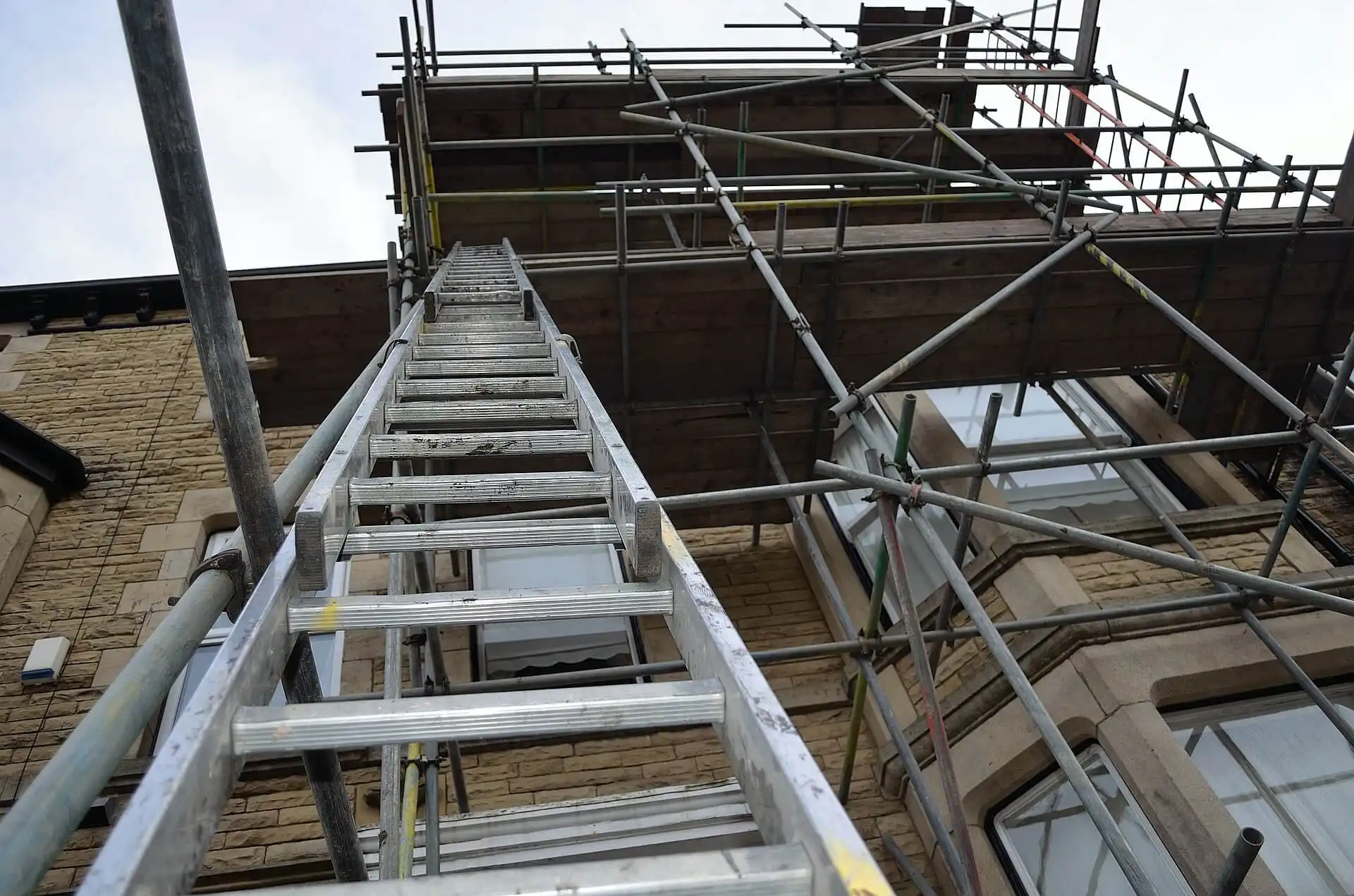
    Scaffolding incidents represent some of the most common types of accidents in the construction industry. The most prevalent types of scaffolding accident include scaffold collapse, scaffold falls, and injuries caused by materials falling from a scaffold.

    The violations that most commonly are associated with scaffold construction violations include improper assembly of scaffolding and incomplete training of workers who utilize scaffolding. Keep in mind a significant majority of construction workers must utilize scaffolding in the completion of their assigned work tasks.

    Ladders

    The third most frequently cited construction violation involves the use of ladders. These violations typically arise from inadequate training, inappropriate ladder placement, improper demarcation of a work zone involving a ladder, and improper use of a ladder (which can include placing items on a ladder in a manner that creates a hazard).

    Fall Protection – Training

    Falls are common underlying causes of injuries in the construction industry. This includes falls from ladders, falls from scaffolding, slip and fall incidents, and other types of situations in which a worker falls.

    The fourth most common cited OSHA violation in the construction industry arises from inadequate training associated with fall protection. Examples of inadequate fall protection training include improper instruction on scaffolding and ladder use as well as incomplete training associated with hazards that can cause slip and fall incidents, including remediating spills in the workplace.

    Eye and Face Protection

    The fifth most common OSHA construction site violation is the failure to provide or have workers utilize proper eye and face protection. Oftentimes, appropriate eye and face protection is available at a construction site. However, site managers fail to appropriately require workers to utilize this vital protection, even in situations in which it clearly is required.

    Hazard Communication

    Yet another frequently cited construction site violation by OSHA involves issues with hazard communication. This is a rather broad category that includes issues like failure to properly identify hazardous materials, substances, and conditions. It can also include improper protocols for announcing to workers the existence of a hazardous situation or condition at a worksite.

    Head Protection

    The seventh most common construction industry violation cited by OSHA involves head protection issues. This type of violation runs the gambit from permitting visitors on a worksite without proper head protection to allowing workers to be on site without suitable head protection in place. Traumatic brain injury is a major type of injury arising from accidents at construction worksites. Many of these injuries would be prevented if workers (and site managers) followed OSHA head protection standards on a consistent basis.

    Aerial Lifts

    On the list of the 10 most frequently cited construction violations involves improper aerial lifts. Improper aerial lift issues can involve equipment, materials, and ever worksite personnel. In addition, it can involve third parties unassociated with a construction project who are injured due to an inappropriate aerial lift of some sort.

    General Safety and Health Provisions

    Yet another of the top 10 most frequently cited construction violations involves a lapse in the application of general safety and health provisions of OSHA standards. These citations come on a variety of forms and encompass an array of more general safety and health issues that can arise at a construction site.

    Fall Protection – Systems Criteria and Practices

    Finally, the tenth most common construction site OSHA cited violation involves fall protection. This type of citation is issued in response to failures in regard to fall protection practices, protocols, and associated system criteria. Beginning in 2018, OSHA is placing even a more significant emphasis on enforcing standards related to all types of falls at a construction site.

    The types of issues on the top 10 list giving rise to OSHA citations typically remain on somewhere on the listing from one year to another. There are changes in specific position on the list, however.

    ====

    Jessica Kane writes for Advance Online, a leading provider of web-based OSHA. DOT. and HAZWOPER training. 

  • Benefits of designing and building your own shipping container home

    Benefits of designing and building your own shipping container home

    There’s a serious trend these days with people designing and building their own shipping container modular homes.

    You don’t have to to look very far to see these trendy house designs all over social media platforms like Pinterest and Facebook.

    Most people think the main appeal to building them is a the ease and speed of construction as well as the low building costs along with the fact they use sustainable materials, especially if you use second hand shipping containers for the main structure of the dwelling.

    containe _homes

    But there are actually several other benefits that are commonly overlooked that will not only benefit the homeowner but the planet and your bank balance too.

    Shipping container houses can have extra bedrooms or sections added on easily

    Most people who buy their first home start off small. They buy a place usually big enough for themselves, say you and a partner and then as the family starts to grow they need to sell and find a larger home. When your home is built out of containers adding new bedroom is easy.

    container home

    The containers are built with steel sides and roofs and the steel can be cut out of any of the four walls or ceilings. This mean you can have additional containers placed next to the existing containers and all you need to do is cut holes where you want entry to be and you’ve just extended your house. Extending your house is not only limited to the putting the container next to each other on the ground but you can also stack them on each other. So adding more stories to your home can happen quickly as well.

    It’s not uncommon for people to actually work on extending their homes themselves. This is because you don’t have to be skilled in many different trades you’re only going to be working with steel. We do recommend that anyone who does attempt to work with steel shipping container homes is wearing the correct safety equipment including welding work boots, hot work gear and and eye protection.

    Containers can be arranged in almost shape you like

    One of the main reason architects and homeowners are swinging more and more to the idea of building with containers is the fact that they can be arranged quickly in many different shapes. Shipping containers are like large lego blocks usually 40 ft long and have a square foot land coverage of 320 square feet per container. This mean that you can simply pick these up and arrange them which includes stacking them on top of each other too.

    Shipping Container Cottage

    5-6 shipping containers equate to the size of an average dwelling. It’s common for houses made from containers to be substantially smaller in overall size but taller than most dwellings of the same internal square foot size. The reason that they can be built so much taller without going wider is because of the strength of the steel walls. This allows more imaginative designs in terms of height vs width and can give the occupant views from the second level even when building on a relatively small piece of flat land.

    Container homes can be moved with ease

    Really let this idea sink in for a second. If you liked the design of your shipping container home but no longer liked the area you could simply have your house picked up and moved.

    That’s a huge advantage in terms of giving the homeowner ultimate freedom to live where they please.

    Housing Sea Container

    Another upside to being able to move the design is you can sell the house without selling the land. This can be beneficial for both the buyer and the seller. Picture the idea if you’ve been living in your container design for the last few years and you think you’d like to upgrade to different size containers or a whole new design all together. You could simply put your current design up for sale and once you have a buyer then have it moved to the new location and then start working on your new house design.

    Without a doubt working and living in shipping container homes is one of the most versatile and practical modern ways to design a home.

    The possibilities when it comes to design are endless and the benefits extend long after the building is complete.   

  • Internal Walls: Stud or Solid?

    Internal Walls: Stud or Solid?

    One of the considerations when you are building a house or any building concerns the internal walls.  It is easy to forget that there are two main purposes for a wall – as a divider and as a load bearing wall.  So how do you know which is which and whether you should choose stud or solid walls for your self build?

    Many times, self builders don’t think about how internal walls should be built.  If you have involved an architect or a designer, they will complete plans and you will follow them.  Often, they will suggest a system such as using timber frame or SIPs (structural insulated panels).  This will mean taking the package on offer from the company you are using to source materials and simply putting them in place.

    But is it worth giving the topic more consideration?

    Is a wall loadbearing?

    There are two simple categories of walls inside a property – loadbearing and non-loadbearing.  Visually it is often difficult to tell the difference between the two but from a structural viewpoint, there is a big difference.

    Loadbearing walls are the support system for the roof, for a floor above, a beam or even another wall.  This means it needs to be much stronger than a non-loadbearing wall.  It also needs the right support under it, usually in the form of a foundation trench.

    When you are building a new build property, structural issues will be handled during the design stage of the process and this means that there isn’t too much to worry about when actually doing the self-build.  But during renovation projects, the subject is even more important because you have to be aware of the purpose of a wall before you remove it.

    For example, you need to know if a wall is load bearing:

    • If it is, you will need another means of support in place of the wall and this often means having a professional building survey done to see what options are available
    • If it isn’t, then you can remove it as you want without any additional work

    Image: https://www.homebuilding.co.uk/internal-walls-stud-or-solid/

    Stud or solid

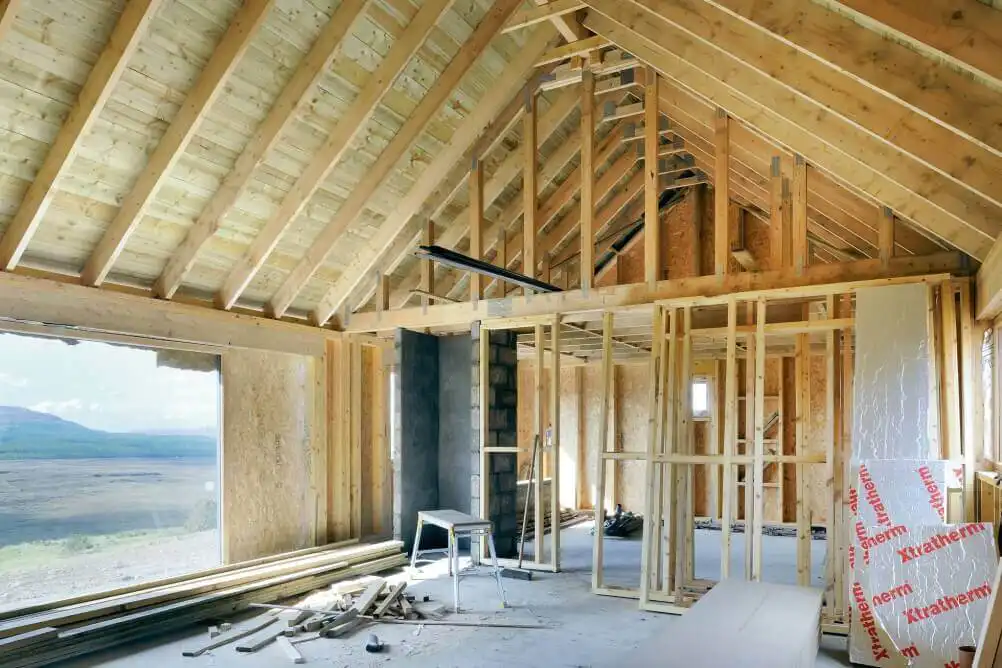
    The other big question surrounding the walls of a house is the way that they are constructed.  There are a number of ways these can be made.  For example, in block built homes, it is common for blockwork to be used for load bearing walls and timber studwork to be used for other walls.  So, you might have blockwork walls on the downstairs of the home and timber studwork upstairs, especially if the roof is constructed with trusses that transfer the weight to the side walls of the house.

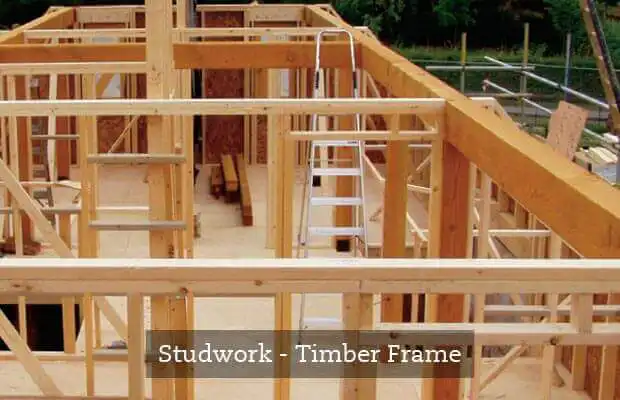
    Studwork can also be used for some load-bearing walls.  In timber-framed homes and buildings, for instance, timber stud walls are used for everything.  And studwork doesn’t have to be timber – some builders use steel channels because they are lightweight and quick to put into place as well as being ideal for partition walls which aren’t loadbearing.

    Blockwork is a more straightforward option for loadbearing walls than studwork which requires more effort and often the use of doubling up of uprights.  However, there is a downside of using blockwork – it is much heavier, and this means you need support at the floor level to ensure it can handle this weight.  

    This often means extra work is required.  This might mean adding foundations or beams to make the floor strong enough to support the blockwork wall.  Or there may be a reinforced flooring system used to ensure it can handle the weight.  It may be that the design is simply switched to studwork instead because the work cannot be done on the floor.

    Soundproofing walls

    As well as being strong and loadbearing, blockwork is popular for internal walls for another reason – it offers good soundproofing.

    Soundproofing levels between the rooms of a house come under the Building Regulations – Part E2 in Wales and England and Part 5.2 in Scotland.  These both call for a minimum sound reduction of 40 decibels between rooms – but in reality, this isn’t too hard to achieve with most of the main construction methods.

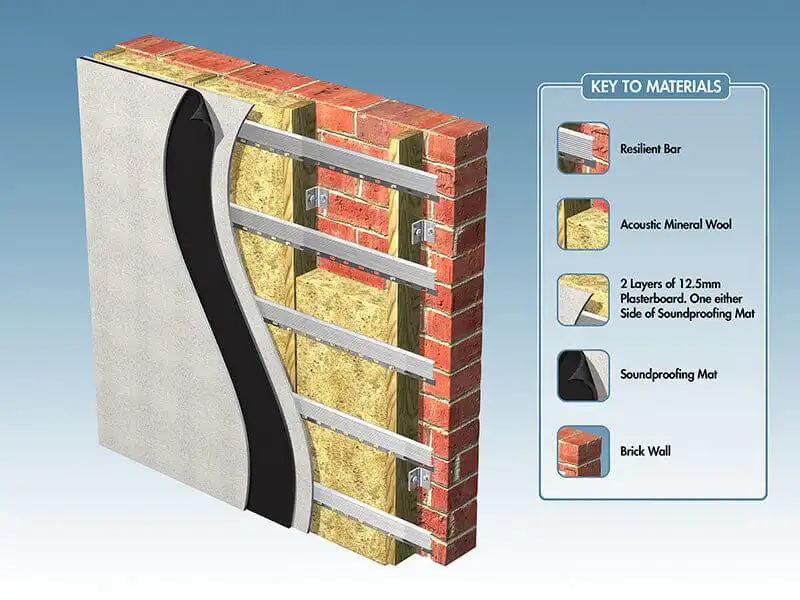
    Blockwork will achieve this naturally, but studwork does require a little help to get there.  This is normally done by packing it with acoustically enhanced wool insulation and finishing it with 15mm or acoustic grade plasterboard on the walls.  This ensures it meets the standard, but you can add a second layer of plasterboard if required.

    Cost is a consideration when building a house.  Studwork is cheaper than blockwork but does require extra spending to get the insulation levels.  However, even with this, it is usually cheaper.  Other steps can be taken to add to the soundproofing of a room including:

    • Adding an acoustic door set (these are expensive but an option)
    • Placing built in cupboards between rooms that you need to isolate
    • Placing switches and sockets away from noise sensitive walls

    En-suite bathrooms can also be a problem but are exempt from Part E.  However, it is often worth having their walls reach the same standard to ensure the insulation of the entire property.

    Wall hangings

    One final consideration is when it comes to adding wall hangingsand features such as radiators, basins and mirrors.  One way to deal with this is the addition of timber known as noggins that go between the vertical studwork and are able to carry weight.

    Other options including using loadbearing wall boards at the plastering stage of the building.  These cost a lot more than normal plasterboards but allow heavy objects such as radiators to be fixed to them.  They also help with soundproofing the property.  You can also fix lighter loads such as pictures or wall hangings with the use of plasterboard wall plugs.

    It can be a good idea to photograph studwork before it is covered to ensure you can easily located studs afterwards.  Some self-builders even record where studs are located but often a stud finder can be used – a special type of metal detector that can also pick up on nails and screws used to fix the boards in place.

  • 3D Printed Furniture?

    3D Printed Furniture?

    3D design opens new doors for interior designing

    A look at today’s interior design, specifically in the furnishings and supporting décor will show that there is a leaning to the unusual and luxurious. For designers coupling a client’s taste, personality, and budget may be a daunting task, especially if any of these elements do not correspond with another. Often, one will find that the demands of the design are either too high for the allotted budget, or simply do not exist. And here is where 3D printing can help in your furnishings.

    Create Concepts

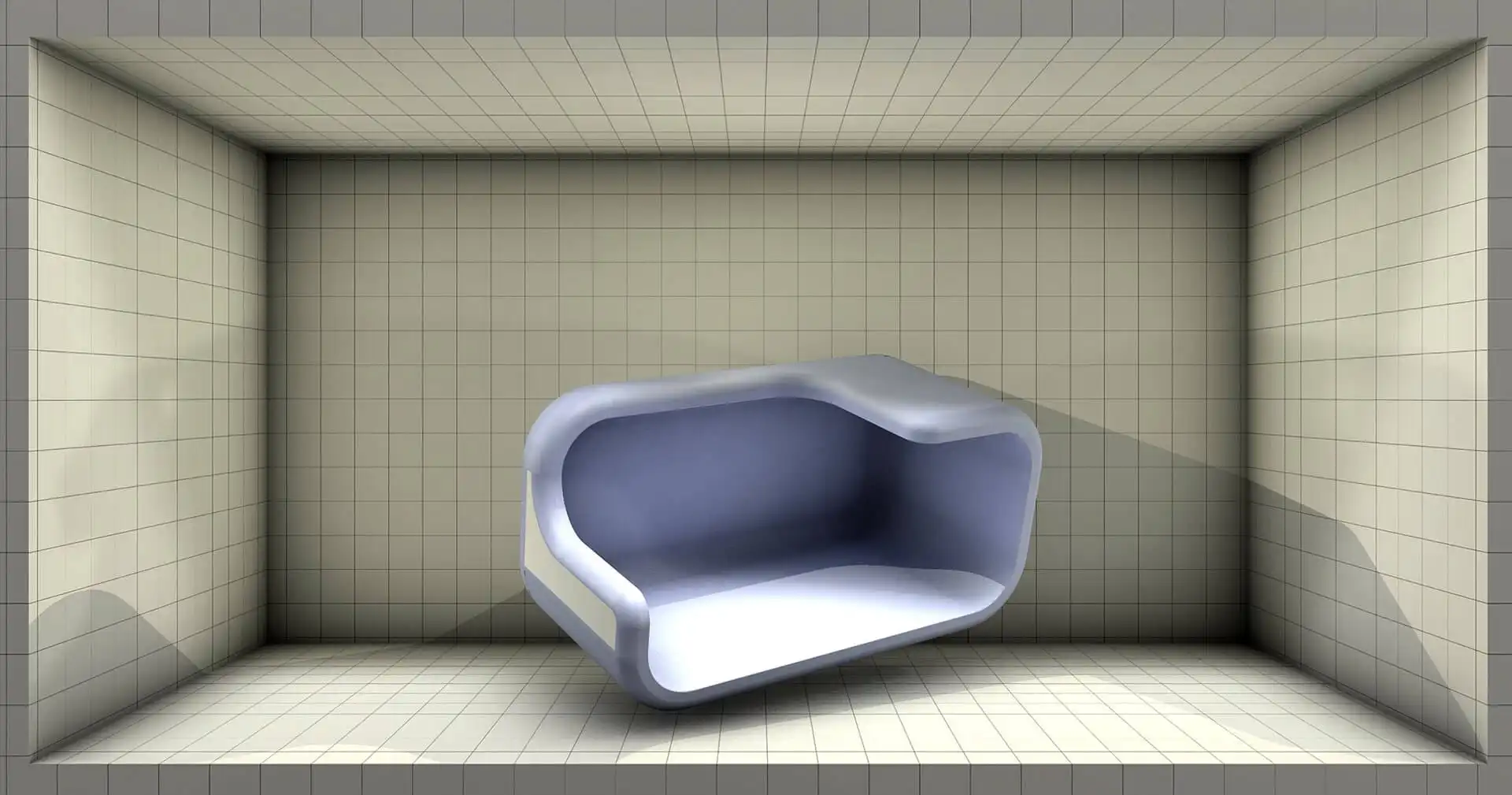
    If you can draw structurally sound furnishings which do not exist in the real-world, you can pass that design off to a 3D artist to have it modeled out to scale. A good 3D artist will note that the fabrics will need to be on a separate layer and that the framework should be isolated and will produce a 3D model which reflects this. Because 3D printers can print complex shapes, the design of the furniture is mainly limited by the scope of your imagination and the size of the printing box in which the furniture will be fabricated.

    Keep in mind that you will need to make the cushions and the fabric additions to the furniture post fabrication. While 3D printers have come a along way, they have not yet designed a machine to create hard interior framing and plush cushion exteriors. That being stated, chairs have been printed and had standard sized cushions added, fixtures have been designed and had electrical elements added post-fabrication as well. It really is just a matter of getting your concept into 3D and then tweaking and printing the concept out.

    Quicker Staging

    A room which requires specific furnishings (without cushions and fabrics) such as tables, chairs, fixtures, etc. may find that it is more expedient to use a 3D print than to search around for the specific furnishings. All that one must do for a printed staging piece of furniture is go to a 3D model site such as CGTrader, find the model of the furniture needed, ensure that it is available in a .stl or similar format and send that to your 3D printer.

    Should you have your printer on site, you will find that the process can be accomplished in a matter of hours or a day rather than days or weeks. If your furnishing is layered and requires assembly, you could order the part in multiple colors and materials and have the shipped to you direct. And while you could overnight stock furnishings for your staging, this method (that being the 3D printing method) allows you to present potential clients with something they have never seen before, giving you the edge over the competition.

    Supporting Elements

    Perhaps the best way in which the 3D printer can help the interior designer is in the supporting elements of existing furniture. As many of the supporting elements are rather small, but many, being able to have a 3D printer constructing these elements while one’s focus is on the larger elements and necessities of the room, such as the lighting and the carpets, drapes, and artwork, maximizes the flow and design process.

    Since the 3D printers can print in multiple colors and in multiple materials including metal (for the higher ended commercial grade printers), one does not need to worry about finishing on the print. A focus only needs to be made to the size of the design and to the materials to be used in the printing process. Purchasers should note that 3D printers work primarily off of CAD based designs. If purchasing your design, or if creating your own design for 3D printing, ensure that you have it in a format supported.

    Is realistic?

    One may wonder if the 3D printing process for furniture is an ideal or if it is an actual solution. For this I would state that one needs only to look at the progress of the 3D printer as it pertains to architecture. Full size houses are being printed within 24 hours. Steel and concrete are being fabricated using the 3D printer. Considering this, furnishings should not be an issue. When considering the 3D designer, mobile devices, tablets, and the availability of various software has opened the door for several aspiring artists to make creations and post them to 3D model sites. While not every model is to scale, there is an overabundance of furniture designs available.

    Interior Design websites have shown a number of 3D furniture prints including end-tables, chairs, beds, standing light fixtures, bookshelves, etc. The information and the technology is present for the designer. The question is not whether or not 3D printing is realistic but rather is 3D printing feasible for your company’s needs. The writer would argue that any company which has substantial demand for interior design has the means and the demand for such technology.