Category: Architecture

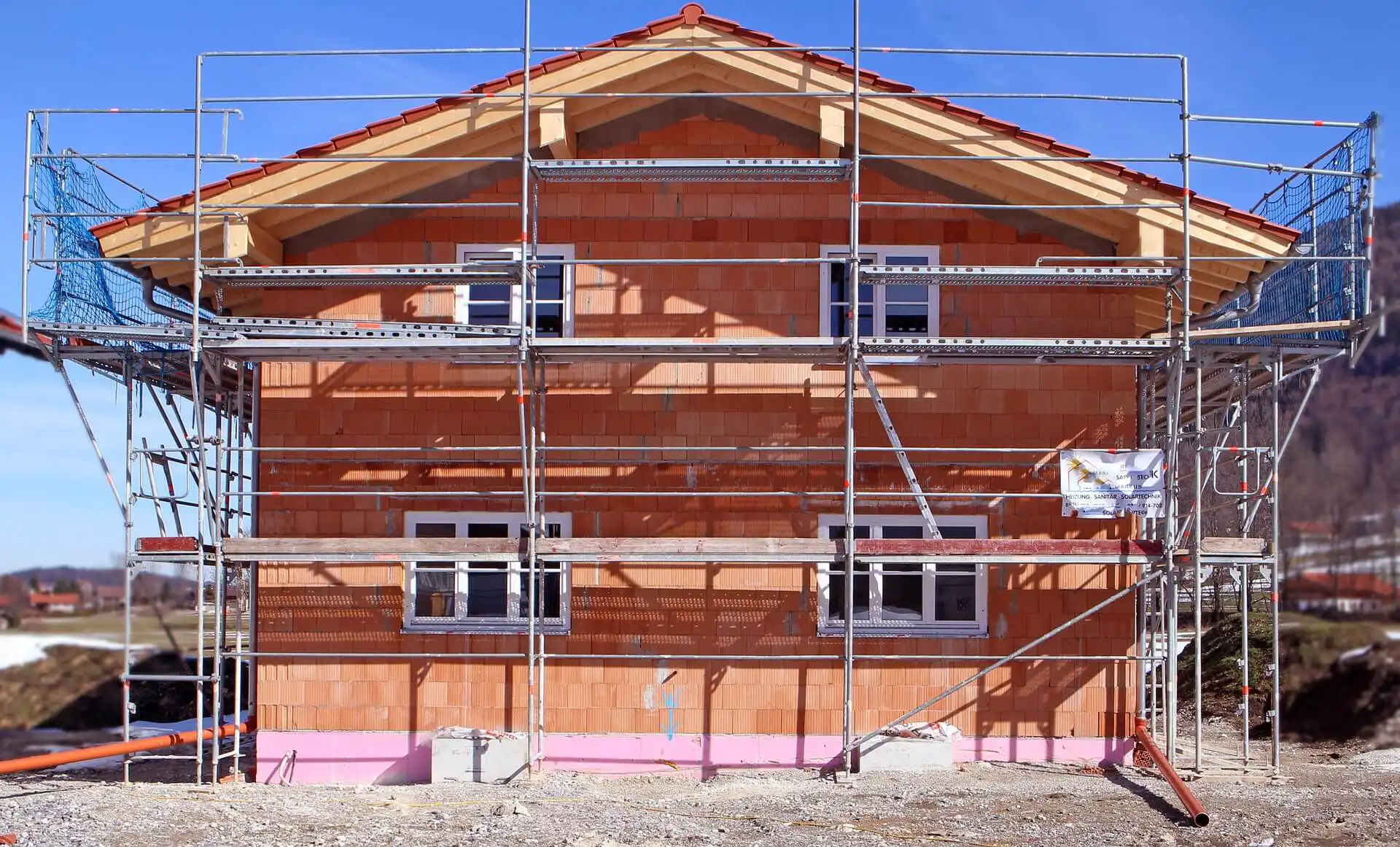
  • A Step by step Guide to the Home Building process

    A Step by step Guide to the Home Building process

    The idea of building your own home has become increasing popular. This has been partly fuelled by the high price of existing property and partly as a result of the desire to build something unique and environmentally friendly.

    Once you’ve decided that you want to build your own home then you need to familiarize yourself with the process.

    Prep

    The first step is locating the land that you wish to build on. It will need to have planning permission or you’ll need to be prepared to apply for it.

    Before you apply it is important to be aware of the local planning rules and have a blueprint of your intended build drawn up. You’ll find it useful to enlist the help of an architect at this stage.

    Of course you can choose to buy a home off plan but this may not give you the uniqueness you desire.

    Finance

    If you have enough capital to build your own property then that’s fantastic. All you have to do is create your budget and make sure you stay within it. Having said that it is a good idea to have a little in reserve; there are always good reasons why a project has gone over budget.

    But, if you don’t have enough capital to finish the project you’ll need to consider getting construction finance. You’ll be expected to put down a 20% deposit and the funds will be released in stages. This keeps the risk at a minimum for both parties.

    Get Staff

    You have a choice, you can entrust the entire project to a builder or you can click here to find the best available trades people in your area.  This s a great option to keep your budget down and if you want to do some of the building yourself.

    You can simply hire the people you need as and when you need them. They will take care of all the specialist parts of the building process while you concentrate on the construction.

    Choose Materials

    You can do this before the build or during but be aware that any material which is hard to get hold of could slow down your build.

    While it is traditional to build with wood or brick you may prefer a more environmentally friendly route. Equally if this is your choice it may be necessary to confirm it’s acceptable with planning first.

    Finishing Off

    It’s your job to complete any section of the build you can and to supervise the trades people you have employed. You need to make sure they are all working on the time scales you have given and that they are performing all the right details of the job.

    Ideally every trades person should know exactly what job they are being asked to do and how long they have to do it.

    This will help to keep your build on time and in budget.

    Once the shell is built you’ll have to start looking at the internal furnishings. This is when personal taste comes into play and you can easily blow the remainder of your budget without finishing the build; choose wisely.

    Don’t forget you’ll need to have our property inspected and certified when it’s finished.

  • The Great Castles of America and Their Design Trends, Angelica St. Rose

    The Great Castles of America and Their Design Trends, Angelica St. Rose

    Ever since I was young, I dreamt about what living in a castle would be like. Would I suddenly become royalty, with an arsenal of servants and noblemen to follow my every beck and call, of knights to fight for my honor? Would I suddenly be able to snap my fingers and summon a musician to play any tune I wanted, even if it was the instrumental to some Beyonce song? Could I rule the world?

    Okay, okay. Admittedly, my delusions of grandeur as a child had never risen to such ridiculous heights. My fascination for castles didn’t come from fantasies about owning dragons Daenerys-style, or inciting epic wars in my honor. Rather, my reasoning is far more simple: I fell in love with the architecture, the Old World charm of these gallant fortresses. Castles feel like time capsules rooted in modern time, each and every one painting individual stories. Below are a collection of my favorite chateaus all across America.

    Boldt Castle (SV – 22,200)

    Location — Heart Island, Alexandria Bay, New York  

    The story of the Boldt Castle is one entrenched in heartbreak. Beginning in 1900, George C. Boldt, millionaire proprietor of the prominent Waldorf Astoria Hotel in New York City, set out to build a dream project: a full size rhineland castle in Alexandria Bay, settled upon the gorgeous Heart Island—all for the love of his life, his wife Louise. Work on the castle begun immediately,  George excited to complete the stunning 6-story, 120 room castle, fashioned with tunnels, a powerhouse, Italian gardens, a drawbridge, the Alster tower for children to play, and a dove cote. However, tragedy struck in the middle of the project, Louise passing away unexpectedly. George subsequently fell into depression, abandoning the project and never returning to the island.

    However,  the will to keep the project going irrespective remained, the Thousand Islands Bridge Authority acquiring the property in 1977. Since then, several millions of dollars have gone into rehabilitation of the property.

    Today, the Alster Tower is referred to as the Playhouse, with architecture inspired by a defense tower similar to those used on the Alster River in Germany.

    Belvedere Castle (SV – 9,900)

    Location – Central Park, New York

    Named after the Italian meaning “beautiful view”, the words couldn’t be truer. With two balconies, a gorgeous panoramic view of the city is available, revealing iconic trademarks such as: the Delacorte Theater, the Great Lawn, the Turtle Pond, and the Ramble.

    First conceived by Calvert Vaux in 1869, codesigner of Central Park, the castle was initially intended as a Victorian folly, sitting upon Vista Rock. And while providing incredible views to guests is a function the castle still does well, it also served another purpose: a station for for the U.S. Weather Bureau.

    The current weather station in Central Park, an Automated Surface Observing System (ASOS) located just south of the castle, with wind equipment still being located in the main tower.

    Additionally, the castle now serves as a visitor center and gift shop, with free family and community events such as birding and other natural history programs.

    Hammond Castle (SV – 6,600)

    Location – Gloucester, Massachusetts

    Hammond Castle is a Medieval-style castle located in the fishing village of Gloucester, built by John Hays Hammond Jr. between 1926 and 1929. He was a prolific inventor and creator, and had even meritted himself the name “Father of Radio Control” for his extensive work in the field.

    His creation, Hammond Castle, sits dreamily upon a bluff overlooking the Atlantic Ocean, bringing a unique blend of art, architectural elements, and culture (Hammond having spent time in both Africa and England as a child). He appreciated eras that spanned Ancient times, the Medieval period, and Renaissance. He purchased a collection of varied artifacts, and created his residence around grandiose stone archways, windows, wooden facades, and other Old World architectural elements. Because of this, guests can truly enjoy the essence of what Europe was thousands of years ago, without actually being there.

    There are a plethora of gorgeous castles not only in the United States, but around the world, each with their own exotic history. And while you unfortunately cannot own the properties listed in this article, there are plenty of enchanting castles for sale in the USA.

  • OSHA and the 10 Most Frequently Cited Construction Violations

    OSHA and the 10 Most Frequently Cited Construction Violations

    The Occupational Safety and Health Administration is responsible for setting safety standards in the workplace for different industries. This includes the construction industry.

    As part of its mission, OSHA also deals with violations of standards the agency establishes. In addition, it’s compliance efforts include citing workplace violations and workplace injuries in the construction industry.

    There are OSHA training programs that are created to increase employees’ awareness and understanding of workplace and workplace hazards so that they’re able to prevent workplace accidents as much as possible.

    Fall Protection – General Requirements

    The number one most common workplace violation in the construction industry is the failure of an employer in the construction industry to satisfy the general requirements established by agency standards to protect against fall. In simply terms employers in the construction industry who violate standards associated with fall protection general requirements are failing to meet some relatively basic, essential requirements to keep workers safe.

    Scaffolding

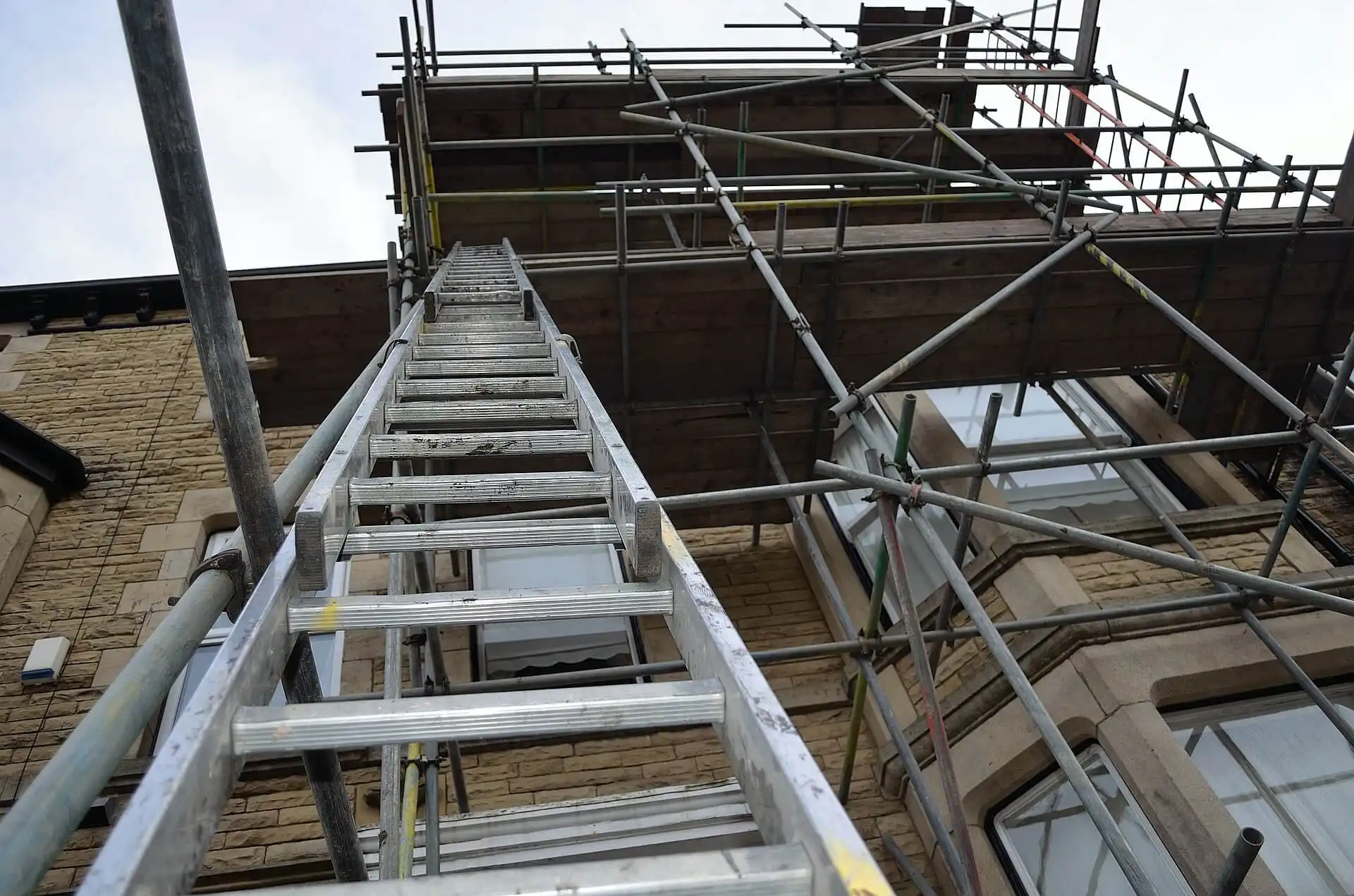
    Scaffolding incidents represent some of the most common types of accidents in the construction industry. The most prevalent types of scaffolding accident include scaffold collapse, scaffold falls, and injuries caused by materials falling from a scaffold.

    The violations that most commonly are associated with scaffold construction violations include improper assembly of scaffolding and incomplete training of workers who utilize scaffolding. Keep in mind a significant majority of construction workers must utilize scaffolding in the completion of their assigned work tasks.

    Ladders

    The third most frequently cited construction violation involves the use of ladders. These violations typically arise from inadequate training, inappropriate ladder placement, improper demarcation of a work zone involving a ladder, and improper use of a ladder (which can include placing items on a ladder in a manner that creates a hazard).

    Fall Protection – Training

    Falls are common underlying causes of injuries in the construction industry. This includes falls from ladders, falls from scaffolding, slip and fall incidents, and other types of situations in which a worker falls.

    The fourth most common cited OSHA violation in the construction industry arises from inadequate training associated with fall protection. Examples of inadequate fall protection training include improper instruction on scaffolding and ladder use as well as incomplete training associated with hazards that can cause slip and fall incidents, including remediating spills in the workplace.

    Eye and Face Protection

    The fifth most common OSHA construction site violation is the failure to provide or have workers utilize proper eye and face protection. Oftentimes, appropriate eye and face protection is available at a construction site. However, site managers fail to appropriately require workers to utilize this vital protection, even in situations in which it clearly is required.

    Hazard Communication

    Yet another frequently cited construction site violation by OSHA involves issues with hazard communication. This is a rather broad category that includes issues like failure to properly identify hazardous materials, substances, and conditions. It can also include improper protocols for announcing to workers the existence of a hazardous situation or condition at a worksite.

    Head Protection

    The seventh most common construction industry violation cited by OSHA involves head protection issues. This type of violation runs the gambit from permitting visitors on a worksite without proper head protection to allowing workers to be on site without suitable head protection in place. Traumatic brain injury is a major type of injury arising from accidents at construction worksites. Many of these injuries would be prevented if workers (and site managers) followed OSHA head protection standards on a consistent basis.

    Aerial Lifts

    On the list of the 10 most frequently cited construction violations involves improper aerial lifts. Improper aerial lift issues can involve equipment, materials, and ever worksite personnel. In addition, it can involve third parties unassociated with a construction project who are injured due to an inappropriate aerial lift of some sort.

    General Safety and Health Provisions

    Yet another of the top 10 most frequently cited construction violations involves a lapse in the application of general safety and health provisions of OSHA standards. These citations come on a variety of forms and encompass an array of more general safety and health issues that can arise at a construction site.

    Fall Protection – Systems Criteria and Practices

    Finally, the tenth most common construction site OSHA cited violation involves fall protection. This type of citation is issued in response to failures in regard to fall protection practices, protocols, and associated system criteria. Beginning in 2018, OSHA is placing even a more significant emphasis on enforcing standards related to all types of falls at a construction site.

    The types of issues on the top 10 list giving rise to OSHA citations typically remain on somewhere on the listing from one year to another. There are changes in specific position on the list, however.

    ====

    Jessica Kane writes for Advance Online, a leading provider of web-based OSHA. DOT. and HAZWOPER training. 

  • Turn your Dreams into Reality with Top Notch Landscape Designing Services!

    Turn your Dreams into Reality with Top Notch Landscape Designing Services!

    Which home owner would not want to have a beautiful property? It not only wins you accolades, but also ensures that you come back to a welcoming home and not a dreary one. Remember that the exterior of your home is the first thing that people notice.

    Landscape designers across Sydney, work hard to combine your preferences with their experience and expertise to create a mesmerizing landscape.

    japanese garden

    HOW CAN LANDSCAPING IDEAS ENHANCE YOUR PROPERTY’S LOOK?

    Whether it is a season change or a change in preferences, homeowners would need to change the look of the outdoors and make it look attractive. The home owners can take on such projects for the simple reason that it enhances both aesthetics and property’s value. These awesome ideas can help you create a lovely landscape around your property:

    home deks

    • Creating an Entrance: Entrance is the gateway to your beautiful home, but that does not mean that you do not pay attention to the look of the entrance. It can create the first impressions about you and your property, so add some greenery or take the help of experienced landscapers who have numerous ideas to implement.
    • Walkways Revival: Walkways are perhaps one of the most ignored parts of the property exteriors during renovations. Maintaining or remodelling the walkways along with the other parts of the home can help improve the overall look of the home. Whether you want concrete pathways or timber ones, take the advice of experts from reputable agencies and they will help create walkways that enhance the look of the overall property.
    • Beautiful Patios: Patio is perhaps a safe haven for many after a hard day at work, where you can unwind and relax. Who would want to be greeted by a dull looking patio? Decorate the patio with lovely decorations of various size and shapes. Landscapers have a good idea about what can enhance the look of your patio and make it look welcoming, while maintaining the elegant look of your property.
    •  Paved Driveways: Driveway is another part of your property that passerby, potential buyers and guests will definitely notice, so you need to make sure that it looks attractive. Many homeowners feel that a simple patch-up job might be okay for the driveway, but the truth remains that for a beautiful property you need an amazing driveway.

    pool lighs

    • Pool Decks: Landscaping companies and agencies also offer services to enhance the look of your pool deck. Whether you are enjoying a dip in the pool or lazing on the poolside with a book and a drink, you would want a wonderfully decorated deck. It will not only win you accolades from guests, but also add to the aesthetics of the property.
    • Retaining Walls: Retaining wall is a concept that has gathered popularity due to its versatility and practicality. On top of that, if used intelligently, it can also enhance the aesthetics of your property significantly.

    natural wall

    • CAN PROFESSIONAL LANDSCAPERS AND GARDENERS ACTUALLY HELP BEAUTIFY YOUR PROPERTY?

     Are you considering a DIY project for all of these additions to your outdoor? Some think DIY projects are economical, while others do it for winning accolades, but have you considered the problems you might encounter completing such a project? You could end up making mistakes or worse hurting yourself, which cost much more than calling in professionals.

    Experts, on the other hand, offer their services at affordable rates and have knowledge about the latest trends that can help enhance your property’s outdoor area. There are numerous reputed agencies and companies with experienced professional landscapers and gardeners, who will work to create a property of your dreams.

  • How to Spot Signs of Foundation Issues

    How to Spot Signs of Foundation Issues

    A house is as good as its foundation. Without a good foundation, a house will not stand the test of time. Eventually the foundation might crack and become uneven and this would then affect other parts of the house.

    Knowing the early signs of foundation problems can head off problems that ultimately could cost you an arm and a leg to fix. Here’s how to spot signs of foundation issues:


    • Uneven or sagging floors

    Old Floor


    There could be trouble if your floors are out of level or seem to be dipping, bowing or sagging. Floors have a tendency to squeak or sag when pier and beam foundations have problems.

    This is because slab foundations and pier and beam foundations are positioned differently. As such, they are affected differently.

    With time, floors that appeared to be out of level may become uneven by up to three times their original level. At this stage, these floors are not only unsightly but are also very hazardous.

    To avoid injuries, have the floors repaired as soon as you detect any sagging or unevenness.


    • Cracks on walls, floors and/or on the foundation.

    Cracks on walls


    Cracks on either the walls, floors or the foundation itself may signal a foundation problem. A broken chimney, wall fissures and floor cracks can also mean trouble. Eventually, your house may experience foundation movement. This then causes shifts and gaps on your foundation.

    Not all cracks however are a result of a bad foundation. In fact, it’s perfectly normal for a foundation to develop some in the first four years after construction. However, anything more than ¼-inch gap on the concrete block walls could mean something serious.


    • Doors that stick or don’t open and close properly.

    Doors


    A sticking door is a frequent indication of a foundation problem. Exterior doors that stick are likely to hang down at the top or drag at the threshold. Double doors may hang incorrectly or fail to meet at the middle.

    Usually, it’s a problem that affects all kinds of slab and pier beam foundations. And no property is immune to such problems, be it even a commercial structure.

    Sometimes doors stick because of high humidity. This happens if there’s been severe flooding or heavy downpour.


    • Gaps around exterior doors or window frames.

     window frames


    Gaps around exterior doors and window frames could signal foundation issues. You might also notice that doors no longer latch. A good signal is when double don’t align properly.

    When they are not aligning as they should, it makes closing them difficult. Doors may also become impaired and crooked. Crooked floors may also occur as a result of moisture issues in the crawl space.


    • Slanted mortar joints.

    mortar joints


    Slanted mortar joints are perhaps the easiest to spot. They occur as a result of foundation shifts. Generally, foundation experts will use laser lines to check against mortar joints. If something is amiss, it’s safe to say that something’s amiss.


    • An unstable chimney.

    unstable chimney


    A cracking or leaning chimney may signal foundation problems. In most cases, a chimney is installed at the same time as the house is built. In some cases, though, the chimney doesn’t share a foundation or footing with the house itself.


    • Foundation upheaval in slab foundations.

    Foundation upheaval


    Foundation upheaval is when your house’s foundation has moved up. Foundation upheaval is the opposite of foundation settling. Causes of foundation upheaval may include frost heave, under-slab plumbing leaks, excess moisture due to rain, and soil that expands and contracts.

    Generally, heaving impacts your home’s interior, the perimeter area of a concrete slab, and the outside garage.

    Excessive moisture is the number one cause of foundation upheaval. Moisture can be trapped beneath your slab as a result of plumbing problems or heavy rains. Inspect your water bill if you suspect something unusual with your slab foundation. You could be losing up to fifty gallons of water each day. Sometimes even more.

    When soil gets wet it becomes heavy. And the heavier it becomes the more upward force it has. Frost heave can also put pressure on your home’s foundation, which can then result in a foundation movement.

    When you spot any of these foundation issues, don’t jump into conclusions, but rather get in touch with a building contractor immediately.

  • Benefits of designing and building your own shipping container home

    Benefits of designing and building your own shipping container home

    There’s a serious trend these days with people designing and building their own shipping container modular homes.

    You don’t have to to look very far to see these trendy house designs all over social media platforms like Pinterest and Facebook.

    Most people think the main appeal to building them is a the ease and speed of construction as well as the low building costs along with the fact they use sustainable materials, especially if you use second hand shipping containers for the main structure of the dwelling.

    containe _homes

    But there are actually several other benefits that are commonly overlooked that will not only benefit the homeowner but the planet and your bank balance too.

    Shipping container houses can have extra bedrooms or sections added on easily

    Most people who buy their first home start off small. They buy a place usually big enough for themselves, say you and a partner and then as the family starts to grow they need to sell and find a larger home. When your home is built out of containers adding new bedroom is easy.

    container home

    The containers are built with steel sides and roofs and the steel can be cut out of any of the four walls or ceilings. This mean you can have additional containers placed next to the existing containers and all you need to do is cut holes where you want entry to be and you’ve just extended your house. Extending your house is not only limited to the putting the container next to each other on the ground but you can also stack them on each other. So adding more stories to your home can happen quickly as well.

    It’s not uncommon for people to actually work on extending their homes themselves. This is because you don’t have to be skilled in many different trades you’re only going to be working with steel. We do recommend that anyone who does attempt to work with steel shipping container homes is wearing the correct safety equipment including welding work boots, hot work gear and and eye protection.

    Containers can be arranged in almost shape you like

    One of the main reason architects and homeowners are swinging more and more to the idea of building with containers is the fact that they can be arranged quickly in many different shapes. Shipping containers are like large lego blocks usually 40 ft long and have a square foot land coverage of 320 square feet per container. This mean that you can simply pick these up and arrange them which includes stacking them on top of each other too.

    Shipping Container Cottage

    5-6 shipping containers equate to the size of an average dwelling. It’s common for houses made from containers to be substantially smaller in overall size but taller than most dwellings of the same internal square foot size. The reason that they can be built so much taller without going wider is because of the strength of the steel walls. This allows more imaginative designs in terms of height vs width and can give the occupant views from the second level even when building on a relatively small piece of flat land.

    Container homes can be moved with ease

    Really let this idea sink in for a second. If you liked the design of your shipping container home but no longer liked the area you could simply have your house picked up and moved.

    That’s a huge advantage in terms of giving the homeowner ultimate freedom to live where they please.

    Housing Sea Container

    Another upside to being able to move the design is you can sell the house without selling the land. This can be beneficial for both the buyer and the seller. Picture the idea if you’ve been living in your container design for the last few years and you think you’d like to upgrade to different size containers or a whole new design all together. You could simply put your current design up for sale and once you have a buyer then have it moved to the new location and then start working on your new house design.

    Without a doubt working and living in shipping container homes is one of the most versatile and practical modern ways to design a home.

    The possibilities when it comes to design are endless and the benefits extend long after the building is complete.   

  • What is the Connection Between Architecture, Technology and Education?

    What is the Connection Between Architecture, Technology and Education?

    It is quite fair to say that education affects every aspect of our life, as it shapes the way we percept the world around us. Moreover, education is what brings up specialists, who are responsible for all the important decisions, which define the life of a country and the world in general. On the other hand, the number of things, which can shape the way the education is provided, is limited, yet architecture and technology are among those things.

    Tunel

    Obviously, technology has changed the educational process and will change it even more in the nearest future. Although most of the changes are taken for granted, they have made the process of acquiring new knowledge and skills much easier and, at times, faster. The first thing which comes to mind when you think about the technological development in the context of education is the internet and all the lovely advantages which it has provided. The internet has granted an opportunity for everyone to search and share information, hence saving any scholar tens and hundreds of hours, which one would otherwise have to spend in libraries.

    Another essential contribution that technology development has made into educational process is making knowledge available for anyone who is interested. Many prestigious universities and colleges have uploaded the materials of their best and highly-ranked courses, thereupon providing the opportunity to learn for many people who can’t afford paying the cost of daytime education.

    Modern gadgets and newest software are changing the very concept of a textbook. As numerous books can be downloaded to one device, the availability of knowledge is now taken to a new level: people can literally spend every spare minute to learn, if they want to. Social media platforms have granted the opportunity for students to find people who share their passions, and hence, spread their interest in academic subjects way beyond college curricula. Moreover, many teachers try to keep in touch with their former and current students via social networks. Such behavior serves to two main things: it creates a community of educated people, who are able to provide each other assistance in the areas of common professional interest, and helps current students see their teacher more as a friend who is always ready to help.

    office

    Consequently, technology has changed the model of education: the teacher is no longer an authoritative figure who provides conventional knowledge and abstracted facts, the teacher is a mentor, whose first responsibility is to foster the class’ aspiration to learn. Naturally, with such a shift in the image of a teacher in the eyes of ones students, the classrooms should get rid of the outdated attributes of authoritative schooling. But what do massive old chalkboards, lecture hall chairs, and plain desks have to do with the quality of knowledge being provided in class?

    office

    A vast majority of people would think that the only connection between architecture and education happens when people are pursuing their careers in construction and engineering, and imagine a student working on an architecture paper. Although architecture and interior design are not commonly thought to be the determinant factors in education, their influence on the way students process and memorize information is proven to be quite significant. Same as the learner’s perception differs depending on the type of tools one is using to take notes and read, it also varies contingent on a setting.

    Symbol

    The dominant idea in modern architecture is that it is the environment that has to adjust to the needs of the students, not vice versa. It is greatly supported by the fact that students are trying to be in charge of their educational process and manage it according to personal preferences and needs. The findings of a recent study have shown that changing some interior elements in the classroom can result in growth of educational outcome by 16 percent. Changing the way desks are located, for example, helps students become more involved in the process, enhances teamwork and compels even the shyest students to collaborate.

    office

    The interior of the classroom should always be evaluated from the learners’ point of view. The architects should consider the distribution of natural and artificial light, air circulation, sound isolation and many other important factors, which will determine whether the classroom is going to be comfortable or not. It is important to make sure that students are able to see and hear what they need from any seat in the class, as this will define the level of their interest and engagement in everything that will be going on in the class.

    Generally, the classes for the younger children are designed to be friendly environments, which would feel more like home, whereas lecture halls for the scholars should be spacious and convenient.

  • Internal Walls: Stud or Solid?

    Internal Walls: Stud or Solid?

    One of the considerations when you are building a house or any building concerns the internal walls.  It is easy to forget that there are two main purposes for a wall – as a divider and as a load bearing wall.  So how do you know which is which and whether you should choose stud or solid walls for your self build?

    Many times, self builders don’t think about how internal walls should be built.  If you have involved an architect or a designer, they will complete plans and you will follow them.  Often, they will suggest a system such as using timber frame or SIPs (structural insulated panels).  This will mean taking the package on offer from the company you are using to source materials and simply putting them in place.

    But is it worth giving the topic more consideration?

    Is a wall loadbearing?

    There are two simple categories of walls inside a property – loadbearing and non-loadbearing.  Visually it is often difficult to tell the difference between the two but from a structural viewpoint, there is a big difference.

    Loadbearing walls are the support system for the roof, for a floor above, a beam or even another wall.  This means it needs to be much stronger than a non-loadbearing wall.  It also needs the right support under it, usually in the form of a foundation trench.

    When you are building a new build property, structural issues will be handled during the design stage of the process and this means that there isn’t too much to worry about when actually doing the self-build.  But during renovation projects, the subject is even more important because you have to be aware of the purpose of a wall before you remove it.

    For example, you need to know if a wall is load bearing:

    • If it is, you will need another means of support in place of the wall and this often means having a professional building survey done to see what options are available
    • If it isn’t, then you can remove it as you want without any additional work

    Image: https://www.homebuilding.co.uk/internal-walls-stud-or-solid/

    Stud or solid

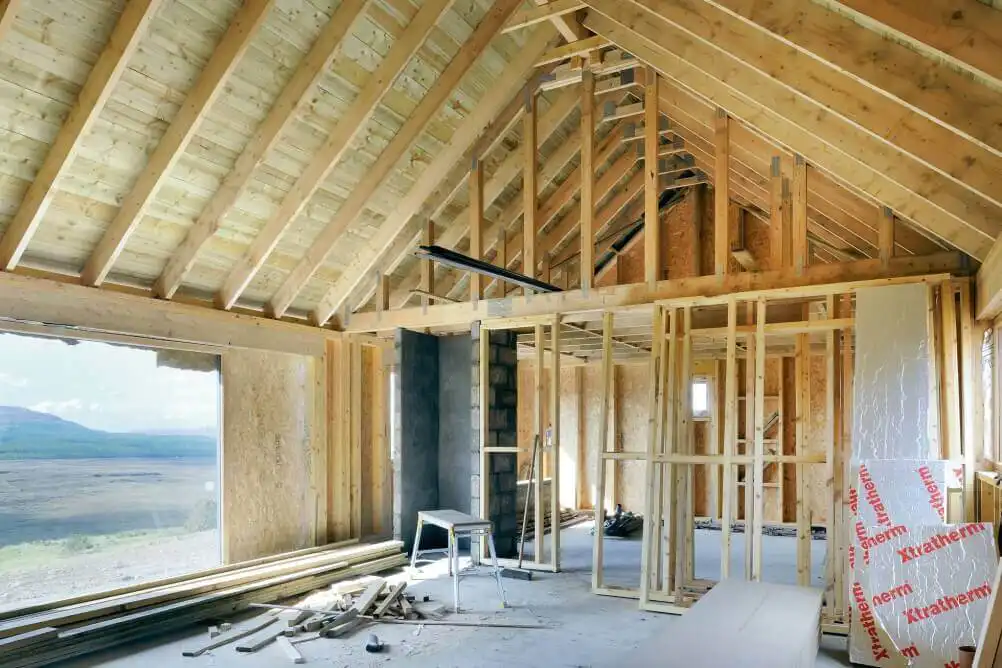
    The other big question surrounding the walls of a house is the way that they are constructed.  There are a number of ways these can be made.  For example, in block built homes, it is common for blockwork to be used for load bearing walls and timber studwork to be used for other walls.  So, you might have blockwork walls on the downstairs of the home and timber studwork upstairs, especially if the roof is constructed with trusses that transfer the weight to the side walls of the house.

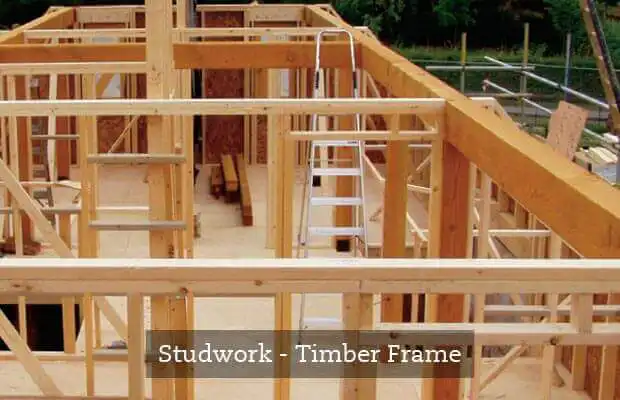
    Studwork can also be used for some load-bearing walls.  In timber-framed homes and buildings, for instance, timber stud walls are used for everything.  And studwork doesn’t have to be timber – some builders use steel channels because they are lightweight and quick to put into place as well as being ideal for partition walls which aren’t loadbearing.

    Blockwork is a more straightforward option for loadbearing walls than studwork which requires more effort and often the use of doubling up of uprights.  However, there is a downside of using blockwork – it is much heavier, and this means you need support at the floor level to ensure it can handle this weight.  

    This often means extra work is required.  This might mean adding foundations or beams to make the floor strong enough to support the blockwork wall.  Or there may be a reinforced flooring system used to ensure it can handle the weight.  It may be that the design is simply switched to studwork instead because the work cannot be done on the floor.

    Soundproofing walls

    As well as being strong and loadbearing, blockwork is popular for internal walls for another reason – it offers good soundproofing.

    Soundproofing levels between the rooms of a house come under the Building Regulations – Part E2 in Wales and England and Part 5.2 in Scotland.  These both call for a minimum sound reduction of 40 decibels between rooms – but in reality, this isn’t too hard to achieve with most of the main construction methods.

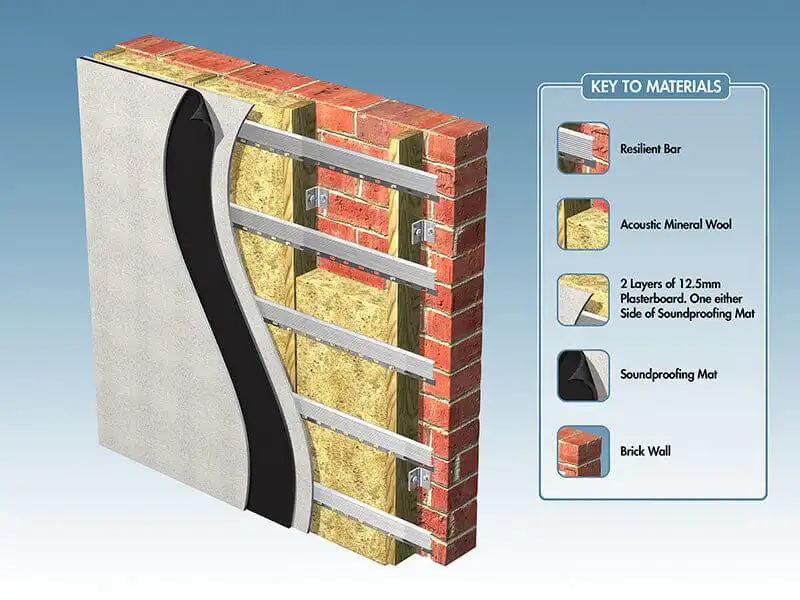
    Blockwork will achieve this naturally, but studwork does require a little help to get there.  This is normally done by packing it with acoustically enhanced wool insulation and finishing it with 15mm or acoustic grade plasterboard on the walls.  This ensures it meets the standard, but you can add a second layer of plasterboard if required.

    Cost is a consideration when building a house.  Studwork is cheaper than blockwork but does require extra spending to get the insulation levels.  However, even with this, it is usually cheaper.  Other steps can be taken to add to the soundproofing of a room including:

    • Adding an acoustic door set (these are expensive but an option)
    • Placing built in cupboards between rooms that you need to isolate
    • Placing switches and sockets away from noise sensitive walls

    En-suite bathrooms can also be a problem but are exempt from Part E.  However, it is often worth having their walls reach the same standard to ensure the insulation of the entire property.

    Wall hangings

    One final consideration is when it comes to adding wall hangingsand features such as radiators, basins and mirrors.  One way to deal with this is the addition of timber known as noggins that go between the vertical studwork and are able to carry weight.

    Other options including using loadbearing wall boards at the plastering stage of the building.  These cost a lot more than normal plasterboards but allow heavy objects such as radiators to be fixed to them.  They also help with soundproofing the property.  You can also fix lighter loads such as pictures or wall hangings with the use of plasterboard wall plugs.

    It can be a good idea to photograph studwork before it is covered to ensure you can easily located studs afterwards.  Some self-builders even record where studs are located but often a stud finder can be used – a special type of metal detector that can also pick up on nails and screws used to fix the boards in place.