
The best kitchen declutter ideas designers rely on aren’t about buying more storage bins or spending a weekend reorganizing every cabinet. The average kitchen has 17 items on its counters that a professional designer would remove in the first ten minutes — and not one of them requires a storage system, a label maker, or a single trip to a home goods store.
That number isn’t an exaggeration. It comes from the same observation that experienced kitchen designers make on nearly every client walkthrough: the kitchen isn’t cluttered because people don’t care. It’s cluttered because no one ever gave them a specific filter for deciding what earns its place on a surface and what doesn’t. Most decluttering advice stops at “if you don’t use it, lose it.” Designers go further. They think about cognitive load, visual weight, material consistency, and the architectural role each surface plays in the room as a whole.
These six removals aren’t about minimalism for its own sake. They’re about understanding why certain objects undermine everything else you’re trying to do in a kitchen — and what to put in their place so the room reads styled, not stripped. Each swap costs less than you’d expect and takes less time than reorganizing a single drawer.
Here’s where to start.
1. The Mismatched Canister Collection Killing Your Visual Calm
You probably didn’t buy them all at once. That’s exactly the problem. The ceramic rooster from a farmers market, the glass jar repurposed from pasta, the plastic container that came with a coffee subscription, the one actual “canister” you bought intentionally — together, they form what designers call visual noise, and it registers in the brain before you’ve consciously noticed a single object.
Research from the Princeton Neuroscience Institute confirms what designers have observed empirically for years: visual clutter actively competes for the brain’s attention and measurably reduces its capacity to process information. In a domestic environment, that translates directly to elevated stress responses. Your kitchen feels chaotic even when it’s technically clean because your eyes can’t settle anywhere.
The mismatched canister collection is a perfect case study in this phenomenon. Each container has a different height, material, lid style, and color temperature. The brain registers that inconsistency as disorder — not “charming” or “eclectic” — just unresolved. And because canisters typically sit at eye level on the most visible counter run in the kitchen, they anchor the room’s entire aesthetic tone.
The fix isn’t more canisters. It’s fewer, matched ones.
Designers consistently recommend transitioning to a set of two to three canisters in a single material and finish. Matte ceramic in a warm white or stone tone is the most universally flattering — it reads as intentional against almost any backsplash or cabinet color. Brands like Mud Australia, Hawkins New York, and CB2’s Renzo collection all offer cohesive sets under $120 for three pieces. You don’t need to fill them with anything photogenic. The visual payoff comes from the repetition of the same material, the same height rhythm, the same finish.
What you’re creating isn’t just storage. It’s a deliberate vignette — a grouping the eye reads as “chosen” rather than “accumulated.” That distinction is the entire difference between a counter that looks styled and one that looks crowded.
If you’re working within a tight budget, thrift stores and Facebook Marketplace regularly surface single-material sets that someone else has moved on from. The criteria remain the same regardless of price: same material, same finish family, consistent heights. Three white stoneware canisters from a thrift store will outperform six brand-new mismatched ones from a big box store every single time.
One additional note on canisters that designers rarely discuss publicly: the lid matters more than the body. A collection of canisters with lids in three different materials — wood, acrylic, cork — creates visual fragmentation at the top of the grouping, which is the zone your eye naturally lands on last. If you’re keeping existing canisters, switching to a single lid material (all cork, all wood, all matching ceramic) makes an immediate difference even when the bodies don’t perfectly match.
Actionable takeaway: Pull every canister off your counter today. Set only matching ones back. Store or donate everything else, including the ones you’re “saving” in case a matching partner shows up someday. It won’t.
—
2. Decorative Items That Have Never Once Been Used (Designers Call This ‘Display Debt’)
Every kitchen has at least one. The decorative olive oil bottle you bought at a Tuscan-themed boutique. The ceramic fruit bowl that holds three limes and a rubber band. The small framed print that seemed perfect in the shop and has been invisible to you for eleven months. Designers have a term for these objects: display debt.
Display debt describes any object that demands visual attention from a space without paying it back — either through genuine function or through beauty that still moves you every time you see it. It’s debt because the object is costing you something (visual real estate, cognitive bandwidth, a sense of calm) while returning nothing. Unlike financial debt, most people don’t realize they’re carrying it.
A 2022 UCLA study found that households with high levels of object density in kitchens correlated with elevated cortisol levels in female homeowners throughout the entire day — not just while cooking. The stress wasn’t triggered by a single messy moment. It was a continuous low-grade response to visual density that the brain interpreted as unfinished business.
Interior designers cite the kitchen as the room where aspirational decor accumulates fastest. Items bought for the cook you planned to become. The mortar and pestle for the herb garden you haven’t started. The beautiful cookbook stand holding a book you haven’t opened. These aren’t failures. They’re just objects that stopped earning their place, and no amount of styling around them will fix that.
The audit is simple:
- Pick up every decorative object on your kitchen surfaces.
- Ask one question: Have you touched this, used this, or genuinely admired it in the past three months?
- If the answer is no, it’s paying no aesthetic rent.
The styled swap here isn’t about replacing with more things. It’s about choosing one intentional object per surface zone that functions as a focal point rather than a filler. A single oversized wooden bowl — something like a hand-turned piece from Etsy makers like KO Woodcraft, or a lava stone bowl from StoneCraft — reads as sculptural rather than decorative. A live herb in a quality ceramic pot (rosemary in a Hasami Porcelain planter, for example) is simultaneously functional, living, and beautiful. One object with intention will always outperform six objects with none.
Display debt is also worth considering in the context of gifted items. A disproportionate number of kitchen surfaces are occupied by things people received as gifts but don’t actually want — novelty salt and pepper shakers, branded olive oils that are long empty but “too pretty to throw away,” ceramic trivets with sayings on them. The social weight of a gift can make removal feel like a betrayal. It isn’t. The gift was the gesture. The object is just an object, and it doesn’t owe you anything and you don’t owe it counter space.
Actionable takeaway: Audit one surface today using the three-month rule. Remove everything that doesn’t pass. Live with the cleared surface for 72 hours before deciding what, if anything, goes back.
—
3. The Fridge Door Gallery — Why Designers Remove Everything From This Surface First

Here’s something most homeowners have never thought about: the refrigerator is the largest vertical surface in the majority of kitchens. In a standard kitchen layout, it spans roughly 36 inches wide by 70 inches tall — that’s approximately 17.5 square feet of visual plane. And most households are using it as a bulletin board.
Magnets from vacations taken years ago. A child’s drawing from last spring. A takeout menu for a restaurant that closed. A calendar from eighteen months ago. A magnet in the shape of a lobster purchased at an airport gift shop in 2019. Each item felt meaningful at the point of attachment. Together, they create what designers identify as the single most visually disruptive element in the average kitchen — because unlike counter clutter, fridge door clutter is vertical and unavoidable. Your eyes go there whether you intend them to or not.
The reason designers address the fridge door first in a kitchen refresh isn’t sentimental. It’s spatial math. Clear that one surface and you’ve visually opened the room more than clearing three counters would. The fridge door, by virtue of its size, acts as a backdrop for everything else in the kitchen. When it’s chaotic, the chaos becomes the room’s tone. When it’s clear, everything else — the cabinets, the counters, the backsplash — reads cleaner by proximity.
The styled swap for the fridge gallery isn’t a different set of magnets. It’s a single functional element, chosen deliberately. A slim magnetic notepad in a matching metallic finish. A small magnetic knife strip on the side panel instead of the front. A single, current piece of children’s art in a simple magnetic frame — one at a time, rotated monthly. The family information that used to live on seventeen different scraps can migrate to a single wall-mounted organizer in a nearby hallway, out of the kitchen’s visual field entirely.
If you have a stainless or panel-front refrigerator, the solution is even simpler: nothing. The surface was designed to be clear, and clearing it is the entire swap.
—
4. The Small Appliance Collection You Use Once a Month (or Less)

The countertop appliance problem is one of the most common issues that comes up when designers share their best kitchen declutter ideas with clients — and it’s also one of the most emotionally charged. Small appliances carry the weight of intention. The juicer represents the healthy morning routine you planned. The bread maker represents the cozy weekend baking you envisioned. Removing them feels like admitting defeat on a version of yourself you were looking forward to becoming.
Designers are not unsympathetic to this. But they are honest about what those appliances are actually doing to your kitchen in the meantime.
Every large countertop appliance that you use fewer than four times per month occupies, on average, 1.5 to 3 square feet of premium prep surface. In a standard kitchen, the total workable counter area is between 15 and 30 square feet. A stand mixer, an air fryer, a rarely-used blender, and an espresso machine that requires a tutorial to operate can collectively consume 40 percent of your entire prep surface — while being used a combined total of perhaps six times per week between them.
Here’s the honest audit to run on every countertop appliance in your kitchen:
- Daily use: Stays on the counter. Non-negotiable.
- 3–5 times per week: Earns counter space if it’s also visually cohesive with the rest of the kitchen.
- Weekly or less: Lives in a cabinet, ideally one accessible without crouching or a step stool.
- Monthly or less: Consider whether it lives in a pantry, a lower cabinet, or not in the kitchen at all.
The styled swap for the appliance collection is twofold. First, the appliances you do keep on the counter should share a finish family — all matte black, all brushed stainless, all cream. Mixed metal finishes and mixed color temperatures in appliances create the same visual fragmentation that mismatched canisters do, just at a larger scale. Second, the cleared counter space itself becomes the swap — open prep surface is a design element, not an absence of one. A clear stretch of stone or wood countertop reads as luxury in a way that no appliance can match.
Actionable takeaway: Pull every small appliance off your counter and put it on your kitchen table. Put back only what you’ve used in the last seven days. Everything else goes into a cabinet for a two-week trial. You will almost certainly find that you don’t miss most of them enough to retrieve them.
—
5. Duplicate Utensils and the Utensil Crock Overflow Problem

Open the utensil crock on your counter — or the drawer dedicated to cooking tools — and count how many of the same item you own. Most kitchens contain:
- 3 to 5 wooden spoons (only one of which ever gets used)
- 2 to 4 rubber spatulas in different sizes and colors
- Multiple tongs in different lengths, often with no clear reason for the duplication
- At least two vegetable peelers — one good, one not, both kept
- Several whisks of varying sizes that have never all been used in the same month
This is one of the most overlooked areas when people approach kitchen declutter ideas on their own. They reorganize the crock, they buy a bigger crock, they add a second crock — and the problem doesn’t change because the problem was never the storage. It was the quantity.
Designers approach utensil editing with a simple principle: one excellent version of each tool, stored within arm’s reach of where it’s used. That’s it. One wooden spoon with a handle that fits your hand. One thin, flexible fish spatula that also works for everything else. One set of tongs. The utensil crock, if it stays at all, should hold no more than six to eight items total — and each one should be used at least weekly.
The styled swap for the utensil overflow is a deliberate reduction combined with a container upgrade. A wide, shallow ceramic crock or a simple wooden box holds fewer items by design, which means it enforces the edit. Brands like Farmhouse Pottery and East Fork both make wide-mouthed crocks in matte glazes that function as the kind of considered object a designer would choose — something that reads as part of the kitchen’s material story rather than a holder that simply exists to contain things.
Actionable takeaway: Empty your utensil storage completely. Lay everything out on the counter. Keep only one of each type. If two items do the exact same job, keep the better one. The rest goes.
—
6. The Paper Accumulation Zone — Menus, Manuals, and Mystery Mail
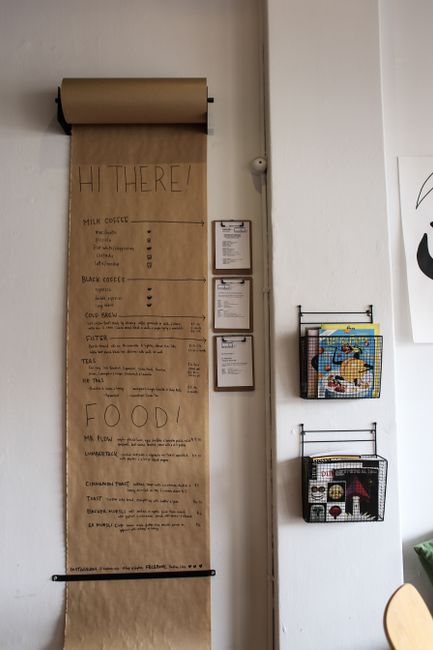
Every kitchen develops at least one flat surface that functions as a paper landing zone — a corner of the counter, the top of the microwave, the edge of the island. Receipts, takeout menus, appliance manuals, school permission slips, coupons with expired dates, a magazine that was read in 2021. Designers identify this as the final and most insidious category of kitchen clutter because paper clutter uniquely resists visual editing. Unlike objects with dimension and material presence, stacked paper flattens into an undifferentiated mass that the eye processes as a single chaotic element.
The practical problem with the paper zone is that it’s usually serving a real function — some of that paper does need to be somewhere accessible. The design solution isn’t to pretend otherwise. It’s to give the function a deliberate, contained home that removes it from counter surfaces entirely.
The most effective approaches designers recommend:
- A wall-mounted mail sorter near the kitchen entry point, not on the counter — paper gets intercepted before it lands
- A single slim tray or magazine holder designated for active paper only, mounted inside a cabinet door if space allows
- Digital migration for appliance manuals (virtually every major appliance brand maintains a searchable online manual database — you don’t need the physical copy)
- A weekly paper reset, ideally 10 minutes on Sunday evening, to process everything that accumulated during the week
The styled swap is particularly satisfying in this category because the surface underneath the paper accumulation is almost always genuinely beautiful — stone, butcher block, painted wood — and has simply been invisible for months or years. Clearing the paper zone is less a decorating decision than an excavation. What’s underneath is usually already the swap.
Actionable takeaway: Set a timer for 15 minutes and sort every piece of paper in your kitchen into three piles: action required, file, and recycle. Relocate action items to a wall-mounted solution. Recycle everything else today.
—
How to Apply All Six Removals Without Getting Overwhelmed

The six categories above represent the core framework that designers use when they walk into a kitchen for the first time. Knowing what kitchen declutter ideas designers actually prioritize — versus what generic decluttering advice covers — changes the order in which you work and the results you get.
If tackling all six at once feels like too much, here’s the sequence that creates the most visible impact with the least sustained effort:
- Start with the fridge door — it’s one surface, it takes 10 minutes, and the visual payoff is immediate and room-wide
- Move to the utensil crock — a contained edit that clarifies one zone completely
- Address the paper accumulation — set up a system so it doesn’t return
- Edit the countertop appliances — this requires the most honest decision-making, so do it when you have uninterrupted time
- Audit decorative objects for display debt — use the 72-hour cleared surface test before replacing anything
- Replace mismatched canisters — this is the only step that involves spending money, so save it for after you’ve seen what the cleared surfaces look like without them
Each step reinforces the next. The kitchen gets progressively easier to maintain as the number of objects competing for its surfaces decreases.
—
Frequently Asked Questions

Q: Where do designers say to start if you only have 30 minutes?
Start with the refrigerator door. It’s the largest vertical surface in most kitchens, it takes 10 minutes to fully clear, and the visual impact on the room is immediate and disproportionate to the effort. Nothing else you can do in 30 minutes will change the room’s tone as quickly. After the fridge door, spend the remaining 20 minutes on one counter surface using the three-month rule for decorative objects.
Q: Is it okay to keep sentimental items in the kitchen even if they don’t fit the styled look?
Yes, with one condition: deliberately chosen. A single piece of your child’s artwork in a proper frame, rotated seasonally, is a considered design decision. Seventeen magnets, two framed prints, a ceramic piece from a trip, and a novelty salt shaker on the same surface is accumulation, not curation. The difference isn’t sentimental value — it’s intention. One meaningful object displayed with care beats a collection of meaningful objects competing for the same space.
Q: Do I need to spend money to apply these kitchen declutter ideas from designers?
Five of the six removals in this article cost nothing. The only category that potentially involves spending is the canister swap — and even that can be solved through thrift stores, Marketplace apps, or simply by pairing down to matching pieces you already own. Cleared surface space is free. That’s the point. The most impactful design moves here are subtractive, not additive.
Q: What should actually stay on the counter? Is there a designer-approved list?
Designers generally agree on a short list of items that earn permanent counter status: a coffee or espresso station if it’s used daily and visually cohesive, a knife block or magnetic strip in a matching finish, a utensil crock with no more than six to eight items, one live plant or herb, and any appliance used five or more times per week. Everything else is evaluated on the frequency-of-use and visual-weight criteria above. The goal is that every object on the counter was placed there as a choice, not a default.
Q: How do you stop the clutter from coming back after you’ve done the initial edit?
The one habit designers consistently recommend is what some call the “counter closing” routine — a 5-minute reset at the end of each day where every surface is returned to its intentional baseline. It’s less about discipline and more about having established what the baseline actually is. Once you know exactly what belongs on each surface, returning things to that state takes minutes. The clutter returns when the baseline was never defined in the first place, so there’s nowhere specific for anything to “go back to.”