Author: ION

  • Private Showings vs. Open House: Which Is Better for Potential Buyers?

    Private Showings vs. Open House: Which Is Better for Potential Buyers?

    Any good real estate agent needs to be familiar with the market. Some methods may work better on different people, depending on what their needs, budget, and location are. As the agent, it is up to you to determine the best course of action when it comes to presenting homes that you want to sell to the prospective buyers who approach you.

    Try to always put yourself in their shoes to effectively assess their needs. If you’ve bought your own house in the past, you surely recall how overwhelming it was, even if you’re not a first-time buyer. When people interested in buying a home feel ready to start touring some houses that they are interested in, some of them can be confused about whether an open house or a private showing is better for them. As the agent, you can advise them on what kind of home viewing is best for them by getting to know what their needs are.

    Benefits of Private Showings

    These are usually scheduled appointments made by the buyers, where they exclusively get to tour a house they are interested in buying, with their real estate agent. The agent acts as the guide and is there to answer their questions and give information that is unique to the home. Here are a couple of advantages of private house showings:

    1. Exclusive tour at the buyers’ own pace. Unlike an open house, the buyer can set their own schedule for a private showing and can go on the tour at the speed that they like. There are usually a lot more people at open houses and the presentation is treated more like a general group tour. Unfortunately, this also means that the finer details are usually not brought up or discussed in depth with the buyers. 

    This type of setup is not ideal for buyers who are further into the home-buying process. The details will matter a lot to them, especially if they’re already serious about buying a particular house. If you are going to assess the people who want to hire you, definitely ask them about what they’re looking for and if they prefer to see a house by themselves or with other people.

    1. More transparent discussions. For more serious buyers, they will definitely be more observant and particular about what they’re looking for in a house. In a private showing, they are free to ask you any questions that they like and can voice their opinions on the house, whether these are positive or negative. This might not happen as much in an open house as there are more people there, and there is less time to entertain everyone’s questions and address everyone’s concerns.

    You can have more frank conversations with buyers at a private showing because there is no one else there. It is much easier to be open and to provide all the answers and clarifications that they need without worrying about time restrictions or moving along with the tour.

    Benefits of Open Houses

    For buyers who aren’t exactly sure what kind of house they want to buy or haven’t hired an agent yet, open houses are more ideal for them. There is less pressure to close the deal and more room for exploration. As the agent, your goal is to ultimately sell the house, but you also need to keep in mind what people’s needs are. In this case, you can help them decide on what they’re looking for by having them attend an open house. Here are two tips to keep in mind regarding that:

    • No prior appointments needed. While private shows need to be booked in advance, an open house can commence on a regular basis until the property is sold. Most open houses are held on weekends and only last for a few hours each time as the emphasis is more on giving a general tour of the property and not so much on the small details. 

    Since open houses are normally for walk-in buyers, they are also easier to set up and go through. Many buyers can simply come to the property, register with the agent at the property, go through the open house, ask a few questions, and leave. 

    • Less pressure and more clarity. For a lot of first-time home buyers, it can be extremely daunting to look at different homes when they’re not quite decided on what they are looking for yet. An open house is a bit like going window shopping or visiting a convention. It’s simply a chance for them to get a guided tour from an agent and to look around without feeling the need to come to a decision right then and there.

    An open house is also a way for a lot of buyers to see which real estate agent they would like to work with in the future. If you happen to be the one presenting the home, this is also your chance to make a good impression on these people who are not just future homeowners but future clients of yours as well. For the people who attend the open house and ask to get a closer look at the home, you can use this as an opportunity to recommend that they schedule a private showing with you.

    Whether you’re doing a private showing or hosting an open house, the potential buyer’s needs are important in determining what’s right for them. Moreover, you should also be concerned about coordinating with the home seller too on the days when you’ll be conducting either. To skip the hassle of going back and forth and finding a schedule that works for everyone, you can request that the seller simply install a lockbox in their home so only you can access the keys to the home. To learn more about lockboxes with customizable security features that can be relied on, click here

  • Is it bad to sleep on the lounge?

    Is it bad to sleep on the lounge?

    Everyone has slept on a lounge at one time in their lives, whether it be staying at a friend’s house or trouble at home, a lounge is seen as a temporary bed, one to be used when no other sleeping surface is available. For many, sleeping on the lounge is a risky maneuver, with the specter of neck and back pain lurking just out of sight.

    Happily, I haven’t suffered any neck or back pain on my current lounge, I am particularly guilty of dozing off on my Ava fabric modular lounge after a long day’s work, as often as once a week, which got me thinking; is sleeping on the couch really that bad? 

    We need sleep.

    The benefits of sleep are well known, and we are always being told to get more quality sleep. The average human adult needs around 7-8 hours of sleep to function optimally, so surely, getting some extra sleep in the lounge room should be beneficial, right?

    The key term we should be looking at is “quality” sleep. Our bodies need to be in a relaxed, neutral position. To get quality sleep, we need to be cool and comfortable. Have you ever slept a restless 14 hours and still feel like you haven’t slept a minute? Its probably because you missed out on quality sleep. Adding a few hours of sleep into your day by dozing on the couch might not be bad, but it won’t be the quality sleep you need.

    The wrong shape.

    A lounge is perfect for well, lounging on, but it simply isn’t the right shape for a human body to sleep on. Unless you have a huge lounge or you’re a small person, most adults aren’t suited to sleeping on a lounge. Lounges are designed to support different postures and disperse weight differently to a mattress. A mattress supports your whole body weight evenly, giving you a stable and hopefully firm base to rest on.

    A mattress also has space for you to stretch out on, giving your muscles a chance to flex and rebuild during the night. Sleeping on a lounge can cause a strain on your muscles, especially your back, neck, and shoulders. Anyone who has woken up from sleeping on a friend’s couch stiff and sore will know all too well the hidden dangers of sleeping on a couch.

    Too hot, too cold.

    A big difference between a mattress and a lounge is in the materials used. Most lounges are a timber frame, with the super plush lounges getting some sort of spring-based support system. A mattress is almost exclusively a bed of springs with layers of supportive foam. Lounges are upholstered in a heavier fabric to keep them fresh and durable, but for sleeping purposes, they are not ideal.

    Most lounge fabric is designed to stand up to the rigors of daily loungeroom life, not for a sweaty human to sleep on for extended periods. The notion that an average adult sweats a liter per night has been well circulated but bares no truth. In reality, we only sweat out at maximum a few hundred milliliters, still not an insignificant amount, and still not something you want to seep into your lounge. 

    Is it really bad?

    Ok, so the occasional nap on the lounge isn’t a big deal in the long run. For most people, a twenty-minute nap will recharge and refresh them, even if they slept on a train seat. If you aren’t getting enough quality sleep, its ill-advised to try and catch it up on the lounge. If you aren’t getting a good nights sleep on your mattress, its time to buy a new one that fits your body and sleeping habits.

    What If you were forced to sleep on a couch every night? In this uncomfortable scenario, things would start to turn nasty fairly quickly. How nasty is nasty? Oh, let us count the ways that no sleep can affect us.

    1. Weight gain and diabetes

    Leptin is a hormone that affects how hungry you are. When you are sleep deprived, your body produces less leptin, and you find it harder to keep hunger at bay. Increased appetite means an increased chance of diabetes as your sleep-deprived body craves sugar

    1. Your brain starts to lose its zing

    We need sleep not only to repair tissues and fibers in our bodies but to replenish chemicals in our brains. In a sleep-deprived brain, chemicals that are usually helping your brain function start to run out, making it harder to concentrate and remember things.

    1. Problems In the bedroom

    If you aren’t getting enough sleep, you are already having a problem in the bedroom, but lack of sleep can cause other problems. Libido is affected by hormones that are replenished by a good night’s sleep. A study in the UK showed testosterone levels drop after just one week of poor sleep. Ouch.

    1. Bad for your heart.

    The less sleep you get, the more likely you are to have heart problems. Numerous studies show a direct correlation between certain heart problems and getting less than five hours of sleep each night. When we constantly become sleep-deprived, coronary heart disease and stroke rear their ugly heads

    1. Death

    I know, I know, sleeping on the lounge isn’t going to kill you. Death as a direct result of sleep deprivation is rare, but it can happen. The stresses on your body and brain from lack of sleep can be fatal.

    Despite my doom and gloom, having a little sleep on the lounge can be a lovely thing, especially in the comfort of your own lounge room. Sometimes, drifting off in front of the TV or sleeping at the inlaws can’t be avoided and a night sleeping on the lounge is inevitable. Is it really that bad? In the short term, no, as long as you return to sleeping in your bed, just don’t go making a habit like me!

  • How to Use a Lathe?

    How to Use a Lathe?

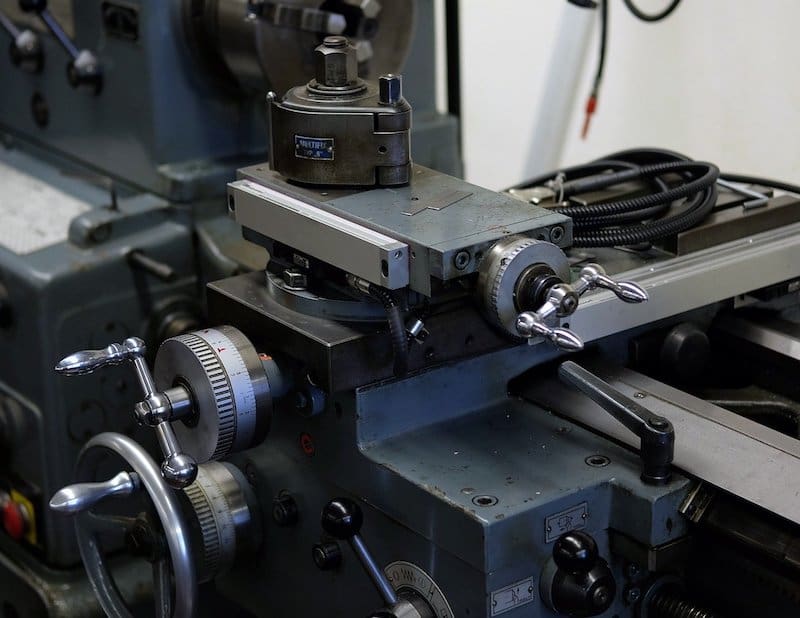
    Are you into DIY? Many people enjoy doing jobs around the home after all! Why not take things further, and start making things yourself? What do we mean by this? Well, what if you had your own lathe? Of course, you know of lathes as industrial machines used for turning wood and sometimes metal, but did you know you can buy a lathe for home use? A small yet capable lathe will easily fit in your garage or workshop, and can be a very useful – let alone enjoyable – machine to own. What can you do with a lathe, and how do you use one? That’s what we’re here to talk about!

    What is a Lathe?

    A lathe is a machine into which you insert a work-piece – lets say a piece of wood in this case – which is turned using either a handle, a foot pedal or by electric power. As it turns, it is cut, or has other operations applied to it, in order to shape it into something specific. Lathes are widely used in industry for turning lengths of wood and metal into usable items, so what can you use one for at home?

    There are many home projects you could use a lathe for. You could fashion flowerpots out of a blocks of wood using a lathe, and they would make excellent presents, or simply produce turned wooden ornaments that look superb. You can make eating utensils such as wooden spoons, or turn lengths of wood so they can be suitable as the legs for furniture. Lathes can be used for making wooden bangles and other items to be worn – in fact, anything made from wood that has been shaped will have been turned on a lathe.

    What do you need to start using a lathe, and how do you use one? Let’s have a closer look.

    What You Need to Get Started

    If you buy a lathe it will come with all the standard equipment that you need to get going, and while we won’t go into detail here, that means the stand, the lathe bed – which is the base – and the spindle. The latter is the part you attach the piece you need to work to. It will also include its power source, and for home use you may be using a manual lathe, one turned by yourself. What it might not come supplied with is a lathe chuck which is a device for holding the work piece in place, and these come in various types. They are not expensive, and it may be advisable to look for a lathe that comes with one supplied.

    Once you have the wood in place on the spindle, the idea is that as it turns, it comes into contact with the cutting tool, which is a blade of sorts. This takes away a layer of wood in a precise manner – as instructed by the user – and can be adjusted for position. Using a lathe takes patience and, as you learn and gain experience, a modicum of skill, and it is a very satisfying feeling to see your turned piece when you take it out of the chuck.

    Lathes are not just for wood, yet we have talked about a wood lathe here as a DIY home use item. They can also be used for turning metal, which requires a lot more patience and – of course – a different type of cutting tool. If you think a lathe might be a good addition to your workshop, why not have a closer look at them now and you should find one to suit your budget.

  • Why You Should Consider Creating a Utility Room

    Why You Should Consider Creating a Utility Room

    We all dream of that perfect extension, and have great fun imagining what that outdoor living space or combined kitchen-diner might bring to our domestic lives. But there’s a more practical addition to the home that you might have overlooked: the utility room.

    Photo by Nathan Van Egmond on Unsplash

    The utility room is among the least glamorous, and most underappreciated, rooms in the modern home. If you don’t have one, then you can be sure that you’re missing out. Let’s take a look at exactly why this might be.

    Photo by Stephanie Harvey on Unsplash

    Hides the Ugliness

    Let’s face it: there are parts of your home that are far more functional than they are great to look at. While designers of washing machines and tumble dryers might have taken great pains to make their products look sleek and visually appealing, the fact is that if you had a choice, you wouldn’t spend much time looking at them. A utility room provides a space to keep these items out of sight, thereby beautifying the rest of your home.

    Allows you to mentally compartmentalise

    When you’re in the utility room, it’s difficult to think about all of the other, more entertaining, distractions in the home. You’ll be totally focussed on the task in hand – whether it’s the washing, the drying, or the ironing. That way, you’ll be able to get it finished more quickly, and you’ll ultimately become more productive than you were previously.

    Photo by Obi Onyeador on Unsplash

    Provides a Space for Your Boiler

    One of the first questions you’ll be asked by any engineer looking to install a boiler for you is: where would you like it to go? In most cases, it will need to be attached to an exterior wall. But even a modern boiler will create quite a lot of noise, and so you’ll want to put it somewhere that isn’t immediately next to a bedroom, or to a living space. Then there’s the practical matter of the thing connecting to the existing pipework.

    Photo by Obi Onyeador on Unsplash

    A utility room solves many of these problems. It’s an obvious location for your boiler, for the beautifying reason we’ve already mentioned, but also because it’ll make servicing and monitoring the device that much easier. If you’re shifting an existing boiler, you can make sure that you’re protected via cover from WarrantyWise.

    Photo by Bernard Hermant on Unsplash

    Frees up Space Elsewhere

    One thing that’s guaranteed to make a home feel more spacious is having all of the storage space consolidated in a single room. If your kitchen cabinets are so rammed with tinned goods that you can scarcely reach the items at the back, then shifting larger items (like sacks of potatoes and big bags of rice) into the utility room will help you to keep everything easily managed. By the same token, household tools, refuse sacks and those little miscellaneous items will have a home once you’re established a utility room. 

    If your home is a little on the cosy side, then this might be an extremely effective measure, but even if it isn’t you’ll be amazed at home much space you free up with just a small utility room.

  • Effective Ways to Make Your Washing Machine Last

    Effective Ways to Make Your Washing Machine Last

    In most households, the washing machine is among the hardest-working appliances. In fact, depending on the size of your family, your washer is liable to tackle multiple loads per day. Given how much most households depend on their washers – and how expensive a good washing machine can be – it’s in your best interest to keep yours in prime condition for as long as possible. Fortunately, this is much easier than many families make it look. Anyone who wants to get the best possible performance out of their washer for the longest possible time should heed the following pointers.

    Avoid Overloading 

    Overloading is among the most common mistakes people make with regard to washing machine maintenance. Frankly, it isn’t hard to see why so many families habitually overload their washers. Since laundry is a chore, most people want to devote as little time to it as possible, and cramming as many clothes into a single load as possible can be an effective way to do that. However, while this may mean less time spent on laundry, it also stands to impact both the functionality of your washer and the overall quality of the wash.

    Heavy loads have a tendency to throw washers off balance, thereby impacting the rhythm and resulting in a lower quality wash. If overloading becomes a regular occurrence, your washer may incur permanent damage, which will have an effect on the quality of every load you wash moving forward. You can nip this problem in the bud by sticking to the load sizes recommended by your washer’s owner’s manual. While washing as many clothes as you possibly can in a single load may be tempting, it’s hardly conducive to extending the life of your washer.   

    Deep Clean Your Washer 

    Every washing machine needs the occasional deep cleaning. This helps ensure that clothes come out their cleanest and prevent the formation of mold, mildew and foul odors. While deep cleaning a washing machine may initially strike you as an arduous undertaking, it’s actually very simple and requires only minimal effort on your part. Just purchase a high-quality washing machine cleaner, pour the recommended amount into your washer and run an empty load. If you’re not interested in using over-the-counter cleaners, there are numerous at-home cleaners that are just as effective and very easy to make.

    Simply leaving your washer door open after completing loads can also prove effective in the fight against mold, mildew and bad smells. Leaving to door or lid open ensures that moisture in the drum and washing machine is able to evaporate, thereby preventing the aforementioned issues from taking hold.  

    Don’t Overuse Detergent 

    It’s easy to see why so many people overuse detergent. After all, is it possible for clothes to be too clean? While this line of thinking is understandable, it can also prove detrimental to the long-term health of your washer. Using more than the recommended amount of detergent not only stands to damage clothing, it can also prove problematic for both water pipes and washing machine motors. 

    Find a Dependable Maintenance Service 

    Even the most reliable washer is bound to encounter the occasional hiccup. As such, it pays to acquaint yourself with a dependable washing machine repair and maintenance service. A seasoned professional will be able to identify and fix an expansive array of both minor and pressing issues. When it comes to washing machine maintenance, it pays to deal with seemingly small problems as early as possible. The longer these issues are allowed to linger, the costlier they’ll ultimately be to repair. So the next time your washer begins acting up, abstain from adopting a “wait and see” approach.

    Depending on the size of your household, your washing machine may be put through its paces on a daily basis. Given the amount of dirty laundry produced by most families, it’s easy to see why washers are often regarded as one of the most vital everyday appliances. However, as is the case with any heavy-duty appliance, washing machines can be very expensive to repair and replace. As such, it behooves cost-conscious households to make their washers last. Fortunately, with the aid of the tips discussed above, this shouldn’t prove difficult.  

  • How to make your own quilt?

    How to make your own quilt?

    Crafting your quilt is always prodigious and overwhelming!

    Image by InsaneArtist from Pixabay

    Quilting is a perfect way to pass your leisure time. With your exquisite creative skills, you can fabricate your own style of quilt and warm your night with blankets, or pass them down to your children and grandchildren as a token of love. Follow the below basic steps to craft a quilt from the start to end and showcase your talent in front of your family and friends.

    Image by VictorianLady from Pixabay
    1. Select a fabric and Quilt pattern

    Choosing a fabric from a thousand materials from the market is a prominent step in making a quilt and it’s one of the most daunting tasks. To make a quilt from 100% cotton fabrics and polyester/ cotton blend materials, pick different materials for the front part of the quilts, the border and 2 primary materials for the quilt designs.

    For first-ever quilt makers, start to make baby quilts and it’s perfect to learn basic techniques. Choose a basic block pattern like half-square triangles, patchwork squares to begin the making of the quilt.  

    Image by pixel1 from Pixabay
    1. Gather cutting and other sewing basics tools

    After choosing patterns and fabrics, you have to buy the basic sewing and quilting tools. Use good quality cutting tools to create professional-looking quilts. Instead of the regular sewing scissors, use rotary cutters which are the easiest and fastest cutting tools.

    Use the transparent extra-long and wide ruler and high-quality cotton thread for quilting. The best thread color for quilting is neutral color threads like tan, gray or white. Gather the things that are useful for sewings such as straight pins, seam ripper, sewing machine, iron box, and safety pins. Get the fluffy material called batting or filling, which is sandwiched between the front and back of the quilt and provides warmer to your quilt.

    1. Cut and sew the patchwork

    Before the cutting process, wash your fabric to avoid shrinkage and rinse any extra dye. To remove wrinkles, press your fabric with iron to make your cutting easier. To get accurate patchwork, carefully use rulers to measure and cut the fabrics with rotators of your preferred patterns. 

    Image by pixel1 from Pixabay

    Lay the patches out and rearrange it according to your design, begin your quilt designs by sewing each piece together. After sewing patchwork, press down with iron to avoid wrinkles. 

    1. Baste the quilt

    Basting is the process of putting together the quilt sandwich and basting layers. Layer your backing fabric, quilt sandwich, and front quilt pattern, then start the bating process. Use spray adhesive or safety to hold all quilt layers together temporally.

    Foto di Pixabay da Pexels
    1. Sew your quilt

    Use the free-motion quilting technique to move your fabric under the needle to make different designs. Simple and popular quilt stitching is straight lines, it is the easiest method of stitching for beginners

    Image by mching49 from Pixabay
    1. Blind the quilt

    After the quilt stitching technique, add binding edges to your quilt. The binding means the border of the fabric that goes around the edges of the quilt and adds a finished look. Cut the fabrics into four trips according to the length of the border and sew it to make a perfect looking quilt.

    You can gift your handmade quilt to your loved ones. Keep practicing and enjoy quilt making, your skills will grow on each quilt. 

  • Five ways to Choose the Right VoIP Service Provider

    Five ways to Choose the Right VoIP Service Provider

    There is no second opinion that a virtual phone number is all you need to enjoy cost-effective, comprehensive, and commendable inbound and outbound business communication.

    Image by Peggy und Marco Lachmann-Anke from Pixabay

    This tool can improve your communication abilities up to an extent that you can clearly witness better ROI, improved customer experiences, and great market presence. 

    Photo by Devin Pickell on Unsplash

    Most of the businesses know that they can benefit in that manner only if they have chosen the right VoIP service providers. Just as having the cloud telephony is important, getting it from the right vendor is equally important. Sadly, this aspect gets ignored all the time and businesses just follow the herd and pick any random vendor suggested by their business partners or promoted by others.

    If you want to make most of your cloud telephony investments, enjoy hassle-free cloud PBX services and streamlined communication then here are points to ponder over when you have to pick the right vendor. 

    Foto di Anthony Shkraba da Pexels
    1. Package pricing 

    No matter what service/product you purchase, the very first thing that you should take into consideration is the cost involved. Make sure that cost should fit into the spending budget. There is no point in buying an over-budget package and using only half of it. 

    Almost 20% of small businesses fail in their first year just because of poor capital management. We don’t want you to belong to that category. Hence, understand the kind of offerings and costs charged by the service provider. 

    Our suggestion to you is to gather quotes from different vendors and compare them keeping your requirements and budget at the center. 

    1. Look for hidden cost 

    So, you are impressed with the lost per minute charges offered by a vendor and decided to go with it. Wait! Have you asked about the hidden costs? Yes, there are various kinds of hidden costs like connection fees, service taxes, annual maintenance, data cost, hardware cost, and so on. 

    Image by ElasticComputeFarm from Pixabay

    All these costs, when added, can turn out a huge number. So, before you take any final decision, try to inquire about any hidden costs involved in the services. 

    1. Features offered 

    One of the key reasons behind the growing popularity of cloud telephony is the features offered by it. These features amplify your communication ability and reduce response time. Without the right set of features, your virtual phone number is nothing but a waste for you. That’s why don’t forget to inquire about the kind of features you are getting in your cloud telephony. 

    Photo by June Heredia on Unsplash

    Features like on-hold music, call forwarding, IVR, reporting & analysis, CRM integration, call transferring, auto-attendant, and welcome greeting have to be included by default. Other than these, some advanced business phone system features like time-based routing, call queuing, and global connect can be availed as per the need.    

    1. The service quality 

    In cloud telephony, calls are transmitted over the internet. Though this type of call transmission is highly beneficial but, due to poor connectivity, quality is compromised sometimes. To avoid this, you must ask for a test run of the services provided on your network. 

    By doing this, you will be able to understand your existing internet infrastructure’s capability of handling the cloud telephony operations. Any of the leading VoIP service providers won’t mind doing it. Along with this, make sure the vendor is offered services as QoS or Quality of Service. Under this protocol, all the quality standards are already maintained and end-users always get the best-of-breed services. 

    1. Data protection 

    In cloud telephony, your data is exposed to the internet world. 

    Activities like cyber frauds, phishing, data theft, virus & Trojan attacks, and malware have made us fearful about exposing our data in the world of the internet. If you fall into its nippers, it can be fatal for you. So, before you make any final decision, you must check the security protocol adapted by the vendor.

    Image by Karin Henseler from Pixabay

    All the data should be highly encrypted and should come with a proper & secure back-up facility. 

    • Diverse services 

    With time, your business requirements can also be changed. Today, you are using a local number; tomorrow you may require an international number. Now, a toll-free number is working fine for you, but you may require a vanity number in future. With the changed requirements, you can’t change your entire communication infrastructure. 

    So, it’s very important that you buy an office phone system from a vendor that is offering you multiple services under one roof. 

    Finding the right service provider 

    Cloud telephony can turn out to be the most advantageous resource that a business can ever ask for only if it is availed from the right VoIP service providers. 

    The cost charged, the features offered, the customer support provided, and the quality of the services offered by the vendor makes a huge difference in your growth and helps you overcome various operational hurdles. So, if you want to grow perpetually then make sure you are choosing the right service provider. 

  • Nagami Design 3D prints protective masks to help fighting COVID-19

    Nagami Design 3D prints protective masks to help fighting COVID-19

    Spanish design brand Nagami Design www.nagami.design, which specialises in robotic 3D printing, is leading an initiative to accelerate the production of personal protection masks to protect local and global medical staff against COVID-19.

    Since its outbreak, the Coronavirus pandemic that is shaking the entire world has registered more than 400.000 cases to date, hitting hardest in China, Italy, the USA, and Spain – in particular Madrid its surrounding provinces such as Castilla y León, where Nagami Design is based.

    Hospitals across the global are running at beyond maximum capacity and their need for safe medical equipment has grown exponentially in the past few days. To speed up the supply of essential items such as masks and life support machines, manufacturers are using 3D printers and other digital manufacturing tools, and are forming a global network where on-demand production can be actioned locally: https://vimeo.com/400534401

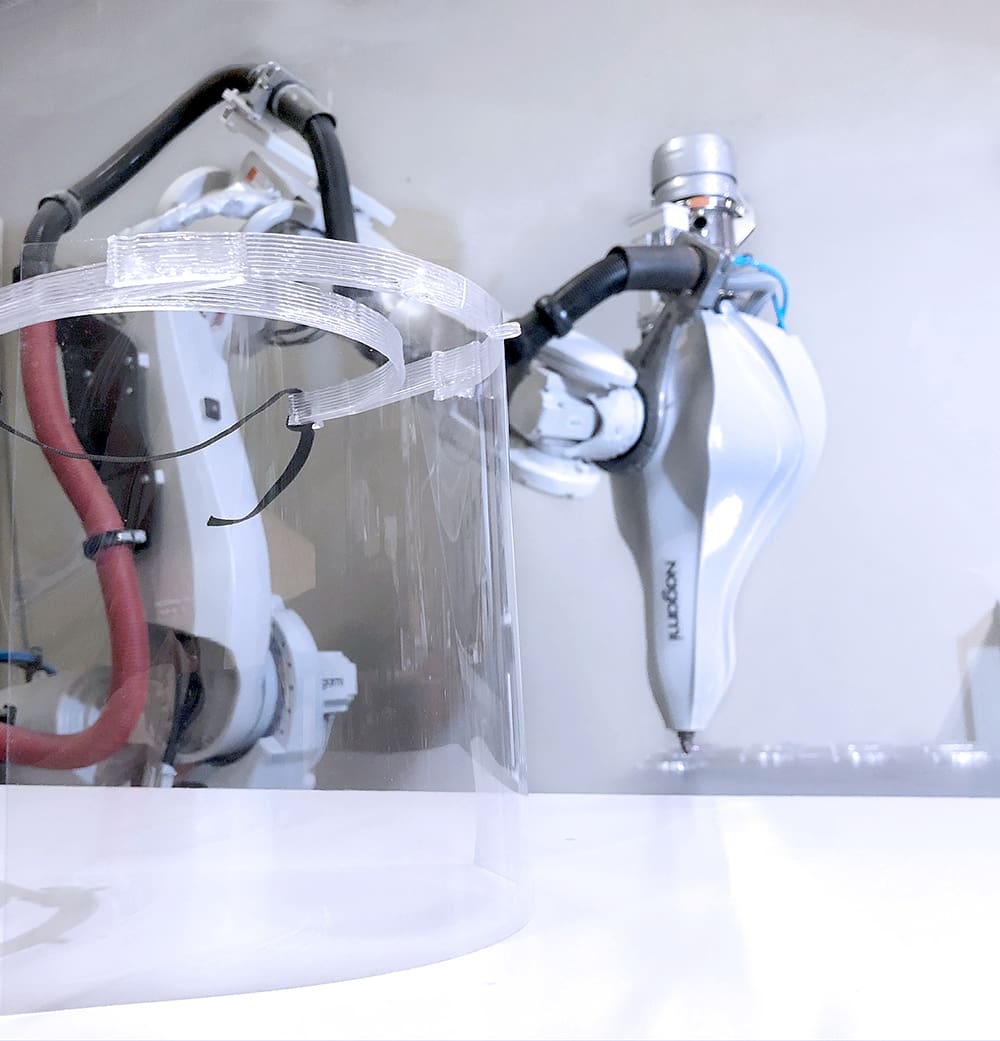
    Nagami Design has put its furniture production on hold to focus exclusively on the production of robotic 3D printed COVID-19 Masks based on the Prusa model (www.prusaprinters.org/prints/25857-prusa-protective-face-shield-rc2), which is open source and can be reproduced by desktop 3D printers. By designing a specific robotic version of the model and thanks to its extrusion technology, Nagami Design is printing around 500 COVID-19 Masks per day — or one mask every five minutes — around seven times faster than a desktop 3D printer, and the company is working around the clock in collaboration with the entire local community.

    “This is by far the most important project we’ve ever worked on, but also one we wish we’d never had to start. Our generation has knowledge and digital tools that have become truly meaningful. There is no product to sell, no market to compete in. This is a challenge for all of us, and we’d like to encourage everyone with tools of any kind to reach out and contribute to helping bring safety back into our world”, assert Manuel Jimenez García, Miki Jimenez García and Ignacio Viguera Ochoa, the founders of Nagami Design.

    Nagami Design is currently focusing its efforts on Hospital Provincial de Ávila, in the city where its factory is located, and is planning to expand this week to other regions such as Madrid and La Rioja. Inquiries are arriving from various other countries, such as the USA, Italy, France, UAE, India, UK, Denmark, and many more.

    The masks are produced through robotic extrusion in a layer-by-layer FDM (fused deposition modelling). The material used is a PETG (Polyethylene Terephthalate Glycol) which is durable, tough, 100% recyclable, and has robust chemical resistance and high-impact strength.

    3D printing has emerged as the ultimate tool for local manufacturing, reducing the production chain to the bare minimum. With COVID-19 emergency, this technology provides the opportunity to efficiently produce affordable tools, which are now essential to help save lives. This is indisputably the most important challenge we have faced as designers and makers, but also the best use of design intuition and technology. affirm Nagami Design’s founders.

    For more information, please contact Nagami Design’s press office, mint LIST (Maria Azzurra Rossi, Giulia Milza): [email protected].

    CREDITS

    Nagami Design Team: Manuel Jiménez García, Miguel Angel Jiménez García, Ignacio Viguera Ochoa, Alejandro Nieto Jiménez, Luis de la Parra Garcia, Patricia San Segundo Galan, India Carazo, Anna Szonyi

    Project Collaborators and sponsors

    3D printing support: CV19_Fab_Avila

    Technology support: ABB

    Rubber Bands sponsor: Merceria Padilla, Merceria Mordissko, Merceria Ysali, Comunidad china abulense

    Transparency Film sponsor: Tecnipapel, Imagen, Libreria letras, Libreria Atenea, App Las Damas, Hiper Office, Politecnica de Avila, Bricoaguilar

    Printing Material sponsor: Politecnica de Ávila, Jose Luis Jimenez

    Plastic Filament: Sicnova

    Packaging: Blueboxes Smart Wash, Esembal

    Tool support: Mecanizados Jimar, Mecanizados Castilla

    Coordination and deliveries: Protección Civil de Ávila