Category: Building Design

Building Design

  • Building your own home: five things that can be forgotten

    Building your own home: five things that can be forgotten

    The job of building your own home can be huge, with hundreds of details that need to be addressed and endless problems to be solved. Though every project is unique, there tends to be certain aspects that people ignore or simply forget about.

    From hiring a One Search locator to help with utility mapping, to taking your furniture into account, there are a number of things you should remember to add to your to-do list.

    Checking Underground

    As we already mentioned, doing a pre-dig inspection of the property is vital. Even so, many people don’t give this task the attention it deserves. Never trust the opinions of your contractors about where cables, pipes or lines “should” be. Call your local “dig safely” line and have a proper assessment done.

    Outside Plugs and Spigots

    There is always so much focus on the interior of the house, that many aspects of the exterior get overlooked. In this case, we’re talking about outside electrical outlets and water taps. People tend to just stick them around the backside of the house (if they are remembered at all) without really thinking about their best placement. If you are planning on putting in a gorgeous flower bed to highlight the front porch, then the hose spigot should probably be closer to the front, for example.

    If you haven’t thought ahead enough to know where these should go, then it would be best to play it safe and have more than one.

    Planning for Mistakes

    Managing the materials in a big job is a project all of its own, and it’s easy to fall into the trap of sticking to your estimates to keep the costs in line. The problem is that no job ever runs that smoothly, and you simply must plan for errors. Mistakes are made all the time, and it’s inevitable that you will need more of some supplies than you expect.

    Taking the approach that you can always buy more when you need it may not be the best idea. That can mean awkward delays if you need to place orders for more materials right as you have a contractor on-site for some part of the job. They may not be willing to wait around. You can also run the risk of finding some particular product is no longer available, which can be a disaster if you have already tiled 3/4 of the kitchen floor and can’t get matching tiles for the rest.  

    Planning for Large Furniture

    A house is not an island, and you need to take your contents into consideration. At least to some degree. Will a large king-size bed fit up the stairs to the bedroom now that the staircase has that 90-degree turn in it? Will your pool table fit through the doorway into the games room? Even if you are not personally going to move into this house, or are planning in buying new furniture anyway, these are still important considerations to consider for the future.

    High-Tech Wiring

    Keep your technology needs in mind when you plan on the wiring. Outlets that have built-in USB slots can make charging devices much easier, and you can add surge-protectors as well to protect your larger computer systems. Integrated Ethernet cabling or whatever you happen to need can make your home office a lot more efficient.

  • Important Things to Check When Renting an Apartment

    Important Things to Check When Renting an Apartment

    When people think about shifting into new apartment, they not just look for a place for safe haven but even a place where they can make unforgettable memories. No doubt then that it is for the apartment to be comfortable and convenient. This doesn’t just mean that it must be an airy structure with good arrangement but even needs to be in an opportune location also. People normally get confused and flustered with some things they notice and cannot make a decision on what they really want while rent an apartment near UC Davis campus. Here are some important tips for you that can help you when renting an apartment.

    Apartment’s Neighborhood

    Confirm the nearby area before renting an apartment. Check for hygiene, safety, neighbours and their behavior, neighbourhood’s noise levels, light, privacy and view from the apartment, etc. Even you need to check if there are any medicine stores, departmental stores near to the apartment. You can discuss with some neighbours and get more information about that area. You can check about your landlord and your apartment with those you talk to.

    Rent

    The U apartments Davis CA can be taken for rent for specific time period. Confirm that you properly read the rental contract and talk about the terms and conditions of the contract with the property-owner in advance. You do not need to be in a condition where you argued one thing and finished up paying a lot higher cost. Even confirm that the period of contract for the rental is somewhat you can commend to and in line with your needs.

    Damages

    One more important thing to make sure before shifting into an apartment is the damages like broken tiles, water leakages, faulty fittings, etc. Confirm that you see if there are any types of damages to the apartment and if there are any; confirm that you notify the landlord in advance. If it is not done, there are high chances that you may later need to pay for the damages. In case the property-owner is informed in advance, the damages can even be repaired before you shift in that apartment.

    Maintenance


    Confirm that the apartment is in good condition. Look how perfectly maintained the apartment, how is the protection systems, in case of emergency is there any type of help is available or not, etc. Checking out these important things before renting an apartment will effectively save you the work out of running around at the last time in case there actually is an urgent situation.

    Utilities

    Confirm the available utilities in the apartment before renting. The utilities can be a series of things from water, gas, cable tv, electricity, internet connection, trash removal and many more. Not the entire apartments offer all of these kinds of things. Few of them may offer you some of the necessary utilities only. Even find out what type of utilities are included in the rent and what will need to be paid for.

  • Why modular classrooms might just be the best long-term investment you make

    Why modular classrooms might just be the best long-term investment you make

    Many educators across America are of the opinion that modular classrooms are an asset to schools that are not only just starting out, but also those looking to expand. There are some obvious reasons why portable classrooms make sense and some you might not have considered yet. What makes modular classrooms a smart option for schools and how are they a good long-term investment? There are 3 primary reasons why modular classrooms might just end up becoming the best long-term investment you make this year. Let’s take a look at these reasons.

    • Modular classrooms are the most accommodating choice

    Modular classrooms can be customized to accommodate any class-size, big or small. This particularly comes in handy with schools that are just starting out. Schools looking to expand can do so with minimum costs incurred. The best part about modular classrooms is that they can either be permanent or flexible, depending on the need. So let’s say your school is undergoing renovations, or certain classrooms need modernization or if it’s undergoing infrastructural changes due to budget-cuts, modular classrooms are the convenient, accommodating choice.

    • Modular classrooms are far more cost-effective in comparison to traditional constructions

    For starters, if you’re already working with a tight budget, modular classrooms definitely make the smarter, cost-effective choice. Modular classrooms are designed to fit your preferences, be it preference of size, customization or even budget. Furthermore, the choice to either rent or buy these modular spaces makes them an easy solution for schools to add new buildings to a school campus on really short notice. Additionally, one thing modular classrooms have going for them is the quick construction time. Modular classrooms are mass produced in warehouses and are then transported to the desired location for assembling. These constructions can be completed over a period of a few short months, as compared to traditional constructions that could take a few years for completion. Construction time and costs are drastically cut down making modular classrooms a convenient choice for schools.

    • Modular classrooms are an environment-friendly friendly

    This shouldn’t come as a surprise if you take construction time and method into consideration. All modular constructions are required to adhere to the federal codes as set down by the U.S. Department of Housing and Urban Development (HUD) and are built in controlled conditions in warehouses. Construction of these buildings can be complete in a matter of a few short months which means reduced construction waste. Companies such as Mobile Modular use recycled materials in the production of all their modular spaces. Furthermore, they make use of self-adhering recycled tiled that emit no volatile organic compounds. And it doesn’t just end there, more and more companies today are building modular spaces using eco-friendly HVAC technology to reduce overall energy consumption.

    We’re living in a world where energy conservation and smart thinking is the need of the hour. Thankfully, modular classrooms help you do just that, contribute towards conserving the environment and reduce waste, all the while having all your construction needs met with ease!

  • Easy Design Tips for Aspiring Architects and Interior Designers

    Easy Design Tips for Aspiring Architects and Interior Designers

    Architecture and interior design may be fields with required education, skills, and talents. Yet even if you have these three necessities, it’s still hard to be accomplished and prominent in the industry. But to help you with the basic and some secrets to success, here are easy tips for you as you aspire to become an architect or an interior designer.

     Easy Design Tips for Aspiring Architects and Interior DesignersAspiringArchitects(image source: pixabay.com)
    1. Establish a special concept.

    Being an architect or an interior designer may all be about skills and presenting an amusing design. But beyond these factors, creating a good story behind the design and construction makes your work more special.

    Establish a special concept by using your clients’ story or background. Portray the life, interests or personality of each client for them to appreciate the recommendations and work you do. Link those knowledge to the choices you’ll provide that will also help you make and accomplish your own portfolio with diversity.

    1. Do innovation.

    Simply incorporating the character of your clients to the design you develop is not enough to satisfy and attract more clients. To become recognized and successful in the field, you should always be open in taking risks.

    Taking risks means thinking and doing innovation. This required practice includes rethinking, redoing and improving the existing designs. You may settle for simplicity especially since minimalism is in the trend but you should do it with style and edge. Remember that to be a good architect and interior designer is also being an inventor. Don’t conform to what have been done but review them and create something even better.

    1. Keep updated.

    Speaking of innovation, you can only innovate if you know the past and latest trends and interests of people. Stay in the know and enlightened from your design gurus and competitors to continue your progression with the designs and modernization you build. Read design publications and research the current needs and wants of the clients.

    But keeping yourself updated also involves being aware and educated on the history of architectural and interior designs, concepts, codes and ethics, and the available technology for your work or field. Through this method, you’ll be able to learn more about design techniques and the trends for you to start reimagining and refining things with an inspiration or idea while following the right policies and procedures.

    1. Have a keen eye for detail.

    If you’re an aspiring architect or interior designer, an attitude you should gain is being organized and detailed. From the creation or drawing of a draft, you should already be detailed and specific with your proposal. There are several computer aided drawing (CAD) software or applications available that offer 3D rendering services to help you develop a presentable blueprint easier. With the use of these applications, the dimensions, sizes, setting and design that you’re proposing can be exactly placed and realized at least virtually.

    Being detailed also involves evaluating everything you’re provided with by the client such as the space and location of your project. If you’re starting from a blank area, you should then take note of all the attributes the area has. But if the project is only for a renovation, focus on what should be changed and improved.

    1. Consider all senses.

    Visuals are important but an impressive place takes more than that. A place is only good if it can serve all senses including the smell, touch and sound in the area. Because of this, you should also consider the type of objects and design materials you’ll be using such as the type of wood for the flooring and roof, paint for the walls and plants or trees around the house or space for design.

    Conclusion

    Provided with all these tips, it can be said that simply allowing your creativity to flow is not enough to be an architecture and interior designer. It also takes to be highly educated with technical knowledge on the principles, standards and policies needed to do the job. A good attitude and practices must be adapted as well. So if you’re serious about achieving a good name in the industry, these are only a few of several other steps and guidelines that should be learned and done.

    Author Bio:

    Dana Ayson is a Design and Fine Arts student from the Philippines. She has a strong sense of adventure and wanderlust. Particularly addicted to DIYs and constantly redesigning her bedroom. Follow her on Google+.

  • How to Pick an Architect

    How to Pick an Architect

    No matter what sort of work you are planning on doing – whether it’s a simple bedroom extension over the garage or you have a glorious spectacle of titanium architectural genius in mind – it is more than likely that you should employ the trained mind of an architect to help you out.

    Sometimes, it can seem like employing an architect might be an expensive waste of your money, especially in these current times of economic difficulties. Other people believe that the process of hiring one might be confusing, and are put off trying it for this reason.

    However, you really should get the help of an architect if you’re planning some big changes to your house, especially if you’re not 100% sure of what you’re doing. In fact, sometimes an architect might even be able to save you money! There are, however, some things you should keep in mind.

    Architecture-firm

    Do You Need an Architect?

    If you are genuinely wondering whether or not you should hire an architect, the answer is almost definitely a yes. Take this as your rule of thumb: if it is anything other than a small project which needs no planning permission whatsoever, you should get an architect onside.

    Why? Well, an architect can aid you in your project in myriads ways, from helping you to understand what materials you need to drawing up blueprints, from filing the planning permission application to overseeing the build to the finish.

    How Do You Choose?

    Before doing anything, ask around your friends and family and find out if any of them recently had any architectural work done – if they have, ask whether they’d recommend them or not. If they would, great! You already have an architect and can go on with the job.

    If they’ve not had anything done, or the architect did an awful job, you should visit a few local architecture firms. A good quality architect shouldn’t be too difficult to find – use www.yell.com or search the internet yourself, or simply browse the phone book and make enquiries!

    If you’re not sure about their accreditation, you can check on the Royal Institute of British Architects (RIBA) website, or ask whether they’re on the ARB (Architects’ Registration Board). To be safe, if you’re suspicious, don’t hire them!

    How Much Will You Pay?

    Normally, an architect’s fee would be based on a fixed percentage of the overall construction costs, but it could also depend upon how much time the architect spent working on the job. You may even be able to secure a lump sum fee from the outset of the job, so speak to the architect beforehand to discuss payment options. The initial meeting shouldn’t cost you a penny, so use it wisely.

    If you want a concrete hourly fee, we’d say somewhere around £80. Of course, this might vary wildly depending on which firm you visit, so the only way to find out for sure is by asking around yourself.

  • Lovely Single Family Residence “Floating” above the Ground

    Lovely Single Family Residence “Floating” above the Ground

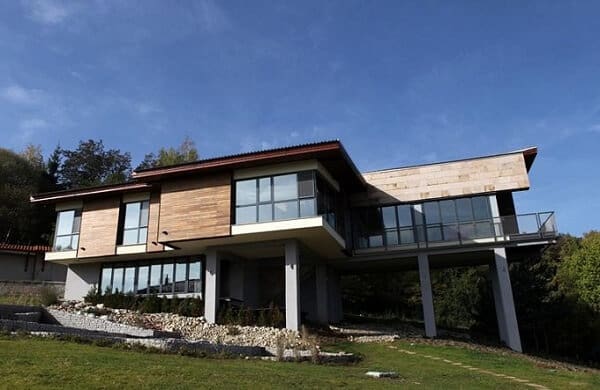
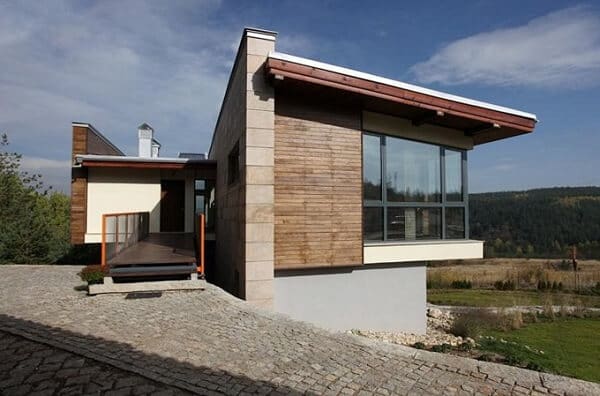
    Located at the foot of the Vitosha Mountain near Sofia, Bulgaria, this 310 sq.m modern house is a residential project designed and projected by Bulgarian architectural company 4DA Ltd, one of the nominated works  by the Bulgarian Architects’ Association to compete for the European Union Prize for Contemporary Architecture Mies van der Rohe Award 2011. The briefing was to build a single family house fully exposed to the maximum amount of sunlight from each and direction, with a mixture of independent renewable energy sources and backup systems, that also have to take advantage of the spectacular vista towards the city.

    Facade-of-the-house

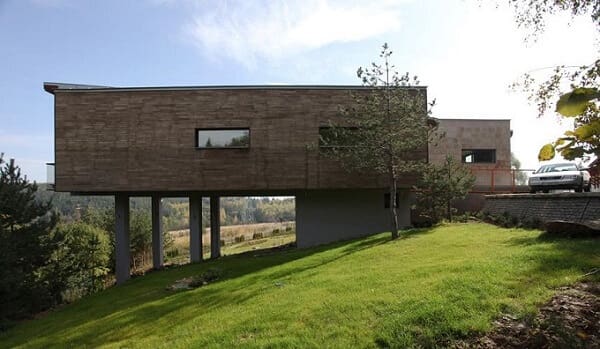
    The project meets both the the residential and recreational owner’s specific needs. Its addresses all the required features, being a welcoming home that opens up to the wonderful views of the surrounding area. Its area is 2780 sq.m and the location is amazing considering, besides the natural landscape, the mountain climate with cooler summer, snowier winters and fresh air all year round. Given the constraints of the existing steep slope of the terrain, the residence is designed to “float” above the ground and the main entrance is made as a bridge and finds on the upper of two levels. At this level are also situated the main rooms of the house (the living room with a separate kitchen and three bedrooms), designed in such a way that an atrium is formed in the middle of it allowing the sunlight into the premises more effectively.

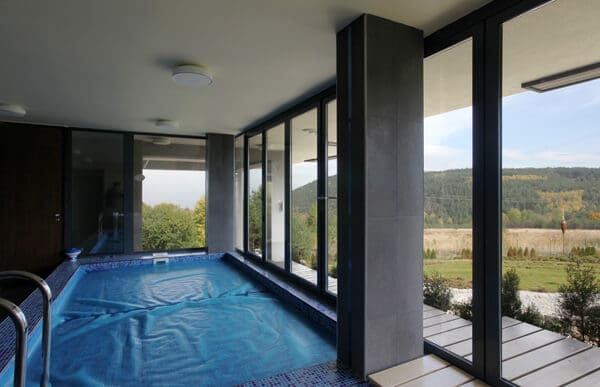
    Partially beneath the upper floor, the ground floor includes a service room along with a small SPA equipped with a counter-current swimming pool. Green design concepts were integrated, including floor to ceiling windows for natural light and ventilation, solar panels installed on the south slope of the roof for optimal sun exposure and a sewerage system that runs through custom designed waste management station equipped with holding tanks so the purified water can be used for irrigation.

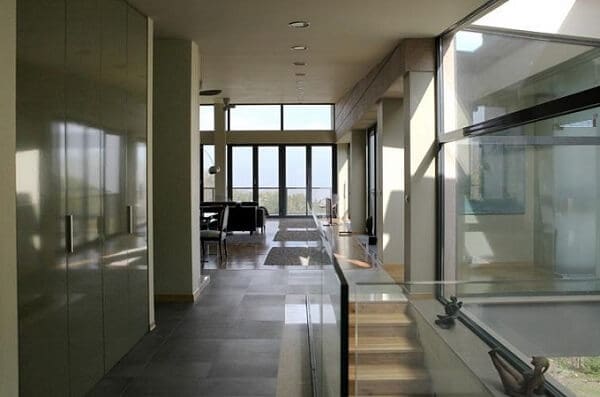
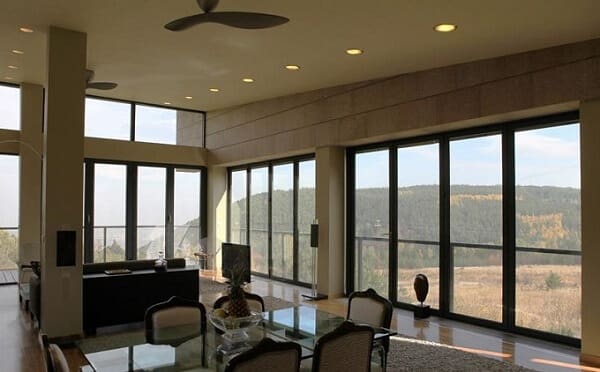
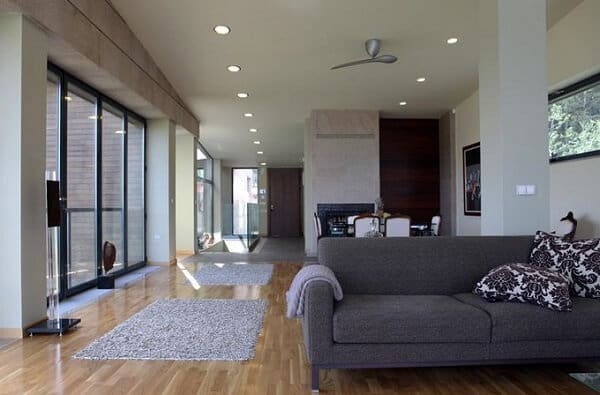
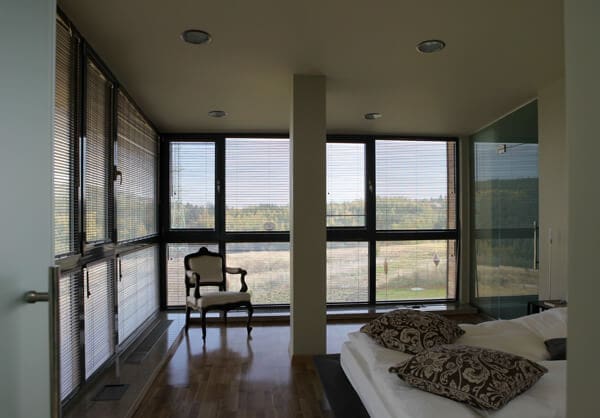
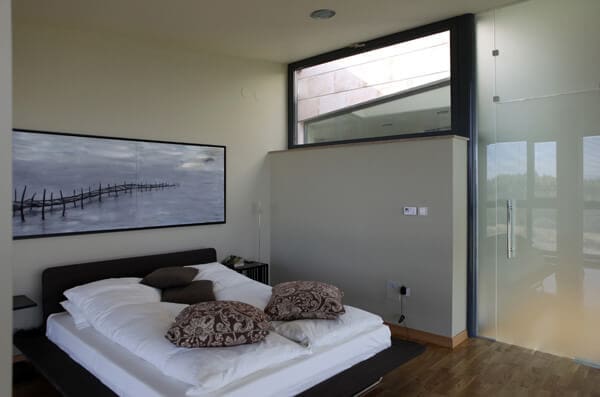
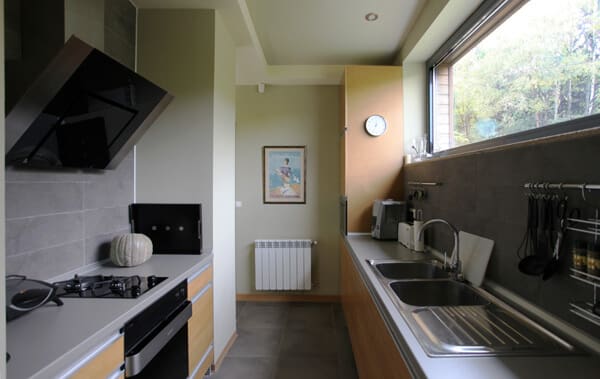
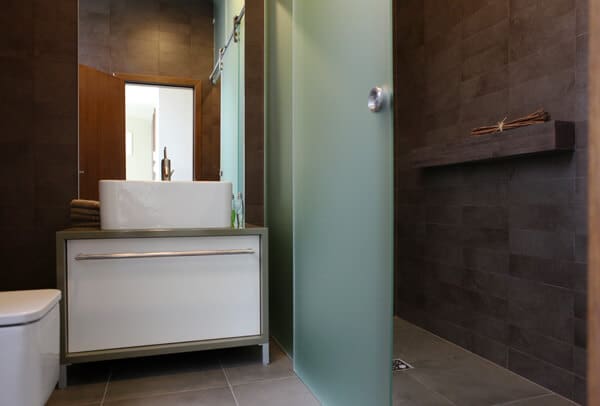
    The interiors features stylish contemporary furniture and neutral color palette that give the entire layout of the house a clean and elegant look. Floor to ceiling windows that partially replace the use of common walls are everywhere allowing the sun to flood each room with warmth and offering a maximum connectivity with the environment. The views captured are splendid, inviting to calm and relaxation. Here are some pictures with the project.

    House-architecture

    House-by-4DALtd

    Open-living-area1

    Contemporary-living-and-dining-room

    Contemporary-furniture

    Contemporary-bedroom

    Minimalist-bed

    Modern-kitchen-design

    Modern-bathroom

    Interior-swimming-pool

    Photos © Valentina Petrova


  • Future Learning Environments for Karolinska Institute in Sweden

    Future Learning Environments for Karolinska Institute in Sweden

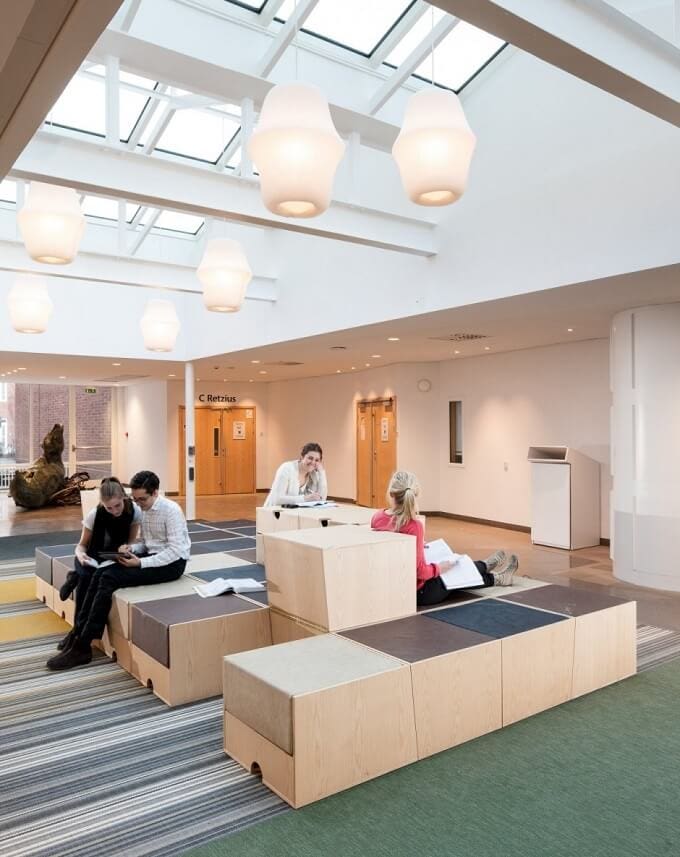
    Have you ever thought how does space space impact on learning? The architecture of the academic centers has traditionally been viewed as a means of satisfying utilitarian functionality, but in fact imposing architectural plans are more than just an accidental arrangement of space and building materials, they reflect distinctive educational assumptions and pedagogical objectives,  a particular approach to learning, or a certain educational philosophy.

    Institute-building

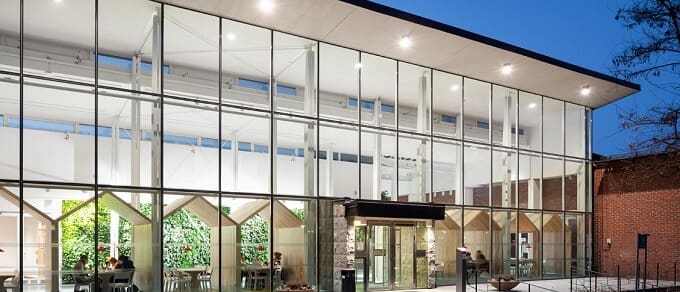
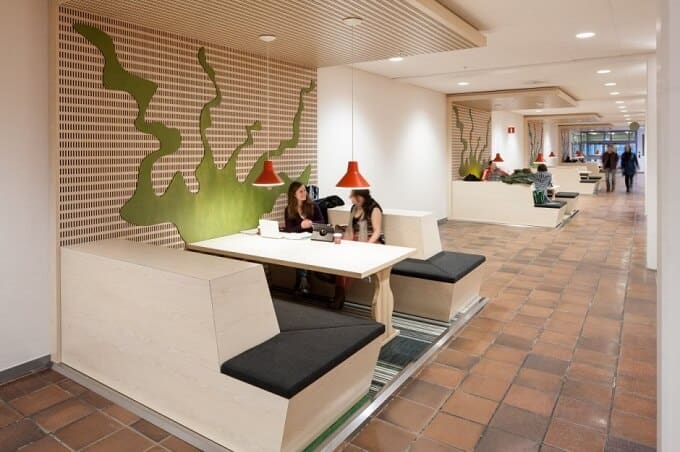
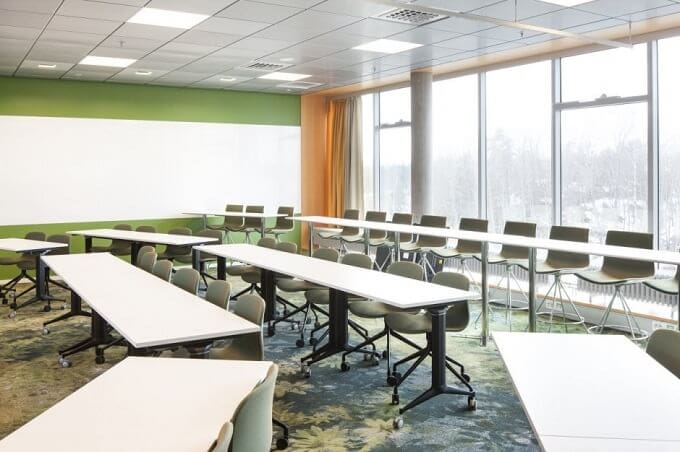
    Students in the  21st century have other learning demands than those of 100 years ago had, and space designs should be adapted according to nowadays education objectives such as creativity, collaboration and student centered learning. Grounded on research, learning and higher education,  “Future Learning Environments” is a project started in 2009 by Stockholm County Council and Karolinska Institute in Sweden, where the main objective was to improve and expand teaching environments for its students. They commissioned the interior design studio Tengbom to develop the interiors of the project and also interpret Karolinska Institute’s design manual on the Formal Learning Environments.

    Institute-interior

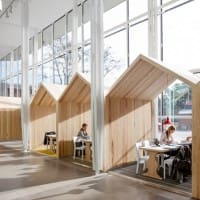
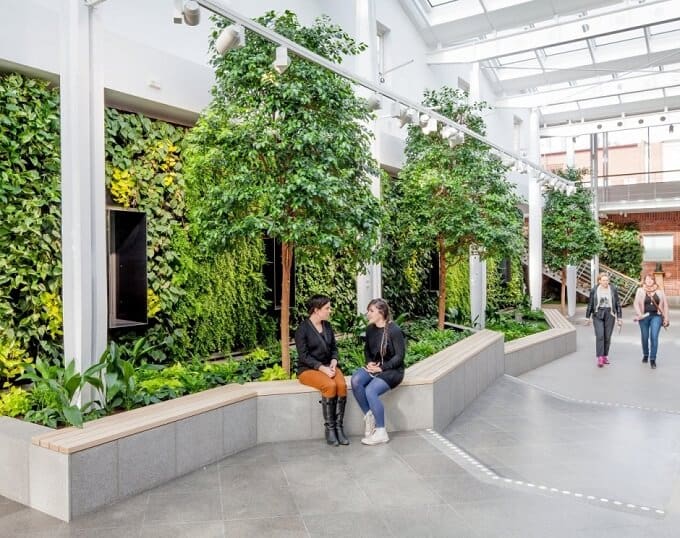
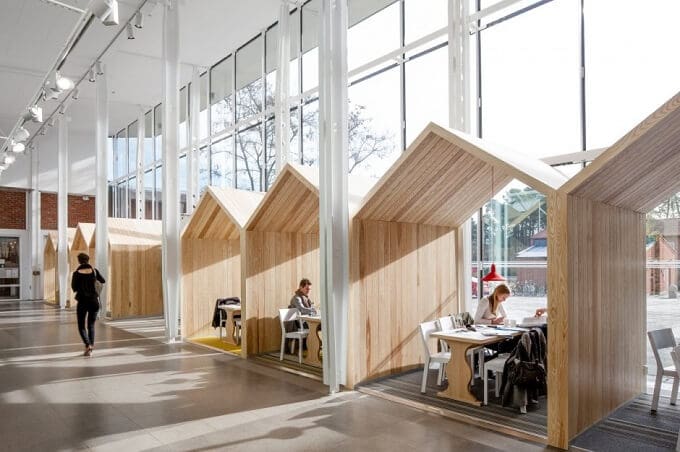
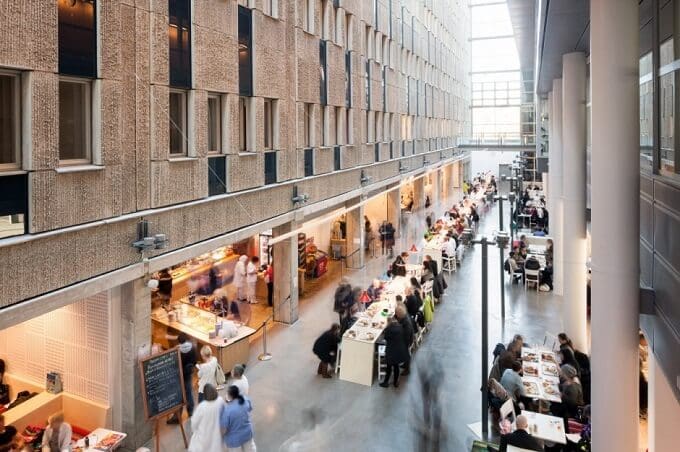
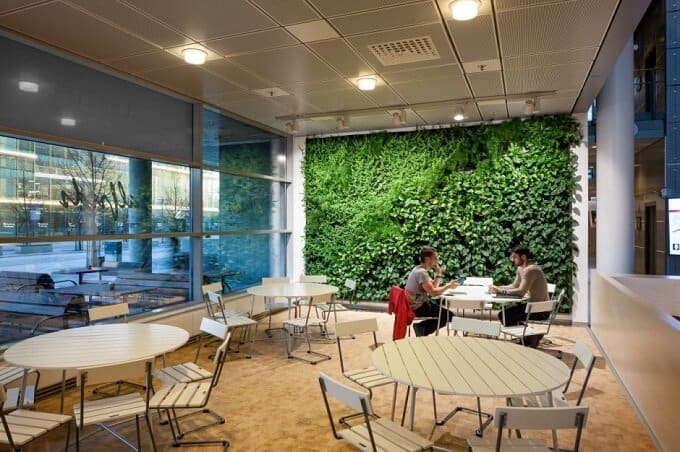
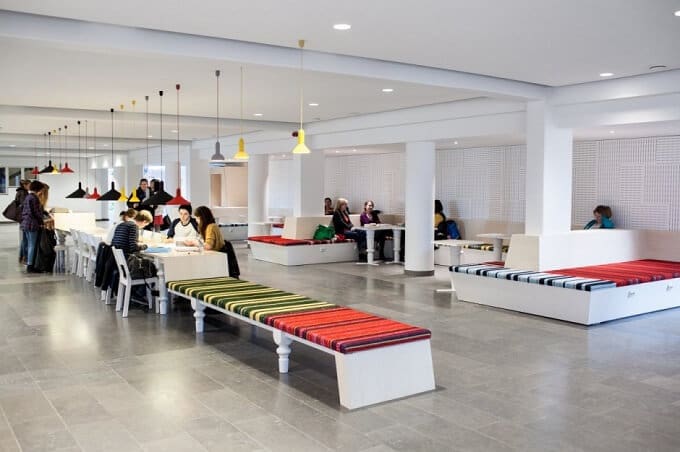
    Choosing the “home” as a metaphor, Tengbom proposed to create a “Home away from Home,” a second home for the informal zones at the Karolinska Institute in Solna. These facilities are located primarily next to the lecture halls and were initially “leftover” and unused areas. The “Home away from Home” concept meant a natural meeting place, a social arena, where students, teachers and researchers can meet and get together, exchange thoughts and ideas, socialize, learn from one another-peer learning.

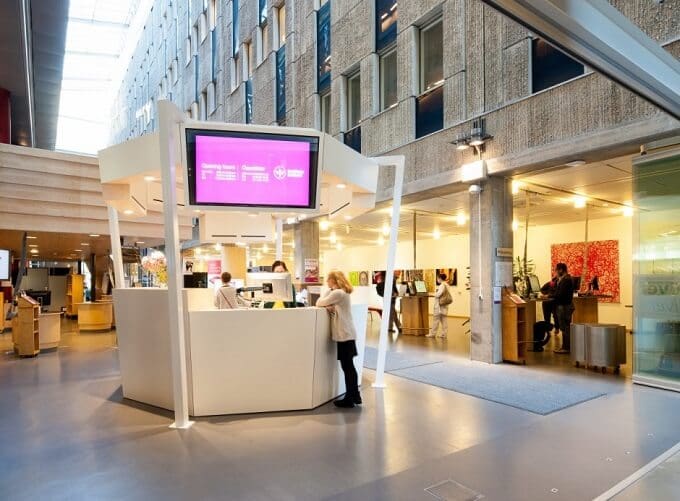
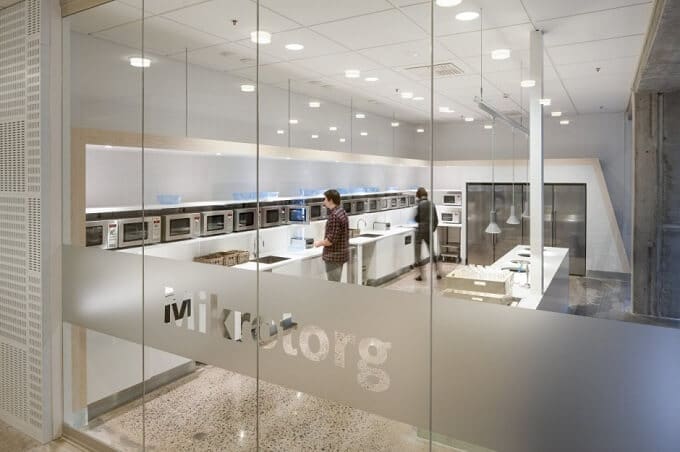
    A meeting place with areas for meals, communal activity, open squares, space in the room and reading areas for concentrated study, but also with a central information point. The end result is a compact and cosy environment, which creates a positive, productive hustle and bustle. This variety was designed to help people from different cultures to get on well together and feel at home. Through this new interior design for Karolinska Institute at Solna , its brand is strengthened into a place accessible to everyone. Here are some images to understand better the design concept.

    Places-for-learning

    Places-for-eating

    Karolinska-Institute

    Places-for-socializing

    Spaces-to-socialize

    Karolinska- Institute-Sweden

    Kitchen-area

    Learning-areas

    Area-for-interaction

    Photos © Sten Jansin


    Project details:

    Client: The Karolinska Institute
    Year of Commission: 2011-2012
    Interior Design and style: Tengbom
    City: Solna
  • Outstanding Hotel Design to be Built in Lima, in front of the Pacific Ocean

    Outstanding Hotel Design to be Built in Lima, in front of the Pacific Ocean

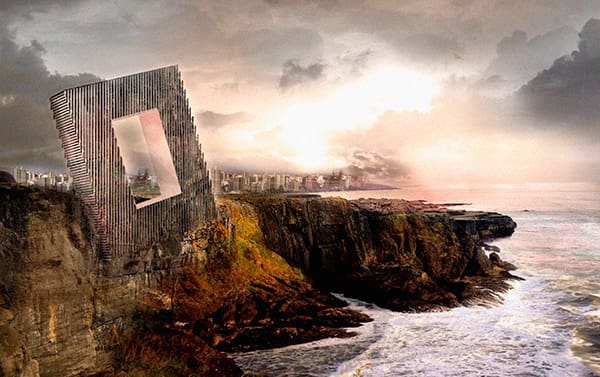
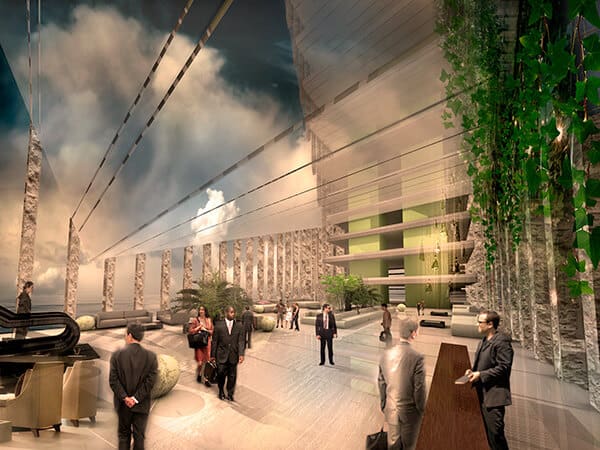
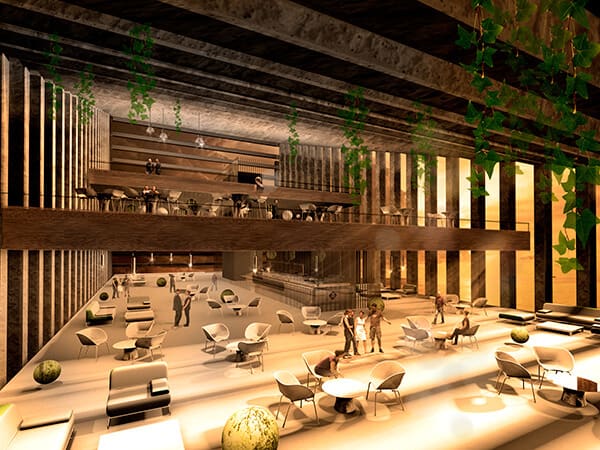
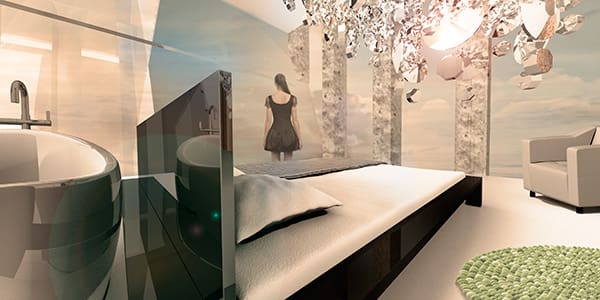
    Remarkable building silhouette, amazing location and exquisite amenities, this is the picture of the “Unbalanced Hotel” which will be built by OOIIO Architecture for a private client, an Latin American promoter, who wants to create an innovative and worldwide recognizable building with accessible investment. We’re sure that after you’ll see the following pictures, you’ll be as amazed as we by the design concept of this hotel.

    Unbalanced-Hotel-in-Lima

    Suggestive entitled “Unbalanced Hotel”, the building’s unique  and futuristic shape hanging on a cliff seems more a fantasy, then something to be built in reality. The project is really special we think because it has the ability for catching instantly everyone’s attention and will surely become a landmark for those 8 million inhabitants of Lima, and the whole Peru. It’s for sure a project to be watched. The hotel will be built in a very quiet area outside the city centre of Lima, Peru. In fact, besides its peculiar shape, it will overlook astonishing views of Pacific Ocean, because it will be placed right in the proximity of the Andes to the Pacific Ocean.

    The interesting yet not very friendly topography won’t be a barrier to building the Unbalanced Hotel, on the contrary, the architects took advantage of this fact in designing its surprising and original look. They’ll opt for a frame-building instead of a traditional one in order not to obstruct the magnificent views and landscape, and the observer will appreciate both the surroundings and the building itself. Hanging on a cliff with a relative height, the Unbalanced Hotel is really something you don’t see everyday, the perfect “frame” to attract people and activities into it. It will feature 125 rooms, but it will be given a great attention to conference rooms, restaurants, meeting rooms, exhibitions, etc.

    Unbalanced-Hotel-back-view

    Unbalanced-Hotel-interiors

    Unbalanced-Hotel-restaurants

    Unbalanced-Hotel-rooms

    Photos © OOIIO Architecture


    Project details:

    Status: Design Development.
    Location: Lima, Peru.
    Area: 16.070 m2.
    Design: OOIIO Architecture.
    Team: Joaquín Millán Villamuelas, Lourdes Martinez Nieto, Cristina Vicario del Cojo, Patricia Moreno Blasco.
    Client: Private.