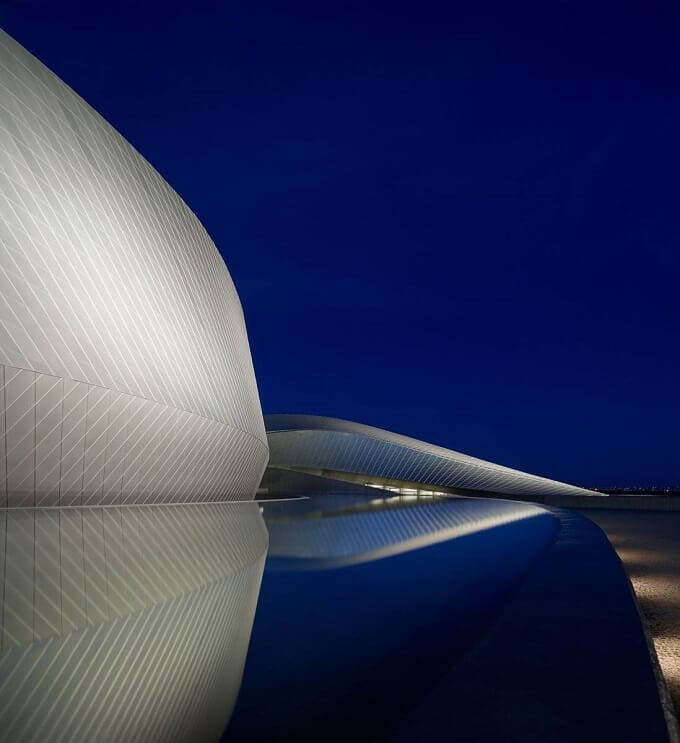
Category: Building Design

Building Design

  • New Spiritual Retreat on the Campus of Stanford University, USA

    New Spiritual Retreat on the Campus of Stanford University, USA

    A refuge to go and take a break from the intensity of daily life and be fulfilled, this is the purpose that Windhover Contemplative Center in California, United States will have. Although its construction has been on the Stanford University’s agenda for about 15 years, only this year the project  received the final approval in June for both design approval and site, and it’s scheduled to be finished in spring 2014.
    Windhover- Contemplative-Center-01

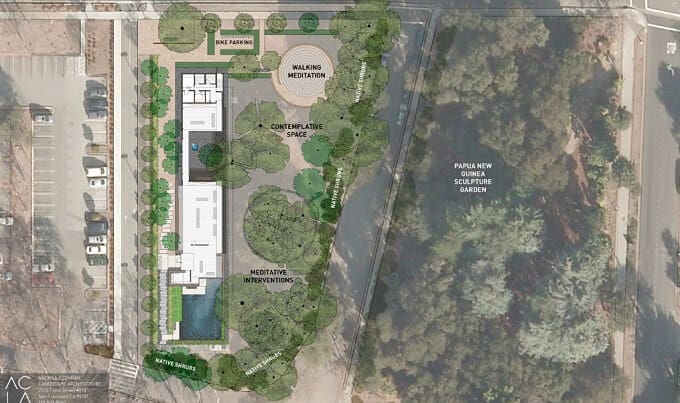
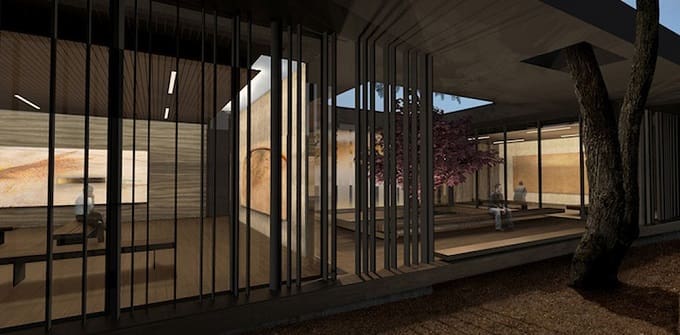
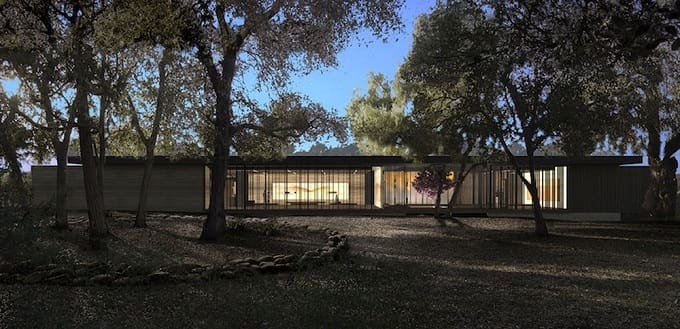
    Adjacent to the Papua New Guinea Sculpture Garden at the corner of Santa Teresa Street and Lomita Mall, the new Windhover Contemplative Center will be a spiritual retreat, a one-storey, 4,000 sq ft  space that will inspire and promote personal renaissance where university’s community (staff members, students and faculty) will be able to reflect on themselves quietly in the daytime.

    The chapel-like center will be built in the front of Roble Hall, neighboring to a natural oak grove, where now is a parking lot. The idea of making such a place belongs to the late Nathan Oliveira, an internationally acclaimed artist who was Stanford art Professor for three decades. The art Professor wanted that people have a center to re-establish balance and find tranquility while viewing his large paintings inspired by birds in flight.  San Francisco-based firm Aidlin Darling Design teamed up with Andrea Cochran Landscape Architecture to design this $4.2 million center showcasing a building enclosed in glass in order to let people contemplate the Oliveira’s paintings even from outside anytime.
    Windhover- Contemplative-Center-interior

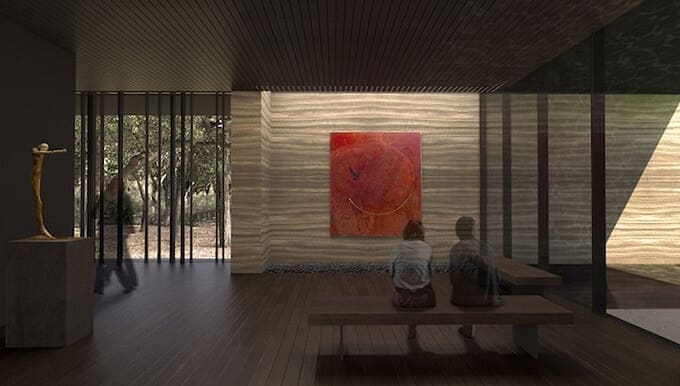
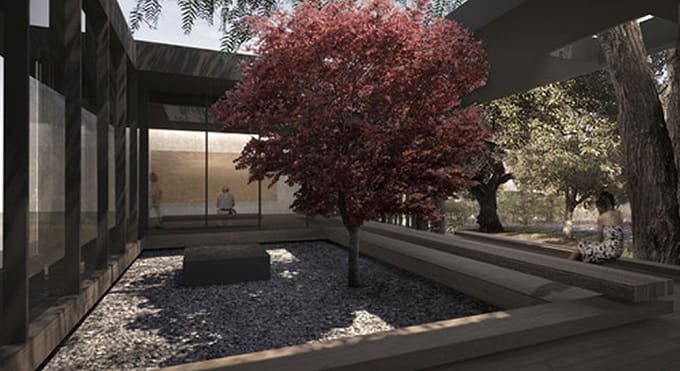
    Before entering the refuge, there’s a long, private garden sheltered from its surroundings by a line of tall bamboo. The exterior landscaping will have garden areas, fountains and reflection pool which will ensure ambient sound as an aid for meditation. Inside the building, there are three rooms where one can see  five large paintings belonging as we said to Professor Nathan Oliveira. Rammed earth walls, wood surfaces, benches and cushions along with the outdoor design guarantee the visitor a great visually, olifactorily, tactily and acoustically experience. What do you think about this place?
    Windhover- Contemplative-Center-02

    Windhover- Contemplative-Center-exterior

    Windhover- Contemplative-Center-03

    Photos © Aidlin Darling Design
  • Striking Building for the New Chiller Plant for Ohio State University Completed in June

    Striking Building for the New Chiller Plant for Ohio State University Completed in June

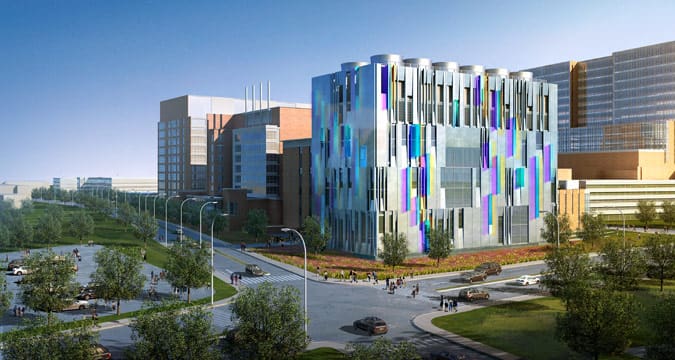
    As part of the University’s Framework Plan for the Cannon Drive Corridor, Ohio State University South Campus Central Chiller Plant was recently completed by US practice Ross Barney Architects . Situated at the edge of campus, on a proeminent site, in a surface parking lot west of the College of Pharmacy, the new $72.5 m building now serves as an iconic anchor at an important pathway to the main campus.

    Chiller-Plant-in-Ohio

    Designed to provide the new Medical Center tower the medical center and all associated buildings in the campus zone “ice” water to be used for an efficient system of air conditioning in the treatment rooms, Ohio State University South Campus Central Chiller Plant is a long-term, active and sustainable solution for chilled water production and distribution.

    The architects’ approach consisted of a modular design with auxiliary constituents of a critical equipment, that will be redundant and durable, being able to support 12,500 tons of chilled water for the medical center customers  in operating rooms, intensive care, etc. In order to improve reliability and have chilled water for critical operations during power outages, they establish emergency power with the chiller plant. Initially with a capacity of 15,000 tons, the chillers for the plant has now a total chilled water capacity of 30,000 tons. They were set in phases and are remotely supervised with powerful industrial control systems. The design team received overall guidance from Champlin Architecture for this project.

    Chiller-Plant-in-US

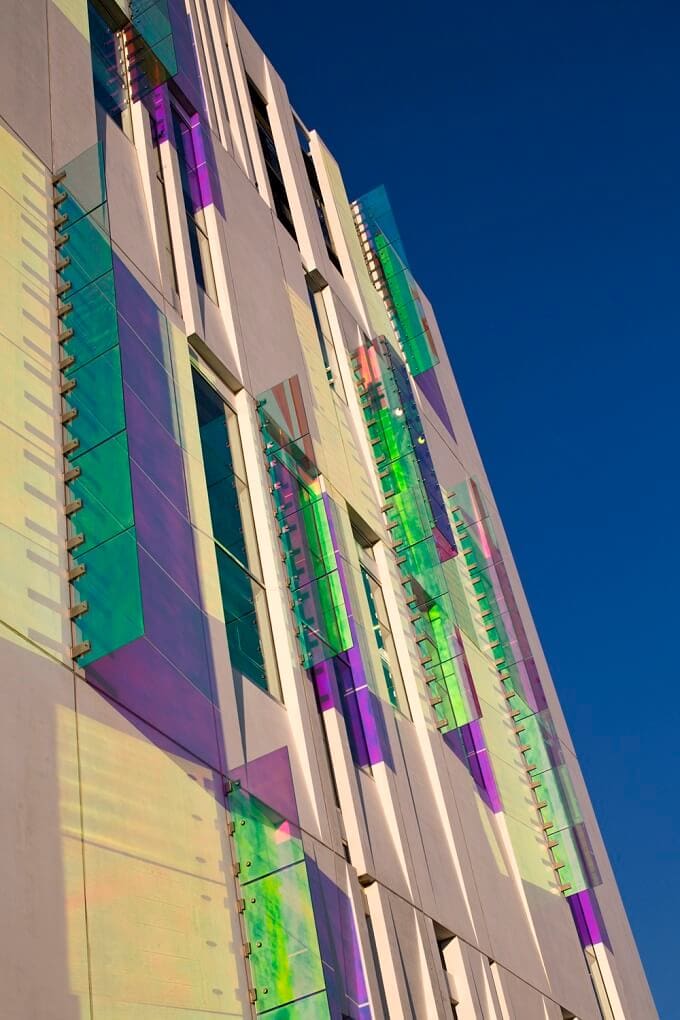
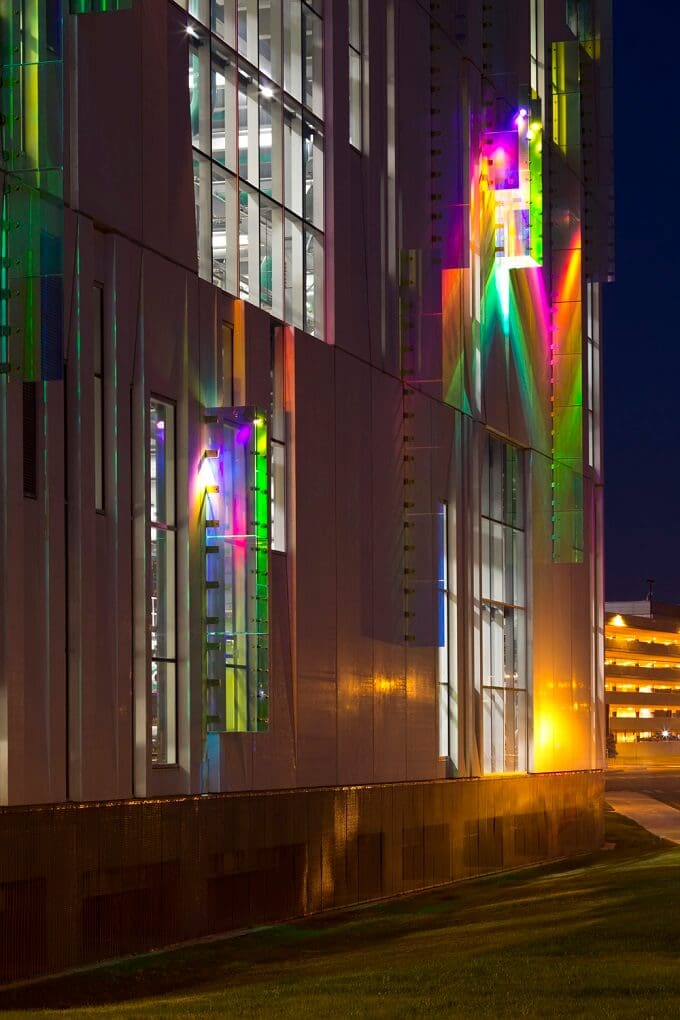
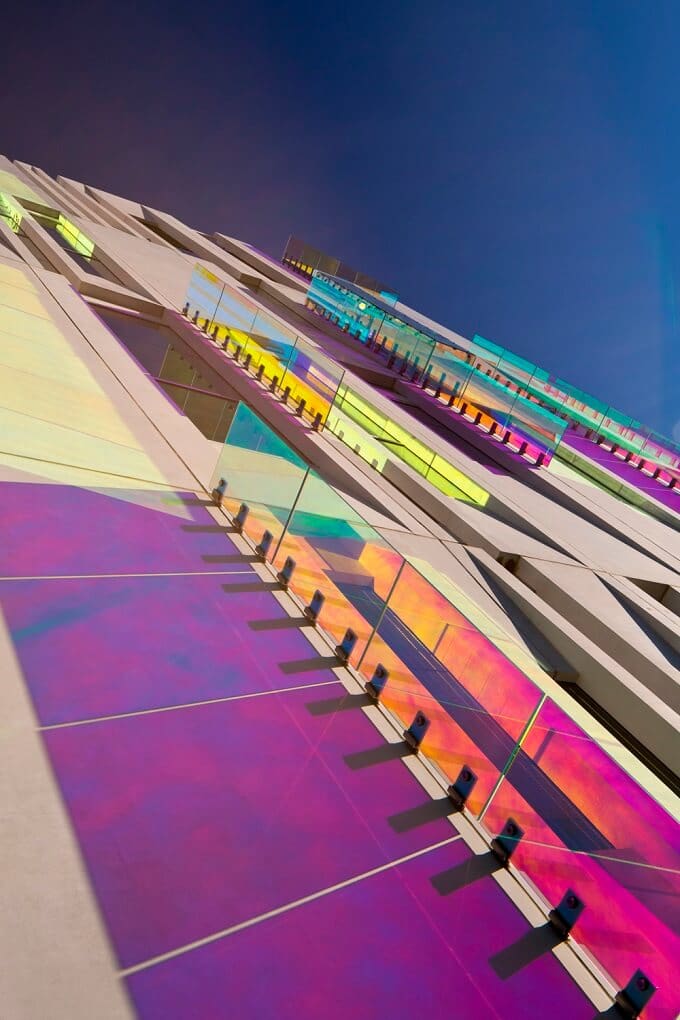
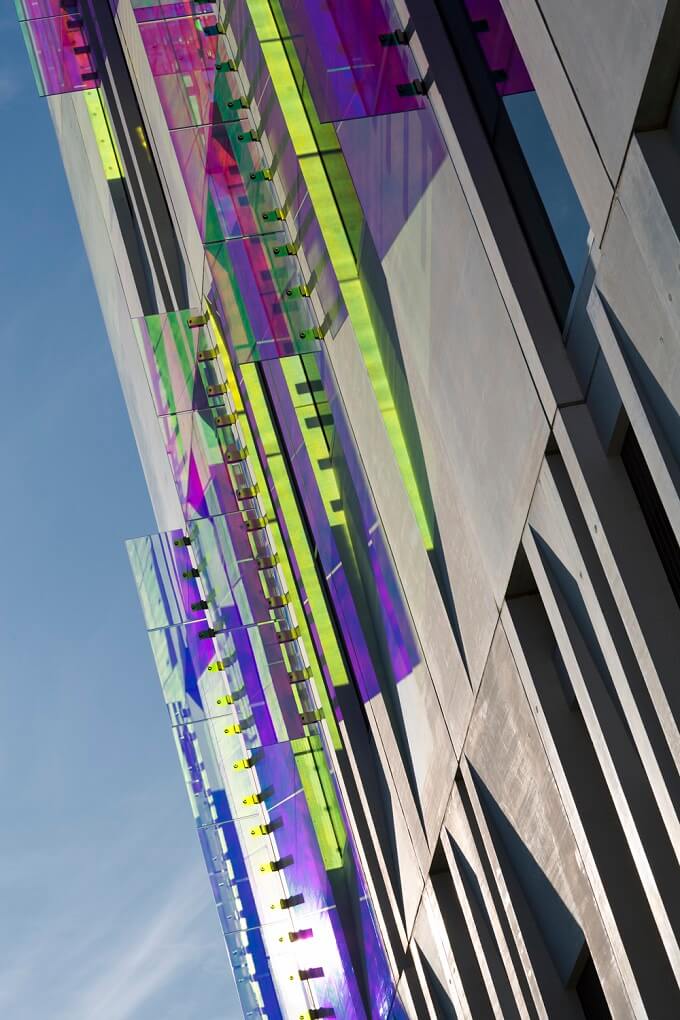
    This 95,737-square-foot building has a striking, artistic appearance that draws attention right away due to the beautiful kaleidoscope of colors showased during daytime. The 10-story South Campus Central Chiller plant is comprised of all galvanized structural steel to face fluctuating external and internal extreme temperatures in an urban Midwest environment. Its architecture shell is the most unique feature of the Chiller Plant: the structure consists of concrete panels with a high sheen polish finish and dichoric glass fins that create the illusion of motion as the reflected light changes colors with the movement of the sun.

    Building-facade-during-daytime

    Large glass-covered openings frame views of the chiller equipment, helping to spot the building’ purpose. The design incorporates sustainable principals and will be integrated with the planning of LEED certification of other District facilities, therefore the structure will be intact and corrosion-free in the years to come.

    Landscaping around the building is the solution to revitalize the greenscape along the nearby Olentangy River. A “pond” of prairie grass will be planted, also plaza and landform seating area will be created in order to engage the pedestrian traffic.

    Artistic-glass-incorporated

    Building-facade-detail
    Plant-at-night

    Kaleidoscope -of-colour-on-the building

    Photos © Brad Feinknopf, Ross Barney Architects


    Project details:

    Client: The Ohio State University
    Location: Columbus, OH, United States
    Design Architect: Ross Barney Architects
    Architect of Record: Champlin Architecture
    Local Architect: Lupton Rausch
    Program: 30,000 tons chilled water
    Costs: $72.5 million
    Status: Complete 2013

    South Campus Central Chiller Plant


  • Newly Opened Student Centre in US Showcases Innovative and Energy Efficient Design

    Newly Opened Student Centre in US Showcases Innovative and Energy Efficient Design

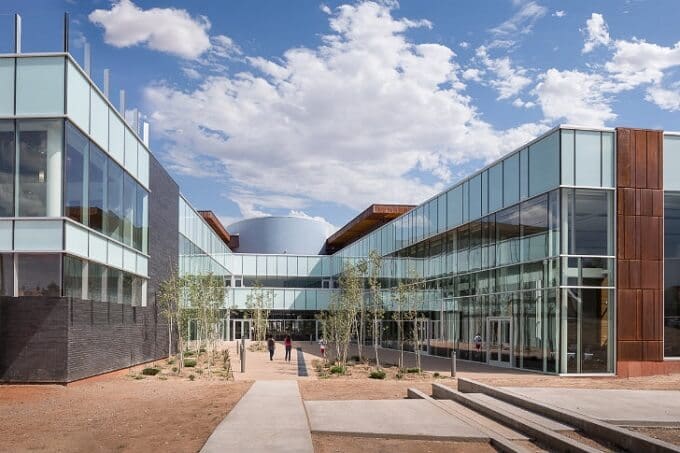
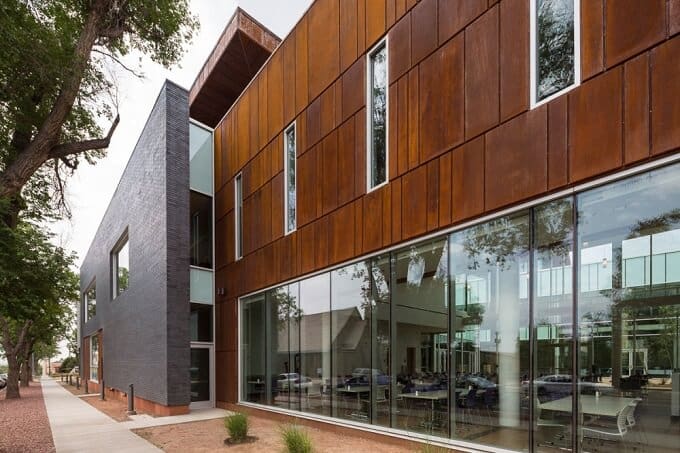
    Diamond Schmitt Architects teamed up with Studio Southwest Architects to design a new project in Las Vegas, Nevada, United States. It’s about the Student Centre at the New Mexico Highlands University, which was started in 2010 and it was recently completed, this summer.  The three-story building is situated at an important crossroads on the edge of the campus, being a central meeting point that links the campus with the rest of the city of Las Vegas. Envisioned to meet students’ needs of having a much larger space, NMHU Student Centre showcases a modern, highly innovative and energy efficient design both inside and outside.

    NMHU-Student-Centre-Diamond-Schmidt-Architects

    With the goal to obtain LEED Gold certification for this Student Centre, Diamond Schmitt Architects designed a building that make us of innovative technologies and passive design to respond to the capricious desert climate defined by  hot summers, monsoons, cooler nights and even cold winters, but also to minimize energy consumption and maximize the free energy potential of the sun.

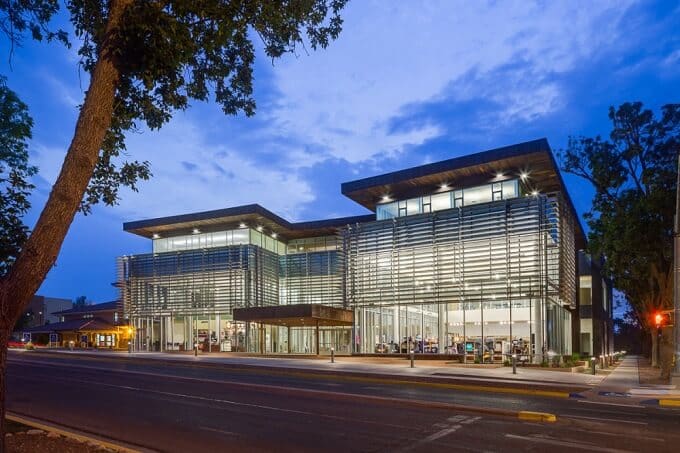
    The most important feature is that the building benefits from, is the motorized sun traking louver system on the south side used to shade the interiors from direct sunlight during the day and opens during the night. This system is said to be one of the first of its kind in North America. The louvers enable sun shading to the grade levels without compromising view and transparency. In this way, the system drastically reduces mechanical loads. To help its mechanical energy system, besides the louvers, the building also features green roofs and geothermal well field.

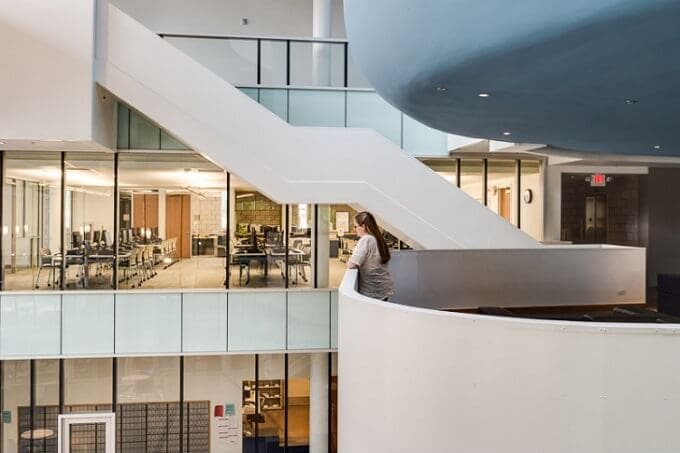
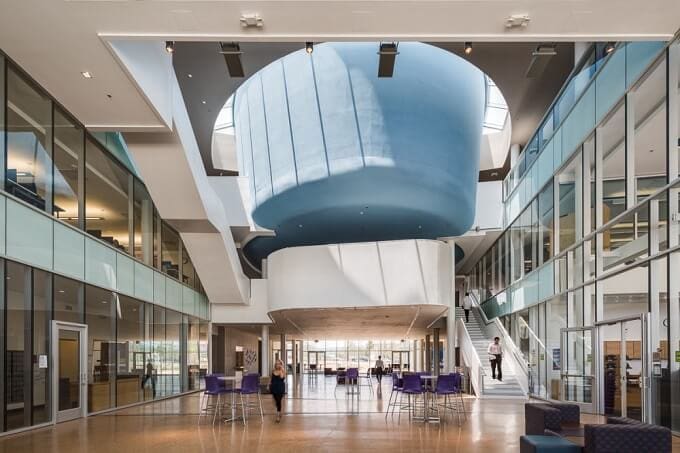
    Inside the NMHU Student Centre, there are various zones (study, meeting, programatic areas), versatile ballroom and conference facility, bookstore, theatre, café, post office and cafeteria that opens onto a sheltered courtyard. A computer lab, student offices, meeting rooms, dining rooms and a dramatic student governance chamber are to be found on the upper floors. The second floor has a bridge that is linked with the adjacent library.

    NMHU-Student-Centre-Diamond-Schmidt-Architects-7
    Student-Centre-at-night
    Student-Centre-exterior
    Student-Centre-interior-detail
    Student-Centre-Interiors
    Photos © Robert Reck
  • Simple Geometric Shape Montpellier Pavilion by Robin Juzon Architect

    Simple Geometric Shape Montpellier Pavilion by Robin Juzon Architect

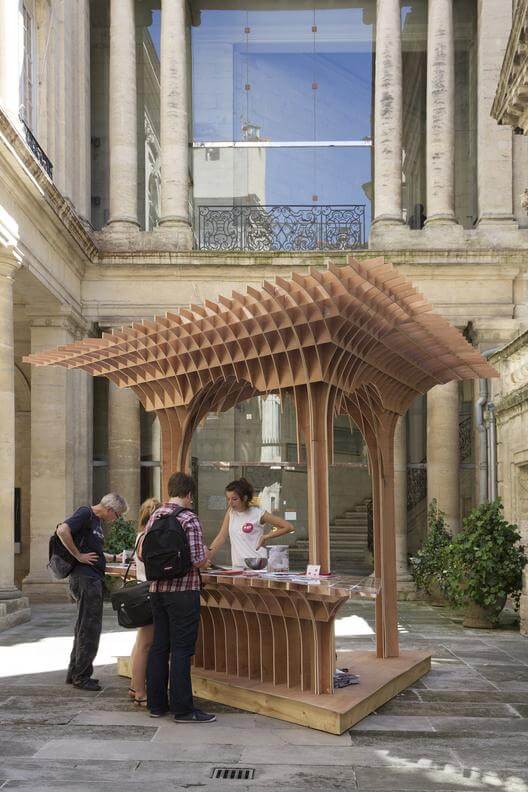
    The Robin Juzon Architecture is a well-known agency, where the engineer with brilliant ideas creates design and architecture, focusing on every detail project for obtaining the best value of performance and quality design. The perfect example of their remarkable work is the two pavilions that were strategically assembled in the main points of the city, so that it can be seen by all the people who are passing by. The first pavilion was located in the courtyard of the CCIT Montpellier Hotel Saint Come, and the second pavilion was installed in front of the Tourism office in the La Grande Motte.

    Pavilion-by-Robin Juzon

    They succeed because of their free autonomy in making projects with a taste for simplicity but well done projects architecture design.

    Robin Juzon Architecture participated in 2007 in the CIMBETON contest, where the engineering was awarded.

    The pavilion’s influence was from Japan travels, where the designer discovered the refinement and minimalist design by using raw materials.

    The Montpellier pavilion reflects simple geometric shapes, and it is made of massive and opaque wood panels with a design that reflect thin sheets of wood embedded into each others, which creates the opaque and transparent design depending on the view angle. The visitors can see and admire this sublime architecture, with simple natural geometric shape, that can be turned into a beautiful garden with colored flowers, or can be used as an information point, a reception from where people can enjoy sitting and relaxing.

    Japanese-inspired-Pavillion

    Pavillion-with-Japanese-inspiration

    Pavilion-in-Montpellier

    Pavilion-in-Montpellier-01

    Photos © Paul Kozlowski

  • 71 Housing Service with Amazing Enlarge Ventilation Systems designed by Farko in Dalfsen

    71 Housing Service with Amazing Enlarge Ventilation Systems designed by Farko in Dalfsen

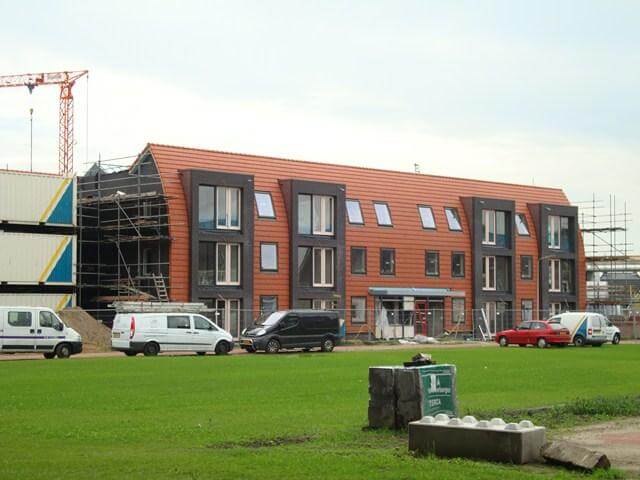
    The leading company Vechthorst ordered to the Farko architecture design to build in Dalfsen a number of 71 homes with are going to be used for housing service. For those who don’t know Dalfsen, it is a town in the Salland region of the Dutch province of Overijssel, Netherlands an extremely likeable and quiet place, with lovely people and fantastic food.

    homes-in-dalfsen1

    The most notable featuring of the Vechthorst housing service is reflected in the amazing enlarge ventilation systems idea by using high windows, actually the biggest size Fakro windows 131×50 cm, which can offer to those who will live in, a spacious and healthy environment with a fresh air and splendid view.

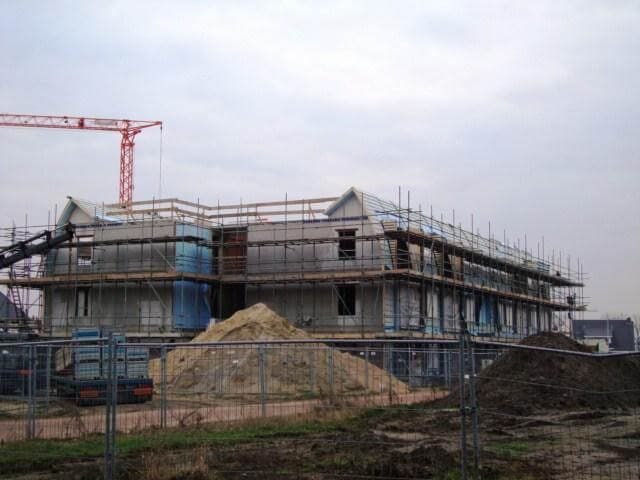
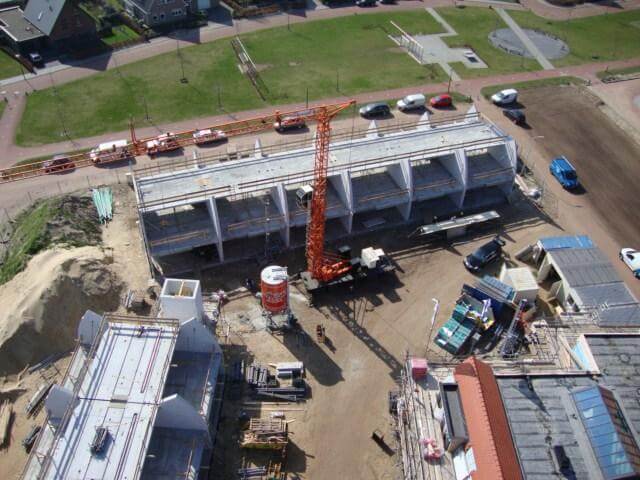
    The Farko windows are equipped with FSC wood and also with Police safety, and of course these are standard for all the windows of the buildings. Also as you can see from the photos, this construction will have an exceptional and unique design, and for archiving such a spectacular architecture, the Van Dijk Construction first built a mock-up in, fitted remarkably well in the joinery. This way all the masonry and details plans combined together will reflect a surprising and brilliant design.

    So, the Dalfsen aria will become a richer and beautiful place due to the 71 homes designed by Farko.

    homes-in-dalfsen-up-side homes-in-dalfsen

    homes-in-dalfsen-construction homes-in-dalfsen-up-down


  • Northern Europe’s Largest Aquarium Opened in Copenhagen

    Northern Europe’s Largest Aquarium Opened in Copenhagen

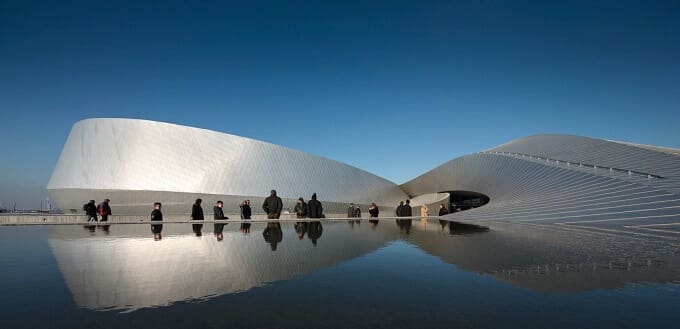
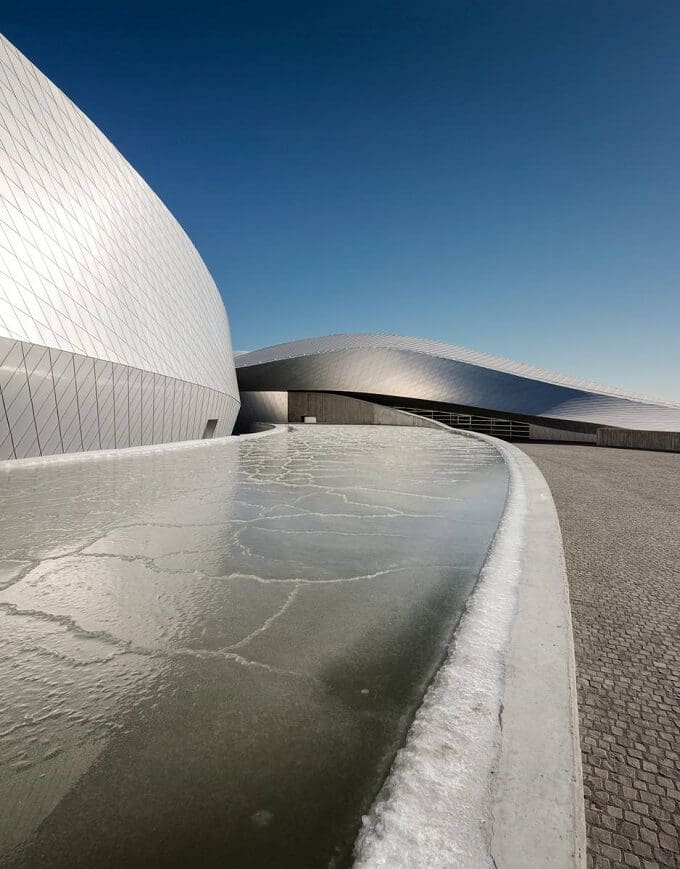
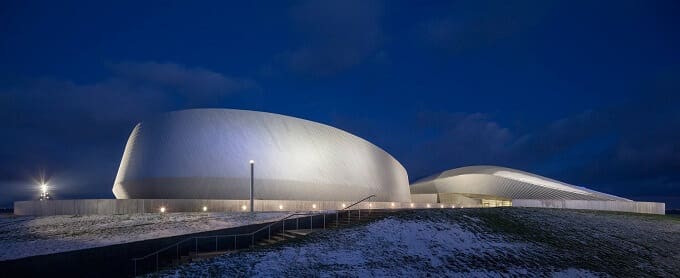
    The Northern Europe’s largest aquarium is the recently opened “Blue Planet”, an oustanding and magical place that offers visitors a truly unique experience of the world beneath the surface of the sea. With an impressive structure  that extends over an area of almost 100,000 square feet, Denmark’s new National Aquarium is located on an elevated headland towards the sea, north of Kastrup Harbor, Copenhagen.

    The-Blue- Planet-exterior

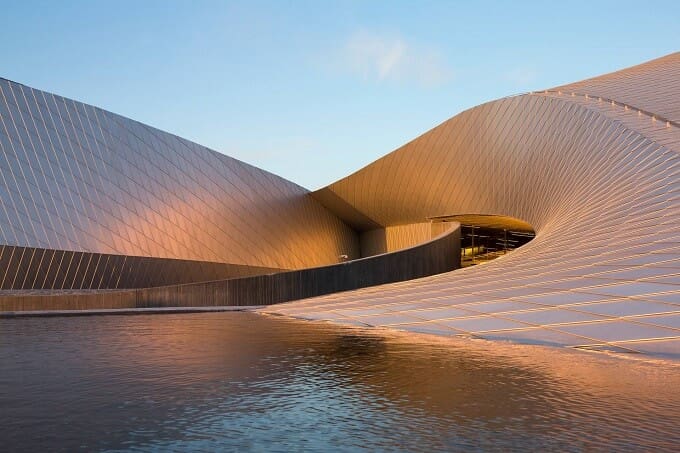
    Designed by renowned architecture firm 3XN, The Blue Planet’s distinctive building took inspiration from the whirl streams of the sea, shoals of fish, and swirling starlings turning the sky black. The construction is visualized as a whirlpool which introduce visitors the fascinating world of the sea creatures.

    Seen from above, it looks like a giant conch shell, that connects the sea with the landscape, being plain visible for travellers arriving by plane at the nearby Copenhagen Airport. In this way, the building’s organic form with outdoor ponds tells the story of what awaits you inside. Its expression modifies as the natural surrounding changes due to its facade covered with small diamond-shaped aluminum plates, known as shingles.

    The-Blue- Planet-architecture

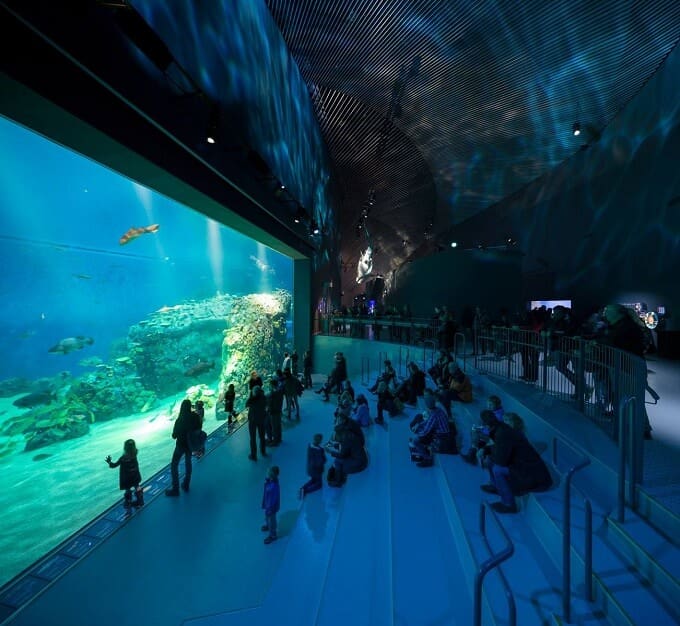
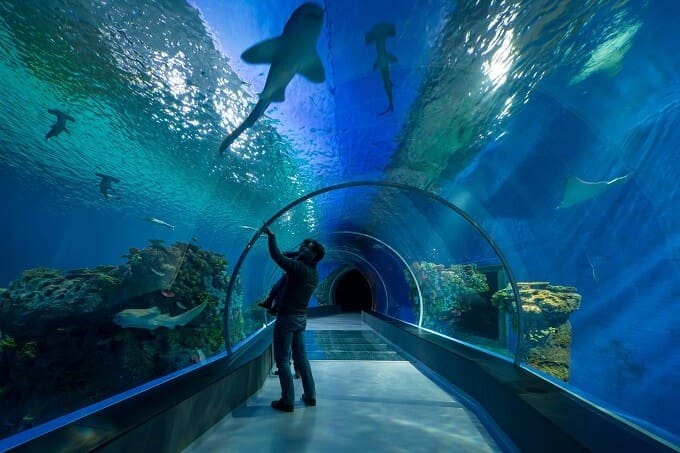
    By following the first and longest of the whirlpool’s whirls, visitors get to the entrance. Inside the building, another world is revealing to you, a fabulous world seen by most of us only from TV documentaries. Sharks, dwarf crocodiles and sea lions, The Blue Planet is home to more than 450 different species and 20,000 fish and aquatic creatures. Exhibits of Africa’s lakes, the Amazon river and coral reefs are definitely something worth seen and visitors can explore them in the circular foyer which is the central point of navigation in the aquarium. Multiple routes are whriled in the slightly curved sequence of rooms, enabling flexible movement between exhibitions. A few meters away, there is a restaurant with a splendid view of the sea.

    The new aquarium was estimated to attract nearly 700,000 visitors each year.

    The-Blue-Planet-Aquarium

    The-Blue-Planet-Denmark

    Building-design-aquarium

    The-Blue- Planet-at-night

    The-Blue- Planet-at-night-01

    Photos © Adam Mørk


    Project details:

    Location: Kastrup, Denmark
    Prizes: The prize ‘In-Situ Prisen 2013’ awarded by the Danish concrete association, Dansk Beton
    Client: The Blue Planet Building Foundation (Realdania, Knud Højgaards Fond, Tårnby Kommune)
    Function: Aquarium
    Floor area: 9,700 m2
    Completion year: 2013
    Architect: 3XN Architects
    Partners: Engineering: Moe & Brødsgaard // Exhibition Design: Kvorning Kommunikation og Design // Landscape Architect: Henrik Jørgensen LANDSKAB // Aquarium Techniques: AAT


    The Blue Planet New Aquarium in Copenhagen


  • Rocco Design Architects Completed W Guangzhou Hotel & Residences in China

    Rocco Design Architects Completed W Guangzhou Hotel & Residences in China

    Over the past few years, the southern China’s largest city, Guangzhou, is an ever-growing city, becoming one of the most remarkable architectural places in China. This fabulous 106,500 sq complex consisting of hotel and residences is the latest addition to the new Central Business District of Guangzhou. Situated along the central axis of the district, with the main boulevard on one side and the residential building (part of the same urban block) on the other side, the development acts as an interface between its two different site contexts: the inner landscaped courtyard and the busy, public Xian Cun Road.

    Hotel-building-in-China

    This imposing and glossy addition to the city showcases a distinctive architecture with an expressively rich composition that goes beyond the daily conventional. Two buildings with different functions ( a 317-room boutique hotel and 160 serviced apartments) are architecturally unified into one amazing monolithic block.  According to architects, the two sections are run by the same management, being practically mixed with the same overarching aesthetic keeping in the same time through subtle design features their contrasting elements.

    The taller part of the building feature apartment units designed for permanent residents. To have the best living conditions, the residences  block is directed towards  the quieter south-eastern Xian Cun Road junction, while those who stay in the hotel rooms can see the Xian Cun Road / Jin Sui Road roundabout with a much livelier energy. A matrix of vertical glass fins delicately defines the dark granite and glass cladding of the  private residential part consisting of apartments and guest rooms.

    Besides its functional role, to accomodate  bars, restaurants and spa, which means the public part, the transparent glazed boxes that visually spring out from the dark background of the building have also the role to animate the western façade. A gracious, welcoming, and surprising ambience is created through large vertical opening designed in the centre of the development. This feature connects both visually and spatially its tranquil inner park with the public street. It acts as a “Window to The City” allowing free passages of air, light, and different views. Spectacular appearance at night!

    Imposing-hotel-building

    Gorgeous-hotel-interior

    Gorgeous-hotel-interior-01

    W-Guangzhou-diagramPhotos © Liky Lam


    Project details:

    Architect: Rocco Design Architects Ltd
    Local Architect: Guangzhou Foreview Architect Institute
    Interior Designer: Yabu Pushelberg, Glyph, AFSO, A.N.D., DesignWilkes
    Structural Engineer: RBS Archectural Engineering Design Consultant Co Ltd
    M&E Engineer: J. Roger Preston Ltd
    Hotel Operator: Starwood Asia Pacific Hotels & Resorts Pte. Ltd
    Location: Guangzhou, China
    Year: 2006-2013
    Client: KWG Property Holding Limited
    GFA: 106,000 sq m


  • Zaha Hadid – World Architecture Exhibition Opens Today in Denmark

    Zaha Hadid – World Architecture Exhibition Opens Today in Denmark

    An exhibition experience beyond the ordinary is expecting you this summer at the Danish Architecture Centre, Denmark, between 29 June and 29 September 2013. The international star architect Zaha Hadid is having her first solo show in Scandinavia, which opens today at 6 pm. Celebrating her work, the exhibition “Zaha Hadid-World Architecture” is an invitation to discover the architecture’s universe through the eyes of one of the most sought after, admired and discussed architects in the world.

    Zaha-Hadid-architect

    Photo © Steve Double

    “Everything needs to be perfected, everything!” are the words of the first female architect who has received the prestigious Pritzker Architecture Prize – ‘architecture’s Nobel Prize’ in 2004. Zaha Hadid name is synonym with revolutionary experimentation and research, design innovation and implementation of stat-of-the-art technologies into a sensual and expressive form language, which today have become iconic for the vision of the future global architecture.

    Challenging the boundaries of architecture for more than 30 years, the Iraqi-British architect Zaha Hadid is one of the most sought after, admired and discussed architects in the world. Projects like the MAXXI: National Museum of 21st Century Art in Rome (2010), Guangzhou Opera House (2010), the BMW Central Building in Leipzig (2005), the Aquatics Centre for the London 2012 Olympic Games (2012), The Changsha Meixihu International Culture & Arts Centre  are excellent examples of her vision for fluid, dynamic and complex architectural structures.

    Supported by Realdania and Kvadrat, Zaha Hadid Architects teamed up with the Danish Architecture Centre and developed this extraordinary exhibition where visitors have the opportunity to experiment a world of amazing towers, floating shells, selected projects and design objects, which take shape in a bordless advanced digital and geometric universe. Moreover, an interactive installation that changes in form and expression according to visitors’ movements in space will certainly be something worth seen.

    There will be a pre-opening talk followed by the opening reception between 6-8 pm. For more other details, check out the Danish Architecture Centre’s website.