Category: Building Design

Building Design

  • Zaha Hadid Architects to Build a New Public Transport System in Riyadh, Saudi Arabia

    Zaha Hadid Architects to Build a New Public Transport System in Riyadh, Saudi Arabia

    Saudi Arabia’s biggest city, the capital Riyadh, has experienced a rapid growth since 1990, its population is now more than 5  million residents, two times higher than before, so current transport system maybe faces this situation with difficulty because at the end of 2012 the government announced to build a metro system in Riyadh and constituted a new Public Transport Commission in order to set out public transport services and private investment in the sector.  The project is progressing and ArRiyadh Development Authority revealed already details of the city’s public transport plans and said that the new King Abdullah Financial District (KAFD) Metro Station in Riyadh will be designed by the renowned and awarded Zaha Hadid Architects studio.
    Futuristic-architecture-in-Riyadh

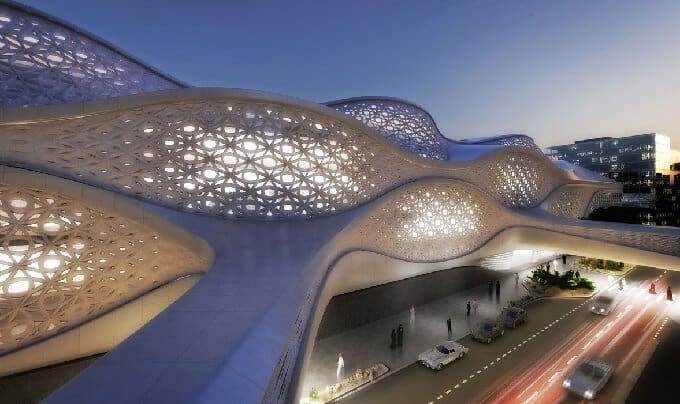
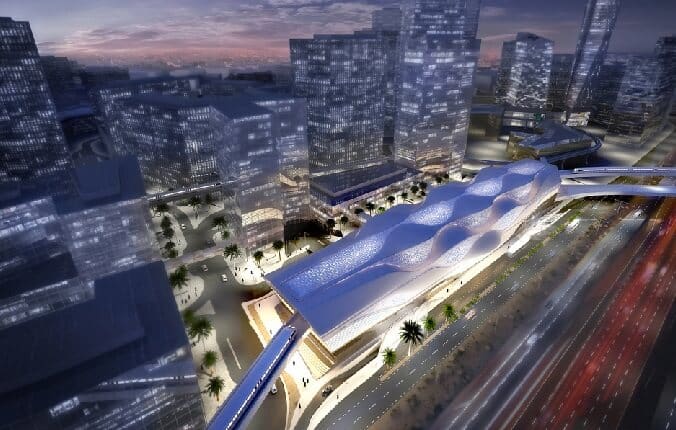
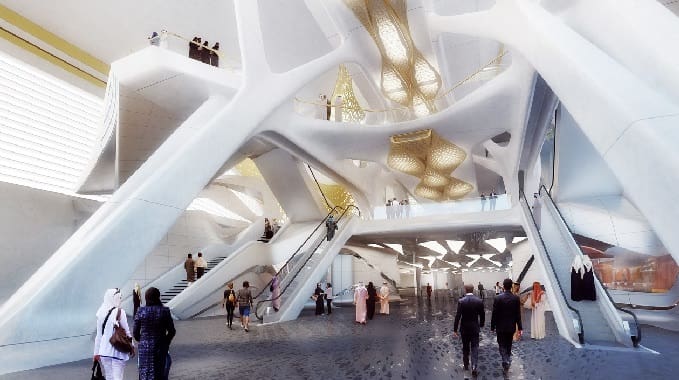
    Planned to be completed in four years, the ambitious project will be not only an intermediate place perceived through quick transitions which serves to city’s fast-growing population, but a powerful landmark, a dynamic and multi-functional public space highly anchored in the urban context of the financial district and responding to the Riyadh’s future vision. Six metro platforms featuring over four public floors and two levels of underground car parking will be of vital importance for the future public transport there.

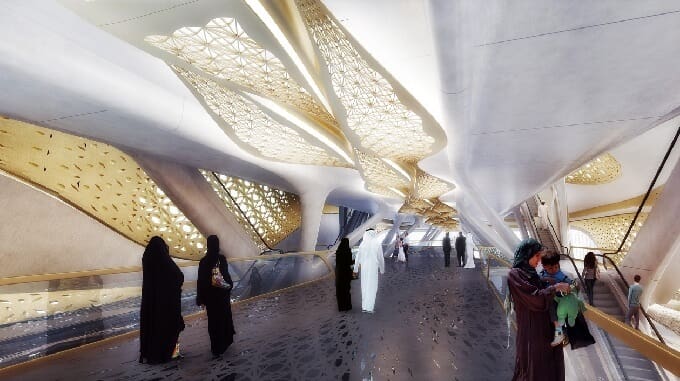
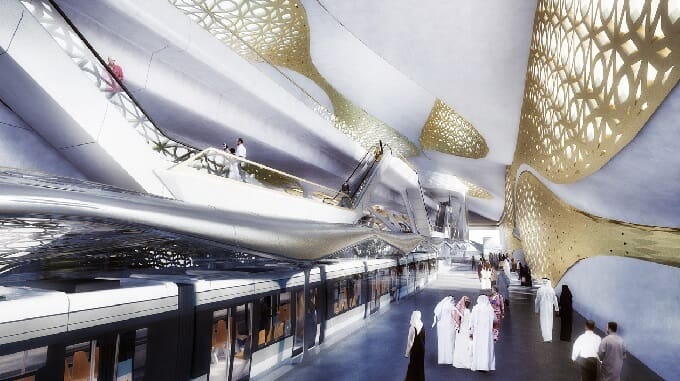
    The new KAFD Metro Station seems that will act as a key interchange for three lines ( Line 1, Line 4 -for passengers to the airport) and Line 6). The station will also allow passengers to access the local monorail through a skybridge.  The KAFD master plan and the astounding design shows the metro station will be at the meeting point of a network of pathways, sky bridges and metro lines. To improve internal circulation and prevent congestion, they mapped its internal structure with all pedestrian and metro routes very clearly delimited.
    Metro-station-in-Saudi-Arabia

    Metro-station-architecture

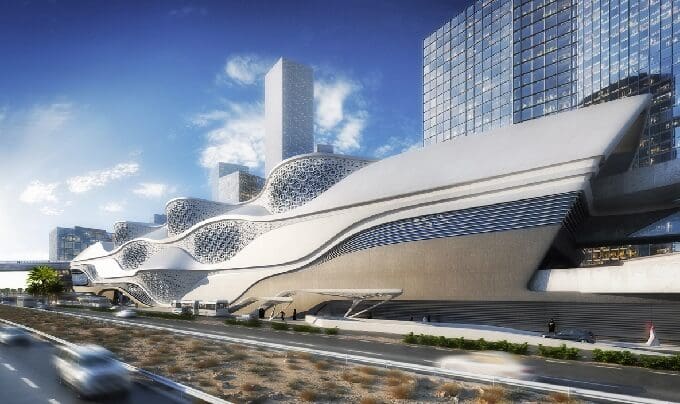
    Its futuristic architectural concept is impressive and high-aimed seeing these images. The exterior building design resembling sand dunes generated by desert winds places the new KAFD Metro Station within its cultural environment. To generate the patterned façade with interesting geometric perforations, Zaha Hadid Architects will apply distinct subset of elements through symmetry, repetition and scaling. The outstanding design will be optimized by simplifying technical challenges but preserving its spatial quality. Take a look!
    New-Riyadh-metro

    Metro-station-interior

    New-Riyadh-metro-01

    Photos © Zaha Hadid Architects


    Project details:

    Project: King Abdullah Financial District Metro Station
    Location: Riyadh, Kingdom of Saudi Arabia
    Date: 2012 – 2017
    Client: ArRiyadh Development Authority
    Design: Zaha Hadid Architects
    Project Director: Gianluca Racana, Filippo Innocenti
    Project Architect: Fulvio Wirz, Gian Luca Barone
    Design Team: Alexandre Kuroda, Fei Wang, Lisa Kinnerud, Jorge Mendez-Caceres
    Structural Engineer: Buro Happold
    Services: Buro Happold
    Transport and Civil Engineering: Buro Happold
    Fire Engineering: Buro Happold
    Façade Consultant: NewTecnic
    Cost Consultant: Davis Langdon
    Size: 20,434 m2
    Levels: 4 above ground, 2 below ground (car parking)
    Metro Lines served: Line 1, Line 4, Line 6
    Skybridge access to monorail: (6 train plattforms)


  • EnCana HQ, the Canada’s Tallest Tower Outside Toronto

    EnCana HQ, the Canada’s Tallest Tower Outside Toronto

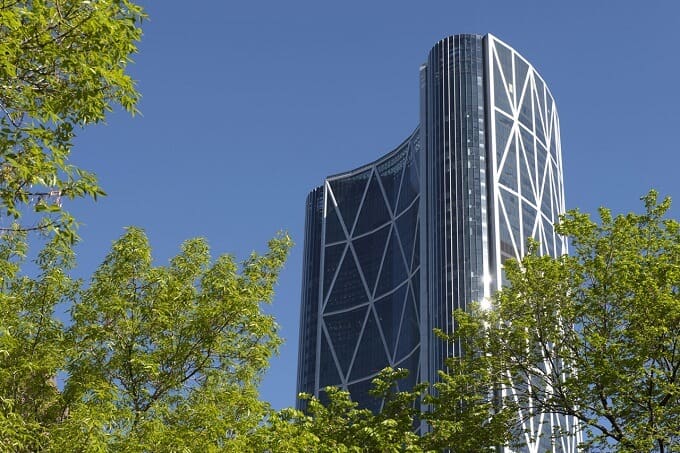
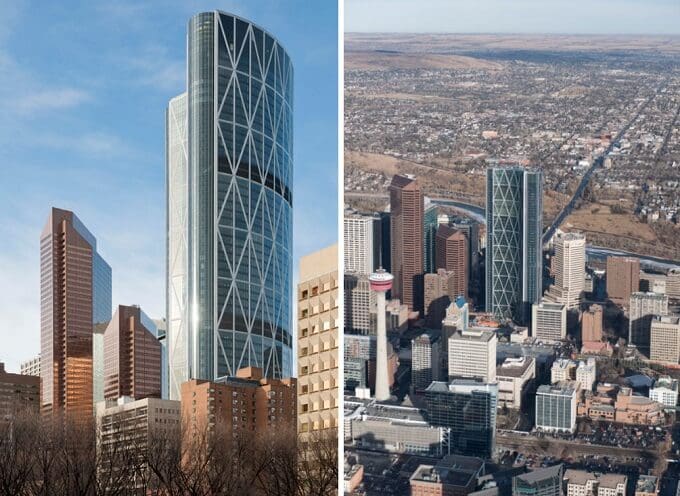
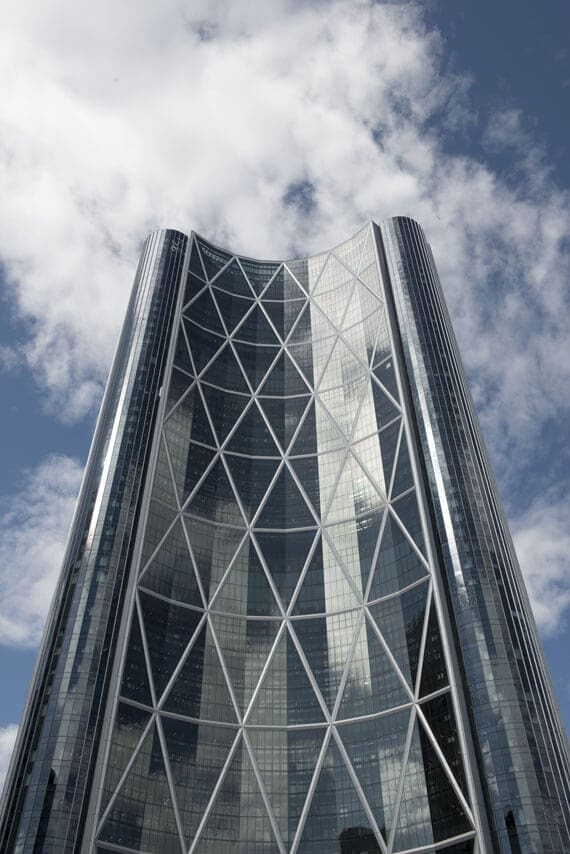
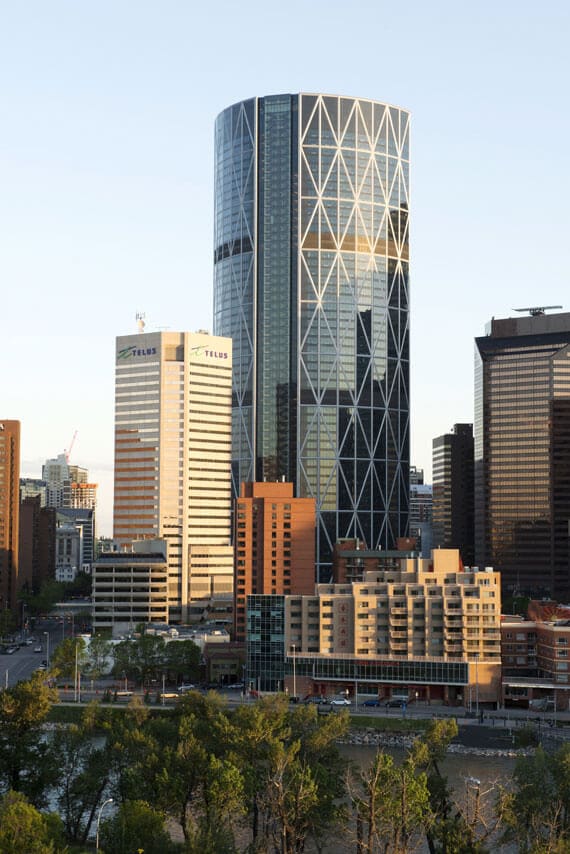
    At the begining of this month, a new office complex development opened in downtown Calgary. With a stunning architecture built in accord with the unique city climate, the 239-metre-high headquarters tower now dresses the Calgary skyline becoming the city’s tallest building and Canada’s tallest tower outside Toronto. The Bow, as it was named due to its bow-shaped plan, belongs to EnCana Corporation, the Canada’s leading energy company, and was designed by one of the most innovative architecture and integrated design practices in the world, Foster+Partners.

    With an unrivalled experience of over 45 years, 620 awards won for excellence and the ability to achieve sustainable design solutions through adequate expressions of public space and civic values, Foster+Partners met this time the EnCana’s business objectives and interests with the design of the new headquarters, and the result after six years is extraordinary.

    Calgary's-tallest-building

    As part of a mixed-use masterplan which aims to regenerate two entire city blocks on the east side of Centre Street, the major axis through downtown Calgary, the ambitious project manages to capture the collective consciousness of the city and to responds to its civic values, setting a bold new, meaningful symbol in terms of urban, social and environmental terms. Combining the latest advances in building technology with a deep analysis of the climate and organisations, the architects shaped an amazing building design based on sustainable principles.

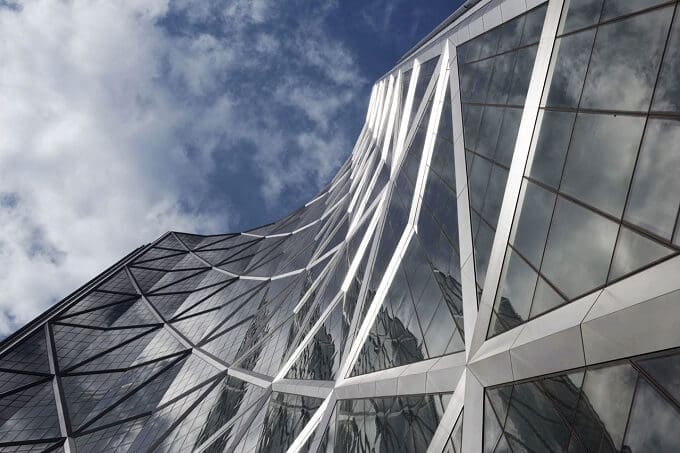
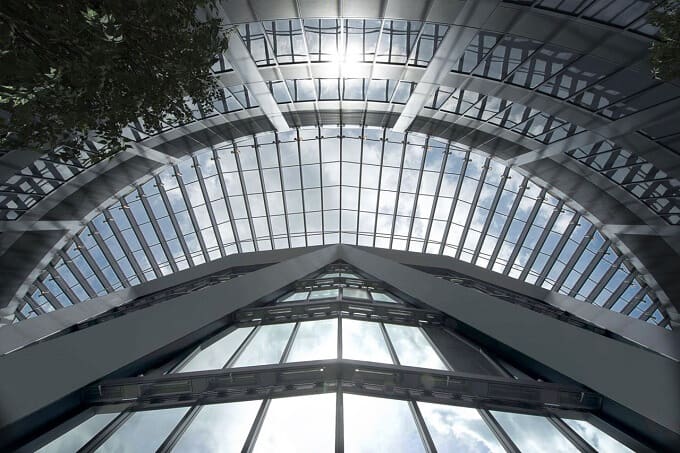
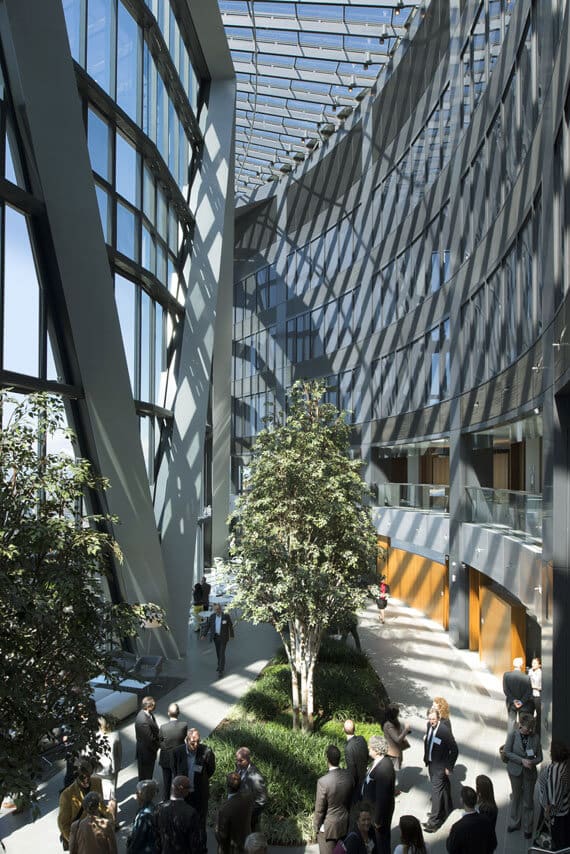
    Every aspect of the skyscraper is designed to be highly efficient. The tower faces south, curving towards the sun in order to take full advantage of heat and daylight, to encourage natural ventilation and help to significantly reduce energy use, and to outline a series of tremendous light-filled six-storey atria with sky gardens, cafes and meeting areas, which bring a vital social dimension to the office floors. In this way, the location of cellular offices is also maximised with beautiful views of the Rocky Mountains. The convex, glazed façade is turned into the prevailing wind, so the amount of steel is reduced and the structural loading is minimized.

    Exterior-architecture

    The tower base is highly impermeable with a +15 enclosed bridge connection to downtown, an atrium filled with restaurants, cafes, shops and a fabulous plaza, while the atria at levels 24, 42 and 54 incorporate mature trees, seating, meeting rooms, catering facilities and local lift cores. At the very top of the building there is an auditorium which complements the staff facilities in these atria.  The building project’s plan include a pedestrian connection with the downtown network and is fused at two points to Calgary’s system of enclosed walkways, which offers a retreat from the city’s harsh winters. Here’s some beautiful pictures to discover it.

    See also another spectacular skyscraper in Canada envisioned by Foster+Partners.

    New-landmark-on-Clagary's-skyline

    The-Bow-interior-design

    The-Bow-interiors

    The-Bow-by-Foster&Partners

    img5

    Photos © Foster + Partners


    Project details:

    Appointment: 2005
    Construction start: 2007
    Completion: 2013
    Area: 199 781 m²
    Height: 239 m
    Client: Matthews Southwest Developments Limited
    Collaborating Architect: Zeidler Partnership
    Structural Engineer: Halcrow Yolles
    Quantity Surveyor: Altus Helier (Partial)
    M+E Engineer: Cosentini
    Landscape Architect: Gustafson Guthrie Nichol (Carson McCulloch – Local)
    Lighting Engineer: Claude Engle Lighting Design
    Additional Consultants: Sturgess Architecture, DA Watt, KJA, Kellam Berg, Cerami, Gensler, Cygnus, leber Rubes, Transolar, RWDI, Brook Van Dalen, Leber Rubes, Hayes Davidson


  • New Football Stadium Inspired by Brancusi’s Work To be Designed in Romania

    New Football Stadium Inspired by Brancusi’s Work To be Designed in Romania

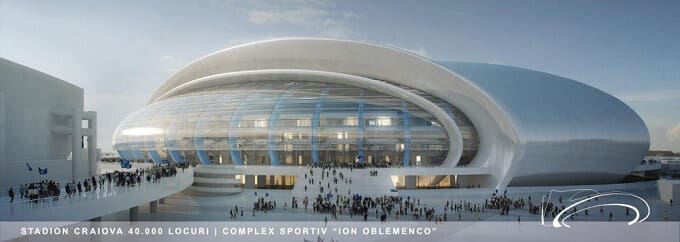
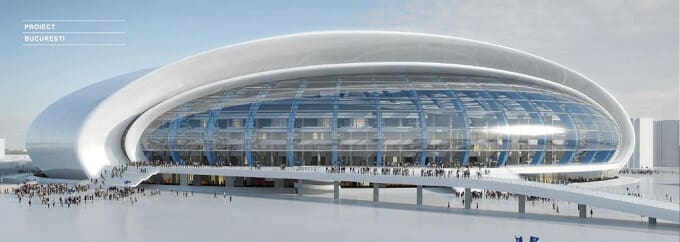
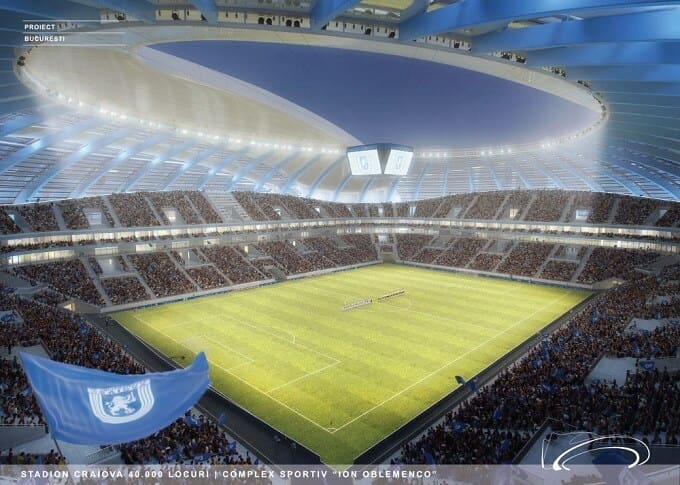
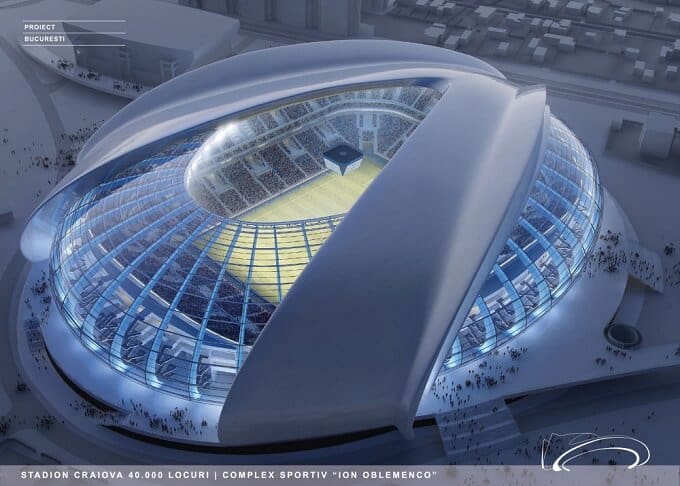
    Meet the new football stadium, which will be built starting with 2014 in Craiova, Romania. The amazing football arena will replace the existing “Ion Oblemenco” Stadium and will be the fourth of the three ultra modern stadiums already opened in recent years in Romania (from Bucharest -235 million euros, Cluj’s stadium-35 million euros and Ploiesti -17 million euros). The project envisioned by Romanian multi-disciplinary design practice Proiect Bucuresti looks magnificent on paper and miniature and it can compete with the National Arena in Bucharest, but at a much lower price.

    Football-stadium-in-Romania

    The future stadium will have a 40,000 seats capacity, will cover an area of ​​approximately 100,000 square meters, and will be part of a larger sports complex  including another small stadium, athletics track with 5,000 seats and a park linking the Polyvalent Hall with the stadium. Its construction is supposed to begin in the summer of 2014 and although not yet known, the costs of the 40,000-seat stadium are estimated around 100 million euros.

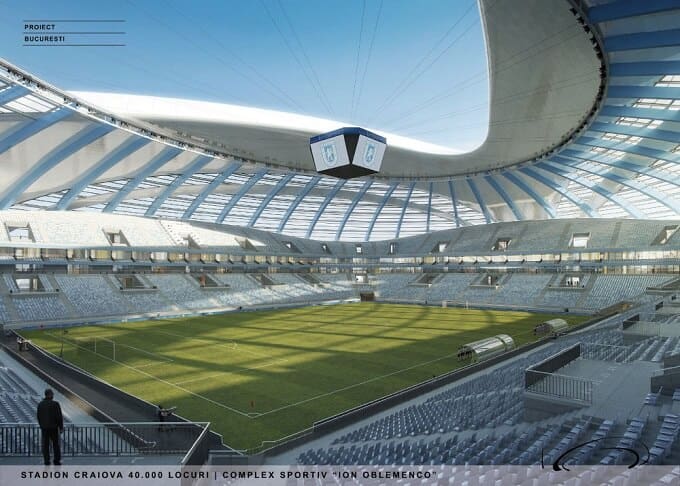
    With a standard playing field measuring 105m x 68m, heated, irrigated, drained and ventilated natural grass surface, comfortable seats arranged on two levels to have the best visibility possible, and VIP skyboxes located between the levels of seating around the full perimeter of the bowl, Craiova’s new football stadium will be ultra modern and will exceed European standards. It will be designed to achieve UEFA category IV (the highest level) and will host matches within the 1-st Romanian Football League (FRF), UEFA Europa League and UEFA Champions League and for National team matches (FIFA and UEFA).

    Football-stadium-architecture

    But the first thing that impresses is its remarkable architectural design, that pays tribute to the renowned Romanian sculptor Constantin Brancusi. The special form of the main roof lines follows the shape used to make the eyebrows of one of his famous work “Miss Pogany”, and opens to the sky, intensifying the volume of the main bowl. They will be suggestive in daylight and the enhancement of architectural lighting at night will accentuate the building when viewed from the center of the town.The stands coverage and the protection under stairs space is solved by a single element like a dome starting from a perfect ellipse base in plan. The sculptural form opened to the sky and highlighted by the structural “ribs” architecturally illuminated thanks to transparent and translucent materials will enhance the importance of the interior space.

    The result is a dynamic building architecture with arched shapes which will impress the viewer. The project that architects  of Proiect Bucuresti comes with, proposes an ecological approach to the environment, so the materials and technologies used to built this football arena will be sustainable and will integrate green energy sources such as photovoltaic cells, ground source heating/cooling and deep well water sources. They will choose very carefully the materials in order to protect  spectators in unfavorable weather conditions and ensure in the same time the stadium is flooded with natural light necessary to maintain the stadium’s pitch.

    Artificial photosynthetic systems for the same purpose. Besides the stadium, the landscape of the sports complex will be improved with new landscaping, public parks, pedestrian walkways and parking as well, transforming this highly modern area into a powerful landmark that will boost the development of Craiova. Check out the video at the end of this post!

    New-Ion-Oblemenco-Stadium

    Craiova-Stadium-inside

    Craiova-Stadium

    Amazing-football-stadium
    Photos © Proiect Bucuresti


    Project details:

    Location: Craiova, Romania
    Architects: Proiect Bucuresti
    Status: Concept design
    Area: 100.000 square meters
    Seats: 40.000
    Execution period: 2014-2017


    New “Ion Oblemenco” Football Stadium in Craiova


  • If You Want to See the Green Benefits of a Conservatory Then Go to the Biggest One in the World

    If You Want to See the Green Benefits of a Conservatory Then Go to the Biggest One in the World

    More and more homeowners are waking up to the fact that adding a conservatory to their property is a smart and effective way of making their house more environmentally friendly. There are some great benefits to doing this and if you want to see them in action maybe you should go the biggest conservatory on the planet.

    The Place

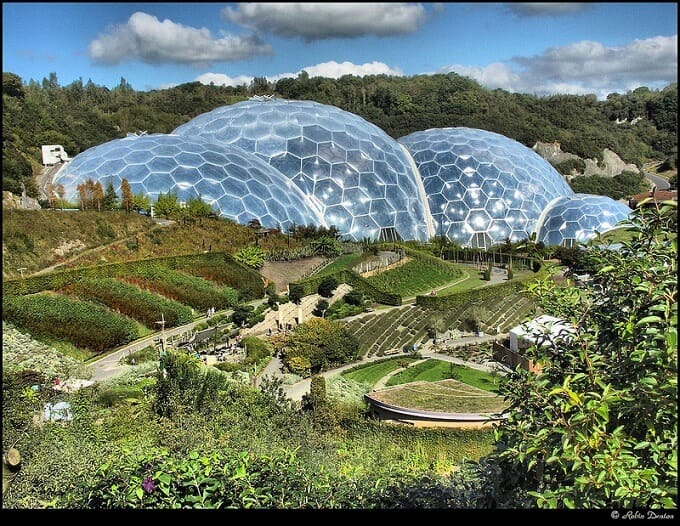
    The Eden Project in Cornwall has been described as the biggest of all the conservatories on Earth and is sure to be much bigger than the one you choose from the likes of Anglianhome.co.uk for your home. However, we can still learn a lot by going here and seeing it for ourselves.  It took two and a half years to build it and between the Tropical Dome and Mediterranean Dome there are more than 2 hectares of covered land included in this project. It has proved to be a huge success as a visitor attraction and a must see for many of the visitors who spend time in this part of the UK.

    Eden-Project-in-Cornwall

    Photo © Robin Denton via Flickr

     The Plants

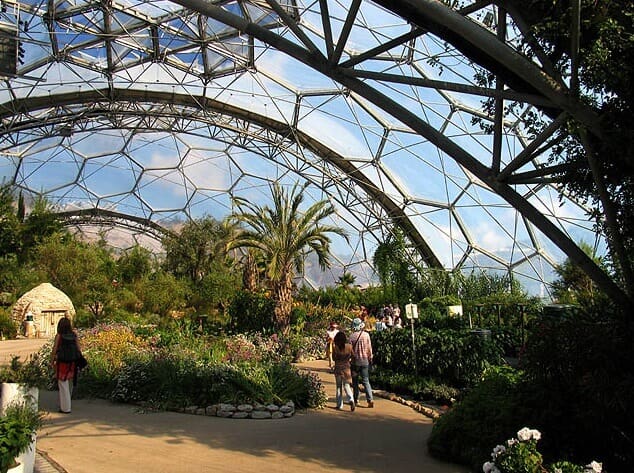
    There are more than one million plants on display here and it is sure to provide an educational experience for anyone who wants to know more about our reliance upon plants to sustain our planet in a healthy way. Of course, not many of us can fit more than a dozen or so plants into our home conservatory but we can still use the same principle of choosing them well, looking after them and helping the planet in our own little way. An interesting feature of the Eden Project is that the medicinal plants are labelled, so if this is something which interests you then you know where to go to in order to find out more and start your collection at home.

    Eden-project-inside

    The Water Usage

    Can you imagine how much water is needed to keep one million plants healthy and looking good all year round? This could have been a problem for the owners of the Eden Project and it might also be something you worry about at home too. In the case of the Cornwall centre, a clever rainwater storage system collects all of the rainwater which pours down here and uses it for watering the plants and also for the place’s toilet system. You might find that you can do something similar at home although obviously on a much smaller scale. The use of an ecologically friendly rainwater collection barrel is something which is becoming more popular in many households and you can use this water to keep your plants well watered and also to do other things like wash your car. As you sit down and enjoy another warm, sunny afternoon in your new conservatory you can now do so safe in the knowledge that you are doing your bit for the planet as well.


  • Concert Venue in France Displaying an Eccentric Architecture Concept

    Concert Venue in France Displaying an Eccentric Architecture Concept

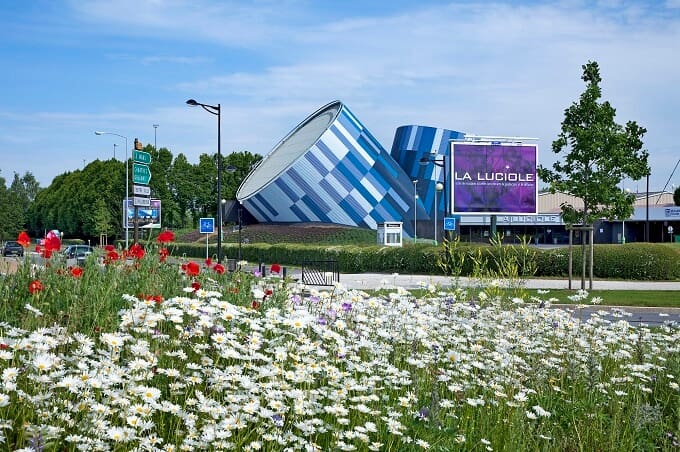
    Meet “La Luciole” (French for “firefly”), an ambitious and demanding artistic project started in 1994, that despite the fact that only 250 people could enjoy the musical performances, it became over time a strong regional identity attracting famous musicians and delivering quality programming.

    Located in Alençon, a little gem in Lower Normandy still unspoilt by tourism, but with much to offer in terms of history, architecture and traditions to the discerning traveller, “La Luciole”  resulted from the efforts of its passionate director and several years ago it showcased a new auditorium and an improved modern look. The municipality has financed the extension of this concert hall and starting with 2008 Moussafir Architectes Associés offered a new unique identity to it.

    La-Luciole-in-Alencon

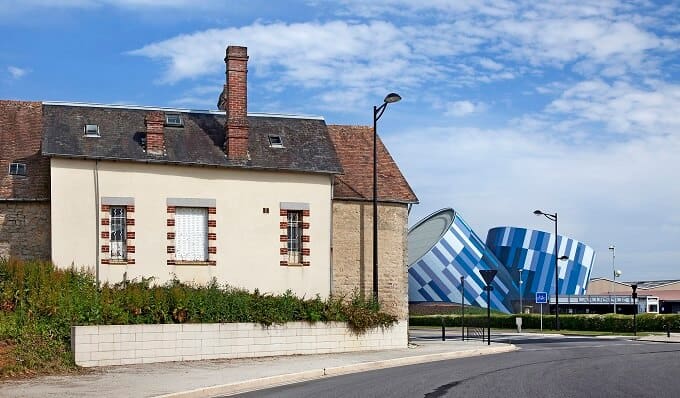
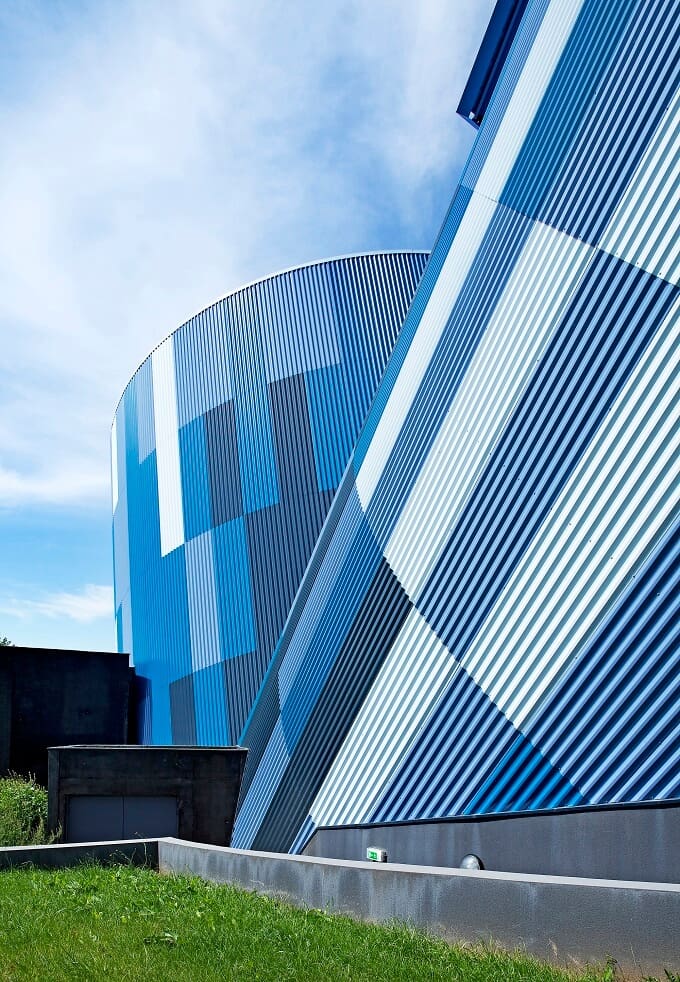
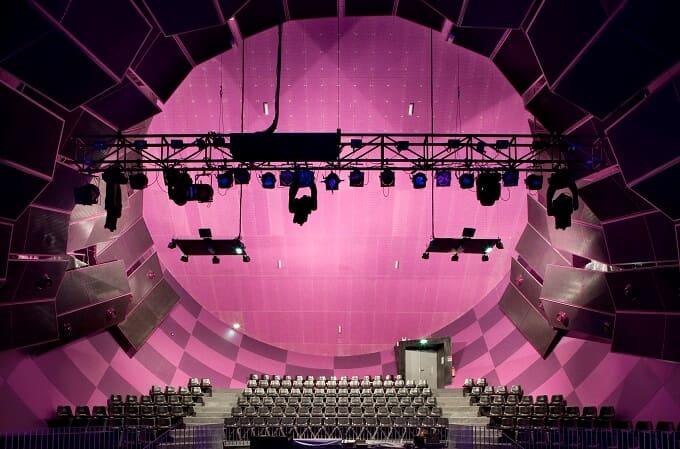
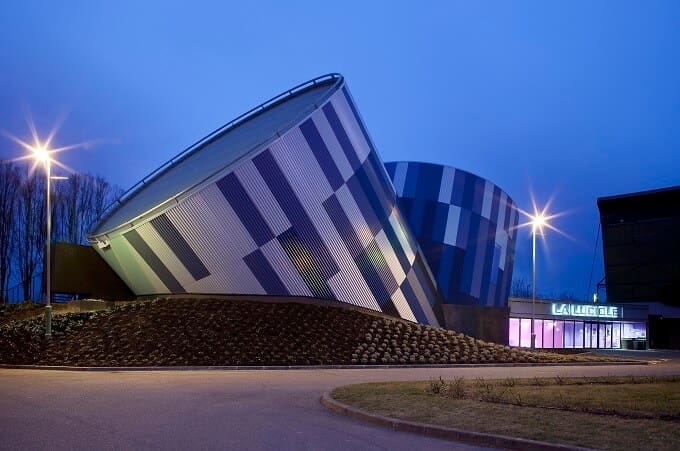
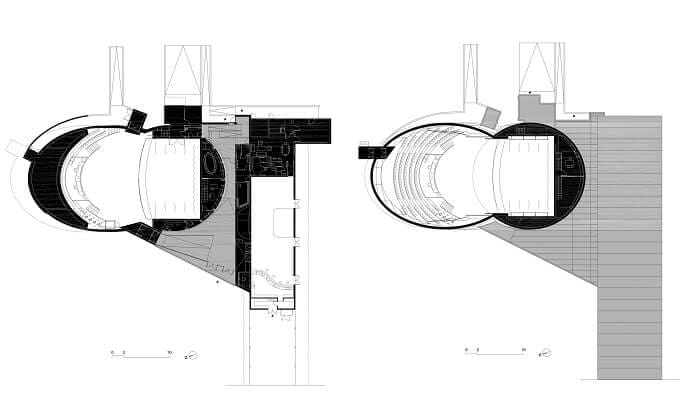
    The aim of this project was to create a larger concert facility for 650 people maintaining in the same time that friendly and intimate atmosphere that distinguised the original space, renowned for the way it brought audiences closer to artists. This desire has shaped the building’s cylindrical forms preserving the core idea –  two tilted, interconnected volumes containing the audience and the stage. The new concert venue displays above all a non-referential design, a minimalist object emerging from the ground. Its bold geometry with exuberant color palette seems to reveal a pixilated fragment of the sky, often covered with the fleeing clouds in the Normandy sky.

    La-Luciole-concert-hall

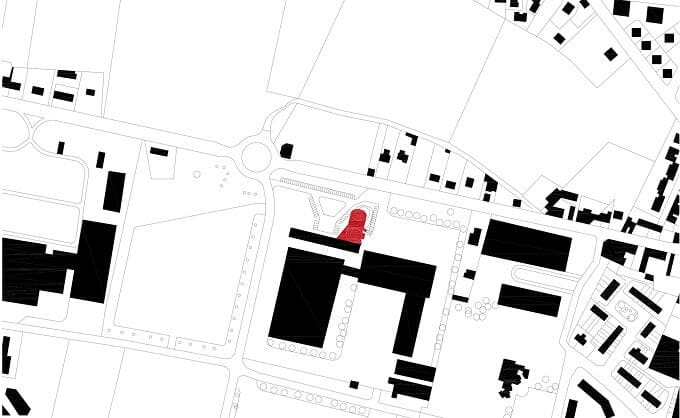
    Randomly arranged white and blue panels contrasts beautifully with darker shades where the two circular forms meet, creating an interesting effect that evokes a geyser linking the earth and the sky. The new Luciole acts as an urban beacon in counterpoint to the linear façade of the adjacent exhibition center. Although simple in itself, the steel structure presented some challenges in designing it while assembling the curved insulation panels and suspending acoustic sheets from the rounded surfaces of the performance hall. Moreover, serious development work needed to be done in order to reduce the use of materials without jeopardize the building’s stability. It resulted a concert facility with a bizzare and eccentric architecture, yet modern and very original.

    La-Luciole-exterior-design
    Original-concert-facility

    La-Luciole-at-night


    La-Luciole-floor-plan


    La-Luciole-situation-plan

     Photos © Luc Boegly & Moussafir Architectes Associés via Archdaily


    Project details:

    Architects: Moussafir Architectes Associés
    Location: 171 Rue de Bretagne, Alençon, France
    Design Team: Jacques Moussafir with Francesca De Marchi, Nicolas Hugoo, Alexis Duquennoy, Guillaume Cournut, Laurent Théaux and Albert Ruiz
    Budget: 2,653,000 €. ex tax
    Client: Alençon City Council
    Area: 1,274 sqm
    Year: 2008


  • Creative Sculpture Expressing Harmony and Beauty – Peace Pavilion in London

    Creative Sculpture Expressing Harmony and Beauty – Peace Pavilion in London

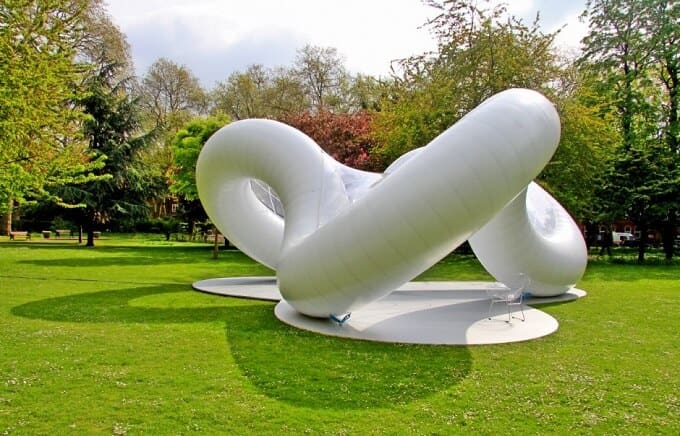
    Between May and June 2013 make sure you visit “Peace Pavilion” exhibited in the unique settings of the Museum Gardens in Bethnal Green, London, a project which is part of the Archtriumph’s Annual Showcase “Triumph” Pavillion. This year, the pavilion’s theme was “Peace” – one of the highest human ideals, and the winning idea, chosed from hundreds of applications submitted from all over the world, has the signature of those from AZC  (Atelier Zündel Cristea), architects Irina Cristea and Grégoire Zündel.

    To provide an inspirational and interactive place that speaks about the importance and benefits of peaceful co-existence around the world, where people visiting can stand, walk-through, seat around, admire and share points of view about diversity, Paris-based innovative and creative practice AZC proposed a visually and aesthetically engaging sculpture that speaks to everyone through its creative geometry.

    Triumph-Pavilion-2013

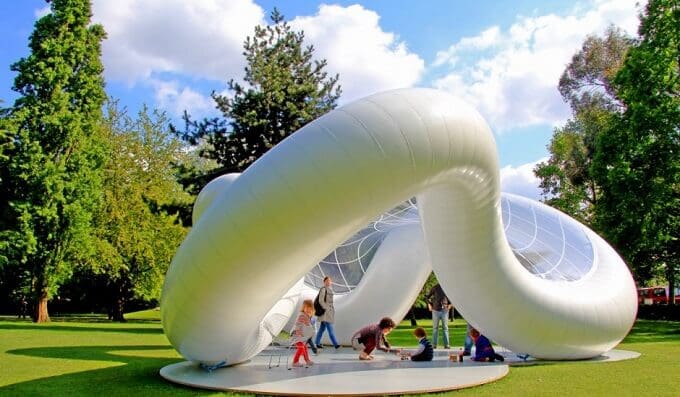
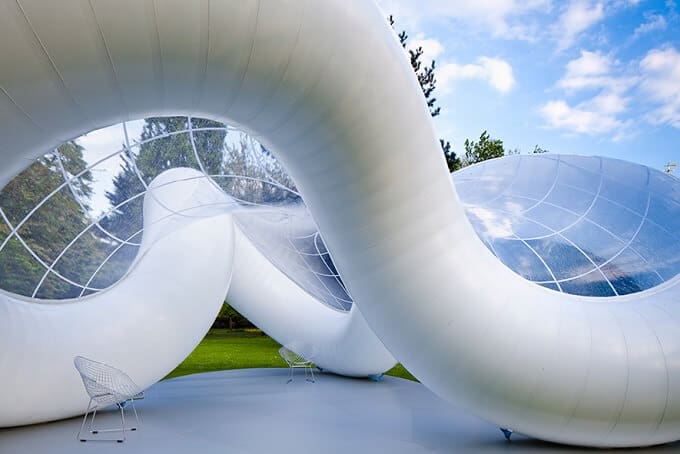
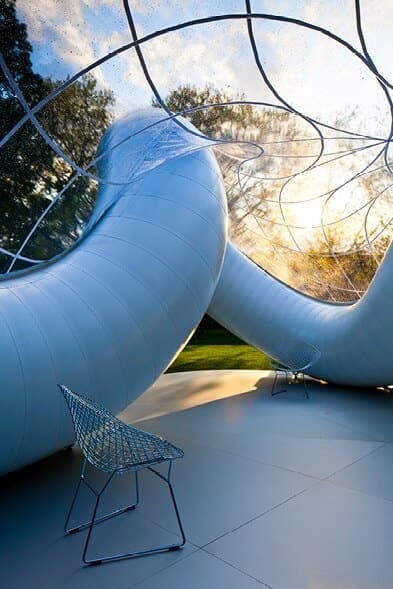
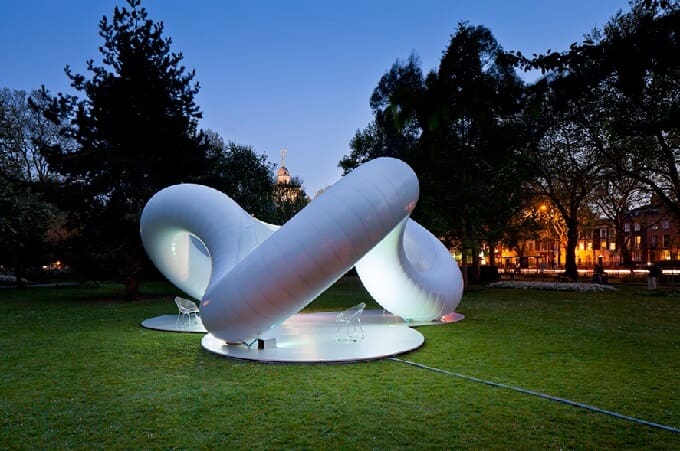
    White and enormous, the sculpture draw attention by its unusual, yet beautiful shape of an exceptional aesthetic value. Perfect symmetry and fluidity, achieved through an accurate geometrical manipulation, suggests an ideal contemporary space offering a state of equilibrium -harmony, silence, pureness, kindness, happiness, appeasement, calm, reconciliation, serendipity, tranquillity, in a word, “peace”. The notions of inside and outside are vanished, so the interior space is connected with the exterior one allowing people to walk around and understand the significance of it.

    Made entirely with durable lightweight materials ( Clear 500my HvHt PVC, Precontraint 902S marin fabric, polished Aluminium and wood) and inflated with approximately 47m3 of air, the structure with an apparently complex shape  is self-supporting and measures 4m in height and 20m² in area. The “Peace Pavilion” encourage a peaceful future and is also dedicated to the contribution made by Sudans’ ancient pyramids to architecture. A collector or a museum buy the Pavilion when the exhibition is finished, with the hope that the owner will exhibited it around the world in Europe, America, Asia, Middle East and Africa.

    Triumph-Pavilion-exhibition

    Peace-Pavilion-exhibition-London

    Peace-Pavilion-detail

    Exhibition-London-2013

    Photos © Giacomo Cannata; © Sergio Grazia


    Project details:

    Program:“Triumph Pavilion – Summer 2013”
    Name: Peace Pavilion
    Team: AZC (Atelier Zündel Cristea)
    Client: ArchTriumph
    Location: London -Museum Gardens, Bethnal Green
    Status: Competition 2013


  • Dynamism and Modern Simplicity – Gallery House on a Budget

    Dynamism and Modern Simplicity – Gallery House on a Budget

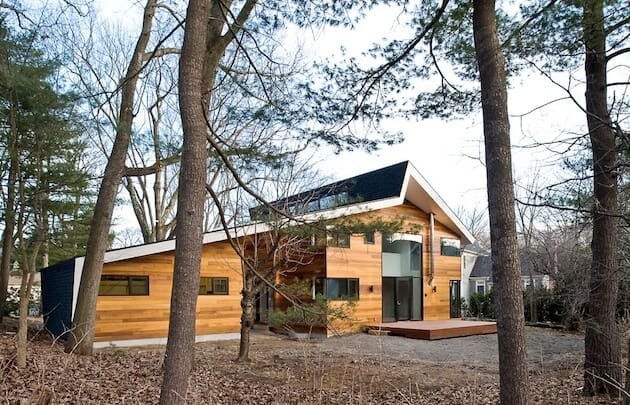
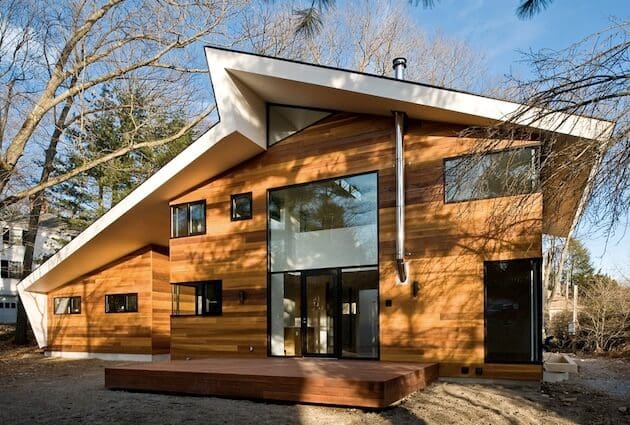
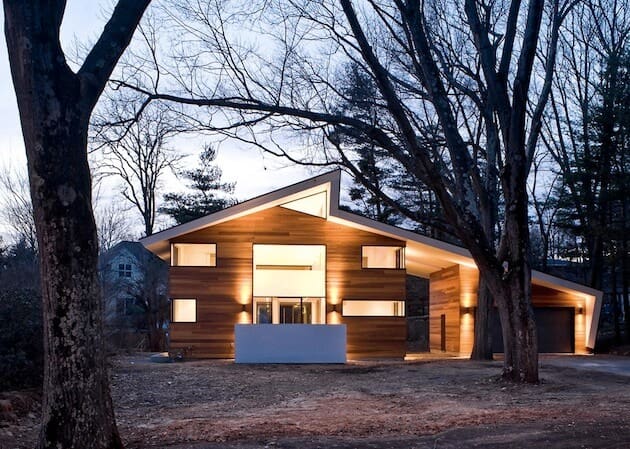
    The collaborative design firm Next Phase Studios develop projects well managed, with innovative and creative design, and Gallery House is evidence of that. Especially designed to fit the needs of a family of four, the exquisite  two storey residence located in Chestnut Hill, Massachussetts, showcases a strong visual identity inspiring comfort and warmth due to a clever use of materials. Modern and original at the same time, the Gallery House stands out thanks to its striking wood exterior and jagged geometric roof. No matter what the standpoint, the visual approach is different, this dynamism being expressed also internally through layers of internal and external glazing.

    House-by-Next-Phase-Studios Architects

    Despite its graphic contemporary exterior design and modest size, the house is in harmony with the more traditional neighborhood. The extensive use of wood for the facade reflects a sense of warmth and immediacy with nature, while the black and white roof’s angular shape creates a beautiful contrast and help the facade to stand out and fits very well with the black framed windows. This  dialogue between the exterior finishes is also found in the interior design of this natural light flooded private residence.

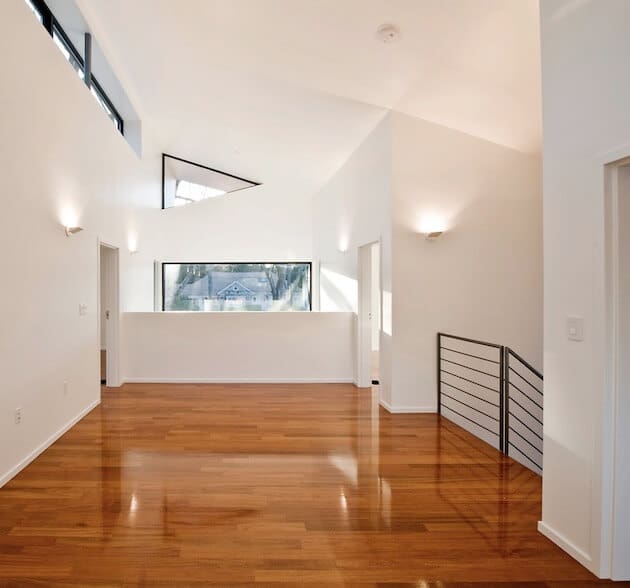
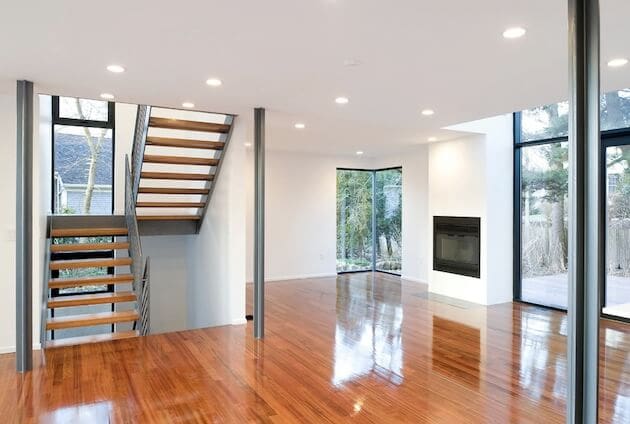
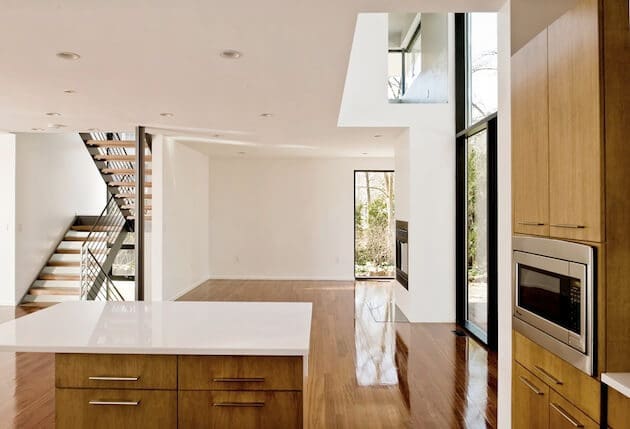
    Large commercial aluminum frame gallery windows and uncovered corner windows establish a connection between the indoors and the outdoor landscape and let the sunlight penetrates through all rooms from front to back, while maintaining privacy and controlling energy gain through an enormous roof and dramatic overhangs. Despite its limited space, the Gallery House reveals a good space distribution. A custom steel staircase leads to the private room which are compact and constituted around the luminous central living room and the kitchen area. Multiple layers of steel columns, glossy flooring, clean lines and white walls give the space a neat and modern overall look. Here are some inspirational pictures!

    House-by-Next-Phase-Studios Architects-01

    Hall-with-white-walls

    Living-room-design

    Minimalist-kitchen-furniture

    House-architecture

    Photos © Next Phase Studios Architects


  • Environmentally Sustainable Building for George W. Bush Presidential Center

    Environmentally Sustainable Building for George W. Bush Presidential Center

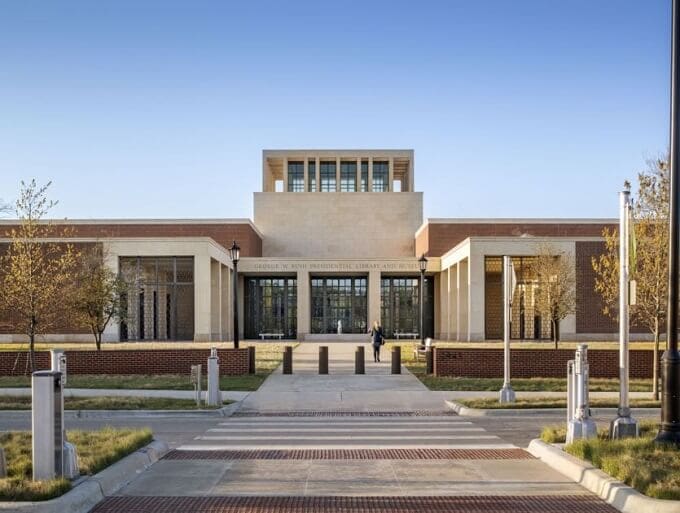
    If you want to explore the history of the  George W. Bush Presidency, now you have a great place that will provide you a deep insight of his career and life, its Presidency, but also of American history and many other important issues of public policy through official records, artefacts, donated collections and innovative exhibits- the George W. Bush Presidential Center. Founded by former George W. Bush president and his wife and built with private donations, the Presidential Center located in Dallas, Texas, had its special ceremony dedication on April 25 2013 where participated all living Presidents, dignitaries and supporters, and opened to the general public on May 1st 2013.

    Bush-Library-and-Museum-Entry

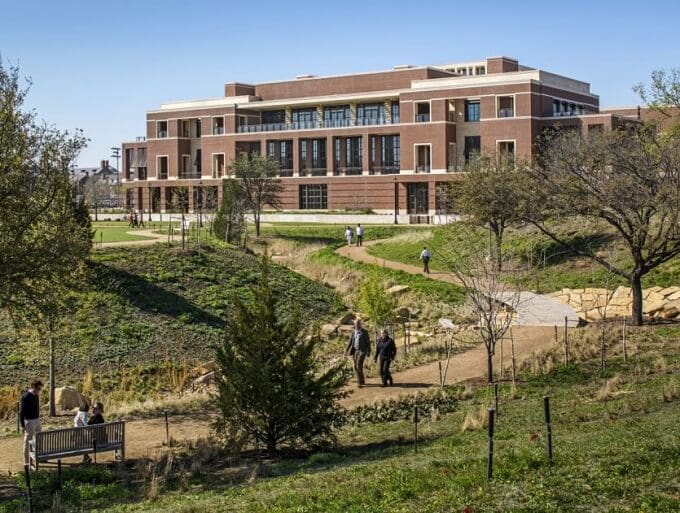
    Covering 226,000-square-foot for its beautiful building and 15-acre of urban park on the campus of Southern Methodist University (SMU), it houses the Bush Institute and the offices, the George W. Bush Foundation and the fantastic Bush Presidential Library and Museum, which occupies the 13th place in the National Archives and Records Administration system and becomes the second-largest presidential library after Ronald Reagan Presidential Library. The project is environmentally sustainable both in terms of building and landscape design. They complement somehow each other resulting in an amazing destination for researchers, historians, students and all kind of visitors.

    Ceremonial-courtyard

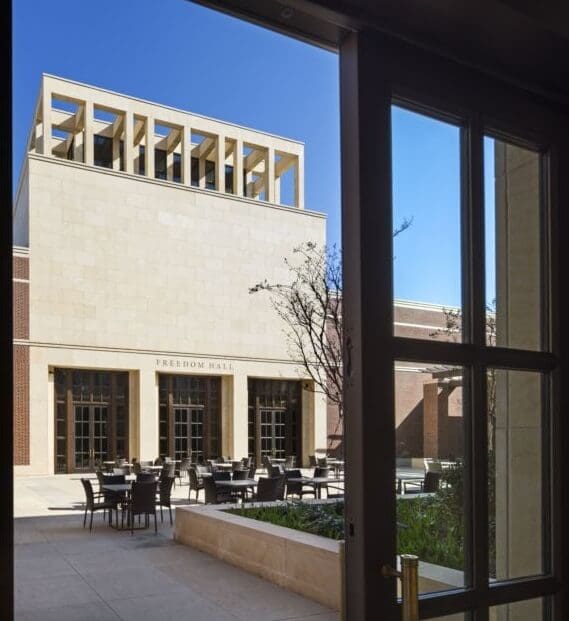
    The building’s brick and limestone design is envisioned by Robert A.M. Stern Architects and fit in perfectly with the American Georgian character of the wonderful SMU campus. Attested with LEED Platinum, the highest level in the U.S. Green Building Council’s Leadership in Energy and Environmental Design rating system, the George W. Bush Presidential Center building uses on large scale local materials recycled ones (pecan paneling, millwork Texas Cordova Cream limestone) and features green and highly-reflective roofs, rooftop solar hot water panels, brises-soleils on the west and south façades, shaded balconies,etc.  Freedom Hall, a 67-foot high tower stands out, being the signature architectural feature of the building.

    Former President George W Bush Opens  Library in Dallas

    Photo © BROOKS KRAFT / CORBIS FOR TIME

    Former President George W Bush Opens Library in Dallas

    Photo © BROOKS KRAFT / CORBIS FOR TIME

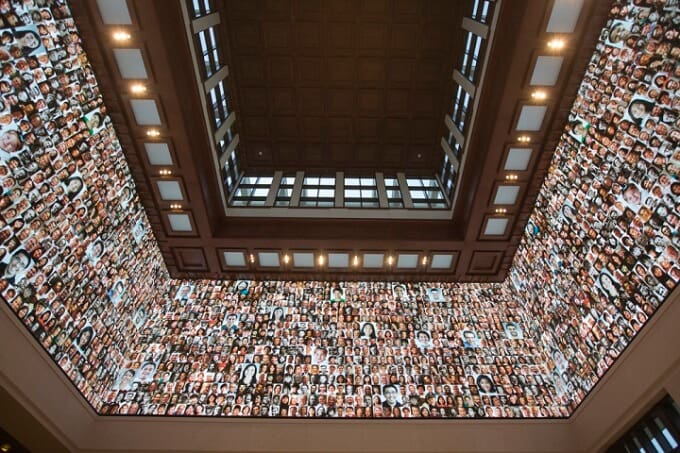
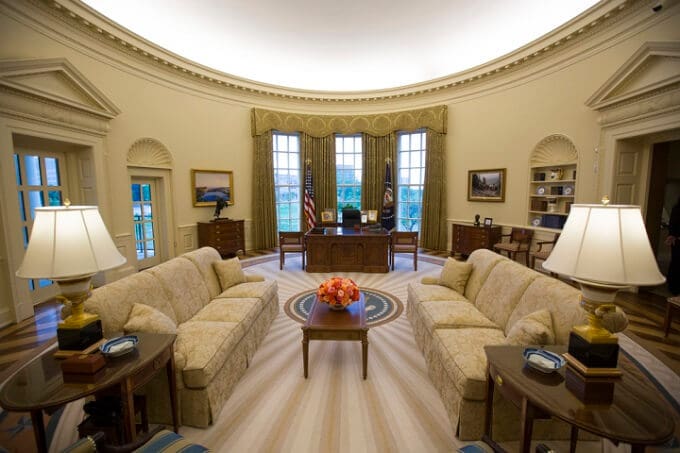
    This section with a unique 360-degree high-definition LED media wall brings plenty of natural daylight into the heart of the building and, at night, glows softly distinguishing the The Bush Center in SMU campus. It provides access to The Museum and Presidential Archives where visitors can explore the interactive museum galleries, sit in the recreated White House Oval Office, examine Bush’s baseball collection, enjoy the Texas Rose Garden, eat lunch in the restaurant or café, or shop in the Museum store. The Institute section of the building is “an exciting place, a results-oriented institute” as former president said, where all the programms undertaken here have the purpose to change the country and the world.

    For that, it includes a 360-seat auditorium, seminar rooms, a fully-equipped broadcast and recording studio, reception rooms, as well as offices for staff. After visiting the Center, visitors can stroll through the scenic and sustainable landscape of the 15-acre park filled with native Blackland Prairie grasses and seasonal wildflowers, creation of Michael Van Valkenburgh Associates.

    Native-Texas-Garden

    Photos © Peter Aaron