Category: Architecture

  • How to Pick an Architect

    How to Pick an Architect

    No matter what sort of work you are planning on doing – whether it’s a simple bedroom extension over the garage or you have a glorious spectacle of titanium architectural genius in mind – it is more than likely that you should employ the trained mind of an architect to help you out.

    Sometimes, it can seem like employing an architect might be an expensive waste of your money, especially in these current times of economic difficulties. Other people believe that the process of hiring one might be confusing, and are put off trying it for this reason.

    However, you really should get the help of an architect if you’re planning some big changes to your house, especially if you’re not 100% sure of what you’re doing. In fact, sometimes an architect might even be able to save you money! There are, however, some things you should keep in mind.

    Architecture-firm

    Do You Need an Architect?

    If you are genuinely wondering whether or not you should hire an architect, the answer is almost definitely a yes. Take this as your rule of thumb: if it is anything other than a small project which needs no planning permission whatsoever, you should get an architect onside.

    Why? Well, an architect can aid you in your project in myriads ways, from helping you to understand what materials you need to drawing up blueprints, from filing the planning permission application to overseeing the build to the finish.

    How Do You Choose?

    Before doing anything, ask around your friends and family and find out if any of them recently had any architectural work done – if they have, ask whether they’d recommend them or not. If they would, great! You already have an architect and can go on with the job.

    If they’ve not had anything done, or the architect did an awful job, you should visit a few local architecture firms. A good quality architect shouldn’t be too difficult to find – use www.yell.com or search the internet yourself, or simply browse the phone book and make enquiries!

    If you’re not sure about their accreditation, you can check on the Royal Institute of British Architects (RIBA) website, or ask whether they’re on the ARB (Architects’ Registration Board). To be safe, if you’re suspicious, don’t hire them!

    How Much Will You Pay?

    Normally, an architect’s fee would be based on a fixed percentage of the overall construction costs, but it could also depend upon how much time the architect spent working on the job. You may even be able to secure a lump sum fee from the outset of the job, so speak to the architect beforehand to discuss payment options. The initial meeting shouldn’t cost you a penny, so use it wisely.

    If you want a concrete hourly fee, we’d say somewhere around £80. Of course, this might vary wildly depending on which firm you visit, so the only way to find out for sure is by asking around yourself.
  • Lovely Single Family Residence “Floating” above the Ground

    Lovely Single Family Residence “Floating” above the Ground

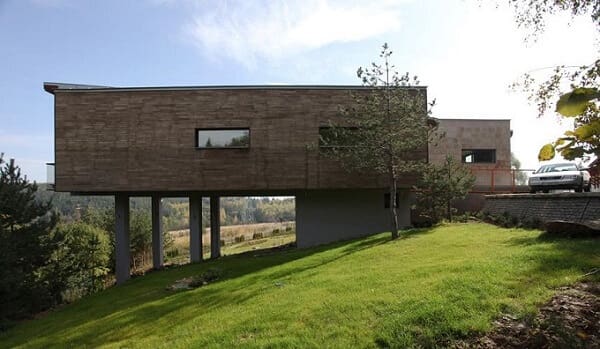
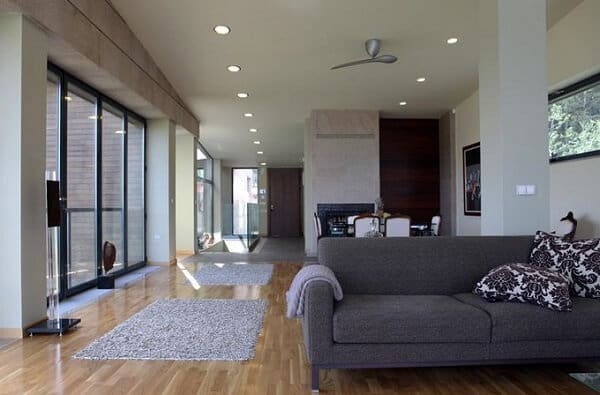
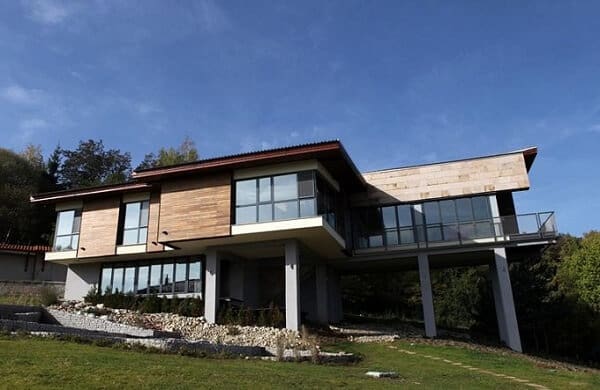
    Located at the foot of the Vitosha Mountain near Sofia, Bulgaria, this 310 sq.m modern house is a residential project designed and projected by Bulgarian architectural company 4DA Ltd, one of the nominated works  by the Bulgarian Architects’ Association to compete for the European Union Prize for Contemporary Architecture Mies van der Rohe Award 2011. The briefing was to build a single family house fully exposed to the maximum amount of sunlight from each and direction, with a mixture of independent renewable energy sources and backup systems, that also have to take advantage of the spectacular vista towards the city.

    Facade-of-the-house

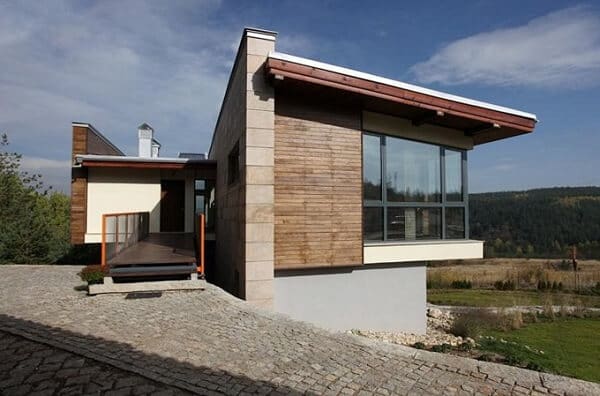
    The project meets both the the residential and recreational owner’s specific needs. Its addresses all the required features, being a welcoming home that opens up to the wonderful views of the surrounding area. Its area is 2780 sq.m and the location is amazing considering, besides the natural landscape, the mountain climate with cooler summer, snowier winters and fresh air all year round. Given the constraints of the existing steep slope of the terrain, the residence is designed to “float” above the ground and the main entrance is made as a bridge and finds on the upper of two levels. At this level are also situated the main rooms of the house (the living room with a separate kitchen and three bedrooms), designed in such a way that an atrium is formed in the middle of it allowing the sunlight into the premises more effectively.

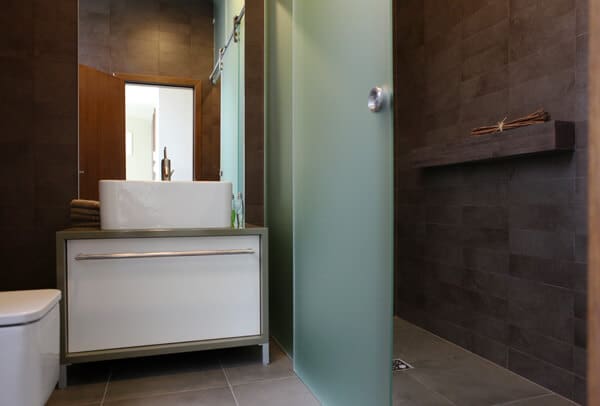
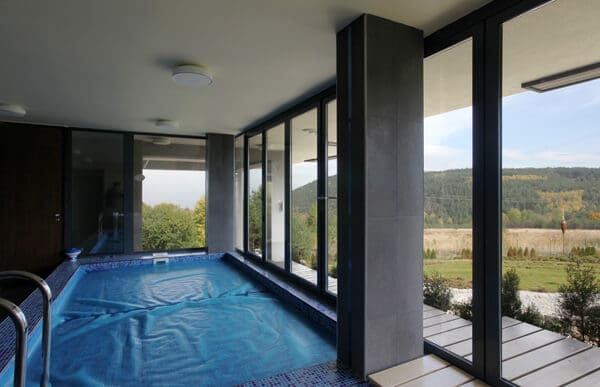
    Partially beneath the upper floor, the ground floor includes a service room along with a small SPA equipped with a counter-current swimming pool. Green design concepts were integrated, including floor to ceiling windows for natural light and ventilation, solar panels installed on the south slope of the roof for optimal sun exposure and a sewerage system that runs through custom designed waste management station equipped with holding tanks so the purified water can be used for irrigation.

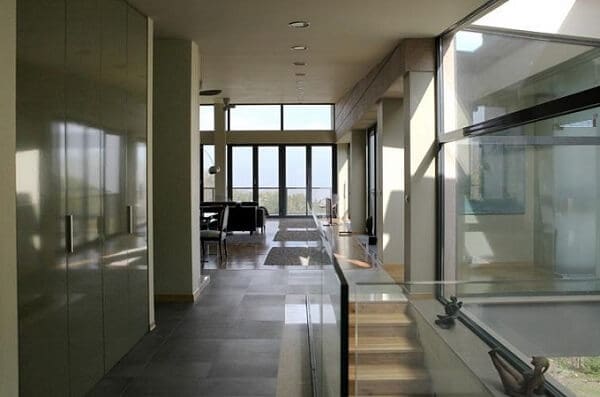
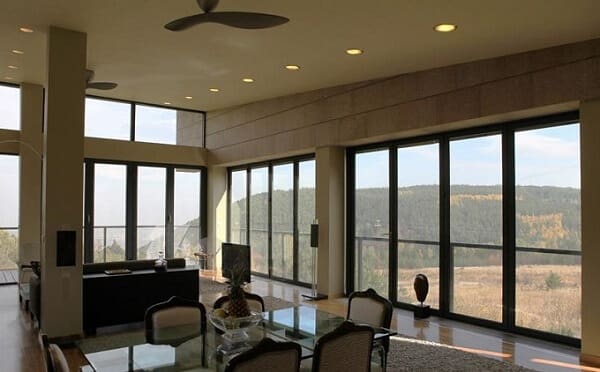
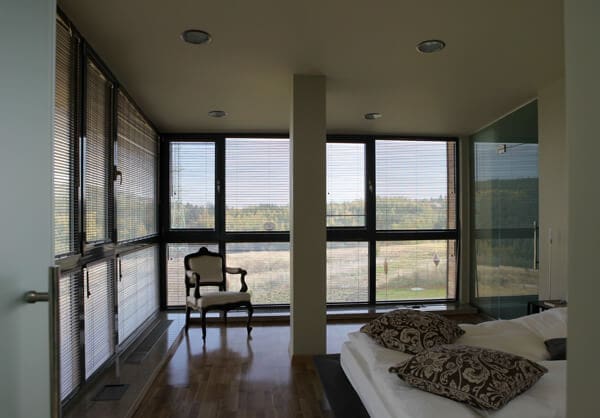
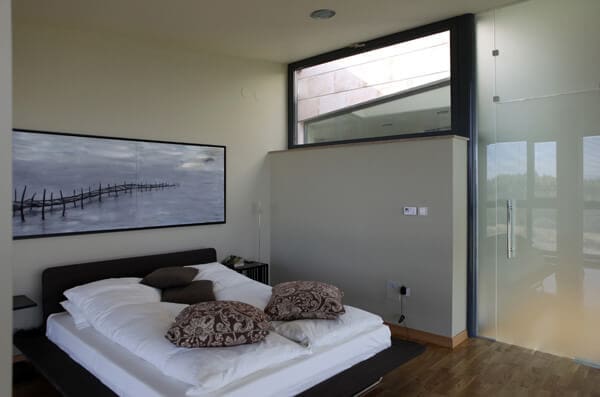
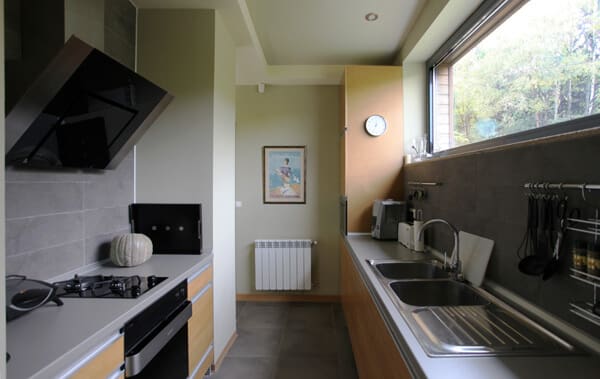
    The interiors features stylish contemporary furniture and neutral color palette that give the entire layout of the house a clean and elegant look. Floor to ceiling windows that partially replace the use of common walls are everywhere allowing the sun to flood each room with warmth and offering a maximum connectivity with the environment. The views captured are splendid, inviting to calm and relaxation. Here are some pictures with the project.

    House-architecture

    House-by-4DALtd

    Open-living-area1

    Contemporary-living-and-dining-room

    Contemporary-furniture

    Contemporary-bedroom

    Minimalist-bed

    Modern-kitchen-design

    Modern-bathroom

    Interior-swimming-pool

    Photos © Valentina Petrova


  • Future Learning Environments for Karolinska Institute in Sweden

    Future Learning Environments for Karolinska Institute in Sweden

    Have you ever thought how does space space impact on learning? The architecture of the academic centers has traditionally been viewed as a means of satisfying utilitarian functionality, but in fact imposing architectural plans are more than just an accidental arrangement of space and building materials, they reflect distinctive educational assumptions and pedagogical objectives,  a particular approach to learning, or a certain educational philosophy.

    Institute-building

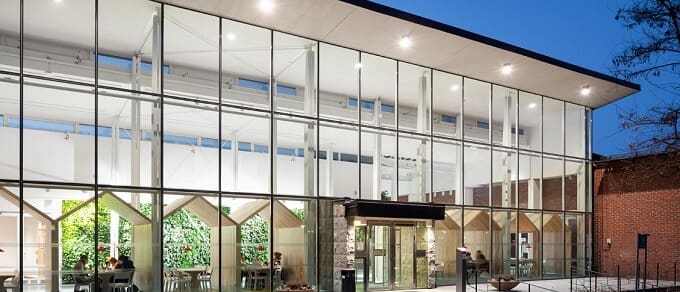
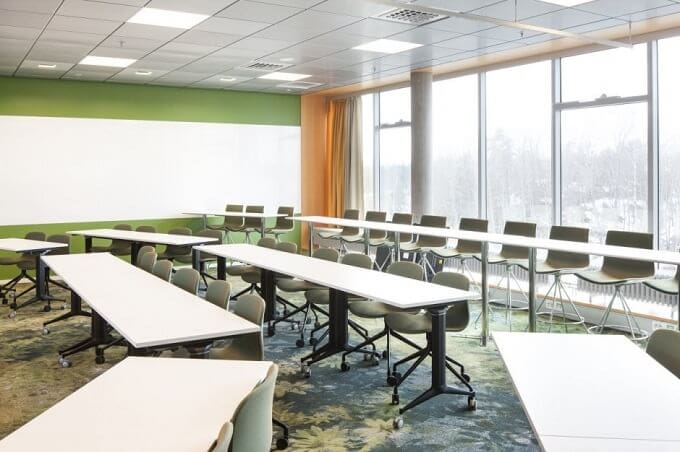
    Students in the  21st century have other learning demands than those of 100 years ago had, and space designs should be adapted according to nowadays education objectives such as creativity, collaboration and student centered learning. Grounded on research, learning and higher education,  “Future Learning Environments” is a project started in 2009 by Stockholm County Council and Karolinska Institute in Sweden, where the main objective was to improve and expand teaching environments for its students. They commissioned the interior design studio Tengbom to develop the interiors of the project and also interpret Karolinska Institute’s design manual on the Formal Learning Environments.

    Institute-interior

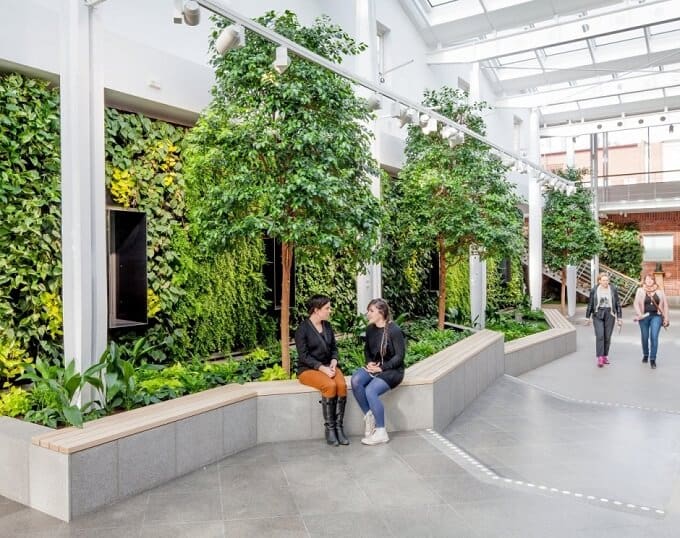
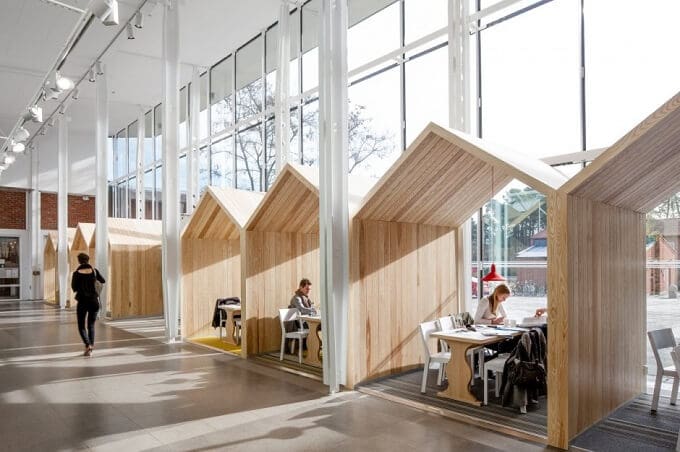
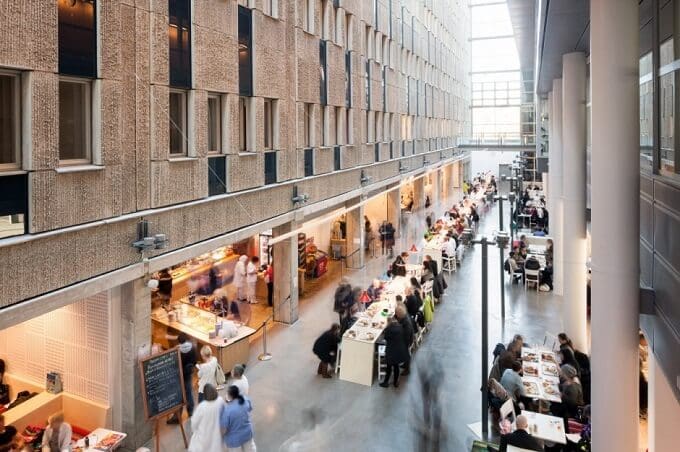
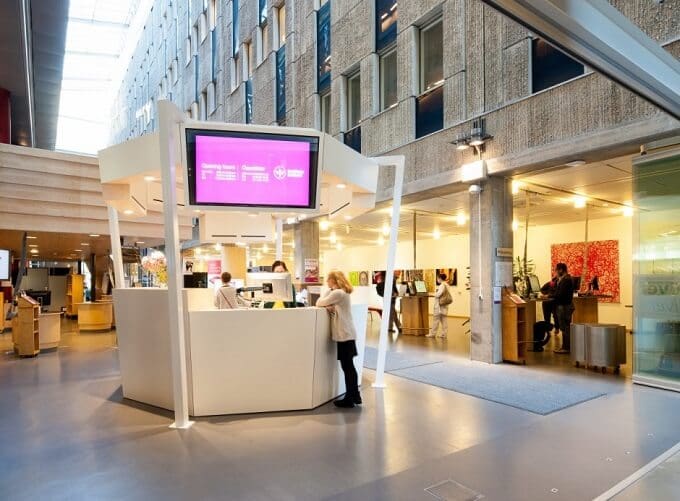
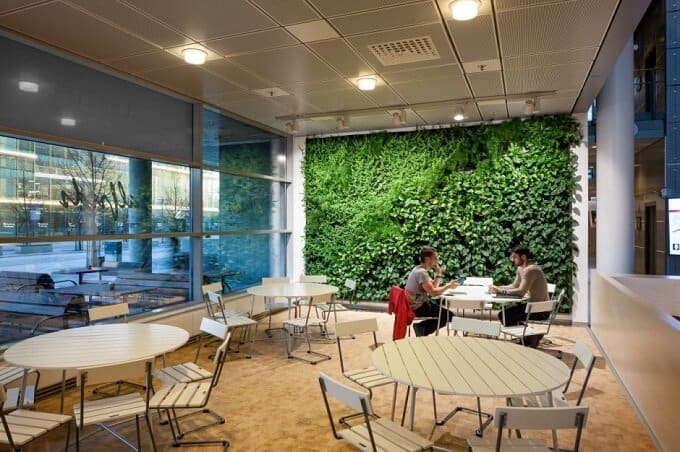
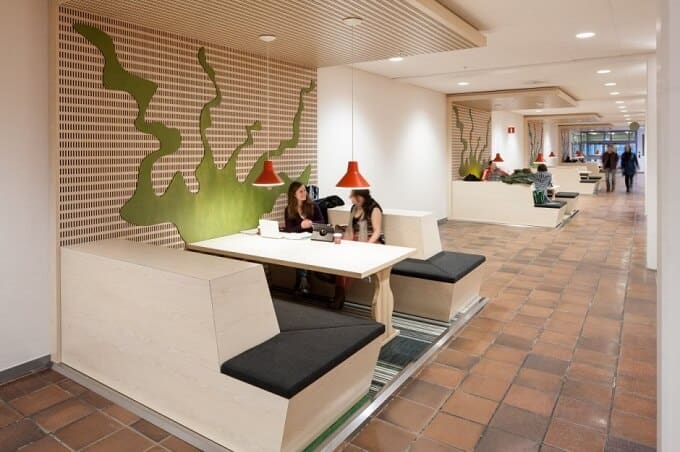
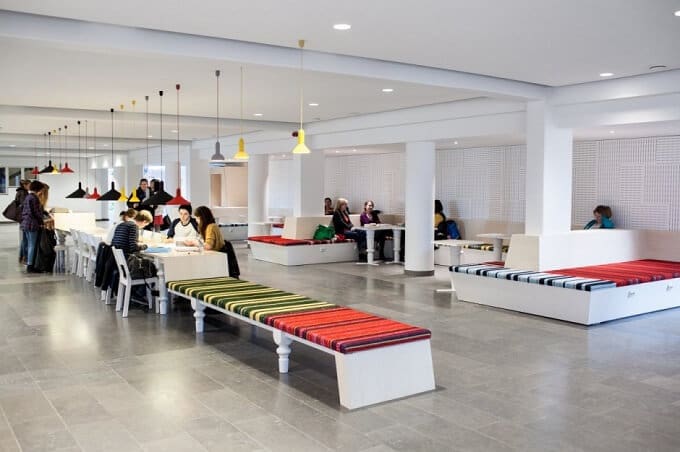
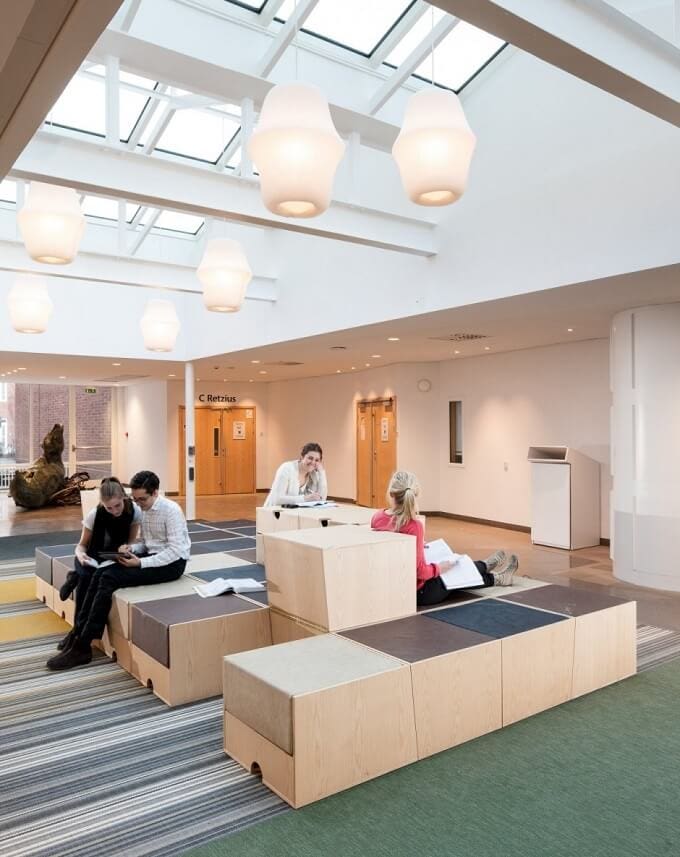
    Choosing the “home” as a metaphor, Tengbom proposed to create a “Home away from Home,” a second home for the informal zones at the Karolinska Institute in Solna. These facilities are located primarily next to the lecture halls and were initially “leftover” and unused areas. The “Home away from Home” concept meant a natural meeting place, a social arena, where students, teachers and researchers can meet and get together, exchange thoughts and ideas, socialize, learn from one another-peer learning.

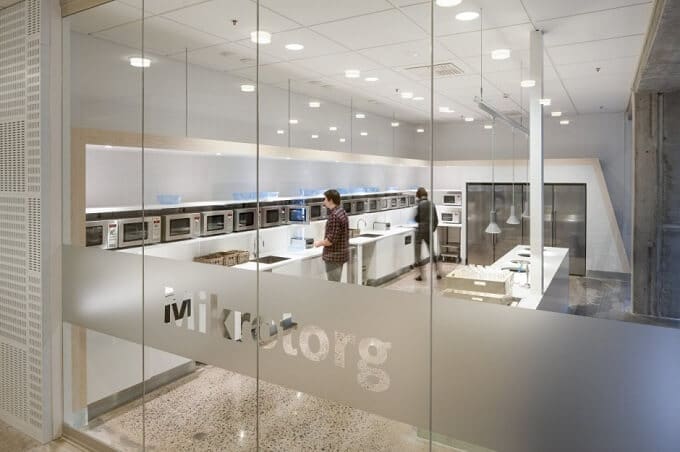
    A meeting place with areas for meals, communal activity, open squares, space in the room and reading areas for concentrated study, but also with a central information point. The end result is a compact and cosy environment, which creates a positive, productive hustle and bustle. This variety was designed to help people from different cultures to get on well together and feel at home. Through this new interior design for Karolinska Institute at Solna , its brand is strengthened into a place accessible to everyone. Here are some images to understand better the design concept.

    Places-for-learning

    Places-for-eating

    Karolinska-Institute

    Places-for-socializing

    Spaces-to-socialize

    Karolinska- Institute-Sweden

    Kitchen-area

    Learning-areas

    Area-for-interaction

    Photos © Sten Jansin


    Project details:

    Client: The Karolinska Institute
    Year of Commission: 2011-2012
    Interior Design and style: Tengbom
    City: Solna
  • Outstanding Hotel Design to be Built in Lima, in front of the Pacific Ocean

    Outstanding Hotel Design to be Built in Lima, in front of the Pacific Ocean

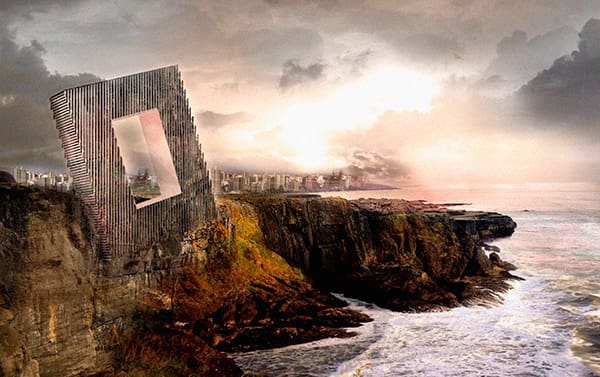
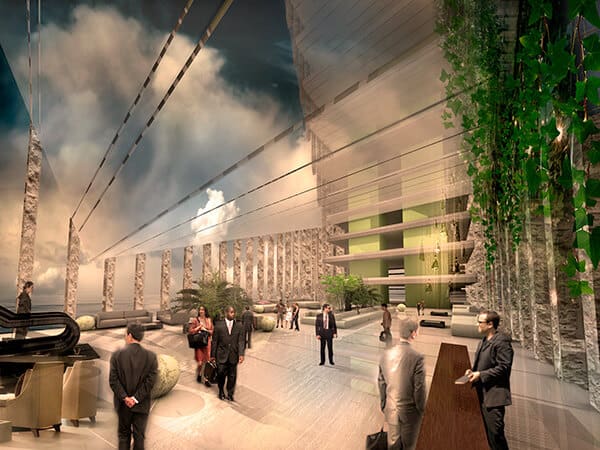
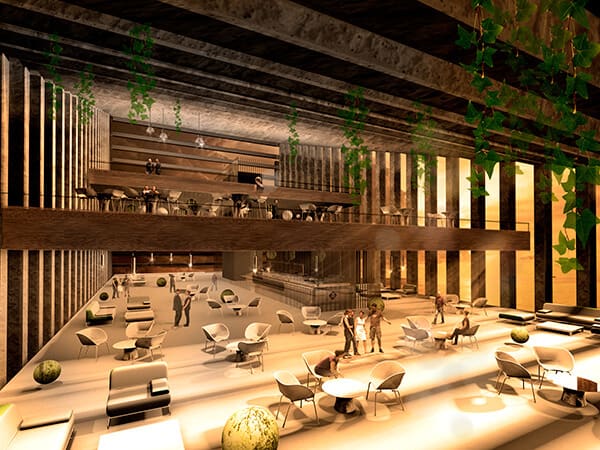
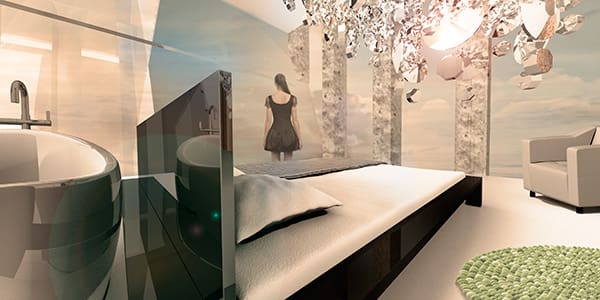
    Remarkable building silhouette, amazing location and exquisite amenities, this is the picture of the “Unbalanced Hotel” which will be built by OOIIO Architecture for a private client, an Latin American promoter, who wants to create an innovative and worldwide recognizable building with accessible investment. We’re sure that after you’ll see the following pictures, you’ll be as amazed as we by the design concept of this hotel.

    Unbalanced-Hotel-in-Lima

    Suggestive entitled “Unbalanced Hotel”, the building’s unique  and futuristic shape hanging on a cliff seems more a fantasy, then something to be built in reality. The project is really special we think because it has the ability for catching instantly everyone’s attention and will surely become a landmark for those 8 million inhabitants of Lima, and the whole Peru. It’s for sure a project to be watched. The hotel will be built in a very quiet area outside the city centre of Lima, Peru. In fact, besides its peculiar shape, it will overlook astonishing views of Pacific Ocean, because it will be placed right in the proximity of the Andes to the Pacific Ocean.

    The interesting yet not very friendly topography won’t be a barrier to building the Unbalanced Hotel, on the contrary, the architects took advantage of this fact in designing its surprising and original look. They’ll opt for a frame-building instead of a traditional one in order not to obstruct the magnificent views and landscape, and the observer will appreciate both the surroundings and the building itself. Hanging on a cliff with a relative height, the Unbalanced Hotel is really something you don’t see everyday, the perfect “frame” to attract people and activities into it. It will feature 125 rooms, but it will be given a great attention to conference rooms, restaurants, meeting rooms, exhibitions, etc.
    Unbalanced-Hotel-back-view

    Unbalanced-Hotel-interiors

    Unbalanced-Hotel-restaurants

    Unbalanced-Hotel-rooms

    Photos © OOIIO Architecture


    Project details:

    Status: Design Development.
    Location: Lima, Peru.
    Area: 16.070 m2.
    Design: OOIIO Architecture.
    Team: Joaquín Millán Villamuelas, Lourdes Martinez Nieto, Cristina Vicario del Cojo, Patricia Moreno Blasco.
    Client: Private.


  • New Spiritual Retreat on the Campus of Stanford University, USA

    New Spiritual Retreat on the Campus of Stanford University, USA

    A refuge to go and take a break from the intensity of daily life and be fulfilled, this is the purpose that Windhover Contemplative Center in California, United States will have. Although its construction has been on the Stanford University’s agenda for about 15 years, only this year the project  received the final approval in June for both design approval and site, and it’s scheduled to be finished in spring 2014.

    Windhover- Contemplative-Center-01

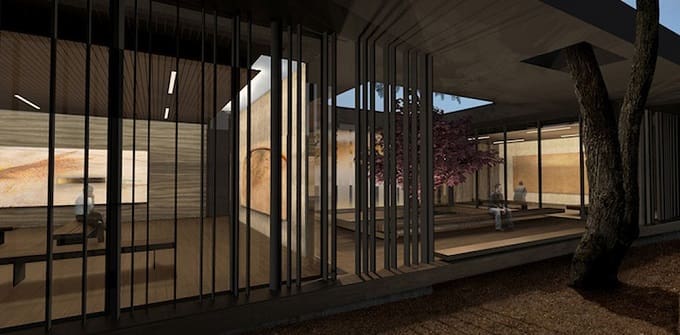
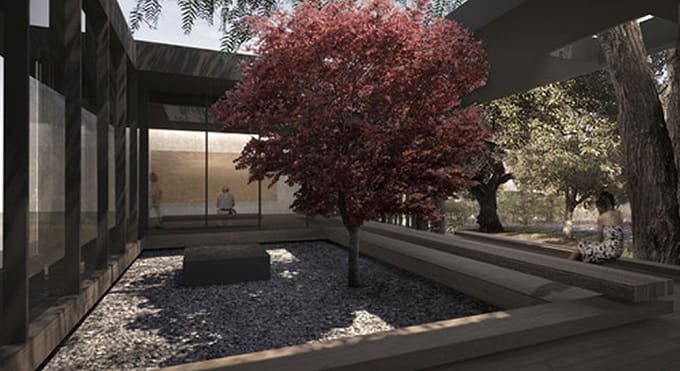
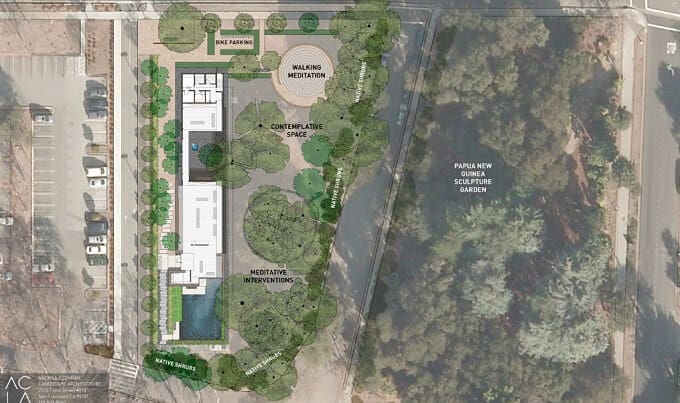
    Adjacent to the Papua New Guinea Sculpture Garden at the corner of Santa Teresa Street and Lomita Mall, the new Windhover Contemplative Center will be a spiritual retreat, a one-storey, 4,000 sq ft  space that will inspire and promote personal renaissance where university’s community (staff members, students and faculty) will be able to reflect on themselves quietly in the daytime.

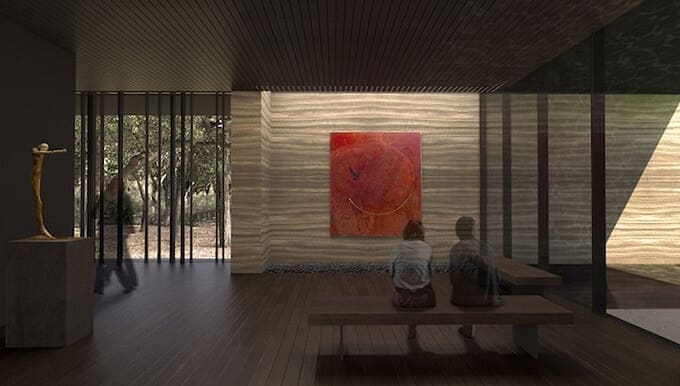
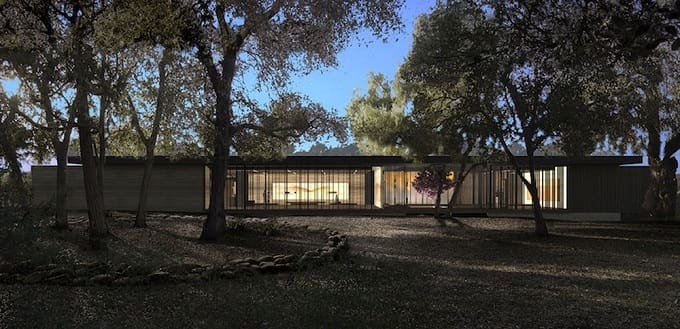
    The chapel-like center will be built in the front of Roble Hall, neighboring to a natural oak grove, where now is a parking lot. The idea of making such a place belongs to the late Nathan Oliveira, an internationally acclaimed artist who was Stanford art Professor for three decades. The art Professor wanted that people have a center to re-establish balance and find tranquility while viewing his large paintings inspired by birds in flight.  San Francisco-based firm Aidlin Darling Design teamed up with Andrea Cochran Landscape Architecture to design this $4.2 million center showcasing a building enclosed in glass in order to let people contemplate the Oliveira’s paintings even from outside anytime.

    Windhover- Contemplative-Center-interior

    Before entering the refuge, there’s a long, private garden sheltered from its surroundings by a line of tall bamboo. The exterior landscaping will have garden areas, fountains and reflection pool which will ensure ambient sound as an aid for meditation. Inside the building, there are three rooms where one can see  five large paintings belonging as we said to Professor Nathan Oliveira. Rammed earth walls, wood surfaces, benches and cushions along with the outdoor design guarantee the visitor a great visually, olifactorily, tactily and acoustically experience. What do you think about this place?

    Windhover- Contemplative-Center-02

    Windhover- Contemplative-Center-exterior

    Windhover- Contemplative-Center-03

    Photos © Aidlin Darling Design

  • Striking Building for the New Chiller Plant for Ohio State University Completed in June

    Striking Building for the New Chiller Plant for Ohio State University Completed in June

    As part of the University’s Framework Plan for the Cannon Drive Corridor, Ohio State University South Campus Central Chiller Plant was recently completed by US practice Ross Barney Architects . Situated at the edge of campus, on a proeminent site, in a surface parking lot west of the College of Pharmacy, the new $72.5 m building now serves as an iconic anchor at an important pathway to the main campus.

    Chiller-Plant-in-Ohio

    Designed to provide the new Medical Center tower the medical center and all associated buildings in the campus zone “ice” water to be used for an efficient system of air conditioning in the treatment rooms, Ohio State University South Campus Central Chiller Plant is a long-term, active and sustainable solution for chilled water production and distribution.

    The architects’ approach consisted of a modular design with auxiliary constituents of a critical equipment, that will be redundant and durable, being able to support 12,500 tons of chilled water for the medical center customers  in operating rooms, intensive care, etc. In order to improve reliability and have chilled water for critical operations during power outages, they establish emergency power with the chiller plant. Initially with a capacity of 15,000 tons, the chillers for the plant has now a total chilled water capacity of 30,000 tons. They were set in phases and are remotely supervised with powerful industrial control systems. The design team received overall guidance from Champlin Architecture for this project.

    Chiller-Plant-in-US

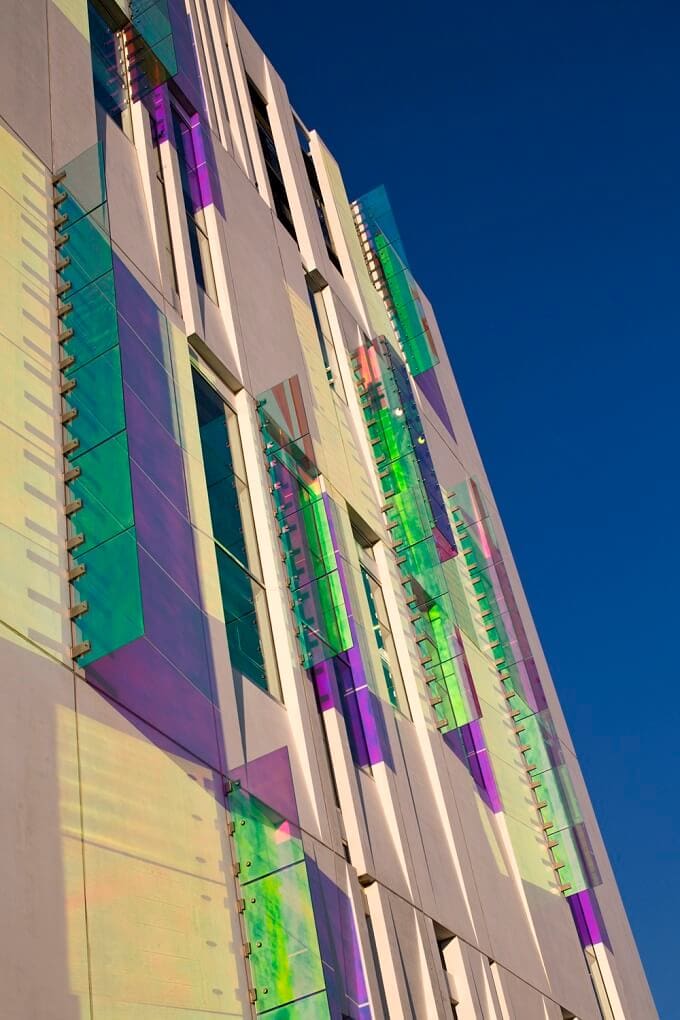
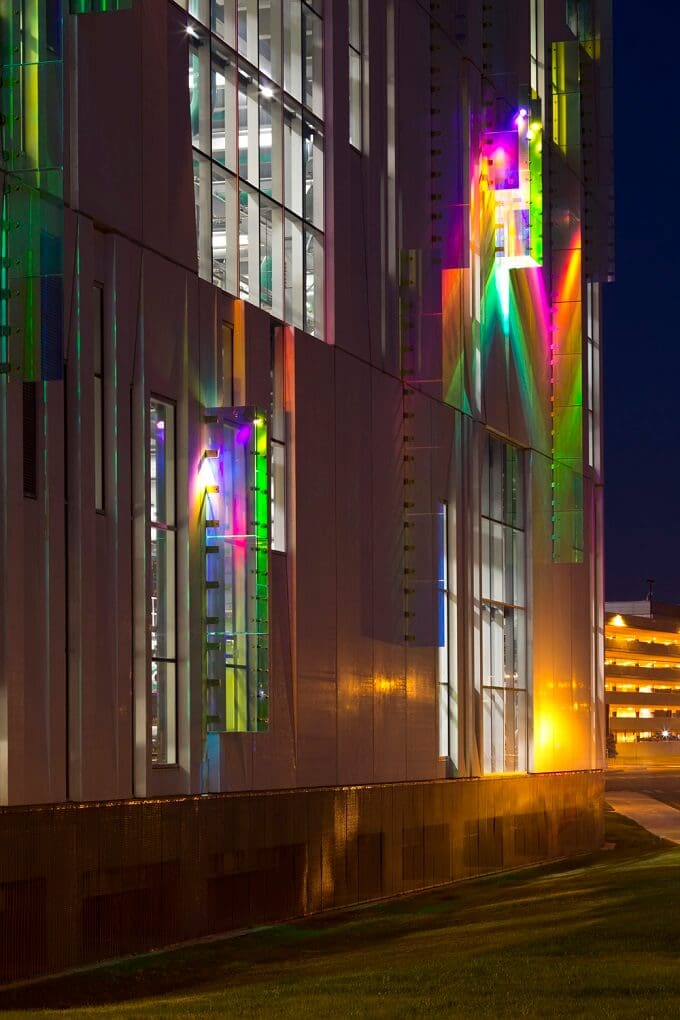
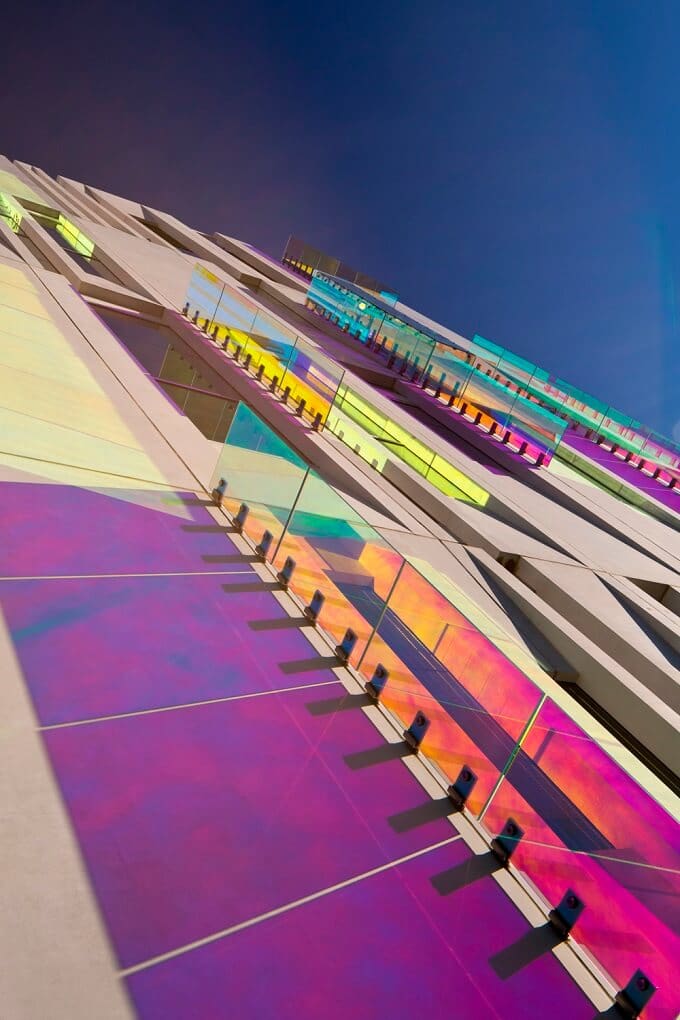
    This 95,737-square-foot building has a striking, artistic appearance that draws attention right away due to the beautiful kaleidoscope of colors showased during daytime. The 10-story South Campus Central Chiller plant is comprised of all galvanized structural steel to face fluctuating external and internal extreme temperatures in an urban Midwest environment. Its architecture shell is the most unique feature of the Chiller Plant: the structure consists of concrete panels with a high sheen polish finish and dichoric glass fins that create the illusion of motion as the reflected light changes colors with the movement of the sun.

    Building-facade-during-daytime

    Large glass-covered openings frame views of the chiller equipment, helping to spot the building’ purpose. The design incorporates sustainable principals and will be integrated with the planning of LEED certification of other District facilities, therefore the structure will be intact and corrosion-free in the years to come.

    Landscaping around the building is the solution to revitalize the greenscape along the nearby Olentangy River. A “pond” of prairie grass will be planted, also plaza and landform seating area will be created in order to engage the pedestrian traffic.

    Artistic-glass-incorporated

    Building-facade-detail
    Plant-at-night

    Kaleidoscope -of-colour-on-the building

    Photos © Brad Feinknopf, Ross Barney Architects


    Project details:

    Client: The Ohio State University
    Location: Columbus, OH, United States
    Design Architect: Ross Barney Architects
    Architect of Record: Champlin Architecture
    Local Architect: Lupton Rausch
    Program: 30,000 tons chilled water
    Costs: $72.5 million
    Status: Complete 2013

    South Campus Central Chiller Plant


  • Newly Opened Student Centre in US Showcases Innovative and Energy Efficient Design

    Newly Opened Student Centre in US Showcases Innovative and Energy Efficient Design

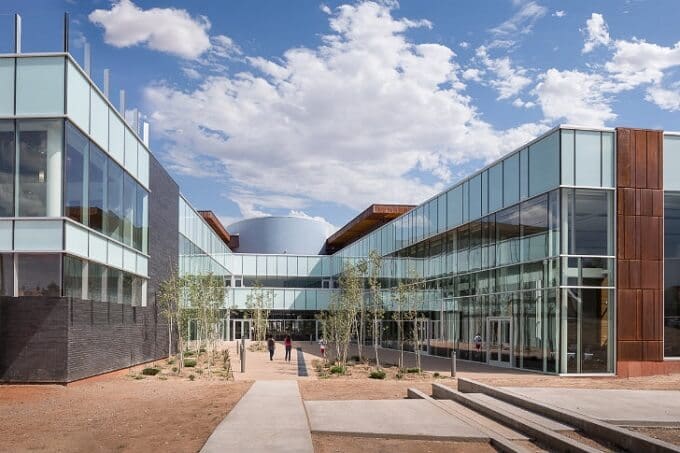
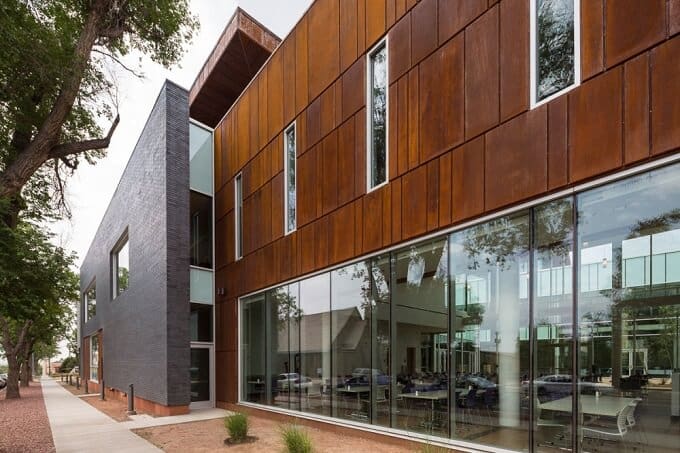
    Diamond Schmitt Architects teamed up with Studio Southwest Architects to design a new project in Las Vegas, Nevada, United States. It’s about the Student Centre at the New Mexico Highlands University, which was started in 2010 and it was recently completed, this summer.  The three-story building is situated at an important crossroads on the edge of the campus, being a central meeting point that links the campus with the rest of the city of Las Vegas. Envisioned to meet students’ needs of having a much larger space, NMHU Student Centre showcases a modern, highly innovative and energy efficient design both inside and outside.

    NMHU-Student-Centre-Diamond-Schmidt-Architects

    With the goal to obtain LEED Gold certification for this Student Centre, Diamond Schmitt Architects designed a building that make us of innovative technologies and passive design to respond to the capricious desert climate defined by  hot summers, monsoons, cooler nights and even cold winters, but also to minimize energy consumption and maximize the free energy potential of the sun.

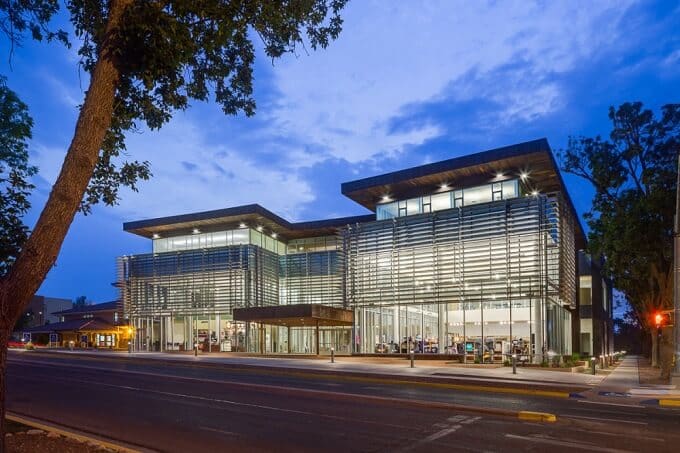
    The most important feature is that the building benefits from, is the motorized sun traking louver system on the south side used to shade the interiors from direct sunlight during the day and opens during the night. This system is said to be one of the first of its kind in North America. The louvers enable sun shading to the grade levels without compromising view and transparency. In this way, the system drastically reduces mechanical loads. To help its mechanical energy system, besides the louvers, the building also features green roofs and geothermal well field.

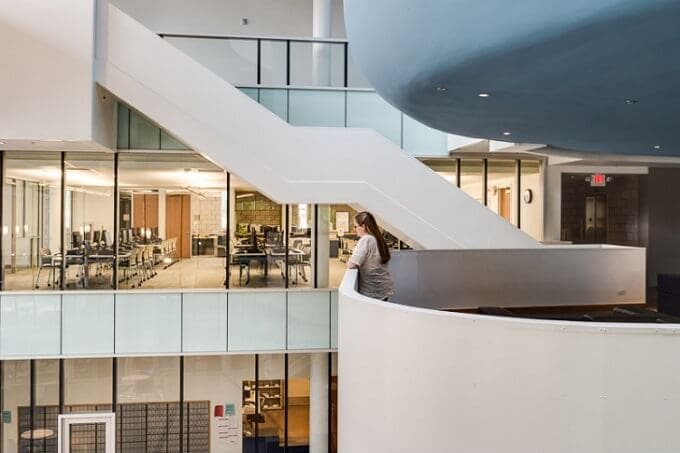
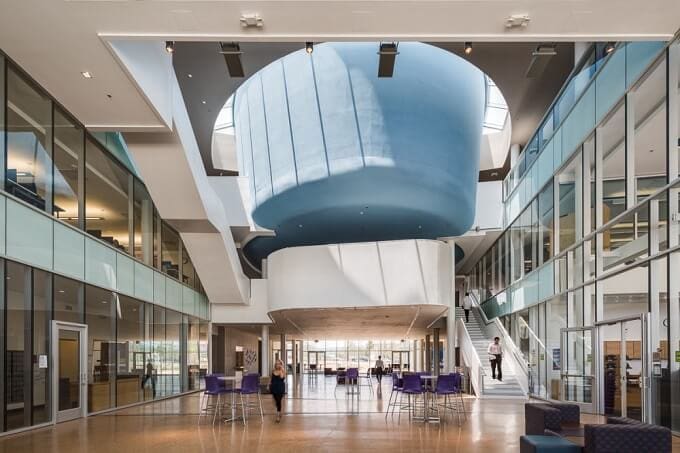
    Inside the NMHU Student Centre, there are various zones (study, meeting, programatic areas), versatile ballroom and conference facility, bookstore, theatre, café, post office and cafeteria that opens onto a sheltered courtyard. A computer lab, student offices, meeting rooms, dining rooms and a dramatic student governance chamber are to be found on the upper floors. The second floor has a bridge that is linked with the adjacent library.

    NMHU-Student-Centre-Diamond-Schmidt-Architects-7
    Student-Centre-at-night
    Student-Centre-exterior
    Student-Centre-interior-detail
    Student-Centre-Interiors
    Photos © Robert Reck
  • Contemporary Tschingel Complex Design by Rykart Architekten

    Contemporary Tschingel Complex Design by Rykart Architekten

    If you are looking a veritable inspiration for a modern architecture, then I recommend you to pay attention to the work of Rykart Architekten.  The Tschingel architecture consists of complex houses, which are  located in a lovely place offering  a splendid view. By overlooking to the attractively lake, you can see not only the lake beauty that you can admire, but also the extraordinary architectural design of this complex, situated in Brienz.

    Tschingel-Brienz

    The Rykart Architekten choose to develop a contemporary design by ensembling five buildings in a fragmented nature, which succeeded to transform the traditional chalet into a modern design one.

    The 34 small apartments, which are unobstructed from 1 ½ to 3 ½ rooms, form together the Tschingel complex.  These apartments have large balconies, which are embellishing the facade of the building and maintain the horizontal banding of the house volume.Tschingel-Brienz1

    Tschingel-Brienz2

    situation tschingel linien mf

     Photos © Rycart Architekten


    SPECIALISTS

    Minder & Partner GmbH, construction management, Brienz

    Mätzener & Wyss AG, civil engineers, Meiringen

    Schmidiger Peter AG, electrical engineers, Interlaken

    Flück Building Services Ltd, HVAC planned, Brienz

    Office B, Physics, Matten b. Interlaken