
The average American household loses 10 minutes every single morning searching for keys, shoes, and the thing someone swore they left “right by the door” — and almost none of it has anything to do with not having a mudroom. It has to do with not having a system. If you’re searching for entryway storage ideas no mudroom required, you’ve already figured out the right framing: the problem isn’t the missing room, it’s the missing zones. There’s a real difference, and conflating the two is why people spend money on hall trees that end up as expensive coat piles and benches that collect mail, backpacks, and whatever that mystery charger is that nobody claims.
Quick Answer
The average American household loses 10 minutes every single morning searching for keys, shoes, and the thing someone swore they left ‘right by the door’ — and almost none of it has anything to do with not having a mudroom.
This is fixable. Not by buying more furniture — by building zones. Nine specific ones, matched to how your household actually moves through a space.
Why the “Just Add a Bench” Advice Keeps Failing You
In This Article
- Why the “Just Add a Bench” Advice Keeps Failing You
- Entryway Storage Ideas No Mudroom Required: The Zone System Explained
- 1. The Command Hook Wall (for Coats, Bags, and Daily Carry)
- 2. The Shoe Corral (Without the Shoe Rack Eyesore)
- 3. The Key and Small Essentials Station
- Entryway Storage Ideas No Mudroom Needed: Making It Work in Under 18 Inches of Space
- 4. The Bag Zone
- 5. The Mail and Paper Triage Zone
- 6. The Pet Zone
- 7. The Seasonal Gear Zone
- 8. The Charging Zone
- 9. The Return Zone
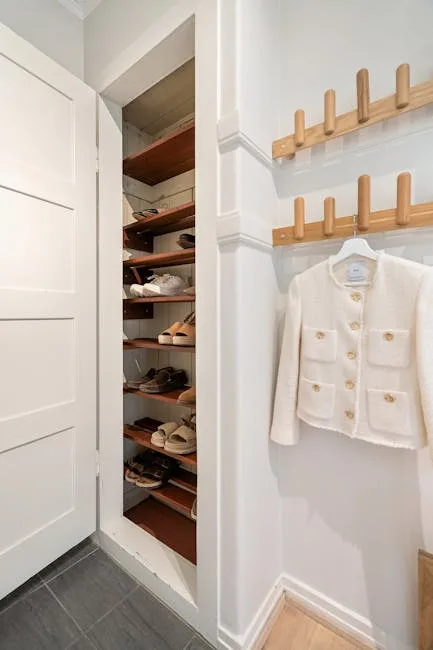
Most entry clutter is a system problem, not a product problem. I watched this play out enough times in client homes that it stopped surprising me — someone buys a beautiful hall tree from a big box store, places it near the front door, and within three weeks it looks like a lost and found bin. The hall tree didn’t fail. The system failed, because no one mapped what actually comes through that door every single day before buying anything.
The real issue is that most entries lack dedicated drop zones for each category of item. Keys go somewhere different every day. Shoes migrate. Coats land on whatever surface is closest. When everything shares the same vague “entry area,” nothing has a home, and the visual result is chaos regardless of how much storage you technically have.
Before you buy a single thing, stand at your front door and watch what happens. Literally watch — who enters, what they’re carrying, what they drop first, where they go next. The pattern you observe in three days will tell you more than any product guide ever could. This takes five minutes of attention most people never spend.
According to the NAHB, fewer than 20% of new homes built under 2,000 square feet include a dedicated mudroom — which means the overwhelming majority of American homeowners are improvising their entry storage with whatever they can find. That improvisation usually looks like a single bench surrounded by creeping chaos.
Buying a bench or hall tree without first mapping your household’s traffic patterns creates visual noise, not order. The bench becomes a surface. The hooks fill up with coats that haven’t moved in eight months. What you actually needed — distinct zones for keys, shoes, bags, and outerwear — never got built, because you started with a product instead of a problem.
Actionable takeaway: Before purchasing anything, spend one week writing down the five items you search for most often near your door. That list is your zone priority map.
Entryway Storage Ideas No Mudroom Required: The Zone System Explained

Before getting into each specific zone, it helps to understand the logic that holds all of them together. Every zone in this system does one thing: it removes a decision. When your keys have a single designated spot, you don’t decide where to put them — you just put them there. Multiply that across nine categories of daily-use items and you’ve eliminated the cognitive friction that causes the morning chaos in the first place.
The zone system works precisely because it doesn’t require a mudroom. A mudroom gives you a dedicated room with built-in infrastructure — benches, cubbies, utility lighting, often a second door to create an airlock between outside and inside. What the zone system does is replicate that function using whatever wall space, floor space, and furniture arrangements your actual entry allows. The room you’re missing becomes less relevant when you’ve accounted for every category of item that passes through.
Each zone has a defined boundary, a defined category of items, and a defined maximum capacity. When something doesn’t fit within those parameters — because the category is full — the system tells you to remove something before adding it, rather than expanding indefinitely. That constraint is what makes it work long-term.
1. The Command Hook Wall (for Coats, Bags, and Daily Carry)

Height layering is the thing nobody tells you, and it’s the single detail that separates a functional hook wall from a tangled mess of coats blocking each other. One row of hooks at shoulder height sounds logical until you’re pulling a coat off a hook and knocking a backpack onto the floor every single morning. Three heights. That’s the fix.
Mount hooks at three distinct levels:
- 66 inches from the floor for adult coats and heavy outerwear
- 48 inches for bags, backpacks, and crossbodies — items you need accessible
- 30 inches for kids’ items, dog leashes, or reusable grocery bags
Spacing between hooks matters as much as height. Six to eight inches between individual hooks prevents items from overlapping and — this is the part that’s actually annoying in practice — from hiding each other. When a puffy coat covers the bag hook next to it, the bag ends up on the bench, which is where the chaos starts.
Interior designers recommend a minimum of 14 inches of horizontal wall space per person to prevent hook zones from feeling cramped in narrow entries. For a family of four, that’s 56 inches of wall — roughly five feet. If you don’t have that on a single wall, split it: adults on one side, kids and accessories on the other.
The two-hook rule is non-negotiable. Limit each household member to exactly two hooks. More hooks isn’t more organized — it’s permission to pile. Every additional hook beyond two becomes a holding zone for items that should be elsewhere, and you end up with a wall that looks full but functions badly. I’ve seen this in $2 million apartments and $900/month rentals alike. The number of hooks is never the problem.
Use hooks rated for the actual weight you’re hanging. A coat hook rated for 5 lbs holding a 4 lb winter parka and a stuffed gym bag is going to fail at the worst possible moment. Look for hooks rated at 15–25 lbs for anything bearing outerwear.
Actionable takeaway: Map your wall space, calculate 14 inches per person, and mark the three height levels with painter’s tape before committing to any hardware placement.
2. The Shoe Corral (Without the Shoe Rack Eyesore)
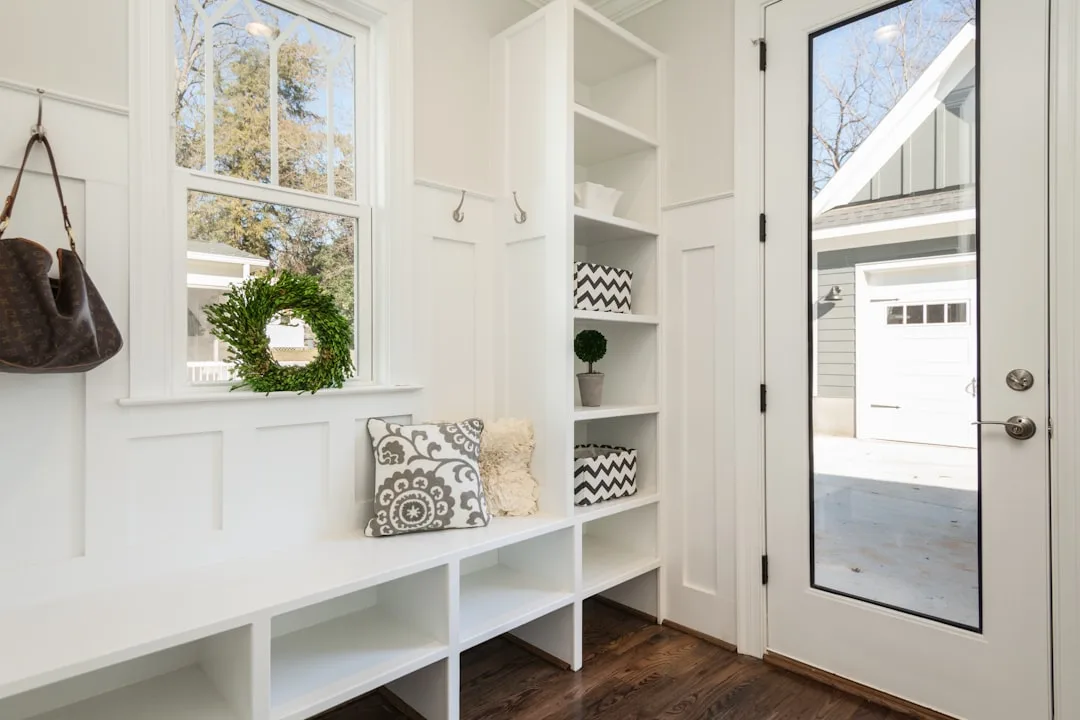
Here is the thing about visible shoe racks: they are almost universally recommended in entry storage guides, and they almost universally make entries look worse. A rack designed to hold shoes still shows shoes — heels tipped over, mismatched sneakers, a single flip flop that’s been there since July. The problem isn’t organization. The problem is visibility.
A standard shoe rack holding 12 pairs takes up roughly 36×12 inches of floor space — the exact same footprint as a slim enclosed storage cabinet that holds 20+ pairs behind closed doors. Same floor space. One of them looks like a shoe store back room and one looks like furniture. This is not a close decision.
Enclosed options that work in narrow entries:
- Slim shoe cabinets under 12 inches deep function in entries as narrow as 36 inches wide — look for the IKEA Hemnes shoe cabinet or similar slab-front designs that read as furniture, not storage
- A low bench with angled interior shoe shelves hides footwear while providing seating — the angled shelf design fits more pairs in less depth than flat shelving
- Ottomans with interior storage work as hybrid shoe-and-seating solutions in entries under five feet wide, and they can be moved aside for vacuuming
The active shoes rule is what actually makes this work. Two pairs per person at the entry. Maximum. Rotate everything else to a bedroom or hall closet seasonally. I used to tell clients this and watch them nod and then leave eight pairs by the door anyway — until I made them physically count the shoes at their entry every Sunday for a month. After four weeks, they stopped arguing about the two-pair limit.
Seasonal rotation is the system, not the furniture. The furniture just holds what the system allows in.
Actionable takeaway: Count the shoes currently near your front door. If it’s more than two pairs per person, the problem isn’t the storage unit — it’s the rotation system that doesn’t exist yet.
3. The Key and Small Essentials Station

Keys, wallet, sunglasses, transit cards, lip balm, the spare inhaler — these are the items that derail mornings more than anything else, and they’re the items most entry storage systems completely ignore. A hook wall handles coats. A shoe corral handles footwear. Nobody builds a zone for the three-inch objects that disappear into couch cushions and jacket pockets and the general void of a flat surface near the door.
What a proper small essentials station requires:
- A wall-mounted key hook positioned between 54 and 60 inches from the floor — eye level for most adults, which is why you actually use it instead of forgetting it exists
- A shallow tray or catch-all bowl, no wider than 10 inches, positioned directly below or beside the key hooks — sized small intentionally, because a large tray becomes a junk drawer with better lighting
- One small drawer or lidded container for items that need to be hidden (transit cards, spare cash, medications) — visibility of these items creates clutter perception even when they’re technically organized
The shallow tray is doing significant work here. It creates a single, bounded landing zone for everything small. The boundary matters: when the tray is full, something has to leave before something new comes in. A 10-inch tray fits a wallet, sunglasses case, and keys. That’s it. That constraint is the system.
Avoid the temptation to add a charging station to this zone on day one. A charging station works well in an entry, but it requires cable management — and cables without management become the new clutter. If you want a charging station, build it as a separate, dedicated zone with a power source behind furniture or through the wall, not a power strip sitting on a tray surrounded by cables.
Actionable takeaway: Mount a key hook at eye level this week — before you buy anything else. That single change eliminates the most common morning search immediately and costs under $15.
Entryway Storage Ideas No Mudroom Needed: Making It Work in Under 18 Inches of Space

This is where most entryway storage ideas no mudroom guides fall short: they show you beautiful wide entries with 8 feet of wall space and call it practical advice. The reality for apartments, townhouses, and older homes is often a hallway between 36 and 48 inches wide with a door that opens inward and exactly one wall that isn’t interrupted by a light switch, radiator, or closet door.
Here’s how to make the zone system work in genuinely tight spaces:
Vertical is your primary axis. When floor space is limited to 18 inches of depth or less, every solution has to go up. Wall-mounted shoe storage with a fold-down seat, over-door organizers on the back of the entry door itself, and pegboard panels that consolidate hooks, shelves, and small bins into a single footprint all function in entries that can’t accommodate floor furniture.
Over-door storage is underused in almost every entry. The back of a front door that opens inward gives you approximately 18 square feet of usable surface area that most people leave completely blank. An over-door organizer with multiple pockets handles shoes, scarves, gloves, and dog leashes without touching floor space or wall space. The caveat: measure your door clearance first. Many over-door organizers assume 1.5 inches of clearance behind the door, and a baseboard or threshold can make that impossible.
A floating shelf at 48 inches acts as a mini command center in entries too narrow for any floor furniture whatsoever. Mount a single 8-inch deep shelf at 48 inches, add two hooks below it, and attach a small magnetic key strip to the underside. That combination — shelf, hooks, key strip — handles coats, bags, keys, and a landing surface in a footprint of roughly 24 by 8 inches of wall space.
Actionable takeaway: Measure your entry’s narrowest point before researching any furniture. If it’s under 36 inches clear of any obstacles, you’re in wall-only territory, and every solution should be wall-mounted or over-door.
4. The Bag Zone

Backpacks, gym bags, work totes, reusable grocery bags — these are not coats, and treating them like coats (hanging them on the same hooks in the same zone) is why hook walls fill up and stop functioning. Bags are bulkier than coats in one dimension and lighter in another. They need dedicated hooks at the right height, and they need to be separated from outerwear to prevent the layering problem that makes hooks impossible to use.
The 48-inch hook height from Zone 1 covers this if you’ve committed to the three-tier system. But the bag zone becomes a distinct zone when it gets its own labeled or visually defined space — even if that’s just a different hook style or a different section of wall. Visual differentiation is what makes zones function in an open entry rather than a dedicated room.
For households with kids, the bag zone is where backpacks live during the school week. This means the bag zone needs to be accessible to kids — below their reach isn’t a zone, it’s a surface they’ll ignore. The 30-inch hooks handle small kids. As kids get taller, adjust. The system should grow with the household.
Actionable takeaway: If backpacks are currently landing on your bench, couch, or floor, the bag zone either doesn’t exist or isn’t at the right height. Fix the height before buying additional storage.
5. The Mail and Paper Triage Zone
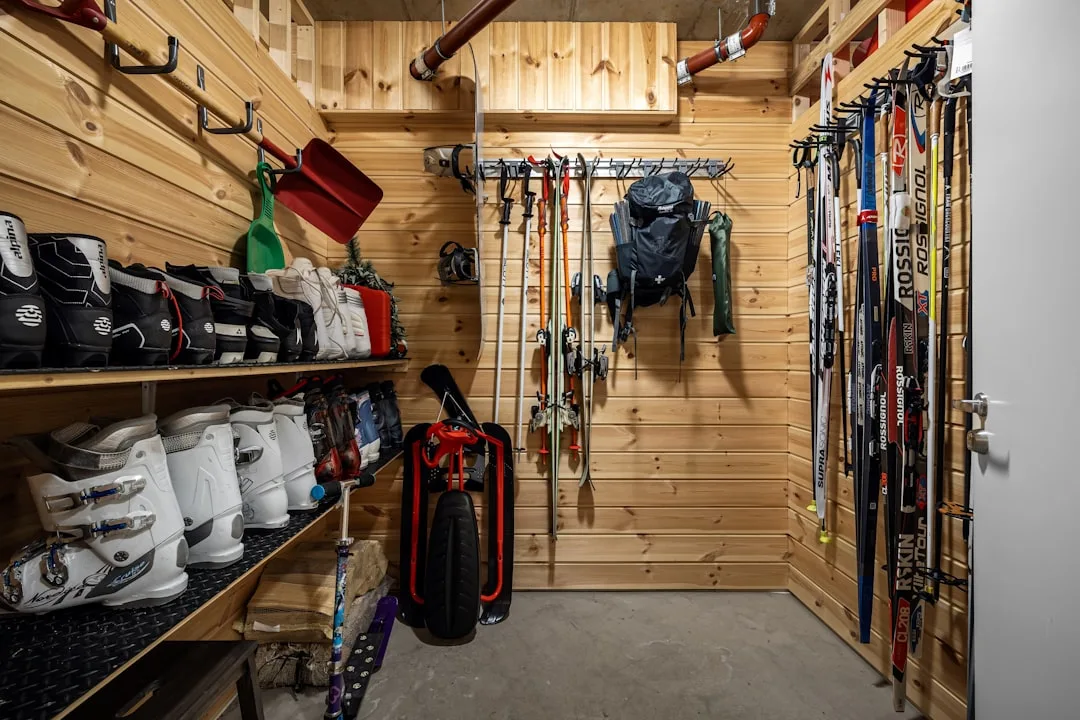
Paper is the entry clutter category most people refuse to acknowledge, and it’s the one that makes every other zone look worse because paper spreads. A single piece of mail on a bench turns into a pile within 48 hours. The pile turns into a visual signal that the entry is chaotic, and once an area reads as chaotic, everything migrates to it.
The triage zone is not a filing system. It’s a 48-hour holding zone with a maximum capacity of three items. The categories are: action required, to be filed, and recycle. Three slots, three items max. Anything beyond that means something from a previous day hasn’t been processed, which is a calendar problem, not a storage problem.
A wall-mounted letter organizer with two to three slots costs under $20 and installs in 10 minutes. Mount it at eye level near the door, not at the end of a hallway where you’ll walk past it without stopping. The friction of distance is enough to break the habit.
The recycling bin lives here, not in the kitchen. Place a small bin directly under or beside the mail triage zone. Most junk mail can be recycled the moment it enters the house, before it touches any surface. If the recycling bin is in the kitchen, the mail travels through the house and lands somewhere it shouldn’t.
Actionable takeaway: Count the pieces of paper currently in your entry. If it’s more than five, you need a triage zone — and you probably also need a recycling bin closer to your front door.
6. The Pet Zone
Dog leashes, cat carriers, pet waste bags, bandanas, retractable leads, the backup collar that lives near the door just in case — households with pets generate a specific category of entry clutter that no generic storage guide accounts for. Pet items end up tangled with coat hooks, buried under shoe piles, or jammed into the catch-all tray where the keys should be.
A dedicated pet zone requires three things:
- A hook at 30 to 36 inches specifically for leashes — this height makes leashes accessible without crouching and prevents them from tangling with coats above
- A small bin or basket for consumables (waste bags, treats, the folded bandana) — lidded is better than open for anything with a smell
- A designated floor spot for a portable carrier or crate if relevant — not a permanent spot for a large crate, but a zone marking that tells everyone in the household where the carrier lives when not in use
For households with dogs, the pet zone often becomes the most-used zone in the entry because it’s engaged every single day, often multiple times. That frequency justifies more investment in its organization than a zone used seasonally.
Actionable takeaway: Pull out every pet-related item currently in your entry. If any of it is on a coat hook or in the shoe area, it needs its own hook and bin before you do anything else.
7. The Seasonal Gear Zone
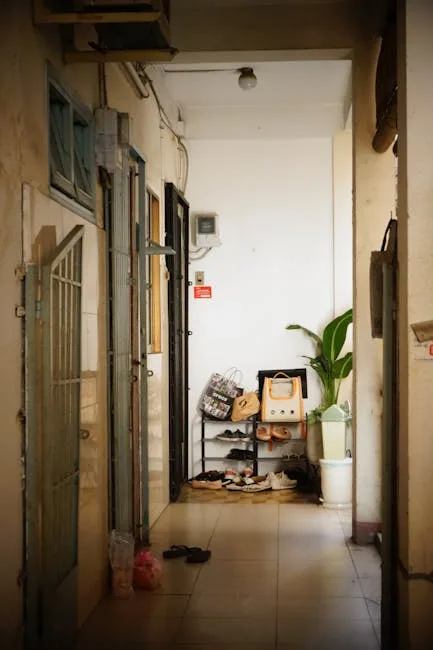
Umbrellas, gloves, scarves, hats, sunscreen, bug spray — these are items that rotate in and out of daily use by season, and they’re the items that make every other zone worse when they don’t have a home. Winter gloves stuffed into a shoe cabinet. Umbrellas leaning against a wall in July. A sunhat hanging on an adult coat hook in October.
The seasonal gear zone works as a single basket, bin, or drawer that gets physically swapped twice a year. Not reorganized — swapped. One container lives at the entry with the current season’s items. The previous season’s container moves to a closet shelf or under-bed storage. The physical swap takes 10 minutes and solves six months of accumulated seasonal clutter.
Umbrella storage specifically: the floor-standing umbrella stand is a nineteenth-century solution to a nineteenth-century problem and it works exactly as well now as it did then. A single weighted umbrella stand near the door, holding no more than four umbrellas, keeps them upright, contained, and away from every other zone. If you have more than four umbrellas in regular use, the problem is umbrellas, not storage.
Actionable takeaway: Identify one container — a basket, a bin, a fabric cube — that will hold your current season’s small gear. Everything in that category that doesn’t fit in that single container gets moved or donated.
8. The Charging Zone
This zone works or it doesn’t, depending entirely on whether the cable situation is solved before the zone goes live. An unsolved cable situation looks like a power strip on a console table with four cables trailing across the surface and two more hanging off the edge. That is not a charging zone. That is a fire hazard with organizational aspirations.
A functional charging zone requires:
- A power source that isn’t visible from the entry — either an outlet behind a piece of furniture, a recessed outlet inside a drawer, or a cabinet with a pass-through cutout for cables
- A fixed location for each device, ideally with a labeled cable or cable clip so each person’s charger doesn’t migrate
- A maximum of one device per household member charging at any given time — stacked devices charging on a shared surface create exactly the visual chaos the zone is supposed to eliminate
In apartments with limited outlet placement, a slim console table with a lower shelf houses a power strip on the shelf (hidden) with cables routed up through a hole drilled in the shelf surface. The top surface stays clear. The cables stay hidden. The zone functions.
Actionable takeaway: Before setting up a charging zone, identify where the outlet is and whether the cable can be hidden from the primary sightline. If the cable is visible, the zone isn’t finished yet.
9. The Return Zone
The most overlooked zone in any entry system — and the one that makes the rest of the zones stay functional over time. The return zone is a single designated spot, typically a small basket or tote, where items that need to leave the house get placed the night before. Library books. Items being returned to a store. Something borrowed from a neighbor. The lunch container you keep forgetting to bring back to the office.
Without a return zone, these items sit on benches, block shoe areas, lean against hook walls, and gradually contaminate every other zone in the entry. They don’t belong in any of the other zones — they’re outbound items — so they default to horizontal surfaces and pile logic.
The return zone works because it’s time-limited by design. An item placed in the return zone should leave the house within 48 hours. If it’s been there longer, it either needs to be acted on or it belongs somewhere else. The zone is a staging area, not storage — and that distinction is what keeps it from becoming another pile.
Position the return zone where you’ll physically encounter it on the way out the door. If it’s behind you as you leave, it doesn’t work. It needs to be in your path — near the door handle, at foot-level by the entry mat, or on the shelf directly above the key hooks.
Actionable takeaway: Place one container — a handled tote works best — near your door handle today. Any outbound item goes there immediately instead of on a surface. Test it for two weeks before deciding if it needs to be permanent.
Frequently Asked Questions
How do I create entryway storage with no mudroom in an apartment with no wall space?
The back of your front door is your primary resource. An over-door organizer handles shoes, accessories, and small bins without touching walls. A narrow console table under 10 inches deep adds a surface and lower shelf without blocking traffic. Vertical pegboard panels consolidate multiple functions — hooks, shelves, small bins — into a single wall footprint if you have even 24 inches of clear wall. The constraint is real but solvable.
What’s the minimum amount of space needed to build a functional entry zone system?
A 24-inch wide by 12-inch deep footprint can hold a mounted key hook, two coat hooks, and a small shoe cabinet. That’s not comfortable, but it’s functional. The zone system prioritizes function over comfort — you can always expand once you’ve established which zones your household actually uses consistently.
How do I get other people in my household to use the system?
Make the right behavior easier than the wrong behavior. If hanging a coat on the hook requires less movement than putting it on the bench, the hook wins. If the key tray is between the door and the next destination (kitchen, living room), it gets used. Design the zones so that following the system is the path of least resistance, not a behavior change requiring willpower.
Are there entryway storage ideas for no mudroom situations that actually look good, not just functional?
Yes — but the aesthetic comes after the function is solved, not before. Once zones are working, you choose materials and finishes that match the rest of your home. Rattan baskets instead of plastic bins. Matte black hooks instead of chrome. A slim console in the same wood tone as nearby furniture. The zone structure is invisible when it works; what’s visible is the cohesive material palette layered on top of it.
How often does a zone system need to be reset or reorganized?
A well-built zone system needs a full reset twice a year — typically at seasonal transitions — and a five-minute weekly maintenance pass the rest of the time. If you’re reorganizing more frequently than that, either the zone capacity is too small for your household’s actual volume, or the household isn’t following the rotation system (usually the shoes). Frequent reorganization is a signal that something in the system design needs adjusting, not that organization is harder for your household than for others.
How do I create entryway storage with no mudroom in an apartment with no wall space?
The back of your front door is your primary resource. An over-door organizer handles shoes, accessories, and small bins without touching walls. A narrow console table under 10 inches deep adds a surface and lower shelf without blocking traffic. Vertical pegboard panels consolidate multiple functions — hooks, shelves, small bins — into a single wall footprint if you have even 24 inches of clear wall. The constraint is real but solvable.
What’s the minimum amount of space needed to build a functional entry zone system?
A 24-inch wide by 12-inch deep footprint can hold a mounted key hook, two coat hooks, and a small shoe cabinet. That’s not comfortable, but it’s functional. The zone system prioritizes function over comfort — you can always expand once you’ve established which zones your household actually uses consistently.
How do I get other people in my household to use the system?
Make the right behavior easier than the wrong behavior. If hanging a coat on the hook requires less movement than putting it on the bench, the hook wins. If the key tray is between the door and the next destination (kitchen, living room), it gets used. Design the zones so that following the system is the path of least resistance, not a behavior change requiring willpower.
Are there entryway storage ideas for no mudroom situations that actually look good, not just functional?
Yes — but the aesthetic comes after the function is solved, not before. Once zones are working, you choose materials and finishes that match the rest of your home. Rattan baskets instead of plastic bins. Matte black hooks instead of chrome. A slim console in the same wood tone as nearby furniture. The zone structure is invisible when it works; what’s visible is the cohesive material palette layered on top of it.
How often does a zone system need to be reset or reorganized?
A well-built zone system needs a full reset twice a year — typically at seasonal transitions — and a five-minute weekly maintenance pass the rest of the time. If you’re reorganizing more frequently than that, either the zone capacity is too small for your household’s actual volume, or the household isn’t following the rotation system (usually the shoes). Frequent reorganization is a signal that something in the system design needs adjusting, not that organization is harder for your household than for others.