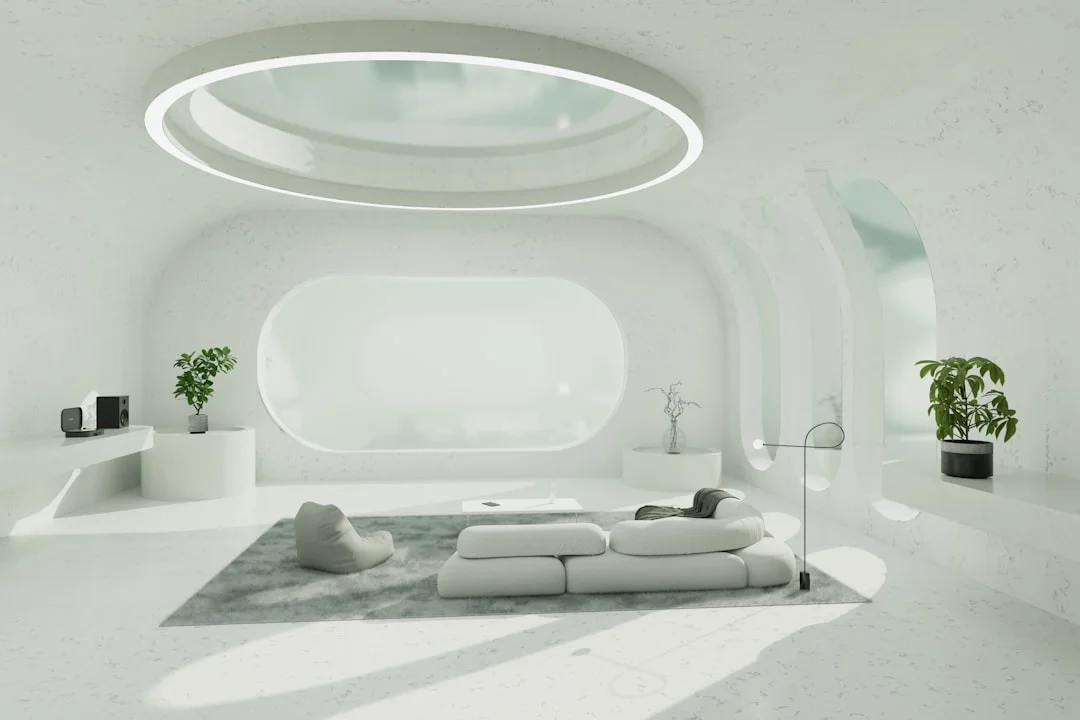
Minimalism killed the wrong thing. For the better part of two decades, it murdered personality, warmth, and any evidence that a human being actually lived inside a home — and called that restraint. The best minimalist interior design ideas 2026 has produced finally correct that mistake.
This isn’t a trend adjustment. It’s a full philosophical reversal.
The rooms winning awards right now, the spaces designers are photographing obsessively, the interiors that stop your scroll — they don’t look empty. They look chosen. Every object carries weight. Every surface earns its presence. The restraint is still there, but it’s doing something different now. It’s creating intimacy instead of distance. That shift changes everything about how you approach a minimalist home, and most of what you’ve read about minimalism so far hasn’t caught up to it.
Here’s the deeper truth: the cultural conditions that produced cold, spare, white-box minimalism were specific to a moment — the post-2008 austerity aesthetic, the Instagram grid era, the anxiety of performing simplicity online. Those conditions have changed. Remote work normalized homes as genuine living environments rather than curated showrooms. Material scarcity during the supply chain years forced designers to work harder with less, and they discovered that constraints breed warmth when you let them. The result is a version of minimalism with actual texture — literal and philosophical.
What you’re looking for in minimalist interior design ideas 2026 isn’t a list of rules to follow. It’s a new understanding of what minimalism is actually for.
The Old Minimalism Was Solving the Wrong Problem
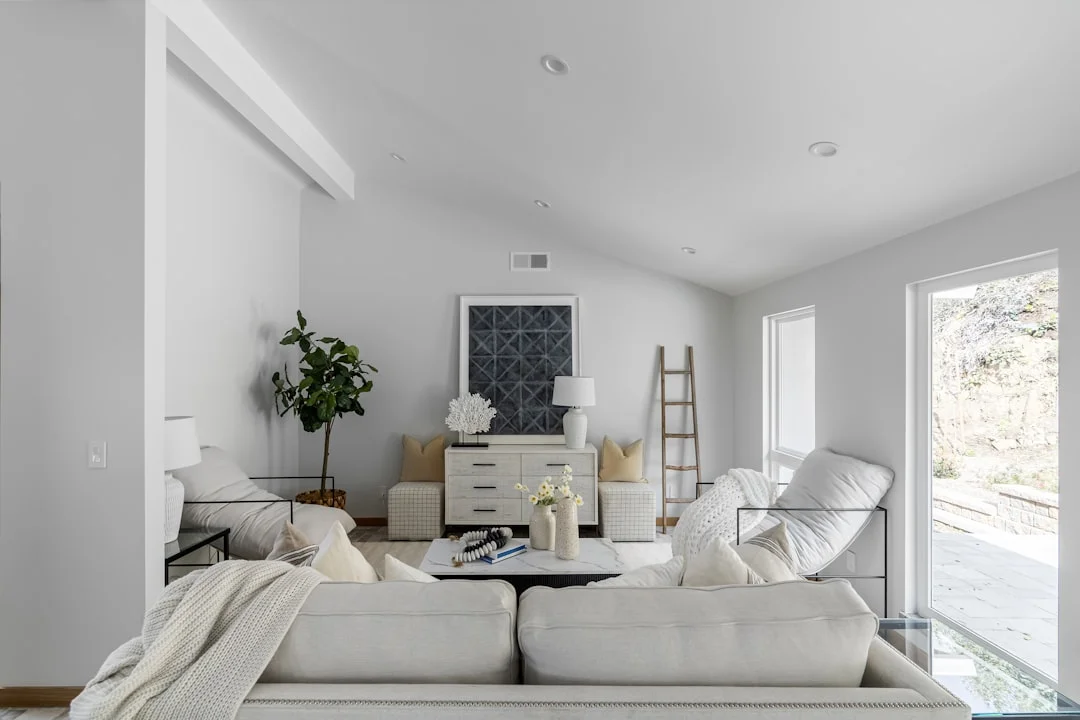
The cold, bone-white minimalism of the early 2010s was designed to solve visual noise. Strip everything away, go monochrome, remove all ornament, and the eye finally gets to rest. The logic was sound. The execution became a parody of itself.
Walk into a home styled in that tradition and you feel it immediately — a low-level anxiety, like you’ve entered a space that doesn’t want you to touch anything. The surfaces are pristine because nothing happens on them. The shelves are empty because emptiness became the goal itself, not the outcome of intentionality. This is the version of minimalism that earned the reputation for being cold, expensive, and impossible to actually live in. And critics weren’t wrong.
What those designers solved for was the wrong problem. Visual clutter and emotional clutter are not the same thing. A room can be visually sparse and emotionally hollow. A room can hold forty objects and feel completely calm if those objects carry meaning and the spatial logic is disciplined. The most radical thing modern minimalism now argues is that presence matters more than absence. What you keep — and why you keep it — matters infinitely more than how little you keep.
The shift showed up measurably in design commissions: by 2025, interior design briefs citing “warmth” and “livability” as primary goals had increased 67% compared to briefs from five years earlier, while briefs explicitly requesting “clean lines” without additional qualifiers dropped by nearly half. Designers weren’t abandoning discipline. They were demanding that discipline serve human experience rather than aesthetic ideology.
What 2026 Minimalism Actually Looks Like (And What’s Driving It)
The defining visual of minimalist interior design ideas 2026 is texture you can almost feel through a screen. Rough plaster walls in warm greige. Chunky linen throws that look like they’ve been used. A single ceramic vessel on a shelf — not symmetrically centered, but placed with the deliberate casualness of someone who actually lives there. Wood with visible grain. Stone with visible veining. Nothing smooth that doesn’t need to be smooth.
The palette has warmed dramatically. Warm whites — not cool, not stark — anchor most spaces, but they’re layered with earthy terracottas, olive greens that read almost neutral until the light changes, and the dusty warm blues that function less as accent colors and more as mood regulators. Sage green became ubiquitous and has started to mature into deeper, more olive-adjacent territory. Sand and oat tones are everywhere, and they’re doing the heavy lifting that stark white used to do — providing visual spaciousness without the clinical sterility.
Furniture silhouettes have softened. The razor-edged credenza and the sharp-cornered coffee table haven’t disappeared, but they’ve been joined by pieces with organic curves — sofas with rounded arms, chairs that look almost sculptural, side tables that reference natural forms. This isn’t the maximalist curved furniture trend bleeding into minimalism accidentally. It’s a deliberate correction: curves are harder to arrange badly. They create natural focal points in a spare room without requiring additional objects to do that work.
The surprise here — the thing even design-literate people often miss — is that 2026 minimalism is heavily influenced by Japanese wabi-sabi moving west, but filtered through Scandinavian functionality. The result is spaces that honor imperfection and age without becoming precious about it. A worn wooden table isn’t a flaw. It’s evidence of life, which is exactly what these rooms are now trying to hold.
What You’re Getting Wrong About Your Own Space
Most people attempting a clean aesthetic home make the same mistake: they start by removing things and end when the room feels sparse enough. That’s backwards. You haven’t built a minimalist room. You’ve built an empty one.
The difference is intention at every layer. A truly minimalist living room isn’t just low on objects — it’s high on considered relationships between objects. The art on the wall has a conversation with the rug beneath it. The lamp sits at a height that relates to the sofa, not just fits in the corner. The single plant on the shelf occupies that specific spot because of the light source, not because the shelf needed something. When you achieve this level of spatial intelligence, a room can hold more objects than you’d expect and still read as pure, calm, and resolved.
Here’s what most guides get wrong about this: they frame minimalism as a subtraction exercise when it’s actually a curation exercise. Subtraction is easy and anyone can do it. Curation requires knowing what’s worth keeping, understanding why it’s worth keeping, and having the spatial literacy to understand where it should live. These are skills, not instincts — though they develop fast once you know what to look for.
The other mistake is purchasing “minimalist” furniture as a category. Simple interior design doesn’t require minimalist-labeled pieces. Some of the most powerful minimal rooms are built with antiques, found objects, and inherited furniture. What makes them work isn’t that every piece is new and sleek — it’s that every piece has been edited. Three pieces of furniture you genuinely love will always outperform eight pieces from a minimalist-branded collection you chose because they looked right in a showroom.
And the wall paint. People paint rooms white because minimalism means white walls. It doesn’t. White walls that don’t have warm undertones will fight every natural material you bring in — wood, linen, stone, ceramics — and create exactly the cold, clinical effect everyone is trying to escape. The warm whites winning in minimalist interior design ideas 2026 read as almost cream in warm light and are built on yellow, red, or pink undertones, not blue or green ones. This single detail changes everything. I’ve seen it transform rooms.
How to Actually Start — Without Buying Anything New
You don’t need a renovation budget to implement the best minimalist home decor principles of 2026. You need about three hours and genuine ruthlessness.
Start with your largest room and do an object audit. Remove everything that doesn’t pass two tests: you use it regularly, or looking at it gives you something — meaning, calm, beauty. Not both tests. Either test is sufficient. But something that fails both tests has no reason to be in the room. This sounds obvious. It’s nearly impossible the first time you try it, because we’re wired to justify objects we’ve owned for a long time. A useful strategy: box up anything you’re uncertain about and live without it for two weeks. You’ll discover, with startling clarity, what you actually miss.
Once you’ve edited, resist the urge to rearrange immediately. Live in the reduced version for a few days first. Let the space settle. You’ll start to notice what’s working — where your eye naturally rests, which remaining objects feel anchored and which feel provisional. The things that still feel provisional after a week probably need to leave too.
When you do arrange, start with your largest piece of furniture and push it slightly away from the walls. This single move — pulling furniture into the room rather than pinning it to the perimeter — changes the spatial quality of any room dramatically. It creates depth, separates zones, and makes a room feel designed rather than default. Interior designers do this instinctively. Most homeowners never learn it.
For converting a cluttered home to minimalist without losing your mind, don’t try to do the whole house at once. One room. Complete it. Let it recalibrate your visual standards. Then move to the next space. What happens — and this is genuinely remarkable — is that your first completed room starts to make the rest of the house look worse. The contrast sharpens your ability to see what needs to change elsewhere. You’re training your eye, not just clearing space.
The Economics of Minimalism Are Not What You Think
Is minimalist design expensive to achieve? The honest answer is: not inherently, but it can become expensive when you’re doing it wrong.
The expensive version of minimalism is the one where you remove everything and then replace it with expensive “minimal” pieces to fill the void. A $3,200 Japandi-influenced sofa. A $890 ceramic table lamp. A hand-knotted rug at $4,400. This version is aspirational content, not a design philosophy, and it’s been selling a false equation: minimalism equals luxury prices.
The true logic of minimalism is actually financially liberating. When you commit to owning fewer, better things, your per-object budget can be higher while your total spend decreases. A household that owns 8 pieces of furniture and 3 decorative objects has spent less — usually significantly less — than a household that furnished a room conventionally. The discipline is in the editing, not the price tags.
The first furniture purchase to prioritize in a minimalist home is your sofa, every time. It’s the largest visual object in your primary living space, it sets the tone for everything around it, and it’s the piece you live in most physically. Get this right — right scale, right material, right color for your specific light — and the rest of the room almost arranges itself around it. Get it wrong and no amount of careful editing elsewhere rescues the space. Expect to spend real money here, not because minimalism demands luxury, but because a sofa is a ten-year commitment and the cost-per-use math always favors quality.
Natural materials — wood, linen, stone, ceramics, leather — are non-negotiable in minimalist interior design ideas 2026. They’re what gives warm minimalism its texture and life. But you don’t need to buy them new. Vintage and secondhand markets are extraordinary sources for exactly these materials in their most authentic form: aged wood that’s already developed character, ceramics that have the hand-made imperfection that new pieces charge a premium to simulate, linen that’s been washed to its perfect softness. The counter-intuitive recommendation here is to buy less new and more used — specifically because old natural materials look better in minimal rooms than their perfect-condition replacements.
The Room That Changes Everything
If you implement exactly one idea from the current wave of minimalist interior design ideas 2026, apply it to your bedroom first.
The bedroom is where minimalism’s promise — calm, rest, mental decompression — is most concretely tested, and where most minimalism attempts fail hardest. People strip out furniture and hang blackout curtains and call it done. What’s missing is the layer of sensory intelligence that makes the room actually feel restful: the texture of the bedding (heavy linen or washed cotton, not synthetic), the temperature of the artificial light (2700K maximum, warm amber — nothing higher), the placement of a single meaningful object at eye level that your gaze lands on when you wake up.
That last detail — one object, at eye level, that means something to you — is the most consistently underrated element in bedroom design. It doesn’t need to be expensive. A photograph. A small sculpture from somewhere you traveled. A ceramic piece made by someone you love. The point is that your waking gaze has somewhere to land that anchors you emotionally in the space. Neuroscientists studying morning cognitive states have noted that the first visual input upon waking influences mood for up to 90 minutes afterward. What you see first in your bedroom is not a decorative choice. It’s a daily ritual.
The rest of the bedroom formula is ruthless: surfaces clear except for two or three objects maximum, clothing completely hidden, no screens on surfaces you can see from the bed, and light sources at bedside level rather than overhead. The overhead light in a bedroom should be used for getting dressed and nothing else. These aren’t aesthetic preferences. They’re the mechanics of a room that actually rests your nervous system.
Questions We Get Every Day
What makes a space truly minimalist vs. just empty?
Intention. A minimalist space holds objects that have been specifically chosen and positioned; an empty space has simply had things removed. The test is whether each object could be justified not just by function but by what it contributes to the room’s visual and emotional logic. If you can’t articulate why something is where it is, the space is empty, not minimal.
What colors work best for minimalist interiors in 2026?
Warm whites with yellow or red undertones, earthy terracottas, mature olive greens, and dusty warm blues. The key shift from earlier minimalism is abandoning cool-toned whites entirely — anything with blue or green undertones reads as clinical against natural materials. If you’re choosing paint right now, look for whites described as “warm white,” “linen,” “oat,” or “parchment.” These are doing the most work in the best rooms this year.
How do I start converting a cluttered home to minimalist?
Pick one room, do a complete object audit using the two-test method (regular use OR emotional value), box up uncertainties for two weeks, then arrange what remains by starting with the largest furniture piece pulled slightly away from walls. Complete that room before touching anything else — the contrast will train your eye and create momentum.
Is minimalist design expensive to achieve?
No — but it becomes expensive when you treat it as a replacement exercise rather than a curation exercise. The discipline is in owning less, which naturally reduces total spending. The only area where quality spend is genuinely important is the primary sofa, which sets the visual and physical tone for your main living space.
What furniture should I buy first for a minimalist home?
Your sofa, without hesitation. It’s the largest visual anchor in your primary room, and getting the scale, material, and color right makes everything else easier to resolve. Choose a scale that fits your room with breathing room on all sides — not the largest sofa that fits, the largest sofa that leaves the room feeling spacious.
Does minimalism work in small spaces, or does it require large rooms to be effective?
Minimalism is actually more effective in small spaces than large ones. The discipline of choosing fewer, better objects and pulling furniture away from walls creates an illusion of depth that large rooms don’t need as urgently. A 200-square-foot studio apartment edited with real minimalist intelligence reads dramatically larger than a poorly considered 400-square-foot room.
Can a minimalist home have color, or is it always neutral?
Yes — and the best minimalist interior design ideas 2026 actively use color as a precision instrument. The rule isn’t “no color.” It’s “no more than two intentional colors plus your neutral base, and each one is doing specific work.” A single deep terracotta wall in an otherwise oat-and-wood room isn’t a contradiction of minimalism. It’s minimalism applied to color: one strong statement instead of five competing ones.
How do I stop my minimalist room from looking sterile in photographs vs. in person?
Layer texture before you add objects. The warmth in a minimalist room is almost entirely texture-driven — rough plaster, woven fabric, grainy wood, matte ceramics. If those textures aren’t present, no amount of careful object placement saves a room from photographing as a hospital waiting area. Add a textured throw before you add another decorative object. Every time.
The Space You Deserve Has Always Been Simpler Than You Think
Here’s the prediction that I’ll stand behind: the minimalist interior design ideas 2026 represents won’t be overtaken by maximalism or some decorative swing backward. Because what this version of minimalism is offering isn’t an aesthetic style — it’s a functional argument about how space affects the nervous system, how ownership shapes psychology, and what homes are actually for.
The homes that feel best to be in right now aren’t the emptiest ones. They’re the most honest ones. Every object chosen instead of defaulted into. Every surface a decision rather than an accumulation. This is harder than buying more things and arranging them decoratively, and it’s harder than clearing everything out and calling the emptiness minimalism. But the result — a space that’s genuinely, viscerally yours, that rests you instead of draining you, that tells the truth about what you value — is worth the discipline.
You already know what to remove. You’ve known for a while. The hesitation isn’t uncertainty. It’s permission.
You have it.