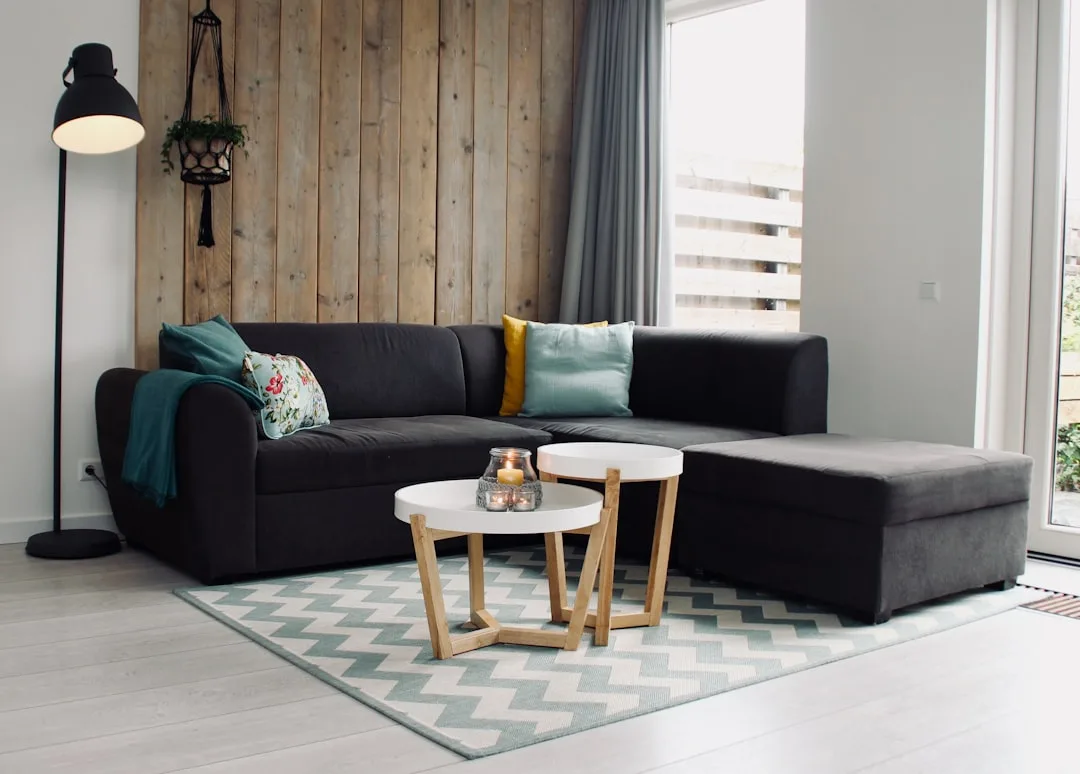
The single most common decorating mistake in living rooms has nothing to do with color, furniture arrangement, or lighting — it is buying the wrong rug size under a sectional sofa. Not two sizes too small. One. The margin between a room that feels designed and a room that feels like furniture got dropped into it randomly is almost always a single rug increment: the difference between the 6×9 you bought and the 9×12 you needed. Getting the rug size under your sectional sofa right is the highest-impact change you can make to a living room without moving a single piece of furniture.
Quick Answer
The single most common decorating mistake in living rooms has nothing to do with color, furniture arrangement, or lighting — it is buying a rug that is one size too small for the sectional sitting on top of it.
I spent eleven years doing this work in Chicago and New York, and I saw this exact mistake in roughly half the apartments I walked into. Not because people had bad taste. Because every big box store displays rugs under sectionals that are demonstrably too small — it makes the furniture look larger by comparison, which is good for selling sofas and bad for your living room.
This article is about fixing that. Not with vague rules you’ll misapply, but with a framework that actually holds up when you’re standing in your specific room with your specific sofa.
How Big Should a Rug Be Under a Sectional Sofa?
In This Article
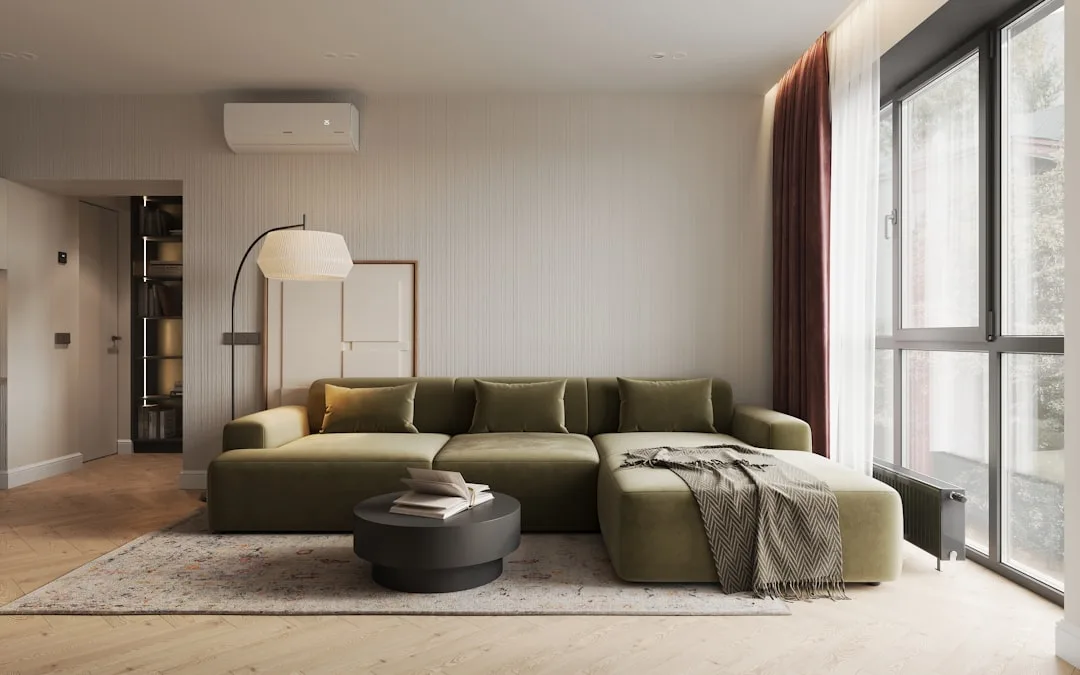
The minimum rug size for most sectionals is 9×12 ft. That is not a starting point for negotiation — it is the floor for anything other than a compact apartment-scale sectional in a small room. A smaller rug doesn’t just look slightly off; it creates what I call the “floating island” problem, where the sectional appears to hover over a decorative mat rather than anchor a deliberate seating zone.
Here is why the math forces you toward larger sizes faster than most people expect.
Start with the room, not the sofa. The rug’s job is to define the conversational grouping — the entire zone where people sit, turn toward each other, and rest their feet. That zone is almost always larger than the sofa’s footprint. The rug should extend at least 18 to 24 inches beyond the open ends of the sectional, meaning the sides not against a wall or another sofa section. When you actually tape that out on the floor, the resulting rectangle tends to be larger than the 8×10 most people were considering.
The two-thirds guidance that circulates in design content states that a rug should occupy at least two-thirds of the seating area’s total square footage to read as intentional rather than accidental. Run that math on a standard sectional and you arrive at the same conclusion: a 9×12 is not extravagant, it is adequate.
What I kept seeing in client spaces — and what no one in a showroom will tell you — is that people anchor their size decision to the sofa’s longest dimension rather than the full conversational zone. A sectional might be 110 inches across its primary face, but the zone where people actually live in that space is easily 130 to 140 inches once you account for the coffee table, the foot traffic path, and the visual weight of the space around it.
There is also the question of rug orientation relative to the sectional’s configuration. On an L-shaped sectional, the rug almost always needs to be oriented so its longer dimension runs parallel to the longer sofa leg — which means a 9×12 gets laid with the 12-foot side along the primary face. That single orientation decision can make a correctly sized rug read as too small if you get it wrong, and it is something no one mentions in the rug size guides because it seems obvious until you’re standing in the room second-guessing yourself.
One more factor that pushes size requirements up: the coffee table. Most people forget to account for it when they tape the floor. A standard rectangular coffee table in front of a sectional typically runs 48 to 60 inches long and sits roughly 16 to 18 inches off the sofa face. That table needs to sit fully on the rug — not half on, half off. A table straddling the rug edge looks unresolved and actually draws more attention to the rug being undersized than leaving the table off entirely. When you fold the coffee table into your tape-on-the-floor measurement, the zone almost always pushes you into 9×12 territory even in moderately sized rooms.
- Rooms 12×14 ft and smaller: 8×10 ft rug is the realistic ceiling; verify clearances carefully
- Rooms 14×16 ft to 16×20 ft: 9×12 ft is the correct call in almost every case
- Rooms over 300 sq ft with a full L- or U-shaped sectional: size up to 10×14 ft before assuming 9×12 is sufficient
Actionable takeaway: Measure the conversational zone first — painter’s tape on the floor, 18 inches beyond the sofa on open sides, coffee table included — before you look at a single rug.
What Is the 2/3 Rule for Couches — and Does It Actually Hold Up?
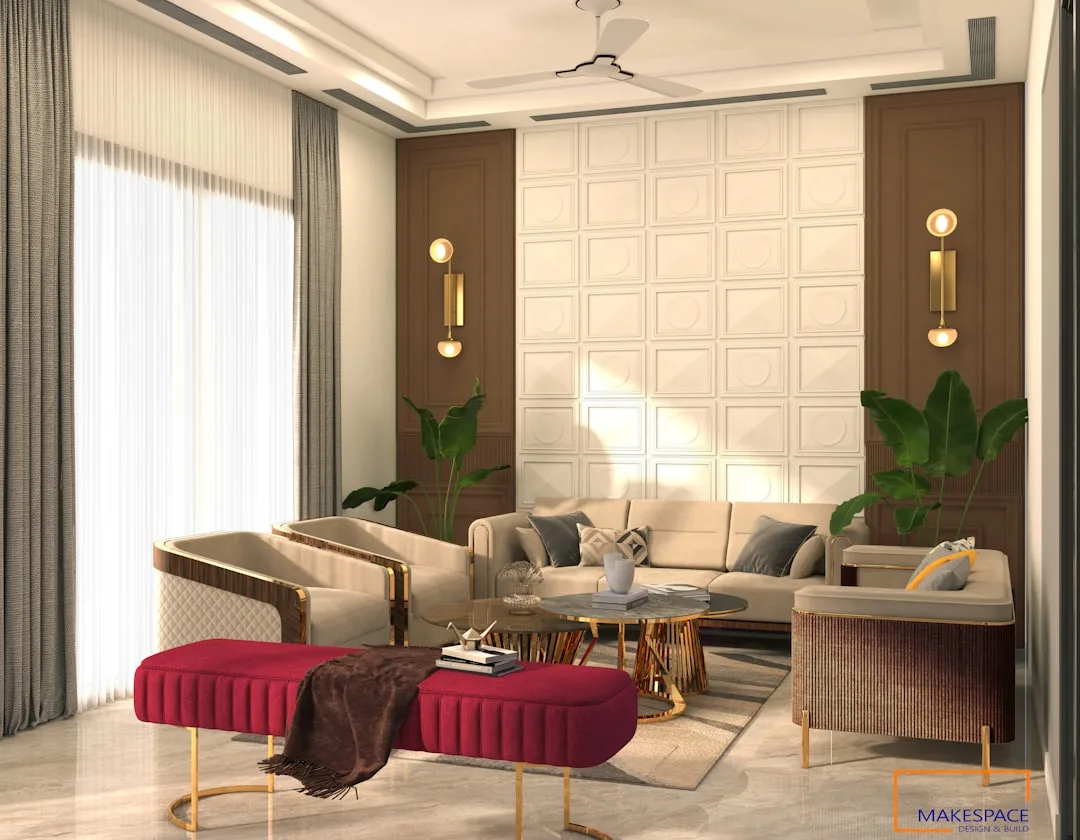
The 2/3 rule is one of those design shortcuts that works fine until it doesn’t, and it fails specifically on the sectionals most people own. The rule states that a rug should be approximately two-thirds the length of the sofa. Clean, memorable, easy to apply. Also ambiguous on an L-shaped sectional, where “the length of the sofa” could refer to either leg — and that ambiguity almost always produces a rug that is too small.
Here is the more reliable adaptation I used with clients: apply the 2/3 calculation to the longest leg of the sectional, then verify that the short leg is also at least partially covered. The short leg is the check. If your 2/3 calculation produces a rug size that leaves the short leg entirely floating on bare floor, you’ve undersized.
A standard L-shaped sectional runs between 110 and 150 inches on its longest side. Strict 2/3 math on that range gives you 73 to 100 inches — which translates to needing at minimum an 8×10 ft rug, and more often a 9×12 ft once you account for the short leg and any desired overhang on open sides. The formula, when correctly applied to an L-shape, almost always resolves to the same answer as the measurement-first approach.
Where the 2/3 rule breaks down entirely:
- Open-plan rooms where the sofa is not backed against a wall — the rug needs to do more visual work in every direction, and formula sizing undershoots
- Very large U-shaped configurations, where even correct 2/3 math on the longest leg doesn’t account for the third sofa face
- Hardwood floors that need visual warmth across a larger surface area — in these rooms the rug is doing textural and thermal work beyond anchoring, and the formula doesn’t account for that function at all
One thing I noticed with clients who insisted on applying the rule mechanically: they tended to feel vindicated by the math and skip the tape-on-the-floor test. That is how you end up with a rug that is technically 2/3 the length of the sofa and still looks like a doormat under it.
It is also worth mentioning what happens when you apply the 2/3 rule to a modular sectional that can be reconfigured. These sofas are increasingly common — pieces that work as a 3-seat sofa today and a full L-shaped sectional when guests come. If you size the rug to the compact configuration, you will be living with an undersized rug every time the sofa is extended. The smarter move is to size for the largest configuration you realistically use and accept that in the compact arrangement the rug will have more visible floor around it. Extra floor showing is always more forgiving than a rug the sectional swallows.
Actionable takeaway: Use the 2/3 rule as a sanity check, not a prescription — then tape the floor regardless of what the math says.
What Size Sectional Fits an 8×10 Rug — and When to Size Up
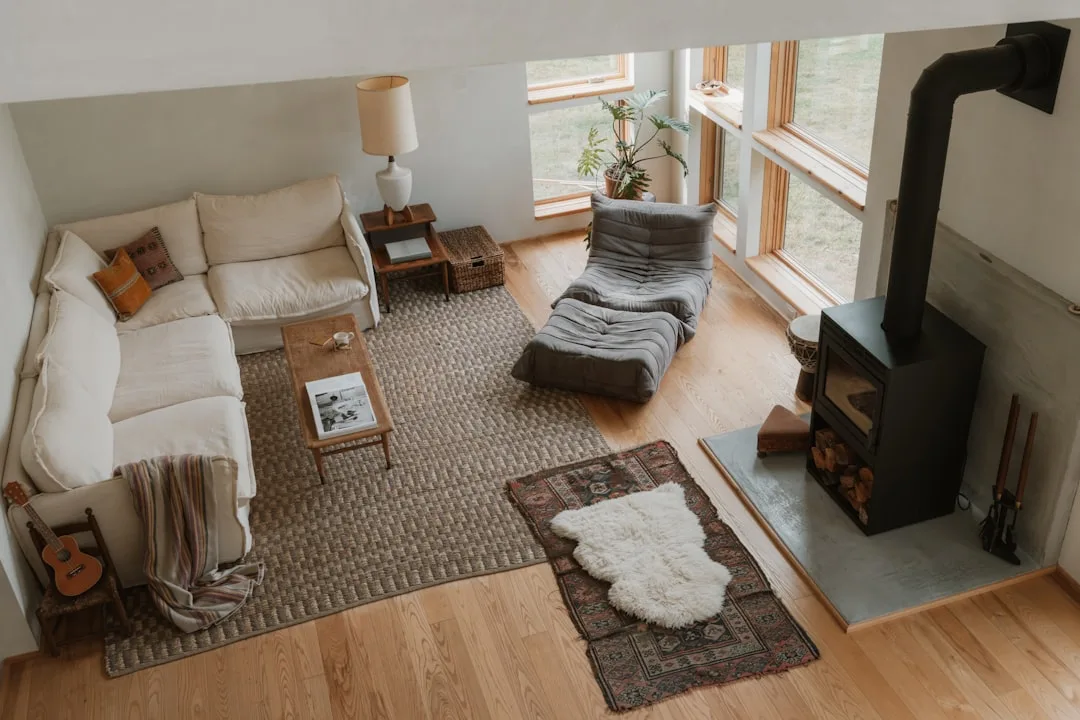
Working backward from a rug size is something most rug guides never address. They always start with the sofa. But plenty of people already own an 8×10 rug — or have a strict budget ceiling that stops at 8×10 — and need to know whether their sectional can work with it.
An 8×10 rug comfortably anchors a sectional no longer than 110 inches on its primary face. That’s the honest ceiling. Compact apartment-scale sectionals — the kind you find in a 550-square-foot Chicago one-bedroom — typically fall in that range. If your sectional exceeds 120 inches on either leg, the 8×10 will look like it belongs under a dining table, not a sofa.
The dimensional reality: an 8×10 rug is 96 inches by 120 inches. With 18 inches of recommended overhang on open sides, the sofa face it can cover is roughly 120 minus 18 minus 18, which is 84 inches — about 7 feet. That is small. A sectional at that scale exists, but it is not what most people shopping for sectionals end up with.
There is a positioning workaround worth knowing if you are committed to an 8×10. Rather than centering the rug under the sectional’s corner, shift it toward the open end — the chaise leg or the shorter sofa face — so that the rug anchors the sitting end rather than the corner junction. This positions the rug where feet actually land and where visual attention naturally falls, and it reads as more intentional than a centered placement that splits the difference and looks too small in both directions. It does not fix an undersized rug on a large sectional, but on a mid-range sectional in the 110-to-115-inch range it can make an 8×10 hold together visually.
Where 8×10 genuinely works:
- Rooms between 12×14 ft and 14×16 ft where a 9×12 would crowd the walkways and sit too close to the walls
- Apartment living rooms under 180 square feet where scale is genuinely constrained and the sectional itself is compact
- Sectionals configured as a sofa-plus-chaise rather than a full L-shape, particularly when the chaise sits against a wall and doesn’t require rug coverage on that side
- Rental situations where you cannot commit to a large rug purchase and need the existing 8×10 to do the job until you move somewhere the room actually supports the sectional you own
When an 8×10 is not salvageable — even with positioning tricks — is when the sectional runs 130 inches or longer on any face. At that point, the rug is visually outmatched and no placement adjustment rescues it. The only real options are accepting the look, purchasing a 9×12, or layering a smaller natural-fiber rug over the existing 8×10 to extend its visual footprint. Rug layering works better than most people expect on sectionals specifically because the sectional’s large silhouette provides visual permission for the layered look — it does not read as cluttered the way it might under a single armchair.
Actionable takeaway: If your sectional runs longer than 115 inches on its primary face and you’re working with an 8×10, budget for a 9×12 rather than trying to make the smaller rug work with positioning tricks alone.
The Front Legs Rule — And Why It’s Different for Sectionals
The “front legs on the rug” guideline is everywhere in furniture and design content, and it is solid advice for traditional sofa-and-two-chairs arrangements. For sectionals, it requires more precision to apply usefully.
On a standard sofa, “front legs on” means the two front feet of the sofa frame sit on the rug while the back legs remain on bare floor. This creates a connection between the sofa and the rug without requiring a rug large enough to go fully under the piece. On a sectional, executing this correctly means all front legs of all sofa sections need to land on the rug — not just the primary face. The chaise legs, the corner unit legs, and the secondary face legs all count. If the chaise front legs fall off the rug edge, the sectional looks like it is coming apart as a composition.
That requirement is exactly why front-legs-on sizing for sectionals tends to produce the same answer as full-coverage sizing: to get all front legs on, you generally need a rug large enough that the difference between “legs on” and “fully under” is minor.
Where front-legs-on placement does offer a genuine advantage for sectionals is in rooms where the sofa sits in the center of the space with no wall behind it. Floating sectionals — particularly common in large open-plan living and dining combinations — need the rug to do heavy spatial work. A rug large enough to go fully under a floating sectional can run 10×14 or larger, which creates budget and clearance problems. Front-legs-on placement at 9×12 is often the practical middle ground: the sectional is visually anchored, the rug reads as appropriately scaled, and you are not pulling a 10×14 across a room where it will fight the dining area rug for visual dominance.
Choosing the Right Rug Shape for a Sectional
Most sectionals are placed against one or two walls, which means the furniture arrangement is inherently asymmetrical. Rectangular rugs are almost always the right call — they reinforce the room’s perimeter lines and work with the sectional’s angular footprint rather than against it.
Round rugs under sectionals come up occasionally in design content and almost never work well in practice. A round rug can make sense under a circular sectional, which is a real product category if not a common one, but under a standard L-shaped or U-shaped sectional it creates a shape conflict that your eye registers as wrong even if you cannot articulate why. The curved rug edge cuts across the sectional’s right angles and reads as a mismatch rather than a deliberate design choice.
The exception is an oversized round rug — something in the 10 or 12-foot diameter range — placed in a large room where the sectional is one of several furniture groupings and the round rug is meant to serve as a central focal point for the entire space rather than a dedicated anchor for the sectional. At that scale, the geometry tension lessens because the rug is clearly performing a room-level function. In a standard living room where the rug is there specifically to anchor the sectional, stay rectangular.
Square rugs under L-shaped sectionals are worth considering in rooms where both legs of the sectional are similar in length — something close to a symmetrical L. A 9×9 or 10×10 square rug can work cleanly in that configuration and is sometimes easier to position correctly than a rectangle that wants to be oriented one way. Square rugs in those sizes are harder to source than standard rectangles, but they exist and are worth knowing about if you have a symmetrical sectional configuration in a relatively square room.
Frequently Asked Questions
What is the most common rug size mistake people make with sectionals?
Buying one size too small — specifically choosing a 6×9 or 8×10 when the room and sectional require a 9×12. The scale difference looks minor in a store but reads as significantly off in a real room because the rug’s job is to anchor a full conversational zone, not just sit under the sofa frame. The second most common mistake is orienting the rug incorrectly — placing the shorter dimension parallel to the longer sofa leg, which makes a correctly sized rug look undersized.
Should all legs of a sectional be on the rug?
Ideally, at minimum all front legs of all sofa sections should be on the rug. Fully under is better when the rug size and room dimensions allow it. What you want to avoid is a configuration where some sections are on the rug and others are entirely off — that makes the sectional read as multiple disconnected pieces rather than a unified seating zone. The rug is doing the visual work of holding the sectional together as a composition, and it can only do that if it makes contact with every section.
Can you use two rugs under a large sectional?
Yes, and for very large U-shaped sectionals or open-plan rooms where a single rug would need to be 12 feet or larger to work, two rugs layered or placed adjacently is a legitimate approach. The key is that they need to read as intentional — similar material, complementary colors, and a clear logic to why there are two. Two rugs that look like you ran out of room with the first one will make the problem more visible, not less. In most standard living room situations, a single correctly sized rug is preferable to two smaller ones.
How much floor should show between the rug edge and the walls?
The standard guidance is 18 to 24 inches of bare floor between the rug edge and the wall on all sides. In smaller rooms, 12 to 18 inches is acceptable. Less than 12 inches and the rug starts to look like wall-to-wall carpet that someone trimmed unevenly. More than 30 inches in a room with a large sectional and the rug starts to look proportionally small relative to the room even if it is correctly sized relative to the sofa. The ideal clearance amount is one of those things that reveals itself clearly once you tape out the rug dimensions on the floor — what looks right in your specific room tends to be obvious once you see it mapped out.
Does rug pile height matter for sectionals specifically?
More than people realize. A high-pile or shag rug under a sectional creates two practical problems: the sofa feet sink into the pile and can damage the rug structure over time, and the height differential between rug surface and bare floor creates a tripping edge that gets used constantly in a seating zone. Low to medium pile — under half an inch — is almost always the right call for the rug size under a sectional sofa. Flat-weave rugs work particularly well under sectionals in high-traffic rooms. If you want texture, a medium-pile wool or wool-blend in the 0.25 to 0.5 inch range gives you the visual warmth without the structural and safety issues that come with higher pile under heavy furniture.
What is the most common rug size mistake people make with sectionals?
Buying one size too small — specifically choosing a 6×9 or 8×10 when the room and sectional require a 9×12. The scale difference looks minor in a store but reads as significantly off in a real room because the rug’s job is to anchor a full conversational zone, not just sit under the sofa frame. The second most common mistake is orienting the rug incorrectly — placing the shorter dimension parallel to the longer sofa leg, which makes a correctly sized rug look undersized.
Should all legs of a sectional be on the rug?
Ideally, at minimum all front legs of all sofa sections should be on the rug. Fully under is better when the rug size and room dimensions allow it. What you want to avoid is a configuration where some sections are on the rug and others are entirely off — that makes the sectional read as multiple disconnected pieces rather than a unified seating zone. The rug is doing the visual work of holding the sectional together as a composition, and it can only do that if it makes contact with every section.
Can you use two rugs under a large sectional?
Yes, and for very large U-shaped sectionals or open-plan rooms where a single rug would need to be 12 feet or larger to work, two rugs layered or placed adjacently is a legitimate approach. The key is that they need to read as intentional — similar material, complementary colors, and a clear logic to why there are two. Two rugs that look like you ran out of room with the first one will make the problem more visible, not less. In most standard living room situations, a single correctly sized rug is preferable to two smaller ones.
How much floor should show between the rug edge and the walls?
The standard guidance is 18 to 24 inches of bare floor between the rug edge and the wall on all sides. In smaller rooms, 12 to 18 inches is acceptable. Less than 12 inches and the rug starts to look like wall-to-wall carpet that someone trimmed unevenly. More than 30 inches in a room with a large sectional and the rug starts to look proportionally small relative to the room even if it is correctly sized relative to the sofa. The ideal clearance amount is one of those things that reveals itself clearly once you tape out the rug dimensions on the floor — what looks right in your specific room tends to be obvious once you see it mapped out.
Does rug pile height matter for sectionals specifically?
More than people realize. A high-pile or shag rug under a sectional creates two practical problems: the sofa feet sink into the pile and can damage the rug structure over time, and the height differential between rug surface and bare floor creates a tripping edge that gets used constantly in a seating zone. Low to medium pile — under half an inch — is almost always the right call for the rug size under a sectional sofa. Flat-weave rugs work particularly well under sectionals in high-traffic rooms. If you want texture, a medium-pile wool or wool-blend in the 0.25 to 0.5 inch range gives you the visual warmth without the structural and safety issues that come with higher pile under heavy furniture.