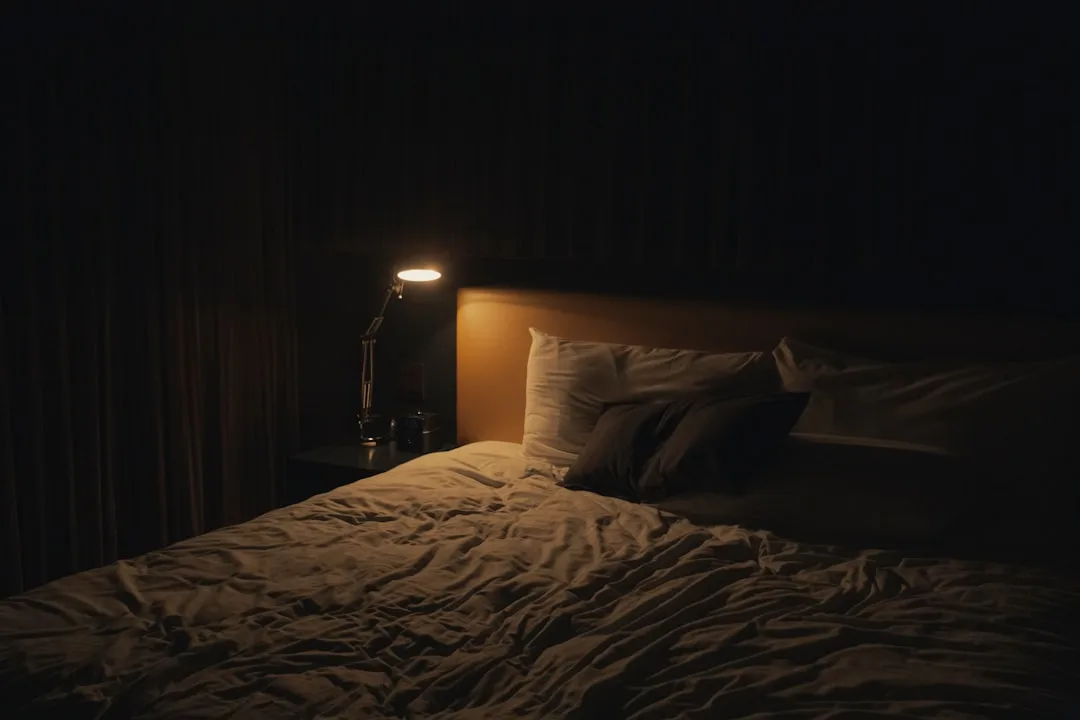
The fixture you chose probably isn’t the problem — the color temperature coming out of it is silently working against every relaxing mood you’re trying to create in your bedroom. You could have the most beautifully designed pendant light, a perfectly placed sconce, or a ceiling medallion that cost more than your mattress, and it will still make your bedroom feel like a hospital break room if the bulb inside it is emitting 5000K cool white light. Ambient lighting in a bedroom isn’t about what you hang — it’s about what that light does to the air in the room.
This is the conversation most lighting guides never have with you. They hand you a list of fixture types, tell you to “layer your lighting,” and move on. You end up with three lamps you don’t love and a room that still feels wrong. So let’s start from the actual problem.
Why Most Bedroom Ambient Lighting Fails (And What to Fix First)
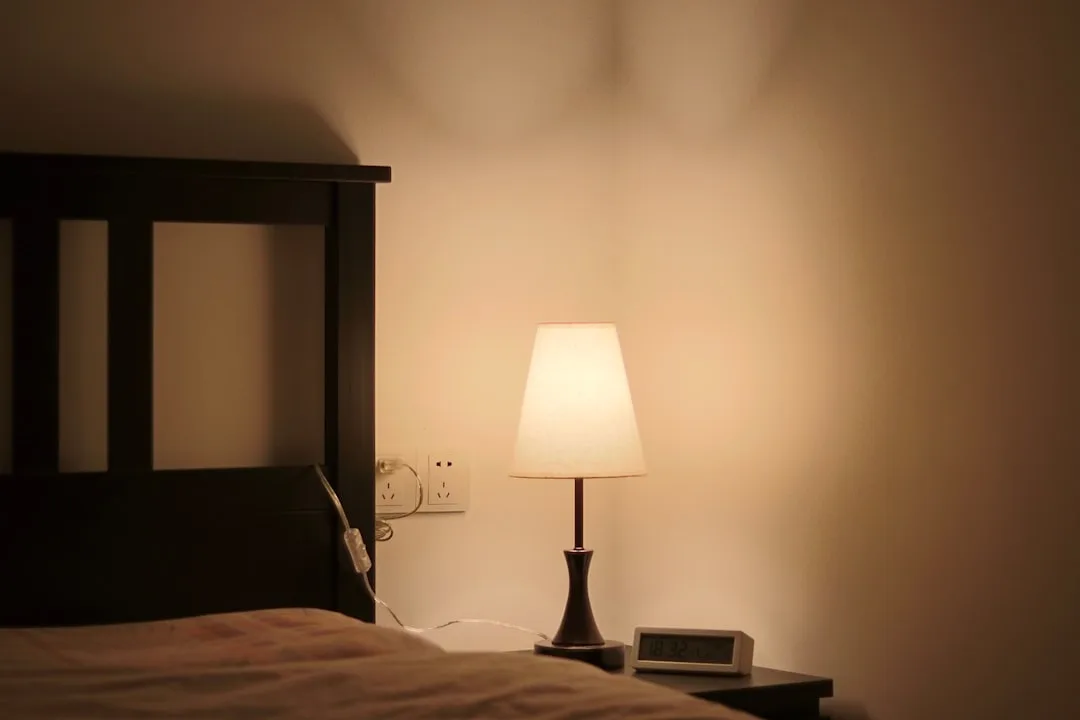
Walk into almost any bedroom that “doesn’t feel right” and you’ll find the same setup: a single overhead fixture, probably a flush mount or a fan with a light kit, positioned dead center in the ceiling, cranked up to full brightness with a daylight bulb inside it. The room is flooded with light from one direction — straight down — and it lands flat on every surface with no variation, no warmth, and no depth.
The single most common mistake in bedroom ambient lighting is using cool white bulbs (5000K or higher) in overhead fixtures. This isn’t a matter of taste. It’s biology. Research published in the Journal of Clinical Sleep Medicine found that blue-enriched light above 4000K can suppress melatonin production by up to 85% compared to warm light sources below 3000K. That overhead daylight bulb you bought because it was the brightest option in the store is actively interfering with your body’s ability to wind down — every single evening.
But temperature is only half the problem. Placement is the other half. Most bedrooms are dramatically over-lit at the ceiling and almost completely under-lit at eye level and below. That top-down flood of light creates what lighting designers call a “flat field” — no gradients, no shadow play, no sense of intimacy. It’s the same quality of light used in commercial retail spaces, which is precisely why your bedroom sometimes feels like a fitting room.
Here’s what’s actually happening structurally:
- Overhead-only lighting creates harsh downward shadows on faces and surfaces — unflattering and institutional
- No variation in light height means the eye has nothing to travel to, making the room feel smaller and more static
- Full-brightness fixtures with no dimming eliminate any possibility of transitioning the room’s mood from daytime function to evening wind-down
- Mismatched color temperatures across multiple fixtures create visual dissonance that reads as “something feels cheap” even when everything is expensive
- Bulbs with a CRI below 80 render colors inaccurately, making bedding, wall colors, and wood tones look flat or slightly wrong even under warm light
- No consideration of light direction means walls and ceilings stay bright while the bed — the visual and functional center of the room — sits in relative shadow
The fix almost never requires buying new fixtures. It requires understanding what the light you already have is doing wrong — and making targeted corrections.
Actionable takeaway: Before purchasing anything, replace every bulb in your bedroom with a 2700K warm white dimmable LED and install a basic dimmer switch. Do that first. Assess the room. You’ll probably discover the fixture was never the problem.
The Bedroom Light Zones Framework: A Smarter Way to Think About Ambient Lighting
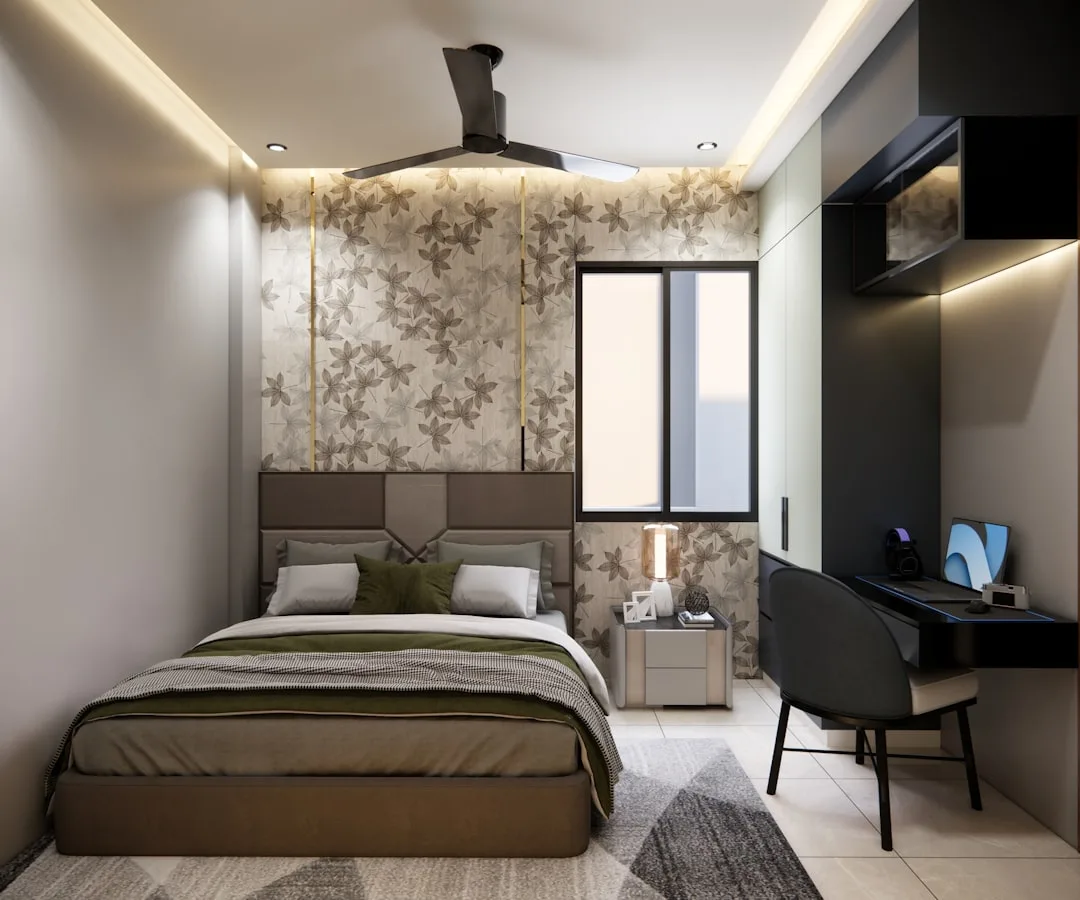
Every article you’ve read on bedroom lighting talks about “layering” — ambient, task, accent, stacked vertically like a parfait. That metaphor sounds logical, but it doesn’t actually help you make decisions about where to put things or why. A more useful way to think about your bedroom is horizontal zones: ceiling zone, mid-wall zone, and floor-level zone. Each zone produces a completely different emotional register, and the zone you prioritize determines how your room feels — not the style of the fixture you choose.
Ceiling zone (overhead fixtures, recessed lights, chandeliers) — Light in this zone reads as functional and alerting. It’s the zone your brain associates with daytime activity, offices, and kitchens. Ceiling-zone ambient light is appropriate for getting dressed or cleaning, but it actively works against relaxation. Use it sparingly in bedrooms, and always on a dimmer.
Mid-wall zone (sconces, bedside pendants, cove lighting at headboard height, picture lights) — This is where ambient lighting actually changes how a bedroom feels. Light sources positioned between 48 and 72 inches off the floor enter your field of vision at the same level as your face when you’re sitting up in bed or moving through the room. The brain interprets this as social, warm, and intimate — the same level as candlelight across a dinner table. This zone is the most underused in residential bedrooms and delivers the highest emotional return per dollar spent.
Floor-level zone (uplighters, base-of-bed LED channels, low table lamps on nightstands below mattress height) — Light that comes from below eye level reads as the most intimate and relaxing of all three zones. Think of campfires, candles on a coffee table, the glow of a fireplace. This zone is underrated in bedrooms because it seems decorative — it absolutely is ambient.
Interior lighting designers recommend that residential bedroom ambient light levels sit between 10–30 foot-candles for relaxation, rising to 30–50 foot-candles only in task areas like a reading chair. Standard overhead-only setups with a single 60-watt equivalent bulb typically push the room to 40–60 foot-candles across the entire floor — far above the relaxation threshold.
The shift in thinking is this: stop asking “what fixture should I put where?” and start asking “which zone am I serving, and what mood does that zone produce?”
To make the framework practical, here’s how each zone maps to specific moments in your bedroom routine:
- Getting dressed, choosing clothes → ceiling zone at 50–70% brightness, 2700K
- Reading before sleep → mid-wall zone with directional sconce, 2700–3000K, 30–50 foot-candles at the page
- Winding down, watching a screen → floor-level or mid-wall zone at 10–20% brightness, 2200–2700K
- Middle-of-the-night navigation → floor-level only, ideally motion-activated at very low lumen output
- Waking up in the morning → ceiling zone with a gradual dimmer timer or smart bulb sunrise routine, starting at 2700K and rising to 3000K
Actionable takeaway: Identify which zone your current bedroom lighting lives in. If everything is ceiling-zone, add one mid-wall source — even a single plug-in sconce at headboard height — before changing anything else. The shift is immediate.
Ambient Lighting Ideas That Work With Your Bedroom’s Architecture
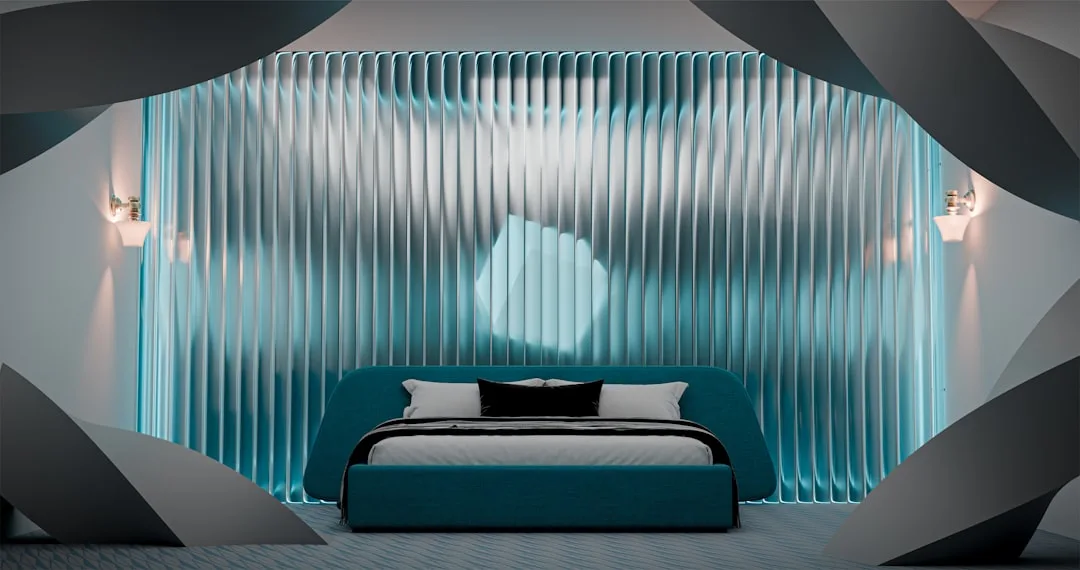
Generic fixture recommendations fail because they ignore the one variable that matters most: your actual ceiling height and room shape. A chandelier that transforms a room with 10-foot ceilings looks oppressive and dangerous in a room with 7.5-foot ceilings. Recessed lighting that works beautifully in a flat-ceilinged master suite looks awkward and poorly placed in a room with a vaulted or sloped ceiling. The best ambient lighting ideas for your bedroom are the ones that work with the architecture you already have — not the ones that photograph well in showrooms built around ideal conditions.
Low ceilings (under 8 feet)
In a room this height, pendant fixtures and recessed downlights create disproportionate brightness because the diffusion distance — the space between bulb and floor — is too short for the light to soften before it hits surfaces. The result is a punchy, high-contrast effect that reads as functional rather than atmospheric.
Ambient lighting ideas that work specifically for low-ceiling bedrooms:
- Flush-mount fixtures with frosted glass or fabric diffusers — the diffuser does the softening work the ceiling height can’t
- Plug-in wall sconces at headboard height — pulls attention away from the ceiling entirely and anchors light at the most useful zone
- LED strip lighting hidden behind crown molding or a floating shelf — bounces indirect light off the ceiling, making it feel higher without adding fixture mass
- Table lamps with opaque shades — directs all light downward or sideways, keeps it out of the ceiling zone entirely
- Uplighting corners with small floor lamps — adds perceived depth and height by washing the ceiling from below at the perimeter rather than the center
What to avoid in low-ceiling rooms:
- Pendant lights that hang more than 6 inches below the ceiling
- Recessed cans positioned fewer than 24 inches from walls (creates dark vertical columns along the perimeter)
- Bare Edison bulbs, which read as harsh without adequate diffusion space
- Multiple overhead sources at full brightness simultaneously
Standard ceilings (8–9 feet)
This is the most common ceiling height in residential bedrooms, and it’s also the most forgiving. Nearly every ambient lighting idea works at this height — the real decisions are about style and zone priority rather than technical constraint.
What works well in standard-ceiling bedrooms:
- Semi-flush pendants with a 6–12 inch drop — adds visual interest without crowding headroom
- Cove lighting above a headboard or along one wall — creates a soft wash that feels architectural rather than decorative
- Paired bedside pendants hung at 60–66 inches from floor — frees up nightstand surface while keeping light in the mid-wall zone
- A single statement ceiling fixture on a dimmer combined with two lower-zone sources — covers all three zones without visual clutter
- Recessed lighting in a 2×2 or 2×3 grid (not the standard single center can) — distributes light more evenly and allows dramatic dimming without creating dark pockets
High ceilings (10 feet and above)
High ceilings introduce a different problem: light becomes too diffuse and the room starts to feel cavernous rather than intimate. The ceiling is so far away that upward-facing fixtures barely register, and overhead fixtures can feel disconnected from the human-scale activity happening below.
Ambient lighting ideas for high-ceiling bedrooms:
- Pendants with downward-facing shades that bring the light source visually down to mid-room level
- Chandeliers hung lower than standard — in a bedroom with 11-foot ceilings, a chandelier hung so the bottom sits at 7.5 feet feels intentional rather than a clearance issue
- Cove lighting at two heights — one at the ceiling for a soft glow and one at headboard height for functional ambiance
- Picture lights or art lights on the wall — anchors human-scale detail and prevents the lower half of the room from going visually dark
- Floor-level uplighters in corners — fills vertical space with light from the bottom up, making the height feel intentional
Vaulted and sloped ceilings
Vaulted ceilings are beautiful during the day and a lighting nightmare at night. Standard recessed cans require specialized sloped-ceiling trim kits to aim properly. Pendants hung from the peak of a vault flood the center of the room while leaving the perimeter in shadow.
What actually works:
- Wall-mounted fixtures on the lower (knee) walls of the vault — keeps light in the mid-wall zone regardless of ceiling geometry
- Track lighting on a ceiling beam or ridge — allows precise aiming to compensate for the asymmetry of the slope
- Plug-in pendants with long cords anchored to a ceiling hook at the desired height — bypasses the need for sloped-ceiling electrical work entirely
- Indirect LED strips along the base of the slope — traces the architectural line of the ceiling and turns an awkward feature into an ambient glow
Specific Ambient Lighting Ideas by Bedroom Style

Beyond architecture, the mood you’re trying to create matters. These are the ambient lighting ideas that consistently work within specific aesthetic directions — not because of the fixture shapes, but because of how the light behaves in each approach.
Warm minimalist
The goal is maximum warmth with minimum visual clutter. Every light source should be hidden or nearly invisible, with the glow doing all the work.
- LED strips recessed into a floating headboard panel, facing the wall
- A single large-shade floor lamp in the corner, shade opaque, 2700K bulb
- Recessed ceiling lights used only for morning and task situations, dimmed to near-off in the evening
- No exposed bulbs anywhere — every source behind a diffuser or shade
Layered traditional
Traditional bedrooms are the most natural fit for warm ambient lighting ideas because the style already favors warm materials — wood, textiles, layered surfaces — that respond well to low, warm light.
- Matching table lamps on nightstands with cream or linen shades
- A central chandelier with candle-style bulbs, 2200–2700K, on a dimmer
- Picture lights above framed artwork or a headboard mirror
- A torchiere floor lamp in a corner for upward fill light
Modern and contemporary
Contemporary bedrooms tend toward cool material palettes — white walls, chrome, concrete, pale woods — which makes ambient lighting choices more critical, not less. Cool materials under cool light read as stark. The same materials under warm light read as sophisticated.
- Recessed lighting in a deliberate geometric grid, 2700K, fully dimmable
- Concealed cove lighting at ceiling perimeter — clean, architectural, invisible source
- Bedside pendants with smoked glass or matte metal shades
- A single sculptural floor lamp as the room’s visual anchor, shade directing light downward
Bohemian and eclectic
This is the style most tolerant of mixed light sources because visual variety is already part of the aesthetic. The risk is color temperature chaos.
- String lights used as fill light, not primary light — 2200K warm white only, never cool white
- Multiple table lamps of varying heights with warm-toned shades
- Paper or rattan pendant shades that diffuse light softly and cast textural shadows on walls
- Candle holders and low votives used as legitimate ambient light sources at the floor zone
The Bulb Decisions That Matter More Than the Fixtures
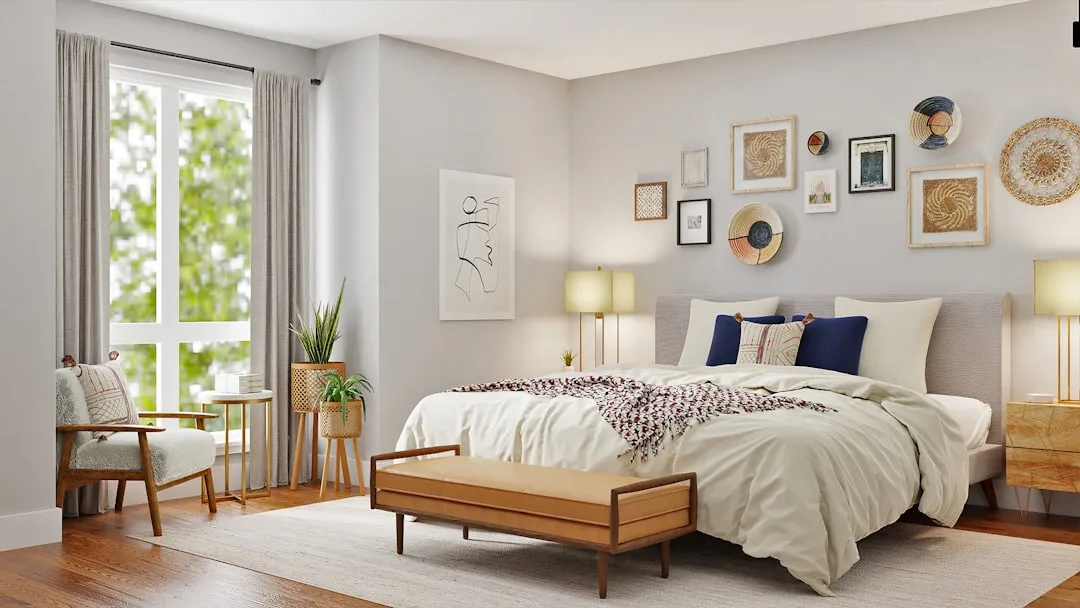
Most ambient lighting ideas for the bedroom fail at the hardware store, not at the design stage. The fixture choice gets all the attention, but the bulb inside it determines whether any of this works.
Color temperature (Kelvin rating)
- 2200K — candlelight territory, extremely warm amber, use for accent and floor-zone sources only
- 2700K — the standard for residential warm white, correct for almost every bedroom ambient source
- 3000K — slightly cooler than 2700K, acceptable for task areas like a reading chair but too alert for primary bedroom ambient
- 3500K and above — do not use in bedroom ambient lighting under any circumstances if relaxation is the goal
CRI (Color Rendering Index)
CRI measures how accurately a light source renders colors compared to natural daylight. A CRI of 100 is perfect. For bedrooms:
- CRI 90+ — recommended for all bedroom ambient sources; renders skin tones, fabric colors, and wood grain accurately
- CRI 80–89 — acceptable minimum; colors read reasonably well
- CRI below 80 — avoid; everything looks slightly washed out or off-tone, which creates a vague sense that “something is wrong” with the room even when nothing structural is
Dimmability
- Every bulb in a bedroom ambient lighting setup should be dimmable
- Not all LED bulbs marked “dimmable” work well on all dimmers — check manufacturer compatibility lists before buying
- The best results come from pairing Lutron or Leviton dimmers with bulbs from the same brand’s recommended compatibility list
- Trailing-edge (ELV) dimmers work better with most LED bulbs than leading-edge (TRIAC) dimmers — less flicker, smoother dim curve
Lumen output by fixture type
- Bedside table lamps: 400–600 lumens per lamp
- Ceiling fixture (primary): 1000–1600 lumens total, always on dimmer
- Sconces (ambient, not task): 200–400 lumens each
- Cove or strip lighting: 300–500 lumens per linear meter
- Floor lamps (ambient, not reading): 600–900 lumens
FAQ: Ambient Lighting Ideas for the Bedroom
What color temperature is best for ambient bedroom lighting?
2700K warm white is the right choice for the vast majority of bedroom ambient sources. It’s warm enough to support melatonin production in the evening, flattering to skin tones and textiles, and compatible with almost any design style. If you want to go warmer for a specific floor-level or accent source, 2200K is appropriate. Anything above 3000K belongs outside the bedroom or strictly in a dedicated task zone with its own switch.
How many light sources does a bedroom actually need for good ambient lighting?
Most bedrooms need a minimum of three sources in at least two different zones to achieve genuine ambient lighting — not just illumination. A practical starting point: one ceiling-zone source on a dimmer, two mid-wall sources (like bedside sconces or pendants), and one floor-level source. That combination covers all three emotional registers and allows you to use the room differently at different times of day. You can do more, but fewer than three sources almost always leaves at least one zone unaddressed.
Can LED strip lights work as actual ambient lighting, or are they just decorative?
LED strips can function as legitimate ambient bedroom lighting when they’re used correctly. The key conditions: the strip itself must not be visible (hidden behind a headboard, inside a cove, under a floating shelf), the color temperature must be 2700K warm white, and the output must be sufficient — at least 300 lumens per linear meter. When all three conditions are met, LED strip lighting produces some of the most flattering and controllable ambient light available. When any condition is missing — visible strip, cool white temperature, or insufficient output — it reads as a decoration rather than a light source.
Do I need an electrician to improve my bedroom’s ambient lighting?
Not necessarily. Many of the highest-impact ambient lighting ideas for the bedroom require no hardwiring at all. Plug-in wall sconces, plug-in pendants, floor lamps, and table lamps can all be added without an electrician and collectively accomplish the same zone distribution as hardwired fixtures. The only situations that genuinely require an electrician are: adding a new ceiling fixture where none exists, installing recessed lighting, or adding a dedicated dimmer circuit. Replacing a standard switch with a dimmer switch is a DIY task for most homeowners with basic electrical comfort.
Why does my bedroom feel “off” even after I’ve added more lamps?
The most common cause is mismatched color temperatures. If your overhead fixture runs at 3500K and your table lamps run at 2700K, the two light sources will fight each other visually — one side of the room will look warm and the other will look cool, and the brain will register the inconsistency as “something feels wrong” without being able to identify why. The fix is straightforward: standardize every ambient source in the room to the same color temperature (2700K). The second most common cause is that all the added lamps are still in the same zone — typically the ceiling or mid-wall zone — so the floor-level zone remains empty and the room still lacks depth. Adding one low light source, even a single small table lamp placed on the floor in a corner, often resolves this immediately.