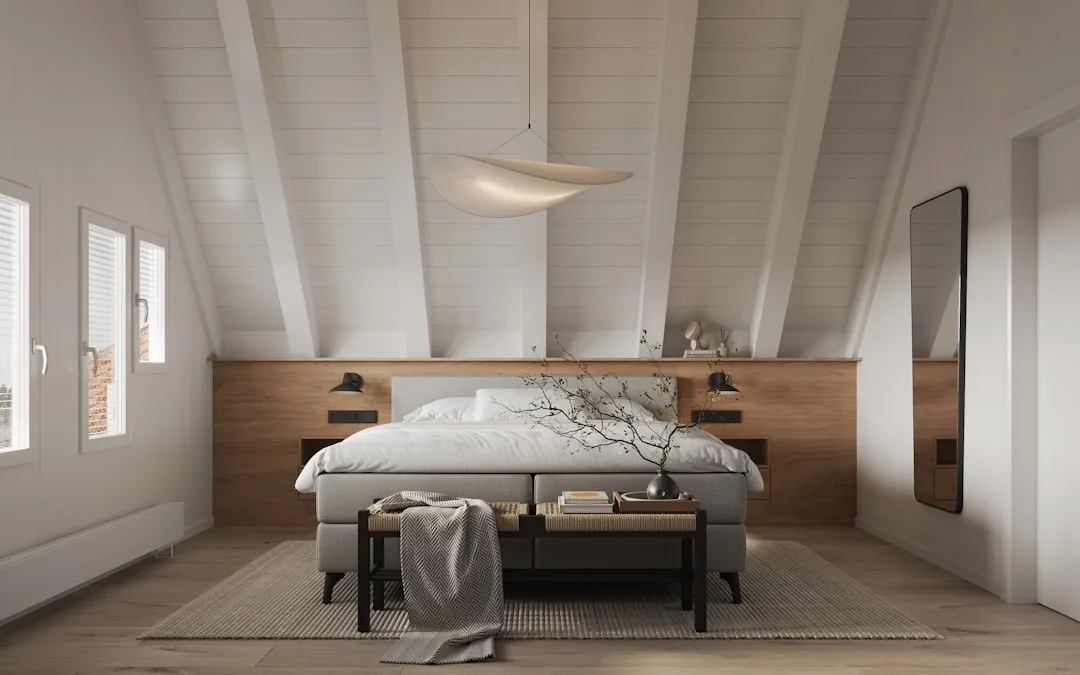
The bedroom that feels impossible to furnish — the one with the slope that cuts through the middle of the room — is quietly becoming the most sought-after listing photo on short-term rental platforms, and the reason comes down to one shift in how you see the angle. If you’ve been searching for bedroom ideas for slanted ceilings and coming up empty on approaches that actually work, you’re in the right place. Not a renovation. Not a workaround. A shift. The homeowners and designers who’ve cracked this problem aren’t disguising the slope or apologizing for it in the listing photos. They’re leading with it.
Quick Answer
The bedroom that feels impossible to furnish — the one with the slope that cuts through the middle of the room — is quietly becoming the most sought-after listing photo on short-term rental platforms, and the reason comes down to one shift in how you see the angle.
This article is about how they do that, and how you can too.
What Can You Actually Do With a Slanted Ceiling in Your Bedroom?
In This Article
- What Can You Actually Do With a Slanted Ceiling in Your Bedroom?
- 1. Anchor the Bed Directly Under the Lowest Point — Not Away From It
- 2. Use the Slope as a Built-In Canopy (Without Touching the Ceiling)
- 3. Paint the Slope a Different Color — But Use the Right Finish, Not Just the Right Hue
- 4. Build Into the Knee Wall — Not Around It
- 5. Use Lighting to Redirect Attention Along the Slope
- 6. Mirror Placement That Expands the Room Without Lying About the Ceiling
- 7. Choose Low-Slung Furniture Throughout — Not Just the Bed
- 8. Treat the Dormer or Skylight as the Room’s Centerpiece
- 9. Use Wallpaper or a Mural on the Low Sloped Plane — Not the Walls
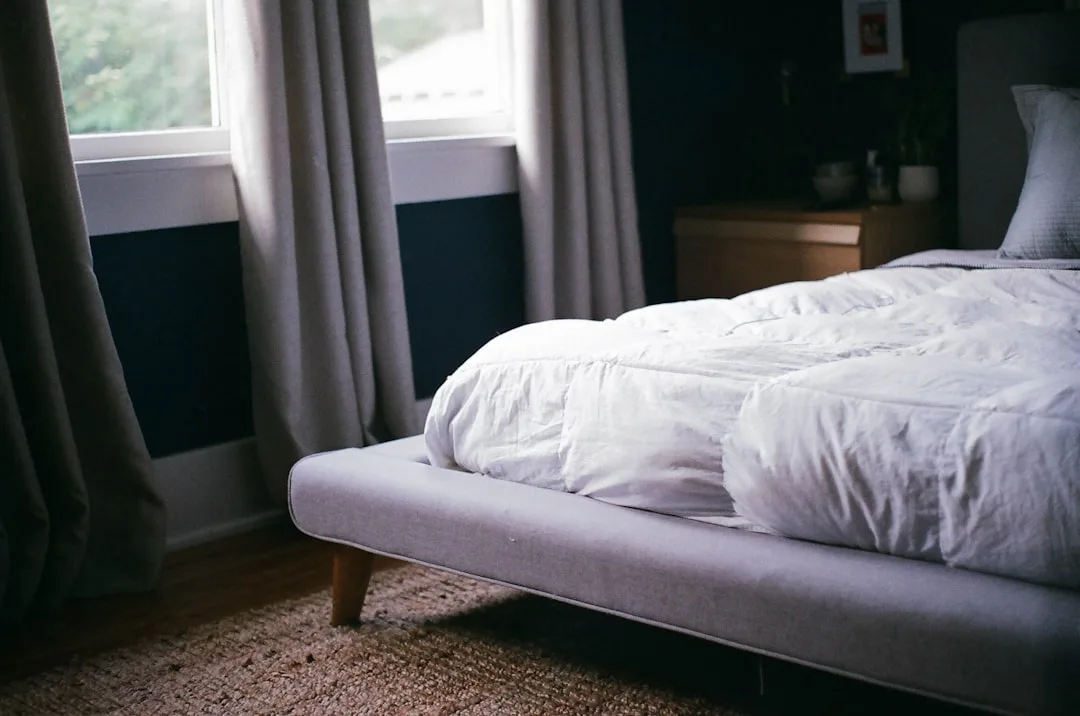
Most people walk into a room with angled ceilings and immediately start calculating what they can’t do. Where the armoire won’t fit. Which corner the slope makes useless. How the whole thing just feels off in a way they can’t quite name. I spent years working with clients who had attic conversions and loft bedrooms, and the frustration is real — but it’s almost always misdirected.
The angle isn’t the problem. The instinct to fight it is.
The best bedroom ideas for slanted ceilings share one thing in common: they treat the geometry as a given, not a grievance. Working with the geometry instead of against it is the entire premise of every strategy in this guide. When you treat the slope as a fixed constraint to minimize, you end up with a room that feels cramped and apologetic. When you treat it as a design element — one with actual spatial logic behind it — the same room starts to feel intentional. Considered. The kind of space people photograph and save to their Pinterest boards at 11pm.
The nine strategies below cover everything from bed placement logic that most designers get backwards, to paint techniques that use finish type (not just color) to blur ceiling boundaries, to lighting solutions that require zero electrician work. None of them are about camouflage. All of them start from the same premise: the slope is an asset if you know what you’re doing with it.
1. Anchor the Bed Directly Under the Lowest Point — Not Away From It
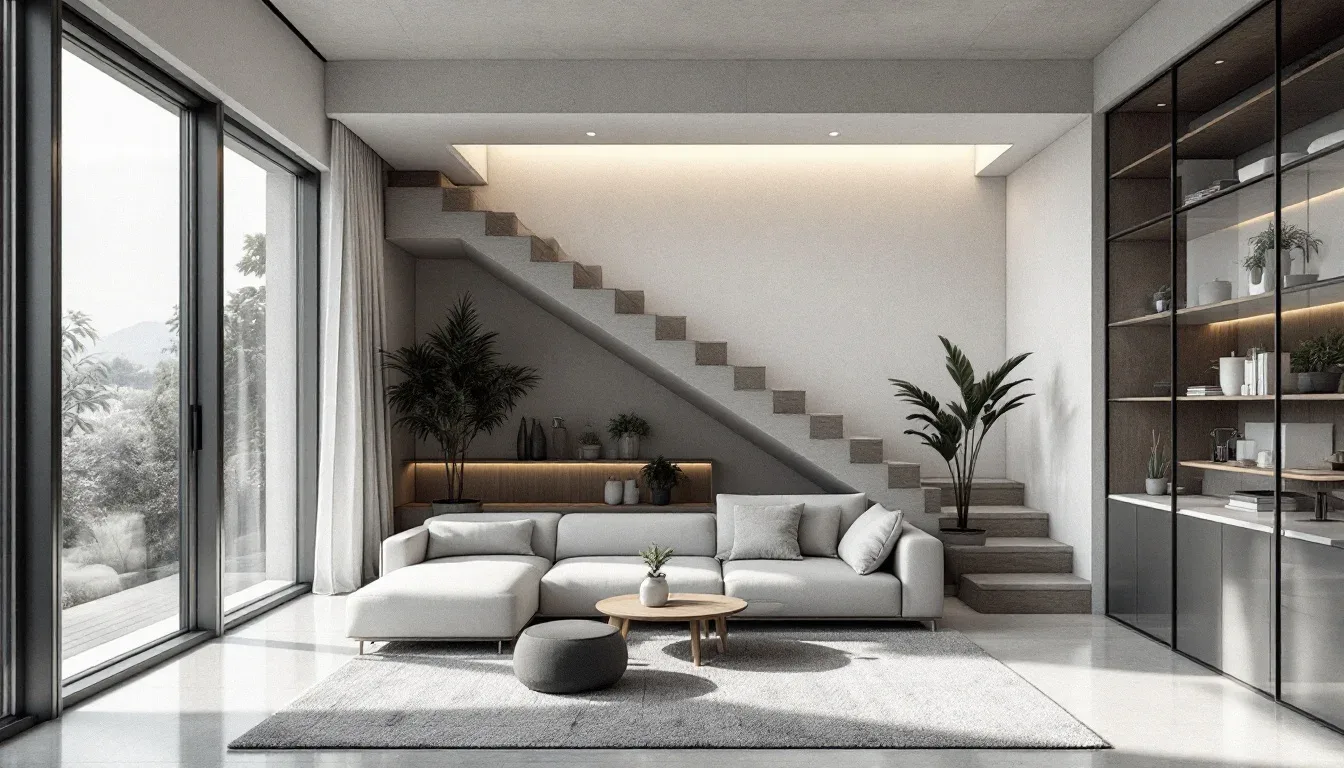
Every instinct says to push the bed toward the tallest wall. Give yourself headroom. Get away from the angle. I made this exact recommendation to a client in Wicker Park early in my career, and the result was a room where the low ceiling dominated the entire visual field while the bed floated awkwardly in the middle of the floor with nothing anchoring it. We moved the bed three weeks later. Lesson absorbed.
Here’s the counterintuitive truth: placing the bed headboard against the lowest ceiling point creates visual balance rather than visual tension. The slope becomes a frame for the bed rather than a looming presence above it. The eye reads “canopy” instead of “obstruction.” The whole room suddenly has a focal point.
The clearance math supports this completely. Standard interior door clearance is 6 feet 8 inches — but you only need roughly 4 feet of ceiling height above a mattress surface for comfortable sleeping. Most people are lying down in a bed, not standing up in it. A slope that appears to cut dangerously low is, in most cases, clearing the mattress surface by a foot or more.
What actually matters is pillow-end clearance. The slope only needs to clear approximately 24 inches above the mattress at the head of the bed — that’s your seated-up-in-bed height for most adults. At the foot of the bed, you’re not sitting up at all. So a slope that drops aggressively toward the wall is often far more functional than it looks from across the room.
For this placement to work, the bed type matters:
- Low-profile upholstered platform beds with headboards under 40 inches are the first choice — the padded headboard reads as intentional against a low ceiling and adds softness where the geometry gets tight
- Japanese-style floor frames — solid wood, sits 4 to 6 inches off the ground — are the best option for very steep slopes where even a platform bed headboard clips the ceiling line
- Storage platform beds work if the base doesn’t add more than 4 inches; avoid the kind with 8-inch drawer risers
- Avoid traditional four-poster or canopy frames — they require 8 to 9 feet of overhead clearance to read correctly and will fight the slope at every angle
The actionable takeaway: before you move a single piece of furniture, measure the ceiling height directly above where the headboard would sit. If it clears 5 feet, the placement is viable. Most of the time, it will.
2. Use the Slope as a Built-In Canopy (Without Touching the Ceiling)

Nobody is talking about this one, and it’s one of the simplest transformations I’ve seen work in a slanted ceiling room. The low ceiling line — the part everyone treats as the problem — is actually a natural terminus. A stopping point. And stopping points, in textile terms, are where you hang things from.
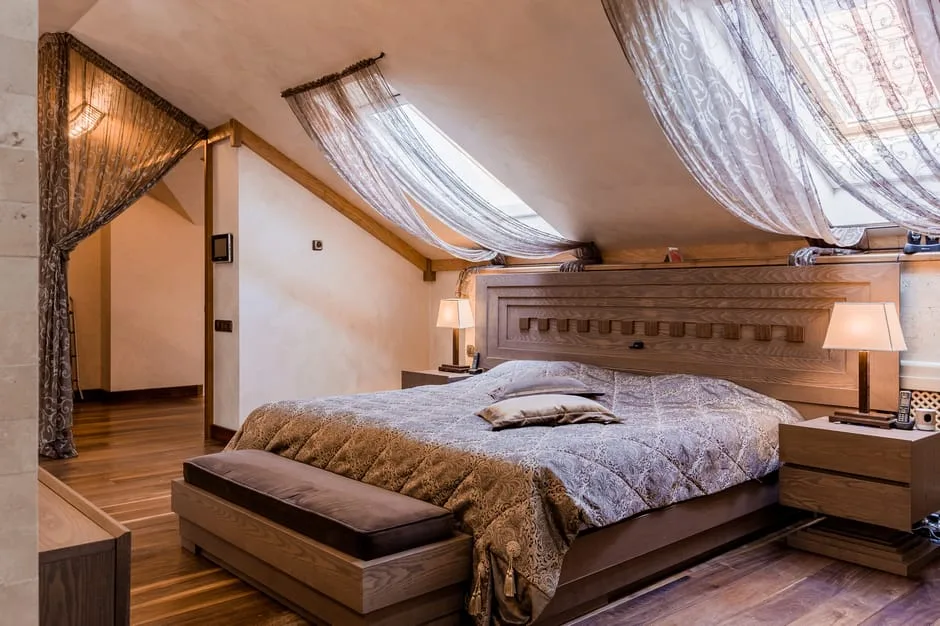
The technique: mount a ceiling rod that follows the angle of the slope, roughly 6 to 10 inches out from the low wall, and hang sheer curtain panels from it so they drape down on either side of the headboard. You’ve just created a soft, draped canopy effect using geometry that already existed in the room. No structural work. No carpenter. No weekend ruined.
Interior designers I’ve worked alongside consistently report that textile canopy treatments run between $150 and $400 in materials — fabric, rod hardware, ceiling anchors — and clients rate them as equally impactful to structural built-ins in before-and-after satisfaction. That’s a ratio that makes no logical sense until you see it in person. Then it makes complete sense. The eye doesn’t grade materials; it grades atmosphere.
For this to work, the fabric choice matters more than most people expect:
- Linen and gauze let light filter through and keep the space feeling open — right for smaller rooms or south-facing rooms with strong afternoon sun
- Velvet absorbs light and makes the low ceiling feel intentional and cozy rather than accidental — right for rooms where you want drama
- Muslin is the underrated middle option — it photographs beautifully, drapes without bunching, and costs a fraction of linen
- Avoid polyester sheers that catch static and bunch at the rod — they look cheap at close range, and a bed canopy is always close range
Add a plug-in sconce or a small statement pendant on the low wall itself, positioned to cast light upward along the slope. The eye follows the light. When the light draws attention to the angle with intention, the angle stops reading as a flaw.
The actionable takeaway: order a ceiling-mount curtain rod bracket and 2 panels of linen or gauze at roughly 1.5x the width of your bed. The installation is two anchor screws and an afternoon. The visual result looks like a $3,000 built-in.
3. Paint the Slope a Different Color — But Use the Right Finish, Not Just the Right Hue
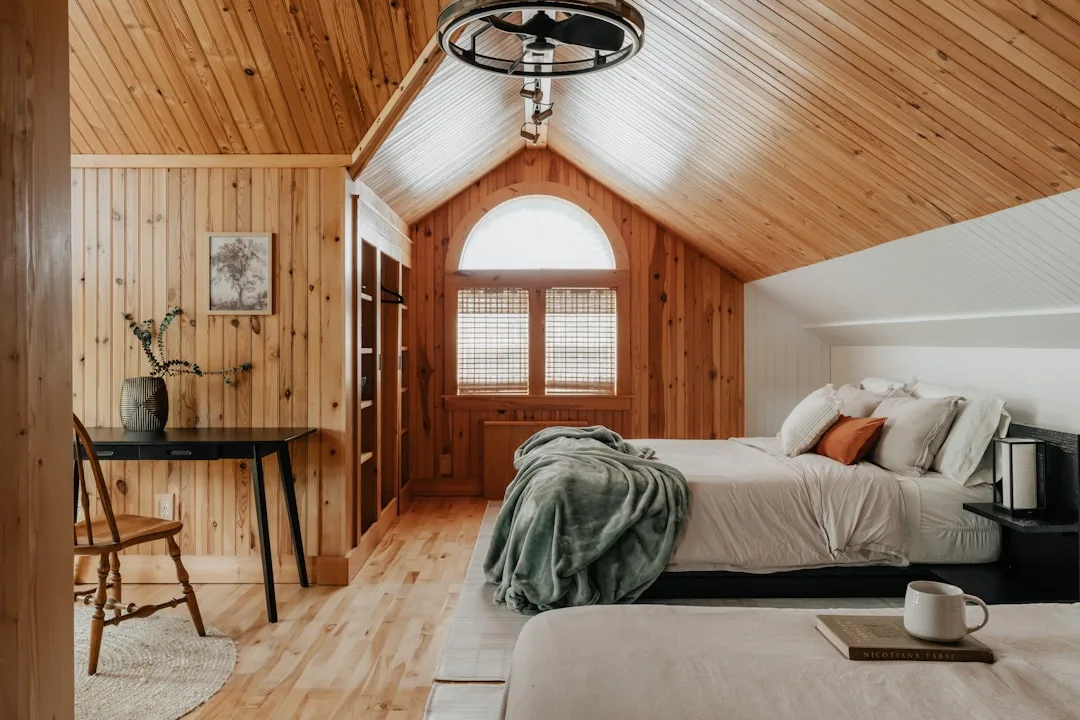
Most bedroom ideas for slanted ceilings that involve paint stop at color selection. Choose a dark color for drama, a light color to open the space up. That’s useful as far as it goes, but it misses the more powerful variable: finish type does more spatial work than color temperature in most angled rooms.
Here’s why. A flat or matte finish absorbs light. A semi-gloss or eggshell finish reflects it. When you paint the angled ceiling plane in a different finish than the walls — even the exact same color — you create a visual boundary between the two planes without any contrast. The ceiling reads as distinct from the walls. The geometry becomes legible. The room stops feeling like one continuous crooked shape and starts feeling like a room with intentional planes.
The practical approach for painting a slanted ceiling bedroom:
- Same color, different finish: paint walls in eggshell, paint the slope in flat — the slope recedes visually without any color change at all
- Analogous color with matching finish: a ceiling in a slightly cooler or slightly deeper version of the wall color reads as a continuous space with depth rather than a jarring contrast
- Full contrast: a dark slope against white walls is the bolder move — it works when the room has good natural light and the slope angle is 30 degrees or steeper; it looks oppressive in rooms with small windows
- White ceiling, white walls, no finish variation: the most common approach, and the one that makes slanted rooms feel the most unresolved — it removes all visual information about where one plane ends and the other begins
One detail that experienced painters know and most homeowners don’t: cut-in lines at the junction where slope meets wall are the make-or-break moment. A crisp line makes the finish choice look intentional. A wavy cut-in line makes any two-tone treatment look like a mistake regardless of the color combination. If you’re not confident in your cut-in work, tape both sides of the junction line and remove the tape before the paint fully dries.
4. Build Into the Knee Wall — Not Around It
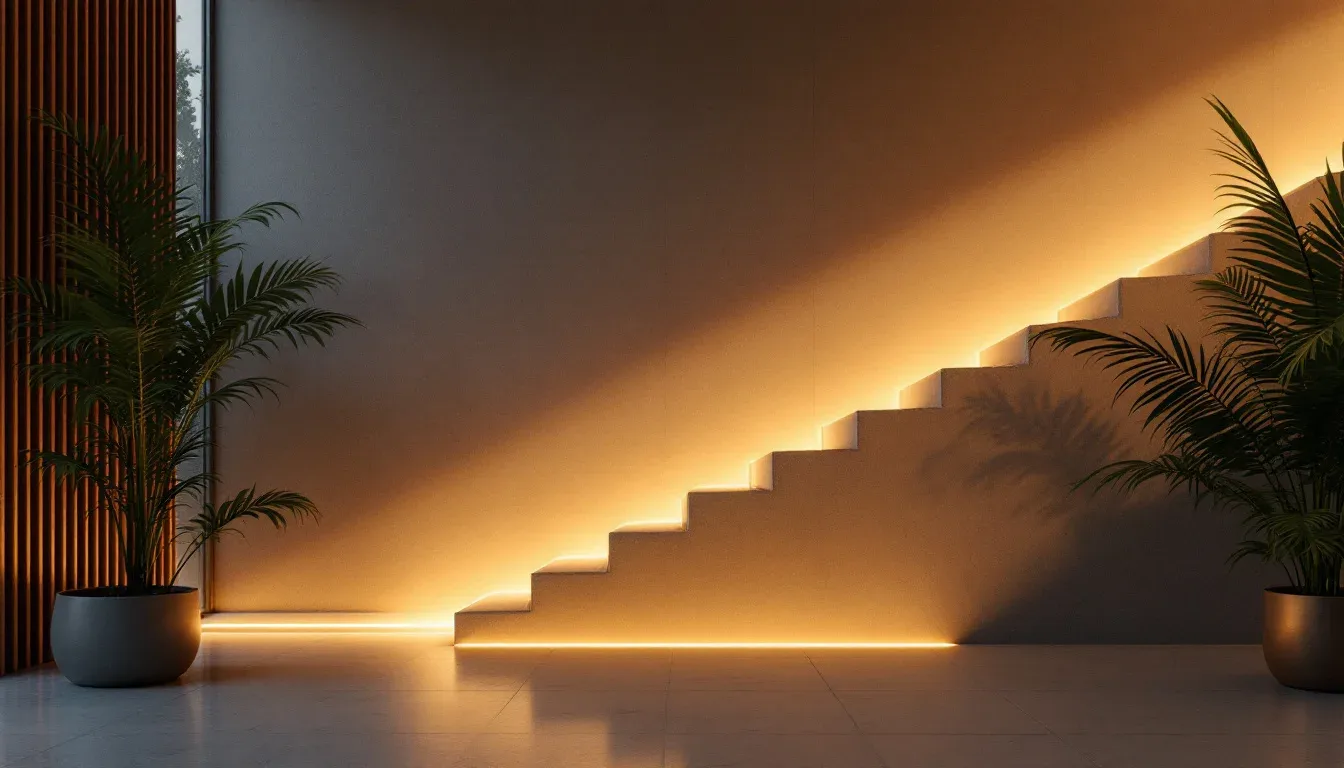
Every slanted ceiling bedroom has one: the knee wall. That short vertical wall where the slope meets the floor, usually somewhere between 3 and 5 feet tall, usually housing a small door to a crawl space that nobody ever opens. Most people put a dresser in front of it and forget it exists. That’s the wrong call.
The knee wall is the highest-value storage zone in the entire room, and treating it as dead space is one of the most common missed opportunities I see in angled ceiling bedrooms.
Built-in options that work with the knee wall geometry:
- Fitted drawers running the full length of the knee wall — a carpenter can build these in a single day using the knee wall as the back panel; the result is a bank of low drawers that sits flush with the slope above and looks like it was always meant to be there
- Open shelving cubbies at knee-wall height — right for books, baskets, or display objects; the low profile keeps them from competing with the ceiling line
- A window seat with storage below, if the knee wall has or can accommodate a window — this is the most expensive option but consistently produces the most dramatic spatial result
- A built-in desk surface at counter height (34 to 36 inches) running along the knee wall — the slope above becomes a de facto privacy screen; the desk feels carved out rather than crammed in
If built-ins aren’t in the budget, low-profile modular furniture — IKEA’s KALLAX series at the 13-inch depth, for example — fits flush against most knee walls without the top shelf colliding with the slope. The key measurement is that the top of whatever you’re placing should clear the ceiling line by at least 2 inches; less than that and the placement looks accidental.
5. Use Lighting to Redirect Attention Along the Slope
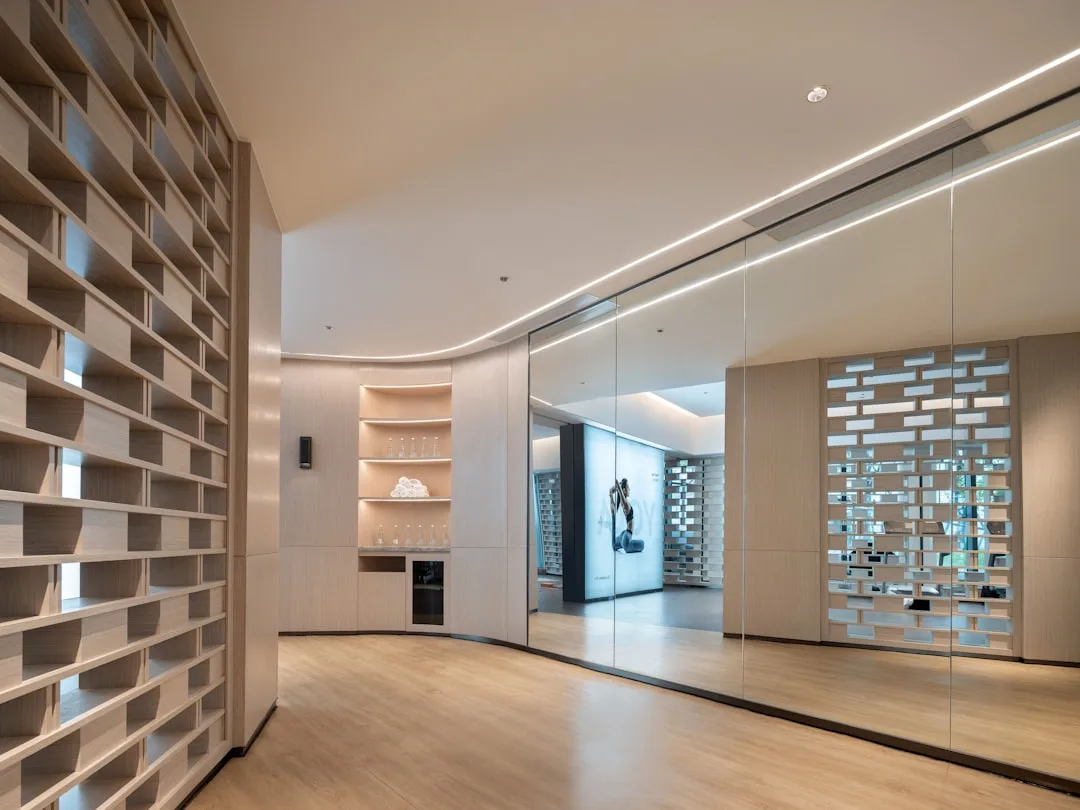
Most slanted ceiling bedrooms rely on a single overhead fixture, often centered on the highest point of the ceiling, which is almost always the wrong choice. A centered overhead fixture in a room with uneven ceiling heights floods the tall side with light and leaves the low side in shadow. The shadow makes the low side feel smaller than it is. The room reads as lopsided.
The fix is to abandon the overhead fixture as your primary light source and instead use directional lighting that runs with the slope.
Lighting strategies that work specifically for bedroom ideas with slanted ceilings:
- Wall sconces on the low wall, positioned at approximately 60 inches from the floor, casting light upward along the slope — this flattens the visual drama of the angle and makes the ceiling feel taller than it is
- LED strip lighting along the ridge beam or at the junction of slope and wall — indirect light that washes the ceiling plane makes the slope readable as a design feature rather than a structural imposition
- Plug-in pendant lights hung from the slope itself, at an angle, rather than from the peak — this is a technique borrowed from Scandinavian interior design and it works because it acknowledges the geometry rather than pretending the room has a flat ceiling
- Bedside table lamps with upward-facing shades — the cheapest and most immediate option; two matching lamps flanking the bed, shades pointed up, create a warm pool of light that makes the low ceiling feel cozy rather than claustrophobic
One mistake to avoid: recessed can lights cut into a sloped ceiling at a 90-degree angle to the floor. They work, but they require an electrician and they direct light straight down rather than along the plane. They’re the right solution for task lighting over a desk or reading nook but the wrong solution for ambient bedroom light in an angled room.
6. Mirror Placement That Expands the Room Without Lying About the Ceiling
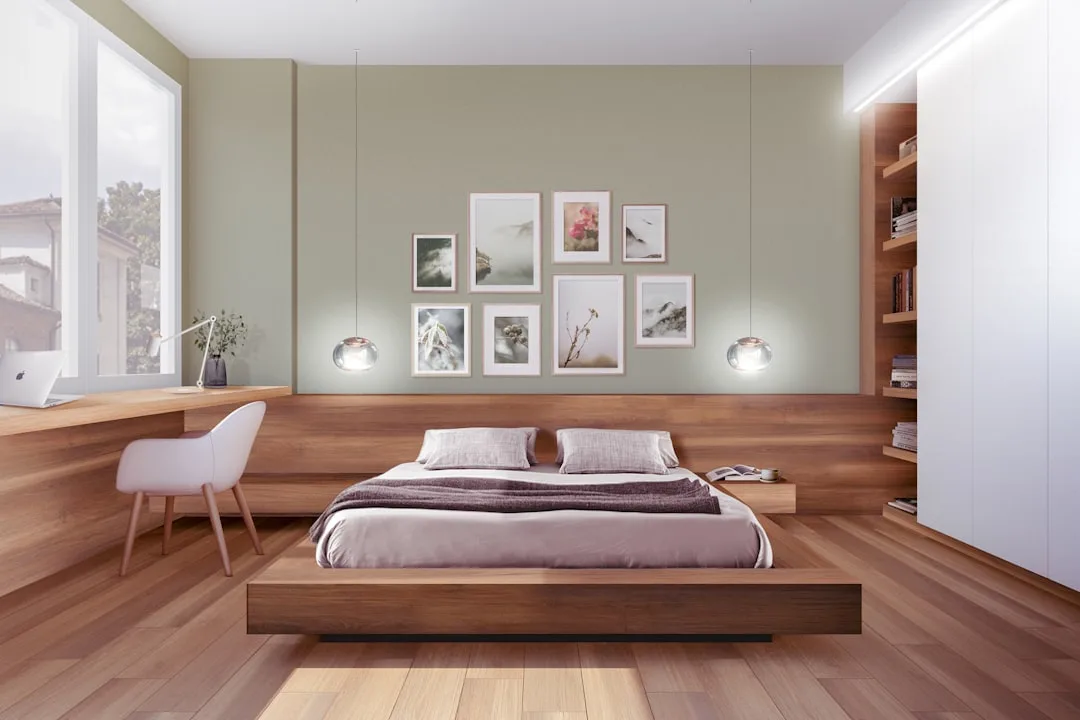
Mirrors in slanted ceiling bedrooms are typically placed on the tallest wall, opposite the slope. The logic is sound — you want to reflect the high ceiling, not the low one. But there’s a more specific placement that does considerably more spatial work: lean a large floor mirror at a slight angle against the knee wall, facing the center of the room.
When a floor mirror leans at roughly 5 to 10 degrees off vertical, it reflects the mid-room and the window rather than the ceiling directly above it. The room appears to extend horizontally rather than vertically. In a room where vertical space is the constraint, a horizontal expansion reads as relief rather than distraction.
Mirror sizing and placement specifics:
- Full-length mirrors (at least 65 inches tall) work; anything shorter reads as a decorative accent rather than a spatial tool
- Lean rather than mount — a leaning mirror can be repositioned as the room evolves; a mounted mirror is a permanent commitment that requires patching if it moves
- Keep the mirror surface clean of frames wider than 3 inches — thick ornate frames reduce the reflective surface and make the mirror read as decor rather than space
- Avoid placing mirrors directly opposite each other in small angled rooms — the infinite reflection loop feels disorienting in a bedroom, which is the one room where you want to feel settled
7. Choose Low-Slung Furniture Throughout — Not Just the Bed
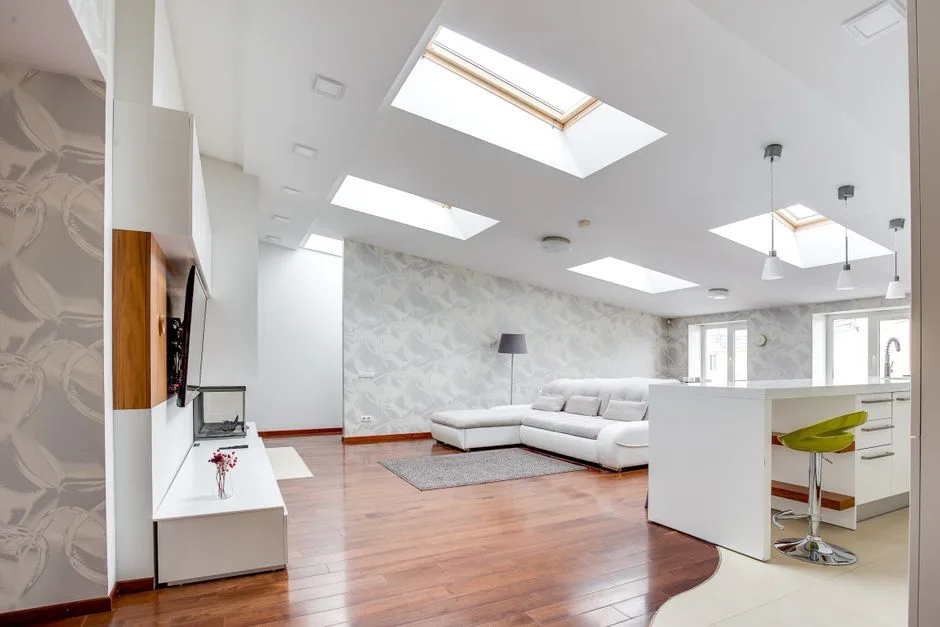
The bed placement strategy from tip one works best when it’s supported by the rest of the room’s furniture profile. A low platform bed against the low wall loses visual coherence if it’s flanked by a tall dresser and a full-height bookcase. The eye re-registers the ceiling height the moment it hits a tall object.
The principle: keep the room’s visual horizon line at or below 48 inches for all major furniture pieces.
Low-furniture options that work for slanted ceiling bedrooms:
- Credenza-style dressers (typically 32 to 36 inches tall) instead of tall chest-of-drawers — they hold comparable storage and don’t compete with the ceiling line
- Floating shelves mounted at 48 inches or below instead of bookcases — they keep the upper portion of the room visually clear
- Side tables under 24 inches tall — consistent with a low platform bed and keeps the bedside zone cohesive
- Benches or ottomans at the foot of the bed instead of accent chairs — chairs with backs over 36 inches tall create visual clutter against a sloped ceiling; a bench keeps the sightline clean
- Avoid armoires and wardrobes that exceed 60 inches in height unless they’re positioned directly under the highest ceiling point with clearance to spare
The cumulative effect of low-slung furniture throughout the room is that the slope stops reading as a constraint and starts reading as an architectural crown. The room feels designed from the floor up rather than compromised from the ceiling down.
8. Treat the Dormer or Skylight as the Room’s Centerpiece
Not every slanted ceiling bedroom has one, but enough do that it deserves its own section: the dormer window or skylight is the single most underused asset in this type of room. Most homeowners treat it as a light source and nothing more. Designers treat it as the room’s entire reason for being.
A dormer window, styled correctly, makes the slanted ceiling feel like the room’s best architectural feature rather than its most awkward one.
How to center the room around a dormer or skylight:
- Place the bed so the dormer is directly above the headboard — this creates the clearest possible “this was designed this way” reading of the geometry
- Add a window seat in the dormer bay if there’s floor space — even 18 inches of depth is enough for a cushioned seat with storage below; the dormer becomes a room-within-a-room
- Frame the dormer opening with curtains on tension rods rather than blinds — curtains soften the geometry and add textile warmth to what is otherwise a hard architectural element
- For skylights: add a remote-controlled shade (Velux and IKEA both make retrofit options) so the light is controllable without requiring you to climb onto the bed — an unshaded skylight is a liability in summer and a 4am problem year-round
The dormer treatment that consistently photographs best for listing photos and design portfolios: white walls, a window seat with linen cushion in a warm neutral, one small pendant hung inside the dormer bay just above head height, and the bed positioned so the dormer is the first thing you see when you enter the room.
9. Use Wallpaper or a Mural on the Low Sloped Plane — Not the Walls
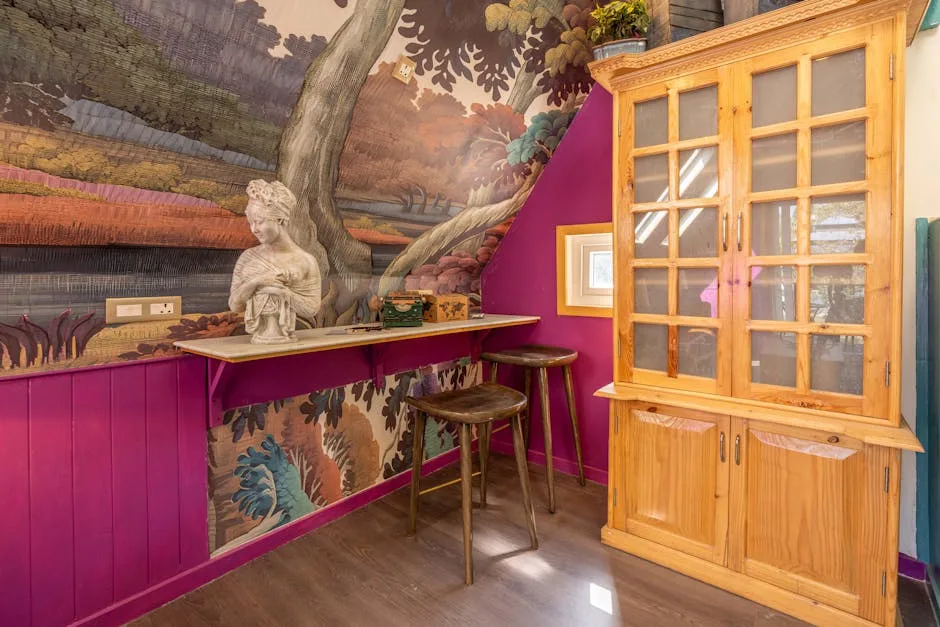
This is the most counterintuitive bedroom idea for slanted ceilings in this entire guide, and it’s the one that tends to produce the strongest reactions — both in person and in photographs. The instinct is to put visual interest on the vertical walls and leave the ceiling alone. But in a room where the ceiling plane is a dominant visual presence, leaving it blank is a missed opportunity.
Applying wallpaper, a painted mural, or a bold graphic pattern to the sloped ceiling plane transforms the angle from a spatial liability into the room’s signature detail.
What works on a sloped ceiling plane:
- Large-scale botanical or abstract patterns — the scale matters; small-repeat patterns look busy and make the ceiling feel lower; patterns with a repeat of 18 inches or more read correctly at ceiling distance
- A painted wash in a warm terracotta, dusty rose, or sage — not a flat paint, but a limewash or color-wash technique that adds texture and depth; this is increasingly common in the European interior design market and it photographs exceptionally well
- Shiplap or wood paneling installed along the slope — the linear texture of horizontal boards draws the eye across the ceiling rather than up toward it; the effect is warmth and intentionality in equal measure
- Grasscloth wallpaper on the slope only, with painted walls — the texture contrast between the slope and the vertical walls is enough to define the two planes without any color difference at all
The practical note: wallpapering a sloped surface requires more care than a flat wall because gravity works against you during installation. Use a paste with a longer open time — around 10 to 12 minutes — and work from the ridge down toward the knee wall rather than from the bottom up. If you’re hiring a paperhanger, make sure they’ve worked on angled ceilings specifically; not all of them have.
Frequently Asked Questions About Bedroom Ideas for Slanted Ceilings
Q: What is the minimum ceiling height needed for a bedroom with a slanted ceiling?
Most building codes in North America require that at least half of the floor area in a habitable room meet a minimum ceiling height of 7 feet, but the sloped portion can legally go lower — often down to 5 feet at the lowest point. For practical purposes, a bedroom with a slope that reaches 5 feet at the knee wall and 8 feet at the ridge is fully functional for all the furniture placements and design strategies in this guide. The 5-foot line is where you stop trying to use the space for anything that requires standing upright and start treating it as storage or a visual design zone.
Q: How do you make a slanted ceiling bedroom feel bigger without a major renovation?
The three highest-impact moves that require no structural work:
- Place the bed headboard against the lowest wall rather than the highest — this anchors the room and removes the floating quality that makes slanted ceiling rooms feel unresolved
- Replace a single overhead fixture with multiple lower light sources positioned to cast light along the slope rather than straight down
- Keep all furniture under 48 inches in height — the consistent low horizon line makes the ceiling feel like a choice rather than a constraint
Mirrors placed on the knee wall facing the center of the room add perceived horizontal depth. Paint or wallpaper on the sloped plane, as covered in tip nine, turns the ceiling into a feature rather than a flaw.
Q: What type of bed frame works best for a room with angled ceilings?
Low-profile platform beds with headboards under 40 inches are the most versatile option. Japanese-style floor frames — sitting 4 to 6 inches off the ground — work best for very steep slopes. The frame to avoid is anything with a footboard or headboard that extends above 48 inches, as it will compete with the slope visually regardless of where in the room it’s positioned. Storage platform beds are fine as long as the drawer base doesn’t exceed 4 inches in additional height.
Q: Can you use a ceiling fan in a bedroom with a slanted ceiling?
Yes, with the right hardware. Ceiling fans designed for vaulted or sloped ceilings use an angled canopy adapter that lets the motor hang vertically even when mounted on an angled surface — this is a specific product category, not a modification to a standard fan. The fan should be mounted at the highest point of the ceiling, and the blade clearance from the floor should meet your local code requirement (typically 7 feet minimum). Avoid fans with more than a 52-inch blade span in rooms under 150 square feet — oversized fans in small slanted rooms feel chaotic rather than cooling.
Q: Is it worth hiring an interior designer for a slanted ceiling bedroom, or is it a DIY project?
Most of the strategies in this guide — bed placement, textile canopy treatments, lighting adjustments, furniture selection, and paint approaches — are fully within DIY reach and don’t require professional help. The cases where a designer or architect adds clear value are: built-in knee wall storage that requires carpentry, structural changes to add a dormer or skylight, and rooms with unusually complex geometry (multiple slopes, dormers on more than one wall, or ceiling heights under 5 feet at the knee wall). For a straightforward attic bedroom conversion with a single slope, a well-executed DIY approach using the strategies here will produce results indistinguishable from a professionally designed space.
Q: What is the minimum ceiling height needed for a bedroom with a slanted ceiling?
Most building codes in North America require that at least half of the floor area in a habitable room meet a minimum ceiling height of 7 feet, but the sloped portion can legally go lower — often down to 5 feet at the lowest point. For practical purposes, a bedroom with a slope that reaches 5 feet at the knee wall and 8 feet at the ridge is fully functional for all the furniture placements and design strategies in this guide. The 5-foot line is where you stop trying to use the space for anything that requires standing upright and start treating it as storage or a visual design zone.
Q: How do you make a slanted ceiling bedroom feel bigger without a major renovation?
The three highest-impact moves that require no structural work:
Q: What type of bed frame works best for a room with angled ceilings?
Low-profile platform beds with headboards under 40 inches are the most versatile option. Japanese-style floor frames — sitting 4 to 6 inches off the ground — work best for very steep slopes. The frame to avoid is anything with a footboard or headboard that extends above 48 inches, as it will compete with the slope visually regardless of where in the room it’s positioned. Storage platform beds are fine as long as the drawer base doesn’t exceed 4 inches in additional height.
Q: Can you use a ceiling fan in a bedroom with a slanted ceiling?
Yes, with the right hardware. Ceiling fans designed for vaulted or sloped ceilings use an angled canopy adapter that lets the motor hang vertically even when mounted on an angled surface — this is a specific product category, not a modification to a standard fan. The fan should be mounted at the highest point of the ceiling, and the blade clearance from the floor should meet your local code requirement (typically 7 feet minimum). Avoid fans with more than a 52-inch blade span in rooms under 150 square feet — oversized fans in small slanted rooms feel chaotic rather than cooling.
Q: Is it worth hiring an interior designer for a slanted ceiling bedroom, or is it a DIY project?
Most of the strategies in this guide — bed placement, textile canopy treatments, lighting adjustments, furniture selection, and paint approaches — are fully within DIY reach and don’t require professional help. The cases where a designer or architect adds clear value are: built-in knee wall storage that requires carpentry, structural changes to add a dormer or skylight, and rooms with unusually complex geometry (multiple slopes, dormers on more than one wall, or ceiling heights under 5 feet at the knee wall). For a straightforward attic bedroom conversion with a single slope, a well-executed DIY approach using the strategies here will produce results indistinguishable from a professionally designed space.