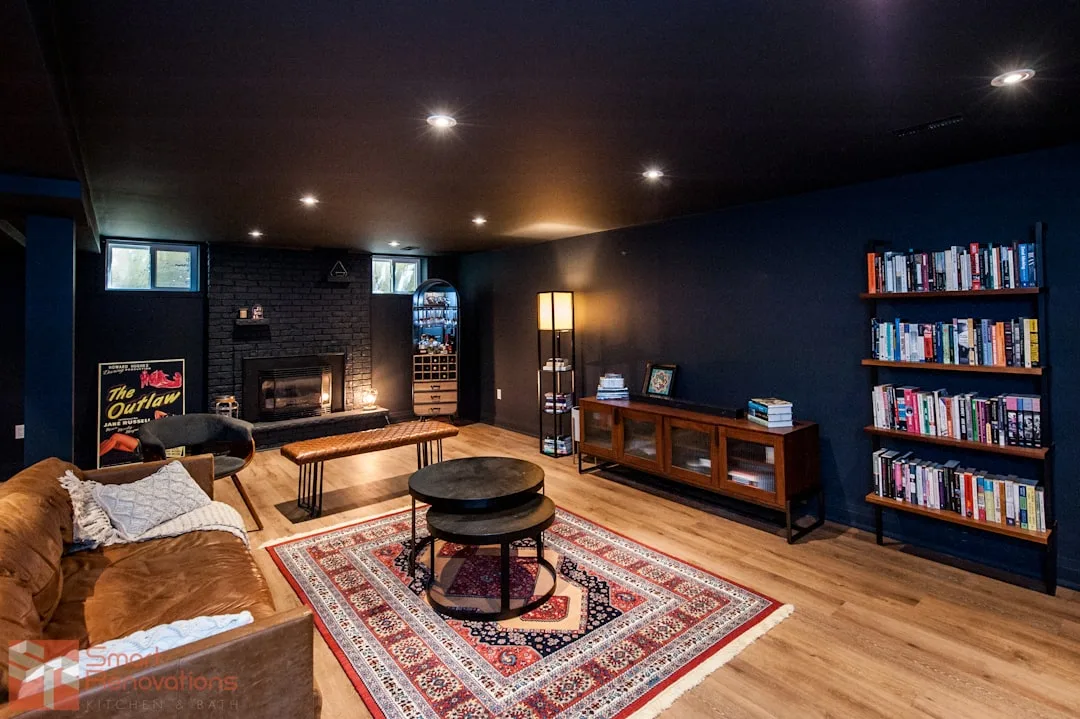
Most basement renovations fail not because of bad taste — but because a decision made in week one, before a single wall goes up, quietly undermines everything that follows. If you’re exploring basement room ideas and wondering where to start, the answer is almost never the finish materials or the floor plan. It’s the structural and legal decisions that happen before any of that.
Quick Answer
Most basement renovations fail not because of bad taste — but because a decision made in week one, before a single wall goes up, quietly undermines everything that follows.
I’ve watched homeowners spend $25,000 finishing a basement only to rip out half of it eighteen months later because moisture crept through an untreated slab, because a beautifully drywalled wall buried the electrical panel, because nobody pulled a permit and the house wouldn’t sell. The mistakes aren’t dramatic. They don’t announce themselves. They just compound quietly until one day you’re explaining to a home inspector why the egress window doesn’t meet code.
This is not a listicle of basement room ideas sorted by aesthetic. What you’ll find here is a decision framework — the kind I wish I’d handed every client before they fell in love with a finish material or a floor plan that their actual basement couldn’t support.
Which Basement Room Actually Makes Sense for Your Space
In This Article
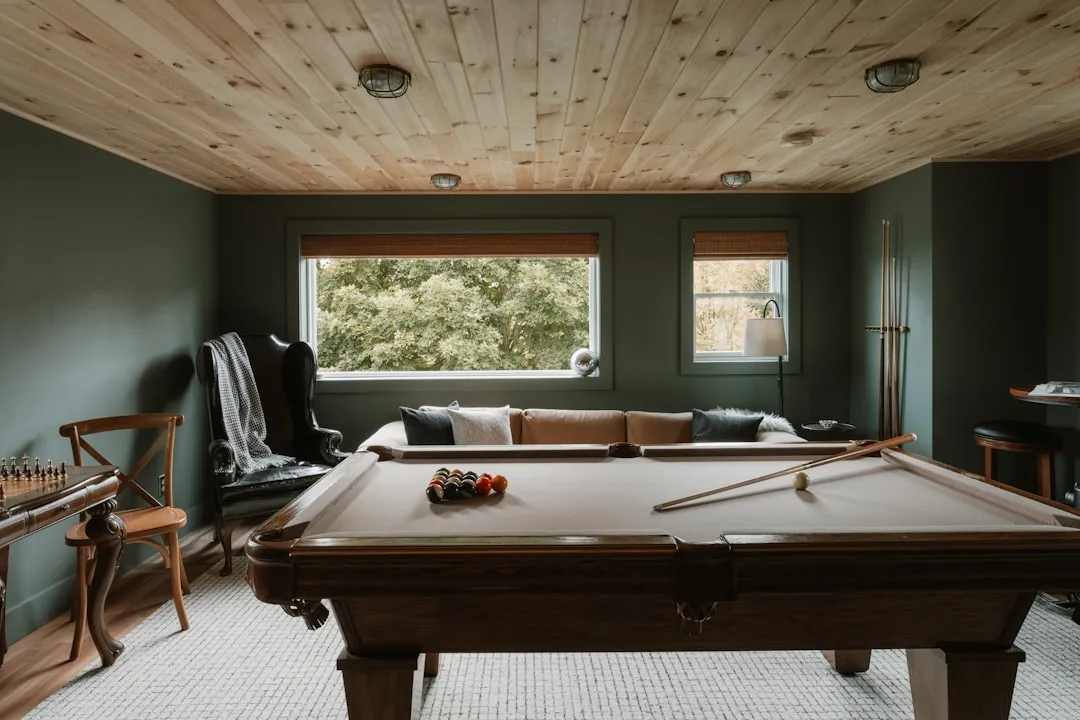
Before you start pinning photos of moody home theaters or sleek home gyms, your basement has to tell you what it can actually become. Most people skip this step. They pick the room type first, then try to make their space conform to it — and that backwards logic is where expensive problems begin.
Ceiling height is your first filter, not an afterthought. Seven feet is the practical minimum for any room where people will spend real time — a bedroom, living area, home office, or gym with overhead movement. At 6.5 feet, you’re looking at storage-adjacent utility spaces or a gym where nobody is doing pull-ups or jump training. If your ceiling runs below 6.5 feet after accounting for flooring thickness, you are not finishing a room — you are organizing a basement, and that’s a different project entirely.
Natural light access should determine which activities live where. If you have egress windows or a walkout situation on one side of the basement, that’s where your highest-use room belongs. Dark zones — and every basement has them — are actually useful. A home theater needs darkness. A wine cellar requires it. Stop treating low light as a problem to solve everywhere and start treating it as a constraint that directs your layout.
The household lifecycle question is one I saw constantly ignored. A family with two kids under ten needs different basement utility than a couple in their mid-fifties with remote jobs. The gym-turned-guest-room-turned-teenager-hangout trajectory is real and predictable — if you’re honest about where your household is heading, you can design for that second phase from the start rather than retrofitting it.
Square footage matters more for planning than most people admit:
- Under 400 sq ft: Commit to a single purpose. Split-use plans at this scale create rooms that feel like they can’t make up their minds.
- 400–800 sq ft: Dual-zone planning works here — a media area plus a small home office alcove, for instance, or a gym with a half-bath.
- 800 sq ft and above: Multi-room layouts become viable, but now you need to think about traffic flow, sound separation, and which uses conflict with each other spatially.
According to the National Association of Realtors, a finished basement adds an average of 70% ROI on remodel costs — but only when the room type aligns with buyer expectations in your local market. A finished basement in a neighborhood full of young families that becomes a wine cellar and cigar lounge may recover far less than that average suggests.
When evaluating basement room ideas against your actual space, the square footage and ceiling height numbers are non-negotiable starting points — everything else is flexible by comparison.
Actionable takeaway: Measure your ceiling height at the lowest point — not the average, the lowest — and identify where natural light reaches before you decide on a room type.
The Permits and Code Questions Nobody Wants to Deal With
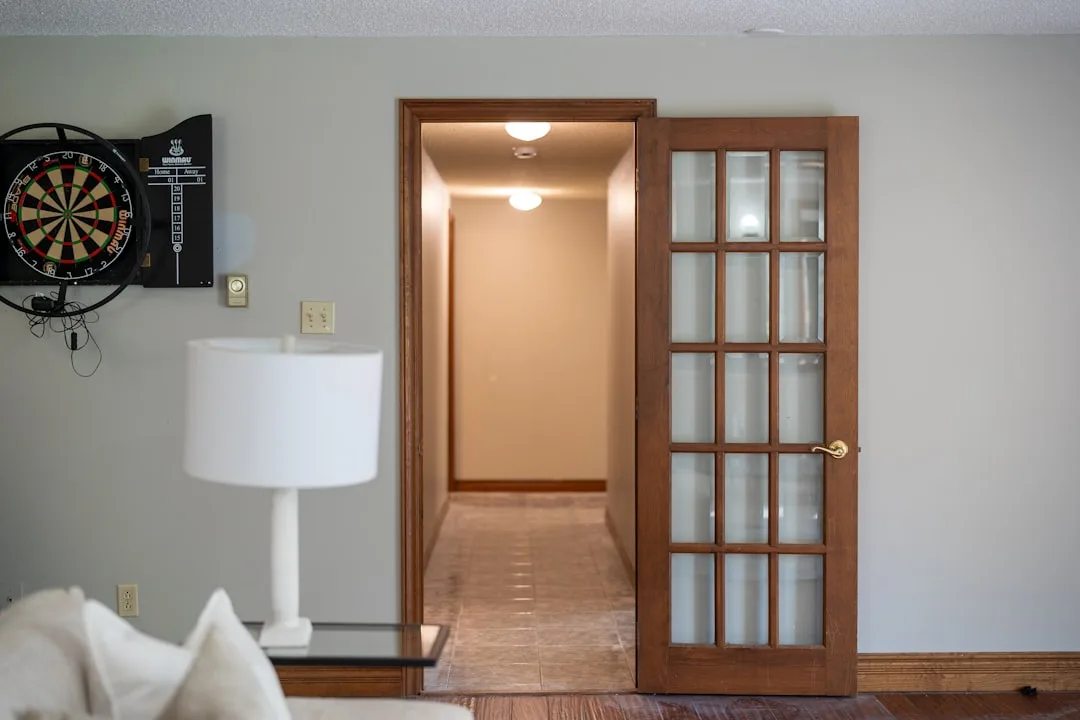
This section exists because most basement design content skips it entirely, and that omission costs homeowners real money. Permits are not bureaucratic nuisances. They are the mechanism by which your finished basement gets recorded as legal living space — and that recording directly affects your home’s appraised value and its saleability.
Here is what typically requires a permit when finishing a basement, though requirements vary by municipality:
- Framing new walls, including non-load-bearing partition walls
- Adding or relocating electrical circuits, outlets, or panel work
- Installing a bathroom or wet bar with new plumbing rough-in
- Cutting or enlarging egress windows
- HVAC extensions that add supply and return runs to the new space
- Egress compliance work for any room classified as a bedroom
The egress issue deserves particular attention. If you want to call a basement room a legal bedroom — for listing purposes, for rental income, for an in-law suite — most jurisdictions require a window opening that meets minimum width, height, and sill-height-from-floor specifications. The International Residential Code sets the baseline: minimum 5.7 square feet of openable area, at least 20 inches wide and 24 inches tall, with the sill no more than 44 inches from the floor. Your local code may differ, but those are the numbers to start with.
What happens if you skip permits? A few scenarios:
- During sale: A buyer’s inspector finds unpermitted work. The buyer requests remediation or a price reduction. The work may need to be opened up for inspection — meaning finished walls come down.
- During refinance: An appraiser cannot count unpermitted square footage as finished living space, which affects your loan-to-value calculation.
- During a claim: Your homeowner’s insurance may deny a claim for damage in an unpermitted space, on the grounds that the work was never verified to meet code.
Pull the permit. It adds time — typically two to six weeks for approval depending on your jurisdiction — but it is not optional if you want the finished basement to function as an asset rather than a liability.
How to Make a Basement Room Feel Like It Belongs Upstairs
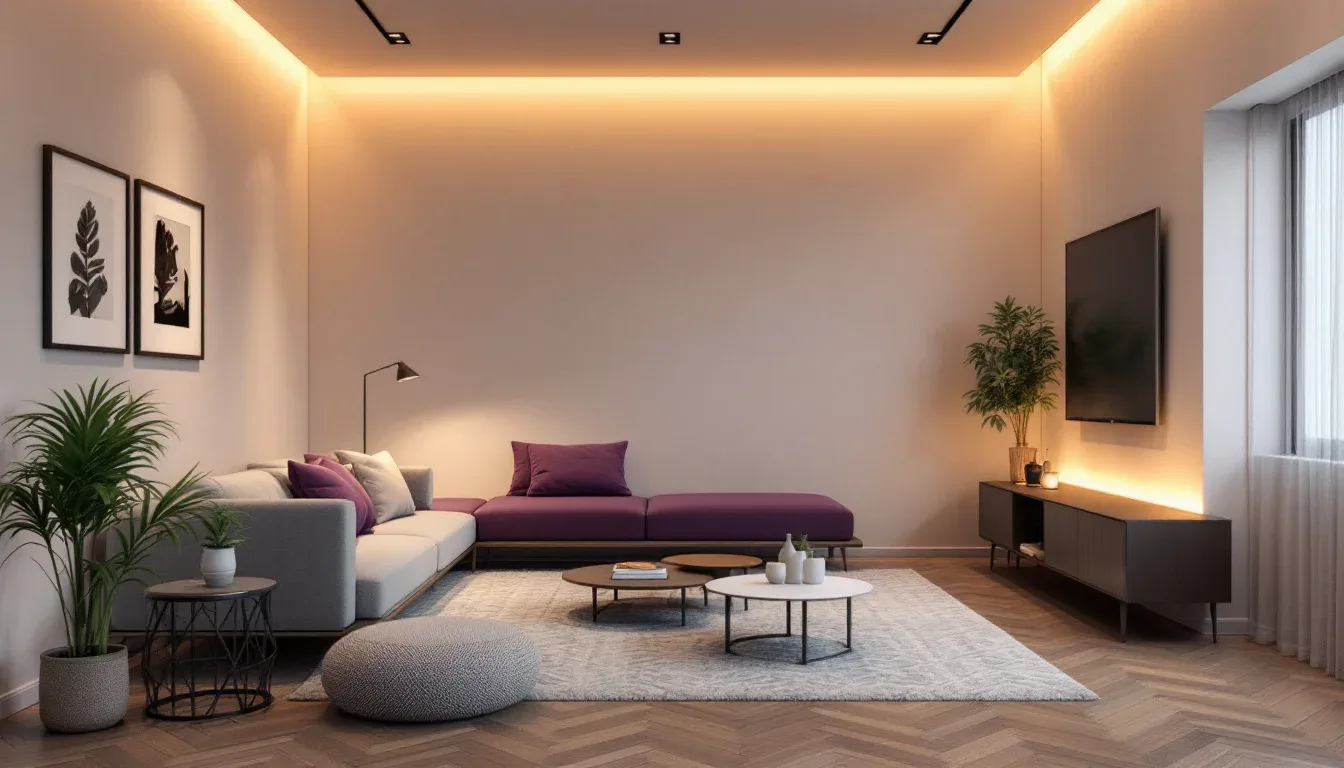
The honest answer to this question isn’t “add plants” or “use mirrors.” I’ve given that advice before, early in my career, and watched clients do exactly that while the room still felt like what it was: a basement. The problem isn’t styling. It’s the way below-grade spaces behave physically — and you have to address the physics first.
Moisture is not a decorating issue. If you see efflorescence — that white mineral deposit that looks like a salt crust on concrete walls — or if the space smells musty after rain, no amount of shiplap or recessed lighting will fix what’s happening. Moisture has to be resolved at the structural level before any finish material decision happens. Full stop. I learned this the expensive way when a client’s beautifully finished gym started growing mold behind the rubber flooring three months after completion because we trusted a “dry enough” assessment that turned out to be seasonal.
Once moisture is handled, lighting is the highest-impact place to spend your money and attention. Recessed cans alone create a flat, clinical feeling — the kind that makes people say a space “feels like a basement” even when everything else is well-designed. The fix is layering: recessed cans for general illumination, sconces or table lamps to create pools of warmth at eye level, and under-shelf LED strips to add depth. Research on perceived ceiling height consistently shows that warm-toned lighting in the 2700K–3000K range makes low ceilings feel significantly less oppressive than cool daylight bulbs at 5000K or higher, which amplify the compressed feeling rather than reducing it.
Ceiling treatment is where I see people make an almost universal error — they try to hide mechanical elements by boxing them in, which lowers the visual ceiling further. Paint everything the same dark color instead. Ductwork, joists, conduit — when they’re all the same deep charcoal or matte black, they visually recede. The ceiling reads as higher because there’s no contrast drawing the eye downward.
For color strategy: warm whites on ceilings, mid-tone walls. Cool white ceilings make the space feel institutional. Very dark walls in a low-light basement create a cave — not in a cozy way, in a disorienting way. The mid-tone range gives the room dimensionality without making it feel smaller than it is.
One thing almost nobody mentions in basement design content: acoustic control is functional, not decorative. Basements reverberate. Hard concrete walls, hard flooring, and few soft surfaces create an echo chamber that makes the room unpleasant to spend time in, regardless of how it looks. Area rugs, upholstered furniture, and fabric wall panels — whether you think of them as decorating choices or not — are doing acoustic work. Size the rugs generously. A small rug floating in the center of a large basement room makes the space feel smaller and does almost nothing acoustically. Go larger than feels instinctively right.
Flooring choices carry more consequence in basements than anywhere else in the house. The slab is always there, and whatever you put over it has to tolerate moisture vapor transmission, temperature fluctuation, and the fact that concrete never fully stops moving. Engineered hardwood handles this better than solid hardwood, but neither belongs directly on a slab without a vapor barrier and ideally a subfloor layer. Luxury vinyl plank has become genuinely excellent — the better products have a rigid core that bridges minor slab imperfections and handles moisture without warping. Polished or painted concrete is an honest choice that leans into what the space actually is, and in the right basement room ideas context — an industrial home gym, a minimalist workshop — it reads as intentional rather than unfinished.
The Basement Room Ideas That Actually Work by Use Case
This is where most articles start. It’s where this one lands after the framework — because now you have the context to evaluate these options against your actual space rather than in the abstract.
Home theater or media room remains the most requested basement room idea for good reason. Basements are genuinely well-suited to it: below-grade walls provide natural sound dampening, consistent temperatures protect electronics, and the absence of windows means you control light completely. What most media room guides skip: the HVAC situation. Home theaters generate significant heat from equipment, and if your basement’s existing system isn’t sized to account for that, you’ll be running the room uncomfortably warm within an hour of use. Plan for supplemental cooling or confirm with an HVAC professional that your system can handle the load.
Key decisions for a basement home theater:
- Room within a room construction for serious acoustic isolation — this means building interior walls that don’t touch exterior walls, eliminating the direct path for vibration transfer
- Projector vs. large-format display — projectors need controlled ambient light, which basements provide naturally, but they also need throw distance; confirm your room depth before committing
- Seating platform vs. flat floor — a raised rear platform with tiered seating creates sightlines but reduces the functional flexibility of the space afterward
- Acoustic panel placement on first and second reflection points, not just randomly on walls
Home gym is the second most common basement room idea, and it’s also where I see the most planning oversights. Rubber flooring is essential — not just for comfort but to protect the slab from dropped weights and to reduce vibration transmission to the floors above. Eight-millimeter thickness is the minimum for free weight areas; twelve millimeters if you’re deadlifting regularly. Ceiling height matters here more than in any other use: a ceiling fan for air circulation needs clearance, a cable machine or pull-up rig needs seven feet minimum to the lowest obstruction, and jump training needs more.
Home gym planning checklist:
- Ceiling height at lowest point — measure before buying any tall equipment
- Dedicated circuit for treadmills, rowers, and any motorized equipment; most draw enough amperage that sharing a circuit causes tripped breakers
- Mirror placement on one wall, not wraparound — full mirror coverage creates a commercial gym feeling that most people find less motivating at home
- Ventilation — basements without operable windows need mechanical ventilation in gym spaces; CO2 accumulation during hard training is real and affects performance
- Floor protection zones — not all areas need the same thickness; map your equipment layout before ordering rubber flooring
Guest bedroom or in-law suite is the basement room idea with the most code implications. The egress window requirement isn’t optional — it’s a life-safety issue, and most jurisdictions enforce it. Beyond egress, a legal basement bedroom typically requires:
- A closet (in most jurisdictions, though definitions vary)
- Proper ceiling height — the IRC minimum is 7 feet for habitable rooms
- Smoke and carbon monoxide detectors wired to the home’s system
- Adequate heating that can maintain the space at livable temperatures independently
If the suite includes a bathroom, plan the plumbing rough-in before any framing happens. Adding a below-grade bathroom almost always requires a sewage ejector pump — gravity drainage isn’t available when you’re below the main sewer line — and the pump needs to be accessible for maintenance. Budget $800–$1,500 for the pump system itself, plus plumbing labor.
Home office is among the most practical basement room ideas for remote workers, but it demands the most from lighting since you’ll be spending eight-plus hours in the space on work days. Natural light simulation matters here more than in a home theater or gym. Full-spectrum LED panels that mimic daylight in the 4000K–5000K range support alertness and reduce eye fatigue during long work sessions — the same logic that makes cool light feel oppressive in a lounge makes it functional in a workspace. Layer it with task lighting at the desk and warmer ambient sources for video calls, where cool overhead light creates unflattering shadows.
Multipurpose family room is the catch-all category, and it works best when it’s designed with clear zones rather than as an open plan that tries to do everything at once. A sectional sofa that anchors a TV zone, a built-in desk alcove along one wall, and a folding table area for games or crafts — these can coexist in 600–800 square feet without competing, as long as the traffic flow between zones is logical and the sound situation between uses is considered.
What to Sequence, and Why the Sequence Matters
The order of operations in a basement finish project is not arbitrary. It follows a logic that, when ignored, creates expensive corrections.
The correct sequence for most basement finishing projects:
- Moisture assessment and remediation — before any framing, any material purchase, any design decision
- Permit application — submit before work begins; in most jurisdictions it’s illegal to begin framing before approval
- Rough plumbing — if a bathroom or wet bar is planned, this happens before framing, because drain lines may need to be cut into the slab
- Framing — walls go up around confirmed mechanical locations; the electrical panel, water heater, and furnace all need code-required clearance maintained
- Rough electrical and HVAC — run in open walls before insulation
- Rough plumbing inspection — if applicable
- Insulation — after rough inspections are passed
- Drywall — closed walls after insulation approval
- Finish electrical, plumbing, HVAC — fixtures, outlets, registers
- Flooring, painting, trim — in that order; flooring before painting protects the slab work; trim last covers the flooring edge gap
- Final inspections
The most common sequencing error I see is homeowners who frame walls, drywall them, and then realize the rough electrical hasn’t been inspected — which means opening walls. The second most common is installing flooring before the HVAC is extended to the space, then having installers drag equipment across finished floors.
Getting the sequence right doesn’t just prevent rework. It determines whether your subcontractors can work efficiently, which affects both timeline and cost.
Frequently Asked Questions About Basement Room Ideas
How much does it typically cost to finish a basement into a usable room?
The range is genuinely wide: $25–$50 per square foot for basic finishing with standard materials, and $75–$150 per square foot for high-end finishes, a bathroom addition, or significant structural work. A 600-square-foot basement finished to a comfortable but not luxury standard typically runs $18,000–$35,000 depending on your region and what the space requires. The biggest cost variables are whether you’re adding a bathroom (add $8,000–$20,000), whether moisture remediation is needed before finishing (add $3,000–$15,000 depending on severity), and local labor rates, which vary significantly by market.
Do I need an egress window even if I’m not calling it a bedroom?
If you’re not classifying the space as a bedroom, most jurisdictions don’t require an egress window. However, if there’s any possibility you’ll want to call it a bedroom later — for resale, for rental income, for an in-law suite — install the egress window now. Cutting and retrofitting a window opening after walls are finished costs significantly more than doing it during the initial project, and it requires opening finished walls in the area around the window.
What’s the best flooring for a basement room?
Luxury vinyl plank with a rigid core is currently the most practical choice for most basement room ideas: it tolerates moisture vapor transmission, handles temperature fluctuation, installs directly over most slabs with minimal prep, and is available in styles that read as genuinely upscale. Engineered hardwood is the right choice if you want wood authenticity and your moisture situation is well-controlled. Carpet works in low-traffic, low-moisture zones — a bedroom or home theater — but should never be installed directly on a slab without a proper moisture barrier and padding system. Polished or sealed concrete is the honest choice for gyms, workshops, and utility-forward spaces.
How do I know if my basement has a moisture problem before I start finishing?
The tape test is imperfect but useful as a first screen: tape a 12-inch square of plastic sheeting to the slab and wall in several locations, seal all edges, and leave it for 24–48 hours. Condensation on the underside of the plastic indicates moisture vapor coming through the concrete. Condensation on the top indicates ambient humidity in the air — a different problem with a different solution. A musty smell after rain is a reliable indicator of water intrusion. Efflorescence (white mineral deposits) on concrete walls indicates water has been moving through the wall consistently. Any of these signs warrants a professional moisture assessment before you spend a dollar on finishing materials.
Can I convert a basement into a legal rental unit?
In many jurisdictions, yes — but the requirements are specific and the process is not simple. A legal accessory dwelling unit (ADU) or basement apartment typically requires: a separate entrance, full egress compliance in all sleeping areas, a full bathroom, a kitchen or kitchenette, separate HVAC or the ability to independently control temperature, smoke and CO detectors, and an electrical panel capable of supporting the unit’s load. Zoning approval is a separate step from building permits — your municipality may allow ADUs by right, require a conditional use permit, or prohibit them entirely in your zone. Check zoning before investing in the design. In markets where ADUs are permitted and housing demand is high, a legal basement rental unit is among the highest-ROI basement room ideas available.