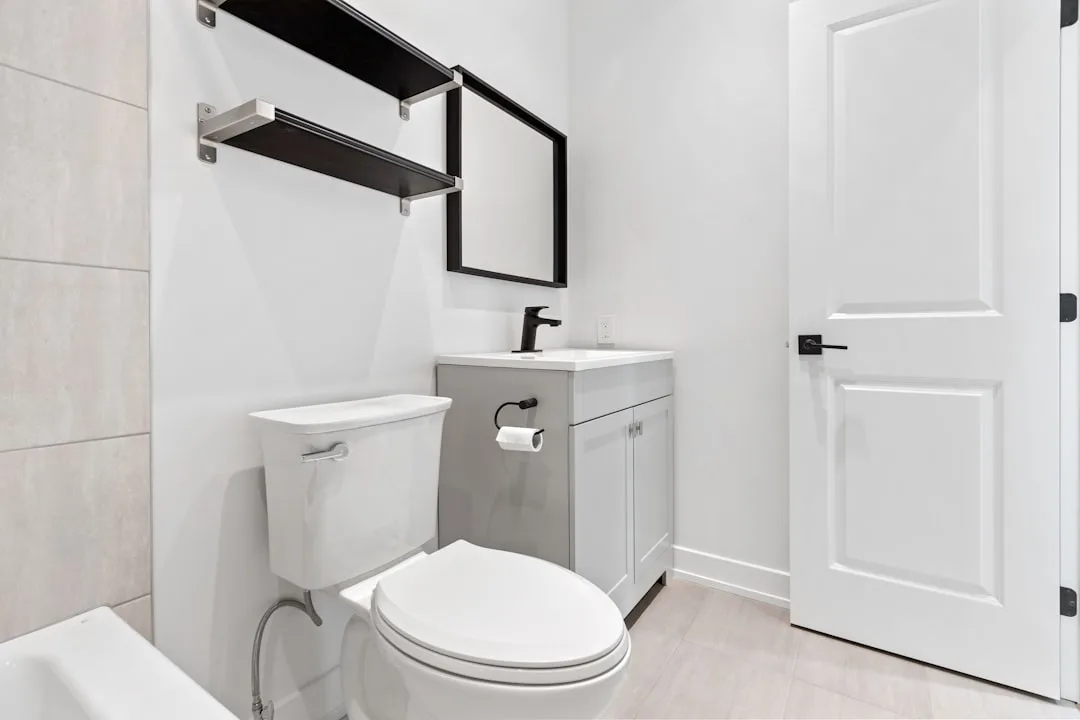
A standard 30-inch bathroom door destroys nearly 8 square feet of usable floor space every time it swings open — in a 40-square-foot bathroom, that’s almost 20% of the room working against you. Most people register this as a vague inconvenience and never address it. The ones who do address it usually end up reading a list of nine bathroom door alternatives for small spaces with no guidance on which one actually fits their situation, their wall type, their budget, or whether they rent or own. This article is the one that does that work.
Quick Answer
A standard 30-inch bathroom door destroys nearly 8 square feet of usable floor space every time it swings open — in a 40-square-foot bathroom, that’s almost 20% of the room working against you.
Why Your Current Door Is Quietly Stealing Floor Space
In This Article
- Why Your Current Door Is Quietly Stealing Floor Space
- 1. Pocket Doors: The High-Reward, High-Commitment Fix
- 2. Barn Doors: When the Style Actually Works (and When It’s a Privacy Problem)
- 3. Bifold Doors: The Underrated Middle Ground
- 4. Sliding Bypass Doors: The Two-Panel Option for Wider Openings
- 5. Pivot Doors: When You Have the Ceiling Height to Make It Work
- 6. Curtains and Fabric Panels: The Renter’s Realistic Option
- 7. Dutch Doors: The Ventilation-Forward Choice
- 8. Glass Panel Doors: Borrowing Light Without Sacrificing Privacy
- 9. The Doorless Entry: Angled Walls and Strategic Layout
- Which Bathroom Door Alternative Is Right for Your Space?
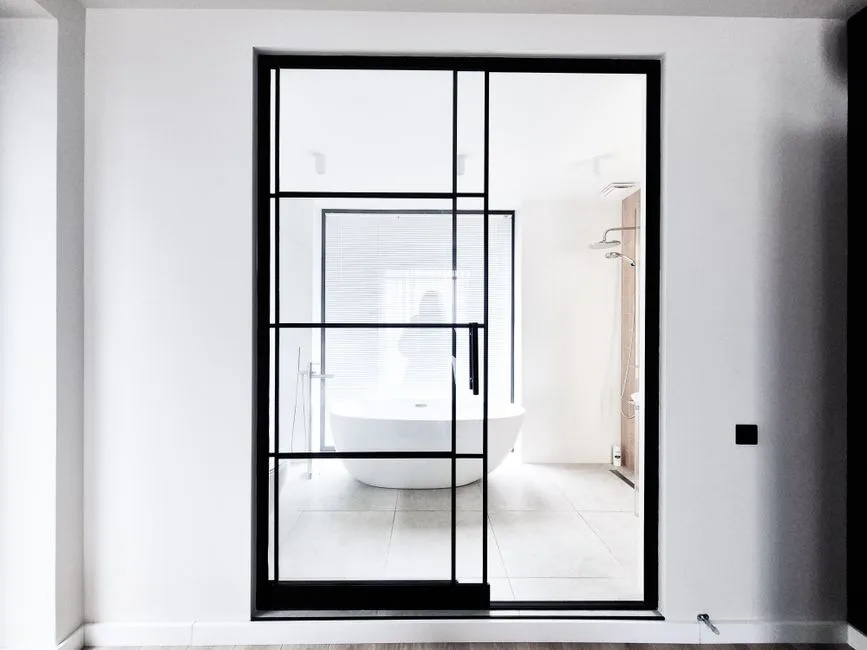
Here’s what nobody calculates until they’re standing in a cramped bathroom trying to figure out why it feels impossible: a standard 30-inch interior door requires a swing arc of approximately 7.7 square feet of clear floor space, based on a standard radius calculation where r equals door width. That arc isn’t just inconvenient. It’s dead. Nothing can live in it permanently — no hamper, no scale, no small cabinet, no towel hook at a useful height. The door owns that floor, and you pay for it every square foot of the month.
In bathrooms under 50 square feet, that dead zone represents 15–18% of your total floor area. I spent years doing space assessments in Manhattan and Chicago apartments where the bathroom was somewhere between 35 and 48 square feet, and the door swing was consistently the single biggest functional problem — bigger than storage, bigger than lighting. People would spend money on floating shelves and then wonder why the room still felt chaotic. The swing arc was the answer every time.
The clearance conflicts compound quickly. Towel bars get pushed to awkward positions because the door arc eliminates the obvious wall. Vanity placement gets dictated not by what makes sense ergonomically but by what the door will clear. Toilet positioning — which affects the entire layout — often traces back to a door swing decision made when the room was originally built, possibly decades ago.
One non-negotiable: egress requirements still apply regardless of which alternative you choose. Most residential building codes require a minimum 32-inch clear opening width for accessibility compliance, though specifics vary by jurisdiction. A curtain on a tension rod, legally speaking, is not an egress-compliant door in most jurisdictions — something worth confirming with your local building department before you commit to a doorless design. Every solution in this article has a code consideration. I’ll flag each one.
Takeaway: Before selecting any alternative, measure your bathroom’s square footage and calculate what percentage the swing arc currently represents. If it’s above 15%, the urgency is real and the payoff from switching is significant.
1. Pocket Doors: The High-Reward, High-Commitment Fix

Pocket doors are genuinely excellent. They’re also the most frequently misunderstood option in this category — not because people don’t understand what they are, but because nobody explains the part where your specific wall has to cooperate.
The wall cavity requirement is non-negotiable. A pocket door needs a hollow wall cavity at least as wide as the door itself — typically 30 to 36 inches of clear, unobstructed wall. Load-bearing walls are almost always incompatible without structural engineering work, which means a header and potentially a temporary support wall during construction. That’s not a weekend project.
Plumbing and electrical inside the target wall disqualify it without rerouting, and that rerouting is consistently the hidden cost that blows budgets. I watched a client in Wicker Park get a pocket door quote of $600 and walk away with a $2,800 bill because there was a supply line running through the only viable wall. Nobody had checked before the demo started. Retrofit pocket door installation in an existing wall averages $1,000–$3,500, compared to $300–$600 in new construction — a cost gap that competitors almost universally omit.
Hardware quality is where pocket doors fail or succeed long-term. Budget hardware — the kind that comes with big-box kits — tends to fail within three to five years. The rollers bind, the door drops off-track, and suddenly you have a door that won’t open. Specify soft-close hardware rated for 100,000-plus cycles. Johnson Hardware and Hafele both make residential-grade systems worth the investment.
The cases where pocket doors genuinely make sense:
- New construction or gut renovation where the wall can be built around the pocket system from the start
- A non-load-bearing wall confirmed to have no plumbing or electrical running through it
- Bathrooms where you want full visual and acoustic privacy — pocket doors with a proper seal come closer than any surface-mount sliding option
Takeaway: Before any other planning, open the wall or pull the permit history to confirm what’s inside. If the wall is clear and non-load-bearing, the pocket door is almost always the best long-term answer.
2. Barn Doors: When the Style Actually Works (and When It’s a Privacy Problem)

Barn doors became the shorthand for “stylish small-space fix” around 2015 and have never quite recovered from being overused. The aesthetic case is real — a well-chosen barn door in the right space looks deliberate and architectural. But there are two structural problems with them in bathroom contexts that most guides gloss over entirely.
The gap problem is not minor. Barn doors typically leave a 1/2-inch to 1-inch gap between the door face and the wall — sometimes more, depending on hardware and mounting — which is enough to allow sound transmission of roughly 20–30 decibels. That’s the range between a whisper and quiet conversation. In a family home with shared bathrooms, this is a real privacy concern, not a theoretical one.
The wall space requirement catches people off guard too. A surface-mount sliding barn door needs clear wall space equal to the full door width on the latch side — a 30-inch door needs 30 inches of clear wall adjacent to the opening. In narrow hallways, that wall often has a light switch, an outlet, or nothing but a corner. The door has nowhere to go.
Where barn doors genuinely belong:
- Powder rooms off open-plan living areas, where the partial privacy gap is acceptable and the aesthetic registers strongly
- Ensuite bathrooms in a primary suite, where the household typically shares the space anyway
- Any bathroom where the design goal outweighs acoustic privacy concerns
Gap-sealing solutions exist — brush seal strips along the door edge and compression bumpers at the wall mount can reduce light and sound bleed. They don’t eliminate it. Anti-jump floor guides and wall-mounted soft-close stoppers are non-negotiable for longevity; without them, the door vibrates, jumps the track, and becomes a liability.
Takeaway: Measure your adjacent wall space before ordering anything. If you don’t have 30-plus inches of clear wall beside the opening, a barn door creates more problems than it solves.
3. Bifold Doors: The Underrated Middle Ground
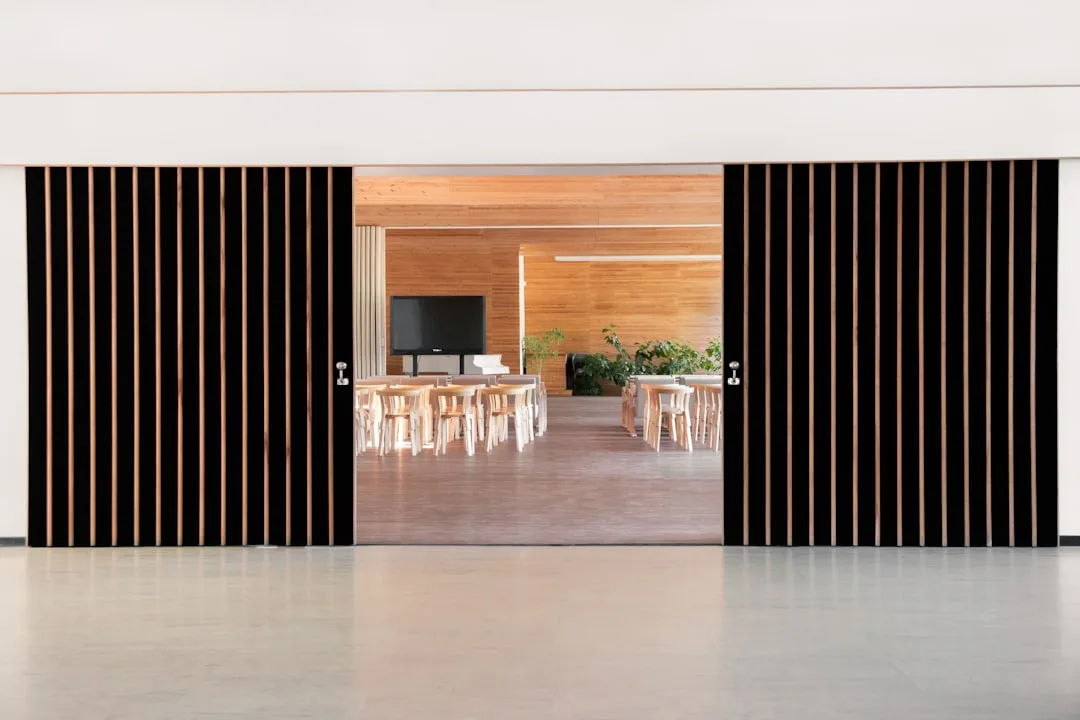
Bifold doors rarely appear on design inspiration boards, which is exactly why they’re underused in contexts where they’d genuinely perform. They fold rather than swing, reducing the floor-arc clearance requirement from roughly 7.7 square feet to under 2 square feet — a meaningful reduction in any bathroom under 60 square feet.
The geometry is the argument. A standard 30-inch bifold door, when opened, folds into two 15-inch panels. The arc it requires to open is dramatically smaller than a hinged door, and the panels nest against the doorframe rather than projecting into the room. In bathrooms where the toilet sits directly across from the door — a common layout problem — this difference is often the one that makes the room function.
The common objections to bifolds are worth taking seriously:
- Center fold intrusion: When open, the fold point projects a few inches into the doorway, reducing the clear passage width. Specify a door that folds fully flush against the jamb, or allow for a slightly wider rough opening than you’d use for a standard door.
- Track reliability: The top-mount track on cheap bifold hardware wears quickly, causing the door to sag and bind. Brands like Stanley and Hettich make commercial-grade bifold hardware that holds alignment under daily use.
- Privacy seals: Bifolds have a center gap when closed. A simple magnetic latch at the meeting point eliminates most of the visual gap and all of the stability problem.
Bifolds are particularly effective in retrofit situations where a pocket door would require wall demolition. The installation is surface-mount at the header, requiring no wall cavity work and no plumbing rerouting. For renters or anyone on a budget timeline, this is the clearest path to reclaiming swing-arc space without a major project.
Code note: Bifold doors with proper hardware typically meet egress requirements when fully opened to their designed width. Confirm the clear opening measurement after accounting for the folded panel thickness.
Takeaway: If you’re ruled out on pocket doors by wall type and ruled out on barn doors by adjacent wall space, bifolds are the logical next evaluation — not a fallback.
4. Sliding Bypass Doors: The Two-Panel Option for Wider Openings
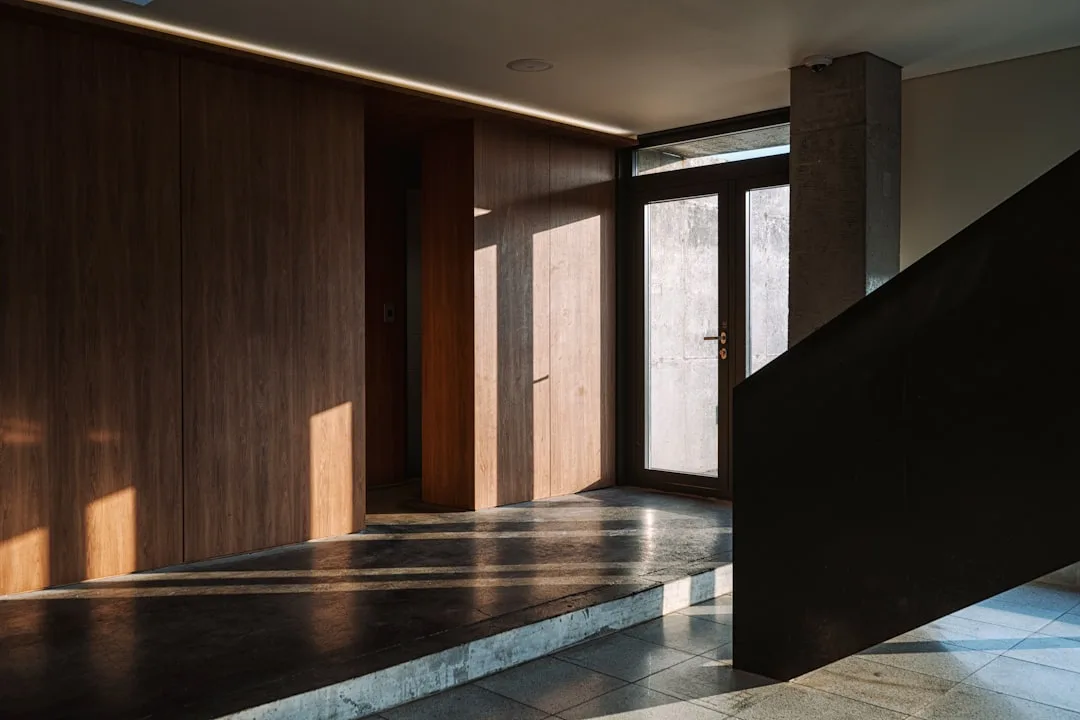
Bypass doors — two panels that slide in parallel tracks, each covering half the opening — are rarely discussed in small bathroom contexts because they’re most commonly associated with closets. That’s a framing problem. In bathrooms with openings wider than 30 inches, or in cases where an existing doorway serves a bathroom and a linen closet simultaneously, bypass doors solve a real problem.
The trade-off is partial access. You can only open half the doorway at any one time — one panel always covers the other. For most bathroom use cases, this isn’t a problem. You’re not moving furniture through the door. But for accessibility purposes, the reduced clear opening is a real constraint: a 60-inch bypass installation gives you only 30 inches of clear passage, which is at the minimum threshold for most residential codes.
Where bypass doors make sense:
- Bathroom-plus-linen combinations where the opening is 48–60 inches wide and two panels make the geometry work
- Renovations where the existing framing is already wider than standard and the options are either bypass or a significant rough-opening reduction
- Situations where a doorless approach isn’t acceptable but a barn door fails on adjacent wall space
Track quality matters as much here as with barn doors. Bottom-mounted rollers on bypass systems tend to accumulate debris and jam. Top-hung systems with bottom guide pins are more reliable and easier to clean. The panels themselves should be the same weight spec as you’d use for any other door — hollow-core panels on heavy hardware wear the track at the mounting points faster than solid-core panels on appropriate hardware.
Takeaway: Bypass doors are a specific-situation answer, not a general one. If your opening is standard width, one of the other options in this list will serve you better.
5. Pivot Doors: When You Have the Ceiling Height to Make It Work
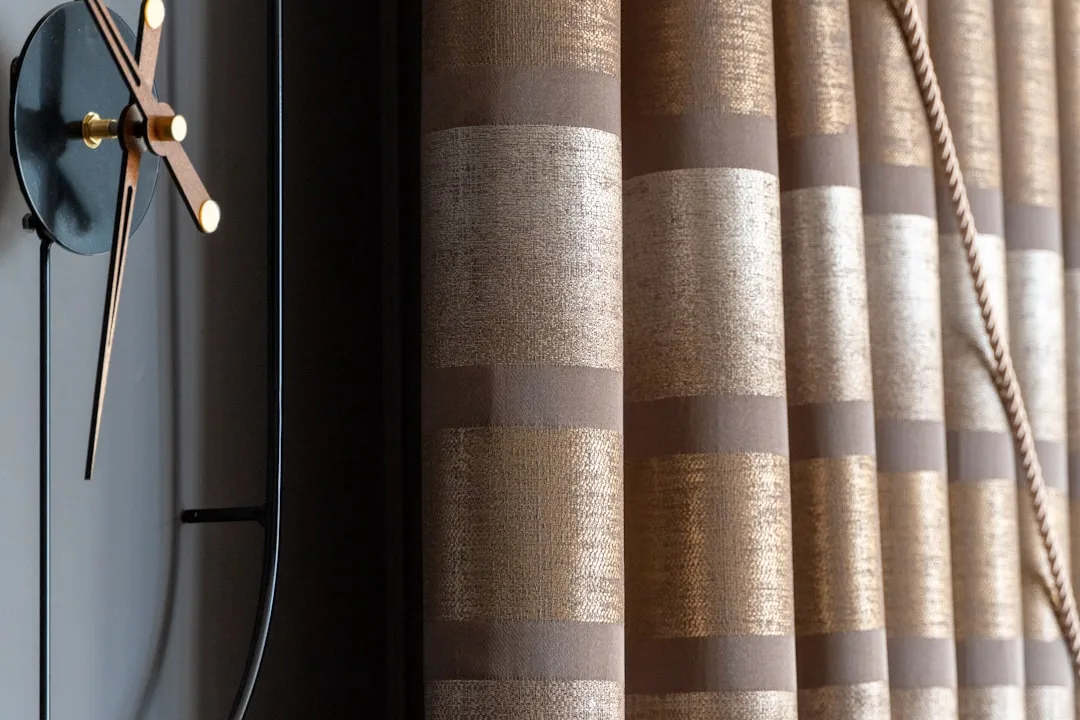
Pivot doors hinge at the top and bottom on a central axis rather than at the side jamb. They’re dramatic, they eliminate the side-jamb hardware entirely, and they open in a way that feels architectural rather than utilitarian. They’re also genuinely space-efficient — the pivot reduces the effective swing radius compared to a side-hung door of the same width.
The ceiling height requirement is the constraint that eliminates pivot doors from most bathroom renovation conversations. A pivot door requires a continuous floor-to-ceiling pivot point, which means the rough opening needs to run full height. In rooms with standard 8-foot ceilings, this works mechanically but creates a proportionally tall door that may not suit the bathroom’s scale. In rooms with lower ceilings or existing headers, the geometry often doesn’t cooperate.
Where pivot doors genuinely belong:
- Primary suite ensuites in newer construction with 9- or 10-foot ceilings
- Renovation projects where the design intent is deliberately architectural and the budget supports custom hardware
- Situations where the doorway reads as a design feature rather than a utility element
The pivot hardware itself — top and bottom pivot sets, typically from brands like Sugatsune or Dorma — runs significantly more expensive than standard hinge sets. Budget $200–$600 for quality pivot hardware alone, before door and installation costs.
Takeaway: Pivot doors are the right answer in a specific set of circumstances. Don’t force the geometry. If the ceiling height and design intent align, they’re worth the investment.
6. Curtains and Fabric Panels: The Renter’s Realistic Option
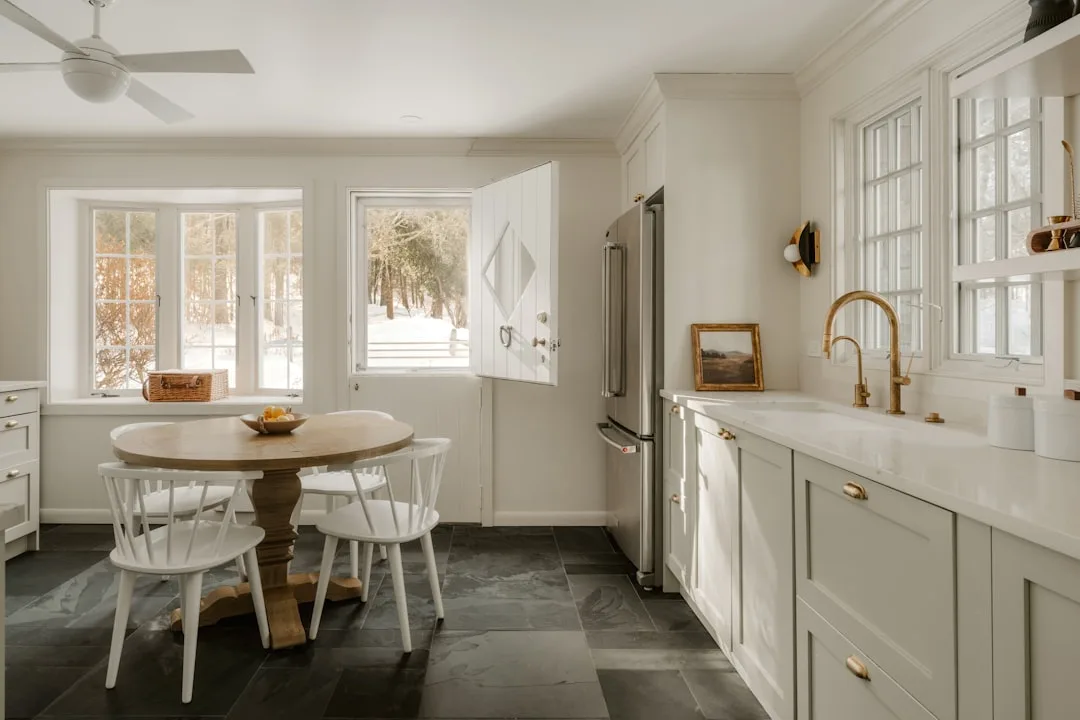
Fabric panels as a bathroom door alternative occupy a category that most interior design writing either ignores entirely or dismisses as a last resort. Neither is accurate. For renters who cannot alter walls, framing, or hardware mounting points, a properly executed curtain installation is frequently the only available bathroom door alternative for small spaces — and when done well, it reads as intentional rather than improvised.
The privacy and acoustic limitations are real and should be stated plainly. A fabric panel provides visual privacy but essentially no sound barrier. Light bleed around the edges is significant. This is not an appropriate solution for shared bathrooms in multi-person households where privacy is the primary requirement.
Where fabric panels work:
- Studio apartments where the bathroom opens into a private space that only one person occupies
- Powder rooms in entertaining areas where the use case is brief and privacy expectations are lower
- Any situation where the existing door is removed for aesthetic reasons and a lightweight visual divider is sufficient
The installation approach matters considerably. A tension rod mounted inside the door frame looks temporary and usually is. A properly mounted curtain rod — with wall anchors appropriate to the substrate, set at ceiling height or above the door frame — looks architectural. Use curtain panels that puddle slightly on the floor to eliminate the light gap at the bottom, and choose a fabric with enough weight (at least 150 GSM) to hang without billowing when the bathroom exhaust fan runs.
Code note: Fabric panels do not meet egress requirements in any jurisdiction I’ve encountered. If the bathroom is being used as a primary bathroom in a permitted renovation, confirm with your building department before removing the door entirely.
Takeaway: Fabric panels are a renter’s tool and a powder-room option. They’re not a privacy solution. Use them where the use case matches their actual capabilities.
7. Dutch Doors: The Ventilation-Forward Choice
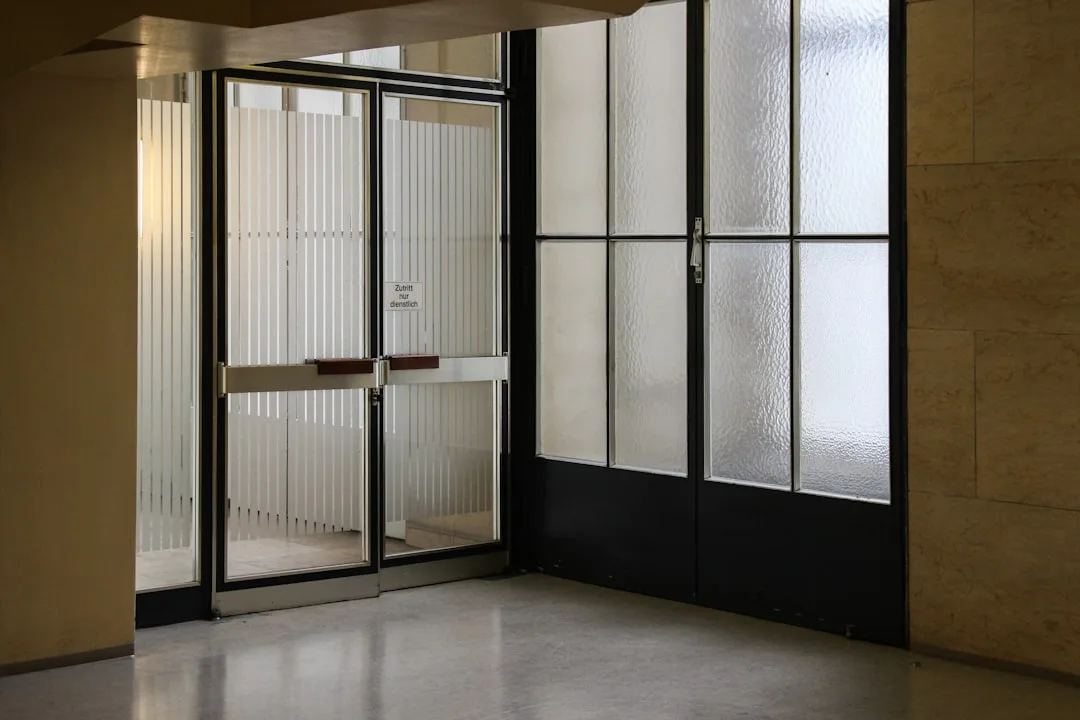
A Dutch door — split horizontally, with the top and bottom halves operating independently — is almost never mentioned in small bathroom discussions, which is a missed opportunity in specific situations. The top half open, bottom closed configuration provides ventilation and light without fully committing to a doorless bathroom.
The primary use case is ventilation. Bathrooms without windows, or bathrooms where the exhaust fan is inadequate, accumulate humidity faster than the fan can clear it. A Dutch door with the top half open while the bathroom isn’t occupied allows passive airflow that a solid closed door blocks entirely. This is particularly relevant in older apartments where the exhaust fan vents into the wall cavity rather than to the exterior — a situation where supplemental airflow genuinely matters for mold prevention.
The space savings compared to a standard hinged door are minimal — a Dutch door still swings and still requires clearance arc. The argument isn’t space efficiency. It’s ventilation functionality combined with the ability to close the lower half for basic privacy when the bathroom is occupied.
Where Dutch doors make sense:
- Bathrooms in humid climates where moisture management is a persistent problem
- Homes with pets or young children where the lower half can stay closed while the upper half provides ventilation and visibility
- Any situation where the design intent includes a deliberate farmhouse or cottage aesthetic
Custom Dutch doors — converting an existing solid door by cutting it horizontally — run $150–$400 in labor depending on the door material and whether a new meeting rail needs to be fabricated. The hardware (top and bottom hinges, a bolt to lock the halves together) is standard and widely available.
Takeaway: Dutch doors solve a ventilation problem more than a space problem. If humidity management is your underlying issue, this is worth serious consideration alongside a bathroom door alternative for small spaces that addresses the swing arc.
8. Glass Panel Doors: Borrowing Light Without Sacrificing Privacy
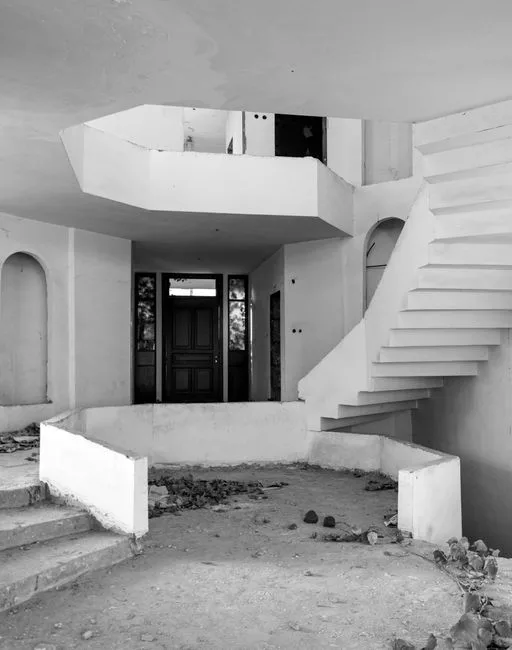
Frosted, reeded, or textured glass panel doors are an underused answer in small bathrooms specifically because they address two problems simultaneously: the visual weight of a solid door in a tight space, and the need for borrowed light in a bathroom with no window.
The light-borrowing function is not cosmetic. In interior bathrooms — bathrooms with no exterior wall — the only natural light source is what can be borrowed through the door from the adjacent hallway or bedroom. A solid door blocks that entirely. A frosted glass door passes diffused light through without compromising visual privacy. In bathrooms where the artificial lighting is inadequate or the ambiance of natural light matters, this is a functional difference, not just an aesthetic one.
The privacy question is the first objection. Frosted glass — especially reeded or textured patterns with a minimum of 4mm thickness — provides complete visual privacy at any reasonable viewing distance. The silhouette visible through the glass is a shape, not a form. For anyone whose hesitation around glass doors centers on privacy, the actual performance of quality frosted glass is almost always better than expected.
Glass panel doors come in two configurations for small bathrooms:
- Full glass replacement panels in an existing door frame, where the door structure stays and only the solid panel is replaced — typically $200–$500 for the glass, plus installation
- Full glass doors on standard hinge hardware, which run $400–$1,200 depending on glass type and frame material
Cleaning is the practical consideration most people forget to ask about. Reeded and textured glass accumulates soap haze in the texture valleys. A squeegee after every shower and a periodic cleaning with a diluted white vinegar solution keeps the glass functional. Smooth frosted glass is easier to maintain but provides slightly less privacy than textured options.
Takeaway: Glass panel doors belong in the conversation for any interior bathroom where borrowed light would meaningfully improve the space. The privacy performance of modern frosted glass is better than most people assume.
9. The Doorless Entry: Angled Walls and Strategic Layout
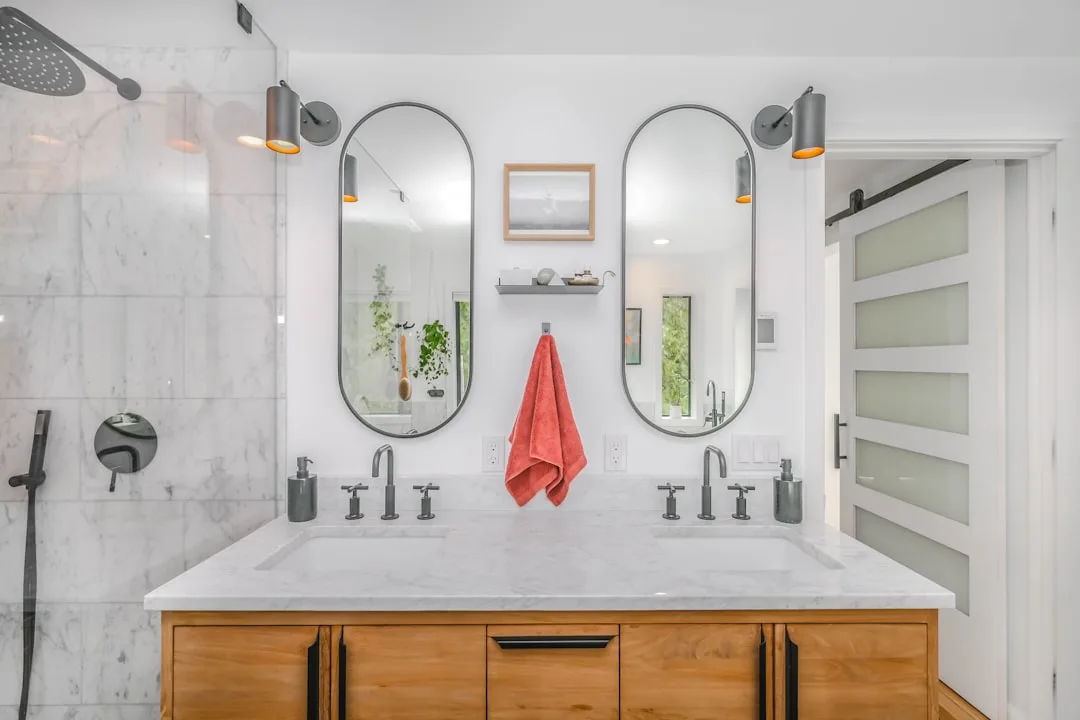
A properly designed doorless bathroom entry — an angled or offset wall that blocks sightlines without requiring a door at all — is the highest-commitment option on this list and, in the right circumstances, the most functionally elegant. No hardware to maintain. No swing arc. No track to clean. No panel to replace when it warps.
The sightline geometry is the entire design problem. A doorless bathroom works only when the toilet and shower are positioned so that neither is visible from the adjacent room at any normal viewing angle. This requires either an offset entry (the door opening is shifted laterally so the toilet falls outside the sightline from the hallway) or an angled entry wall that redirects the view before it reaches the fixture area.
In new construction, this is a design decision made at the floor plan stage and costs nothing beyond the additional wall framing. In a renovation, creating an offset or angled entry typically requires relocating the rough opening — a structural project that involves new framing, potentially a new header, and patching at the existing opening. Budget $1,500–$4,000 depending on wall type and whether plumbing or electrical runs through the affected area.
Where the doorless approach makes sense:
- Primary suite ensuites where the only people with sightline access are the room’s occupants
- New construction where the layout can be designed around the doorless entry from the start
- Renovation projects with a gut-level commitment to getting the layout fundamentally right rather than applying surface fixes
The acoustic consideration is worth flagging. A doorless entry provides no sound barrier. In a primary suite, this is typically acceptable. In a shared hallway bathroom, it’s usually not.
Takeaway: The doorless entry is a layout decision, not a product decision. It requires the most planning and commitment of any option here — and it eliminates more problems than any of the others when the geometry works.
Which Bathroom Door Alternative Is Right for Your Space?
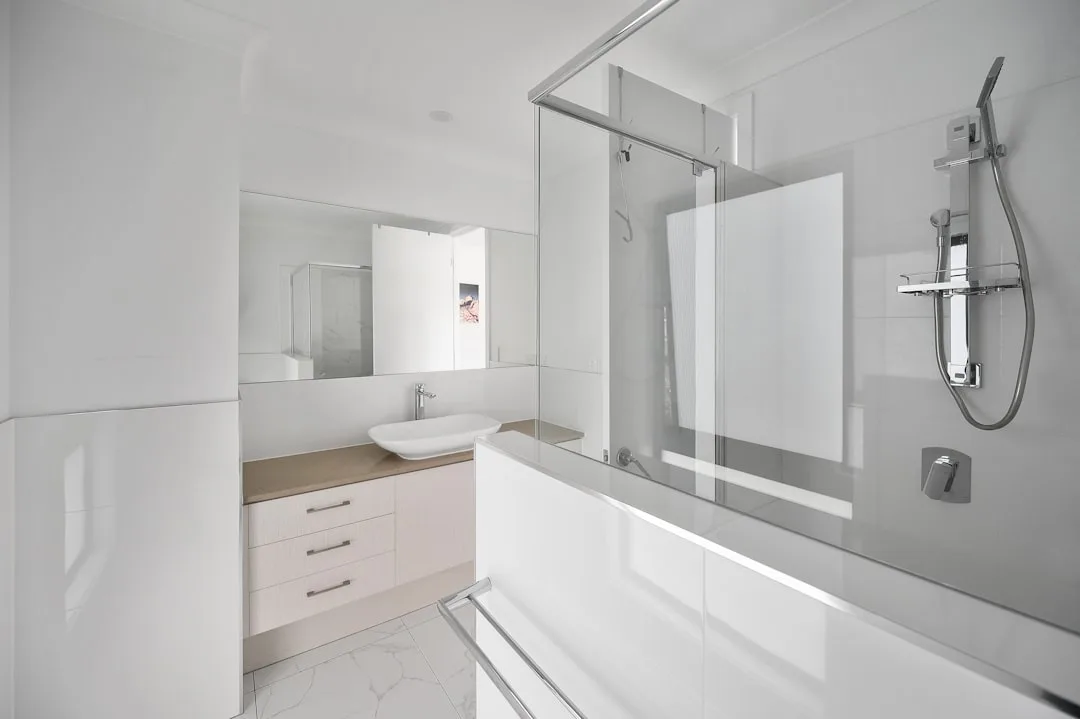
Pulling these nine options together into a usable decision framework — because the goal isn’t to know all nine exist, it’s to know which one applies to your specific situation.
| Situation | Best Option |
|---|---|
| New construction or gut renovation | Pocket door |
| Non-load-bearing wall, no plumbing | Pocket door or bifold |
| Renter, no wall modifications | Curtain panel or barn door (if wall space allows) |
| Powder room, style-forward | Barn door or glass panel |
| Interior bathroom, no window | Glass panel door |
| Humidity management priority | Dutch door |
| Wider-than-standard opening | Bypass door |
| Primary suite ensuite, high ceilings | Pivot door or doorless entry |
| Any bathroom over 15% swing-arc loss | Any of the above — urgency is confirmed |
The right bathroom door alternative for a small space is always the one that matches your wall type, your tenure in the space, your privacy requirements, and your budget — in that order. Anyone who gives you a single answer without asking those questions first is selling aesthetics, not solutions.
Frequently Asked Questions
Can I install a pocket door in an existing bathroom without a full renovation?
Rarely without significant work. A retrofit pocket door requires opening the wall to install the pocket frame, confirming the wall is non-load-bearing, and rerouting any plumbing or electrical that runs through the cavity. If all those conditions are met, it’s possible — but budget $1,000–$3,500 and expect a week or more of disruption. In new construction, the same installation runs $300–$600.
Are barn doors actually private enough for a bathroom?
For a powder room or a primary ensuite, usually yes. For a shared family bathroom, the 1/2- to 1-inch gap that barn door hardware creates between the door face and the wall allows enough sound and light transmission to be a genuine problem. Brush seal strips reduce but don’t eliminate this. Know the privacy requirement before committing.
What’s the most space-efficient bathroom door alternative for a small space?
The doorless entry — when the layout supports it — reclaims 100% of the swing arc because there’s no door at all. Among door-based options, bifolds and pocket doors recover the most floor area because they require no swing clearance. The pocket door is the better long-term answer when the wall allows it; the bifold is the practical choice when it doesn’t.
Do any of these alternatives work for renters?
Curtain panels are the only truly no-modification option. Tension-rod barn door hardware exists but typically requires wall mounting for any system heavy enough to handle daily use. Some bifold hardware mounts entirely within the existing door frame without new holes — worth investigating if your lease prohibits modifications. When in doubt, confirm with your landlord before altering any door hardware.
Do building codes allow bathroom doors to be removed entirely?
It depends on the jurisdiction and how the space is classified. Many residential codes require a door on any bathroom containing a toilet, particularly in multi-family housing. Some jurisdictions allow doorless entries if the sightline to the toilet is blocked by design. Curtain panels and fabric dividers are almost never code-compliant as door substitutes in permitted renovations. Confirm with your local building department before removing an existing door or designing a doorless entry in a permitted project.