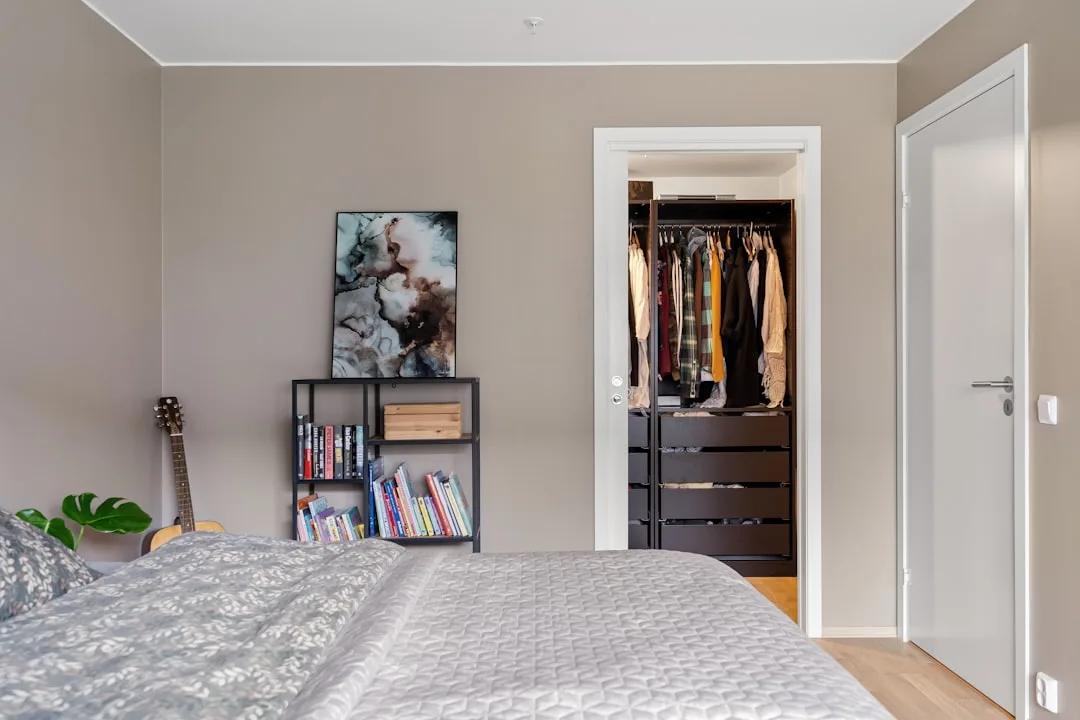
Most bedrooms built before 1940 were designed without a single closet — and yet the advice for dealing with them today is almost always the same recycled list of floating shelves and clothes racks that ignores the one thing that actually matters: your specific room size. If you’re searching for bedroom without closet storage solutions, you’ve probably already noticed that most guides treat a 96-square-foot Brooklyn rental the same as a 200-square-foot primary bedroom in a 1920s craftsman — and that’s exactly why people end up with furniture that creates new problems instead of solving the original one.
Quick Answer
Most bedrooms built before 1940 were designed without a single closet — and yet the advice for dealing with them today is almost always the same recycled list of floating shelves and clothes racks that ignores the one thing that actually matters: your specific room size.
Your 96-square-foot Brooklyn rental needs a completely different solution than a 200-square-foot primary bedroom in a 1920s craftsman. Treating them the same way is why people end up with a beautiful freestanding wardrobe that eats half their floor, or a clothing rail that looks chaotic by Thursday. This article works differently. Answer three questions about your room and your situation, and you’ll know exactly which solutions belong in your space — and which ones to skip entirely.
Can You Legally Have a Bedroom Without a Closet?
In This Article
- Can You Legally Have a Bedroom Without a Closet?
- The Decision Framework Competitors Skip: Match the Fix to Your Room
- Freestanding Wardrobes and Armoires: When They Work and When They Wreck the Room
- Bedroom Without Closet Storage Solutions for Small Rooms: Vertical Space Is Your Inventory
- Open Wardrobe Systems and Clothing Rails: The Honest Trade-offs
- Built-In and DIY Closet Solutions for Homeowners
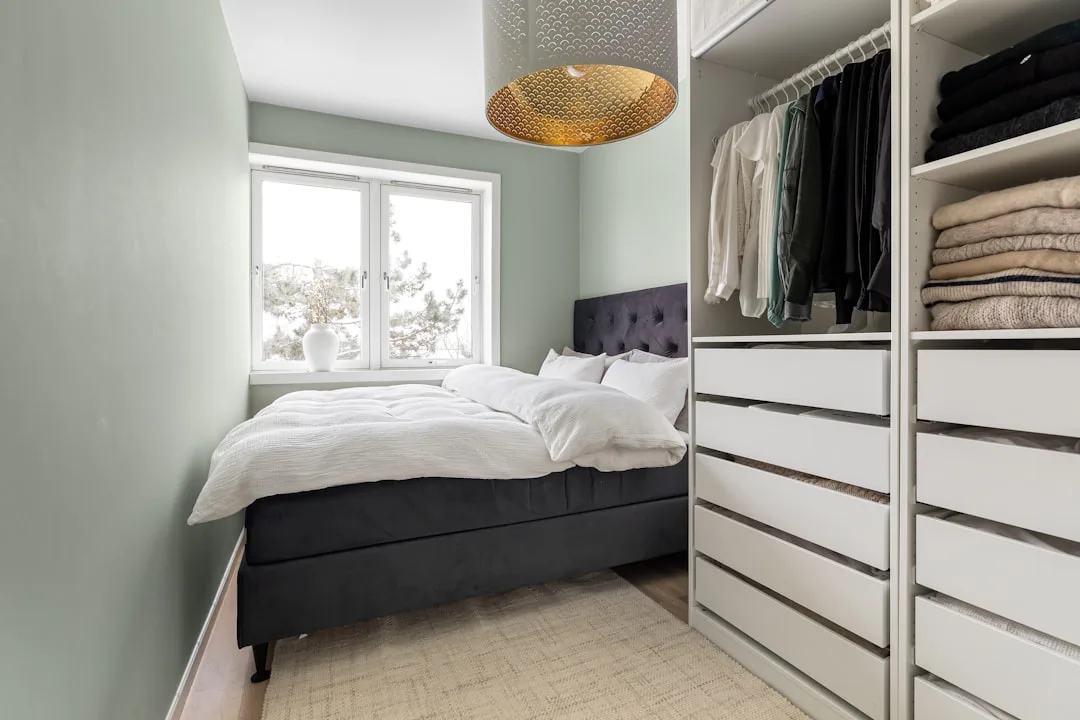
Before spending a dollar on storage, it helps to know that your closet-free bedroom is completely legitimate — legally and historically.
The International Residential Code (IRC) requires bedrooms to have a minimum of 70 square feet of floor space and at least 7-foot ceilings. Closets aren’t mentioned. The code is concerned with egress windows, smoke detectors, and livable square footage — not where you hang your shirts. Most states adopt the IRC as their baseline, with local amendments that occasionally add requirements, but closet storage isn’t one of them.
This matters because a lot of people living in older homes or converted spaces quietly assume something is wrong with their room. Nothing is. Pre-war architecture — particularly in cities like New York, Chicago, Boston, and San Francisco — was built in an era when freestanding furniture handled all clothing storage. Wardrobes and armoires weren’t bedroom accessories; they were the system. The built-in closet is largely a post-WWII invention driven by suburban tract housing and the expectation of car-sized wardrobes.
According to the U.S. Census Bureau’s American Housing Survey, approximately 14% of occupied housing units in the U.S. are in structures built before 1940. In dense urban markets, that percentage climbs significantly higher. If you live in one of these homes, you’re sharing the experience with millions of people — and the solution isn’t to apologize for the room’s architecture. It’s to design around it deliberately.
Studio apartments, converted garages, basement bedrooms, and bonus rooms added to existing homes all share the same trait: no built-in storage by design. The fix isn’t cosmetic. It’s structural thinking applied to furniture choices.
Actionable takeaway: Check your room’s square footage and ceiling height. If it clears 70 square feet and 7 feet of ceiling, you have a legal bedroom — and a storage problem that’s entirely solvable with the right approach.
The Decision Framework Competitors Skip: Match the Fix to Your Room
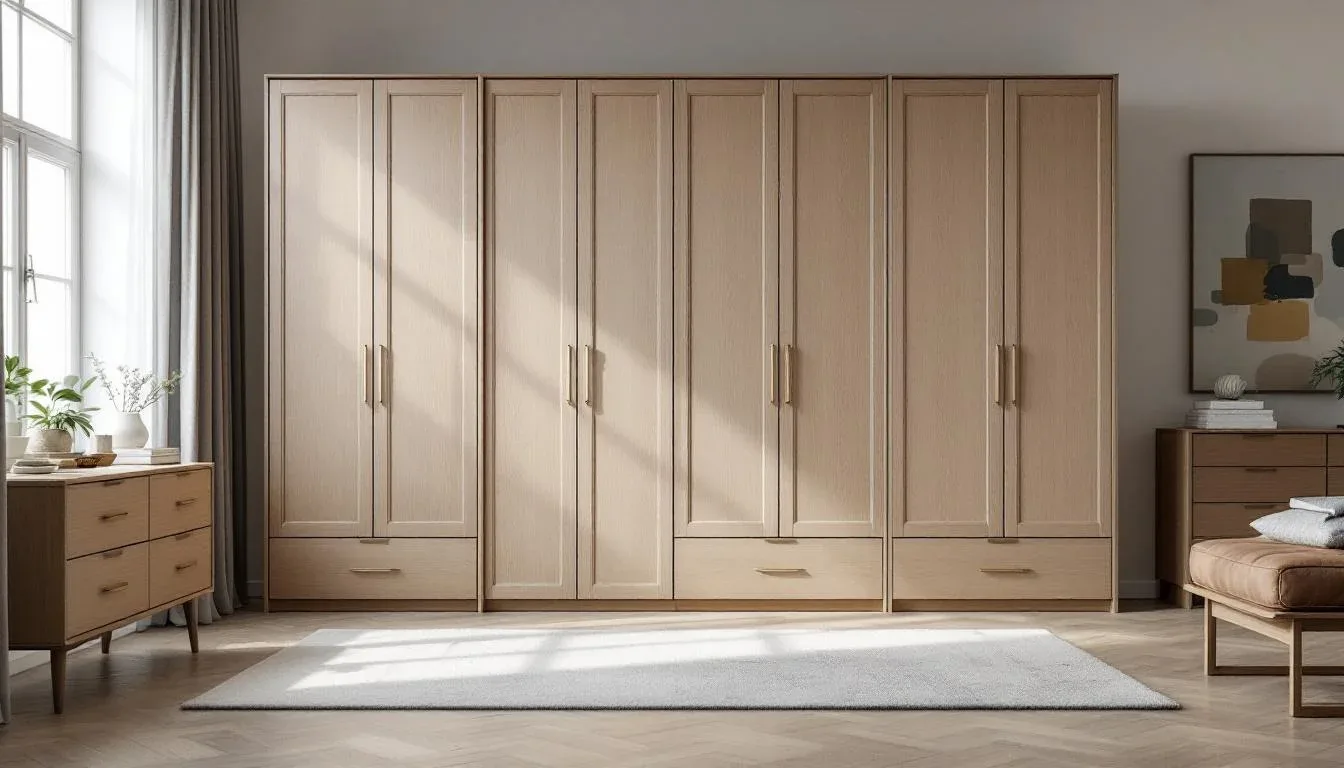
Every article about closet-free bedrooms gives you the same list. None of them tell you which item on that list is right for your room. Three variables determine that answer.
The three variables are: available floor space, housing situation, and wardrobe volume. Get these wrong and you’ll buy furniture that creates new problems instead of solving the original one.
Before reading further, answer these three questions:
- How big is your room? Under 150 square feet or over 150 square feet?
- Do you rent or own? Renters need solutions that leave no permanent marks. Owners can invest in built-ins and wall anchors.
- How much clothing do you actually own? A capsule wardrobe of 40 pieces needs different infrastructure than a full seasonal rotation with winter coats, suits, and beach gear.
Here’s how those answers map to bedroom without closet storage solutions:
- Small room (under 150 sq ft) + renter: Vertical wall systems, under-bed storage, and over-door organizers. Avoid large freestanding wardrobes — they consume too much floor clearance.
- Small room + owner: Consider a DIY reach-in closet built into a corner, or a floor-to-ceiling shelving system anchored to studs.
- Large room (over 150 sq ft) + renter: A freestanding PAX-style wardrobe system works well. So does an open wardrobe wall with a rail, shelf, and drawer combination.
- Large room + owner: An open wardrobe wall or framed closet insert becomes genuinely cost-effective. You’re building equity into the home.
- High clothing volume regardless of room size: You need a combination of hanging space, folded storage, and an off-season rotation system. No single piece handles this.
According to the U.S. Census Bureau’s American Housing Survey, approximately 14% of occupied housing units are in structures built before 1940 — the single largest source of closet-free bedrooms in urban markets. But the fastest-growing group of closet-free dwellers is actually renters in new construction: micro-units and small apartments built after 2010 often omit wardrobes entirely to reduce construction costs.
Actionable takeaway: Write down your three answers now. Every section that follows is organized by room size and housing situation — you can skip directly to what applies to you and ignore the rest.
Freestanding Wardrobes and Armoires: When They Work and When They Wreck the Room
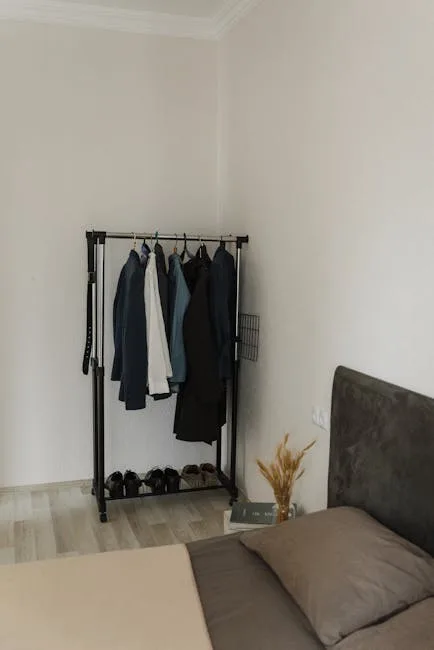
A wardrobe is the most intuitive solution to a missing closet. It’s also the most frequently misjudged — because people choose it based on aesthetics and price without doing the spatial math first.
A standard single-door wardrobe is 24 inches deep. In a room under 120 square feet, that depth alone can consume up to 20% of the room’s usable floor clearance when you account for the space needed to stand in front of it. Depth isn’t the only number that matters, either.
The 36-inch clearance rule is non-negotiable: you need at least 36 inches of open floor space in front of any wardrobe door to open it fully and browse the interior comfortably. Measure that distance before ordering anything. In a room where the bed sits 60 inches from the opposite wall, a 24-inch wardrobe leaves exactly 36 inches of clearance — workable, but tight. Go any larger and the room starts feeling like a hallway.
Sliding-door wardrobes solve the swing clearance problem in narrow rooms but introduce a different limitation: you can only access one half of the interior at a time. For a highly organized wardrobe where sections are clearly divided, this works fine. For a more casual user who needs to scan everything at once, it gets frustrating quickly.
Which wardrobe configurations work for which room types:
- Under 100 sq ft: Skip the freestanding wardrobe entirely. A 24-inch-deep unit against a wall leaves almost no usable circulation space once you account for the bed footprint. Use vertical systems and under-bed storage instead.
- 100–150 sq ft: A single wardrobe unit, maximum 32 inches wide and 20 inches deep, placed on the wall opposite or adjacent to the door. Shallow-depth units (16–18 inches) exist and are worth seeking out for tight rooms.
- 150–200 sq ft: A double wardrobe or two single units placed side by side. This is the sweet spot where a PAX-style modular system starts making real sense — you can configure hanging sections, shelf towers, and drawer bases to match your exact clothing mix.
- Over 200 sq ft: A full wardrobe wall, or an open dressing area defined by the furniture arrangement, becomes possible without compressing the sleeping zone.
IKEA’s PAX wardrobe system deserves its reputation not because it’s cheap (the fully configured versions aren’t), but because it’s the only mainstream system that lets you adjust interior fittings without buying a new cabinet. A PAX frame bought today can be reconfigured three apartments from now. That modularity has real dollar value for renters who move frequently.
Armoires vs. modern wardrobes: Antique armoires are often shallower than modern wardrobes — 18 to 20 inches is common — which can actually be an advantage in small rooms. The tradeoff is interior flexibility. Most armoires have a fixed hanging rod and a shelf or two, with no option to add drawers or reconfigure the layout. If your wardrobe is primarily hanging clothes, an armoire works well. If you need a mix of hanging, folded, and shoe storage, a modern modular system gives you more control.
Actionable takeaway: Measure the wall you’re targeting, subtract 36 inches for door clearance, and whatever depth remains is your maximum wardrobe depth. If that number is under 20 inches, look at open systems or under-bed storage before committing to a freestanding unit.
Bedroom Without Closet Storage Solutions for Small Rooms: Vertical Space Is Your Inventory
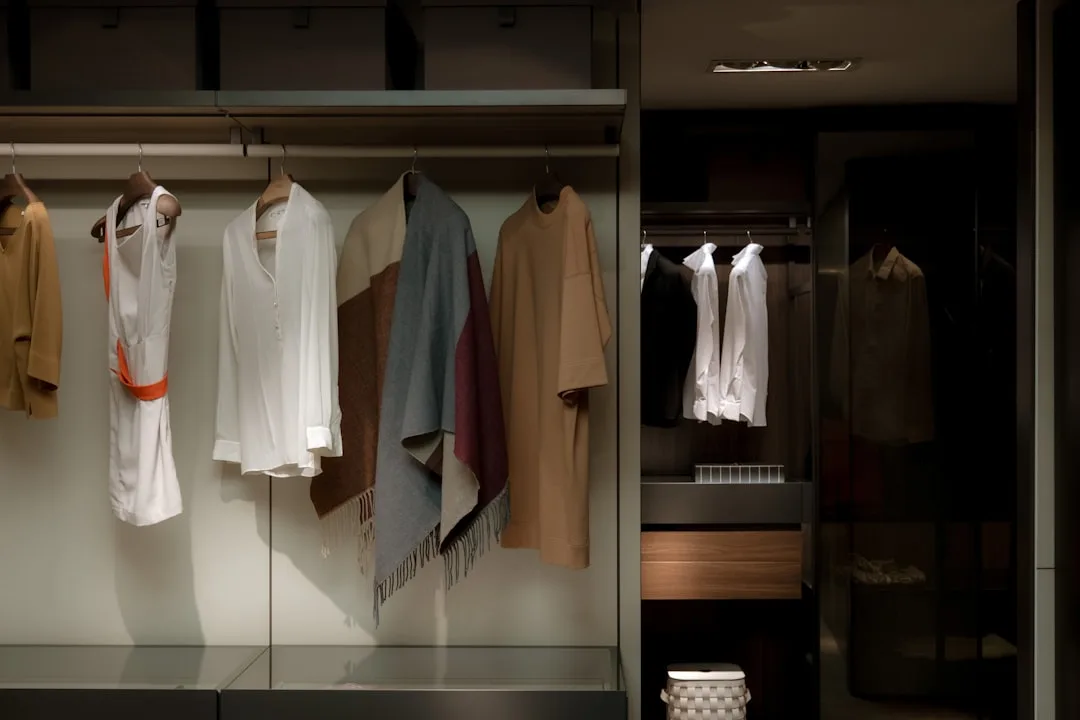
Small rooms under 150 square feet require a fundamentally different mindset. Floor space is the scarcest resource, which means the solution almost always involves going up rather than out. The best bedroom without closet storage solutions for small rooms treat wall height as usable square footage — because it is.
The average bedroom ceiling in American homes is between 8 and 9 feet. Most people use the bottom 6 feet of that wall for furniture and treat the top 2–3 feet as dead space. In a small closet-free room, that dead space is your opportunity.
Vertical storage strategies that work in rooms under 150 square feet:
- Floor-to-ceiling shelving units: A 12-inch-deep shelving column from floor to ceiling stores more than a standard dresser while using a fraction of the floor footprint. Use the lower two-thirds for frequently accessed items and the upper third for seasonal storage in labeled bins.
- Over-door organizers: The back of a bedroom door can hold 20–30 items — shoes, accessories, folded sweaters — with an over-door organizer that costs under $40 and leaves zero floor or wall footprint. This is the most underused surface in any closet-free bedroom.
- Pegboards and wall rails: A pegboard section 24 inches wide and 48 inches tall can hold a complete accessory collection — belts, bags, hats, jewelry — in a space smaller than a nightstand footprint. Wall rail systems (Elfa, String, or basic heavy-duty versions) let you configure hanging rods, shelves, and hooks on a single wall without committing to fixed furniture positions.
- Under-bed storage: A standard queen bed frame sits approximately 13 inches off the floor. Under-bed rolling bins in that footprint (60 inches × 80 inches for a queen) provide the equivalent of a full dresser drawer set. Vacuum storage bags extend this further for off-season items — a queen-sized comforter compresses to roughly the size of a throw pillow.
- Bed frames with integrated drawers: Platform beds with built-in storage drawers eliminate the under-bed rolling bin problem entirely. Drawer-equipped bed frames typically add $200–$500 to the cost but recover that in floor space savings by eliminating the need for a separate dresser in very small rooms.
- Bedside hanging organizers: Fabric organizers that tuck under the mattress and hang down the side of the bed hold books, devices, small accessories, and daily-use items that would otherwise require a nightstand — freeing up another square foot or two of floor clearance.
What to avoid in small rooms:
- Double-rod clothing rails without sides or backing — they look organized on day one and chaotic within a week because nothing constrains where items go
- Tall dressers with more than 6 drawers — they’re deep, heavy, and hard to reposition, and they often end up as flat surfaces for clutter
- Decorative baskets without lids on open shelving — visually noisy and difficult to stack efficiently
Actionable takeaway: In a room under 150 square feet, identify the wall with the fewest interruptions (no door, no window, no radiator) and treat it as your primary storage wall. A floor-to-ceiling system on that single wall will outperform four separate furniture pieces scattered around the room.
Open Wardrobe Systems and Clothing Rails: The Honest Trade-offs
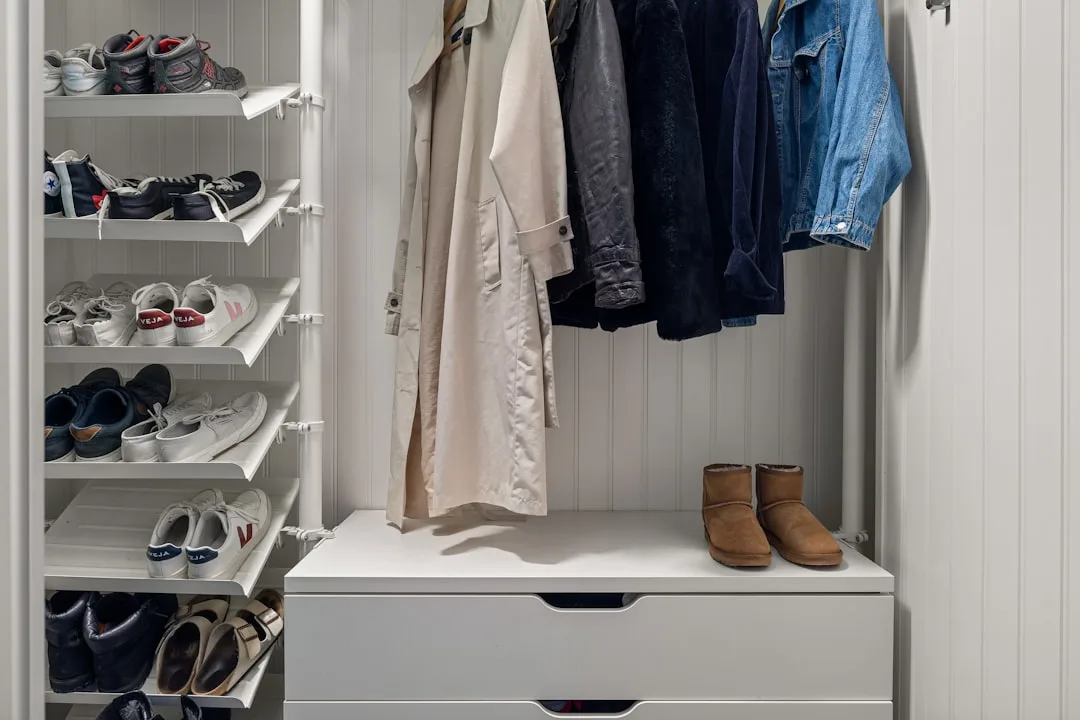
Open clothing storage — rails, rods, and open shelving without doors — has become genuinely popular, and for good reasons. It’s cheaper than enclosed furniture, easier to install, and keeps your wardrobe visually accessible. But the trade-offs are real, and most guides don’t discuss them honestly.
The case for open systems:
- Lower cost per linear foot of hanging space compared to enclosed wardrobes
- Easier to install in rental situations — most rail systems mount with minimal wall contact or are freestanding entirely
- Forces a curation habit — when everything is visible, the incentive to keep only what you wear is higher
- Works well with capsule wardrobes of 30–50 pieces where everything is intentional
The case against open systems — and when they fail:
- Dust accumulates on folded items and hanging clothes within 2–3 weeks in most homes; in cities with higher particulate levels, faster
- Without a dust cover or curtain, a clothing rail in a small room reads visually as clutter even when it’s organized
- Pets, cooking odors, and humidity all affect open clothing more than enclosed storage
- High clothing volume — anything over 60–70 pieces — becomes difficult to navigate visually on an open system
Making open systems work:
The single most effective upgrade for an open clothing system is a tension-rod curtain or a canvas dust cover that drops over the front of the hanging section. This preserves the accessibility benefit while addressing the dust and visual noise problems. IKEA’s RIGGA rail, a $20 freestanding rod, becomes significantly more functional with a $15 curtain panel attached to the rail above with clip rings.
For rooms where the clothing rail is visible from the bed — which is most small bedrooms — the visual weight of the hanging clothes matters. Cohesive hangers (all wood, all velvet, or all matching slim-profile plastic) reduce visual noise by roughly 40% compared to a mixed collection of wire, plastic, and wood. This sounds minor but makes a measurable difference in how restful the room feels.
Actionable takeaway: Open systems work best for edited wardrobes in rooms where the rail can be positioned out of the direct sightline from the bed. If your rail will face the bed directly and you own more than 50 pieces of clothing, add a curtain or choose an enclosed solution instead.
Built-In and DIY Closet Solutions for Homeowners
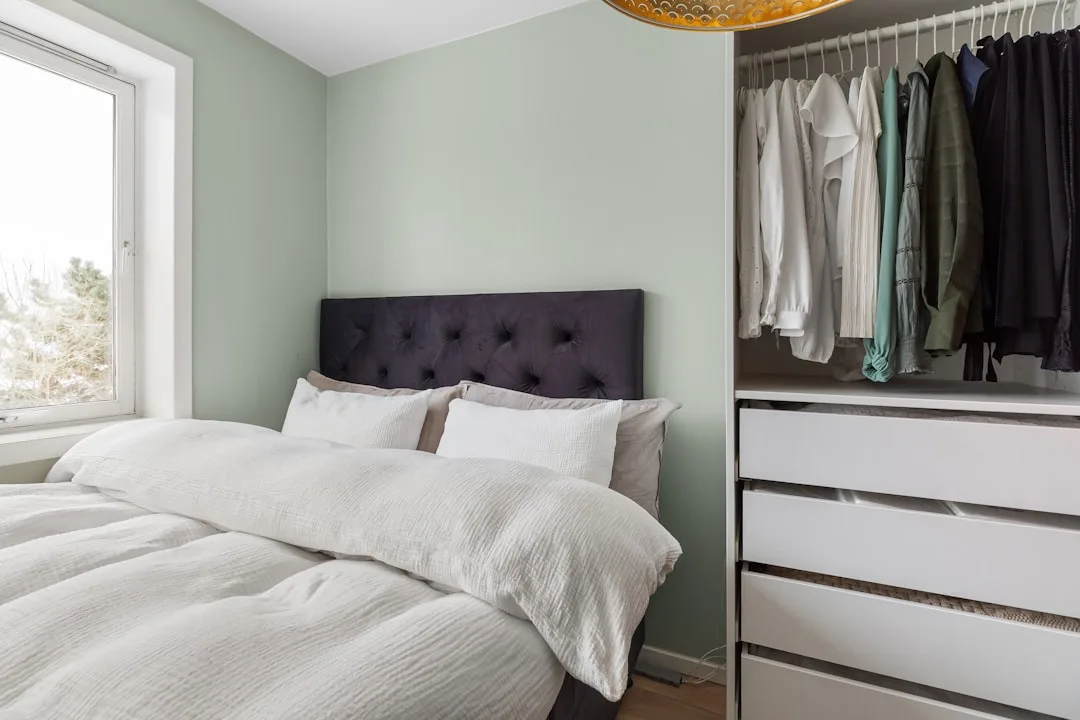
If you own your home, the calculus changes significantly. Every dollar you spend on a built-in solution increases the value of the property — or at minimum, doesn’t reduce it the way a bad furniture purchase does. This opens up options that renters can’t justify.
The reach-in closet insert: The fastest homeowner solution is framing a reach-in closet into an existing wall corner. A 24-inch-deep × 36-inch-wide closet framed into a corner, drywalled, and fitted with a bifold door costs approximately $800–$1,500 in materials if you do the framing yourself. A contractor version runs $2,500–$5,000 depending on finish level. That investment returns dollar-for-dollar in most real estate markets because buyers treat closets as a baseline expectation.
What a basic DIY reach-in closet requires:
- Identify a corner with no load-bearing walls and no plumbing or electrical runs in the planned framing path
- Frame the closet box using 2×4 lumber — a 36-inch-wide × 24-inch-deep box requires roughly 16 linear feet of framing
- Apply drywall, tape, and finish to match the room
- Install a bifold, barn, or curtain closure depending on clearance available
- Fit the interior with a double rod (for shorter garments) or single rod plus shelf (for longer items)
Anchored shelving systems: For homeowners who don’t want to frame new walls, a floor-to-ceiling shelving system anchored directly into wall studs is the next step down. Elfa, ClosetMaid, and custom carpenter solutions all use this approach. The anchor points make these systems significantly more stable than rental-safe alternatives, and you can load them with heavier items — shoes, folded denim, boxes — without worrying about wall anchors pulling.
Repurposing an existing niche or alcove: Many older homes have shallow alcoves, chimney breast recesses, or irregular wall niches that were never used as closets but are perfectly sized for one. A 12-inch-deep alcove that’s 36 inches wide and floor-to-ceiling height can be fitted with rods, shelves, and a curtain for under $200 in materials and transformed into a functional wardrobe space without any structural work.
Actionable takeaway: Before framing a new closet, walk your bedroom perimeter and identify any existing niches, alcoves, or recessed areas. A $150 curtain-and-rod solution in an existing niche beats a $3,000 framed closet if the niche is already the right size.
FAQ: Bedroom Without Closet Storage Solutions
Q: Does not having a closet affect my home’s resale value?
It can, but less than most people assume. A bedroom without a closet is still legally a bedroom in most jurisdictions, and buyers in urban markets — particularly those shopping pre-war buildings — expect it. The larger factor is whether the room has functional storage. A well-designed wardrobe wall or built-in shelving system can actually be a selling point compared to a poorly designed builder-grade closet. If you’re planning to sell within 5 years, prioritize solutions that look intentional and add square footage utility rather than afterthought furniture.
Q: What’s the best bedroom without closet storage solution for renters who can’t put holes in the walls?
Freestanding systems are the clearest answer — but the specific type depends on your room size. For small rooms under 120 square feet, a freestanding shelving unit (like IKEA KALLAX or a metal wire shelving unit) combined with under-bed storage covers most needs without touching walls. For larger rooms, a PAX-style wardrobe system can be fully freestanding if you use the anti-tip hardware that anchors to the cabinet rather than the wall. Over-door organizers require no wall contact at all and add meaningful storage to the back of any door.
Q: How do I keep an open clothing rail from looking messy?
Three things make the biggest difference: matching hangers (velvet slim-profile hangers are the most space-efficient and visually consistent), a color-organized hanging arrangement (grouping by color rather than garment type reduces visual noise dramatically), and a curtain or canvas cover for when the rail isn’t in active use. Limiting the rail to your current-season wardrobe only — moving off-season items to under-bed storage or vacuum bags — also cuts visual volume by 30–50%.
Q: Can I use a walk-in wardrobe concept in a small bedroom?
Yes, but the terminology changes. In a room under 150 square feet, a “walk-in” isn’t a separate room — it’s a defined zone. You can create the functional equivalent by positioning a freestanding wardrobe system perpendicular to the wall, creating a shallow corridor between the unit and the wall that functions as a dressing space. This works in rooms at least 12 feet long where you can sacrifice 24 inches of depth along one wall without compressing the sleeping area below functional size. The result isn’t a true walk-in, but it organizes the storage function in the same way.
Q: How much does it cost to add proper storage to a bedroom without a closet?
The range is wide — from under $100 to over $5,000 — depending on your approach:
- Under $200: Over-door organizers, under-bed bins, one freestanding shelving unit, and matching hangers on a basic rail. Covers a capsule wardrobe in a small room.
- $200–$800: A PAX-style wardrobe system configured for your clothing mix, with interior fittings for hanging, shelves, and drawers. The right solution for most renters in medium to large rooms.
- $800–$2,500: A DIY built-in shelving system or reach-in closet framed into a corner, including materials, drywall, and closure hardware. Homeowner territory.
- $2,500–$5,000+: A contractor-built reach-in or reach-through closet, or a custom open wardrobe wall with cabinetry. Returns value on resale in most markets.
The mistake most people make is spending in the $300–$500 range on a freestanding wardrobe that isn’t the right size for their room — then spending again when it doesn’t work. Measuring your room and answering the three framework questions before purchasing saves that cycle.
What to do if a bedroom has no closet?
A wardrobe is the most intuitive solution to a missing closet. It’s also the most frequently misjudged — because people choose it based on aesthetics and price without doing the spatial math first.
What can I use instead of a closet?
A standard single-door wardrobe is 24 inches deep. In a room under 120 square feet, that depth alone can consume up to 20% of the room’s usable floor clearance when you account for the space needed to stand in front of it. Depth isn’t the only number that matters, either.
How to arrange a bedroom without a wardrobe?
The 36-inch clearance rule is non-negotiable: you need at least 36 inches of open floor space in front of any wardrobe door to open it fully and browse the interior comfortably. Measure that distance before ordering anything. In a room where the bed sits 60 inches from the opposite wall, a 24-inch wardrobe leaves exactly 36 inches of clearance — workable, but tight. Go any larger and the room starts feeling like a hallway.
Can I have a bedroom without a closet?
Sliding-door wardrobes solve the swing clearance problem in narrow rooms but introduce a different limitation: you can only access one half of the interior at a time. For a highly organized wardrobe where sections are clearly divided, this works fine. For a more casual user who needs to scan everything at once, it gets frustrating quickly.