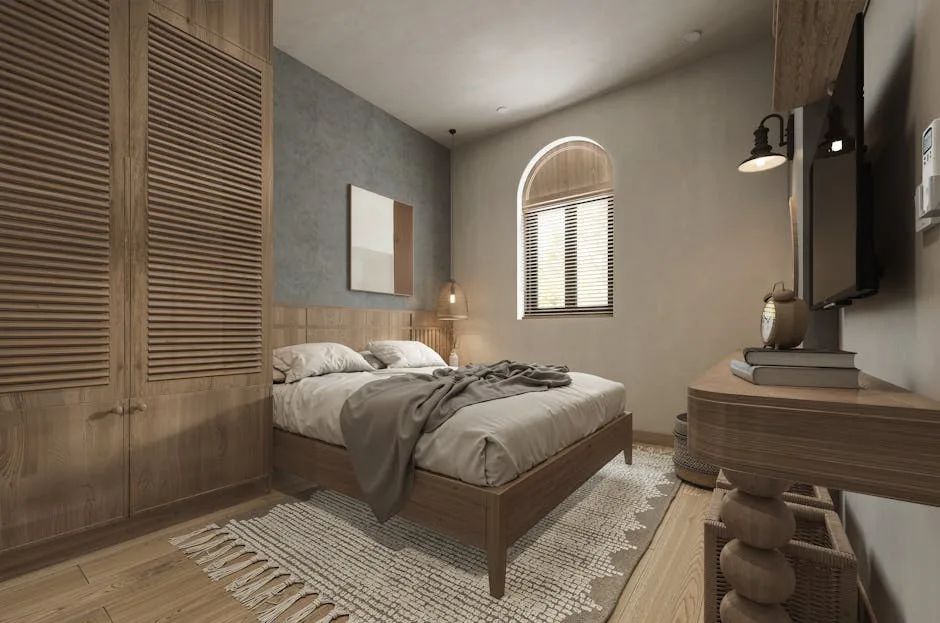
If you’re hunting for studio apartment bedroom divider ideas that actually work, you’ve probably already scrolled past a hundred versions of “hang a curtain.” The average studio apartment gives you one room to eat, work, host, and sleep in — yet most divider advice amounts to “hang a curtain and call it done.” That’s not a solution. That’s a suggestion scribbled on a napkin. The difference between a studio that feels livable and one that feels like a storage unit with a bed in it comes down to how deliberately you’ve designed the sleeping zone — not just screened it off.
Quick Answer
The average studio apartment gives you one room to eat, work, host, and sleep in — yet most divider advice amounts to ‘hang a curtain and call it done.’
US Census data puts the average studio at 400–600 square feet. That’s not nothing. Plenty of thoughtful people have built entire careers out of designing smaller spaces in Tokyo and Hong Kong. The problem isn’t the square footage. It’s treating the sleeping area as a leftover corner rather than a designed room.
This guide covers every serious divider strategy — from ceiling-anchored curtain tracks to raised platforms to lighting schemes — with the specifics that actually help you execute, not just the inspiration.
Why Most Studio Sleeping Zones Feel Like an Afterthought
In This Article
- Why Most Studio Sleeping Zones Feel Like an Afterthought
- Ceiling-Anchored Curtain Tracks: The Rental-Friendly Workhorse
- Bookcase Walls That Actually Function as Architecture
- Raised Platforms: Spatial Division Without a Single Vertical Element
- Folding and Sliding Panels: Flexible Division That Earns Its Floor Space
- Lighting as a Divider: The Invisible Architecture Play
- Combining Systems: How the Best Studios Actually Layer These Solutions
Most studio divider setups fail before a single curtain rod is installed. The failure isn’t in the materials — it’s in the thinking. People reach for a divider as decoration, as something to make the space look more intentional on Instagram, without addressing what a sleeping zone actually needs to function.
The real goal isn’t visual separation. It’s a room-feel. There’s a meaningful difference between a divider that blocks a sightline and one that creates a genuine sense of enclosure. Your brain responds to acoustic cues, light levels, and the sense of being surrounded — not just to whether you can see the sofa from your pillow.
Sleep Foundation research links poor sleep environments to a 20% drop in sleep quality. In a studio, “poor environment” usually means ambient noise from a TV still audible six feet away, light spillage from the living zone, and the psychological inability to mentally leave work or socializing behind when you lie down. A sheer curtain stapled to the ceiling fixes none of these.
Any effective sleeping zone needs to achieve three things:
- Visual privacy — you shouldn’t be staring directly at your dishes from bed
- Light control — independent of whatever’s happening on the other side of the divider
- A sense of enclosure — the feeling that you’ve entered a distinct space, however loosely defined
These three goals don’t always require the same solution. Visual privacy might come from a bookcase wall. Light control might come from blackout curtains layered over it. The sense of enclosure might come from a low platform and a distinctive lighting temperature. Understanding that these are separate problems — with separate solutions — is where most studio dwellers go wrong.
Actionable takeaway: Before buying anything, write down which of the three goals matters most to you right now. If you’re working from home in your studio, psychological separation probably tops the list. If you have a partner who keeps different hours, light control comes first.
Ceiling-Anchored Curtain Tracks: The Rental-Friendly Workhorse
Done badly, a curtain divider looks like a hospital ward. Done properly, it’s one of the highest-impact studio apartment bedroom divider ideas you can execute — and it leaves no damage behind when you move.
The critical distinction is ceiling-mount versus tension rod. A tension rod positions the curtain at standing-head height or lower, which visually chops the room in half at exactly the point where it makes ceilings feel compressed. That’s not a trick — it’s the brain reading the full vertical line and inferring height.
For hardware, you have two legitimate rental-friendly routes:
- Adhesive ceiling hooks rated for 20+ lbs (brands like Command make heavy-duty ceiling hooks, but OCPTY and similar hardware suppliers make track-specific versions): works on smooth ceilings, leaves minimal residue, needs proper curing time — 72 hours before loading
- Tension-based ceiling track systems like IKEA’s KVARTAL or Roomdividers Now track systems: span wall-to-wall without anchoring into the ceiling at all, supported by pressure against opposing walls
Fabric weight changes everything about how this solution performs:
- Linen or cotton (150–250 GSM): lets diffused light through, feels airy, won’t dampen sound much
- Velvet (400–600 GSM): absorbs ambient sound noticeably, creates warmth, pulls significant light
- Blackout lining (can be added to any fabric): genuine sleep-grade light separation without committing to a heavy material on both sides
The most underused technique in ceiling-track systems is the curved track corner. Most systems sold by Houzz-adjacent brands like Smith & Noble or even IKEA’s KVARTAL allow bent or curved track sections. Run the track from one wall, curve it 90 degrees, and terminate it at a bookcase or the edge of a wardrobe — and you’ve created a three-sided sleeping alcove without touching a single stud.
Actionable takeaway: Order 20% more fabric than your measured width and hang it with at least 2x fullness for a proper gathered look. A flat curtain panel across a studio looks like a room divider. A full, gathered curtain looks like a room.
Bookcase Walls That Actually Function as Architecture

The bookcase divider is the most over-recommended and under-executed idea in studio apartment design. Most people shove a Billy bookcase perpendicular to a wall and call it architecture. It isn’t.
Making a bookcase work as genuine spatial division requires thinking about it as a structural element — which means addressing light flow, visual composition from both sides, and safety.
The rule of thirds is the operating principle here. Keep the lower third of the shelving unit solid or filled with opaque storage — baskets, closed boxes, books stacked tightly. Keep the middle third partially open with objects that allow light transmission. Keep the upper third fully open. This gradient serves two purposes: it maintains visual connection near the ceiling (preventing the space from feeling severed) while providing genuine privacy at sitting and lying-down height.
Open-back shelving like IKEA’s KALLAX or EXPEDIT units lets borrowed light pass through — useful if the bookcase is sitting between your only window and the bed. Closed-back units like the BILLY or Crate & Barrel’s Caleb bookcase block light entirely, which means you need to compensate with a dedicated light source on the sleeping side.
On weight and safety: a fully loaded KALLAX in the 4×4 configuration weighs approximately 150 lbs. An empty unit in the 4×2 runs around 50–80 lbs. IKEA’s own safety guidelines require anti-tip anchoring for all freestanding bookcases — and when a unit is positioned as a room divider, away from a wall, the standard wall anchor isn’t an option. The practical solution is a ceiling-to-floor tension rod placed directly behind the unit, or a low-profile base plate bolted to the floor if your lease allows minor hardware.
Two bookcases positioned back-to-back create a thicker wall with double the storage and a significantly more convincing architectural element. Face the open sides outward — one toward the living zone, one toward the sleeping zone — and you’ve created a functional wall that serves both rooms simultaneously. This approach also dramatically improves the anti-tip situation since the combined footprint is much harder to knock over.
Actionable takeaway: Treat the sleeping-side face of the bookcase as its own styled surface. Plants, a small lamp, framed art at eye level from the bed — these details are what convert a divider into a room.
Raised Platforms: Spatial Division Without a Single Vertical Element
The raised sleeping platform is the most committed studio apartment bedroom divider idea on this list, and also the most transformative. It doesn’t divide space — it redefines it. The sleeping zone sits at a different elevation than the rest of the apartment, which the brain immediately reads as a different room.
Standard platforms run 8–14 inches high. That’s enough to change your sightline from the bed, create visible distinction between zones, and — critically — generate usable storage beneath the sleeping surface.
Platform construction falls into two categories:
- Modular bed risers and platform bed frames with storage drawers: no construction required, completely reversible, limited to the footprint of a standard bed. Options from brands like Zinus or the IKEA MANDAL storage bed give you 6–8 inches of under-bed drawer storage without any custom work.
- Custom-built platforms: require basic carpentry skills or a carpenter, but allow you to design the exact footprint you want. A platform that extends 18–24 inches beyond the bed on three sides creates a genuine sleeping alcove with room for a bedside surface, a small bench at the foot, and storage beneath every square inch of floor space. Budget-wise, a basic plywood-and-lumber platform of 100 square feet runs $300–$600 in materials depending on finish.
The detail that separates a good platform from a great one is the step transition. A single-step entry into the sleeping zone reads as a threshold — a genuine signal to the brain that you’re crossing from one space into another. Two or more steps start to feel like a stage. One step, positioned at the center of whatever edge faces the living area, is the right call for most studios.
Lighting built into the platform riser — a strip of warm LED at the base — anchors the whole thing visually and creates a layer of low ambient light in the sleeping zone that doesn’t require turning on an overhead fixture at midnight.
Actionable takeaway: Before committing to a built platform, mock up the footprint with painter’s tape on the floor and live with it for three days. The elevation change feels different than a flat layout on paper, and you’ll catch clearance issues before you’ve cut a single board.
Folding and Sliding Panels: Flexible Division That Earns Its Floor Space
Shoji-style sliding panels and folding room dividers occupy the middle ground between permanent and decorative. Done well, they’re genuine studio apartment bedroom divider ideas that adapt to how you’re using the space hour by hour — closed at night, open during the day when you want the full square footage back.
The problem with most folding dividers sold as “room dividers” is that they’re decorative objects pretending to be architectural ones. A 5-foot tall screen in a room with 9-foot ceilings creates a gap that defeats the purpose. The panel has to reach from floor to at least 84 inches — ideally ceiling height — to create meaningful enclosure.
For sliding panels, the track system determines everything. Floor tracks are the most stable but create a tripping hazard and restrict furniture placement. Ceiling-mounted sliding tracks are the correct solution for studio use — they keep the floor clear, allow the panels to be pushed completely to one side when open, and handle heavier panel weights without bowing. Systems from brands like Saudade Room Dividers or custom options through architectural hardware suppliers like Häfele allow panels up to 100 lbs per leaf.
Panel materials worth considering:
- Frosted acrylic: lets light diffuse through, soundproofs moderately, easy to clean, modern look
- Washi paper or rice paper panels: traditional shoji aesthetic, very light transmission, fragile and not appropriate for households with pets or children
- Fabric-faced frames: can be made with blackout fabric for genuine light separation, softer acoustic performance than hard panels
- Solid wood or MDF: maximum privacy, maximum weight, zero light transfer — treat these as semi-permanent decisions
Actionable takeaway: Measure the open position first, not the closed position. A set of panels that fully covers the bedroom entry is useless if you have nowhere to park them when you want the space open. The open storage position needs to be designed as intentionally as the closed configuration.
Lighting as a Divider: The Invisible Architecture Play
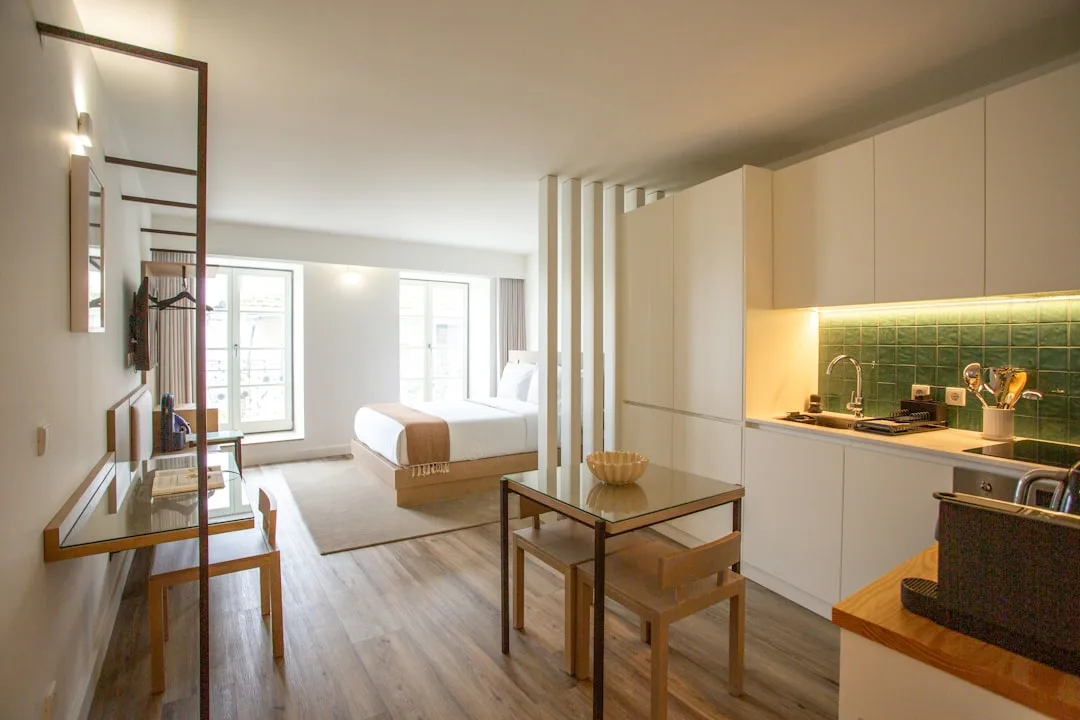
The most underrated entry in any list of studio apartment bedroom divider ideas costs less than $80 and requires no physical installation beyond plugging in a lamp: deliberate lighting zoning.
The principle is straightforward. The human brain reads different light temperatures and levels as different spaces. A living zone lit at 3,000K (warm white) with ambient overhead light and a sleeping zone lit at 2,700K (very warm, amber) with only low-level bedside sources feel like different rooms — even when they share 400 square feet and no physical barrier between them.
The three-layer lighting approach for the sleeping zone:
- Ambient: a ceiling-mounted fixture or pendant on a dimmer, kept at low intensity — 200–300 lumens maximum for the sleeping zone. If your studio has one overhead fixture for the whole space, add a plug-in pendant over the bed area on a separate circuit via a floor-mounted socket.
- Task: a reading light positioned at pillow height that illuminates the book without lighting the ceiling. Clip-on headboard lamps or adjustable arm sconces (even plug-in versions that mount with adhesive) work without electrical work.
- Accent: the low-level glow that operates when everything else is off — a salt lamp, a plug-in night light with warm output, LED strip lighting behind a headboard. This layer is what you use for the last 30 minutes before sleep to signal the brain that the day is over.
The living zone operates at a different set of levels — brighter for work, cooler in color temperature for concentration, warmer and dimmer for evenings. The moment you walk from the living side to the sleeping side and switch on only the sleeping-zone lights, the visual shift is immediate and surprisingly powerful at creating the sense of entering a separate space.
This technique works best as a complement to a physical divider, not a replacement for one. But in rental situations where no physical change is permitted, it’s the highest-leverage single move available.
Actionable takeaway: Install smart bulbs in both zones on separate routines. Set the sleeping zone to begin dimming at 9 PM automatically. The consistency of the routine does a portion of the psychological work that a physical room would otherwise handle.
Combining Systems: How the Best Studios Actually Layer These Solutions
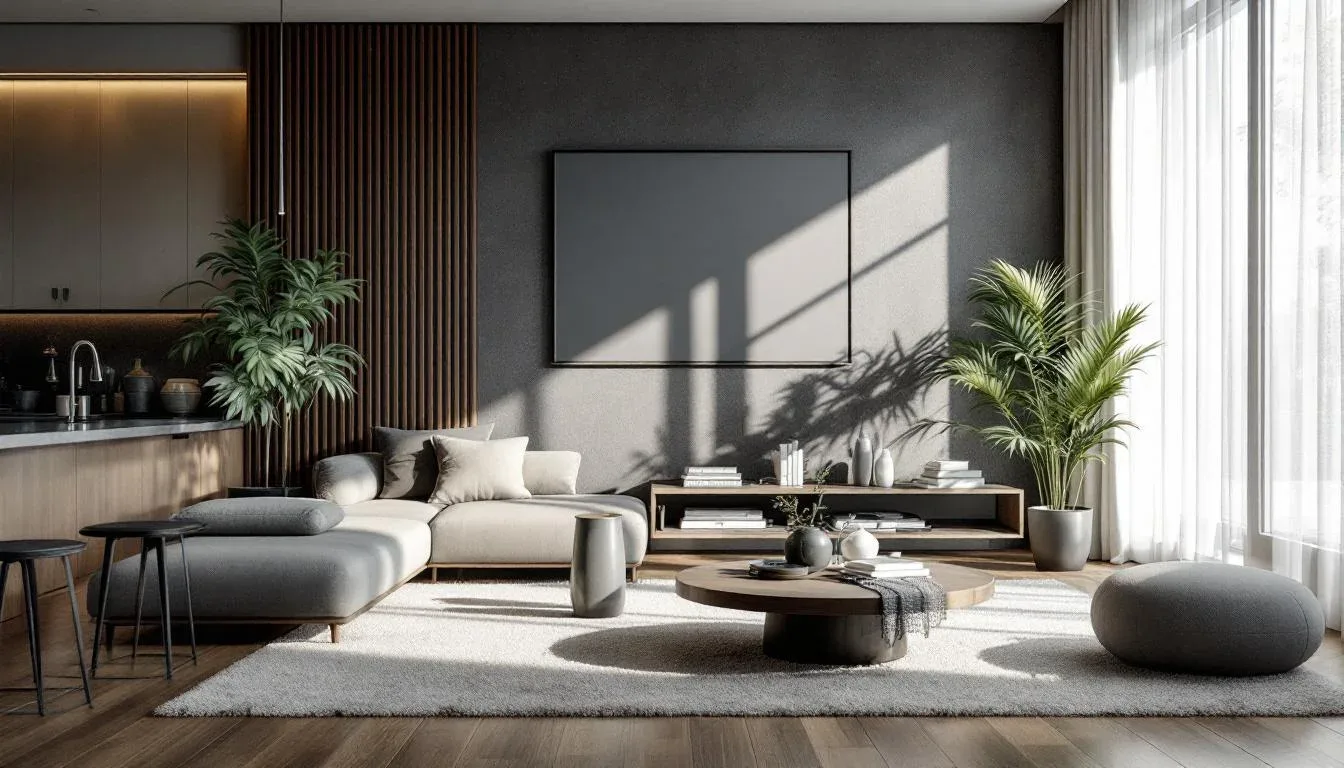
The most effective studio sleeping zones don’t pick one studio apartment bedroom divider idea and commit to it exclusively. They stack complementary solutions that address different problems simultaneously.
A workable combination for a 500-square-foot studio with one window:
- Primary division: ceiling-track curtain on a curved track, pulling from the window wall and terminating at the back of a low wardrobe — handles visual privacy and light control
- Secondary layer: KALLAX bookcase unit positioned at the edge of the sleeping zone as a bedside storage wall, open toward the bed — adds enclosure without blocking the ceiling track
- Lighting: sleeping zone on 2,700K warm bulbs with a dedicated bedside lamp; living zone on 3,000K with overhead dimmer
- Platform: 8-inch platform under the bed to define the zone and add under-bed storage
None of these elements is doing everything on its own. The curtain handles light. The bookcase creates the sense of enclosure on the side the curtain doesn’t cover. The platform defines the floor footprint. The lighting reinforces all of it without any physical hardware.
The budget for this full combination in a rental: $400–$800 depending on fabric choice and whether you build the platform or buy a storage bed frame. That’s less than two months of paying for a one-bedroom upgrade in most major US cities.
Actionable takeaway: Sketch your studio to scale on graph paper before buying anything. Mark the window, the door, and the electrical outlets. Then map which combination of elements addresses visual privacy, light control, and enclosure simultaneously. The sketch will immediately reveal conflicts — a curtain track that would block the closet door, a bookcase position that cuts off the outlet you use for your laptop — before you’ve spent anything.
FAQ
What’s the easiest studio apartment bedroom divider idea that doesn’t require any installation?
A freestanding bookcase or a tall folding screen placed perpendicular to the bed requires zero installation and can be moved when you leave. For maximum effect without touching a wall or ceiling, a 72-inch tall folding panel combined with a bed canopy draped from a freestanding frame creates three-sided enclosure with nothing anchored to the apartment itself.
Will a curtain divider actually help me sleep better, or is it just aesthetic?
It depends on what’s disrupting your sleep. A blackout-lined curtain on a ceiling track will meaningfully reduce light spillage from the living zone — that’s a measurable change. For sound, a velvet or heavyweight fabric will reduce ambient noise but won’t eliminate it. If your main sleep disruptor is noise rather than light, pair the curtain with a white noise machine on the sleeping side for the best outcome.
I’m in a rental with a strict no-damage policy. Which options are actually safe to try?
Ceiling-track curtain systems using tension rods (spanning wall to wall) require zero anchoring. Freestanding bookcases need no wall attachment if you use a floor-to-ceiling tension pole for stability instead of a wall bracket. Raised platform beds using existing commercial storage bed frames leave no marks. Lighting changes — smart bulbs, plug-in pendants, clip-on reading lights — are entirely reversible. These four approaches together cover all three core needs without touching the walls or ceiling.
How do I keep a bookcase divider from tipping without anchoring it to the wall?
Two reliable options: First, position a second identical unit back-to-back, which doubles the base footprint and makes tipping nearly impossible under normal conditions. Second, run an adjustable floor-to-ceiling tension pole (like those sold for closet organization) directly behind the unit — tighten it against the ceiling to create downward pressure on the bookcase. Neither option requires any wall or ceiling anchor points.
What’s the minimum ceiling height needed for a ceiling-track curtain to work well?
Ceiling-track curtains work in any ceiling height, but they’re most effective in spaces with at least 8-foot ceilings. In rooms with 7.5-foot ceilings, floor-to-ceiling fabric still reads taller than a mid-mounted tension rod — but the effect is subtler. In rooms with 9-foot or higher ceilings, the visual impact is dramatic. If your ceilings are very low, compensate by keeping the fabric as lightweight and sheer as your light-control needs allow — heavy fabric in a low-ceilinged space can feel oppressive rather than cozy.
What is the best room divider for a studio apartment that doesn’t damage walls or ceilings?
What’s the easiest studio apartment bedroom divider idea that doesn’t require any installation?
How do you create a bedroom in a studio apartment without building permanent walls?
A freestanding bookcase or a tall folding screen placed perpendicular to the bed requires zero installation and can be moved when you leave. For maximum effect without touching a wall or ceiling, a 72-inch tall folding panel combined with a bed canopy draped from a freestanding frame creates three-sided enclosure with nothing anchored to the apartment itself.
Can a bookshelf really work as a bedroom divider in a small studio?
Will a curtain divider actually help me sleep better, or is it just aesthetic?
How much does it cost to add a sleeping zone divider to a studio apartment?
It depends on what’s disrupting your sleep. A blackout-lined curtain on a ceiling track will meaningfully reduce light spillage from the living zone — that’s a measurable change. For sound, a velvet or heavyweight fabric will reduce ambient noise but won’t eliminate it. If your main sleep disruptor is noise rather than light, pair the curtain with a white noise machine on the sleeping side for the best outcome.