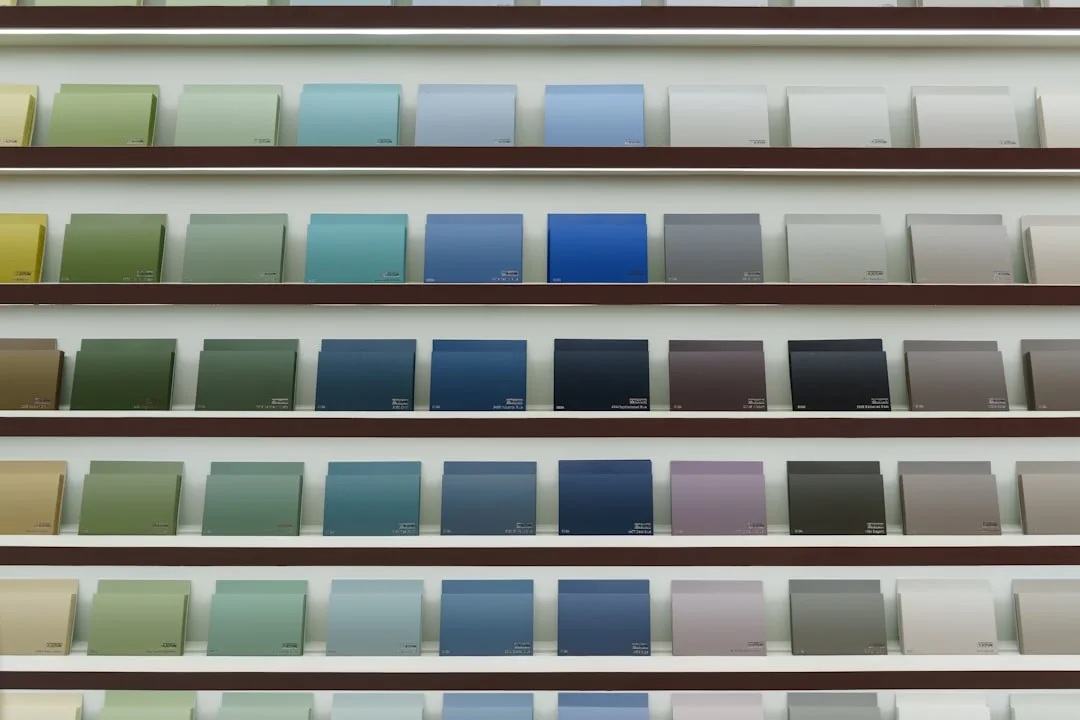
The designer who redid my 38-square-foot bathroom didn’t reach for white — she painted every surface, ceiling included, the same deep eucalyptus green, and the room somehow felt twice as large. I didn’t believe it until I stood in it. If you’ve been searching for the best paint color for a small bathroom and keep landing on the same recycled advice, you already know how unhelpful most of it is. After eleven years of steering clients through paint decisions in Chicago apartments and Manhattan studios, I’ve watched the “always go light” rule fail more small bathrooms than I can count — and I’ve seen a near-black bathroom feel like a sanctuary while a white one felt like a parking garage stall. Finding the best paint color for a small bathroom isn’t about picking a shade off a trending list; it’s about reading your specific room’s fixed elements, light source, and contrast situation, then choosing accordingly. The color you choose matters, but how you choose it — based on your actual room, your fixed elements, your light source — is what separates a bathroom that works from one you repaint eight months later.
Quick Answer
The designer who redid my 38-square-foot bathroom didn’t reach for white — she painted every surface, ceiling included, the same deep eucalyptus green, and the room somehow felt twice as large.
This isn’t a list of colors to copy. It’s a framework for figuring out what your specific bathroom actually needs.
Rule 1: Understand Why the ‘Always Go Light’ Rule Fails So Many Small Bathrooms
In This Article
- Rule 1: Understand Why the ‘Always Go Light’ Rule Fails So Many Small Bathrooms
- Rule 2: Let Your Fixed Elements Set the Color Range
- Rule 3: Ask the Right Question About Making a Small Bathroom Look Bigger
- Rule 4: Understand Finish Before You Commit to Any Color
- Rule 5: Map Your Light Before You Choose a Hue
- Rule 6: Commit to One Dominant Decision and Build From It
- Color Families That Consistently Perform in Small Bathrooms
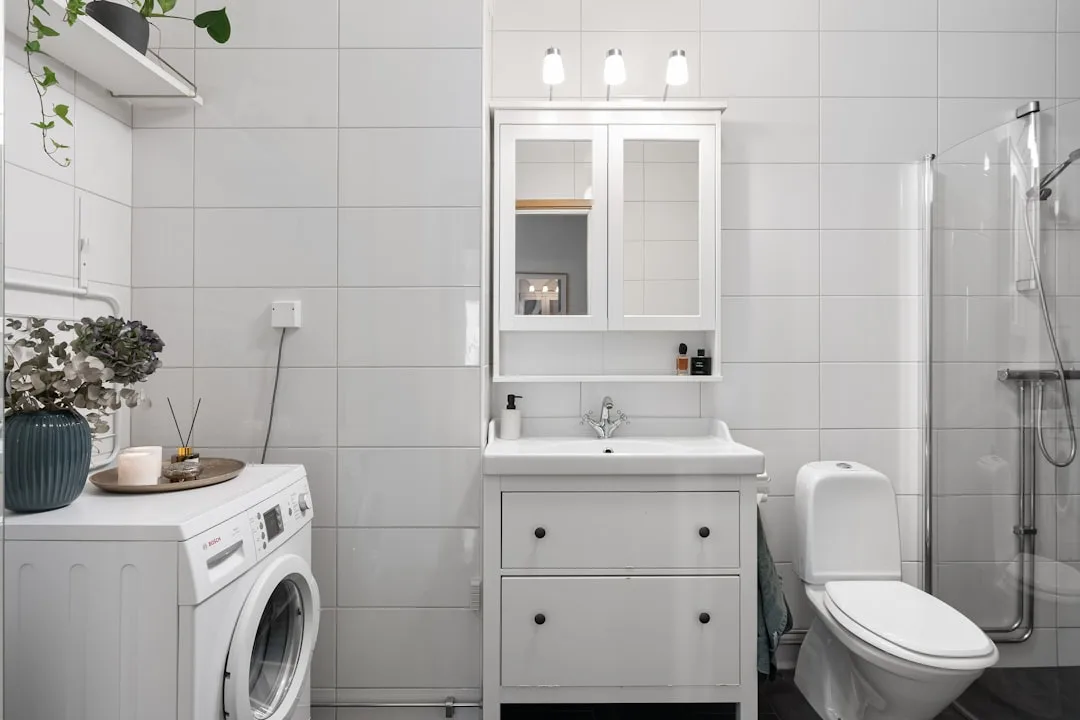
Most small-bathroom paint advice is recycled from the same logic loop: light colors reflect more light, light makes rooms feel bigger, therefore paint your bathroom white. It sounds airtight. It is not.
Here’s what that logic ignores: perceived room size is more strongly influenced by the contrast ratios between surfaces than by wall color alone. Research from the Lighting Research Center supports this — a finding that paint brand content routinely buries because it complicates their product recommendations. A stark white wall next to a white ceiling with white trim creates almost zero contrast, which should, by that same logic, dissolve the room’s boundaries entirely. But it often does the opposite. The flatness emphasizes the boxy geometry. The hard corners stay hard. The room looks like a very clean shoebox.
I once helped a client undo a full white repaint in a windowless bathroom in Wicker Park. She’d done everything the blogs told her — bright white, semi-gloss, mirror above the vanity — and the result was clinical. Harsh. The overhead light hit the gloss walls and bounced straight back at her face. It wasn’t peaceful. It wasn’t even pretty. It was a hospital corridor.
Dark and saturated colors, used deliberately, do something counterintuitive: they remove the walls from your awareness entirely. When every surface reads as one continuous envelope — no light wall demanding attention here, no dark floor creating a hard stop there — the eye stops measuring the room. That’s the jewel box effect. The space feels intentional rather than cramped. Navy, forest green, deep charcoal: these have been used successfully in bathrooms smaller than 40 square feet because they create depth rather than advertising boundaries.
The variables that actually determine outcome are finish, ceiling height, and where your natural light comes from — not the hue’s position on a light-to-dark scale.
What to do instead of defaulting to white:
- Write down the approximate tones of your floor tile, grout, vanity, and existing fixtures before you look at a single paint chip
- Note whether your dominant light source is overhead artificial, directional natural, or diffused natural — each rewards a different color strategy
- Assess whether your existing surfaces are already light-on-light; if so, adding more white will flatten the space further, not open it up
- Look for the contrast seams the eye uses to measure the room — wall-to-ceiling, wall-to-floor, wall-to-trim — and decide whether you want to emphasize or eliminate them
Actionable takeaway: Before you choose a color, map your contrast situation. If everything is already light and high-contrast, adding more light color won’t help — it’ll flatten the space further.
Rule 2: Let Your Fixed Elements Set the Color Range

There is no single best paint color for a small bathroom that works in every room. Anyone who gives you one is either selling paint or hasn’t worked in enough real rooms to know better.
The honest answer is that the best paint color for a small bathroom is determined almost entirely by your fixed elements — the things you’re not repainting or replacing. Floor tile. Grout tone. Vanity color. Fixture finish. Window placement. These elements don’t negotiate. Your paint has to work around them, not despite them.
Here’s the general framework I apply, and it’s held up across dozens of bathrooms:
- Windowless bathrooms under 40 square feet are almost never well-served by stark white. Soft mid-tones — dusty clay, warm greige, muted sage — perform better because they add warmth that compensates for the flat overhead light. White in these rooms just emphasizes the four walls closing in on you.
- Bathrooms with a skylight or east/west-facing window can support true whites and pale cool blues without feeling sterile, because there’s directional light creating natural shadow and depth. The ceiling line opens. The color breathes.
- Bathrooms with warm-toned tile (terracotta, cream, beige natural stone) reject cool paint colors the way a mismatched outfit rejects itself — technically everything is there, but something reads as wrong.
- Bathrooms with white subway tile and cool chrome fixtures are the one context where classic pale blue-gray or crisp white actually performs as advertised.
- Bathrooms with dark grout and light tile already have a strong graphic grid on every surface — your wall color needs to quiet that grid, not compete with it.
- Bathrooms with wood vanities or warm brass fixtures need wall colors pulled from the warm side of any hue family; even a “neutral” gray will read as cold and mismatched against honey oak or brushed gold.
One variable almost nobody mentions — and I want to stress this — is grout color. A bathroom with warm-toned tile and dark grout already has a grid drawn across every surface. Add light walls and you’ve created a checkerboard effect that fragments the room visually. The correction isn’t to change the tile. It’s to bring your wall color close enough to the grout tone that the grid stops asserting itself.
That matches everything I saw working with clients. The tile is always the conversation.
Actionable takeaway: Pull a chip from your floor tile or grout and take it to the paint store before you look at a single fan deck. Start with what the room already has.
Rule 3: Ask the Right Question About Making a Small Bathroom Look Bigger
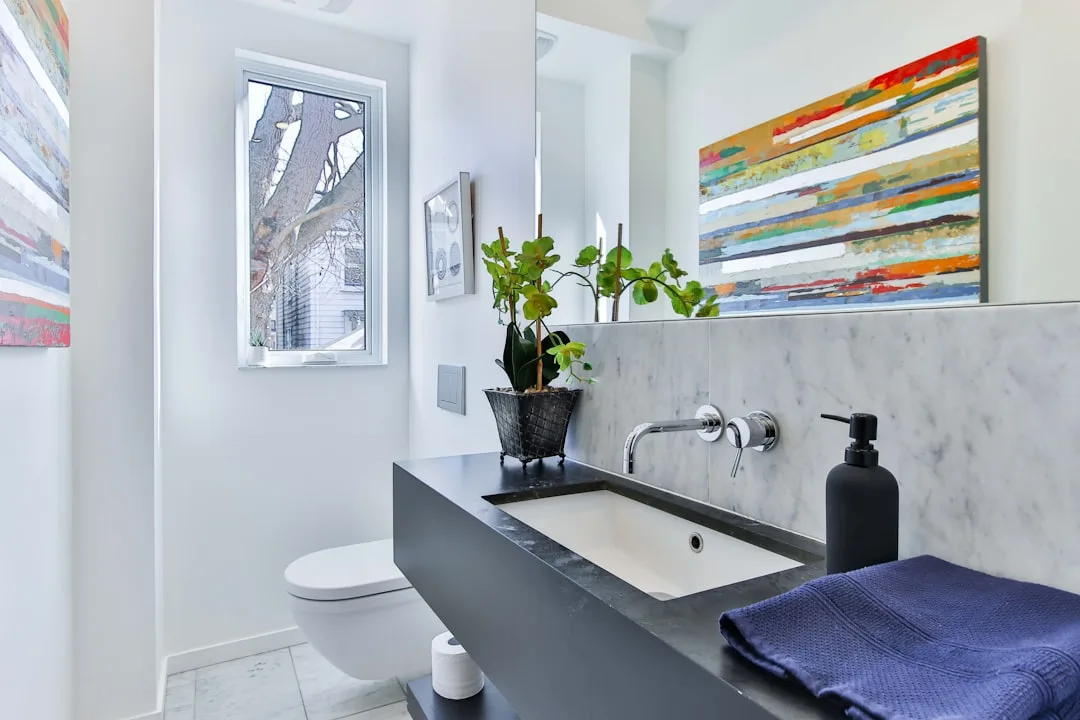
“What color makes a small bathroom look bigger?” is the wrong question — but understandable. The better question is: what paint approach reduces the eye’s ability to measure the room?
The most effective technique for making a small bathroom feel larger is a monochromatic scheme, where walls, ceiling, and trim are painted within two shades of each other. This removes the visual stopping points — the hard transitions between surfaces — that the eye uses to measure distance. It doesn’t matter much whether the color is light or dark. What matters is that the eye can’t find a seam.
Specific approaches that consistently work:
- Soft warm whites in the LRV 75–85 range outperform cool bright whites in most North American bathroom orientations, because vanity lighting skews cool and adds a blue cast to everything. Warm whites counteract that cast rather than compounding it.
- Painting the ceiling the same color as the walls — or within one value — removes the most powerful spatial boundary in a small room. It’s the single biggest free upgrade most bathrooms could get. I’ve done this in rooms as small as 30 square feet and the effect is immediate.
- Painting trim the same color as walls collapses the room’s hard geometry. In a 5×8 bathroom, that’s four window casings, a door frame, and baseboard suddenly gone from the visual inventory. The room reads as one surface instead of eight competing ones.
- Using a matte or eggshell finish instead of semi-gloss removes the reflection bounce that makes overhead light aggressive. Semi-gloss belongs on trim, not walls, in rooms with harsh overhead fixtures.
- Carrying the wall color onto the ceiling in a 5–10 degree lighter tint — rather than an identical match — gives a subtle lift that reads as height without creating a hard contrast line at the crown.
What a monochromatic scheme does NOT mean:
- It doesn’t mean the room has to be boring — texture, pattern in tile, and fixture finishes provide the visual interest
- It doesn’t mean everything must be the same exact color — a two-value shift between wall and ceiling reads as intentional, not monotonous
- It doesn’t require a neutral palette — a deep jewel tone can be used monochromatically just as effectively as a soft greige
Rule 4: Understand Finish Before You Commit to Any Color
Paint finish changes the behavior of color more than most people realize — and in small bathrooms with limited light, it changes the experience of the room entirely. This is the variable that gets the least attention in bathroom paint guides and causes the most post-project regret.
Here’s what each finish actually does in a small bathroom context:
- High-gloss: Maximum moisture resistance, maximum reflection. In a bathroom with good natural light, it can feel vibrant. In a windowless bathroom with a single overhead fixture, it turns every wall into a mirror that bounces harsh light back at your face. Reserve high-gloss for cabinetry and trim, not walls.
- Semi-gloss: The traditional bathroom recommendation because of its wipe-ability. Performs well on walls if your lighting is soft or diffused. Poor choice if your overhead light is strong — the sheen picks up and amplifies it.
- Satin: The best general-purpose finish for small bathroom walls. Enough sheen to be cleanable, low enough to avoid aggressive light reflection. Works in most light conditions.
- Eggshell: Slightly more reflective than flat, slightly less than satin. Excellent in bathrooms with adequate ventilation — the moisture concern is often overstated for well-ventilated spaces.
- Matte/flat: Rarely recommended for bathrooms due to moisture concerns, but in a well-ventilated space, it produces the most even, shadow-free surface. Dark colors look significantly better in matte than semi-gloss — the depth reads truer with no sheen competing.
The finish-color interaction most people miss: Dark colors in semi-gloss look lighter than they do on the chip because the sheen reflects ambient light. If you’re going deep — charcoal, forest green, navy — go satin at minimum, matte if your ventilation supports it. The color you fell in love with on the sample board will show up in the room.
Rule 5: Map Your Light Before You Choose a Hue
Light is the variable that overrides everything else. A color that’s perfect in a south-facing bathroom in Atlanta will look wrong in a north-facing bathroom in Seattle. Before you commit to any color, you need to understand what your specific light is doing.
By light source type:
- North-facing natural light is cool and blue-toned year-round. Cool colors — pale blues, blue-grays, greens with blue undertones — will read accurate in this light. Warm colors will look dull or muddy.
- South-facing natural light is warm and bright. It enhances warm tones and can make cool colors feel harsh. Soft whites, warm neutrals, and warm greens perform well here.
- East-facing light is warm in the morning and neutral by afternoon. Works with most palettes but rewards warmer tones if the bathroom is used primarily in the morning.
- West-facing light is flat during the day and golden in the evening. If the bathroom is used at night, the warm evening light will dramatically shift how any color reads.
- Overhead artificial light (cool white/daylight bulbs) skews everything blue. Warm paint tones correct for this. If you have 5000K–6500K overhead lighting and can’t change it, avoid cool colors entirely — they’ll read clinical.
- Overhead artificial light (warm/soft white bulbs) adds yellow. This is usually more forgiving. Cool colors pick up warmth and read as more neutral. Warm colors deepen pleasantly.
The two-hour test that saves most clients from a bad decision:
Paint three 12×12-inch chips of your shortlisted colors on the actual wall. Look at them at the following times:
- Morning with lights off
- Midday with lights off
- Evening with your actual bathroom fixtures on
The color that holds up best across all three conditions is the right one. Colors that shift dramatically between conditions — looking perfect at noon and sickly at 8pm — will frustrate you within a month.
Rule 6: Commit to One Dominant Decision and Build From It
The most common mistake in small bathroom color decisions isn’t choosing the wrong color. It’s choosing a color tentatively — hedging by going lighter than intended, safer than intended, less saturated than intended — and ending up with a room that feels unresolved.
Every bathroom that works has one dominant color decision made confidently. Everything else supports it.
If your dominant decision is the wall color:
- Bring trim within two values of the wall color — don’t let trim contrast fight the wall
- Choose hardware and accessories that either echo the wall tone (matte black with charcoal walls, brushed brass with warm ochre walls) or deliberately contrast as the sole accent
- Let the tile recede — if your tile is already busy, the wall color should quiet it, not compete
If your dominant decision is statement tile:
- The wall color becomes a supporting player — its job is to make the tile look better, not to be interesting on its own
- Neutral wall colors pulled from the tile’s own palette work better than neutrals chosen independently
- One accent color in the tile can become the dominant wall color if the rest of the palette is kept quiet
If your bathroom has no natural focal point:
- Create one: a painted niche, a contrasting ceiling color carried down to the top of the wainscoting, or a single accent wall (typically the one the door faces when you enter)
- One confident decision is always better than four timid ones that cancel each other out
Signs you’re hedging instead of deciding:
- You’ve been looking at paint chips for more than two weeks without testing on the wall
- Every color feels like it could work but none of them feel right
- You keep gravitating toward a color but talking yourself out of it because it feels “too much”
- You’ve asked five people for opinions and they all said different things
The color you keep gravitating toward and talking yourself out of is usually the right one. Small bathrooms reward decisiveness. They punish ambivalence.
Color Families That Consistently Perform in Small Bathrooms
Rather than a list of specific paint codes — which become outdated and don’t account for your fixed elements — here are the color families with the strongest track record across the small bathrooms I’ve worked in, along with the conditions under which each performs best:
Warm whites and off-whites (LRV 75–85):
Best in: bathrooms with warm-toned tile, south or east-facing light, warm fixture finishes. Worst in: windowless bathrooms with cool overhead lighting — they go flat and yellow.
Soft sage and muted greens:
Best in: bathrooms with wood elements, natural stone, warm chrome or unlacquered brass. Worst in: bathrooms with cool blue-gray tile — the undertones fight.
Deep eucalyptus and forest green:
Best in: bathrooms used as a retreat space, north-facing or windowless rooms where the jewel box effect is the goal. Worst in: bathrooms with busy patterned tile — the depth of the wall competes with the pattern.
Warm clay and dusty terracotta:
Best in: bathrooms with natural stone, terracotta tile, warm wood vanities. One of the strongest performers in windowless bathrooms because it adds warmth that compensates for flat light. Worst in: bathrooms with cool-toned or gray tile.
Navy and deep blue-green:
Best in: bathrooms with white or very light tile and chrome or brushed nickel fixtures. The high contrast between deep wall and light tile is the feature. Worst in: bathrooms with warm-toned tile — the color temperature clash is immediate.
Warm charcoal (not cool gray):
Best in: modern bathrooms with matte black fixtures, concrete-look tile, or minimal ornamentation. Read the undertone carefully — warm charcoals have brown or green undertones; cool charcoals read purple or blue in bathroom light. Worst in: bathrooms with warm wood vanities — the cool gray fights the warmth of the wood.
Frequently Asked Questions
What is the best paint color for a small bathroom with no window?
Soft warm mid-tones consistently outperform white in windowless bathrooms. Dusty clay, warm greige, muted sage, and deep jewel tones all reduce the clinical feeling that white creates under flat overhead light. The key factor is finish — go satin or eggshell, never high-gloss, because gloss amplifies overhead light harshness. If you want to go dark, commit fully: paint the ceiling the same color as the walls and let the jewel box effect work. Half-measures with dark colors in windowless bathrooms look gloomy rather than intentional.
Should bathroom ceiling be the same color as walls?
In most small bathrooms, yes — or within one value lighter. The ceiling-to-wall contrast line is the primary visual boundary the eye uses to measure room height. Removing or softening that line makes the room feel taller and more continuous. The conventional white ceiling is useful when you have a pattern or strong color on the walls that needs a visual rest; in a monochromatic scheme, it creates the one contrast line that works against you.
Does dark paint make a small bathroom feel smaller?
Not inherently. Dark paint makes a small bathroom feel smaller when it’s used on walls alone, leaving a high-contrast white ceiling that hard-frames the room’s dimensions. Dark paint used monochromatically — walls, ceiling, and trim within the same value range — removes the boundaries the eye uses to measure the room and creates depth instead of constriction. The jewel box effect is real and well-documented; the failure cases almost always involve dark walls with a contrasting white ceiling.
What paint finish is best for a small bathroom?
Satin is the most reliable general-purpose finish for bathroom walls. It’s cleanable, moisture-tolerant, and low enough in sheen to avoid aggressive light reflection. For bathrooms with strong overhead light, eggshell is worth considering — the lower sheen reads more evenly. High-gloss and semi-gloss belong on trim and cabinetry, not walls, in most small bathrooms with artificial overhead lighting.
How do I choose between two paint colors I like for my bathroom?
Test both on the actual wall — not on cardboard samples — in a 12×12-inch patch. Look at both under morning light with fixtures off, midday light with fixtures off, and evening light with fixtures on. The color that holds up most consistently across all three conditions is the right choice. If one color looks perfect at noon but goes flat or shifts noticeably at night, and the other holds steady, the one that holds steady wins regardless of which one you liked better on the chip.
The best paint color for your small bathroom is the one that works with what’s already in the room — not the one that worked in someone else’s. Start with your fixed elements, map your light, commit to one dominant decision, and test on the wall before you buy a gallon.
What is the best paint color for a small bathroom with no window?
Soft warm mid-tones consistently outperform white in windowless bathrooms. Dusty clay, warm greige, muted sage, and deep jewel tones all reduce the clinical feeling that white creates under flat overhead light. The key factor is finish — go satin or eggshell, never high-gloss, because gloss amplifies overhead light harshness. If you want to go dark, commit fully: paint the ceiling the same color as the walls and let the jewel box effect work. Half-measures with dark colors in windowless bathrooms look gloomy rather than intentional.
Should bathroom ceiling be the same color as walls?
In most small bathrooms, yes — or within one value lighter. The ceiling-to-wall contrast line is the primary visual boundary the eye uses to measure room height. Removing or softening that line makes the room feel taller and more continuous. The conventional white ceiling is useful when you have a pattern or strong color on the walls that needs a visual rest; in a monochromatic scheme, it creates the one contrast line that works against you.
Does dark paint make a small bathroom feel smaller?
Not inherently. Dark paint makes a small bathroom feel smaller when it’s used on walls alone, leaving a high-contrast white ceiling that hard-frames the room’s dimensions. Dark paint used monochromatically — walls, ceiling, and trim within the same value range — removes the boundaries the eye uses to measure the room and creates depth instead of constriction. The jewel box effect is real and well-documented; the failure cases almost always involve dark walls with a contrasting white ceiling.
What paint finish is best for a small bathroom?
Satin is the most reliable general-purpose finish for bathroom walls. It’s cleanable, moisture-tolerant, and low enough in sheen to avoid aggressive light reflection. For bathrooms with strong overhead light, eggshell is worth considering — the lower sheen reads more evenly. High-gloss and semi-gloss belong on trim and cabinetry, not walls, in most small bathrooms with artificial overhead lighting.
How do I choose between two paint colors I like for my bathroom?
Test both on the actual wall — not on cardboard samples — in a 12×12-inch patch. Look at both under morning light with fixtures off, midday light with fixtures off, and evening light with fixtures on. The color that holds up most consistently across all three conditions is the right choice. If one color looks perfect at noon but goes flat or shifts noticeably at night, and the other holds steady, the one that holds steady wins regardless of which one you liked better on the chip.