
A teak credenza listed as “vintage Danish MCM” sold for $1,200 on a resale platform last month — the buyer later discovered it was a 2003 import reproduction worth roughly $180, and the listing was technically not wrong. “Vintage” has no legal definition in furniture resale. “MCM” is a style descriptor, not a provenance claim. The seller used both terms accurately, in the loosest possible sense, and walked away with $1,020 more than that piece was worth. This happens constantly in the world of midmod decor vintage mid century modern furniture, and it keeps happening because most buyers are shopping on aesthetics alone — they want the look without the knowledge that actually protects them.
Quick Answer
A teak credenza listed as ‘vintage Danish MCM’ sold for $1,200 on a resale platform last month — the buyer later discovered it was a 2003 import reproduction worth roughly $180, and the listing was technically not wrong.
That changes here.
Why Midmod Decor Has Outlasted Every Other Design Trend
In This Article

Farmhouse peaked. Coastal is fading. Cottagecore had about eighteen months before it became a Target endcap. MCM keeps moving, and the reason isn’t nostalgia — it’s that the furniture was engineered to function exceptionally well before it was ever expected to look exceptional.
The postwar production constraints that defined mid-century modern weren’t aesthetic choices. They were solutions. Plywood was bent because solid wood was rationed. Fiberglass was molded because the technology had just come out of wartime manufacturing. Steel tubing was used in chairs because it was cheap, strong, and could be formed without the bulk of carved wood. The silhouettes that resulted from those material constraints — low profiles, tapered legs, clean horizontal lines — turned out to be visually neutral in a way that almost nothing else from that era is. A 1958 Danish teak sideboard looks right in a 2024 apartment because it never looked aggressively of its moment in the first place.
Contrast that with, say, Tuscan-style furniture, which looks immediately and specifically like the early 2000s, or barn door hardware, which will date a kitchen as specifically as avocado green appliances once did. MCM avoids that trap. The lines are too clean and too structural to read as decorative excess.
Google Trends data backs this up in a way I find genuinely interesting — sustained search interest in “mid century modern furniture” over the past ten years shows no meaningful decline, while “farmhouse decor” spiked sharply around 2018–2019 and has been eroding since. That’s not a coincidence. Trend-driven styles burn bright and collapse; styles built around livability accumulate interest slowly and keep it.
The underrated point here is that MCM furniture also holds up physically. A well-made teak credenza from 1962 has already survived sixty years — the joinery is proven, the wood has stabilized, and the hardware was made from solid metal when solid metal was standard. You’re not buying a risk. You’re buying a track record.
Actionable takeaway: Before you spend anything, decide whether you’re decorating or investing. Midmod decor vintage mid century modern furniture rewards both approaches — but the sourcing strategy, and the price you should be willing to pay, are completely different depending on your answer.
The Midmod Decor Vocabulary You Actually Need Before You Shop
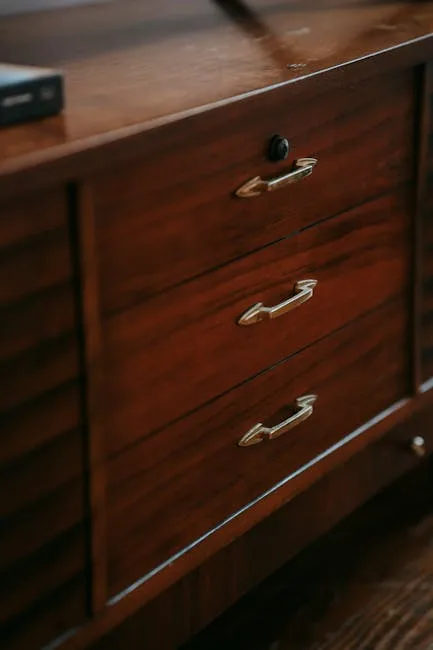
Most people walk into MCM shopping the way I once walked into a plumbing supply store — knowing vaguely what I wanted but unable to say it in the language that would get me the right thing. The vocabulary gap in MCM isn’t just embarrassing. On platforms like Chairish and 1stDibs, listings labeled “MCM” range from $80 for a reproduction to $28,000 for a verified Eames shell chair — and the terms in the listing description are often the only thing separating those two price points.
Here’s the terminology that actually matters when you’re reading listings:
- “MCM-inspired” — This is a modern piece built to resemble mid-century modern design. No vintage value. Often reasonable quality at the right price, but worth nothing at resale.
- “MCM reproduction” — A piece deliberately manufactured to replicate an original design. Some are high quality. Most are not. The seller knows it’s not original.
- “Authentic vintage” — Should mean the piece dates from the original production era, typically 1945–1969. Should. This phrase is abused frequently.
- “Period MCM” — More specific than “vintage,” this implies production within the canonical window. More credible when paired with a manufacturer or designer name.
- “Scandinavian modern” vs. “Danish modern” — Scandinavian modern is a broad design category that overlaps significantly with MCM. Danish modern specifically refers to furniture produced in Denmark, often in teak, often by named craftsmen like Hans J. Wegner or Børge Mogensen. The distinction matters at auction.
- “Hollywood Regency” — This is adjacent to MCM but distinct. Lacquered surfaces, brass hardware, and strong symmetry are Hollywood Regency markers. It overlaps with MCM in era but not in feel — Hollywood Regency is glamorous; MCM is functional.
The words “restored,” “refinished,” “reupholstered,” and “all original” each move value in different directions. A piece described as “all original” commands a premium among collectors but may be too worn for a family room. “Reupholstered” means someone touched the frame — find out when, and by whom. “Refinished” can mean anything from a light oil wipe to a complete strip-and-spray, and the difference between those two interventions is significant.
Also note: pieces from the 1970s MCM revival are genuinely collectible but distinct from canonical MCM. They’re not lesser — they’re different, and a savvy buyer knows which they’re getting.
Actionable takeaway: Before you contact a seller, read the listing three times — once for what it says, once for what it doesn’t say, and once to identify which terms are doing vague work. “Vintage-style” and “vintage” are not the same sentence.
Where to Source Vintage Midmod Pieces (Ranked by Risk and Reward)
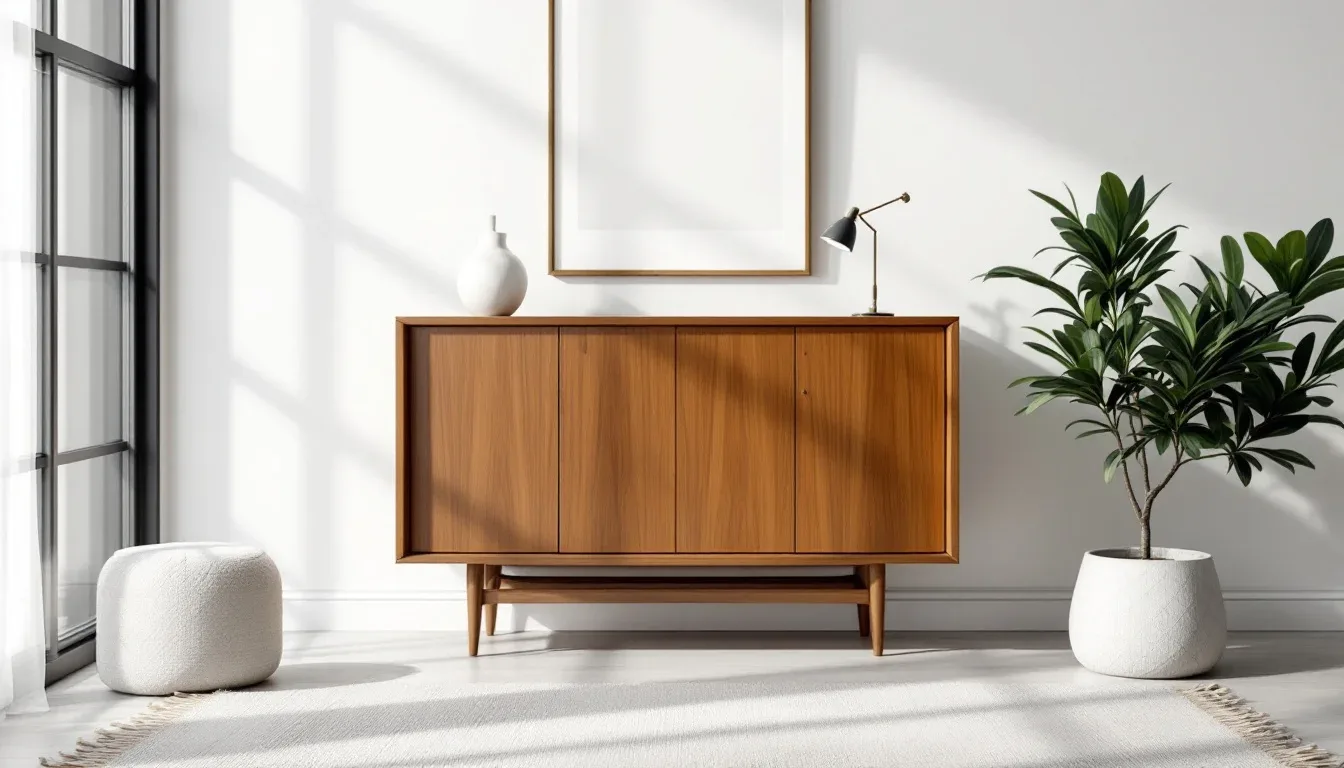
I spent years telling clients to “just check estate sales” — which is technically correct and almost completely useless advice without the operational specifics of how to do it. Here’s the actual tiered breakdown.
Tier 1 — Lowest risk, highest price:
- Established auction houses (Wright in Chicago, Rago Arts in New Jersey) with provenance documentation
- Certified dealers who specialize in MCM and offer return policies
- 1stDibs, which has buyer protection and vets sellers — you pay for that protection in the price
At this tier, you’re unlikely to get burned on authenticity. You may overpay relative to the open market, but you’re buying certainty.
Tier 2 — Moderate risk, moderate price:
- Chairish, where sellers range from professional dealers to individuals clearing out a parent’s estate — quality varies enormously, but the platform has dispute resolution
- Facebook Marketplace with video calls before purchase — always ask the seller to flip the piece and show you the underside, the hardware, and the back of any case goods
- Local estate sales run by reputable companies (EstateSales.net lets you filter by company and read reviews) — the pieces here are priced by people who may not know MCM deeply, which creates opportunity, but authentication is entirely your responsibility
Tier 3 — Highest risk, highest potential reward:
- eBay, where the listings for midmod decor vintage mid century modern furniture range from correctly identified gems to aggressively mislabeled reproductions — buy only from sellers with strong feedback histories and return policies, and always use PayPal Goods & Services for buyer protection
- Craigslist and local buy-nothing groups — cash transactions, no recourse, but also no markup and no platform fees; this is where the best finds and worst mistakes happen in roughly equal measure
- Flea markets and antique malls — booths are rented by individual dealers whose expertise and honesty vary widely; go early, go often, and build relationships with the vendors who seem to actually know their inventory
The tier system isn’t rigid. A Tier 3 source with a return policy and a seller who answers questions in detail is often safer than a Tier 2 platform with a seller who provides no documentation and ignores follow-up questions. The tier tells you where to start your risk assessment — not where to end it.
Actionable takeaway: Match your sourcing tier to your current knowledge level. If you’re still learning to authenticate, pay the Tier 1 premium. Once you can identify a piece by construction details alone, Tier 3 is where you’ll find your best deals.
How to Authenticate a Piece Without Hiring an Expert

This is the section most buyers skip and then regret. Authentication doesn’t require a credential — it requires knowing what to look for and being willing to spend fifteen minutes with a piece before committing money to it.
Check the joinery first. Vintage MCM case goods — credenzas, sideboards, dressers — were almost universally built with dovetail joints at the corners of drawers and carcasses. Pull a drawer out and look at the corner connections. Dovetail joints are hand-cut or machine-cut at an angle and interlock like a puzzle. Staples, glue blocks, or simple butt joints indicate modern production or cheap reproduction work.
Look for manufacturer labels or stamps. The underside of chairs, the backs of case goods, and the undersides of table surfaces often carry paper labels, branded stamps, or metal tags. Common marks to know: Lane Furniture (a diamond-shaped stamp), Heywood-Wakefield (paper labels, often on the underside of chairs and dressers), and Knoll (a metal tag or stamped plate). Danish pieces often carry a Furniture Makers’ Guild stamp — a circular mark that includes the craftsman’s mark and sometimes a date code.
Assess the hardware. Original MCM hardware was almost always solid brass, solid chrome, or anodized aluminum — it has weight. Reproduction hardware is often hollow, pot-metal, or plastic with a metallic finish. Tap it. Solid metal has a dull thud. Hollow hardware rings.
Look at the wood grain consistency. Genuine teak from the MCM era has a specific grain pattern — straight, tight, with a natural oil sheen when lightly sanded. Teak veneer over particleboard, which is common in reproductions, shows grain only on the surface; the edges, if damaged, will show the substrate underneath. Run your finger along any exposed edge.
Check for oxidation patterns. Wood that is genuinely sixty years old oxidizes differently than new wood. Teak darkens with age and develops a specific amber-to-grey patina depending on exposure. The color should be consistent with how the piece was stored — pieces kept in low-light storage will be darker than pieces displayed near windows. Inconsistent oxidation — dark here, light there — can indicate refinishing or, more suspiciously, a newly built piece that’s been artificially aged.
Ask for provenance documentation. Not every piece will have it, and absence of documentation doesn’t mean a piece is fake — most furniture from the 1950s and 1960s was never accompanied by paperwork. But if a seller claims a specific designer attribution and can’t produce any documentation, that claim should drop significantly in your confidence weighting.
Actionable takeaway: Build a pre-purchase checklist from the items above and run through it on every piece before you make an offer. The fifteen minutes it takes will save you, conservatively, hundreds of dollars over the course of building a collection.
Price Benchmarks That Will Keep You From Overpaying

The single most common mistake buyers of midmod decor vintage mid century modern furniture make isn’t buying fakes — it’s paying authentic prices for pieces that aren’t worth what the seller is asking. Here are working benchmarks based on current market data:
Credenzas and sideboards:
- Unattributed Danish teak sideboard, good condition: $400–$900
- Lane Acclaim credenza, original hardware, good condition: $600–$1,400
- Attributed designer piece (Wegner, Mogensen), documented: $3,000–$12,000+
Lounge chairs:
- Unattributed MCM lounge chair, reupholstered: $200–$500
- Adrian Pearsall attributed, original fabric: $800–$2,000
- Eames LCW (Lounge Chair Wood), authenticated: $1,800–$4,500
Dining sets:
- Unattributed MCM dining table with four chairs: $400–$1,200
- Heywood-Wakefield champagne finish dining set: $1,500–$4,000
- Paul McCobb Planner Group dining components: $600–$2,500 depending on configuration
These ranges assume pieces in good to excellent condition. Deduct 30–50% for pieces needing significant restoration. Add 20–40% for original upholstery in good condition on seating pieces.
The trap is assuming that any piece described with designer adjacency — “Eames-style,” “Noguchi-inspired,” “Wegner design” — carries any of the value of the actual designer’s work. It carries none. You’re paying for the material and construction quality of what’s actually in front of you, full stop.
FAQ
What’s the difference between MCM and midmod decor?
They refer to the same aesthetic and era — mid-century modern design, roughly 1945–1969. “Midmod” is shorthand used more casually in resale communities and on social platforms; “MCM” is slightly more formal. When you’re searching for pieces online, use both terms. Listings tagged “midmod decor vintage mid century modern furniture” will often surface different results than listings tagged only “MCM,” because sellers use the terms inconsistently.
How do I know if a teak piece is genuine vintage or a modern reproduction?
Check the underside of the piece for oxidation consistency, examine the joinery at drawer corners and carcass corners for dovetails, and look for any manufacturer stamps or labels. Modern reproductions frequently use teak veneer over MDF or particleboard — check any exposed edges for evidence of a substrate beneath the veneer layer. Genuine vintage teak is solid through, shows consistent grain on all surfaces, and has the weight you’d expect from dense hardwood.
Is it worth buying MCM pieces that need restoration?
It depends entirely on what “restoration” means in a specific case. Reupholstery is almost always worth doing on a well-made frame — good upholstery work runs $300–$800 per piece but adds significantly to both usability and resale value. Refinishing solid teak or walnut is straightforward and worth it. Frame repairs, broken joinery, and structural damage are more complicated — get a restoration estimate before you buy, and factor that cost into your offer.
What are the most commonly faked or mislabeled MCM pieces?
Eames-attributed pieces are the most frequent problem — the “Eames lounge chair” silhouette has been copied at every price point, and the genuine article requires documented provenance. Lane Acclaim credenzas are frequently reproduced and misidentified. Danish teak sideboards labeled “Danish modern” or “Danish MCM” are a broad category that encompasses pieces worth $200 and pieces worth $8,000, and the listing language rarely distinguishes between them reliably.
Can I build a genuine MCM collection on a limited budget?
Yes, with realistic expectations. Unattributed pieces from the era — solid construction, good materials, no famous name attached — are available in the $200–$800 range for most categories of furniture. The strategy is to prioritize construction quality and material over attribution. A well-made teak sideboard by an unknown Danish craftsman will outlast and outperform a cheaply made piece with a famous name on the label. Start with pieces you can authenticate through construction details alone, and save the designer attribution purchases for when you’ve developed enough knowledge to verify the claims yourself.