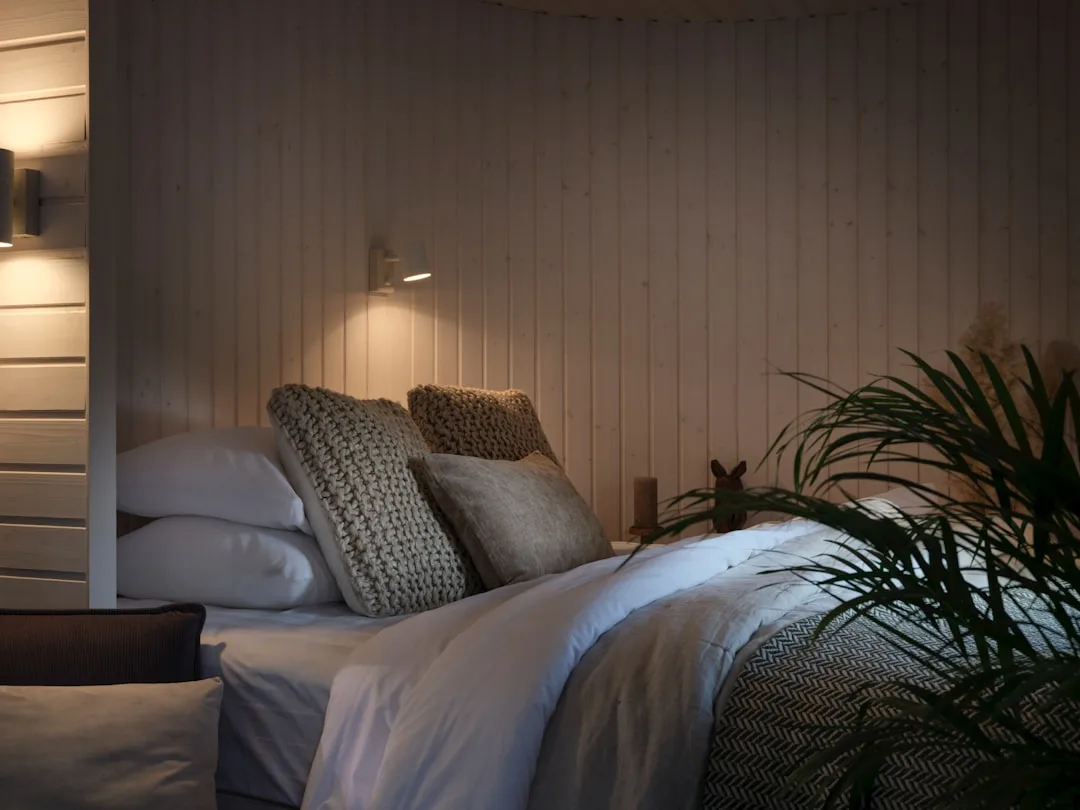
The average small bedroom has nine distinct zones that collect zero storage — not because they’re unusable, but because no one told you they existed. If you’ve been searching for hidden storage ideas for a small bedroom that actually work in real apartments with real constraints, these are the zones you’ve been missing.
Quick Answer
The average small bedroom has nine distinct zones that collect zero storage — not because they’re unusable, but because no one told you they existed.
Most bedroom storage advice treats square footage as the villain. You’ve read the listicles. Get a storage ottoman. Add floating shelves. “Maximize vertical space” — whatever that means in practice. I spent eleven years doing this work in actual apartments, measuring actual rooms, and I can tell you: the issue almost never comes down to how many square feet you have. It comes down to which zones are activated and which ones are completely invisible to the people living there.
Every room I walked into had the same dead spots. The wall above the door. The floor arc swept by the closet door. The toe-kick under the wardrobe that nobody thought to open. Nine zones, sitting there empty, while the homeowner was about to spend $600 on a dresser that would make the room feel even smaller.
This article covers all nine — with specific numbers, material solutions, and a decision framework at the end for figuring out which ones to tackle first.
Why Most Small Bedrooms Feel Cluttered (It’s Not a Space Problem)
In This Article
- Why Most Small Bedrooms Feel Cluttered (It’s Not a Space Problem)
- Hidden Storage Ideas for a Small Bedroom: The 9 Zones You’re Not Using
- 1. The Dead Space Beneath Your Bed Frame
- 2. The Wall Above Your Door Frame
- 3. The Floor Arc Swept by Your Closet Door
- 4. The Toe-Kick Beneath Wardrobes and Built-Ins
- 5. The Space Behind Your Bedroom Door When Open
- 6. The Wall Beside Your Window
- 7. Inside the Closet Ceiling
- 8. Between the Wall Studs (Recessed Niche Storage)
- 9. The Foot-of-Bed Zone
- Which Zones to Tackle First: A Decision Framework
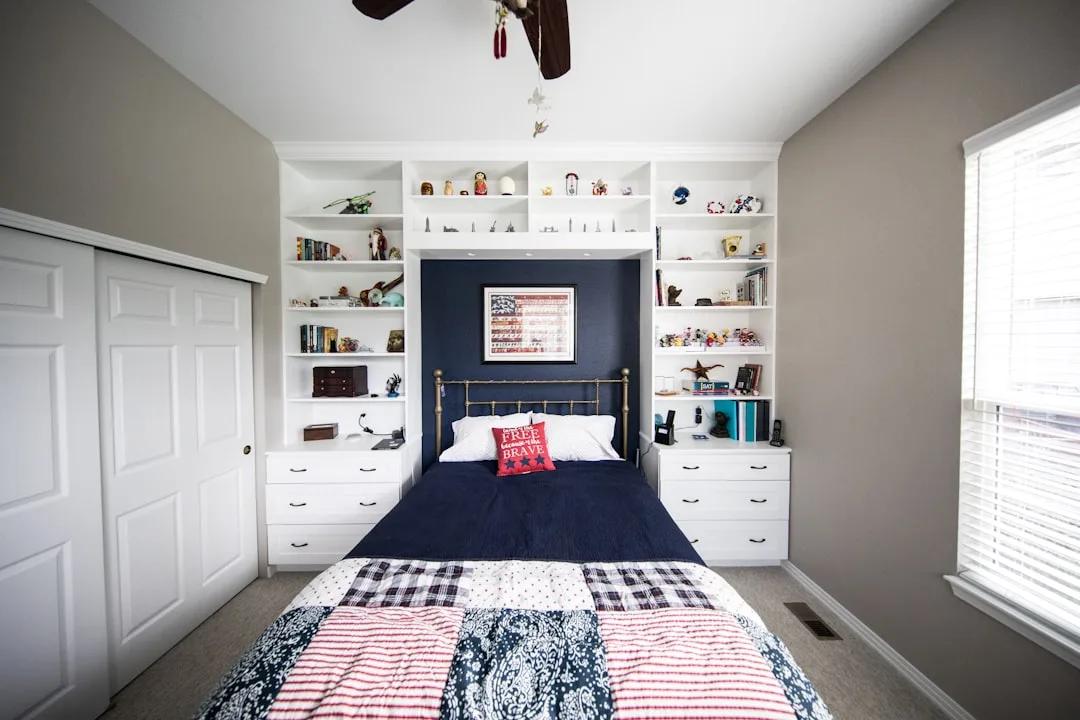
Here’s something I had to learn by getting it wrong: clutter is mostly a perception problem, not a volume problem. A room with 80 cubic feet of storage feels chaotic if that storage is exposed — open shelving with unmatched items, a dresser covered in objects, bags piled on a chair. The same room, with identical total storage volume but closed-front cabinetry and cleared surfaces, feels like a different apartment.
The real culprit is visual noise, not cubic footage.
According to a 2023 NAHB report, the median new single-family bedroom is 219 square feet — and yet storage dissatisfaction remains the number one complaint in homeowner bedroom surveys. That number stunned me when I first saw it, because 219 square feet is genuinely workable. I’ve done remarkable things with 140. The disconnect isn’t about how much room people have; it’s about how much of that room they’re actually using.
What most people do instead is add furniture. A new dresser here, a storage bench there, a set of matching bedside tables from the same collection because it was on sale. I made exactly this mistake with a client in Wicker Park — recommended a sectional-style storage unit that looked brilliant on paper and turned her 180-square-foot bedroom into an obstacle course within two weeks. The unit wasn’t wrong. The approach was. We were solving a zone problem with a furniture solution.
The nine zones I’m going to walk you through aren’t about adding more furniture to your floor plan. Several of them require no floor footprint at all. They work because they exist in architectural space that your bedroom already has — overhead, inside walls, behind doors, beneath frames — and activating even three or four of them changes how a room feels to live in every single day.
One more thing worth understanding before we get into specifics: sequence matters. Resolve floor-level storage first, because everything built on top of a cluttered floor plan just compounds the visual chaos. Wall-level comes second. Ceiling storage — which most people never consider — comes last, and only if it’s warranted.
Actionable takeaway: Before buying anything, walk your bedroom with a phone camera and photograph every zone I describe below. Visual documentation reveals dead space faster than mental inventory.
Hidden Storage Ideas for a Small Bedroom: The 9 Zones You’re Not Using
Before we go zone by zone, here’s a quick reference list of all nine so you can scan, identify which ones apply to your room, and skip ahead if needed:
- The dead space beneath your bed frame
- The wall above your door frame
- The floor arc swept by your closet door
- The toe-kick beneath wardrobes and built-ins
- The space behind your bedroom door when it’s open
- The wall beside (not above) your window
- Inside the closet ceiling
- Between the wall studs (recessed niche storage)
- The foot-of-bed zone
Most people are using one or two of these. Activating four or five is what actually changes how a small bedroom functions.
1. The Dead Space Beneath Your Bed Frame
Standard bed frames — the kind that come in boxes and ship from warehouses — typically sit 4 to 7 inches off the ground. That gap is too shallow for most bins, too narrow for organized access, and almost universally filled with dust and whatever got kicked under there during the last cleaning session. It is, functionally, wasted.
Platform beds with integrated storage drawers are the most direct solution, and they’ve gotten genuinely good in recent years. The better versions don’t feel like afterthoughts — the drawers run on full-extension slides, they’re sized for actual bedding, and they eliminate the need for a separate dresser in most cases. For a small bedroom, that trade is significant. You’re not adding storage; you’re replacing two pieces of furniture with one.
Lift-storage beds — the kind with gas-piston mechanisms that raise the entire mattress platform — go further. A queen-size lift-storage frame offers roughly 30 to 40 cubic feet of concealed storage, which is equivalent to a full four-drawer dresser. The mechanism handles up to 500 pounds on most mid-range models, which means you’re not choosing between storing seasonal clothing or extra bedding — you can store both. The visual impact is zero. From the outside, it’s a bed.
For renters who can’t modify the frame they have, the option that actually works — not the option that looks good in a blog post — is cedar-lined rolling boxes on furniture casters. They slide out, they protect against moths, they don’t damage floors, and when you move, they come with you. The mistake I see constantly is people buying soft-sided fabric bins for under-bed storage, then wondering why they can never find anything. If the container has no structure, you can’t stack, you can’t label effectively, and you can’t access quickly. Hard-sided boxes with handles solve all three problems.
What to store here:
- Seasonal clothing (the stuff you rotate twice a year)
- Extra bedding sets and duvet inserts
- Luggage and travel bags
- Shoes in clear-top boxes
- Boxed items you need rarely but want accessible
Actionable takeaway: Measure your current bed frame’s clearance before buying anything. If it’s under 7 inches, a new storage-integrated frame will pay for itself within one season of reorganization.
2. The Wall Above Your Door Frame
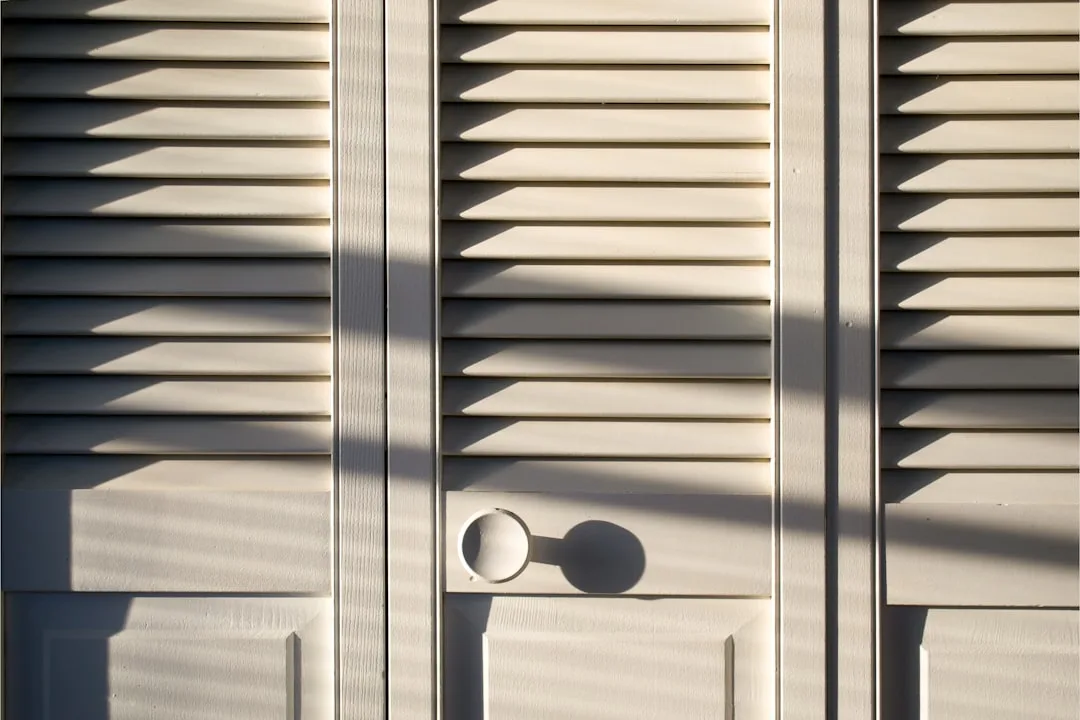
Nobody looks up at the wall above the door. This is the most universally overlooked zone in any bedroom, and I’ve never once walked into a client’s home and found it being used. The space between the top of a standard 80-inch door and an 8-foot ceiling is exactly 16 inches — enough for a continuous floating shelf that runs the full width of the wall.
That shelf is invisible from the bed sightline. When you’re lying down or sitting on the mattress — which is how you see most of your room — the wall above the door is entirely outside your natural field of vision. Storage positioned there doesn’t contribute to visual clutter because you simply don’t see it from the positions that matter. This is the design logic that makes this zone so valuable, and it’s the reason built-in ledge shelving above the door works better than any other solution I’ve tried in this space.
A single 36-inch floating shelf installed at 80 inches adds approximately 6 linear feet of storage without touching your floor space at all. That number gets more interesting when you consider that this is genuinely hidden storage for a small bedroom — not just tucked away, but architecturally invisible from the angles that define how you experience the room daily.
What works well in this zone:
- Boxed seasonal items with printed labels facing outward
- Spare pillows and blankets in vacuum-compression bags
- Books you reference occasionally but don’t need at the bedside
- Decorative baskets that contain smaller miscellaneous items
- Archive boxes for documents you need to keep but rarely open
What doesn’t work here: anything you need daily access to. The height makes frequent retrieval awkward. This is a once-a-season zone, not a morning-routine zone.
Actionable takeaway: Install a shelf in this zone with a standard floating shelf bracket rated for 30 to 50 pounds. Paint it the same color as the wall above the door, and it nearly disappears entirely.
3. The Floor Arc Swept by Your Closet Door
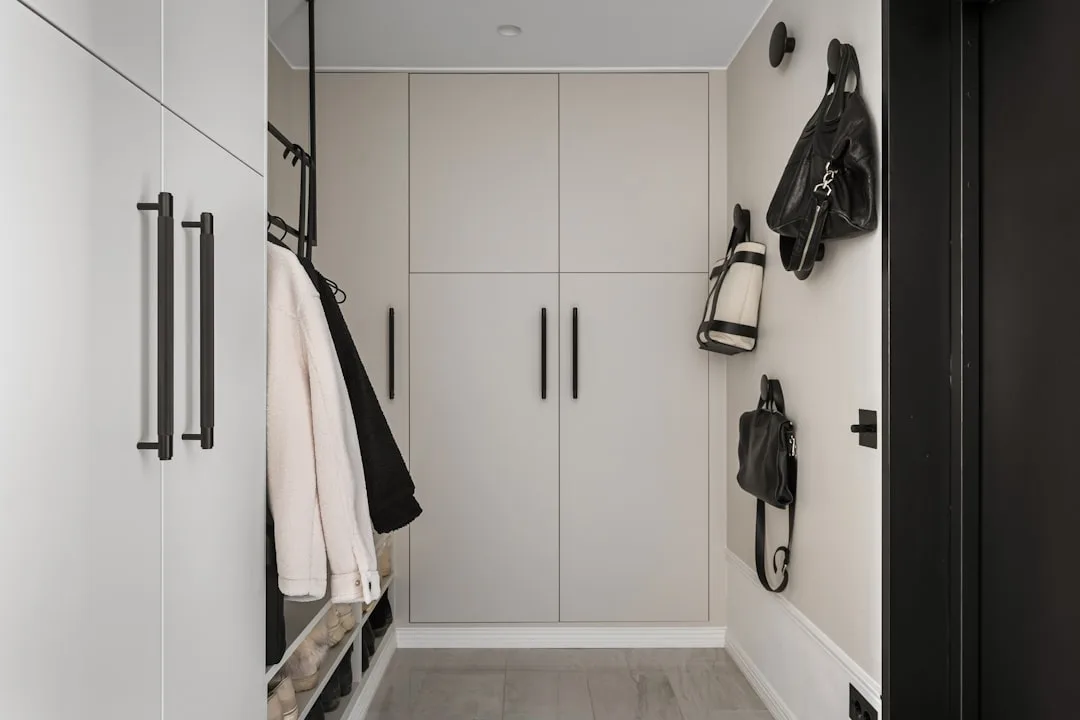
Every hinged closet door sweeps a floor arc of 6 to 8 square feet every time it opens. That arc is kept permanently clear — because the door needs it — which means it sits empty 23 hours a day. The solution isn’t to put anything in the arc. It’s to eliminate the arc entirely.
Bifold doors reduce the swing footprint by roughly 60 percent. Sliding barn-style doors bring it to zero. For a small bedroom where that 6 to 8 square feet is meaningful, converting a hinged closet door to a sliding or bifold configuration is one of the highest-return changes you can make — and it’s almost always renter-reversible if you keep the original hardware.
The reclaimed floor space can then hold:
- A freestanding narrow bookcase (10 to 12 inches deep)
- A small hamper or laundry sorter
- A compact shoe rack
- A rolled yoga mat or exercise equipment
Actionable takeaway: Before buying closet organizers, look at whether the door itself is consuming floor space you could recover. A $60 bifold door conversion frequently does more than $300 worth of interior closet organizers.
4. The Toe-Kick Beneath Wardrobes and Built-Ins
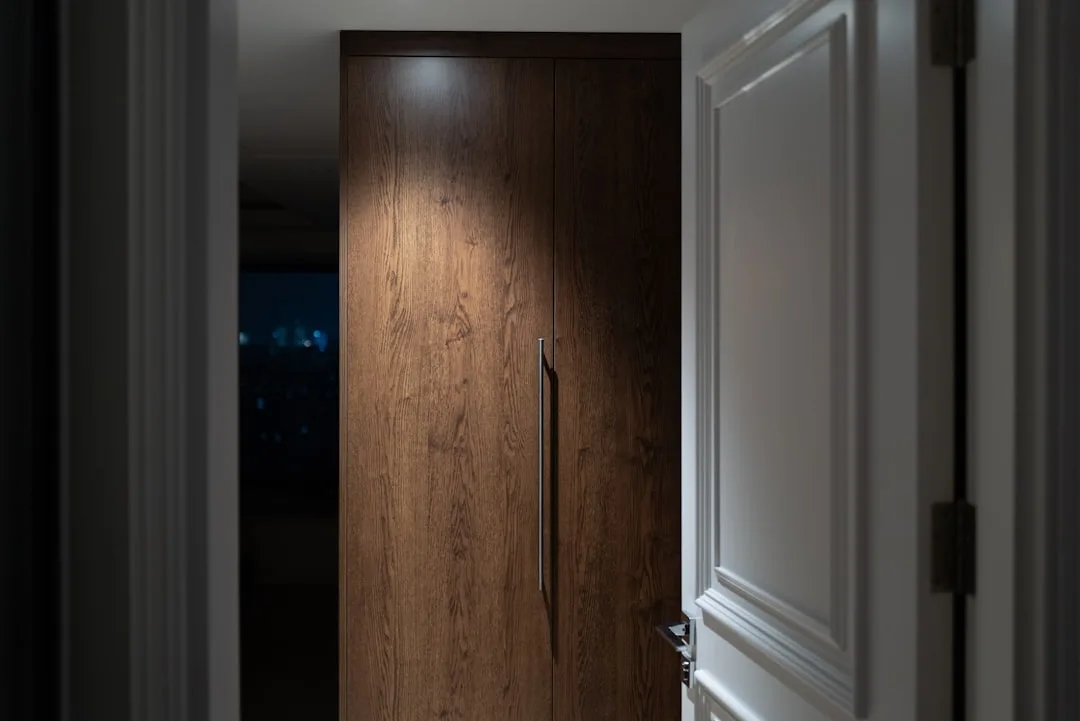
The toe-kick — that recessed panel at floor level on most wardrobes and kitchen-style cabinetry — exists as a production standard, not a design intention. It’s typically 3.5 inches tall and 4 to 6 inches deep. Not impressive as a single unit. But the full run of toe-kick beneath a 6-foot wardrobe represents roughly 250 cubic inches of usable space, and it’s completely hidden from view at standing height.
Dedicated toe-kick drawers — thin, full-width drawers that mount flush and pull out flat — are a standard feature in kitchen remodels. They work identically in bedroom furniture. Independent cabinetmakers and companies that sell cabinet hardware both offer the slides and hardware needed to convert an existing toe-kick into functional storage in an afternoon.
What fits in a 3.5-inch drawer:
- Flat items: wrapping paper, posters, artwork you want to protect
- Bed linens folded flat
- A collection of thin paperbacks
- Phone and device charging cables, organized in a tray
- Sewing or craft supplies in a flat organizer
Actionable takeaway: Before discarding an old wardrobe or built-in for being “too small,” measure the toe-kick. In most cases, a conversion adds meaningful concealed capacity to furniture you already own.
5. The Space Behind Your Bedroom Door When Open
When your bedroom door is open, it typically creates a triangular dead zone between the door, the wall, and the door stop. Depending on wall length and door placement, this zone can be anywhere from 6 to 24 inches wide and floor-to-ceiling tall. Most people put nothing here. Some people put nothing here and feel vaguely guilty about it.
Over-door organizers solve part of this — they’re the most accessible hidden storage idea for small bedrooms precisely because they require no drilling and no commitment. A six-pocket over-door shoe organizer holds more than shoes: accessories, cleaning supplies, small electronics, medications, stationery. At a total depth of 3 inches, it disappears when the door is open.
For a more structural solution, a recessed wall niche between studs — if the wall is non-load-bearing and the zone is deep enough — creates flush, hidden shelving that’s nearly invisible when the door stands open in front of it. This is a renovation-level move, but in terms of hidden storage ideas for a small bedroom, it’s one of the cleanest results possible: storage that’s architecturally integrated and completely out of sightlines.
What works in the behind-door zone:
- Over-door organizers for daily-access items (no drilling required)
- A single hook bar for bags, belts, or robes
- A narrow freestanding shelf unit (8 inches deep maximum, so the door still closes)
- A wall-mounted jewelry organizer with a mirror face
Actionable takeaway: Stand in your doorway and look at what’s behind the open door. If it’s bare wall, you have recoverable space. Start with an over-door solution and evaluate whether a built-in niche makes sense once you know how much you’d actually use it.
6. The Wall Beside Your Window
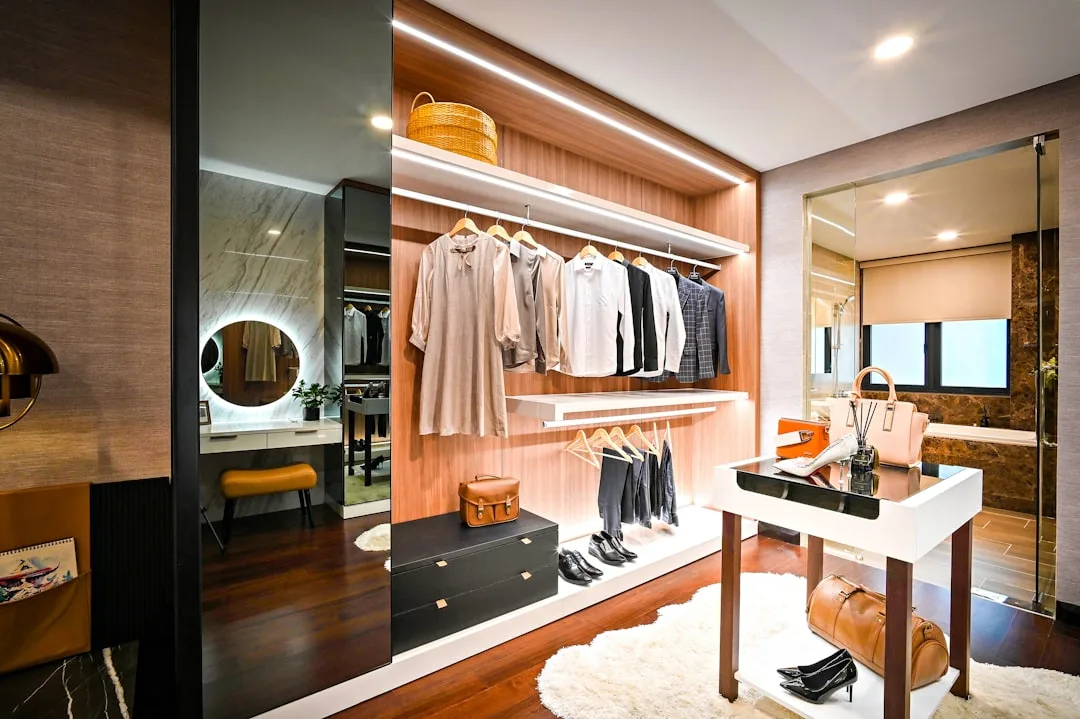
The wall sections flanking a bedroom window are almost always left empty. They’re awkward widths — often 8 to 16 inches on each side — too narrow for standard furniture but perfectly sized for custom or semi-custom built-in cabinetry. These flanking zones are where some of the most functional hidden storage in a small bedroom gets installed, and because the cabinetry frames the window visually, the result looks intentional rather than compensatory.
Floor-to-ceiling cabinetry on both flanks of a standard 36-inch window adds significant storage volume — easily 20 to 30 cubic feet depending on ceiling height — without touching any floor space that wasn’t already functionally unusable. The cabinets read as architecture, not as clutter.
For non-renovation approaches:
- Narrow floating shelves (8 to 10 inches deep) installed symmetrically on both flanks
- A pair of slim bookcases positioned as flanking towers
- Wall-mounted cabinet boxes with doors, painted to match trim
Actionable takeaway: Measure the wall width on both sides of your window. If either side is 10 inches or wider, it’s viable for either built-in shelving or a slim freestanding unit.
7. Inside the Closet Ceiling

The top 12 to 18 inches of most bedroom closets is completely empty. The standard hang rod sits at 66 to 72 inches for full-length garments, which means the zone above the rod — and above any existing shelf — is simply air. In a walk-in closet, that overhead zone can hold an additional 15 to 20 cubic feet of storage.
A continuous shelf at 78 to 84 inches (just below the closet ceiling) captures this zone. It’s ideal for:
- Luggage and large bags stored flat or stacked
- Seasonal items in labeled bins
- Extra blankets and comforters in vacuum-compression bags
- Shoe boxes for rarely worn footwear
- Sports equipment and gear that doesn’t belong on the floor
The installation is straightforward — a standard closet rod bracket at either end, a melamine or pine shelf cut to width, and a support cleat along the back wall. Total material cost for a 4-foot closet run is typically under $40.
Actionable takeaway: Stand inside your closet and look up. If there’s a gap between your top shelf and the ceiling, measure it. Anything over 10 inches is recoverable storage.
8. Between the Wall Studs (Recessed Niche Storage)
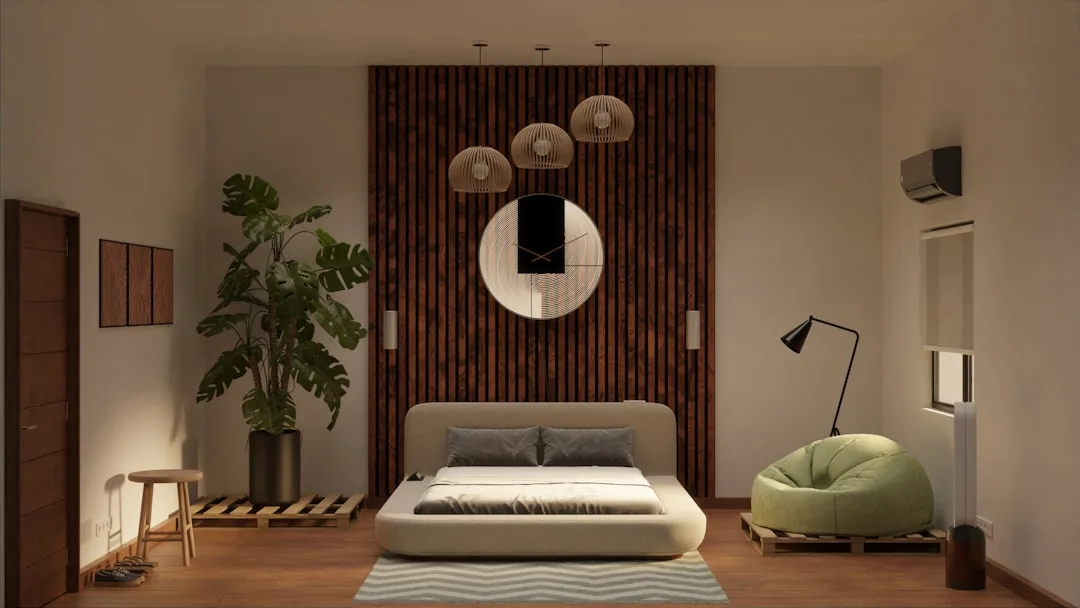
Standard wood-frame walls have studs spaced 16 inches on center with a cavity depth of 3.5 inches between them. That cavity is insulated in exterior walls and empty in interior walls — and in interior walls, it’s available for recessed niche storage. A single-stud bay cut open and finished properly creates a niche that’s 14.5 inches wide, 3.5 inches deep, and as tall as you want to make it.
That depth is enough for:
- Books (most paperbacks are under 1 inch thick; hardcovers fit in two-deep rows)
- A charging station with cable management
- A shallow display shelf for small objects
- Jewelry organized on hooks or a pegboard insert
- Framed photos mounted flush
Recessed niches are a renovation move — they require opening drywall, verifying the wall is non-load-bearing, and refinishing the opening. But the result is storage that has zero floor footprint and zero visual projection. The wall looks intentional. The storage is completely hidden in plain sight.
Actionable takeaway: Identify interior (non-load-bearing) walls in your bedroom. A stud finder and a single exploratory hole confirms whether the cavity is clear. If you’re already planning a repaint, this is the time to add a niche.
9. The Foot-of-Bed Zone

The floor area at the foot of the bed is the zone most likely to collect things that have nowhere else to go — extra blankets, the bag you haven’t unpacked, the throw that fell off the bed. It’s also one of the easiest zones to convert into intentional, functional storage.
A storage bench at the foot of the bed is the standard solution, and it works well when sized correctly. The bench should be approximately the same width as the bed frame — not wider — and no more than 18 inches deep. A bench that’s too large makes the walking path between the bed and the wall feel constricted. The right-sized bench adds 3 to 5 cubic feet of interior storage and a surface for laying out tomorrow’s clothing, which is a habit change that has measurable impact on morning chaos.
What to store inside a foot-of-bed bench:
- Extra blankets and throws in regular rotation
- Pillows not currently on the bed
- Gym clothes and workout gear staged for the next morning
- Books currently in progress (keeps the bedside table clear)
- Small electronics and their chargers
For rooms too narrow for a bench, a cedar chest does the same job with more interior volume. For rooms where even that is too much, a single storage ottoman at the corner of the bed — placed where the footboard meets the wall — adds storage without blocking the walking path.
Actionable takeaway: Measure the width at the foot of your bed and the walking path on each side. If you have at least 24 inches of clearance on both sides of a bench, the foot-of-bed zone is viable for a full-width storage piece.
Which Zones to Tackle First: A Decision Framework
Applying all nine at once is neither practical nor necessary. Here’s how to sequence them based on what your room actually needs:
Start here if your floor feels crowded:
- Zone 1 (under bed) — eliminates the need for a separate dresser
- Zone 9 (foot of bed) — clears the most-used surface in the room
- Zone 3 (closet door arc) — recovers floor space with a hardware swap
Start here if your walls feel overwhelming:
- Zone 5 (behind door) — over-door solutions require no drilling and are reversible
- Zone 2 (above door) — adds hidden shelf storage completely outside your sightline
- Zone 6 (beside window) — frames the window architecturally while adding capacity
Start here if you’re planning a renovation:
- Zone 8 (between studs) — recessed niches that read as architecture
- Zone 4 (toe-kick drawers) — converts existing furniture into active storage
- Zone 7 (closet ceiling) — closes the gap between your top shelf and the ceiling
A useful rule: if a zone solution costs under $100 and requires no permanent alteration, implement it this week. If it requires drilling, carpentry, or furniture replacement, put it on a 30-day decision timeline and photograph the space monthly to track whether the problem is actually bothering you enough to act.
FAQ
Do these hidden storage ideas work in a small bedroom that’s already fully furnished?
Yes — and that’s specifically what most of them are designed for. Zones 1, 2, 4, 5, and 7 work with furniture and architecture you already have. You’re not rearranging the room or replacing pieces; you’re activating space that your existing layout leaves unused. Start with Zone 2 (above the door) and Zone 5 (behind the door) — both can be implemented this weekend without moving a single piece of furniture.
What’s the single highest-impact hidden storage change for a small bedroom?
Converting to a lift-storage or drawer-integrated bed frame. A queen-size lift bed adds 30 to 40 cubic feet of completely invisible storage — equivalent to a full dresser — without occupying any additional floor space. If you’re sleeping on a standard box-spring setup and the room feels perpetually cramped, the bed frame is almost always the right first move.
Can renters use these ideas without risking their security deposit?
Most of them, yes. Over-door organizers (Zone 5), rolling under-bed boxes (Zone 1), freestanding narrow shelves (Zones 3 and 6), and a storage bench (Zone 9) require no drilling and no permanent alteration. The above-door shelf (Zone 2) requires two small bracket holes, which patch in five minutes. Zones 4 and 8 involve carpentry and are better suited to owned spaces or situations where the landlord agrees in writing.
How do I decide between open shelving and closed cabinetry for these zones?
Use closed fronts wherever the contents will be visually inconsistent — seasonal clothing, miscellaneous items, anything that changes frequently. Use open shelving only when the contents are uniform in appearance and you’re willing to maintain that consistency. The number one mistake I see in small bedroom storage is open shelving that starts tidy and becomes visual noise within three months. When in doubt, add a door.
Do these hidden storage ideas work for a small bedroom shared by two people?
They work better with two people, because the volume problem is more acute and the motivation to solve it is higher. The key adjustment: assign specific zones to each person rather than treating storage as shared. Zone 1 (under bed) divides naturally by side. Zone 9 (foot of bed) typically serves shared items. Zones 2 and 7 work as neutral overflow. Clear ownership of zones prevents the situation where one person’s system gradually colonizes the other person’s space.