Perhaps, electrical estimating is an integral part of any construction estimating the project. In the world of electrical estimation, you have to submit proposals and bids to win a certain project. For this reason, Construction Estimating Services NYC plays a vital role. Therefore, it is quite important to bid low enough to win against many other contractors and high to cover all the aspects. In this way, you can easily get the overhead required to run your firm. However, before getting the construction takeoff services try to follow certain steps. Today, we are here with 11 basic steps that can help in getting the project concerning electrical estimating services.
Basic steps for electrical estimation of any project
Choose the Right Work to Bid
Picking the appropriate type of work to bid is the very first stage in the electrical estimating process. If you win the electrical construction project, you should limit bidding on electrical projects in which you have minimal experience and are more prone to make mistakes during the estimate process and project execution. When electrical estimation methods and your field personnel take on new types of work, there is a learning experience that can slice into your profit margin.
Review the Specifications
Examine the Division 01 general specifications, as well as the Division 26 specifications, for contractor requirements, fee structures, bridging capacity, and relevant legislation. And ensure that you can fulfil the standards and live with the legal wording if you win the construction job. Once you’ve completed the general specifications. Now you can easily move forward.
Review the Drawings
Again, look at the drawings and make sure you have a great idea of the entire work. This will help you in finding the true scope of the entire project. In addition to all the things, also look at the architecture. Moreover, understand the height and elevation too. Because it can affect the labour cost, materials, equipment and other utilities.
Perform a Quantity Analysis Before getting construction takeoff Services
Take out all the highlighters, you can use your favourite software for takeoff too. This is again helpful for counting and measuring all the necessary items. Make sure all these things are already mentioned in the electrical drawings. Start with a single item and count all one by one.
Probably, the lightning count is also a fundamental aspect of the electrical estimation of any project. For Estimating the light count you can consult some of the light suppliers too. However, these materials are counted separately. Well, mention the fixtures on the drawings, it will help you in the easy designation.
Create your Estimates
After the above-mentioned steps, now you have a good estimate for all the quantities. Now you have to determine the unit cost of all the items. Well, to complete this step, you have to identify the labour cost that is associated with all the tasks. Moreover, you can also extend this with the task. Furthermore, it’s again easy to determine the material cost by calling the supplier. Keep in mind, previous projects can also help you, but if you are not experienced, you can read some manuals and guides too.
Build your Proposal via consulting construction Estimating Services Nyc
After you get the idea of sale prices now it’s time to consult the Construction Estimating Services NYCyou have hired so far. However, now create your proposal with terms and conditions. However, getting construction takeoff services nycalso involves guiding you in creating a proposal. However, use the same slang that is used in the specifications and drawings. This will make the project easy. Lastly, review it again and again and don’t miss anything.
Analyze the Results
It’s quite possible, in the start it’s not possible to find out your worth when you are in a mix with other contractors. However, keep in mind general contractors usually work with several vendors. Moreover, they also have a great experience. For this reason, you have to bid many times on a project to get the contractor’s trust.
Francis is a foreigner who recently moved to Dubai for work. He is in search of a house to rent. He doesn’t know what to expect from the landlord.
He has been advised by top Real Estate agencies in Dubai on a few things to expect as well as the roles he has to play if he wants to have a smooth relationship with his future landlord.
The advice they gave him is what we would be listing here for you. They are UAE landlord tips every potential tenant should know. Moreover, as an added incentive, you won’t find these tips on other websites.
So, for the foreigners who are new in Dubai or citizens who are don’t know these tips, here are some secret landlord tips:
1.Rent increase protection:
Some laws protect tenants against landlords, increasing their rent from the blues. In 2007, the government of Dubai placed restrictions on the increase in rent for the first two years. For Francis, if he rents one of the Bluewater apartments or Arabian Ranches 3 villas, Dubai, he has no worries about increment in the house rent within his first two years. Although these laws have been reviewed, a rent increase calculator has been developed to guide renters and landlords. Furthermore, the landlord must give the tenant 90 days prior notice before he can affect a rent increase.
2.Evictions can’t just happen:
For example, if Francis’s landlord wants to evict him from the house in the event there was a bridge of contract, the landlord must give the tenant a year notice before the eviction.
3.Fixing the repairs:
Depending on the landlord-tenant agreement Francis signed before renting the house, he isn’t supposed to carry our significant repairs while the tenants can fix the minor issues. On some contracts, however, some clauses require the tenants to make repairs of AED1000. Tenants can negotiate the degree of repairs that need to be fixed.
4.Procedure for rent payment:
Unscrupulous Real Estate agents wont to want to swindle tenants during periods of scarcity. Some ask for upfront payment before they show the tenant the homes. If the house Francis wants to rent is among the new projects by DAMAC, he might be asked by the landlord to pay for the year in the form of a signed, post-dated check. He has the right to negotiate with the landlord to pay in three to five checks; it isn’t against the law.
The above tips are some of the landlord tips you won’t find on other networks. For a healthy landlord-tenant relationship, adhering to the rules of the land and the agreements on the signed contract would ensure you a safe and smooth renting process.
Whether you’re a travel enthusiast or passionate about types of architecture or both of them, Europe has much to offer from fascinating history, artwork, amazing UNESCO World Heritage sites to remarkable pieces of architecture as old as time with gothic structures embellished with Baroque sculptures, ancient ruins and much more.
Home to iconic man-made structures and outstanding landmarks, Europe still continues to impress its visitors and for certain, it will not disappoint you in any way. It has so many attractions, that it’s difficult to pick the best ones, so the list below does not want to be a ranking, but an enumeration in a random order of the most visited and appreciated ones.
So, come with us for a virtual tour of the 35 most famous landmarks of Europe, which are at the top of the list when it comes to popular European countries.
The Eiffel Tower in Paris, France
The Acropolis of Athens, Greece
St. Peter’s Basilica at Vatican City in Rome, Italy
La Sagrada Família in Barcelona, Spain
Big Ben in London, United Kingdom
The Pantheon in Rome, Italy
Palace of the Parliament in Bucharest, Romania
The Leaning Tower of Pisa, Italy
The Brandenburg Gate in Berlin, Germany
Hungarian Parliament Building in Budapest, Hungary
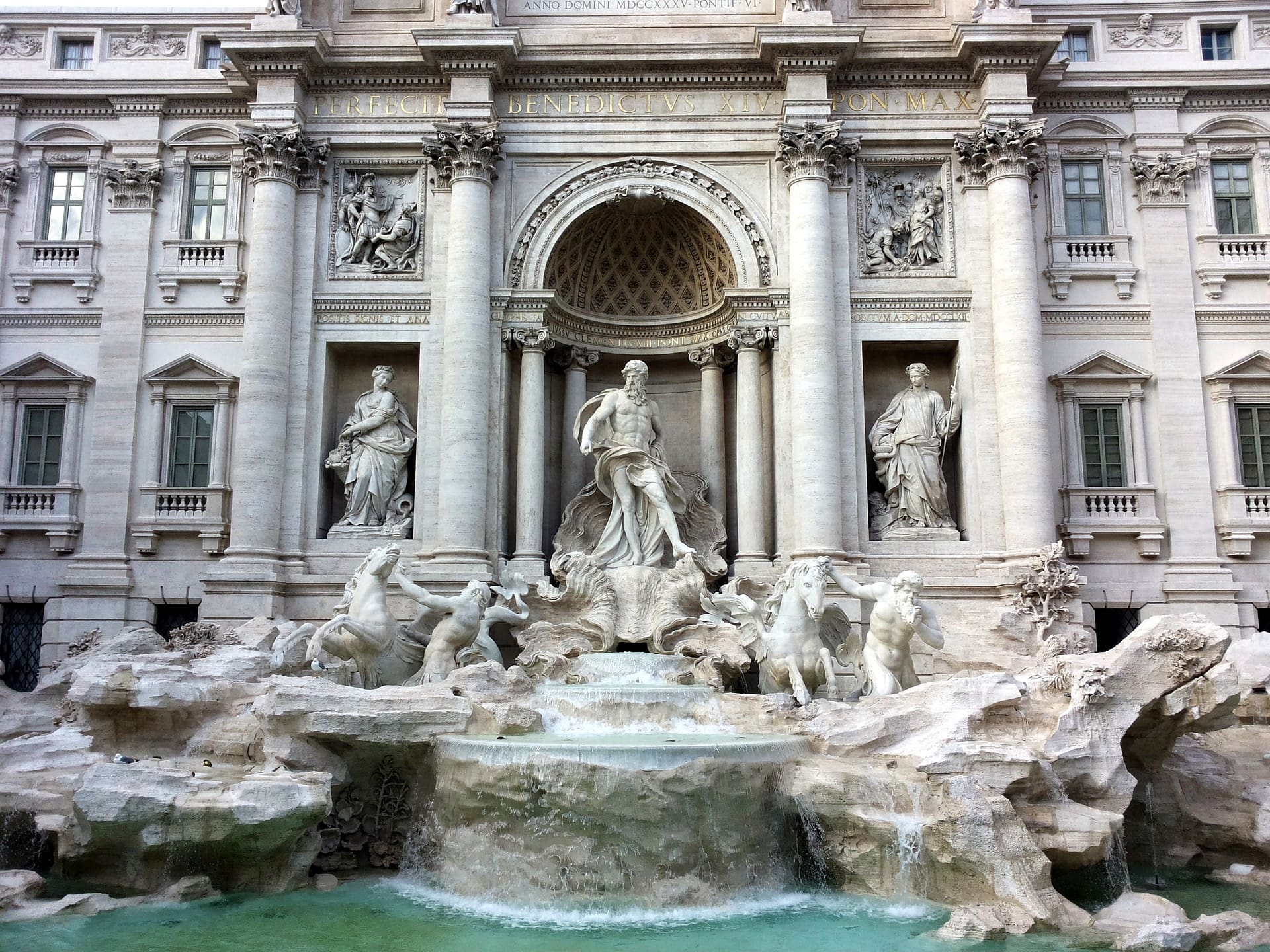
The Trevi Fountain (Fontana di Trevi) in Rome, Italy
The Alhambra in Granada, Spain
The Tower Bridge in London, England
The Charles Bridge in Prague, Czech Republic
Buckingham Palace in London, England
Mont Saint-Michel in France
The Mosque-Cathedral of Córdoba, Spain
Belem Tower (also known as the Tower of St. Vincent), Portugal
La Grand-Place, King’s House (or Bread House) building, Belgium
The Duomo di Milano, Italy
Peles Castle, Romania
Chain Bridge, Hungary
Ancient City Walls of Dubrovnik, Croatia
The Little Mermaid in Copenhagen, Denmark
Wawel Royal Castle, Poland (Krakow Castle)
Blue Domed Church in Santorini, Greece
Neptune and the Palace of Versailles in Paris, France
Dubai has really been one of the world’s most vibrant real estate markets in recent times and both investors and owner-occupiers are making investments in this part of the world for obvious reasons. The Emirate is home to an endless array of attractions, luxury lifestyle, and a long list of cherishing experiences that everyone would want to indulge in. And, that list is ever-growing with more and more opportunities to take a luxury lifestyle to the next level opening up here.
So, before you plan to be a part of these amazing luxuries on offer in Dubai and experience them firsthand by living there, here’s a look at how Dubai’s real estate market is turning up in Downtown Dubai. It will surely help you take the right investment decision.
The Market Dynamics
The property brokers in Dubai have revealed that they are facing more inquiries from the owner-occupiers and there’s an increase in the number of these owner-occupiers buying properties in Dubai. So, that really means the market dynamics are seeing a paradigm shift and the increasing number of end users are now opting to buy homes in Dubai.
If you go back only a few years, the market was driven primarily by investors who wanted to buy properties from the sales viewpoint. But that has certainly changed and, in 2019, people are opting to buy properties where they can live with their families and settle in this luxury getaway rather than simply coming over for their holidays. That’s certainly a sign of maturity and Dubai seems to be becoming a life-long home for many.
Now, what it has lead to is that people are choosing bigger villas and apartments where they can have a taste of the city’s community living. In addition, despite being more in demand, these properties are becoming ever more affordable in the Emirate.
This current situation of the market is definitely opening up new opportunities. Furthermore, this maturity of Dubai’s real estate market would mean that an increasing number of people will settle here and there will be greater demand for the new developments. In addition, there will be new projects coming up in the future to add to the luxury lifestyle and entertainment opportunities for both the residents and the vacationers here.
The number of young families is growing in Dubai and they’re choosing villas in top communities like the Arabian Ranches and Dubai Land. They really want the community feels these developments are known for.
Furthermore, if you’re the end user, the return on your investment isn’t the only thing that you’re looking at. Obviously, the kind of experience you are going to have is more of a priority for you. So, with more and more properties being bought by the end users, these major considerations are more accounted for and even the developers have realized that as well.
The Price Trend
If this paradigm shift in Dubai’s real estate market seems to have convinced you for investing in the Emirate, knowing the current price trend is certainly important for you.
Some of the high-end communities in Dubai like Arabian Ranches, The Springs, and Palm Jumeirah have lately seen a decline in their prices as they’re being sold at almost 11% less now.
The average per sq. ft. price for 3-bed villas in the premium community Arabian Ranches has declined from 1098 AED to 980 AED which marks an 11% decline. On the other hand, the same average price in Palm Jumeirah has declined by 10% going down from 1573 AED to 1415 AED. As for The Springs, there’s an 8% decline with prices going down from 1077 AED to 987 AED. And, these are among the top 5 communities that have been searched by the investors in Dubai.
So, with the market shaping up with this new trend, and the prices marking a decline, it’s high time for both the investors and the owner-occupiers to secure a place in one of the premium communities in Dubai.
There is a whole range of options to consider when you’re first looking at property investment. New build developments and remote homes are just two of the wide variety of property decisions that you are going to come up against. It’s easy to see why remote properties are so tempting for buyers. Modern life can be increasingly fraught, and with technology allowing people to work easily from anywhere, there’s no longer any real need to live in a location that doesn’t appeal. For investors, this opens up a whole new range of challenges. Investing in a new build or even self-built property means looking at alternative ways to provide future homeowners with everything they need.
Location is as important as ever
Whether you’re looking at buying an already existing remote property, or you’re looking at the possibility of buying land to build on, location is as essential as ever. You need to make sure that everything is in place or within reach for the eventual owners. Remember that it’s important to look outside of your local area for the right space. The chances of any property developer finding the ideal investment opportunity in their neighborhood is slim, so go on reconnaissance trips around the country, using the internet to find unusual options. Things to look out for include:
Water Sources– is there a river or a well that can be used for those that want to stay off-grid? Having water is going to be essential for those that eventually live on the property, and also for the renovation or build that you have committed to. If there is no existing water supply, then speak to architects about the best water solutions available.
Access– Are there roads that will allow easy access to the land so that tradespeople can get to the home as you build or renovate? If you’re planning to build your own house then you’re going to need materials and supplies on a regular basis, so make sure that access is not going to be an issue.
Energy – Having a reliable source of energy is essential no matter how remote your investment is. There are a number of options available to look at for both self build homes and for even the most remote properties. LPG gas is a very popular choice for both investors and those that are looking to live more remotely. Click here for more information about how LPG can be of benefit.
Waste Management– The more remote your property, the more issues that you’re going to have with waste. In particularly remote locations, there aren’t going to be regular bin collections. Remote living may simply mean occasional trips to your nearest tip, but even that may not always be an option. Look at modern waste options like how to optimise your compost, recycling, upcycling, and how to use grey water. Septic tanks are also a smart option, and the fact that you have considered waste management will make your investment property far easier to sell when you’re ready to profit.
Investing in property that is more remote can be a great way to get more from your money. Although demand is rising for more remote homes, the complexities are often off-putting for those hoping for a life away from the frantic metropolis. Make sure that you have addressed those key concerns, and your property will become a much more viable lifestyle change for anyone considering the remote life.
Construction companies, as well as subcontractors, get most of their jobs thru bidding. A construction bid is a process where the construction form presents a potential client with a proposal or a tender to build a building or manage a construction project. And, although bids are not chosen on the basis of cost alone, contractors that submit the lowest tenders tend to wind the contract and win the project.
In construction bids, the contractors have one golden rule: Start with highly accurate cost estimates and then, submit the lowest bid. And this starts with looking at the construction plans (which are provided by the would-be client) and performing a material quantity takeoff. If the contractor estimates the project too high, he might lose the bid altogether. But, if the contractor bids too low, he might end up losing money.
One of the best ways of ensuring that your estimates are accurate, save for having a good estimator on your team is by using a tender management software.
A tender software for construction or also known as a construction bidding software is a program that is designed for the construction industry to streamline the estimated construction cost for a project making the bidding process faster. These programs are designed with accuracy in mind. This means that you can get a highly accurate quote in the fraction of the time, allowing you to get in your bid quickly for a project. Less time spend on a quote means more time to bid on other projects.
If you are on the lookout for a construction estimating tender software for your construction company, how do you start? What are the features that you should look for? Regardless of which constriction software for bidding you choose, here are some features that it should have:
FEATURES OF A TOP CONSTRUCTION TENDER SOFTWARE
Top Quality Templates
A good construction tender software should have in its system a set of templates for some of the most common types of building projects. In this way, when the opportunity comes for a bid, then you can just pull up the template needed, and get started on your estimate without wasting time compiling data for every project from scratch.
Includes Regional Cost Data
Software programs come up with their estimates for a bidding project by pulling up cost data from a large database. It works this way: for example, if the project you are bidding on requires a specific kind of window, the estimating software will pull the cost of that from its database, and adds it into the total of your bid.
It looks like a good system, but remember that the information on pricing is only as accurate as the information that it has stored in its database. The problem is that some software calculates the cost along with data using the national average. This will give you a rough idea on the cost, but won’t take into account price fluctuations regionally.
A good system should include regional cost and use pricing from your local area to give you an accurate estimate for your bid. A good tender construction software should also update its database regularly so that you can be assured that pricing so that you can stay updated.
Easy to Use
A good bidding software should have a simple and intuitive dashboard that even your least tech-savvy team member can create an estimate should the need arise. You should be able to quickly get a good feel on how the software works so you can use it right away. After all, you don’t want to spend months teaching your team on how to use it when you should be coming up with estimates.
Cloud-Based Data Access
One of the things that you should look for in a construction bidding software is to check if its cloud-based. Storing your estimates in the cloud is one of the best ways to make sure that you always have access to your data – whether you are in the office or out in the field. A very important feature should you need to view or make changes to your bid.
Buy from a Reputable Company with Great Customer Service
You want to make sure that the software that you are eyeing to buy comes from a company that has great after sales support. This means that if any questions or concerns will come up ( and I’m sure it will happen) with using a new software, there is a team via phone, email or online chat that can, and is willing to assist you on your concern.
Read reviews about the products, especially on their customer service. You also might want to check out their customer service by asking some questions about the software and seeing how long they take to respond.
Buying your software from a reputable company is also one way of making sure that you’ll get excellent customer support. A good software company will be a company that knows your industry and is able to cater to the needs of your specific industry.
Author Bio
Judy Leesis a super-connector with yunasphotography.ae who helps businesses find their audience online through outreach, partnerships, branding and networking. He frequently writes about the latest advancements in digital marketing, digital photography.
If you live in a condominium, the last thing you want to wake up to is a leak in your ceiling from a cracked pipe in the walls, or worse, parts of a tree in your living room after a thunderstorm. And for property owners, keeping property in good shape on a regular basis is a source of financial and safety-related stress.
When it comes to repairing damage done to a condo, both associations and individual condo owners each have their own responsibilities, depending on the circumstances. Here’s what each should do in case of an accident.
Collective responsibilities
The condominium corporation or association (made up of all individual condo owners in the building) can help avoid damage to their building by placing certain preventative measures in place. That puts responsibility on their shoulders when it comes to maintaining anything which affects the entire building, under Section 90 of the Condominium Act of 1998. Repairs are expected from the association if property damage takes place that was not caused by an individual owner or tenant. Such examples include a tree falling onto the roof or floods occuring during a rainstorm.
Having insurance is another requirement for companies in case of damage. Section 99 of the Condominium Act focuses on this, declaring that organizations need insurance to cover damage to individual units and other parts of the area. In addition to damage resulting from hail, rainstorms, snowstorms and other natural disasters, this pertains to damage done by vehicle and airplane accidents, as well as riots, vandalism and other acts of violence.
Individual responsibilities
Handling repairs is in the hands of residents when it comes to damage specifically done by them. The Condominium Act puts responsibility on the shoulders of individual condo owners in these situations, with an example being a resident accidentally knocking something over and creating a dent in their wall.
Owners are also obligated to have insurance for any damage that can occur to their personal property. Whatever coverage they have, such as apartment building insurance in New Jersey, for example, it should include furnishings, fixtures, equipment, decorations, and any improvements and additions that they make to their unit. Whether or not the owner has insurance, they are obligated to pay for damage done to their personal property. As a result, insurance will only make the payment process easier.
Having good credit can also come in handy for making the repair process a piece of cake. Some landlords run a tenant credit check so that they know the person who wants to rent their property is not only able to pay rent, but also has enough money to cover damages. These checks also show whether a tenant has a good history of taking care of their home, which allows for landlords to trust them enough to keep their units in good condition.
Significance of communication
Some landlords have different rules regarding who’s responsible for certain damage. This stresses the significance for current and potential tenants to read the documents that pertain to their specific unit, as the association could be stricter than their previous one as far as costs and penalties for damage done by the unit owner.
But both the owner and association are required to have insurance, though it is the association’s job to ensure individuals are covered in order to prevent problems in the future. The better the understanding of rules is between tenants and landlords, the easier it will be for them to get through repairs. Landlords and tenants can keep this in mind, so they can take care of repairs easily and maintain a good relationship.
When you choose hardwood floors over other types of flooring materials, you want an all-in-one solution concerning beauty, durability, and value. The floor design shows the architectural style and creativity. Hardwood floors work well in both domestic and professional settings and offer warmth and a luxurious appeal to a closed area.
Why Choose Hardwood Floors?
Aesthetic appeal: The best thing about hardwood floors is that on top of looking good, they also complement any design scheme and furniture style when the finishing is done right. Check out capital hardwood flooring for your customized hardwood floors.
Durability: Due to the finishing and compact nature, hardwood floors decrease wear and tear, especially in areas with high amounts of traffic.
Stability: A one-inch thick piece of wood on the floor has the same insulating capability as 15 inches of concrete.
Ease of maintenance: Hardwood floors do not store mildew or absorb dust. Hence, they are easy to clean. Regarding refurbishing, all you have to do is sand the top layer which is less than a millimeter thick, and then apply a fresh coat of finish.
How to choose the best type of wood flooring material?
There are a lot of factors to consider before you settle on the type of wood you will use for theWooden Floors. Some are purely for appearance purposes while others are mechanical considerations. Assuming all varieties are available and you can foot the cost, here are the other considerations that go into choosing wood for floors.
Solid Vs Engineered Wood Flooring
Solid wood flooring exists as a single piece of wood cut from one natural source of wood. Unlike engineered wood, solid plank floorings can be sanded and refinished multiple times.
Engineered wood floors are made using multiple but real pieces of wood or composite veneers from same or different species. They tend to be more stable if several species are combined. Mixed, engineered planks are more durable because the different grain textures are more resistant to expanding and contracting during fluctuations in humidity and temperature.
Design of the planks
We mentioned that you do not need a plank which is more than one to two inches thick to enhance stability unless your contractor advises you otherwise. There is also the issue of selecting the design and shape of the cut of each plank between squares and rectangles. The length of the planks should also be discussed with your designer. Some create the illusion of more space while some are more formal than others.
Wood Species
The species will determine greatly how the finished floors appear. The variation in growth affects the grain patterns which are the first thing you look at on a wooden floor.
The strength, hardness, and durability are also determined by the type of tree the wood originates. While some species like mahogany while strikingly exotic, are not as durable. You will have to choose between such trade-offs.
Colors
Some cuts have deeper colors than others in the layout of the grain, and some types of woods are wholesomely darker than others.
Textures
People usually use the terms grain and texture interchangeably when talking about wood, but they do not mean the same thing. Texture refers to the more delicate structure of the wood and not the annual rings. The texture will determine whether you choose wood that looks shiny and new or you go for a more antique look. The new and polished floors will need to be refurbished if you want to keep them that way or your contractor can install wood that’s new but is appealingly timeworn.
Hardness
Softer wood is more prone to visible scratches and dents, but at the same time, they are easily sanded and refinished. Harder wood is better in areas with high traffic, children and pets.
The Janka hardness test measures the force required to embed a 444-inch steel ball to half its diameter in wood. It is the best measures of the ability of a wood species to withstand wear and tear and also the ease of manipulation.
Unfinished and Factory Finished Wood Flooring
All wood floors require a protective sealant finish. With unfinished wood, your contractor will apply the finish on the job site. The advantage of this type of installment is that you get to choose a finish that blends in well with the rest of your home. You also notice and sand down imperfections. The downside is that you have to withstand the dust and chemical fumes that comes with the job.
With factory-finished wood flooring, you will spend a significant less amount of time to finish the installation process. The floors are ready for use as soon as you are done and they also tend to be more durable in the long run.
Now that you have a guide to choosing hardwood floors, here are the most popular wood species of wood flooring and what to expect from each.
P.S. Remember the Janka hardness measure we mentioned in the guide to choosing the perfect wood flooring? We shall refer the score for each wood so you can easily rate its hardness.
1. Oak Wood Floors
Oak is the most abundant form of hardwood around the globe. There are two types of oak wood, Red Oak and White Oak. White Oak has a Janka measure of 1360 making it harder than Red Oak which measures at 1290.
That being said, such a rating is considered suitable for moderate traffic areas which makes Oak floors ideal for both office and home settings. The score also makes the wood very easy to work with so when you are refinishing it can even be a DIY project. The rating also ensures that the wood absorbs your choice of stain quite easily. The hues of the Oak tree also make the flooring take well to several colors of dye.
Both Red and White Oak flooring materials are readily available in both finished and unfinished forms.
2. Maple Wood Floors
There are a wide variety of maple tree species. This makes the flooring available in different grain patterns, and texture.
On average, maple wood has a Janka rating of between 700 and 1450. You will need to confirm the specific rank of the wood you purchase with your supplier. The difference in score means some of the wood types will be more susceptible to damage and expansion and contraction in extreme temperatures and humidity. Hence, some maple floors will be unsuitable for high traffic and exposed areas.
Maple floors are beautiful because of the swirling grain patterns. They are even more expensive than Oak flooring materials. However, if the grain creates an un-uniformed profile on the finished floor, consider going with a stained finish. The color of the raw wood is available in light hues of beige, tan or gray.
If you settle for the 1450 side rated maple floors, remember you might have a harder time getting the stain to be absorbed. Also, maple floors require to be treated with conditioner first before the stain is applied. To avoid disappointment, go for the pre-finished maple planks.
3. Hickory Wood Floors
Hickory floors are one of the more expensive floors to install. The reason behind the pricing is that the hickory flooring is both exquisite and durable.
With a Janka hardness rating of 1820, the floors can be difficult to work with and so contractors may charge you more for the installation. The wood can withstand great manipulation by both temperature and humidity without much damage to the integrity of the planks. This rating also means that once the floors are installed, the floor requires minimal maintenance work. Also, because the level is hard and resistant to dents, it can last even for generations. With Hickory floors, you will definitely be getting your money’s worth.
The grain structure appears in strong and multiple knots. Hence, if you want a cleaner look, consider going for longer and broader planks. Small and numerous planks will make your space look noisy. The raw wood colors, on a single board, range from beige to brown to red. Staining will also require conditioning first to soften the wood temporarily and to allow the color to take.
4. American Cherry Wood Floors
With a Janka hardness rating of 950, Cherrywood is considered one of the softer hardwood flooring materials. However, it is a pricy flooring to pick. The surface of the wood is susceptible to light and darkens on exposure. This characteristic adds an aesthetic appeal to its already captivating deep reddish brown color.
The wood is suitable for homes and areas with little traffic, and also children and pets are more likely to cause damage to the beautiful wood.
The wood is also susceptible to damage from temperature and humidity due to its porosity. However, the shrinkage and expansion usually don’t affect the wood’s dimensional stability.
Cherry hardwood floors are also captivating because of the unique grain patterns. Make sure you choose floor boards wide enough to showcase the natural grain beauty. Also, although you can select a stained finish, you can also opt for clear finishing to leave the natural grain patterns as a design.
Remember to let the whole floor shade and settle in natural light before placing an area rug, preferably in five to six months.
5. Bamboo Flooring
Although Bamboo is technically not hardwood, but a grass, it is used as an alternative to hardwood flooring. The hardness rating falls between 1200 and 1400 depending on the manufacturer. Engineered bamboo wood is manufactured from compressed strips to make wooden planks.
Concerning availability, most bamboo flooring products are shipped from China so you will have to confirm with your local supplier of its availability.
Since the type of flooring is manufactured and the hardness varies, it is advisable to buy pre-finished planks of bamboo. They are available in many colors, styles, and finishes, so be sure that you will find one that complements the style of your home.
While shopping for bamboo products, you will have to be more careful because the planks are not naturally occurring. Confirm the information regarding warranties and hardness ratings. Usually strand woven Bamboo is the most durable even harder than Red Oak.
6. Black Walnut Wood Floors.
Do not confuse the Black Walnut wood flooring from Brazilian Walnut wood, which is much harder, expensive and not as available. However, the Black Walnut is still as magnificent and not as cheap as oak either, and it is easy to see why. The color of the wood is available in shades from light to dark brown, and the pattern of the grain creates a beautiful crisp finish that blends well with any design style especially because the floor plank’s grain patterns vary only slightly giving a consistent look.
The hardness rating is 1010 which is pretty soft for a hardwood. However, this makes it easier to install and stain.
7. Pine Wood Flooring.
Pine is one of the most abundant forms of wood flooring which is attributed to their rapid growth.
You can choose the flooring between either Eastern White Pine or Southern Yellow Pine, although there’s not much of a difference besides the hardness. The average hardness rating of these types of pine wood falls between 690 and 870. However, there exists a harder variety, the Heart Pine. Derived from the center of the tree such wood flooring has a hardness rating of 1225.
One advantage of installing pine wood flooring is that the aesthetic beauty gets better with age. The grain pattern is in the form of knots and lines. Pine is also easy to stain so you can change the finish as often as you like.
8. Douglas Fir Wood Floors
Douglas Fir flooring materials are one of the least expensive to purchase and install. The low pricing can be attributed mainly to the soft nature of the wood. The hardness rating is only 660, the weakest in our list. The weak hardwood requires maintenance and is not suitable for high traffic areas, or even homes with kids and pets.
While it is a fragile wood for floors, it is most definitely exquisite to look at. The raw wood is available in various tones of gold, orange, red and brown and the color also darkens with age. The grain pattern and texture is relatively uniform so the aesthetic appeal will not be lost on you.
Before you make a final decision, it is important to consult with friends as well as experts on both aesthetic, practical and mechanical considerations. Remember this is a permanent fixture in your home and so whatever you go with should compliment your style and also feel right to you. All in all, there goes a lot of decision making while choosing flooring. We hope this guide makes the work more manageable for you.