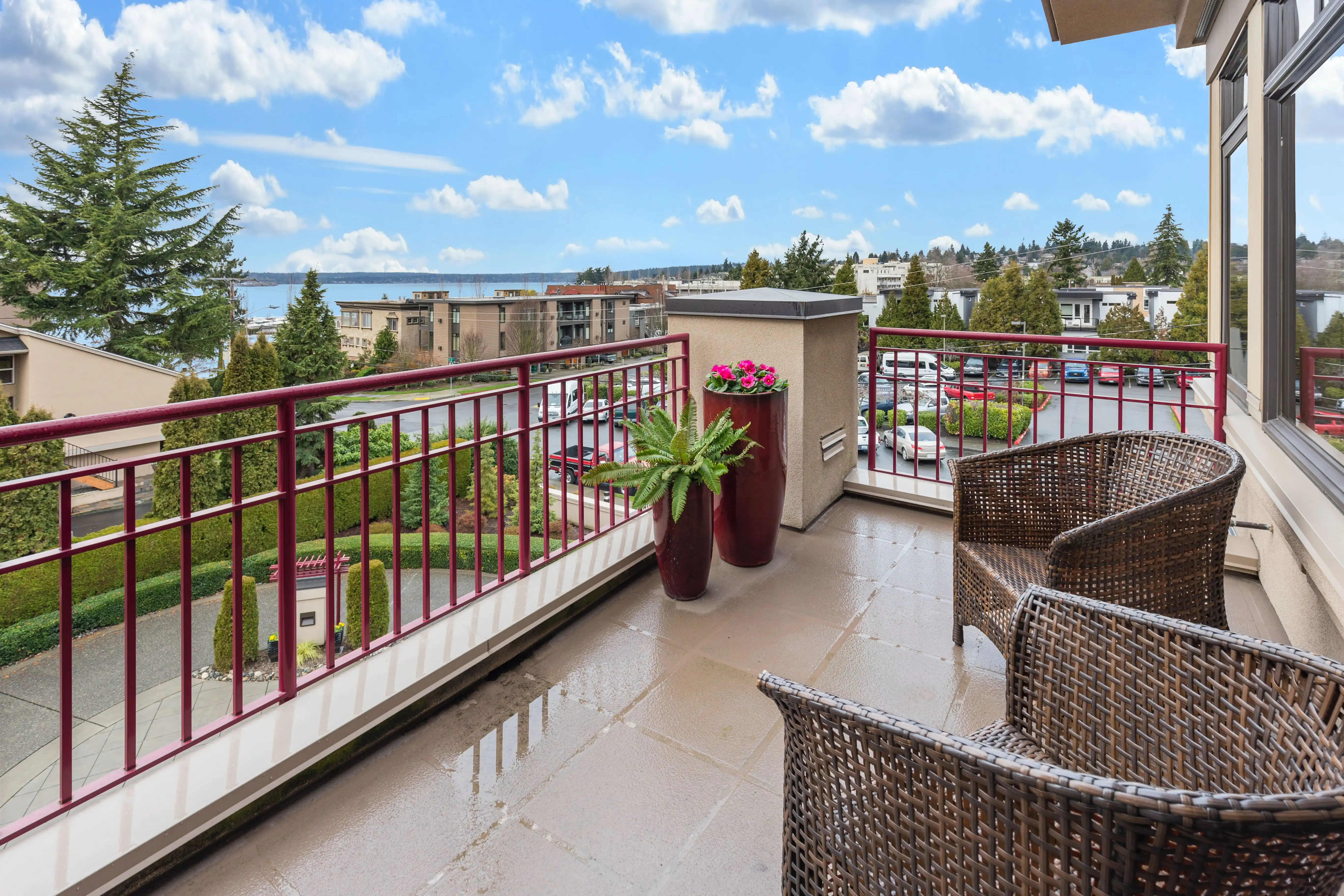
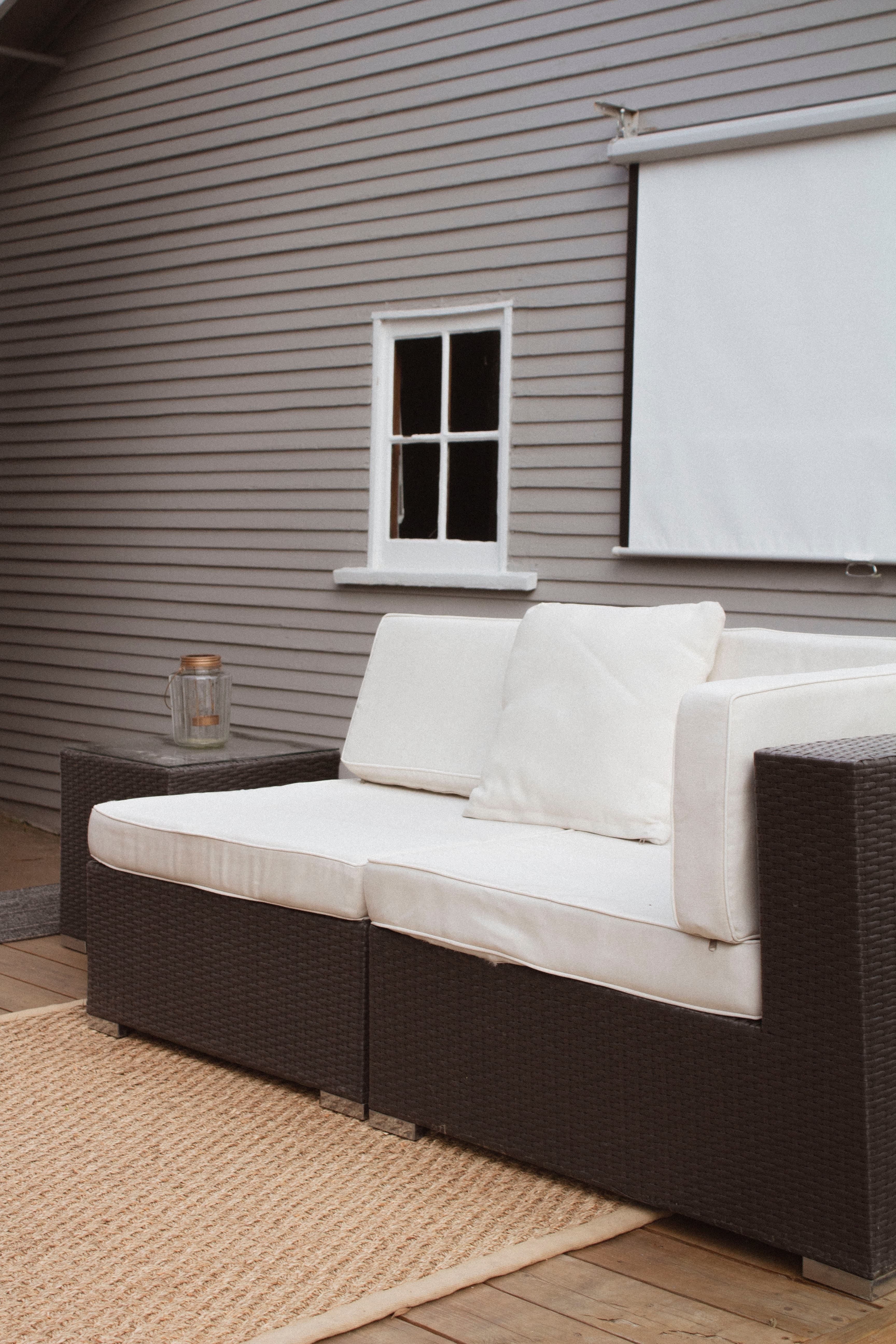
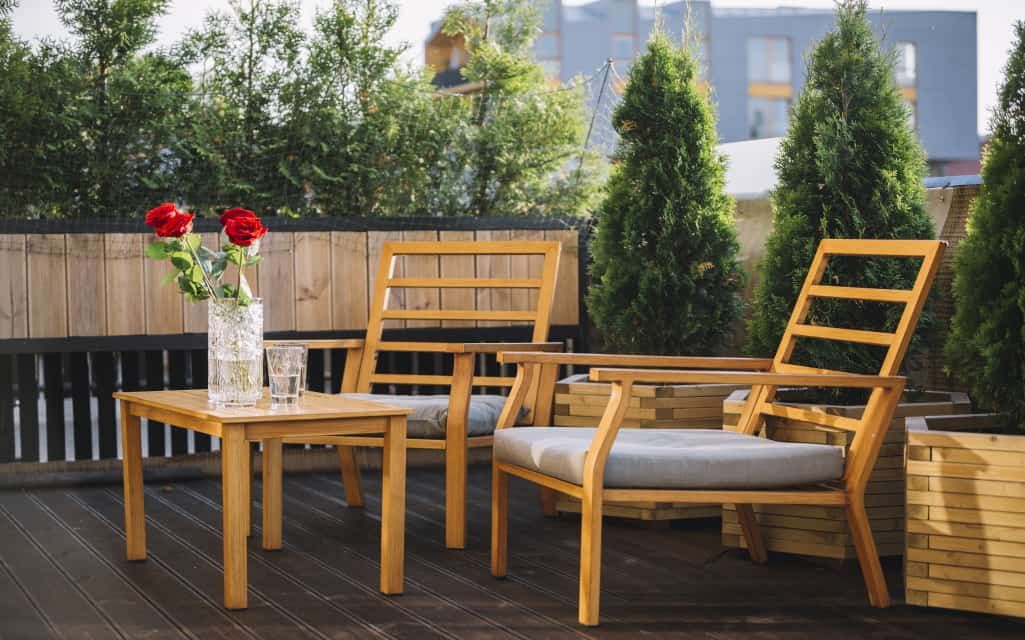
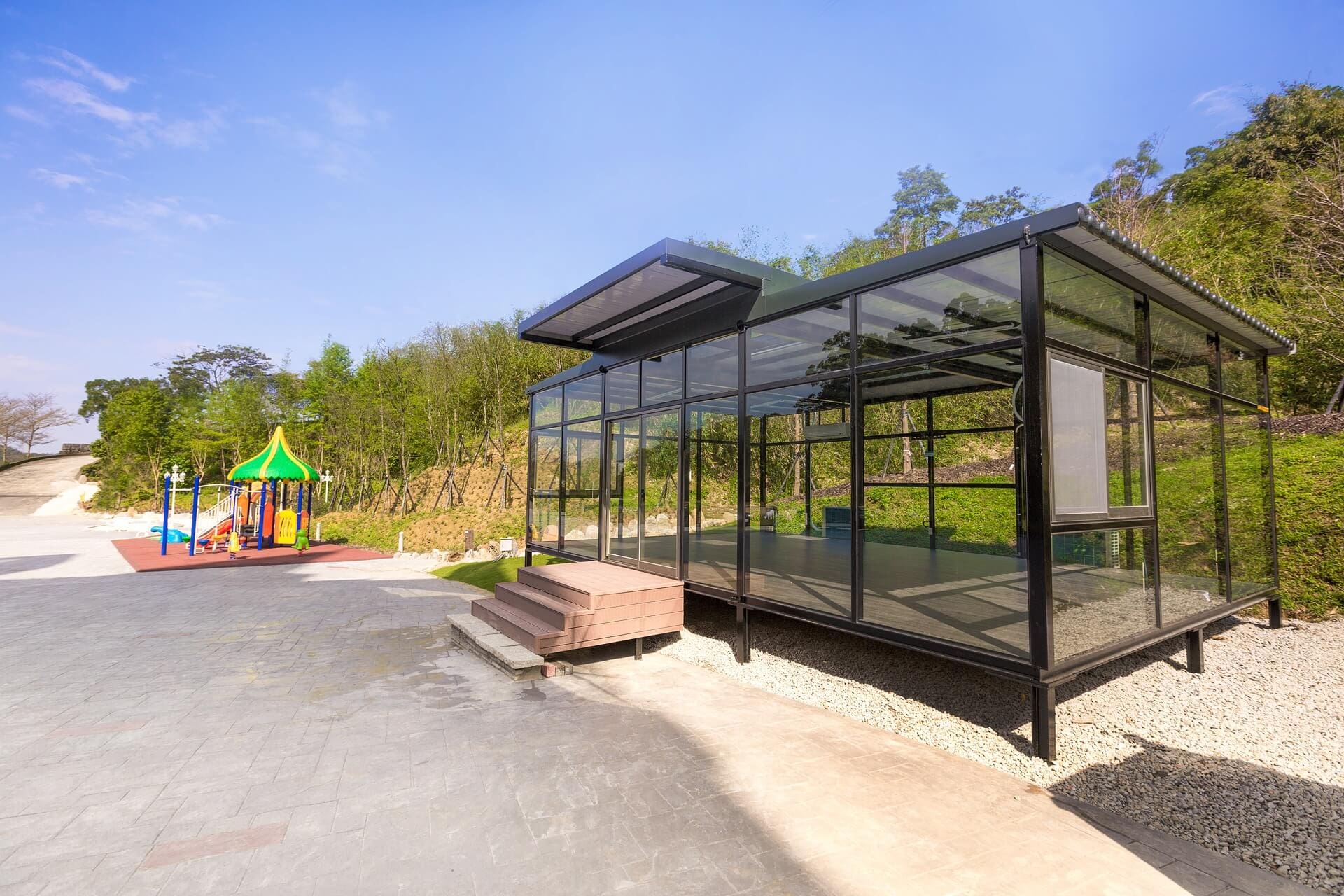
One of the best ways to extend the living area of your home is to create a space outside that is perfect for you and your family to relax or entertain in, and it is something that can be done with ease. If you want to add more living space and do not know where to start, you can follow the advice below and create a relaxing area that you and your family will love. You may even find that you end up spending more time outside, than you do inside, but there are some factors that you will see below that you need to consider.
Patio Or Decking
The first thing that you will need to do is create a patio area by adding paving slabs, or you can also consider decking. The patio will give you a stable surface so that you can add furniture, and it will sit correctly on the floor. You will want to choose a durable material for your patio, which also requires little maintenance, which will encourage you to spend more time outside.
Outdoor Furniture
When you are in the process of creating the space you want, you may want to check out some furniture for an outdoor lounge Melbourne shops have. The city has many reputable retailers that provide high-quality furniture that is suitable for outdoor use. You will want to have adequate seating for your family, with maybe a few extra seats for guests. You will also need a table which will allow you to eat outside comfortably. There are many different types of outdoor furniture that are made in many varieties of materials, so whatever your budget or taste is, there is something for everyone.
A Place For All Weathers
You may also wish to create an area that offers you protection from the elements, no matter what the weather, which will also help to encourage you to spend more time outside. You will want somewhere that will protect you from the sun, offering you a shaded area when it gets too hot, but ensure that you can still top up your tan if you want to. You may also need to have somewhere that will stay dry when it rains, so you can enjoy your garden no matter what the weather.
Some Added Extras
There are also many creature comforts that you can add to your patio area, which will help to ensure that you and your family get as much use of your outdoor space as possible. You can add some speakers so that you can listen to music, and you can also add a television so that you can enjoy watching TV or sports. Adding a functional BBQ area will also allow you to cook outside as well as eat, and for the ultimate addition, you can consider an outside bar for your home.
If you intend to use electricity for some of your devices outside, ensure that you have weatherproof electrical sockets, and hide away any cables. With some planning and a bit of creativity, you can create the perfect space for you and your family and increase the amount of time you spend living outdoors.
Before considering how to work with a construction expert witness, you should first determine whether or not the services of an expert witness are called for, and whether they would help to make the case clearer to the judge and jury. In situations that involve a very complex or technical issue, the likelihood is that neither the judge nor most of the jury members will have a deep understanding of the various aspects of the case. This is exactly when an expert witness can be most helpful, especially if they have the ability to take a complex issue and explain it in simple and straightforward terms so that everyone can have some understanding of the core facts.
Another situation that may call for an expert construction witness is one where there is an issue involved which only an expert would be able to speak to, for instance, whether faulty construction methods were used on a project. There are many more issues just like this where a construction witness would be extremely helpful because of their knowledge and experience. When any of these issues come into play, it’s definitely worthwhile to bring in an expert witness who can shed light on an issue that might otherwise be complicated and confusing to the participants.
Why a Lawyer Should use a Construction Expert Witness
There are a couple of reasons why a lawyer should seek the help and support of an expert construction witness. The first of these is when the lawyer herself has little or no knowledge of the issues involved in a case that involves some aspect of construction work. Trying to argue a case such as this before a judge and jury will always expose a lack of knowledge, and that is an undesirable situation to place oneself in during litigation.
On the other hand, enlisting the aid of an expert construction witness can provide powerful support in bolstering up your case, and can help shed some light on otherwise complicated issues. It is also a smart idea to bring in an expert construction witness when outside circumstances rush the case, meaning you don’t have as much time as you would like to prepare, and you lack the expertise yourself to develop a strategy involving construction litigation on such an expedited timeline.
It is much more beneficial to pick the brain of an acknowledged expert and have that person be a strong advocate and representative for your legal position. This approach also has the added benefit of allowing the attorney more time to focus on other important aspects of the case, so nothing gets overlooked and the case can be pursued fully.
What to Look for in a Construction Expert Witness
In some situations, a lawyer will simply contact an agency for the purpose of connecting them with a competent expert construction witness, thereby saving time and simplifying the process. However, many lawyers also choose to make their own personal selections for witnesses, so they can maintain control of the entire litigation process.
When you’re seeking your own witnesses for litigation, there are some characteristics you should be on the lookout for so that you can make the right choice. First of all, you should work with someone who has very strong credentials, so that the judge will be satisfied with their expertise, and so opposing counsel will likewise have no objections.
Then, you must be sure that your expert witness has a solid working knowledge of the crucial factors and elements involved in your particular case. Lacking this kind of knowledge and understanding, a professional witness would be of little use to your case, and would not add value to the proceedings, or at least would not add sufficient value to justify their inclusion in the litigation.
Another thing you should be aware of when seeking the help of a professional construction witness is that it is ideal that you bring this person on board as soon as possible. This will give your expert witness time to review all the crucial elements of the case and to offer their expert opinion about each of these elements. In turn, that will give you more time to prepare your case and to strengthen your arguments before the judge and jury.
In the ideal situation, you might be able to find an expert who has had years or perhaps decades of experience and knowledge in the precise area which is being litigated. It would also be helpful if your expert construction witness has some kind of background in human factors, so they would have an understanding of why certain actions are undertaken, why deadlines are missed, why safety features are needed, or why neglect might have become a factor on any kind of construction project.
Final Thoughts
After it has been determined by an attorney and his/her client that an expert construction witness would be beneficial for the case, it will be necessary to go through the process of finding the right person to support your case. This will invariably call for a period of research where you seek out industry experts who may possess knowledge of the area in question in your particular case.
As mentioned above, you could also work with an agency that might connect you with a number of witness candidates, but if you take that approach, you would be relying on the agency to provide you with suitable candidates. When you’re pressed for time in finding expert construction witness, you may be obliged to go the agency route, simply as a means of saving time and hopefully finding the right person.
Regardless of how you select your candidates, you should devote a significant period of time to interviewing each candidate so you can be sure that the one you choose is in fact, an expert construction witness in the area being litigated. During this process, you will have to verify that not only is the candidate’s background is acceptable to you, and that it will satisfy both the judge and opposing counsel.
If you can find someone who is well respected within the industry and has a reputation of honesty, that will be even better for your case. Having an expert construction witness can be a powerful advocate for your case, and might just influence the judge and jury enough to help you achieve a favorable outcome.
Almost a quarter of people in the U.S. population made home improvements in 2017 and the remodeling activity is expected to steadily increase through 2021.
Done well, remodeling can improve the aesthetics and the value of your home. Remodeling is usually an expensive and time-consuming process, therefore, the last thing you need before starting this process is government officials delaying your project for months because of a building permit. Not all home remodeling projects require the approval of the local authorities. Find out how to transform your patio without requiring a time-consuming building permit.
Home renovation is both an exciting and potentially stressful period for homeowners. Specific reasons for renovation differ according to individual families but customization is a major motivation for renovation. A study by Houzz found out that over a quarter homeowners renovate to customize the home. Installing awnings is one of the ways you can customize your outdoor spaces without needing to seek authorization from the local government. Awnings achieve the dual purpose of protecting your windows/patio from extreme weather conditions and improving the visual appeal of your home. They can provide a shade for outdoor entertaining on the patio regardless of the weather. Awnings come in a variety of sizes and styles and you need to plan carefully to find something that suits your home. It is important to make sure that the way your install awnings does not deprive you of sunlight during the winter months. The best way to maintain control over your awning is by using a retractable design. Such retractable awnings can be adjusted or removed at will. Some advanced models are motorized and adjusting them is just a switch flick away.
A pergola is another structure that can completely transform your outdoor spaces. You will not usually need a building permit for a pergola unless you make it too big or too tall. A pergola can be used to highlight a walkway, give a shade, or to serve as an outdoor living room for entertaining. There are dozens of shapes and designs you can choose from, although hexagonal, cuboid, and circular pergolas are the most common. In any case, It is important to make sure that the pergola harmonizes with your landscape and architectural design.
Pergolas are build from a variety of materials. Wooden pergolas are cheaper but they are more susceptible to fungi, termites, and moisture damage. Steel and aluminum pergolas usually cost more but they are easier to install and they are usually more durable than wooden pergolas. Some homeowners choose to install a roof over the pergola to protect it from the elements. You can choose from transparent panels or sails for the roof if you need it to allow sunshine through. You can install lighting in the pergola if you intend to use it after sunset.
Adding a trellis to your patio is an easy way of beautifying your outdoor spaces. A trellis can be used to cover over unsightly parts of your home or demarcating parts of the garden. In addition, the trellis may give your family some privacy from the prying eyes of neighbors. Homeowners can choose from a number of designs and materials for trellises. Wooden trellises cost less but you may need to carry out regular maintenance on the wood every year. Wire trellises on the other hand, require less maintenance, and are favored by people who abhor the chores involved in maintaining the structure. The trellis can support a wide variety of vining plants. Wire trellises can last many years without maintenance. Naturally, the sturdiness of the trellis will be determined by the plants you want it to support. Heavy plants like wisteria will require more study structures compared to lighter plants like morning glory.
Remodeling a home is an art that requires an investment in terms of time and money. The need to get a building permit can increase the costs and the time needed to remodel. But there are things you can do to improve the aesthetics of your outdoor spaces even without a building permit. In most places, you can install awnings, pergolas, and trellises without a permit.
Street photography is one that shows the local culture, events, architecture and / or portrays people in scenes of their day to day life. Usually they are intriguing images that tell a story and have the potential to mark an epoch. Street photographs carry a temporary character, show a passing scene, usually (but not necessarily) commonplace, which after a time will be history and tends never to repeat itself in exactly the same way.
The idea of street photography is to give the viewer the sensation of what it is to be there in that place, at that moment, in such a way that, seeing his picture, he can even imagine the smell of the street. The concept is broad and its classification varies from person to person. Often, depending on the context in which it is used, it can also be identified as photojournalism, travel photography and documentary photography. Despite the name, street photographs do not necessarily have to be taken on the street. Photos in a shopping center, shop, theater, beach etc can also be considered street photography. In the opinion of many, street photography does not need to have perfect technique and composition. On the contrary, the imperfections of a snapshot taken at a decisive moment are that they bring to the photo the “charm” of street photography, and convey a sense of authenticity and reality. People or objects partly cut, blurry elements, display errors are just a few examples of these imperfections. They reinforce the immediacy and spontaneity of a passing moment in the life of the person portrayed.
On the other hand, some people argue that every photo should have perfect technique. Of course you should have good sense and a good dose of self-criticism when you go through your photos, and even if you fit the “perfect” side, think that small mistakes in street photography are accepted by many, and so you have a little more flexibility in this theme. The impact of street photography is more on the alert eye of the photographer and its rapidity in freezing that particular moment – and the content of the final image – than in the technique and composition of the photo. When you see something interesting happening, do not hesitate! Take the camera and hit the photo. If you decide to set up the camera at this time you may lose the photo. At the end of the day, some of your photos will be discarded, but many will not, and will make your photo day worthwhile.
Tips for Street Photography
When taking street photography, consider the following tips for returning home with good photos on the memory card: • Shoot without looking through the viewfinder: To capture unusual angles and be discreet, try taking pictures by pointing the camera without looking at the viewfinder or the subject being photographed. In the first few times, framing probably will not be the best, but over time, you gain experience.
• Being “face-to-face”: photographing unfamiliar people, often knowing they are being photographed, can yield great images with excellent compositions. However, it requires a good deal of extraversion and courage, which the photographer creates with the passage of time and experience.
Door furniture is the term for door hardware. Door hardware can be strictly functional, such as a door handle or knocker, or it can be purely decorative. However, most door hardware is both functional and decorative. What factors should you consider when shopping for door furniture? Factors to Consider When Shopping for Door Hardware Factors to Consider When Shopping for Door Hardware
Before you buy door furniture, understand that they are not all interchangeable. For example, doors come in varying thicknesses. Doors are generally between 1.375 inches and 1 75 inches. The typical door has a 2.125 inch bore hold for door knobs and 1 inch cross bore. However, this isn’t always the case. Know what dimensions your door has before you buy a door knob or lock. The backset is the distance from the bore hole to the edge of the door. This distance can vary, and if you buy door hardware that is too short, your door won’t close and the lock you selected cannot secure the door in place.
When selecting door hardware, it is necessary to determine where or not the door will be locked. You can rely on a deadbolt, an entry set, or a modern key code lock. If the door has a traditional keyway and tumbler, you can replace it with another locking mechanism, but you’ll have to either find something that fits the space or modify the door. Deadbolts may be operated by a thumb turn or a key. Note that a deadbolt will secure a door rather well, but it won’t make up for a thin door or weakened door frame when kicked in
An often-overlooked factor when selecting door hardware is accessibility. Adults with limited mobility may struggle with door knobs, whereas door handles are something you could use in twenty years. Door hinges that slowly close doors make it easier for those who move slowly to get through the door without it closing on them
Decorative door hardware can take several forms. You can have purely decorative grills on the door. Sometimes people put dummy door handles on the door to make it easier to opem This is commonly done to the inactive door in a double door set. In these cases, the door handles should match each other, while the hardware in the active door contains the latches and locks.
Note that any door hardware can include decorative elements. Large ornate door handle panels and knockers are common. The only matter for the home owner to decide is which decorative features suit the door and the room it is in. In the case of exterior doors, the decorative elements need to match your home’s architecture.
You don’t want to have a gleaming minimalist door handle that stands out like a sore thumb when the rest of the porch is decorated in black wrought iron. Be careful, though, not to choose door hardware based on how it looks while forgetting the importance of functionality or its ability to literally fit. Another factor to consider is what the door hardware is made to handle. A door knob made to survive rain, sleet and snow can be used indoors. However, door hardware only intended for indoor use no matter how durable it looks may rust shut when used on an exterior door.
Understand the main factors you need to use when selecting door hardware, and you’ll find the best combination of form and function for your particular application
For most homeowners, the spring melt is a welcome change from blustery winter winds. But with warmer temperatures also comes spring rains, and with them comes the risk of roof leaks.
Winter storms, ice build-up, and the wear and tear that comes during periods of frequent freezing and thawing all place a significant amount of stress on your roof, and when the thermometer rises and the water flows, this can lead to nasty surprises.
If you want your roof to stay leak-free this spring, there are a few preventive steps you can take as soon as the snow melts to ensure that any potential problems are dealt with promptly and effectively. Here are the three most important:
Replace Broken Shingles
For good reason, asphalt shingle is the most common residential roofing material in Canada and the northern United States: not only are these roofs cheap and easy to install, they generally offer at least twenty-five years of protection from the elements.
But asphalt shingles are also prone to damage, and high-speed winds, rapid changes of temperature, and ice damscan all conspire to cause shingles to crack or fall away, exposing the roof deck to water damage and rot that will eventually lead to serious leaks.
If the damage is minimal, you may be able to fix it yourself, but it is important to know when to hire an expert roofer in the event that damage is more extensive than you’d expected. If you live in the GTA, call roof repair Toronto experts to help you figure out whether you need professional help.
Clean Your Gutters
A well-designed roof should channel water away from your roof deck in the most efficient way possible. This cannot happen if your gutters are filled with dead leaves, dirt, and other debris, and in the worst case scenario, clogged gutters will cause water to pool on the roof itself, drastically increasing the chances of a leak.
If you want to preserve your roof’s integrity this spring, make sure your gutters are clear and your drains and downspouts are directing the water away from the foundation of your house.
Install Proper Ventilation
It is all but inevitable that some moisture will make it through to your roof deck at some point in the season — between shifting temperatures, internal condensation, and heavy rains, you can’t expect to keep moisture out completely.
This is why it is important to ensure that your roof is properly ventilated. A well-ventilated roof allows moisture to dry out quickly, and keeps it from rotting your roof deck and causing water damage to your insulation and beams. Roof ridge vents are an increasingly popular way of dealing with this problem, but to find out which solution is best for you, consult roofing Toronto experts.
Most homeowners won’t notice that their ceiling has sprung a leak until heavy spring rains are causing water to actually fall into their living area. By this point, the damage is likely to be extensive, and the solutions costly. For this reason, all homeowners should make a plan to inspect and repair their roof as soon as it is safe to do so.
This kind of preventive care won’t simply ensure you avoid a ceiling leak; it will also save you potentially thousands of dollars in repair costs.
Somehow or other, we have all seen a roof that is falling part of the fogging, because the rod is rusted. But, did you know that the repair of this problem is relatively easy?
It is extremely important that, if your roof has these deteriorating characteristics, repair it as soon as the problem is detected. When the area that presents the problem is small, it is easy to repair, even by yourself. If you ignore the problem than it will get bigger day by day and it will be very difficult to repair a larger part of it as compared to the that small portion. So, its highly recommended that you should repair it as soon as you find out about the problem.
If you have never done that kind of work than you should leave it to expert from Cherry and Clark.
Next, a simple procedure so you can repair small areas on your roof that confront problems like this:
First of all, it is vital to correct moisture problems in the ceiling.
Once the leaks in the roof have been eliminated, you can repair the areas where the fogging is falling.
With a ladder and using gloves and safety glasses, begin to remove the peeling that is detached.
Remove all affected plaster and if you notice that there are still areas that sound hollow or detached, continue to remove the material.
Once all the loose patching has been removed, the ceiling area should be thoroughly cleaned.
Then, it is time to protect the exposed rod by painting it with red oxide, which can be obtained in any hardware store of your choice.
Once the rust has dried, apply a bonding agent (“bonding agent”). This is the blue or yellow paint that is applied to the walls before they are dyed, so that the new plastering adheres well to the ceiling concrete.
Once the adhesive is dry, you can proceed to prepare the mixture for the fogging. For this it is recommended that you use the We3 W350 ready mix. This product comes in ready-to-use bags and you just have to add water according to the instructions. It also contains fiber that makes the mixture more resistant and the final finish smoother than regular fogging.
Use a clean bucket to make the mixture. For each bag of Mix List W350, use one gallon of water. Never add more water than recommended since the mixture will be very soft and will fall off when you apply it to the ceiling.
When you have the W350 mixture ready to apply, you can proceed to repack the roof. For this you will need a trowel, float and sponge. If the area to be patched is deep, you should apply the mixture list by layers of up to two inches.
When you have applied the final coat, wait until it has a hard consistency, but not completely dry, so you can finish with the fleet and then finish with the sponge. All ready. You have just learned how to repair a roof overlap.
The average size of a home lawn in the U.S. is 10,000 square feet. To many, however, that amount would be quite a luxury; California, for example, has an average of only half that space for home lawns. With summer nearly here, people are finding themselves wishing for a more inviting outdoor atmosphere. Fortunately, your lawn and/or outdoor space doesn’t need to encompass acres of land to create a beautiful, bountiful garden, and there’s more than one way to do it.
The Traditional Method
Of course, the old-fashioned way of starting a garden is with dirt. When you’re working with a limited planting space, make sure you’re using quality soil, as it needs to be more nutrient dense in order to thrive, as compared to larger spaces. Consider developing your own compost; it’s not only cost-efficient, but it’s one of the best ways to infuse soil with the best nutrition for all plant types. Compost can be made from fruit and vegetable scraps, yard waste (like weeds and grass trimmings), and even the debris buildup from your gutters. Gutters provide a great atmosphere for decomposition, after all. When having gutters professionally cleaned, simply ask that the waste not be disposed of, but placed into buckets for compost instead. Sort through it to remove non-compostable items, and add the rest to your regular compost bin.
Once you have a good soil foundation and your plants selected, you can maximize your space by creating different levels and sections. This can be done through tiered gardening beds or the addition of soil mounds, space permitting. Alternatively, you can use stones or other means of separating the sections. Creating this type of division will give the illusion of a larger green space.
The Vertical Method
While the traditional method is preferred among many, it’s not your only option. If you’re exceptionally space-challenged, going up may be your best bet. You can construct a trellis or living wall using wire, cables, bamboo, and even netting. This is a particularly useful means of gardening for those that need to limit themselves to a patio, balcony, or rooftop, but it can be implemented just about anywhere. Herbs and vining plants are easy to transplant to this type of structure.
Another type of vertical gardening relies on use of your existing outdoor fixtures and furniture. Rails and window ledges can be lined with planters, either hanging or boxed. Sure, this is a small space, but you can grow an array of beautiful plants- even edibles. Strawberries, cherry tomatoes, herbs, and annual flowers are just a few of your options.
The Indoor-Outdoor Method
Finally, for people that simply can’t get enough of their greenery, but can’t accommodate it entirely outdoors, there’s the indoor-outdoor method. It’s exactly what it sounds like: using both indoor and outdoor spaces. Plants like herbs, succulents, and microgreens are all good options for indoor growing, while you can save your outdoor space for larger plants and varieties that are in need of more sun. Of course, you can also step up your indoor approach with the use of sunlamps.
This method is especially beautiful if you have a living space that opens up to your outdoor space. Tying the two together with plant life will give the illusion of a larger outdoor space, even though part of your greenery is technically indoors.
With some creativity, there’s a number of ways you can implement a garden. Your space might be limited, but your imagination is abundant.