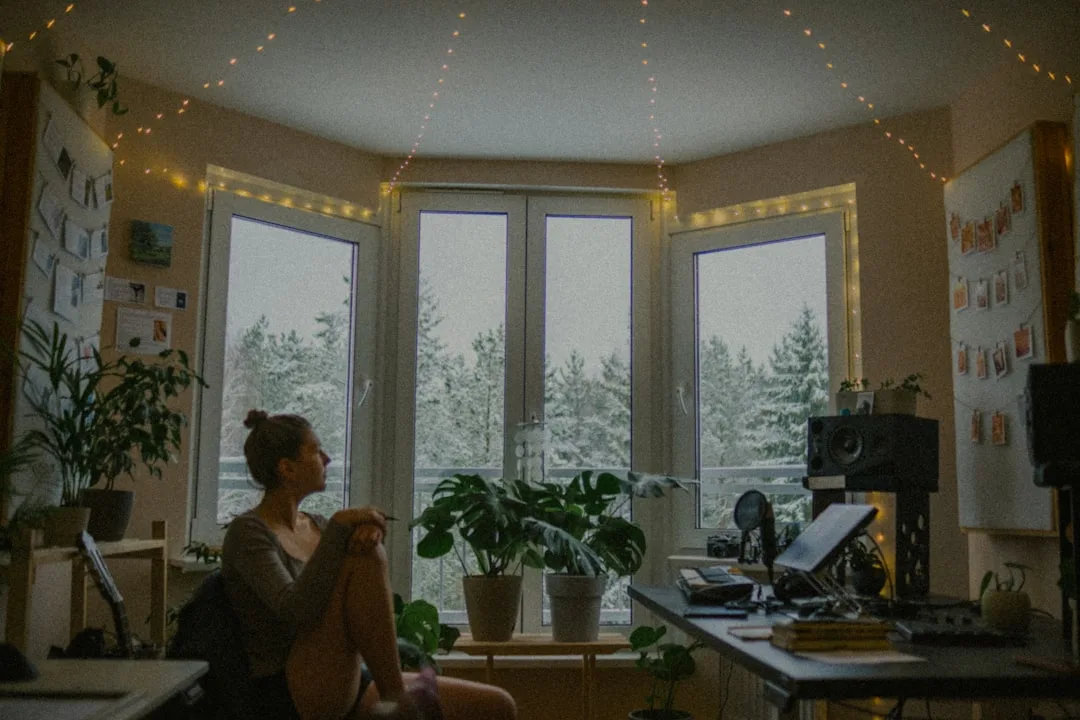
The average American studio apartment offers 514 square feet of living space — and yet every piece of Christmas decorating advice online assumes you have a living room, a foyer, and a spare corner for a six-foot tree. Most of that advice was written for houses. Applied to studios, it produces cramped, visually chaotic spaces that feel worse than before you started, which is almost the opposite of what anyone wants heading into December. Finding christmas decorations for studio apartments that actually work — not just scaled-down versions of house advice — requires a different approach from the ground up. The difference isn’t minor. The underlying logic of what makes a small space feel good during the holidays is structurally different from what works in a three-bedroom colonial, and treating it any other way is where most studio residents go wrong before they’ve unwrapped a single ornament.
Quick Answer
The average American studio apartment offers 514 square feet of living space — and yet every piece of Christmas decorating advice online assumes you have a living room, a foyer, and a spare corner for a six-foot tree.
What actually works in compact spaces is different in kind, not just in scale. This article is built entirely around studio-specific logic — the overlapping zones, the outlet shortages, the lease restrictions, the visual mechanics of a space where your bed is twelve feet from your kitchen table.
How to Decorate a Studio Apartment for Christmas Without Losing Square Footage
In This Article
- How to Decorate a Studio Apartment for Christmas Without Losing Square Footage
- The Clutter Problem: Why Most Studio Christmas Decor Feels Overwhelming (And How to Fix It)
- Lighting as the Foundation: Why String Lights Are Step One, Not an Add-On
- Lease-Smart Decorating: What Studio Renters Actually Need to Know
- Small Space, Full Effect: Specific Combinations That Work
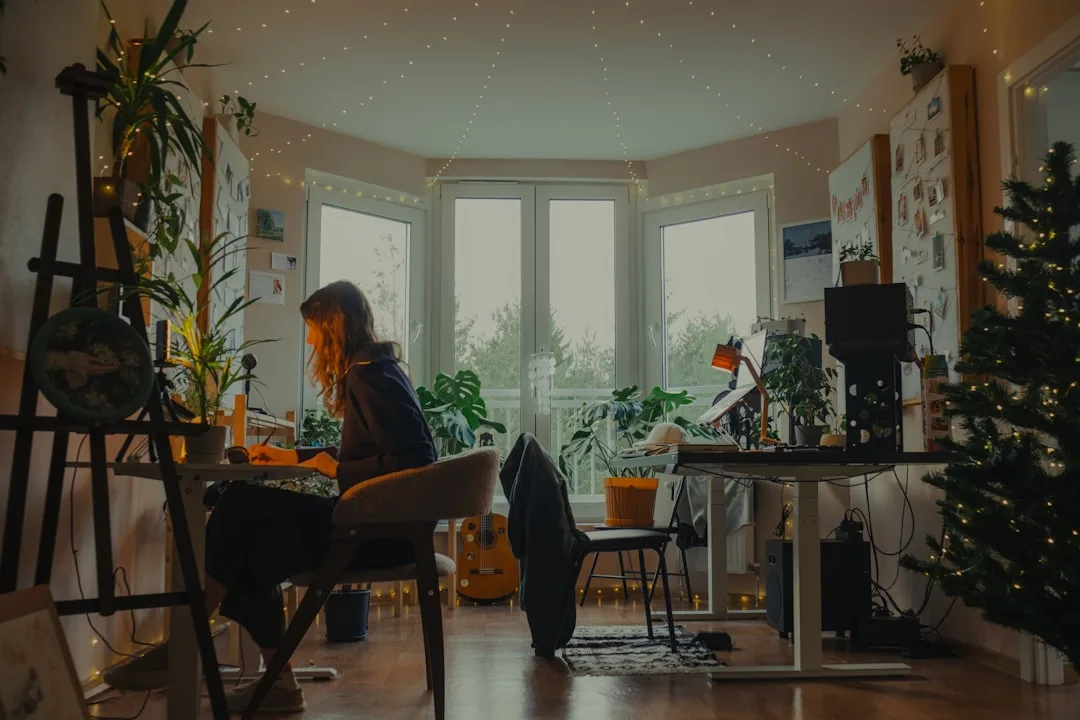
Somewhere along the way, Christmas decorating became synonymous with covering surfaces. Every shelf gets a garland, every corner gets a tree, every table gets a centerpiece. I watched this approach destroy a client’s 480-square-foot apartment on the Upper West Side — she’d followed a magazine spread almost precisely, and by the second week of December she told me she’d started avoiding coming home. The place felt like a storage unit wrapped in tinsel.
The problem wasn’t the decorations themselves. It was that nothing had been removed before they went up. That’s the foundational mistake.
Zone anchoring is the framework that actually works in studios: instead of distributing decor across the entire space, you designate one focal decorative zone per functional area — sleeping, working, eating, sitting — and treat each zone as its own contained composition. Most zones get one item or no items. The living/seating area carries the majority of the decorative weight because it’s the social function of the space.
For studios under 500 square feet, the practical rule is two to three active decorative zones maximum. RentCafe data puts the average U.S. studio at exactly 514 square feet — which means the two-zone version of this rule is more appropriate for most readers than the three-zone version.
The standard advice to “use every surface” actively backfires because of how visual weight compounds in open-plan spaces. In a house, a decorated mantel competes only with what’s in the living room. In a studio, it competes with your bed, your desk, your kitchen, and your dining chair — all visible simultaneously. Clutter doesn’t just feel like clutter. It reads as clutter from every angle.
When choosing christmas decorations for studio apartments specifically, the zone anchoring principle means resisting the impulse to acknowledge Christmas in every corner. One strong focal point — a well-lit window, a styled open shelf, a tree positioned to be visible from the bed and the sitting area simultaneously — does more for the feeling of the space than six smaller gestures scattered around it.
Here’s how to implement zone anchoring without overthinking it:
- Identify your natural gathering point. In most studios, this is the sofa or the bed-facing wall. That’s zone one — your primary decorative anchor.
- Assign a single supporting zone. The window ledge or an open bookshelf works well. This zone gets one item, or a tight composition of two at most.
- Declare everything else off-limits. The kitchen counter, the nightstand, the desk — if they’re not one of your two zones, they stay completely clear of seasonal decor.
- Remove one existing item before placing anything new. Every zone you’re decorating should have something taken away first, not just added to.
- Photograph the space before you start. This gives you a reference point and stops the process from creeping beyond its boundaries.
Actionable takeaway: Before buying a single decoration, walk your studio and identify two anchor zones. Everything else stays bare — or gets cleared.
The Clutter Problem: Why Most Studio Christmas Decor Feels Overwhelming (And How to Fix It)
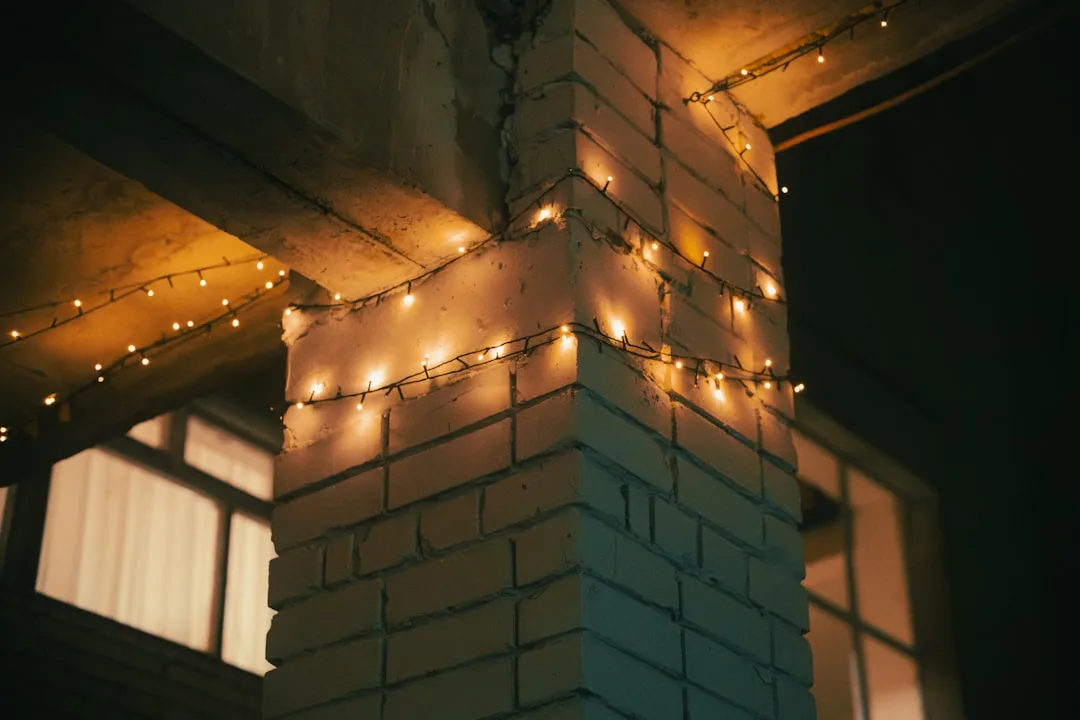
Visual weight is not the same as physical footprint. This distinction matters enormously in small spaces, and almost no one talks about it. A cluster of red-and-gold ornaments on a windowsill occupies maybe four inches of surface area — but if your room runs on a warm beige-and-gray palette, that cluster reads like an interruption. Your eye keeps snagging on it. That’s high visual weight from a physically tiny object.
I’ve seen the reverse, too: a large, neutral wreath made from dried cotton stems and linen ribbon that nearly disappears into a cream-colored wall because it belongs to the same family of tones. Low visual weight despite being sixteen inches in diameter.
Color continuity — choosing Christmas decor in one or two shades already present in the room — is the single most effective move in making a small space feel cohesive during the holidays. NCIDQ design principles frame this as visual hierarchy in compact environments: when seasonal elements share the room’s existing tonal language, they register as integrated rather than imposed. The room doesn’t look “decorated.” It looks like it’s always been this way, just slightly elevated.
The practical audit before any decorating session should go like this:
- Identify the existing palette: what are the two or three dominant colors in your soft furnishings, wall color, and largest furniture pieces?
- Map one Christmas color to each: if your room has navy and warm wood tones, deep green and brass work. Bright red does not.
- Before adding any decor, remove one item of similar visual weight: putting a holiday candle on the coffee table means the stack of books or the decorative tray gets stored away, not pushed aside.
- Test against the whole room, not just the zone: place your chosen item, then stand at the farthest point in your apartment — usually the wall opposite your main window. If it reads as jarring from there, it has too much visual weight for the space.
- Avoid mixing metallic families: if your hardware and fixtures are matte brass, adding silver tinsel creates a tonal argument the room didn’t have before. Pick one metallic and stay in it.
This swap-not-stack principle is especially important when selecting christmas decorations for studio apartments because there is genuinely nowhere for displaced items to go. In a house, the extra throw pillow moves to a guest room. In a studio, it ends up on the floor or shoved under the bed — which creates its own variety of visual noise.
One more thing worth challenging: the pencil tree myth. Narrow trees are marketed aggressively at studio renters, and I understand the appeal — the footprint is small. But if the area around the tree isn’t cleared first, a pencil tree still creates clutter. It creates vertical clutter, which is actually harder to visually escape in a low-ceiling studio. The tree’s physical space isn’t the issue. Everything competing with it is.
If a tree is important to you — and for many people it is, emotionally and practically — here are the formats that actually work in studio apartments, ranked by how little they disrupt the space:
- Tabletop tree, 18–24 inches, placed on a cleared surface at seated eye level. The scale is honest; it doesn’t pretend to be something it isn’t.
- Wall-mounted flat tree, made from string lights or wooden dowels arranged in a tree silhouette. Zero floor footprint. Works surprisingly well for renters who can’t use command strips on certain surfaces if you lean it against the wall instead.
- Corner pencil tree, 4 feet maximum, with a cleared three-foot radius around its base. The clearing is non-negotiable — the tree only works if it has breathing room.
- Single large branch in a weighted vase, decorated with a few ornaments. This reads as a tree from the side and uses almost no floor space.
- No tree at all, with the decorative energy redirected to a single lit window composition. More effective than a crowded tree in 30% of studio layouts I’ve worked with.
Actionable takeaway: Run the color audit before you shop. Bring your room’s dominant palette with you — on your phone, a paint chip, anything — and only buy decor that fits inside it.
Lighting as the Foundation: Why String Lights Are Step One, Not an Add-On
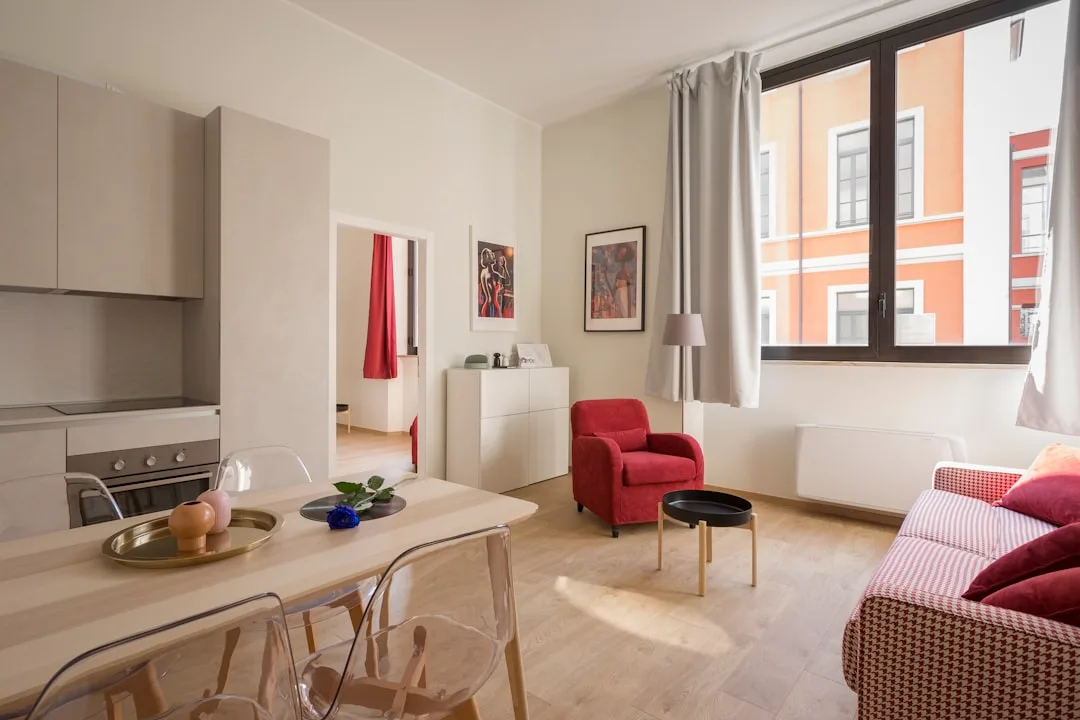
Every competitor article lists string lights under “decorations.” That framing is wrong, and it leads to lights being added last — strung over everything else — which is why so many studio holiday setups look like a decoration store exploded rather than a considered space.
Lighting is the structure. Everything else decorates around it.
Warm white lights in the 2700K–3000K range do something specific to small rooms: they soften the hard edges of furniture and walls, create the illusion of receding depth, and reduce the visual competition between surfaces. Cool white lights — anything above 4000K — do the opposite. They flatten the space and make every object read with equal sharpness, which is exhausting in a room where your eye can’t rest on an empty wall.
Research published in LEUKOS: The Journal of the Illuminating Engineering Society supports this directionally — lower color temperatures in residential settings consistently produce higher reported comfort scores, particularly in rooms under 600 square feet where occupants are exposed to the full visual field simultaneously.
For christmas decorations for studio apartments, lighting placement matters as much as light quality. The goal is to create pools of warm light that anchor your decorative zones and let the spaces between them recede into shadow. Shadow is not a problem in a small room — it’s a tool. A studio where every surface is evenly lit feels smaller than one where certain areas fall into soft darkness.
Here’s the lighting sequence that works in studios, in the order it should be implemented:
- Establish your ambient light first. Set your existing overhead or floor lamps to their warmest, lowest setting. This is your baseline.
- Place string lights at your primary decorative zone before adding any other decor. Frame the window, drape the shelf, outline the headboard — but do this step before anything else goes up.
- Use a single plug-in timer to sync all holiday lights to the same on/off schedule. Studio outlets are limited; running everything off one timer and one power strip keeps cord management clean.
- Add candles or flameless alternatives last, as accent points within the zones you’ve already lit. These should supplement the string lights, not duplicate them.
- Test the full setup in the dark before adding decorative objects. The light composition should feel complete on its own. If it does, you need fewer decorations than you think.
Outlet management is a practical issue that rarely gets addressed in studio holiday decorating guides. Most studios have fewer outlets than a standard one-bedroom, and they’re often clustered near the kitchen and the one exterior wall. Before finalizing your lighting plan, locate every outlet in your apartment and map which zones they can realistically serve. Extension cords running across walking paths are a hazard and a visual mess — both problems that compound in a small space.
A few specific lighting configurations that work well as christmas decorations for studio apartments:
- Window frame lighting: a single strand of warm white fairy lights around the interior window frame. Visible from outside, defines the zone from inside, requires one outlet.
- Shelf underlighting: a short LED strip tucked under an open shelf’s upper lip, casting downward light onto the objects below. Creates a display effect with almost no visible hardware.
- Headboard halo: a loose drape of globe lights across the wall above the bed. Serves double duty as ambient reading light and seasonal decor, so it doesn’t add visual load — it replaces it.
- Mirror amplification: string lights placed near a large mirror bounce warm light across twice the surface area. Particularly effective in studios where a large mirror is already doing space-expanding work.
Actionable takeaway: Install your lighting first, in complete darkness, before any decorative objects go up. If the room feels good with just the lights, you’ve already done 70% of the work.
Lease-Smart Decorating: What Studio Renters Actually Need to Know
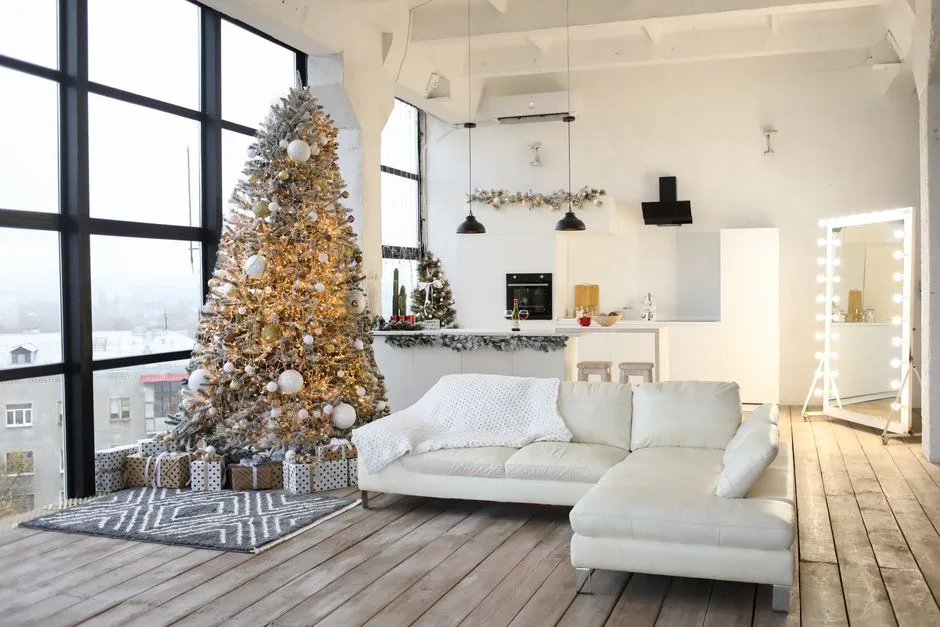
Damage deposits and lease restrictions create a specific set of constraints that homeowner-focused decorating advice ignores entirely. Most studios prohibit wall anchors, limit adhesive products, and in some buildings restrict open flames — which eliminates certain lighting and candle options from consideration before you start.
The good news is that the most effective christmas decorations for studio apartments tend to be surface-independent anyway. The zone-anchoring and lighting-first approach described above was partly developed in response to lease constraints: if you’re building compositions on existing furniture and in windows, you’re not touching walls.
A practical checklist for lease-compliant holiday decorating:
- Check your lease for adhesive restrictions before buying anything that requires command strips, removable hooks, or any wall-mounted product. Some buildings prohibit all adhesives; others allow command strips but not nails.
- Avoid door wreaths if your door opens into a shared hallway — some leases restrict what can be placed in common areas, and a neighbor complaint in December is not how you want to spend December.
- Flameless LED candles have improved significantly in quality over the past three years. The flicker algorithms on higher-end versions are convincing enough that the distinction matters less than it used to. Prices start around $8 for a set of three at most major retailers.
- Weighted vases and freestanding structures require no wall attachment and can be moved without evidence. This is where a heavy-bottomed vase with a branch arrangement becomes genuinely practical, not just aesthetic.
- Battery-operated lights solve the outlet clustering problem and eliminate visible cords — both important in studios where the distance between your decorative zone and the nearest outlet may be inconvenient.
- Take photos of your apartment before decorating and again before taking everything down. This protects you if there’s any dispute about the condition of walls or surfaces after the holidays.
Small Space, Full Effect: Specific Combinations That Work
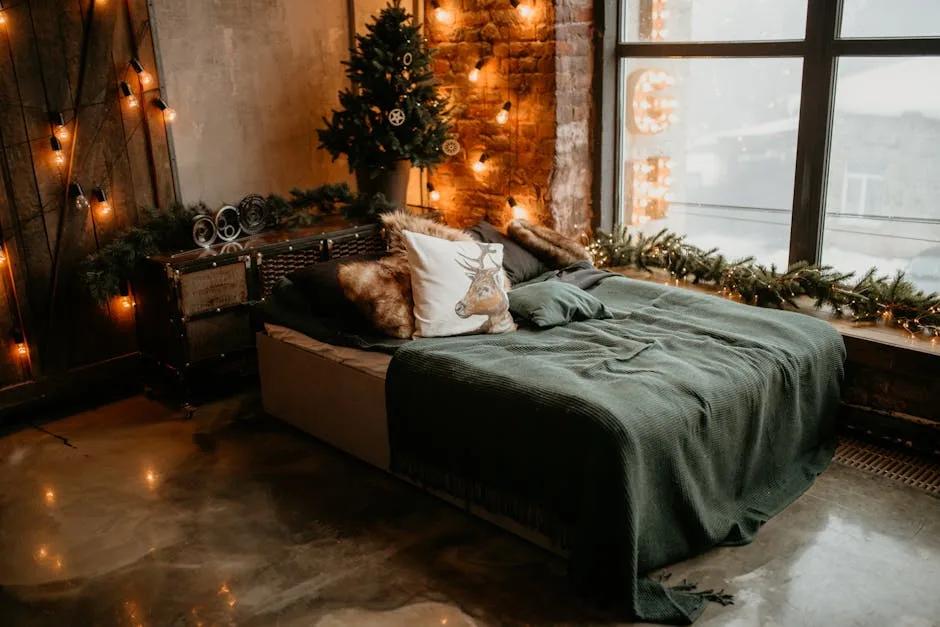
Most decorating guides stay abstract because specific recommendations date quickly and don’t account for individual rooms. But after working with studio apartments across different cities and price points, certain combinations come up repeatedly because they solve the studio-specific problems described above.
These aren’t prescriptions. They’re starting points, documented because they’ve worked consistently:
The single-window composition:
Clear the windowsill completely. Add one small potted plant — a rosemary topiary shaped into a cone, or a small eucalyptus in a terracotta pot. Frame the window with warm white fairy lights on the interior trim. Add one white pillar candle (or flameless equivalent) at the base. This composition costs under $40, takes up zero floor space, requires one outlet, and reads as distinctly seasonal without visually competing with the rest of the room.
The styled open shelf:
Remove half the existing items from one shelf. Arrange the remaining items with a few additions: a small string of globe lights at the back, one or two brass or wooden ornaments, a sprig of dried eucalyptus or juniper tucked between books. The key is restraint — the shelf should look edited, not added to.
The headboard scene:
A loose strand of warm globe lights across the wall above the bed, a small wreath hung from the existing light fixture or curtain rod using a ribbon (no wall attachment), and a single holiday-scented candle on the nightstand. Scent is underused in small-space holiday decorating — it adds a layer of seasonal atmosphere that takes up no visual real estate at all.
The kitchen acknowledgment:
Studios often have open kitchens visible from the main space. Rather than decorating the kitchen separately, treat it as a background zone: one small arrangement on the counter — a bundle of cinnamon sticks tied with a ribbon, or a bowl of clementines with a few sprigs of rosemary — that adds seasonal scent and color without creating a third decorative zone.
Frequently Asked Questions
What’s the smallest Christmas tree that actually looks intentional in a studio apartment?
Tabletop trees in the 18-to-24-inch range work best when they’re placed at seated eye level — on a cleared coffee table, a side table, or a low bookshelf — rather than on the floor. At floor level, anything under three feet reads as an afterthought. At eye level, the scale feels deliberate. Look for trees with denser branch fill rather than height; a wide, full 20-inch tree reads as more substantial than a sparse 24-inch one.
How do I make my studio feel festive without making it feel smaller?
The short answer is lighting and scent before objects. Warm string lights and a single seasonal candle — clove, cedar, balsam — create a strong sensory sense of the holidays without adding visual weight. When you do add objects, keep them within your two designated zones and make sure they match the room’s existing color palette. The goal is elevation, not transformation.
Can I use a regular-sized wreath in a studio apartment?
Yes, if you hang it correctly. A wreath on the back of your front door takes zero livable space and adds nothing to the visual field of the main room. A wreath hung on an interior wall works if the surrounding wall is clear — it needs at least two feet of empty space on each side to read cleanly rather than as additional clutter. Avoid placing a wreath above a surface that’s already decorated; the visual stacking effect amplifies both.
What should I do with holiday decorations that don’t fit the space but have sentimental value?
Store them, and don’t feel bad about it. Sentimental value and display value are different things, and a studio apartment is not the context where everything meaningful gets to be visible at once. One approach that works well: rotate a single sentimental piece each week of December rather than displaying everything simultaneously. Each piece gets its moment, none of them compete with each other, and the space stays manageable.
Are there christmas decorations for studio apartments that work for people who rent furnished units?
Furnished studios present an additional constraint because you usually can’t move or remove the existing furniture and accessories. In that case, work entirely with textiles and lighting — a holiday throw blanket, a set of coordinating pillow covers in seasonal colors, and window-based lighting are all reversible, leave no evidence, and layer on top of existing furnishings without conflict. Avoid surface-level decor in furnished units where you can’t remove the existing items first; the stacking problem is worse when you can’t control what’s underneath.
How early should I put up christmas decorations in a studio apartment, and does timing matter for small spaces?
Timing matters more in studios than in larger homes because you’re living with the decorations at close range, with no room to escape them. Most interior designers working with compact spaces recommend a shorter display window — three to four weeks rather than six — precisely because visual fatigue sets up faster when you can see your entire living environment from any point in the room. Mid-December to early January is a reasonable range. Going up before December 1st in a studio tends to produce the “I’ve stopped coming home” effect described earlier.
What’s the smallest Christmas tree that actually looks intentional in a studio apartment?
Tabletop trees in the 18-to-24-inch range work best when they’re placed at seated eye level — on a cleared coffee table, a side table, or a low bookshelf — rather than on the floor. At floor level, anything under three feet reads as an afterthought. At eye level, the scale feels deliberate. Look for trees with denser branch fill rather than height; a wide, full 20-inch tree reads as more substantial than a sparse 24-inch one.
How do I make my studio feel festive without making it feel smaller?
The short answer is lighting and scent before objects. Warm string lights and a single seasonal candle — clove, cedar, balsam — create a strong sensory sense of the holidays without adding visual weight. When you do add objects, keep them within your two designated zones and make sure they match the room’s existing color palette. The goal is elevation, not transformation.
Can I use a regular-sized wreath in a studio apartment?
Yes, if you hang it correctly. A wreath on the back of your front door takes zero livable space and adds nothing to the visual field of the main room. A wreath hung on an interior wall works if the surrounding wall is clear — it needs at least two feet of empty space on each side to read cleanly rather than as additional clutter. Avoid placing a wreath above a surface that’s already decorated; the visual stacking effect amplifies both.
What should I do with holiday decorations that don’t fit the space but have sentimental value?
Store them, and don’t feel bad about it. Sentimental value and display value are different things, and a studio apartment is not the context where everything meaningful gets to be visible at once. One approach that works well: rotate a single sentimental piece each week of December rather than displaying everything simultaneously. Each piece gets its moment, none of them compete with each other, and the space stays manageable.
Are there christmas decorations for studio apartments that work for people who rent furnished units?
Furnished studios present an additional constraint because you usually can’t move or remove the existing furniture and accessories. In that case, work entirely with textiles and lighting — a holiday throw blanket, a set of coordinating pillow covers in seasonal colors, and window-based lighting are all reversible, leave no evidence, and layer on top of existing furnishings without conflict. Avoid surface-level decor in furnished units where you can’t remove the existing items first; the stacking problem is worse when you can’t control what’s underneath.