
The average apartment gives you less floor space than a two-car garage — and yet every holiday decorating guide tells you to add more stuff to it. More garland. More figurines. More of those little snow globes that look festive in the store and homeless on your bookshelf by December 3rd. If you’re trying to decorate small apartment for christmas without losing your mind or your walkable square footage, the advice most guides give you is actively working against you. After eleven years walking through other people’s spaces and making real decisions about what actually worked versus what photographed well and then made the room miserable to live in, I have zero patience for that kind of advice. This guide is about trading visual noise for actual warmth — which requires strategy, not just shopping.
Quick Answer
The average apartment gives you less floor space than a two-car garage — and yet every holiday decorating guide tells you to add more stuff to it.
Why Most Small-Space Holiday Decorating Fails (And What to Do Instead)
In This Article
- Why Most Small-Space Holiday Decorating Fails (And What to Do Instead)
- How to Decorate Small Apartment for Christmas Without Sacrificing Function
- 1. Use Vertical Space as Your Secret Square Footage
- 2. Replace Your Tree With a Wall Tree
- 3. Make Your Windows Do the Work
- 4. Swap Scent in Before You Swap Decor in
- 5. Light the Room in Layers, Not Overhead
- 6. Treat Your Bookshelf as a Display Case
- 7. Put Greenery Everywhere Except the Floor
- 8. Give Your Entryway a Single Strong Moment
- 9. Use Textiles to Shift the Entire Room’s Feeling
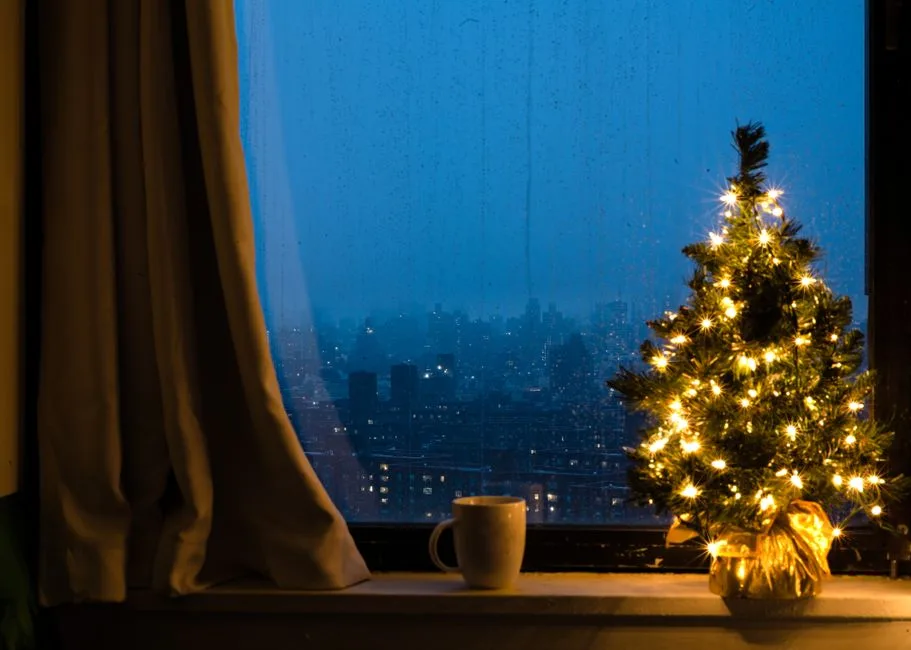
Here is the mistake I watched people make over and over: they treated their apartment as an empty stage and their holiday decor as the set. Throw the wreath on the door, the garland on the mantle, the nutcrackers on the counter, the tree in the corner — and suddenly a 700-square-foot apartment looks like a Christmas pop-up shop that has not finished unpacking. The National Association of Realtors reports that the average U.S. apartment sits under 900 square feet, and a space that small cannot absorb added visual complexity without cost. That cost is the sense of ease you actually want during the holidays.
The clutter trap is this: most people add holiday decorations on top of their existing decor instead of swapping them. Your three everyday throw pillows stay. Your stack of coffee table books stays. Your collection of whatever-you-collect stays. And now there is a Santa figurine wedged between all of it. None of it reads. Everything fights. The room looks busy but feels cold — which is exactly the opposite of what December is supposed to feel like.
Visual noise and visual warmth are not the same thing, and learning to tell them apart is probably the most useful skill in this entire article. Visual noise is too many competing focal points, mismatched scales, or holiday items placed without intention. Visual warmth is the feeling you get when you walk into a room that is dim and glowing and smells like something. One is about stuff. The other is about atmosphere.
The fix is not buying less — it’s applying the one-in-one-out rule to seasonal decorating. Box up your everyday decor as you bring holiday pieces in. Swap the linen throw pillow for a velvet one in deep green. Replace the generic vase with a small evergreen branch in a weighted bottle. The item count on your surfaces stays flat, and the room actually reads as changed rather than overwhelmed.
Actionable takeaway: Before you buy or unpack a single decoration, walk through your apartment with a box. Pull out every non-essential surface item first.
How to Decorate Small Apartment for Christmas Without Sacrificing Function
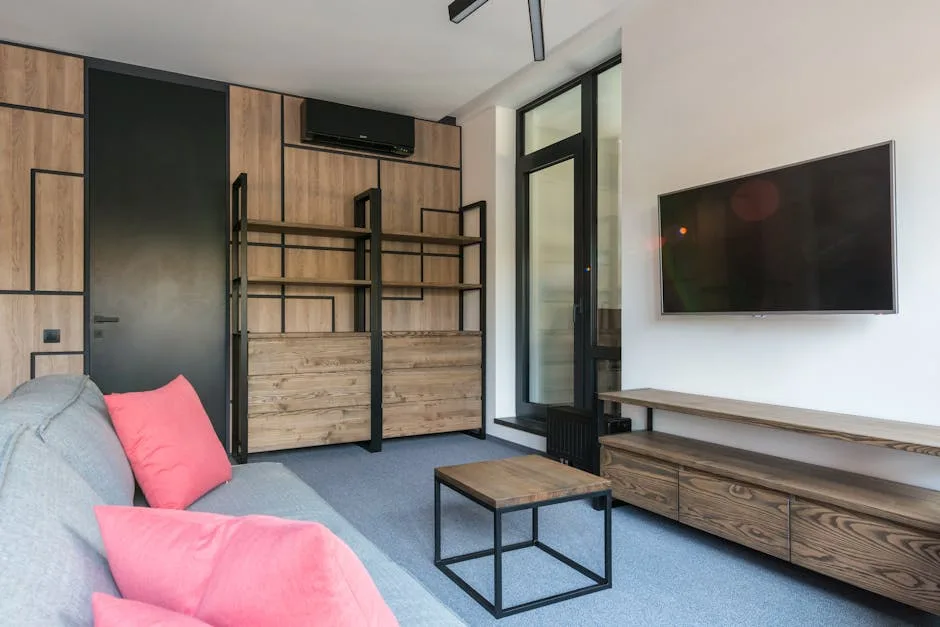
This is where most guidance falls apart — it focuses on what to add without acknowledging what you cannot afford to lose. In a small apartment, every square foot of floor space is doing a job. The path from your front door to your kitchen, the clearance around your bed, the space in front of your couch — these are not decorating opportunities. They are functional corridors that determine whether your home is livable or just photogenic.
The principle I kept coming back to after working in hundreds of small spaces: decoration should improve the room’s atmosphere without interfering with its function. A tree that makes you turn sideways to get to your bathroom is not a decoration. It is an obstacle that happens to have lights on it.
When you set out to decorate small apartment for christmas with this constraint in mind, three priorities clarify immediately. First, identify your anchor point — the one spot in the room where attention naturally lands, usually a window, a fireplace wall, or the wall your couch faces. That is your primary decorating zone. Everything else in the room gets secondary, minimal treatment. Second, choose a three-color maximum for your decorating palette and stick to it across every surface and zone. The reason a well-decorated small space looks curated rather than cluttered is almost always color discipline. Deep green, warm gold, and natural cream will work in virtually any apartment with any existing furniture color. Third, decide before you start which existing items are coming out of the room for the season. Not hidden in a closet — removed from the visual field of the main living area. A basket, a stack of books, an extra chair that usually sits in the corner — when these leave, the holiday items that replace them have room to breathe.
Actionable takeaway: Photograph your apartment before you touch anything. Look at it on your phone screen like a stranger would. Mark every item in the frame that has no functional or emotional purpose. Those go first.
1. Use Vertical Space as Your Secret Square Footage

Most people’s apartments have eight or nine feet of wall height and use approximately twelve inches of it. The floor gets loaded up. The walls stay bare. And then people complain that the room feels cramped — of course it does, all the visual weight is at ankle height. Vertical layering is the single most effective trick interior designers consistently point to for making rooms feel larger, and it applies at least as powerfully when you are adding seasonal decor.
In small apartments, I used to do this with clients: stand in the doorway of the living room and look at where your eye lands. If it lands on the floor or on the couch level, the room is not using its vertical potential. During the holidays, that is fixable in a weekend.
A few approaches that actually work:
- Hanging ornament clusters from ceiling hooks at varying heights — three to five ornaments at different drop lengths, using clear fishing line, creates a floating effect that draws the eye upward and uses zero surface space
- Wall-mounted branch or floating shelf display as a tree alternative — a 3-foot branch mounted at eye level, hung with six or seven curated ornaments, reads as designed rather than as a compromise, and the footprint is literally zero floor inches
- Garland along curtain rods and door frames — not laid across surfaces, but draped up high where it adds greenery and texture without taking anything away from your functional space below
- Tall, narrow floor-to-ceiling ribbon or string light panels — a single strand of warm white lights taped or pinned in a vertical column from ceiling to baseboard creates dramatic height and costs almost nothing
- Stacked decorative boxes in a corner — three gift-wrapped boxes in graduated sizes placed directly in a corner use dead space productively and add color and pattern without sprawling into walkways
The ceiling hook approach took me a while to trust. I had a client in a 550-square-foot studio on the north side of Chicago, and she refused to try it — thought it would look like a craft project gone wrong. We did it anyway with matte gold and deep burgundy ornaments at staggered heights and it was genuinely the best-looking holiday setup I had done that year. Visitors walked in and looked up. That almost never happens in a studio apartment.
2. Replace Your Tree With a Wall Tree
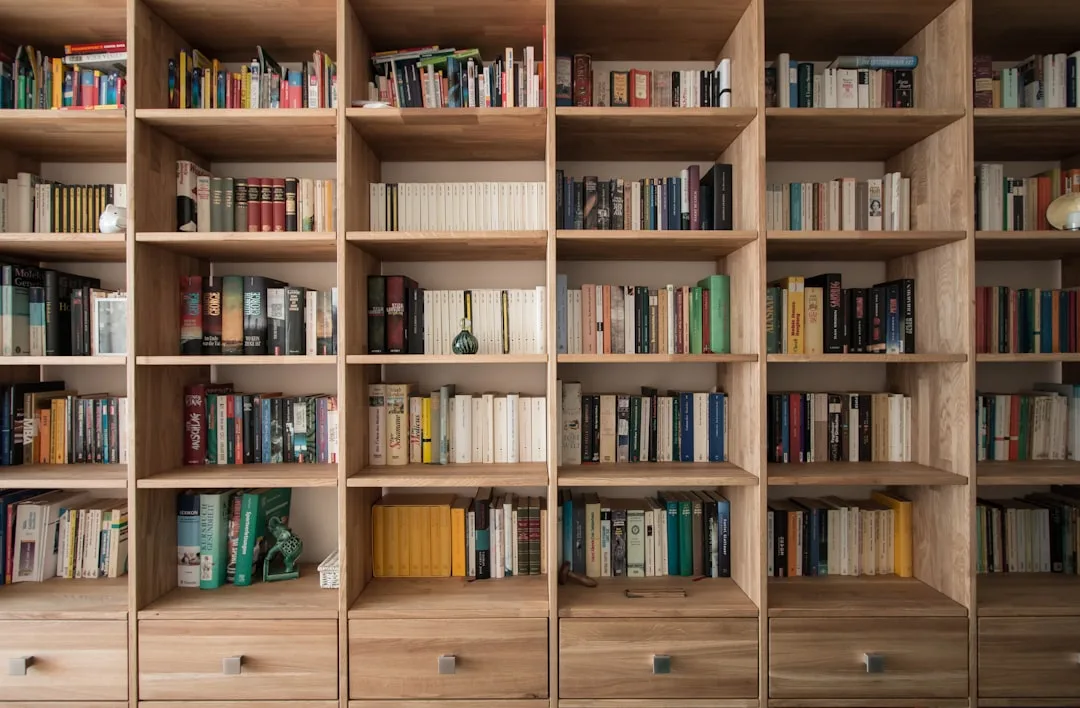
This is the one suggestion people resist the most and thank me for the most. A full-size Christmas tree in a small apartment is almost always a spatial disaster. A six-foot tree needs roughly four square feet of floor clearance around it to look intentional rather than wedged. In a 600-square-foot apartment, that four square feet represents a meaningful percentage of your usable living space — and you are giving it up for a month.
A wall tree solves this entirely. The simplest version: use painter’s tape or removable wall hooks to outline a triangle shape on your wall using string lights. Start with a single point at ceiling height and angle two lines down and outward to about four feet wide at baseboard level. Add horizontal rows of lights between the edges. Hang a handful of ornaments directly on the hooks. Top it with a star cutout or a single oversized ornament.
More elaborate versions use actual branches mounted to the wall in a fan pattern, or a printed triangle of kraft paper layered with real greenery sprigs tucked behind it. The footprint is zero. The visual impact, when done with intention and a consistent color palette, is genuinely impressive.
- Tape and string light version: under $15, two hours, fully removable without wall damage
- Branch-mounted version: sourced from a craft store or your nearest park, takes an afternoon, looks organic and editorial
- Pegboard or dowel version: mount a pegboard painted dark green and hang small ornaments, garland snippets, and battery-powered fairy lights from it — doubles as functional wall storage the rest of the year
If you live in a rental and are nervous about wall attachment, most of these work with removable adhesive strips rated for lightweight loads, which you can find at any hardware store.
3. Make Your Windows Do the Work
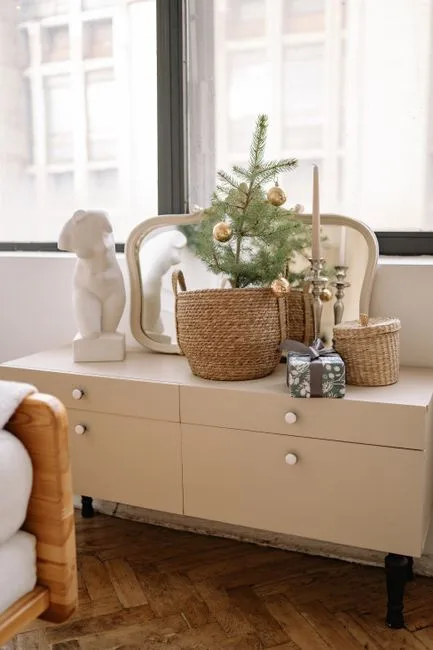
Windows are the most underused decorating surface in small apartments, and during the holidays they become even more valuable because of what happens at night. A window dressed with lights or greenery glows outward into the dark and inward into your room simultaneously — you get double the visual impact for the same amount of effort.
The approaches that work best in small apartments:
- Suction cup hooks with hanging ornament strands — attach three or four hooks along the top of a window frame and hang single ornaments or small clusters at varying lengths using clear wire. At night with the room lights dimmed, this looks stunning for essentially no money
- Candle clusters on the sill — a grouping of three battery-powered pillar candles in different heights on a windowsill uses space that was already empty, adds warm light that bounces off the glass after dark, and creates a focal point visible from both inside and outside
- Single wreath centered in the window — hung from a tension rod or suction cup hook, this uses zero floor and zero surface space, and the outline of a wreath against a dark winter window reads clearly from across the room
- Frosted window cling snowflakes — applied to the lower pane, these are completely removable, cost almost nothing, and add a layer of texture and pattern that makes plain apartment windows feel considered rather than overlooked
The light-bouncing effect is worth planning around deliberately. If your main living area window faces the street or a shared space, the glow coming from it at seven in the evening is part of how you experience approaching your own home. That is worth five minutes of thought.
4. Swap Scent in Before You Swap Decor in
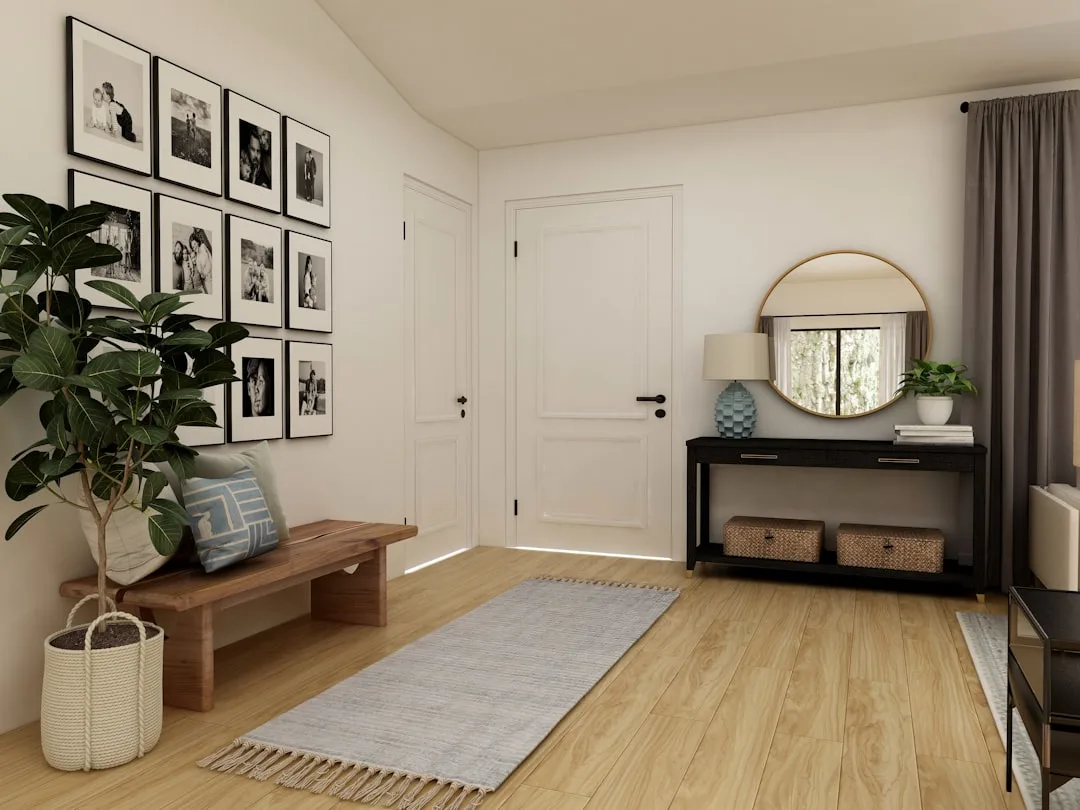
This one gets left out of almost every visual-focused decorating guide, which is a significant omission. Scent is processed faster than sight. When you walk into a room that smells like balsam or clove or warm vanilla, your brain registers “this is a holiday space” before your eyes have finished processing the visual information. In small apartments, where you have limited surfaces and limited spatial freedom, scent does an outsized amount of atmospheric work.
The key is choosing one dominant scent and committing to it rather than layering competing fragrances. A balsam candle next to a cinnamon simmer pot next to a pine-scented spray is not more festive — it is olfactory noise, which functions exactly like visual noise. One well-chosen scent, consistent across the space, does more for the feeling of the room than a dozen well-placed ornaments.
Specific approaches that work well in small apartments:
- Simmering a pot of water with cinnamon sticks, orange peel, and a few cloves for an hour before guests arrive — this costs pennies and smells genuinely like the holidays rather than like a candle trying to smell like the holidays
- A single high-quality candle in your anchor zone — one good candle burning in the primary focal point of the room ties the scent to the visual center, which reinforces both
- Fresh eucalyptus or rosemary bundled into a small vase — these smell clean and green rather than aggressively holiday, which tends to work better in apartments where you also need the space to function as your everyday home through December
5. Light the Room in Layers, Not Overhead
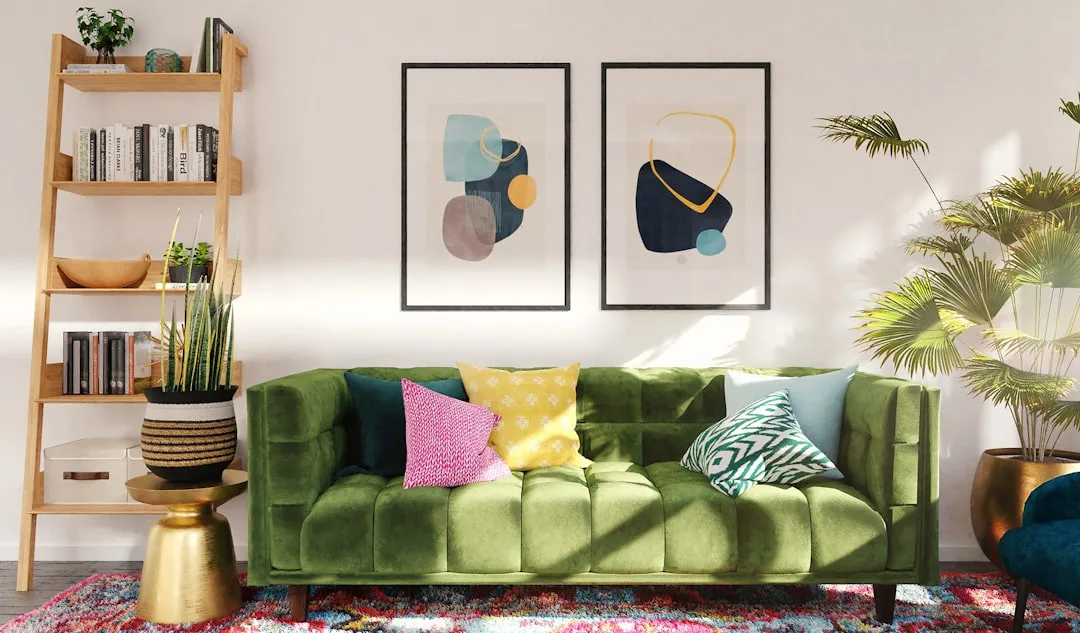
Overhead lighting is the enemy of holiday atmosphere in small apartments. It flattens everything. It makes the room look the same as it looks in July. If you want your decorated apartment to feel genuinely magical rather than just decorated, the fastest change you can make has nothing to do with what you put on your surfaces — it is about turning off the overhead light and replacing it with three or four lower, warmer light sources.
During the holidays, this is easier than at any other time of year because you already have string lights and candles as part of your decorating vocabulary. The trick is treating those light sources as your primary lighting rather than as supplementary decoration.
- String lights draped along a bookshelf edge or window frame become ambient room light when the overhead is off — warm white bulbs at 2700K color temperature read as genuinely warm rather than clinical
- A salt lamp or amber-bulb table lamp in the corner opposite your main seating area creates depth — your eye reads the room as larger because it cannot see all the way to the wall clearly
- Battery-powered tea lights inside glass votives or mason jars scattered across a coffee table or windowsill give you flicker without fire risk, which matters in small apartments where surfaces are close to fabric and paper
- Dimmer switches or smart plugs with scheduling so your ambient holiday lighting turns on automatically at sundown — this small change makes coming home feel different every evening in December without any additional effort
The layered lighting approach works synergistically with every other trick in this guide. A floating ornament installation in a brightly-lit room looks like a craft project. The same installation in a room lit by string lights and a single candle looks like something from a design magazine.
6. Treat Your Bookshelf as a Display Case
Most small apartment dwellers already have a bookshelf functioning as their primary storage and display surface. During the holidays, that shelf becomes one of your most valuable decorating assets — and most people completely ignore it in favor of surfaces they do not actually have.
The approach that works: pull two or three books off a single shelf and replace them with a small curated holiday vignette. Three items maximum. A small evergreen sprig in a bud vase, one ornament, one candle. That is a complete vignette. The books on either side of it frame it and give it context. You have added a holiday moment to your room without adding anything to your floor, your coffee table, or your counter.
Repeat this on one or two other shelves with variation — different items, same palette. The result is a bookshelf that reads as seasonally decorated without looking like you emptied a holiday bin onto it. The key rules:
- Odd numbers only — three items, or five if the shelf is wide. Even numbers feel static and symmetrical in a way that reads as accidental rather than designed
- Vary the heights — a tall candle, a medium ornament, a low sprig. If everything is the same height, the vignette disappears
- Use the existing book spines as part of the palette — if your shelf happens to have books with dark green or red spines anywhere near your vignette zone, arrange them to the front. Free color contribution
7. Put Greenery Everywhere Except the Floor
Fresh or faux greenery is the single most cost-effective atmospheric tool you have when you decorate small apartment for christmas. A six-inch sprig of eucalyptus tucked into a vase, a small bundle of pine tied with twine on a door handle, a single cedar branch laid across a bathroom shelf — each of these reads as intentional and seasonal without requiring any planning, any significant money, or any surface space that was not already available.
The rule I used with every client who had a small space: greenery on vertical and elevated surfaces only. Nothing on the floor. The moment greenery goes on the floor — a wreath laid flat, a basket of pine cones at baseboard level — it adds visual weight to the zone of the room that is already doing the most work. Put it up. Tuck it in. Hang it. Let it trail from a shelf edge downward rather than sitting on a surface.
Specific placements that work:
- Tucked into curtain tiebacks — a small sprig of faux pine or real cedar tucked into wherever your curtain is gathered gives the window a finished, considered look for no effort
- Laid across picture frame tops — a single branch balanced across the top of a framed print or mirror adds a layer of organic texture at eye level and uses space that is otherwise always empty
- In every small vessel you already own — the bud vase on your bathroom shelf, the empty wine bottle on your kitchen counter, the small glass you use as a pencil cup — any of these becomes a holiday moment with one green sprig dropped into it
8. Give Your Entryway a Single Strong Moment
In small apartments, the entryway is often a hallway or a corner — five or six square feet of transitional space that most people treat as a dumping ground for shoes and bags. During the holidays, this is an opportunity most people miss entirely. The entryway is the first impression of your decorated space, and one well-executed moment there sets the tone for the entire apartment before anyone has seen anything else.
The constraint is real: you probably cannot add floor items to an entryway that already has shoes and a coat hook situation. So the single strong moment has to be vertical or wall-mounted.
- A wreath on the inside of your front door — most people only think about the exterior, but a wreath on the inside of your door means the first thing you see when you come home is a full circle of greenery at eye level. That lands differently than a wreath facing outward for neighbors
- A small framed holiday print or typography piece hung in the entryway where nothing is currently hung — this is a zero-space addition that adds a seasonal note without encroaching on the functional corridor
- A single candle or small lamp on any entryway shelf or console — if you have any surface in your entry, one warm light source on it transforms the arrival experience, especially in the dark evenings of December
The goal is a single moment, not a decorated zone. One thing that lands clearly is better than three things that compete.
9. Use Textiles to Shift the Entire Room’s Feeling
This is the most underestimated tool in the small-apartment holiday decorating kit, and it is also the most reversible, the least expensive, and the least spatially demanding. Textiles — throws, pillow covers, a rug — change the feeling of a room more dramatically than almost any decorating element, because they affect multiple senses simultaneously. A chunky knit throw in deep red changes the visual warmth of a room. It also changes the tactile experience of sitting on the couch. It also signals, unconsciously, that this is a season of staying in and staying warm.
The swap principle applies here more powerfully than anywhere else. You are not adding a holiday throw to your existing throws. You are replacing your existing throw with a holiday one. The item count stays flat. The room feels transformed.
- Velvet pillow covers in deep jewel tones — emerald, burgundy, navy — swap onto your existing pillow inserts and instantly shift the room’s seasonal register. Cost is minimal. Storage requirement for your swapped-out everyday covers is one small bag
- A holiday-pattern throw blanket draped over the arm of your couch or the foot of your bed does more atmospheric work per square inch than almost any decorative object you could place on a surface
- A small area rug swap if you have the budget — a rug in a warm, dark tone grounds the room differently in winter than your everyday rug might, and it affects the entire visual weight of the space from the moment you walk in
The textile approach to decorating small apartment for christmas works because it transforms the room you already have rather than adding to it. The furniture stays. The layout stays. The item count on your surfaces stays. But the room looks and feels like a different season.
Frequently Asked Questions
How do I decorate a small apartment for Christmas when I rent and can’t put holes in the walls?
Almost everything in this guide works without permanent wall damage. Removable adhesive strips rated for lightweight loads handle wall-mounted branches, small frames, and hanging garland. Suction cup hooks rated for glass hold ornament strands and small wreaths on windows. Tension rods fit inside window frames and door frames with zero hardware. The only limit is weight — keep wall-mounted holiday items under two pounds per adhesive point and you will have no issues.
What size Christmas tree actually works in a small apartment?
If you want a traditional tree, stay under four feet tall and choose a narrow profile specifically labeled “pencil tree” or “slim tree” — these are designed to fit in tight corners and typically require only about one square foot of floor space. Anything wider than that at the base starts competing with furniture clearance. Alternatively, a tabletop tree (under two feet) placed on an existing surface like a side table or dresser uses no additional floor space and can look genuinely charming when well-decorated with small, curated ornaments rather than the full-size set.
How do I make my small apartment smell festive without it being overwhelming?
Choose one scent and one delivery method. A single well-chosen candle in your main living space is usually enough for an apartment under 800 square feet — the space is small enough that the scent travels. If you want something more natural, a simmer pot on the stove for an hour before you settle in for the evening works better than any candle. The mistake is layering multiple scents. Two competing holiday fragrances in a small space cancels out both and creates something that smells like a holiday store rather than a home.
Is it worth decorating every room in a small apartment, or should I focus on one?
Focus on one primary space — almost always the main living area — and give secondary spaces a single moment each. Your bedroom gets one textile swap and one small greenery element. Your bathroom gets one small vignette on the shelf. Your entryway gets one strong vertical moment. Spreading equal decorating effort across every room in a small apartment produces a result where no space feels fully realized. Concentrating most of your effort in the main living area and giving supporting spaces one considered touch each is the approach that produces the most satisfying overall result.
When should I start decorating a small apartment for Christmas to avoid feeling overwhelmed?
The first weekend of December is usually right for small apartments. Earlier than that and you are living with the decor for too long in a space where you cannot easily escape it — there is no other room to retreat to. The preparation work, meaning the edit-out-your-everyday-items step, can happen the last weekend of November. Then the actual decorating goes quickly because you have already done the harder part of clearing space for it.
How do I decorate a small apartment for Christmas when I rent and can’t put holes in the walls?
Almost everything in this guide works without permanent wall damage. Removable adhesive strips rated for lightweight loads handle wall-mounted branches, small frames, and hanging garland. Suction cup hooks rated for glass hold ornament strands and small wreaths on windows. Tension rods fit inside window frames and door frames with zero hardware. The only limit is weight — keep wall-mounted holiday items under two pounds per adhesive point and you will have no issues.
What size Christmas tree actually works in a small apartment?
If you want a traditional tree, stay under four feet tall and choose a narrow profile specifically labeled “pencil tree” or “slim tree” — these are designed to fit in tight corners and typically require only about one square foot of floor space. Anything wider than that at the base starts competing with furniture clearance. Alternatively, a tabletop tree (under two feet) placed on an existing surface like a side table or dresser uses no additional floor space and can look genuinely charming when well-decorated with small, curated ornaments rather than the full-size set.
How do I make my small apartment smell festive without it being overwhelming?
Choose one scent and one delivery method. A single well-chosen candle in your main living space is usually enough for an apartment under 800 square feet — the space is small enough that the scent travels. If you want something more natural, a simmer pot on the stove for an hour before you settle in for the evening works better than any candle. The mistake is layering multiple scents. Two competing holiday fragrances in a small space cancels out both and creates something that smells like a holiday store rather than a home.
Is it worth decorating every room in a small apartment, or should I focus on one?
Focus on one primary space — almost always the main living area — and give secondary spaces a single moment each. Your bedroom gets one textile swap and one small greenery element. Your bathroom gets one small vignette on the shelf. Your entryway gets one strong vertical moment. Spreading equal decorating effort across every room in a small apartment produces a result where no space feels fully realized. Concentrating most of your effort in the main living area and giving supporting spaces one considered touch each is the approach that produces the most satisfying overall result.
When should I start decorating a small apartment for Christmas to avoid feeling overwhelmed?
The first weekend of December is usually right for small apartments. Earlier than that and you are living with the decor for too long in a space where you cannot easily escape it — there is no other room to retreat to. The preparation work, meaning the edit-out-your-everyday-items step, can happen the last weekend of November. Then the actual decorating goes quickly because you have already done the harder part of clearing space for it.