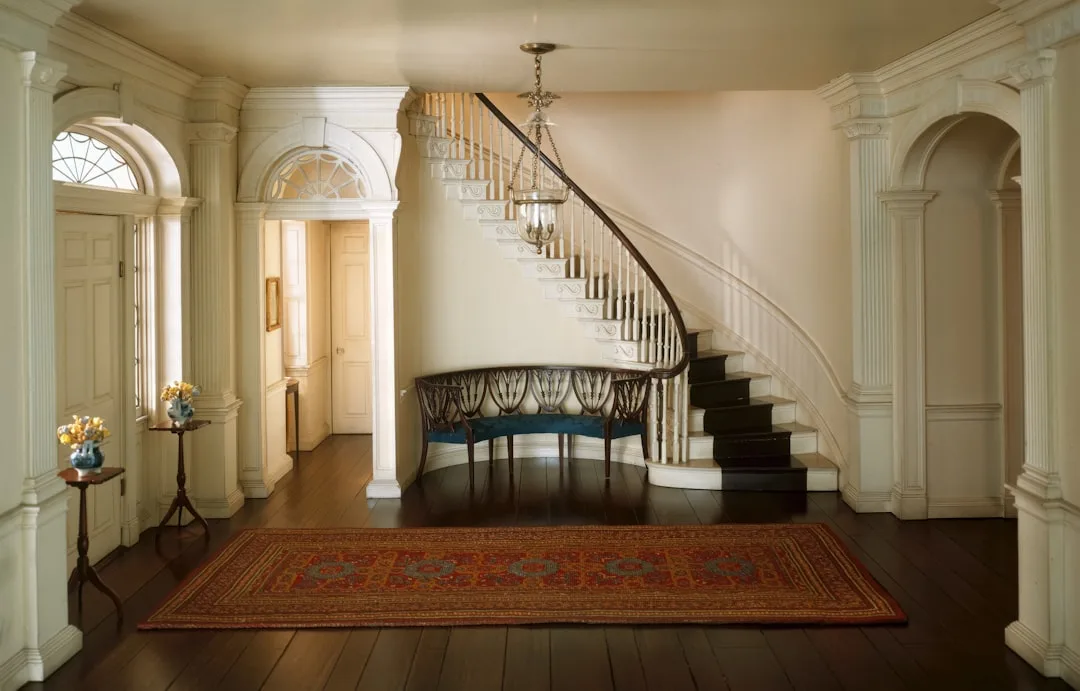
Your entryway has about seven seconds to set the emotional temperature of your entire home — and most fall decorating guides waste all seven of them telling you to buy a pumpkin. If you’re searching for fall decor for entryway spaces that actually feel like something rather than just look seasonal, you’re in the right place — because this is about intention, not inventory.
Quick Answer
Your entryway has about seven seconds to set the emotional temperature of your entire home — and most fall decorating guides waste all seven of them telling you to buy a pumpkin.
I spent eleven years walking into people’s homes before they’d cleaned up, before they’d staged anything, before they knew I was paying attention — and the entryways that stopped me weren’t the ones with the most stuff. They were the ones where someone had clearly thought about what walking through their door should feel like. That distinction matters even more in fall, when the gap between “cozy and intentional” and “Target clearance aisle” is smaller than most people realize.
This isn’t a photo gallery with captions. It’s a system — one that works whether your foyer is a defined room with high ceilings or a thirty-square-inch landing strip between your front door and your living room couch.
Why Your Foyer Sets the Emotional Tone for the Entire Season
In This Article
- Why Your Foyer Sets the Emotional Tone for the Entire Season
- How to Decorate Your Entryway for Fall When You’re Starting From Zero
- The 3-5-7 Rule Explained — And How to Apply It to Fall Foyer Vignettes
- Scent, Sound, and the Sensory Layer Most Decorators Skip
- What to Do When You Have Almost Nothing to Work With
- Maintaining the Seasonal Shift From Early October Through Late November
Most people treat their entryway as a functional problem: where do the shoes go, where are the keys, can guests hang their coats. Fall decorating gets layered on top of that as an afterthought — a wreath on the door, maybe a pumpkin that rolls every time someone opens the screen door.
Here’s what environmental psychology has been documenting for decades: transitional spaces affect mood and perceived comfort disproportionately to their size. Your foyer isn’t a room you live in. It’s a room you pass through — and that constant, repeated exposure to a space makes its sensory input more powerful, not less. Research in environmental psychology indicates that first impressions of interior spaces form within roughly seven seconds. Your foyer isn’t your entire home’s first chapter — it is the first chapter. Everything the living room, kitchen, and dining table does emotionally gets pre-framed by what someone encounters at the threshold.
Fall, specifically, carries a psychological weight that no other season does. It’s the season of transition — of something ending, of warmth becoming precious rather than assumed. Your foyer should reflect that shift, not merely signal it with a foam gourd from a big box endcap display.
I once worked with a client in Wicker Park whose apartment had a proper entryway — about six feet wide, with original tile and one coat hook. She’d spent $240 on a fall wreath, a doormat, and a small orange pumpkin cluster. It looked fine. It felt like nothing. We spent forty minutes rearranging what she already owned — a ceramic bowl from her kitchen, a linen throw from the couch, two brass candlesticks from a thrift store — and the foyer went from fine to something that made you exhale when you walked in. That’s what intentional fall styling does. Not aesthetics. Feeling.
The elements that made the difference in that Wicker Park foyer weren’t seasonal at all. They were:
- Texture contrast — the smooth ceramic next to the rough linen created something for the eye to move through
- Warm metal — the brass candlesticks picked up the amber tones in the original floor tile and created visual continuity
- A single natural element — one dried stem from a farmers market bundle, placed loosely, not arranged stiffly
- Negative space — we deliberately left the corner empty, which made the arrangement feel considered rather than crammed
None of those things cost money that week. None of them were purchased at a seasonal display. All of them were intentional decisions about what to stop doing as much as what to add.
Actionable takeaway: Before you buy a single seasonal piece, stand in your entryway for thirty seconds and ask: does this space currently make me feel anything? If the answer is no, the problem isn’t a missing pumpkin — it’s an absent anchor.
How to Decorate Your Entryway for Fall When You’re Starting From Zero

No console table. No built-in bench. Maybe no wall space that isn’t covered by a door or a light switch. I’ve seen all of it — and the mistake most people make is assuming that fall decor for entryway styling requires furniture infrastructure that they don’t have.
It doesn’t. What it requires is an anchor point, which is not the same thing as a piece of furniture.
Start here: identify your entryway’s architecture type before you buy or move anything.
- Defined foyer with walls: You have the most options. Work vertically — wall hooks, a leaning mirror, a hanging dried botanical bundle overhead.
- Open-plan pass-through: The rug comes first. Always. A jute or vintage-style rug in warm tones defines the zone conceptually before you add a single seasonal element. Without it, your fall vignette floats in space and reads as random objects near a door.
- Narrow hallway: Verticality is your only move. A tall dried pampas arrangement, a floor-leaning mirror, a wall-mounted shelf at eye level — these pull the eye up instead of crowding the corridor.
- Apartment entry with no distinct landing zone: A vintage trunk, a small woven basket cluster, or even a single oversized ceramic vessel on the floor creates an anchor from nothing.
Once your anchor exists, build your fall palette before you buy a single piece. Warm terracotta, deep burgundy, muted sage, and aged brass all work across the three most common foyer light conditions — bright natural, dim artificial, and that frustrating mixed situation where one window faces north and the overhead bulb is the wrong temperature. These colors don’t fight the light. They cooperate with it.
Then layer using the vertical axis — and I mean deliberately, not by accident. Interior designers consistently recommend a three-level vertical approach in entryway vignettes: floor level, surface or mid level, and eye level or wall. This works in spaces as narrow as four feet wide. Floor-level gourds or a basket of pine cones. A tray vignette or a small stacked arrangement at mid-height. A wreath, mirror, or shelf at eye level. Without all three zones activated, even a well-chosen collection of fall pieces looks flat — like items placed near a door, not a styled space.
What to actually shop for when you’re starting from zero:
- A jute or wool rug in warm ochre, rust, or natural tones — this is your single highest-impact purchase if you have none
- One large-scale natural element: a tall dried pampas stem, a bundle of eucalyptus, or a dried wheat sheaf in a floor vase
- A woven basket or ceramic vessel at floor level to hold smaller seasonal items
- One source of warm light — a plug-in sconce, a battery-operated lantern, or a cluster of pillar candles on a tray
- A single textile: a linen runner, a folded throw draped over a basket, or a cloth tote hung on a hook with visual intention
That list totals under $80 at most thrift stores and markets. The point isn’t frugality — it’s that these five categories cover all three vertical zones and all major sensory inputs (texture, light, organic material, color) without requiring a single piece of foyer furniture.
Actionable takeaway: Pick your anchor point first — whether it’s a trunk, a basket cluster, a leaning mirror, or a wall-mounted shelf — and build outward from there. The furniture can come later. The anchor cannot wait.
The 3-5-7 Rule Explained — And How to Apply It to Fall Foyer Vignettes
Here’s the thing about design rules: most of them exist because someone got tired of explaining why something looked wrong and needed shorthand. The 3-5-7 rule is exactly that kind of shorthand — and in eleven years of professional work, I never once set up a vignette that felt intentional by ignoring it.
The rule originates from classical design theory and is taught in professional interior design curricula as a foundational grouping principle. The core premise: objects arranged in odd numbers read as more visually dynamic than even groupings because they resist the eye’s instinct to pair things symmetrically. An arrangement of two identical candlesticks feels like a set. Three candlesticks of varying heights feel like a decision.
Applied specifically to fall decor for entryway vignettes, here’s how the numbers break down:
- Group of 3 — on a tray or surface: one pillar candle, one small ceramic gourd, one sprig of dried botanicals. Vary height. Vary texture. Keep colors within a two-tone range.
- Group of 5 — at floor level: three pumpkins or gourds in graduated sizes, one woven basket, one natural element like a bundle of wheat or a single branch. The basket anchors the group; the natural element prevents it from reading as a grocery display.
- Group of 7 — for a full wall or shelf arrangement: combine objects from both groups above, add a framed piece or mirror, and treat the whole composition as one unit rather than separate clusters.
The most common mistake people make when applying this rule to fall decor for entryway spaces: they count wrong. A tray counts as one object, not zero. A stack of books counts as one object. A pair of matching candlesticks counts as one object. If you’re grouping a tray + candle + gourd + dried stem + small ceramic bowl, that’s actually a group of 5, not 4 — because the tray is the base element that unifies the others into a single visual unit.
Practical troubleshooting for the 3-5-7 rule:
- If your arrangement looks cluttered even in odd numbers, you’ve likely repeated the same height twice — solve it by swapping one object for something significantly taller or shorter
- If it looks sparse even with five objects, you’re probably missing a low-horizontal element; add a flat stone, a folded cloth, or a small dish to ground the group
- If nothing you try feels cohesive, check your textures before your colors — conflicting textures (shiny plastic next to matte ceramic next to glossy lacquer) read as chaos even when the color palette is perfect
- If the arrangement keeps drawing your eye to one corner, you have unintentional visual weight imbalance; move your tallest element closer to center, not to the edge
Scent, Sound, and the Sensory Layer Most Decorators Skip
This is the section that most fall decorating guides don’t include — and it’s the reason why some beautifully styled entryways still feel like nothing when you walk in.
Visual styling is the first layer. But the entryway is also the first sensory environment someone encounters, which means scent and sound carry equal weight in determining whether a space feels deliberately fall or incidentally seasonal.
Scent in the foyer:
The mistake is using a candle. Not because candles are wrong, but because an open-flame candle in a foyer — especially a high-traffic one — gets extinguished constantly by the door opening and closing. What actually works:
- A reed diffuser positioned away from the door draft, in a warm amber or deep tobacco/cedar scent profile
- A small ceramic dish with dried cloves, cinnamon sticks, and a few drops of orange essential oil — no flame, no reed, completely self-sufficient
- Dried botanicals that carry their own scent: eucalyptus loses its camphor sharpness as it dries and becomes something closer to herbal warmth; dried lavender bundles softened with age move toward something almost amber
- A linen spray on your doormat or textile — two spritzes of a spiced fig or clove scent on a fabric surface lasts several days and hits immediately when someone enters
What to avoid in foyer scenting: anything sharp, synthetic, or floral. Pumpkin spice candles that smell like aerosol dessert. Fresh pine when you have no other natural elements to support it. Eucalyptus if your foyer is small enough that the sharpness concentrates — in tight spaces, it reads as cleaning product, not decor.
Sound in the foyer:
This one surprises people. Sound travels into entryways from adjacent rooms, and what guests hear the moment they enter sets a tone as surely as what they see. For fall specifically:
- A small Bluetooth speaker tucked behind a basket, playing low-volume ambient sound — crackling fire recordings, acoustic folk, slow jazz — costs nothing beyond what you already own
- Wind chimes positioned at a back door or window, audible but not visible from the foyer, create an outdoor-indoor continuity that reads as intentional warmth
- Silence, when the rest of the home is generating warm ambient noise (a simmering pot, quiet music from the kitchen), works in your favor — the foyer becomes the calm before the warmth, which is exactly what fall entry styling should feel like
The goal isn’t a sensory performance. It’s removing the sensory friction that makes a beautifully styled entryway still feel incomplete.
What to Do When You Have Almost Nothing to Work With
Sometimes the constraint is real: you’re renting, you can’t put holes in walls, your foyer is literally a four-foot stretch of linoleum between the door and the stairs, and your fall decorating budget is closer to $15 than $150. This section is for that situation.
The good news is that the most effective fall decor for entryway styling at near-zero budget relies on natural materials — which are either free or extremely cheap at farmers markets and craft stores in October.
Free or nearly free fall foyer elements:
- Branches from your yard or neighborhood: A single branch with turning leaves placed in a tall vessel (a wide-mouth mason jar, a ceramic vase, even a clean glass bottle) is more visually interesting than most purchased fall arrangements. The key is selecting branches with movement — curved, not straight — and leaves in at least two different colors.
- Pine cones collected on a walk: Fill a woven basket or a ceramic bowl. Add a cinnamon stick or two. Done. Cost: $0 plus the price of a cinnamon stick.
- Dried corn husks: Available at grocery stores in fall for under $3, typically sold for tamale-making. Arranged loosely in a tall basket or tied in a bundle and hung on a hook, they read as entirely intentional fall styling.
- A single gourd from a farmers market: One large, interesting gourd on the floor — not a cluster of five orange pumpkins, one weird-shaped gourd that has color variation — does more visual work than a purchased decorative cluster costing six times as much.
- Your own kitchen textiles: A linen dish towel in warm tones, folded over a basket handle or draped over a hook, adds textile warmth without purchasing anything new.
When you can spend $15-30, prioritize in this order:
- A small jute or natural fiber mat if you have none — even a 2×3 doormat creates zone definition
- One dried botanical bundle (pampas, wheat, dried eucalyptus) from a craft store or farmers market
- A single pillar candle in cream, rust, or deep burgundy on a small plate or tray you already own
- Dried citrus slices from your own kitchen, threaded on twine and hung from a hook — costs the price of one orange and an hour of oven time at 200°F
None of these require furniture. None require wall holes. All of them work in the smallest, most constrained entryway situation.
Maintaining the Seasonal Shift From Early October Through Late November
One of the most common problems with fall decor for entryway styling: it’s set up in early October and looks exhausted by Halloween, leaving you with five weeks of a tired foyer through Thanksgiving.
The solution isn’t buying more — it’s staging in phases.
Phase 1: Early October (weeks 1–3)
Focus on the palette and texture layer, not explicit seasonal symbols. This means:
- Warm textiles (a folded throw, a linen runner in rust or ochre)
- Dried botanical elements that age gracefully (pampas, wheat, dried eucalyptus)
- Neutral gourds and squash in deep green, ivory, or pale gold — these read as fall without reading as Halloween
- Warm amber light sources: a lantern, a beeswax candle cluster, a plug-in sconce with a warm bulb
Phase 2: Mid-October through Halloween (weeks 3–5)
Add the more explicitly seasonal layer on top of what you’ve already established:
- Orange and deep-red pumpkins join the neutral gourds already in place
- A wreath with more saturated fall color (burgundy berries, copper leaves) replaces a simpler dried one
- A single moody element — a black taper candle, a dark lantern, dried seed pods — extends the visual interest without tipping into Halloween kitsch
Phase 3: Post-Halloween through Thanksgiving (weeks 6–9)
Strip back the Halloween-adjacent elements and shift toward harvest and gratitude tones:
- Remove the orange pumpkins; keep the neutral gourds and white or cream pumpkins
- Replace berry wreaths with simpler dried herb or wheat wreaths
- Add a small bowl of mixed nuts, dried seed pods, or a few acorns gathered outside
- Deepen the textile layer: a heavier throw, a thicker doormat if weather permits
This three-phase approach means your fall decor for entryway spaces stays visually current across the entire season without requiring a complete overhaul every three weeks. Each phase builds on the last rather than replacing it.
Frequently Asked Questions About Fall Decor for Entryway Styling
Q: What’s the single most important fall decor purchase for an entryway with no furniture?
A rug or floor mat in warm, natural tones. Before any decorative element — before a wreath, a pumpkin, a basket, anything — the rug defines the zone. An entryway without a rug is a section of floor that happens to be near a door. An entryway with a rug is a space. Everything else you add after that benefits from that foundation. If your budget allows only one purchase, this is it — a jute mat, a vintage-style wool runner, or even a simple natural fiber doormat does more spatial work than any decorative object.
Q: How do I make fall decor for my entryway look intentional rather than seasonal-by-the-checklist?
Limit your explicit fall symbols to one or two per vignette. One pumpkin or gourd, not seven. One dried botanical bundle, not a dense cluster of every available fall stem. The rest of your styling should be textural and color-based — warm tones, natural materials, varied heights — rather than symbol-based. The difference between “intentional fall styling” and “seasonal checklist” is restraint: the more clearly you’re trying to signal FALL, the less it feels designed.
Q: Can I do fall entryway decorating as a renter with no wall hooks and no furniture?
Yes — and the floor is your primary design surface. A floor-level composition using a woven basket, a gourd or two, a tall vessel with a dried branch, and a small lantern on a tray creates a full vignette without a single wall fixture or furniture piece. For textiles, a folded throw basket or a hung linen tote over the door handle adds height without hardware. For scent, a reed diffuser or ceramic dish with spices sits on the floor without needing a surface. The constraint of renting pushes you toward floor-level and layered compositions, which often look more considered than wall-dependent arrangements anyway.
Q: My entryway gets very little natural light. What fall colors and materials actually work in dim conditions?
Warm tones perform best under artificial light, which works in your favor for fall. Deep terracotta, burnt orange, aged brass, and cream all read richly under warm bulbs. What to avoid: muted sage, dusty blue, and pale gray — these colors go flat and cold in dim artificial light and lose the seasonal warmth you’re working toward. For materials, matte textures (linen, jute, unglazed ceramic, raw wood) absorb warm light beautifully, while shiny surfaces (lacquered pumpkins, glossy ceramic, metallic foil) reflect it in ways that can read as harsh. One candlelight source — even a battery-operated one — in a dim foyer does more for fall ambiance than any decorative purchase.
Q: When should I start and when should I take down fall entryway decor?
Start the first phase (texture and palette) anytime from late September onward — the transition reads as early fall rather than premature. The explicit seasonal layer (pumpkins, saturated fall wreaths) fits comfortably from mid-October through Halloween. Post-Halloween, strip the more explicit symbols and shift toward the harvest and Thanksgiving palette described in the phase guide above. Take everything down by the first of December at the latest — fall foyer styling that runs into December starts competing with winter styling and loses both races. The goal is a clean swap, not a gradual fade.
Q: What’s the single most important fall decor purchase for an entryway with no furniture?
A rug or floor mat in warm, natural tones. Before any decorative element — before a wreath, a pumpkin, a basket, anything — the rug defines the zone. An entryway without a rug is a section of floor that happens to be near a door. An entryway with a rug is a space. Everything else you add after that benefits from that foundation. If your budget allows only one purchase, this is it — a jute mat, a vintage-style wool runner, or even a simple natural fiber doormat does more spatial work than any decorative object.
Q: How do I make fall decor for my entryway look intentional rather than seasonal-by-the-checklist?
Limit your explicit fall symbols to one or two per vignette. One pumpkin or gourd, not seven. One dried botanical bundle, not a dense cluster of every available fall stem. The rest of your styling should be textural and color-based — warm tones, natural materials, varied heights — rather than symbol-based. The difference between “intentional fall styling” and “seasonal checklist” is restraint: the more clearly you’re trying to signal FALL, the less it feels designed.
Q: Can I do fall entryway decorating as a renter with no wall hooks and no furniture?
Yes — and the floor is your primary design surface. A floor-level composition using a woven basket, a gourd or two, a tall vessel with a dried branch, and a small lantern on a tray creates a full vignette without a single wall fixture or furniture piece. For textiles, a folded throw basket or a hung linen tote over the door handle adds height without hardware. For scent, a reed diffuser or ceramic dish with spices sits on the floor without needing a surface. The constraint of renting pushes you toward floor-level and layered compositions, which often look more considered than wall-dependent arrangements anyway.
Q: My entryway gets very little natural light. What fall colors and materials actually work in dim conditions?
Warm tones perform best under artificial light, which works in your favor for fall. Deep terracotta, burnt orange, aged brass, and cream all read richly under warm bulbs. What to avoid: muted sage, dusty blue, and pale gray — these colors go flat and cold in dim artificial light and lose the seasonal warmth you’re working toward. For materials, matte textures (linen, jute, unglazed ceramic, raw wood) absorb warm light beautifully, while shiny surfaces (lacquered pumpkins, glossy ceramic, metallic foil) reflect it in ways that can read as harsh. One candlelight source — even a battery-operated one — in a dim foyer does more for fall ambiance than any decorative purchase.
Q: When should I start and when should I take down fall entryway decor?
Start the first phase (texture and palette) anytime from late September onward — the transition reads as early fall rather than premature. The explicit seasonal layer (pumpkins, saturated fall wreaths) fits comfortably from mid-October through Halloween. Post-Halloween, strip the more explicit symbols and shift toward the harvest and Thanksgiving palette described in the phase guide above. Take everything down by the first of December at the latest — fall foyer styling that runs into December starts competing with winter styling and loses both races. The goal is a clean swap, not a gradual fade.