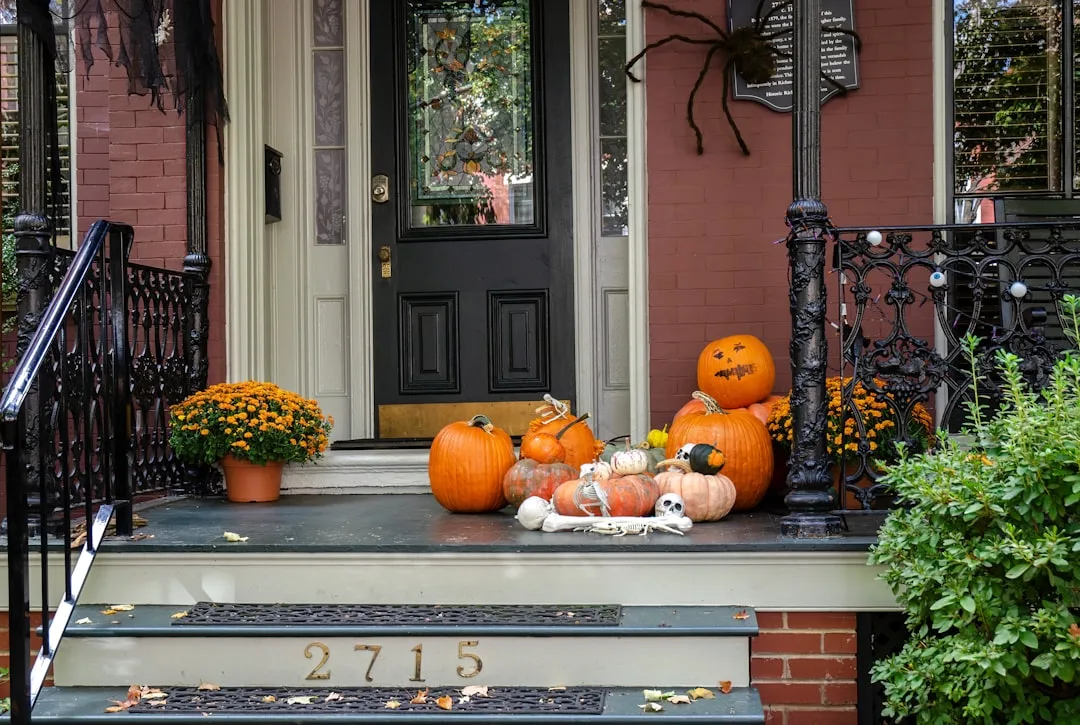
Your entryway forms a guest’s lasting impression in under 7 seconds — and most seasonal decorating advice guarantees you’ll waste all 7 of them on a pumpkin cluster they’ve seen a hundred times before.
Quick Answer
Your entryway forms a guest’s lasting impression in under 7 seconds — and most fall decorating advice guarantees you’ll waste all 7 of them on a pumpkin cluster they’ve seen a hundred times before.
I spent eleven years walking into people’s homes before they’d had a chance to tidy them, before the staging was done, before anyone had thought carefully about what that first interior moment communicated. What I saw, over and over, was that the entryway wasn’t treated as a room. It was treated as a landing strip — a place to drop seasonal items from a Target endcap and call it decorated. The homes that felt genuinely warm and considered the moment you crossed the threshold? They had almost nothing in common with each other in terms of style. What they shared was intentionality. Someone had made choices there, not just placements.
That’s the whole project here. Not a shopping list. A way of thinking about fall entry decor that produces a result you’ll still like in three weeks, not one that embarrasses you by November 1st.
How to Decorate Your Entryway for Fall Without the Clichés
In This Article

Start with a mood board, not a shopping cart. This is the step that separates entries that look designed from entries that look decorated, and most people skip it entirely because it feels like extra work. It isn’t. It’s the work that prevents you from spending $200 on things that don’t cohere.
Before you buy a single stem or swap a single pillow, identify two anchoring colors and one texture family. Two. Not five. I’ve watched clients walk into HomeGoods with no framework and walk out with a burgundy lantern, a rust-orange pillow, a cream ceramic pumpkin, a plaid throw in four colors, and a sprig of artificial maple leaves — none of which looked wrong individually, and all of which looked like a seasonal argument when assembled in one 24-inch console space.
The texture family is often more important than the color palette. Aged brass, raw linen, dried botanicals — these three play together without requiring you to make a single color decision. They signal “autumn” through material rather than through orange pigment, which is a more sophisticated read and one that ages better across the October-November window. This approach also means your entryway doesn’t look immediately dated the week after Halloween, because it’s rooted in material warmth rather than holiday iconography.
Warm lighting is the anchor most people install last and should install first. A small table lamp or a battery-powered lantern placed at the entry level does more atmospheric work than any amount of gourd clustering. Entryway lighting is almost always overhead — a flush mount or a pendant that casts flat, even light across the space. That flat light kills warmth. One lamp at console height, casting a warm pool of light onto a textured surface, transforms the entire register of the space before you’ve added a single seasonal object. If your console doesn’t have an outlet nearby, a small rechargeable lamp with a warm-toned bulb (look for 2700K or lower on the color temperature) works just as well and costs less than most decorative lanterns.
Work from the floor up — rug anchor, then console styling, then vertical wall element — and you will almost never end up with the “scattered seasonal stuff” problem. That problem exists because most people decorate from the eye level down, placing statement pieces first and then trying to figure out what goes beneath them. Reverse it. The rug defines the zone. Everything else builds up from there. A natural-fiber rug — jute, seagrass, or a flatweave wool blend in warm neutrals — costs less than most seasonal wreaths and does more to establish a fall atmosphere than anything you’ll place on the console above it.
Don’t underestimate the door itself as part of your fall entryway moment. Most people treat it as a wreath hanger and nothing more. But the color of your door, even if you can’t repaint it, can be worked with or against intentionally. A dark door — navy, black, deep forest green — becomes a natural backdrop for light-toned organic materials: bleached cotton stems, pale dried grasses, natural fiber swags. A lighter door in cream or white can carry deeper, moodier arrangements without feeling heavy.
According to the National Association of Realtors, the entryway is the first interior space that forms a buyer’s — or guest’s — lasting impression, with first impressions locking in within 7 seconds of crossing the threshold.
Today’s action: Pull up your phone and create a three-image mood board before shopping. Two colors, one texture family. Do nothing else until you have it.
What the 3-5-7 Rule Actually Means for Fall Entry Decor
Most design rules get passed around without their underlying logic, which makes them nearly impossible to apply correctly. The 3-5-7 rule is a good example of this. You’ll see it cited in decorating content as though it’s purely about number-superstition — “odd numbers look better” — when the actual mechanic is compositional tension.
Groupings of odd numbers force the eye to move. Even pairs create symmetrical balance that the eye resolves quickly and then abandons. A group of three objects at varying heights — one tall, one medium, one low — creates a visual hierarchy the eye has to navigate, which reads as more interesting and more alive. Interior design professionals trace this principle to the same compositional logic used in traditional European fine art and formal floral arranging, where static symmetry was deliberately broken to suggest movement and life.
In a fall entryway context, the rule plays out like this:
- A group of 3 on a small tray or tight console section: a tall dried stem arrangement, a small ceramic bowl with a handful of walnuts or dried seed pods, and a single pillar candle — all at clearly different heights.
- A group of 5 on a longer console: add a small framed photograph or piece of art and a low lantern to the group above.
- A group of 7 if you’re styling a full entryway moment that extends to the floor: add a floor-level object like a small basket or a stack of books at one end to anchor the composition downward.
The rule also applies to your fall color palette, and this application is underused. Three tones maximum — a dominant, a secondary, and an accent. For a terracotta-forward entry, that might be clay as dominant, warm cream as secondary, and a single touch of deep olive as accent. Introducing a fourth color, even a “natural” one, tips the whole thing into visual noise.
Height variation within each grouping is non-negotiable. Not optional. I once watched a client arrange five beautiful objects on a console — all of them roughly the same size — and wonder why the whole thing felt flat. Every piece was lovely. The grouping was dead. Stack a book under a vase. Use a small riser. The height differential does more work than the objects themselves.
One practical detail worth knowing: the tallest object in any grouping should be roughly two-thirds the height of whatever is behind it — a mirror, a piece of art, the wall space itself. If your console mirror is 36 inches tall, your tallest stem arrangement should land somewhere around 22 to 24 inches. This keeps the vertical element from either disappearing in front of the mirror or awkwardly blocking it.
Today’s action: Pull three objects from your current entryway styling and rearrange them in a true 3-grouping with at least three inches of height difference between each piece. Notice the difference before adding anything new.
Fall Entry Mistakes That Make Spaces Look Cheap (And How to Avoid Each One)
Here is the part of the work nobody talks about honestly. I have been in hundreds of homes where the problem wasn’t a lack of decor — it was the opposite. Editing is the skill that separates a styled entry from a seasonal garage-sale table, and almost no budget decorating content teaches it because editing doesn’t require a purchase.
Here are the mistakes I see most often when people approach autumn entryway decorating, and exactly what to do instead:
- Too many focal points competing at once. A wreath on the door, a console arrangement, a basket on the floor, a hanging garland, and a framed seasonal print — each one might be individually well-chosen, but the eye doesn’t know where to land. Pick one primary focal point and let everything else support it rather than compete. If the console is the moment, clear the door. If the door treatment is the statement, keep the console spare.
- Artificial materials mixed indiscriminately with real ones. A single high-quality faux stem in a grouping of real dried botanicals can work. A vase of plastic leaves next to a genuine pumpkin reads as discount-store styling regardless of what the individual pieces cost. The issue isn’t artificial versus real — it’s visual honesty. Materials that are clearly faux next to materials that are clearly not create a register mismatch the eye picks up immediately.
- Ignoring scale relative to the space. A 6-inch lantern on a 60-inch console disappears. A 30-inch wreath on a narrow door overwhelms. Scale mistakes are the fastest way to make expensive pieces look cheap, and cheap pieces look even cheaper. Before purchasing any object, measure your console length, your door width, and your ceiling height. Shop with numbers, not instinct.
- Forgetting the floor plane entirely. The area directly in front of or beneath a console is some of the most valuable real estate in an entryway, and it’s almost always left bare or cluttered with shoes. A single low basket, a small stack of books, or even a simple coir mat placed intentionally at the floor plane anchors the whole composition and makes the console styling above it look more considered.
- Swapping out every seasonal element instead of layering. The entryways that feel richest are almost never the ones where everything was purchased for the season. They’re the ones where a few well-chosen seasonal additions were layered over a base of things that live there year-round — a good mirror, a lamp with a warm shade, a tray in a neutral material. Build a permanent base first. Then add the seasonal layer on top of it. That approach costs less each season and produces better results every time.
- Overlooking scent as part of the entry experience. A space can look beautifully styled and still feel atmospherically flat if there’s no scent dimension. This doesn’t mean a plug-in air freshener — it means a single pillar candle in a warm fragrance family (sandalwood, amber, cedar, dried fig), burned once before guests arrive so the scent lingers without being aggressive. Scent is processed before visual information fully registers, which means your entryway’s first impression is partly olfactory whether you’ve planned for that or not.
Today’s action: Walk to your entryway right now and remove one thing. Not the thing you like least — the thing that’s creating competition with your primary focal point. Set it somewhere else in the house or put it away entirely. Reassess.
Budget Breakdowns: Where to Spend and Where to Save
This is the section most decorating content avoids because it requires taking a position. Here it is: in a well-styled entryway, the money should go into the permanent base layer, not the seasonal layer.
The console table, the mirror, the lamp — these are the investments. They’ll carry your entry through every season for years. Spend here. Buy the best version of these things you can afford, because they’re not going anywhere. A solid wood console at $180 is a better investment than a $180 seasonal refresh kit from a home goods chain.
The seasonal layer is where you save. Dried botanicals from a craft store cost $4 to $8 per stem and look identical to the $28 versions sold at boutique home stores. Walnuts, pine cones, and dried seed pods can be gathered for free in many climates. A single high-quality faux pumpkin in white, cream, or black — not orange — can anchor a fall arrangement without looking seasonal-aisle cheap, and it’ll last for a decade.
Where the middle-range budget is most effectively spent: a good tray or riser in a natural material (stone, raw wood, aged brass), which unifies a grouping regardless of what’s in it, and a quality candle in a reusable vessel. The tray does more compositional work than almost any individual decorative object, and it crosses seasons without needing to be replaced.
Frequently Asked Questions About Fall Entryway Decorating
How early should I start decorating my entryway for fall?
The first week of September is a reasonable start point if you’re using the material-and-texture approach described above — dried botanicals, warm-toned linens, natural fiber accents — because nothing about those materials reads as explicitly Halloween or Thanksgiving. If your approach leans toward seasonal iconography (leaf garlands, pumpkin clusters, harvest signage), wait until late September so the display doesn’t feel premature for the full eight-week window.
What’s the easiest way to make a small entryway look more styled for fall without adding clutter?
Remove before you add. In a small entryway, a single well-placed object does more than five objects competing for space. A tall dried stem arrangement in a narrow ceramic vase, a small tray with two or three items on the console, and a warm-toned rug underneath — that’s a complete fall entry moment for a narrow space. The instinct to add more is almost always wrong in small entries.
Do fall entry decorations have to change completely for Halloween versus general fall?
No, and this is actually one of the strongest arguments for the material-and-texture approach. A base of dried botanicals, warm metals, and natural fibers reads as “autumn” throughout October and November without reading as Halloween-specific. If you want to acknowledge Halloween, one or two deliberate additions — a single black taper candle, a small carved or painted gourd — can layer over the existing styling without requiring a full reset on November 1st.
What should I do if my entryway has almost no surface space?
Work vertically and use the door itself more intentionally. A substantial door treatment — a wreath, a swag, or a tied bundle of dried grasses — becomes the entire fall moment when there’s no console to style. For vertical wall space inside, a single piece of art or a small shelf with two or three objects can anchor the seasonal feeling without requiring floor or surface area. A well-placed hook with a textured fall-toned throw draped over it reads as intentional styling, not casual clutter.
Is it worth buying new fall decor every year, or should I build a reusable collection?
Build the collection — but build it slowly and selectively. Spend on permanent base pieces first (console, mirror, lamp, quality tray). Then each year, add one or two well-chosen seasonal elements that work with what you already have rather than replacing everything. Within three or four seasons, you’ll have a genuinely considered collection of autumn pieces that layer together naturally, and you’ll spend almost nothing in subsequent years.