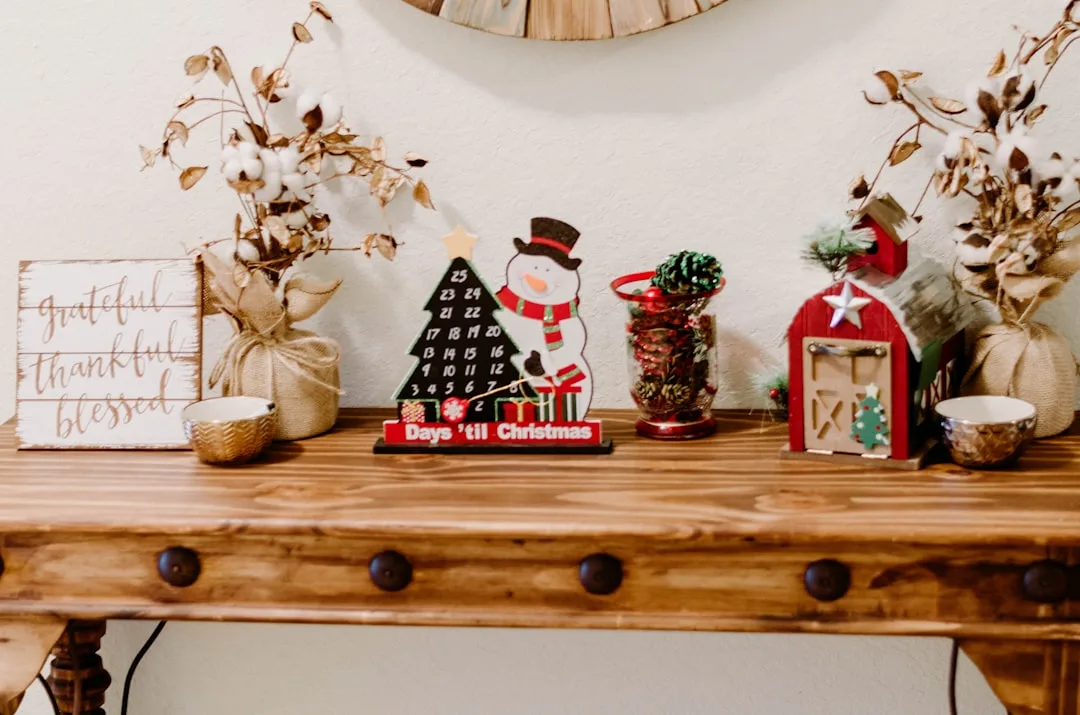
A console table decorated for christmas is the most under-styled surface in the home during the holidays — and the one with the most potential to actually stop someone in their tracks the moment they walk through your door. While everyone fights over mantel real estate and argues about Christmas tree placement, the console sits there doing nothing, maybe holding a bowl of keys and a stack of mail that hasn’t been dealt with since October. That’s a missed opportunity on a level that genuinely frustrates me.
Quick Answer
The console table is the most under-styled surface in the home during Christmas — and the one with the most potential to actually stop someone in their tracks the moment they walk through your door.
Most holiday decorating content focuses on the tree, the mantel, the dining table. The console gets a footnote, maybe a photograph of someone else’s beautiful entryway with zero explanation of how it got that way. This article is the explanation.
How to Dress a Console Table for Christmas Without Starting Over Every Year
In This Article
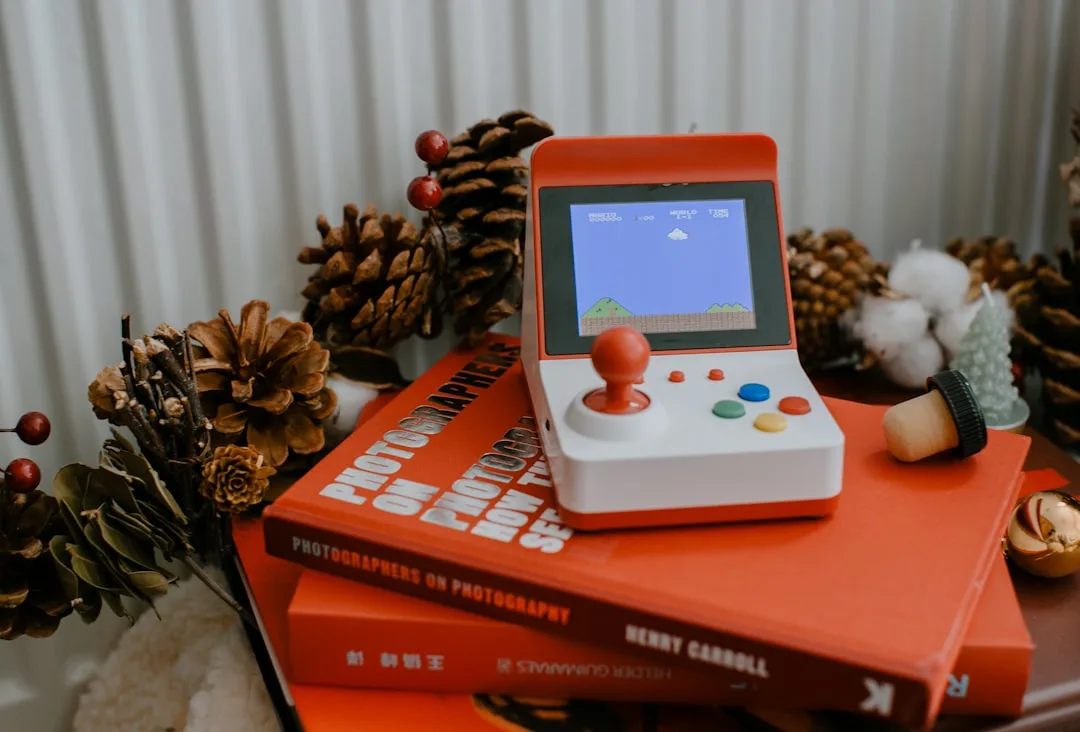
Every November, I watched clients pull out boxes of holiday decor, strip their surfaces completely bare, cover everything in red-and-green, and then pack it all away in January — only to start from scratch the following year with slightly different red-and-green. It cost them money, it cost them hours, and the results were rarely better than the year before.
The anchor-layer-accent method changes that logic entirely. Instead of treating Christmas decor as a seasonal replacement, you treat it as a seasonal addition — building on top of a visual structure that already works.
Here’s how it works:
- Anchor — The permanent structural piece already living on or above your console: a mirror, a piece of framed art, a tall lamp, a sculptural vase that costs enough that it lives there year-round. This piece does not move for Christmas. It becomes your backdrop, your vertical anchor point, the thing that gives the holiday styling something to lean against. This one decision simplifies everything that comes after it.
- Layer — The holiday material: garland, greenery, candles, textiles — draped and arranged to interact with the anchor rather than obscure it.
- Accent — The specific seasonal detail: an ornament, a small figurine, a wrapped box. Accents are the smallest investment and the easiest to swap year over year.
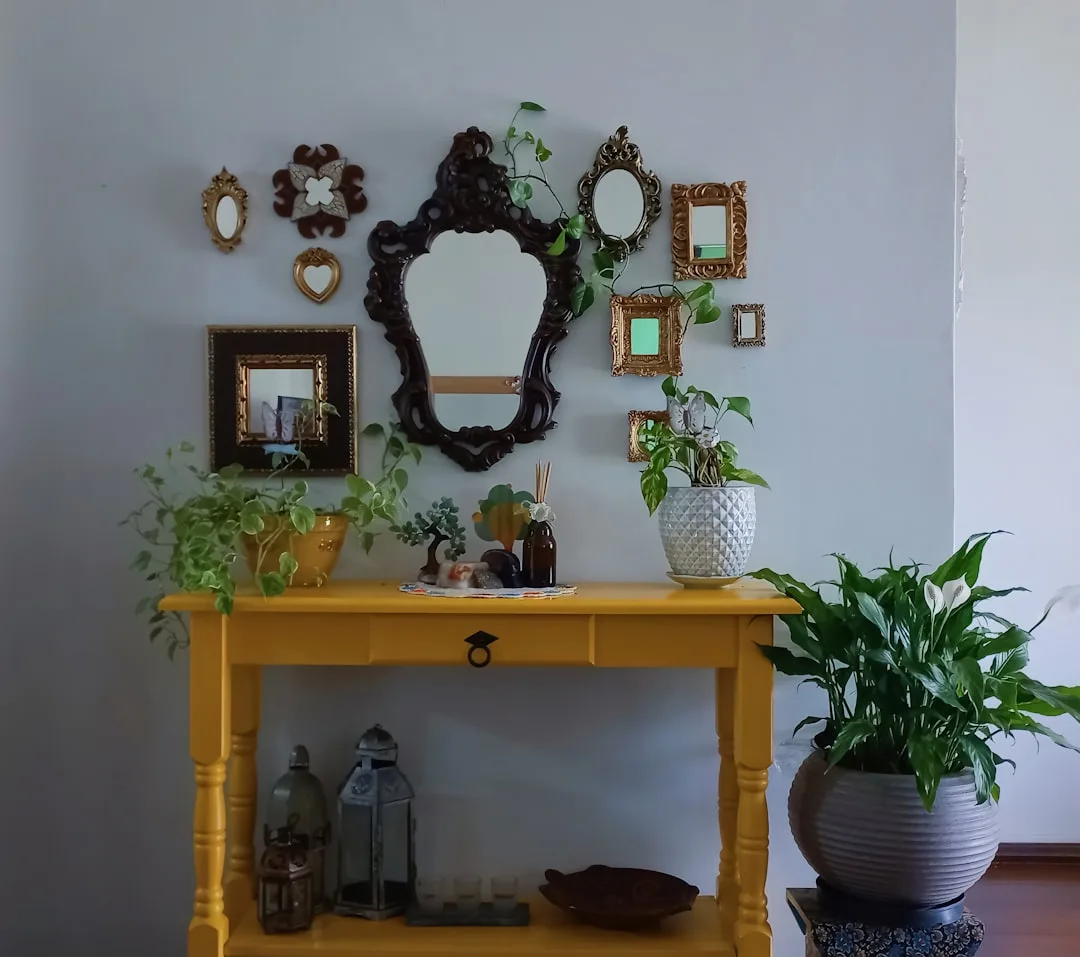
One thing competitors never mention: start with the vertical plane before you touch the surface. Step back and look at what’s on the wall behind the console. A mirror with garland threaded around its frame reads as intentional and designed. The same garland laid flat on the table surface with nothing behind it reads as an afterthought. The backdrop is doing 40% of the visual work.
To figure out what stays and what gets swapped, I use what I call the 3-second silhouette test. Step back far enough that you can’t read any details — just shapes. Ask yourself:
- Does the silhouette have variety in height?
- Is there a tall element, a medium cluster, and some breathing room?
- Does the outline feel balanced without being perfectly symmetrical?
- Are there at least two different textures visible from across the room?
If the outline looks flat or chaotic, the surface will feel flat or chaotic regardless of how pretty the individual pieces are.
On budget: the American Christmas Tree Association’s 2023 survey found Americans spend an average of $107 on holiday decorations annually. A layering system — where you’re adding to existing decor rather than replacing it — compresses that number significantly over two or three years because your investment pieces carry forward.
The Greenery Decision Everyone Gets Wrong
The garland or greenery you choose for a console table decorated for christmas functions differently than garland on a mantel or staircase. A mantel garland drapes. A staircase garland cascades. A console table garland has nowhere to go except across a flat, horizontal surface — which means it needs structural support to avoid looking limp.
The fix is simple and almost nobody does it: build a small riser under the center point of the garland before you lay it down. A stack of hardcover books wrapped in kraft paper, a small wooden box, even a folded linen runner folded four times to create height — anything that lifts the midpoint of the greenery three to four inches creates an arc instead of a flat line. That arc reads as intentional. The flat line reads as something you dropped there on the way to decorate something else.
For the greenery itself, mix at least two types. A single garland variety — all noble fir, all eucalyptus — reads flat in texture. Pairing noble fir with something unexpected like cedar, olive branches, or dried magnolia leaves adds the kind of visual texture that makes people lean in to look closer. That lean-in moment is exactly what a well-styled console table should create.
This week’s action: Identify the anchor piece already on or above your console. Don’t buy anything until you know what that is.
What the 2026 Christmas Color Trends Actually Mean for Your Console Styling
Trend forecasting is useful exactly until it isn’t — and it stops being useful the moment you spend $200 on decor that looks dated in 18 months. So let me give you the 2026 direction with that caveat built in.
The shift happening right now is a move away from the dusty sage, terracotta, and bleached linen palettes that dominated 2022 through 2024. That cottagecore softness had a long run. It’s winding down. What’s replacing it is what the trade show circuit is calling “considered darkness” — moody, saturated, intentional. The colors leading this shift:
- Sapphire — deep, jewel-toned blue that reads as sophisticated rather than cold
- Amethyst — a purple-leaning tone that works particularly well against natural wood consoles
- Oxblood — a dark red with enough brown in it to feel aged and deliberate rather than festive
- Oxidized bronze — not a color exactly, but a metallic finish that anchors all of the above
Maison et Objet and similar design trade events have been pointing toward this for two consecutive cycles now, and the quiet luxury trend is accelerating it. Muted maximalism — rich texture over loud color saturation — is the operating principle. It means a console table decorated for christmas in 2026 should feel weighty and considered rather than bright and cheerful. Think velvet ribbon in deep plum rather than glossy red. Think dried cotton stems and blackened branches alongside fresh greenery rather than a bright green garland covered in red bows.
Metallics are also shifting. Polished gold — the dominant holiday metallic for most of the 2010s and early 2020s — is giving way to aged brass and oxidized bronze. This matters more than it sounds. One candleholder swap can change the entire perceived palette of a vignette. Swapping a shiny gold pillar holder for an aged brass taper holder costs maybe $22 and moves the whole composition forward two years visually.
Here’s the practical translation: the one-swap rule. You don’t need to buy into the 2026 palette wholesale. Find the one element in your current console setup that’s most visually dominant — usually the largest object or the most reflective one — and make that single swap toward the new direction. The rest of your existing decor will follow.
Pantone’s 2026 color direction aligns with this broader trade show trajectory, emphasizing depth and intentionality over brightness. That tracks with everything I’m seeing in the spaces designers are actually building right now.
Translating Trends to Real Budgets
The most common mistake I see when people try to follow color trends is buying everything new at once. You end up with a vignette that’s very 2026 and nothing else — no patina, no history, no sense that anyone actually lives there. The console table decorated for christmas that feels most elevated is almost always a mix of old and new, familiar and fresh.
A better approach: keep your most neutral existing pieces — natural wood candlesticks, clear glass vessels, white ceramic objects — and use those as the bridge between your carry-forward decor and the new direction. Neutral anchors don’t read as dated because they don’t carry the fingerprint of any specific trend year. They just read as calm. Add the one moody sapphire or oxblood element against them and the whole table updates without looking like a trend board ripped from a magazine.
Budget-wise, the highest-impact swaps in the considered darkness direction are ribbon and candles. A spool of velvet ribbon in deep plum costs $12 to $18 and replaces yards of wire-edged satin that screams early 2010s. Taper candles in oxblood or dark aubergine run $8 to $14 for a set of four and change the temperature of the entire composition. Both are small investments. Both punch significantly above their price point.
This week’s action: Photograph your existing holiday decor. Circle the shiniest, brightest piece. That’s the one to replace first.
How to Decorate Your Console Table So It Looks Styled, Not Stuffed
I spent $800 on a sectional once for a client in Wicker Park — the wrong scale, the wrong placement — and it made the entire room impossible to move through. The console table equivalent of that mistake is piling on objects until the surface feels “full.” Full is not styled. Full is just filled.
Negative space is not emptiness — it’s structure. Leaving 30 to 40 percent of your console surface intentionally bare is what makes everything else read as chosen rather than accumulated. When every inch is occupied, the eye doesn’t know where to land and keeps moving — which means nothing registers. When there’s breathing room, the eye stops. The objects read as individual, considered choices rather than a pile.
The specific mechanics of this: place your tallest element first, off-center by about one-third of the table length. Then build a medium-height cluster on the opposite side, keeping it lower than the tall element by at least six inches. Leave the remaining third of the surface either completely bare or with a single low object — a small tray, a candle, a pine cone cluster. That asymmetric distribution is what creates visual tension in the good sense: a composition the eye wants to travel across rather than dismiss in a glance.
The Rule of Odd Numbers, Applied Specifically
Interior designers repeat the rule of odd numbers constantly, but rarely explain what it actually means in practice for a surface like a console. It doesn’t mean you need exactly three objects on the table. It means your eye needs to group things in clusters of three or five — and those clusters should have clear internal hierarchy.
A cluster of three works like this: one tall element (the anchor — a lamp, a tall vase, a candlestick at full height), one medium element (a smaller vase, a short stack of books, a lantern), one low element (a single ornament, a small dish, a sprig of greenery that trails down toward the surface). The height difference between each element should be meaningful — not two inches, but four to six inches minimum. When the heights are too similar, the cluster collapses visually into a flat line even though the objects are technically at different levels.
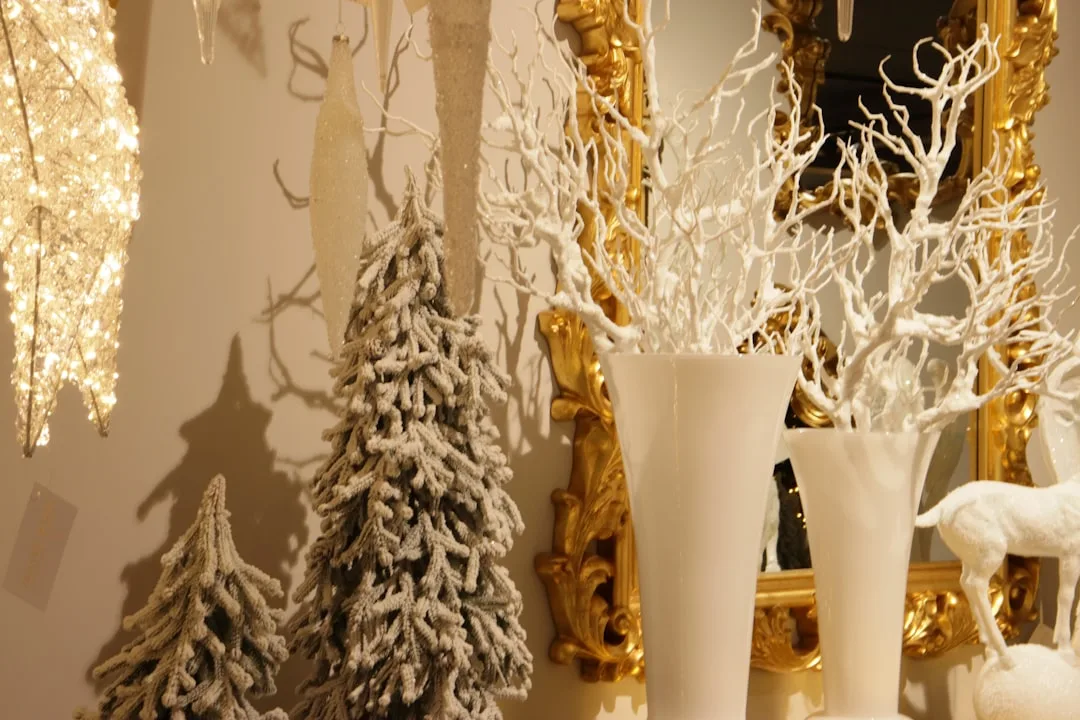
For a console table decorated for christmas specifically, a working cluster might look like: one tall mercury glass candlestick at 14 inches, a small wax-sealed gift box at 7 inches, and three loose pinecones dusted with white paint at surface level. That’s three objects, three distinct heights, three different textures. Cost: under $30 if you’re pulling from existing decor and adding selectively.
Lighting Is the Element Nobody Budgets For
Most console table styling guides treat lighting as an afterthought — add candles somewhere, done. But lighting is doing structural work on a console table in a way it doesn’t need to do on a mantel or dining table, because a console is almost always viewed from a distance first. From across a room or from a front door, you’re seeing silhouette and light source before you’re seeing any individual object.
The specific move that changes everything: layer two light sources at different heights. A tall lamp or tall candlestick provides overhead ambient light that illuminates the wall behind the console and creates a warm halo effect. A low votive or small tea light grouping at surface level creates a secondary light pool that draws the eye downward and gives the composition depth. Two light levels, even in the same warm tone, create dimension that a single light source — however beautiful — cannot replicate.
For a console table decorated for christmas, this might mean a tall brass taper holder with a lit candle at one end, and a cluster of three small mercury glass votives near the center. The cost is negligible. The visual impact relative to cost is hard to overstate. Walk into the room, turn the overhead light off, and look at the console with only those two light sources active. That’s what your guests see when they come through the door on a winter evening and you’ve left the entryway lamp on. Design for that moment, not for the overhead-light version of your table.
What Belongs Under the Console
The space under the console is styling real estate that most people either ignore completely or fill with the wrong things — a basket of magazines, a pair of shoes that didn’t make it to the closet, a dog toy. All of that reads as clutter even if each item is fine on its own.
For the holiday version of a well-styled console, the floor plane is where you put the objects that are too large or too awkward to live on the surface: a large lantern with a chunky pillar candle, a stack of wrapped gift boxes in coordinating paper that you’re actually giving to people, a pair of knee-high mercury glass vases with dried pampas or cotton stems. These floor-level objects extend the visual composition downward and make the console feel like a fully considered installation rather than a surface with some stuff on it.
The rule: whatever is on the floor should relate visually to at least one thing on the surface above it. Same metallic finish, same greenery type, same ribbon color. That visual echo is what makes the whole thing read as intentional rather than assembled from separate decisions.
This week’s action: Clear your console surface completely. Photograph it empty. Then add back only the pieces that survive the silhouette test — and stop before it feels full.
The Console Table Styling Timeline That Actually Works
One of the reasons console table decorating gets skipped or done badly is timing. The tree goes up first, the mantel gets done second, and by the time someone thinks about the console, it’s December 10th and the energy for thoughtful styling is gone. Whatever’s left in the decoration box gets piled on the surface and called done.
A better sequence, week by week:
Week 1 (right after Thanksgiving): Set up the anchor situation. If your console has a mirror, clean it. If it has a lamp, make sure the bulb is working and the shade is straight. This is also when you assess your existing greenery — is last year’s garland still in good shape, or does it need replacing? Order anything that ships online now, before the December crunch hits inventory and shipping times.
Week 2: Add the greenery layer. Get this in place before you add any accent objects, because the greenery determines how much surface space you actually have left to work with. Fresh greenery from a local nursery or florist will last two to three weeks if you mist it every other day. If you’re using faux, this is also the week to check it for bent stems and sparse patches from last year’s storage.
Week 3: Add candles, votives, and accent objects. This is also the week to step back and do the silhouette test for real — not just in your head, but with your phone camera. Photograph the console from the distance a guest would first see it. The camera catches proportion problems your eye filters out when you’re standing close.
Week 4 and beyond: Swap in fresh elements as needed. If you’re using real greenery, some of it may need refreshing by mid-December. If you have a wrapped gift under the console that you’ve actually given away, replace it with something else to maintain the floor-level composition.
This timeline prevents the December-10th pile-on problem and gives each layer time to settle before the next one goes on top. A console table decorated for christmas that was built in stages almost always looks more considered than one assembled in a single afternoon, even if the individual pieces are identical.
Frequently Asked Questions
How far in advance should I decorate my console table for Christmas?
The sweet spot is the first week of December for most households, though if your console is in a high-traffic entryway, the week after Thanksgiving works well — guests start arriving for holiday gatherings earlier than most people account for. The more important timing principle is sequencing: greenery before objects, vertical plane before surface, anchor confirmed before anything else gets added. Rushing that sequence is what produces the stuffed, unresolved look.
Can I decorate a console table for Christmas if it’s in a small entryway?
Yes, and small entryways actually benefit more from a well-styled console than large ones do, because the console is doing more spatial work — it’s setting the tone for the entire home in a compressed footprint. The key adjustment for small spaces is scaling down cluster size, not reducing the number of layers. Keep the anchor-layer-accent structure intact, but use a single taper candle instead of a candelabra, one small vase instead of three, a half-garland drape instead of a full swag. The proportions stay right; the scale just comes down.
What’s the best type of garland for a console table decorated for christmas?
For a console specifically, a garland with a flexible wire core is significantly easier to work with than a rigid or semi-rigid strand, because you can shape it to arc over the riser point described earlier and tuck the ends under other objects at the table edges. For fresh greenery, noble fir and mixed pine hold up well with minimal maintenance. For faux, look for options described as “full tip” — the tip count determines how dense the finished garland looks, and anything under 100 tips per foot tends to look sparse on a well-lit surface.
How do I keep a console table from looking cluttered during the holidays when it’s also a functional surface?
The functional items — keys, mail, everyday objects — need a designated container that can live on the console without competing with the holiday styling. A small tray or lidded box corrals the daily-use items into a single visual footprint. That footprint then becomes one element in the overall composition rather than visual noise. The tray itself can be seasonal — a small lacquered box in deep green or a hammered brass tray fits the 2026 direction and still holds your keys. Function and style aren’t in conflict when the functional item is also visually intentional.
What do I do with a console table that doesn’t have a mirror or art above it?
A blank wall above a console is actually an opportunity, not a limitation. For the holiday version specifically, this is where a simple arrangement of varying-height pillar candles on a wooden board or slate tray creates a vertical element without requiring anything to be hung on the wall. Alternatively, a trio of framed botanical prints in matching thin frames — staggered at different heights and leaned against the wall rather than hung — takes about 10 minutes to set up and creates the backdrop anchor the styling needs. Leaned art reads as intentional and relaxed in a way that works particularly well with the muted maximalism direction trending for 2026.
How far in advance should I decorate my console table for Christmas?
The sweet spot is the first week of December for most households, though if your console is in a high-traffic entryway, the week after Thanksgiving works well — guests start arriving for holiday gatherings earlier than most people account for. The more important timing principle is sequencing: greenery before objects, vertical plane before surface, anchor confirmed before anything else gets added. Rushing that sequence is what produces the stuffed, unresolved look.
Can I decorate a console table for Christmas if it’s in a small entryway?
Yes, and small entryways actually benefit more from a well-styled console than large ones do, because the console is doing more spatial work — it’s setting the tone for the entire home in a compressed footprint. The key adjustment for small spaces is scaling down cluster size, not reducing the number of layers. Keep the anchor-layer-accent structure intact, but use a single taper candle instead of a candelabra, one small vase instead of three, a half-garland drape instead of a full swag. The proportions stay right; the scale just comes down.
What’s the best type of garland for a console table decorated for christmas?
For a console specifically, a garland with a flexible wire core is significantly easier to work with than a rigid or semi-rigid strand, because you can shape it to arc over the riser point described earlier and tuck the ends under other objects at the table edges. For fresh greenery, noble fir and mixed pine hold up well with minimal maintenance. For faux, look for options described as “full tip” — the tip count determines how dense the finished garland looks, and anything under 100 tips per foot tends to look sparse on a well-lit surface.
How do I keep a console table from looking cluttered during the holidays when it’s also a functional surface?
The functional items — keys, mail, everyday objects — need a designated container that can live on the console without competing with the holiday styling. A small tray or lidded box corrals the daily-use items into a single visual footprint. That footprint then becomes one element in the overall composition rather than visual noise. The tray itself can be seasonal — a small lacquered box in deep green or a hammered brass tray fits the 2026 direction and still holds your keys. Function and style aren’t in conflict when the functional item is also visually intentional.
What do I do with a console table that doesn’t have a mirror or art above it?
A blank wall above a console is actually an opportunity, not a limitation. For the holiday version specifically, this is where a simple arrangement of varying-height pillar candles on a wooden board or slate tray creates a vertical element without requiring anything to be hung on the wall. Alternatively, a trio of framed botanical prints in matching thin frames — staggered at different heights and leaned against the wall rather than hung — takes about 10 minutes to set up and creates the backdrop anchor the styling needs. Leaned art reads as intentional and relaxed in a way that works particularly well with the muted maximalism direction trending for 2026.