Open-concept living rooms look simple, but they can be tricky to keep comfortable without the right HVAC installation plan. Before vents, returns, ducts, and thermostats are placed, homeowners need to think about how air will actually move through the entire shared space.
Quick Answer
Open-concept living rooms look simple, but they can be tricky to keep comfortable without the right HVAC installation plan. Before vents, returns, ducts, and thermostats are placed, homeowners need to
The HVAC Floor Plan Mistake That Ruins Comfort
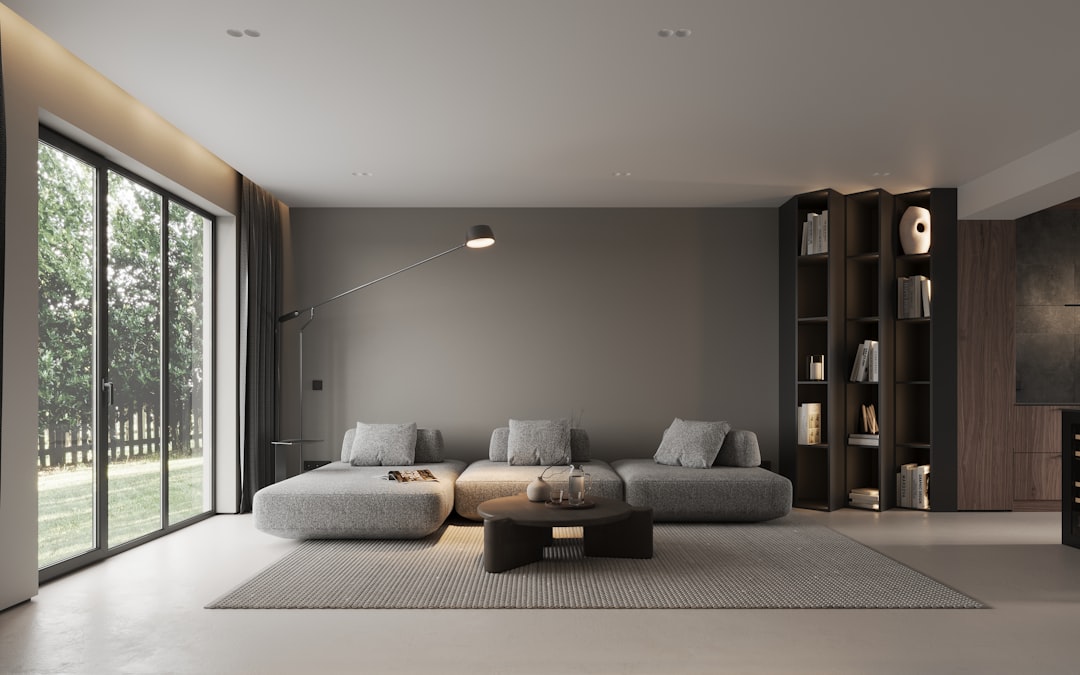
The biggest mistake is treating an open-concept living room like one big, simple box.
At first glance, an open floor plan looks easier to heat and cool because there are fewer walls. In reality, it often creates more HVAC challenges, not fewer. One large space may include a living room, kitchen, dining area, tall ceilings, large windows, sliding doors, a fireplace, and different activity zones, all with different heating and cooling needs.
Walls do more than divide rooms. They help contain air, separate heat-producing areas, reduce drafts, and make temperature control easier. When those walls disappear, the HVAC system has to manage one large moving air environment instead of several smaller, more predictable rooms.
The real mistake is designing the space as if comfort will naturally spread everywhere. It usually does not. Air takes the easiest path, not the prettiest one. It may move quickly across one seating area, barely reach another, rise into a vaulted ceiling, or get pulled toward a return before it ever balances the room.
Many homeowners focus on finishes first, such as flooring, lighting, cabinets, furniture, and paint colors, while assuming the HVAC system can be “figured out later.” But if the project also involves HVAC replacement, waiting too long can lead to a new system that fits the equipment space but does not fully match the comfort needs of the open layout. By then, the best places for vents, returns, thermostats, duct runs, and zoning controls may already be blocked by beams, furniture placement, kitchen layouts, or ceiling design.
The result is a beautiful room that never feels quite right. One sofa may sit under a cold blast of air, the dining area may feel stuffy, the kitchen may overheat during cooking, and the corners near windows may stay drafty.
A better way to think about an open-concept living room is this: you are not just designing a room. You are designing an indoor climate. The flooring, ceiling height, windows, kitchen layout, furniture, lighting, and HVAC system all work together to decide how that climate feels.
A strong open-concept design starts with comfort planning, not just visual planning. The HVAC layout should be considered early so the finished room looks good and feels good in every season.
The most successful homeowners plan the invisible parts of the room with the same care as the visible ones.
Why Open Layouts Need An HVAC Floor Plan
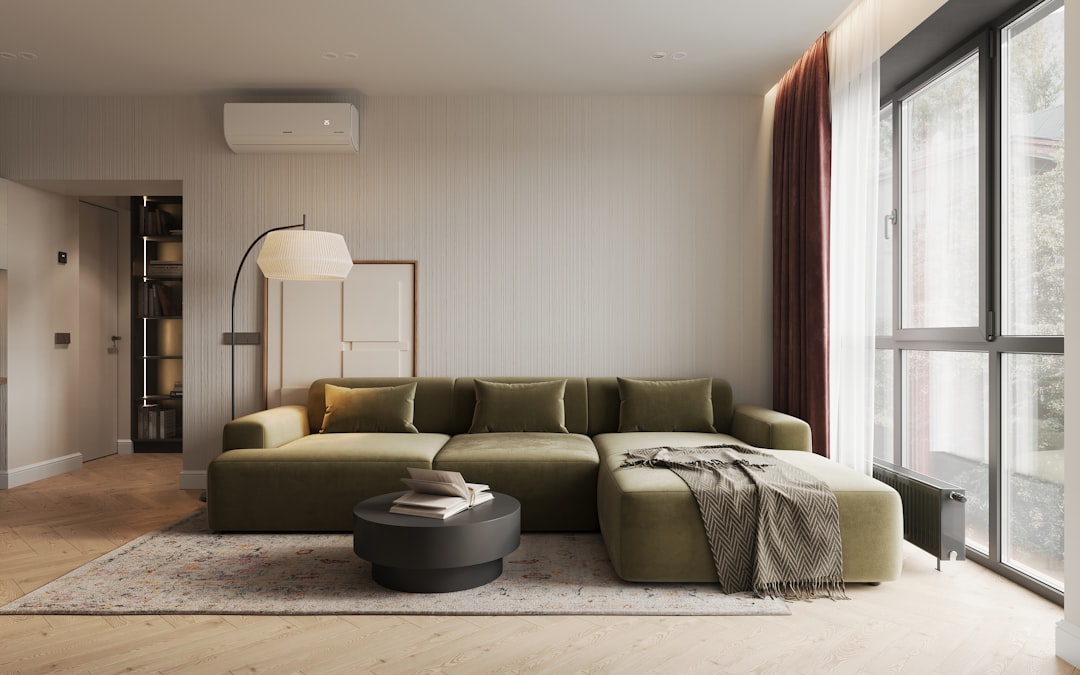
An open-concept layout needs an HVAC floor plan early because airflow depends on the entire room design.
Once walls are removed or spaces are combined, air no longer behaves the way it does in separate rooms. Supply vents, return vents, ceiling height, window placement, furniture arrangement, kitchen heat, sunlight, and traffic patterns all affect comfort. If those details are not planned together, the HVAC system may technically “work” but still leave the room feeling uneven.
In an open-concept space, comfort is shaped by decisions that often seem unrelated to HVAC. A kitchen island can redirect airflow. A sectional sofa can block a return. A beam can limit duct routing. A wall of glass can create a heat load that one small vent cannot overcome. A beautiful ceiling detail can leave no clean place for supply registers.
A proper HVAC floor plan helps answer important questions before construction or renovation decisions become expensive to change. Where should conditioned air enter the space? Where will air return to the system? Where will people actually sit? Where will heat build up? Where can the thermostat read the room accurately? Is one thermostat enough, or does the open space need zoning?
Planning HVAC before furniture, walls, and finishes are finalized also helps preserve the design. When air duct installation is planned at this stage, the ductwork can support the room’s layout instead of forcing awkward vent placement after the design is already finished. Instead of adding awkward vents after the fact, the system can be integrated cleanly into ceilings, walls, soffits, or floor layouts.
The best comfort plan does not fight the interior design. It protects it. When HVAC is planned early, vents can be placed cleanly, returns can be hidden intelligently without being blocked, and comfort solutions can be built into the room instead of patched onto it later.
Because once the room is finished, the HVAC system has to work around the design instead of working with it.
The best open-concept spaces are not just open and attractive. They are balanced, quiet, efficient, and comfortable because airflow was planned before the room was finished.
A finished open-concept room should not force homeowners to choose between the way the space looks and the way it feels.
How An HVAC System Floor Plan Changes Open Spaces
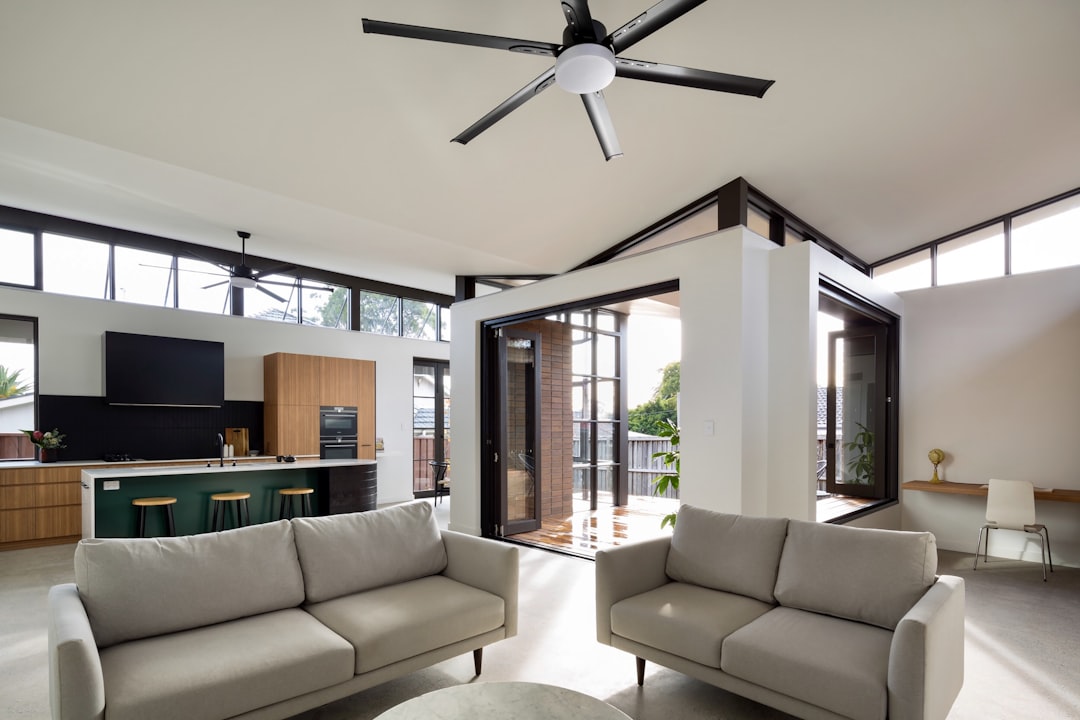
A traditional home with separate rooms naturally contains airflow. Each bedroom, office, or dining room has boundaries that help define where supply vents and returns should go. Doors, walls, and smaller room sizes make it easier to manage temperature differences from space to space.
An open living room is different because several zones share the same air volume. The HVAC system floor plan has to serve multiple functions at once. The living area may need gentle, even comfort for relaxing. The kitchen may need extra cooling support because appliances and cooking add heat. The dining area may need airflow that does not blow directly on guests. A wall of windows may need additional consideration because glass gains and loses heat faster than insulated walls.
In an open layout, those boundaries are gone, but the different comfort needs remain. The HVAC plan has to recognize those invisible boundaries even when the floor plan does not show them.
In an open-concept layout, vent placement is not just about square footage. It is about air movement across the entire space. The design has to consider throw distance, return air paths, ceiling height, furniture placement, sun exposure, and how people actually use the room.
A traditional layout often focuses on room-by-room distribution. An open-concept HVAC layout focuses on whole-space balance.
That is the key difference. A traditional HVAC plan often follows walls. An open-concept plan follows behavior, heat sources, sun exposure, and airflow patterns.
The question is not simply, “How many vents does this large room need?” The better question is, “How should air move through each part of this shared space so every area feels comfortable for the way it is used?”
What A Residential HVAC Floor Plan Should Include

A residential HVAC floor plan for an open-concept living room, kitchen, and dining area should show more than just where the vents go. It should explain how comfort will be delivered across the entire shared space.
At minimum, the plan should include supply vent locations, return air locations, thermostat placement, duct routes, airflow direction, equipment connections, and any zoning components. It should also account for ceiling height, window and door locations, kitchen appliances, fireplaces, skylights, insulation levels, and areas with heavy sun exposure.
Furniture layout matters too. A large sectional, dining table, kitchen island, built-in shelving, entertainment wall, seating areas, dining areas, and traffic paths can change how air moves through the room. If furniture blocks a return or sits directly under a supply vent, comfort problems can show up immediately after the room is finished.
The residential HVAC floor plan should also identify whether the space needs one shared comfort zone or multiple zones. For example, a kitchen and living room may be open to each other, but they do not always have the same cooling load. Cooking, sunlight, electronics, and occupancy can make one part of the room warmer than another.
The plan should also identify “load zones.” These are areas that may feel different from the rest of the room because they gain or lose heat faster. A south- or west-facing glass wall, a cooking zone, a vaulted ceiling, or a sitting area near exterior doors may all need special attention.
Another important detail is return air strategy. Many homeowners think only about where cooled or heated air comes out. But in an open room, where air leaves the space matters just as much. Without a good return path, the system may circulate air poorly, create pressure imbalances, or leave pockets of stale air.
A strong HVAC system floor plan should connect design decisions with comfort decisions. It should help the homeowner understand not only where the system components are located, but why they are placed there.
A complete residential HVAC floor plan should make the room’s comfort logic clear. Anyone looking at it should understand not only where the HVAC components are, but how the space is supposed to breathe.
How Planning Prevents Hot And Cold Spots
Open-concept living rooms often develop hot spots and cold corners because large open spaces are rarely as uniform as they appear.
A single open space can contain several microclimates. One area may receive direct afternoon sun through large windows. Another may sit near an exterior wall or sliding glass door. The kitchen may generate heat from cooking. A vaulted ceiling may allow warm air to rise above the occupied area. A fireplace may affect nearby temperatures. A corner far from the main supply path may never receive enough conditioned air. Meanwhile, furniture, rugs, built-ins, and lighting features can all influence how air moves.
Uneven airflow also happens when supply and return vents are not balanced correctly. If conditioned air enters the room but does not have a clear path back to the return, it can stagnate in certain areas. If supply vents are placed too close together, one section may receive too much air while another gets too little.
Airflow is also influenced by pressure. If air is supplied to the space without a clear return path, it may not circulate evenly. If the thermostat is located in the most comfortable part of the room, the system may shut off before problem areas are satisfied. If it is located near the kitchen, sunlight, a window, or a draft, it may respond to the wrong temperature entirely.
In an open floor plan, comfort problems are often caused by a combination of small design choices. The room may look open, but airflow still needs a planned path.
The HVAC system is often blamed, but the real issue may be that the room was designed as one visual space instead of several comfort zones.
Hot spots and cold corners are usually not random. They are clues. They show where the room’s design and the HVAC airflow pattern are not working together.
How An HVAC System Floor Plan Affects Vents And Furniture
Poor vent placement can make an open-concept space feel uncomfortable even when the HVAC system is properly sized.
In an open-concept space, comfort can be ruined by small design decisions that seem harmless on paper. If a supply vent blows directly onto the sofa, homeowners may feel cold while watching TV, even though the rest of the room is warm. If vents are placed too far from large windows, the areas near the glass may feel hot in summer and chilly in winter. If supply vents are clustered in one part of the room, airflow may not reach the dining area, kitchen island, or far corners.
Blocked returns are another common problem. Return vents are responsible for pulling air back to the system so it can be filtered, conditioned, and redistributed. When a return is hidden behind a sofa, media console, cabinet, curtain, or built-in feature, airflow becomes restricted. That can reduce comfort, increase system strain, and make temperatures feel uneven.
Furniture layout can also disrupt comfort. Large sectionals, tall shelving, open-backed stairs, kitchen islands, dining hutches, large rugs, and low furniture arrangements can redirect, interrupt, or block airflow. In open-concept rooms, furniture is not just decorative. It becomes part of the airflow environment.
The problem is that open-concept rooms are often designed from the eye level up. Homeowners focus on sightlines, finishes, and furniture groupings, while airflow is left as an afterthought. But air has its own sightlines. It needs clean paths across the space and back to the system.
A good rule is this: if a person would not want to sit directly in that airflow path, a vent probably should not be aimed there. If a return cannot “see” the room because it is hidden behind furniture or cabinetry, the system may struggle to breathe.
Comfort problems often appear after move-in because the empty room worked better than the furnished room. That is why HVAC planning should include the furniture plan, not just the architectural plan.
That is why HVAC planning and interior design should not happen separately. The most comfortable rooms are designed with both beauty and airflow in mind.
HVAC Zoning Benefits For Open Plan Homes
HVAC zoning gives homeowners more control over comfort in open plan homes where one large space serves several purposes.
In many open-concept layouts, the living room, kitchen, dining area, and sometimes even a home office or play area all share the same space. But these areas do not always need the same temperature at the same time. The kitchen may heat up during dinner prep. The living area may need more comfort in the evening. A sunny dining nook may get warmer than the rest of the room during the day.
One large room may function as a kitchen in the morning, a work area during the day, a family room in the evening, and an entertaining space on weekends. Those uses create different comfort needs. More people in the room means more body heat. Cooking adds heat and humidity. Afternoon sun may affect one side of the space more than another. A quiet movie night may require different airflow than a busy gathering.
Without zoning, one thermostat has to make comfort decisions for all of those conditions. That can lead to overcooling one area while another stays warm, or overheating one side of the room while another remains chilly.
Zoning allows the HVAC system to respond more precisely to how the home is used. Instead of forcing one thermostat to represent the entire open area, zoning can help manage temperature differences between key parts of the home. This can improve comfort, reduce wasted energy, and prevent the system from over-conditioning areas that do not need as much heating or cooling.
Zoning can also be helpful in homes with vaulted ceilings, large windows, additions, or open spaces connected to hallways, staircases, or a second story. These features often create temperature differences that a single-zone system struggles to handle.
For homeowners, the biggest benefit is flexibility. A zoned HVAC plan can make a large open room feel more comfortable for cooking, relaxing, entertaining, working, and everyday living.
Zoning is not just about controlling temperature. It is about matching comfort to real life.
Why HVAC Open House Planning Belongs In Renovations
Homeowners should consider zoning, mini-splits, and ductwork changes before an HVAC open house inspection or renovation walkthrough because those options are much easier to evaluate before the design is locked in.
An inspection or renovation walkthrough is the right time to ask whether the current HVAC system can support the new open layout. Removing walls, expanding a living room, opening a kitchen, raising ceilings, adding larger windows, or connecting an addition to the main living area can change the heating and cooling needs of the space. Those changes can alter the way heat enters, leaves, and moves through the home.
The existing ductwork may not deliver air evenly anymore, and the old thermostat location may no longer represent the room accurately. Zoning may be a good option when different areas of the open space have different comfort needs. A mini-split may make sense for an addition, sunroom, converted garage, or open area that the existing ductwork cannot serve well. Ductwork changes may be needed when vents or returns are poorly located, undersized, blocked, or no longer aligned with the new floor plan.
The goal is not to choose the most complicated system. The goal is to choose the right comfort strategy before construction, furniture, and finishes make changes harder.
A good HVAC open house walkthrough should look at the full picture: room size, windows, insulation, ceiling height, kitchen heat, existing ducts, return air paths, thermostat placement, and how the homeowner plans to use the space.
Before walls are opened, cabinets are ordered, or furniture layouts are finalized, homeowners should ask a simple question: “Will the existing HVAC system still make sense after this space changes?”
The walkthrough should not only ask whether the HVAC system turns on. It should ask whether the system matches the new lifestyle of the home.
That is where homeowners can avoid expensive regrets. It is much easier to adjust ducts, returns, controls, or supplemental equipment before the finished ceiling, custom cabinetry, and new flooring are in place.
How An HVAC Floor Plan Improves Open-Concept Comfort
Homeowners can plan HVAC early by treating comfort as part of the design, not as a mechanical detail to solve later.
Before finalizing the floor plan, homeowners should talk with an HVAC professional about how the open space will actually be used. Where will people sit? Where will the TV go? Where will the dining table be? Will the kitchen be used heavily? Where does the sun hit hardest? Are there tall ceilings, large windows, skylights, or sliding doors? Will the dining area host guests often? Is the space connected to stairs, hallways, or other rooms?
Those answers help shape the HVAC plan more effectively than square footage alone.
From there, the HVAC plan should be coordinated with the architectural and interior design plans, including the furniture plan, lighting plan, ceiling design, and kitchen design. Vents should not be placed as leftovers after everything else is decided. Supply vents should be placed where they can distribute air evenly without blowing directly on seating areas. Returns should remain open and unobstructed. Thermostats should be installed away from direct sunlight, appliances, fireplaces, exterior doors, and other misleading temperature influences. Ductwork should be reviewed to make sure it can handle the new layout.
Homeowners should also ask their HVAC contractor to explain the airflow path, not just the equipment size. Where does conditioned air enter? How does it cross the room? Where does it return? What areas are most likely to feel warmer or cooler? Would zoning, duct balancing, duct adjustments, added returns, smart thermostats, or a mini-split improve the result?
Not every open-concept home needs every solution, but every open-concept home benefits from early planning.
A beautiful open living room should not require blankets in one corner and fans in another. A well-designed open-concept living room should not need portable fans, space heaters, closed blinds, or constant thermostat changes to stay comfortable.
The goal is a room that feels as good as it looks. With the right HVAC system floor plan, homeowners can enjoy the look they want and the comfort they expect throughout the year.
The best comfort planning is invisible when it is done right. You notice the beautiful room, not the HVAC system working hard behind it.
Frequently Asked Questions
Why do open-concept living rooms have HVAC problems?
Open-concept spaces remove the walls that normally help contain and direct airflow. Without those barriers, a single HVAC system must manage multiple zones with different heating and cooling needs. Proper duct placement and zoning are essential.
What is the most common HVAC mistake in open floor plans?
Treating the entire open space as one zone is the most common mistake. Different areas have different thermal loads. A zoned HVAC system with multiple sensors solves this effectively.
Is a zoning system worth it for an open-concept home?
Yes. A zoning system allows different areas to be heated or cooled independently, reducing energy waste and improving comfort. The upfront cost is higher but long-term savings justify the investment.