The house your neighbors keep photographing from the street probably breaks at least four traditional design rules — and that is exactly why it works.
Quick Answer
The house your neighbors keep photographing from the street probably breaks at least four traditional design rules — and that is exactly why it works.
No crown molding. No pitched roof. Windows that start at the floor and end somewhere near the ceiling. There’s a reason those houses feel different before you even step inside: they were designed around a completely different set of priorities than the homes built thirty years ago. That set of priorities has a name — contemporary style architecture — and understanding it is the difference between making expensive, reversible decorating choices and building something that actually holds together as a composition.
This is not a definition article. Plenty of those exist. This is a guide to how the style actually works, where it came from, and what you can do with it today — whether you’re starting from scratch or trying to drag a 1987 colonial into the present.
What Is the Meaning of Contemporary Architecture Style — And Why It Keeps Changing
In This Article
- What Is the Meaning of Contemporary Architecture Style — And Why It Keeps Changing
- How Louis Sullivan Planted the Seed for Every Contemporary Home You See Today
- The 8 Design Principles That Actually Define Contemporary Style Architecture
- Which Is the Most Beautiful Building in the World — And What It Teaches Us About Contemporary Design
- Does James Madison Have Architecture Worth Studying? What Founding-Era Buildings Reveal About Style Evolution
- Contemporary vs. Modern Architecture: The Difference That Actually Matters for Your Home
- How to Bring Contemporary Style Architecture Into an Existing Home
- The Biggest Mistakes Homeowners Make When Attempting Contemporary Style
Contemporary architecture literally means “of this moment” — which makes it the only major architectural style that is permanently self-updating. This is not a bug; it’s the entire premise.
Unlike Modern architecture, which refers to a specific historical movement spanning roughly 1920 to 1970, contemporary is not a period. It’s a present tense. The International Style, Bauhaus, and mid-century modernism are fixed points on a timeline. Contemporary architecture is whatever serious architects and builders are doing right now — and that moves. What counted as contemporary in 2005 (stainless steel appliances, granite countertops, high-gloss cabinets) can feel dated today without a single wall being moved.
Right now, the style pulls from at least three distinct movements simultaneously. Minimalism contributes the clean lines and anti-clutter ethos. Biophilic design — the idea that humans function better when connected to natural materials and light — explains the explosion of exposed wood, living walls, and expansive glazing. Deconstructivism creeps in at the edges, producing asymmetrical facades and rooflines that feel intentional without being predictable.
The traits that define contemporary residential architecture in this particular moment include:
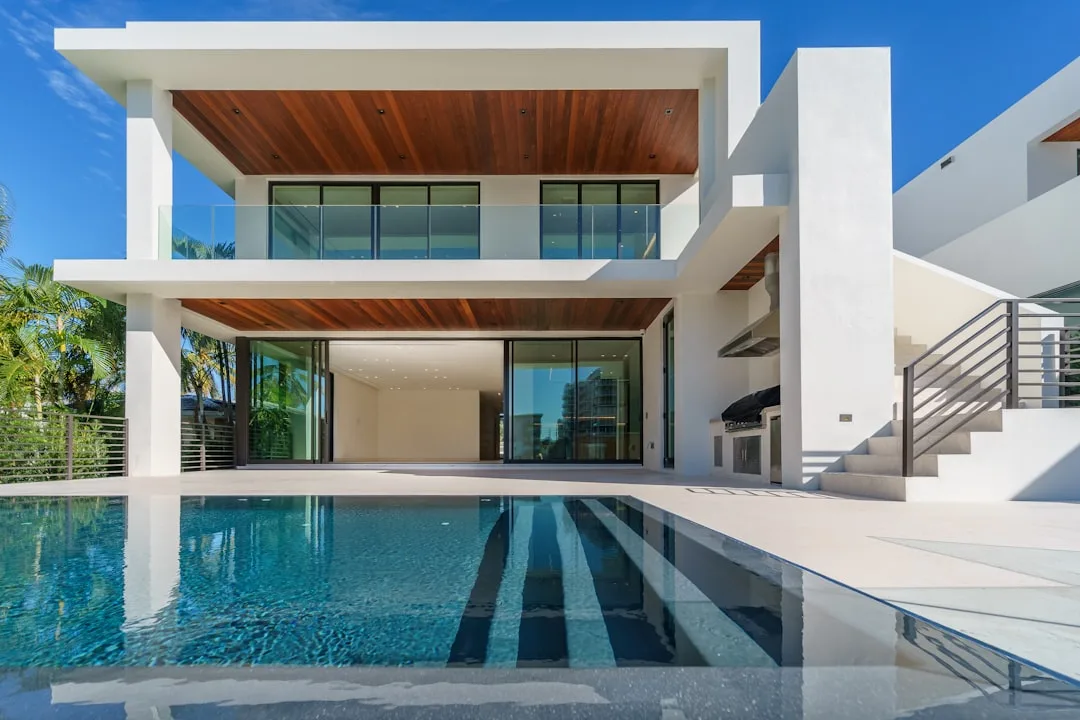
- Flat or low-slope roofs that create a horizontal visual weight missing from traditional pitched designs
- Large, uninterrupted glazing — floor-to-ceiling windows that treat light as a structural material
- Open floor plans where the kitchen, dining, and living areas breathe together rather than being separated by walls
- Sustainable and honest materials — recycled steel, reclaimed timber, low-VOC finishes, and concrete left raw rather than covered
- Geometric asymmetry — massing that uses rectangles and cubes without defaulting to perfect symmetry
According to ArchDaily’s 2024 Building of the Year data, over 60% of winning residential projects featured floor-to-ceiling glazing and exposed structural elements. Both details trace directly to this philosophical commitment to honesty between structure and surface — a commitment that has been building for over a century.
Actionable takeaway: If someone tries to sell you a “contemporary style” home or renovation with ornate trim work, matched furniture sets, or a steeply pitched roof, ask them to justify each one. Contemporary design earns every element, or it removes it.
How Louis Sullivan Planted the Seed for Every Contemporary Home You See Today
Yes — Louis Sullivan (1856–1924) was absolutely an architect, and one of the most consequential in American history. He is widely called the father of modernism and the father of the skyscraper, and if you want to understand why contemporary homes look the way they do, his philosophy is the best starting point I’ve found.
Sullivan’s most durable contribution wasn’t a building. It was a sentence: form follows function. Four words that became the philosophical spine of everything that would eventually strip the Victorian ornament off American buildings and leave behind the clean planes, exposed materials, and structural honesty that define contemporary design today.
His Guaranty Building in Buffalo, New York — completed in 1896 — was among the first buildings to argue that structure should be visible, even celebrated. Glass, steel, and concrete weren’t things to be disguised behind classical ornament. They were the design. Walk past a contemporary house with exposed steel beam ends, unclad poured concrete walls, or deliberately visible structural connections — you are looking at Sullivan’s argument still being made, 130 years later.
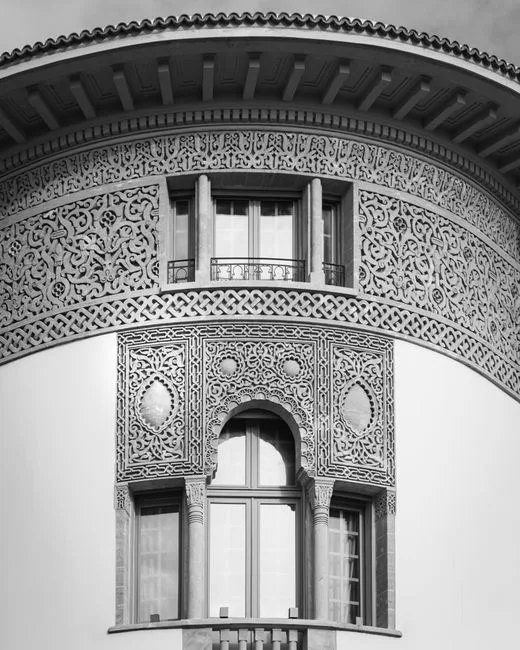
Sullivan designed over 100 buildings in his career, though only around 50 survive. His Carson Pirie Scott store in Chicago, completed in 1899, is still taught in architecture schools as a masterclass in what he called “facade honesty” — the idea that a building’s exterior should tell the truth about what’s happening structurally behind it. That’s the same principle behind contemporary architecture’s floor-to-ceiling glass walls: they don’t pretend the interior isn’t there.
His student Frank Lloyd Wright took these ideas and applied them at residential scale — developing the Prairie style, open plans, and cantilevered overhangs that directly inform how contemporary homes handle space and roof geometry today. Sullivan was never primarily a residential architect, but the lineage runs clear.
I spent years in this industry before I ever connected the philosophical dots between a loft apartment in Wicker Park and Sullivan’s train of thought. Once I did, contemporary design stopped feeling like a trend and started making sense as a position.
Actionable takeaway: Before making any contemporary design decision, ask: does this element tell the truth about the structure, or is it hiding something? If it’s decorative concealment, Sullivan’s ghost would disapprove — and so would your future resale value.
The 8 Design Principles That Actually Define Contemporary Style Architecture

Most definitions of contemporary architecture describe what it looks like. What matters more — especially if you’re planning a build or renovation — is why each principle exists and what problem it solves.
1. Clean geometric massing
Rectangular and cubic forms are not just aesthetic preference. They simplify construction, reduce material waste, and produce facades that age without going out of fashion. Decorative detail requires maintenance; a flat plane does not.
2. Large, uninterrupted glazing
Floor-to-ceiling windows do two things that matter: they dissolve the visual boundary between indoors and outdoors, and they replace artificial light with natural light for more of the day. Both of those improve the actual experience of living in a space.
3. Open floor plans
No unnecessary load-bearing interior walls. The kitchen, living, and dining areas flow into each other — which changes how families actually use space. That number has been climbing for a decade.
4. Neutral and natural palettes
Whites, warm grays, raw concrete tones, and the natural colors of wood and stone. The palette is deliberately quiet because the architecture — the light, the volume, the materials — is doing the work.
5. Sustainable material choices
Recycled steel, reclaimed wood, low-VOC finishes, and thermally efficient glazing are no longer optional flourishes in contemporary builds. They’ve become structural to the style’s identity.
6. Flat or shed rooflines
Beyond aesthetics, flat and shed roofs allow for rooftop terraces, solar panel installation, and a horizontal visual weight that reinforces the grounded, low-profile massing of contemporary design.
7. Mixed material composition
Concrete paired with warm wood. Steel next to glass. Stone alongside white plaster. The textural contrast is intentional — it prevents the monochrome coldness that bad contemporary imitations fall into.
8. Indoor-outdoor integration
Cantilevered decks, sliding glass doors that disappear into wall pockets, landscaping that aligns with the architectural geometry. The yard is not separate from the building; it’s an extension of it.
Actionable takeaway: Use this list as a checklist, not a menu. The more of these principles work together in a single project, the more coherently contemporary the result will feel. Applying one or two while ignoring the rest produces confusion, not style.
Which Is the Most Beautiful Building in the World — And What It Teaches Us About Contemporary Design

Beauty rankings are subjective to the point of being almost useless for practical purposes — but patterns emerge when you look at which contemporary buildings consistently appear on those lists, and those patterns are worth studying.
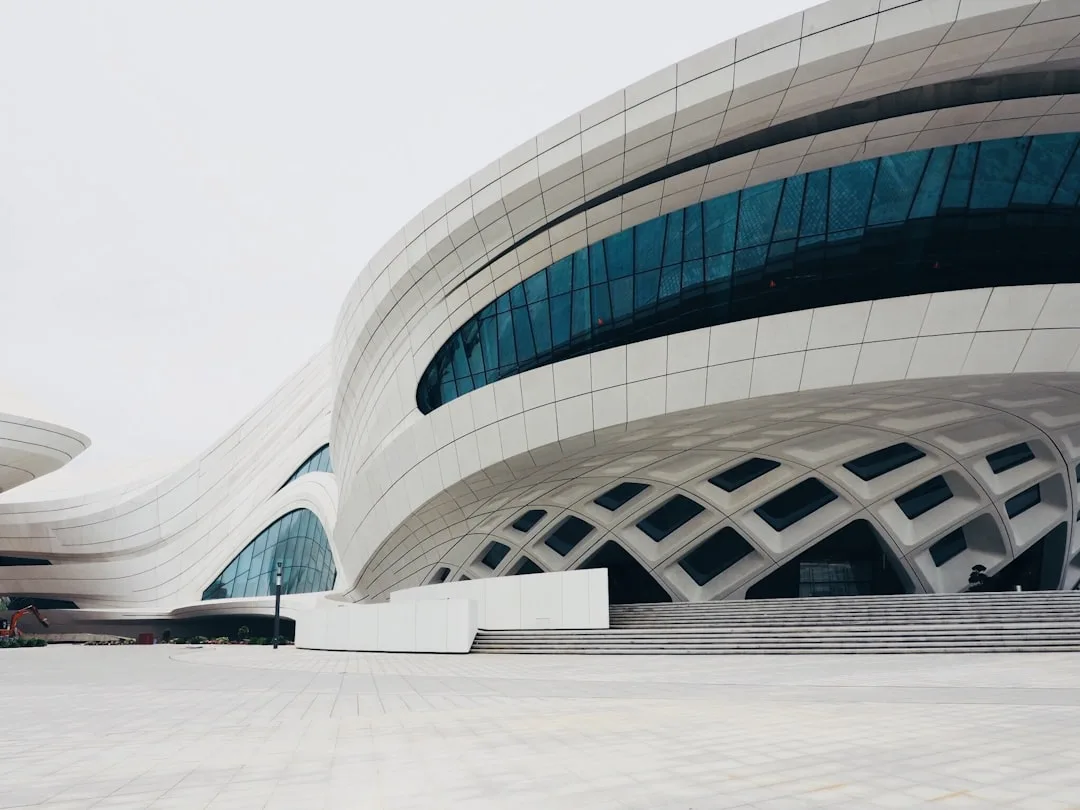
The Heydar Aliyev Center in Baku, Azerbaijan, designed by Zaha Hadid Architects and completed in 2012, dominates recent polls. CNN, ArchDaily, and Dezeen have all placed it among the world’s most beautiful buildings in the last decade. It won the Design of the Year award from the London Design Museum in 2014 and now receives over 300,000 visitors annually — remarkable for a building less than fifteen years old. What makes it significant for anyone studying contemporary style is that it demolishes the assumption that contemporary architecture is inherently boxy. The building flows. Its white exterior surface folds, curves, and rises without a single visible seam or joint — a statement about what contemporary materials and construction technology now make possible.
I.M. Pei’s Louvre Pyramid — 1989, Paris — consistently appears on these lists too, and for different reasons. It is arguably the most successful contemporary intervention into a classical context ever built. Glass and steel geometry dropped into the middle of a Renaissance palace, with no apology and no mimicry. It works because Pei trusted the contrast.
Apple Park, completed by Foster + Partners in 2017, demonstrates something else: that contemporary principles translate perfectly from iconic public buildings down to the details of a corporate campus — and, by extension, into residential design. The same material honesty, the same indoor-outdoor continuity, the same relationship between structure and light that makes Apple Park feel coherent also makes a well-designed contemporary home feel coherent.
The thread connecting every building on these lists is the same thing. Restraint. Materiality. The relationship between the structure and the light moving through it. None of that requires a billion-dollar budget. A poured concrete floor in a 900-square-foot apartment and the Heydar Aliyev Center are operating on the same principle — they just have different square footage to work with.
Actionable takeaway: Study buildings you find beautiful and identify the specific materials and relationships — not just the overall impression — that produce the feeling. That specificity is what you bring to your own project.
Does James Madison Have Architecture Worth Studying? What Founding-Era Buildings Reveal About Style Evolution
James Madison’s architectural legacy centers on Montpelier, his Virginia plantation home — and it’s worth examining, not because Federal-style buildings look anything like contemporary ones, but because understanding the arc from that era to this one helps explain why contemporary design made the choices it did.
Madison redesigned Montpelier twice during his lifetime. He worked with William Thornton — who also designed the original U.S. Capitol — on the home’s expansion, producing a symmetrical brick facade with a classical portico that exemplified Federal-style architecture’s core values: order, proportion, and controlled restraint. Madison was not a trained architect, but he had strong opinions about space and proportion, and the building reflects them.
What the Federal style and contemporary architecture actually share is more interesting than their obvious visual differences. Both prioritize discipline over decoration. Both treat proportion as a moral position — the idea that a building should not have more ornamentation than its function requires. The Federal style imposed that through classical rules and symmetry. Contemporary architecture arrives at a similar conclusion by eliminating the rules entirely and working from material and structural logic instead. Different routes. Similar destination.
The arc from Federal to Beaux-Arts to the International Style to contemporary is essentially a story of progressively stripping ornament until only structure and light remain.
Montpelier underwent a $10 million restoration completed in 2008 that removed 20th-century additions and returned the house to its Madison-era appearance. The project involved over 2,000 archaeological artifacts to inform design decisions — a process that is itself a lesson in how to approach a historic structure with contemporary sensibility. No false historicism. No reproduction Victorian moldings glued over original surfaces. The raw material evidence led the decisions. That’s a more contemporary approach to restoration than many architects with current portfolios.
Actionable takeaway: If you’re renovating a historic home and want to bring contemporary sensibility to it, take the Montpelier approach — strip back what was added in the wrong decades, and let the honest bones of the original structure lead the design.
Contemporary vs. Modern Architecture: The Difference That Actually Matters for Your Home
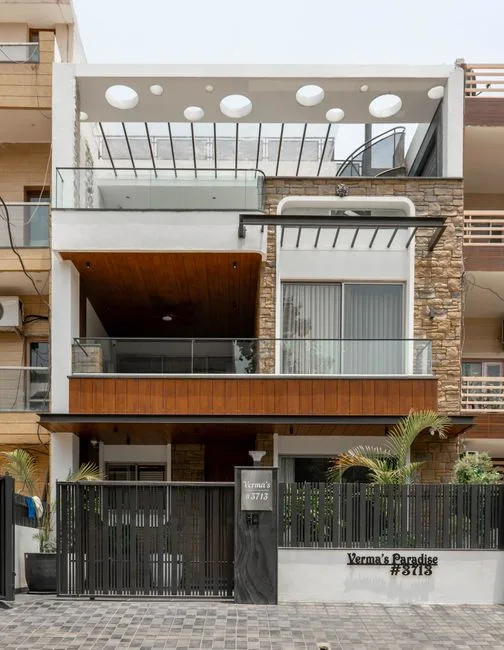
This distinction gets blurred constantly — by homeowners, by real estate agents, and by contractors who should know better. Getting it wrong costs money.
Modern architecture is a historical label. It describes a specific movement that ran roughly from the early 1920s through the 1970s, driven by the Bauhaus school, Le Corbusier’s ideas about machine-age aesthetics, and Mies van der Rohe’s reduction of architecture to pure structure. It has a defined aesthetic: rectilinear geometry, flat roofs, large windows, white and gray palettes, and an almost austere rejection of warmth or ornamentation. When you replicate a “modern” house, you’re working toward a fixed target. The references exist. The rules are documented.
Contemporary architecture is different because there are no fixed rules. It borrows from modern design, but it also incorporates biophilic warmth, sustainable materials, and a broader tonal range that the original modernists would not have recognized as their own. Contemporary homes tend to feel more livable — warmer, more textured, more grounded in natural materials — than pure modernist designs, which can feel close to institutional if they’re not executed with precision.
For homeowners, the distinction matters most at the moment you sit down with a designer or contractor. Saying “I want something modern” gives them a historical reference book to work from. Saying “I want something contemporary” gives them permission to work with current materials and current sensibilities — but it also requires you to be more specific about what you actually want, because the style is moving.
On Zillow, listings using the word “contemporary” in their description sold for an average of 2.4% more than comparable homes without the label, according to a 2022 analysis of listing language and sale prices. That gap reflects real buyer preference — not just semantic labeling.
Actionable takeaway: Before your first meeting with any architect, designer, or contractor, pull together 10–15 images of buildings and interiors that genuinely appeal to you. That image set will communicate your actual intentions far more precisely than any label.
How to Bring Contemporary Style Architecture Into an Existing Home
Here’s where most budget decor content fails the people reading it. “Add some greenery” is not advice — it’s a dismissal. I’ve been in too many apartments where someone took that guidance literally and ended up with a dying pothos on a granite countertop, surrounded by furniture they bought as a matched set from a big box store. That is not contemporary design. That is a collection of individual decisions that never spoke to each other.
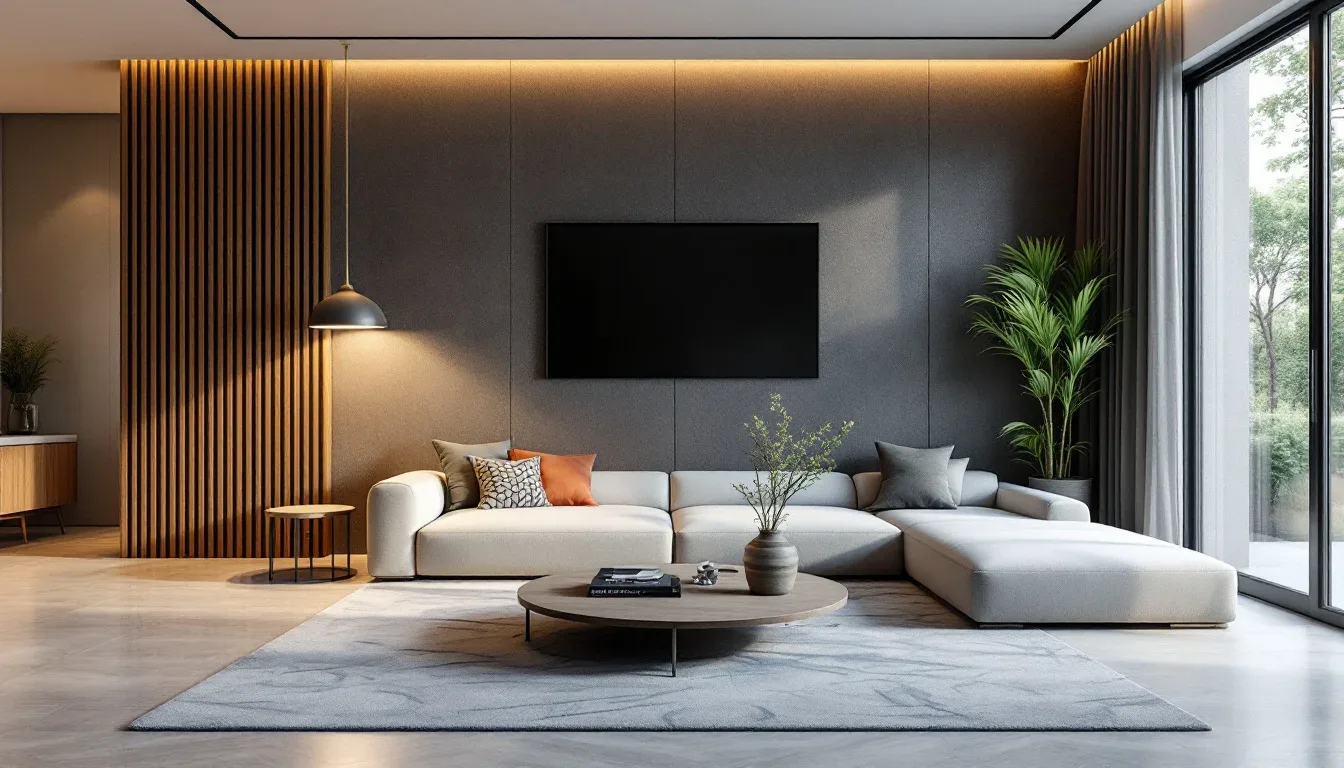
Bringing contemporary architecture into an existing home starts with subtraction, not addition. Remove the crown molding. Pull out the decorative valances. Clear the built-ins of everything that isn’t essential. You are looking for the structural bones of the space — and they are almost always better than what’s been layered over them. I’ve uncovered original concrete floors, honest brick walls, and solid wood beams under drywall in apartments that looked completely generic from the outside.
After subtraction, the highest-impact single upgrade is almost always the windows. Enlarging window openings or replacing dated units with floor-to-ceiling glass changes the light quality, the perceived volume, and the relationship between the interior and the exterior in ways that no amount of furniture arrangement can replicate. According to the National Association of Realtors’ 2023 Remodeling Impact Report, window replacements recoup an average of 67% of their cost at resale — making them one of the most financially defensible contemporary upgrades you can make.
After windows, work in this order:
- Lighting as structure — replace ornate fixtures with recessed linear lighting, concealed LED strips, and hardware-forward pendants; let the light source itself be invisible wherever possible
- Material honesty — expose a brick wall, seal a concrete floor, leave wood beams unpainted; add texture through real materials, not faux finishes
- Landscape as architecture — geometric plantings of ornamental grasses, native sedges, or low-clipped boxwood reinforce contemporary massing from the street; this is not optional decoration, it’s compositional
- Color discipline — commit to three tones: white or off-white as base, one warm neutral (sand, wheat, warm gray), one raw material tone (concrete, wood, stone)
Actionable takeaway: This week, identify one thing you can subtract from a room — a fixture, a piece of molding, a cluttered shelf — and remove it. Live with the absence for two weeks before adding anything back.
The Biggest Mistakes Homeowners Make When Attempting Contemporary Style
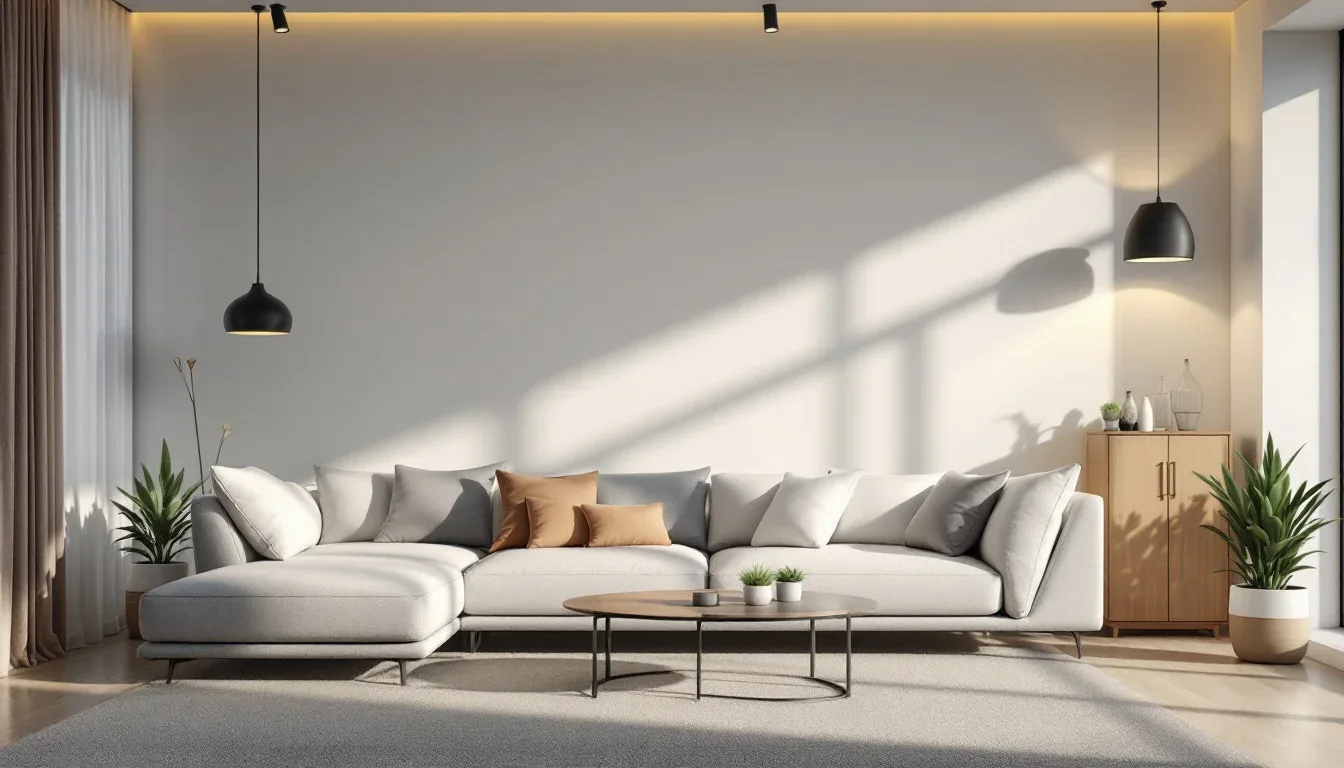
I spent $800 on a sectional once — my client’s money, not mine, which made it worse — that turned a perfectly functional living room into a room nobody could walk through. The scale was wrong for the space, and I’d prioritized the way the piece looked in isolation over how it would function inside four specific walls. That was not a contemporary mistake specifically, but it was the mistake that taught me the most important rule of this style: proportion is everything, and everything is proportional to the space it occupies.
Contemporary design punishes poor execution more ruthlessly than almost any other style. Traditional interiors can absorb clutter, mismatched scales, and mixed eras because they have visual noise built in. Contemporary spaces have almost no visual noise — which means every wrong choice is visible immediately.
The specific errors I’ve watched homeowners make repeatedly:
Confusing minimal with cold. Contemporary interiors are not clinical. Warmth comes from wood grain, linen texture, stone variation, and layered lighting — none of which require color. A room can be predominantly white and still feel genuinely warm. A room can also be predominantly white and feel like a hospital corridor. The difference is material quality and layering.
All-white everything. White is a foundation, not a complete color strategy. Two warm accent tones prevent the “showroom effect” — that feeling that no one actually lives there.
Mixing eras carelessly. A contemporary shell with Victorian furniture or Tuscan stone finishes creates something that designers charitably call “eclectic” and clients eventually hate. Contemporary architecture has a visual logic; elements that contradict that logic don’t add contrast, they add confusion.
Ignoring acoustic reality. Open floor plans combined with concrete floors, glass walls, and steel accents create significant echo problems. According to research published by the American Institute of Architects, acoustic performance is now cited by 34% of architects as a top client concern in open-plan contemporary homes — up from just 12% in 2015. Rugs, acoustic panels, and upholstered furniture are not optional softening touches. They are functional necessities.
Treating the outdoor space as separate. Contemporary architecture extends to the property line. A perfectly executed contemporary interior with a disconnected, traditional garden undermines the entire composition. The boundary between inside and outside should feel intentional, not accidental.
Actionable takeaway: Before purchasing a single piece of furniture or selecting a single finish, tape out the footprint of each major furniture piece on your floor using painter’s tape. Live with the proportions for a week. This costs nothing and prevents most scale mistakes before they become expensive ones.
Frequently Asked Questions
What is the meaning of contemporary architecture style?
Contemporary architecture means exactly what it sounds like — the architecture of right now. Unlike “modern architecture,” which refers to a specific historical movement from the early 20th century, contemporary is a moving target that reflects what architects are actually designing in the present moment. Today, that means flat or low-slope roofs, large glazing, open floor plans, mixed natural materials, and a commitment to sustainability. The definition will shift again in another decade, which is both the style’s defining characteristic and its most frequent point of confusion.
Was Louis Sullivan an architect?
Yes — and one of the most important in American history. Louis Sullivan (1856–1924) is widely credited as the father of modernism and the father of the skyscraper. His dictum “form follows function” became the philosophical foundation for everything contemporary architecture is built on: honest materials, expressed structure, and the elimination of decorative ornament that doesn’t serve the building’s purpose. His Carson Pirie Scott store in Chicago (1899) is still studied as a model of facade honesty. His student Frank Lloyd Wright carried these ideas into residential design — making Sullivan, indirectly, responsible for the open-plan contemporary home.
Which is the most beautiful building in the world?
There is no single answer, and anyone who gives you one with certainty is working from a very narrow source. That said, the Heydar Aliyev Center in Baku (Zaha Hadid, 2012) appears on more contemporary “most beautiful” lists than any other building — it won the London Design Museum’s Design of the Year award in 2014 and draws over 300,000 visitors annually. The Louvre Pyramid (I.M. Pei, 1989) and Apple Park (Foster + Partners, 2017) are consistently cited alongside it. What connects all three is the same thing: restraint, material honesty, and a deliberate relationship between structure and light.
Does James Madison have architecture?
Madison was not a trained architect, but he had strong opinions about design and took a direct hand in the redesign of Montpelier, his Virginia plantation home, twice during his lifetime. Working with architect William Thornton, he produced a Federal-style mansion with a symmetrical brick facade and classical portico that reflects his values of order and proportion. The home underwent a $10 million restoration in 2008 — removing 20th-century additions and restoring Madison-era details using over 2,000 archaeological artifacts as reference — and stands today as both a historic landmark and a case study in honest architectural restoration.
What is the difference between contemporary and modern architecture?
Modern architecture is a historical movement. Contemporary architecture is a present condition. Modern describes a specific aesthetic tied to the Bauhaus, Le Corbusier, and Mies van der Rohe — a look you can precisely replicate with documented references. Contemporary describes what is being built right now, which incorporates modern influences alongside biophilic design, sustainable materials, and warmer tonal palettes that pure modernism never used. For homeowners: modern gives you a fixed target; contemporary gives you a living direction. Know which one you actually want before you spend money on either.
Start today by walking through one room in your home and identifying everything that is decorative rather than structural — trim, fixtures, finishes, furniture — and asking whether each element earns its place or simply arrived there by default. Contemporary style architecture is not a look you apply. It is a discipline of elimination and honesty that you practice, one decision at a time. The house your neighbors photograph isn’t beautiful because someone added the right things. It’s beautiful because someone had the clarity to take the wrong ones away.
What is the meaning of contemporary architecture style?
Contemporary architecture means exactly what it sounds like — the architecture of right now. Unlike “modern architecture,” which refers to a specific historical movement from the early 20th century, contemporary is a moving target that reflects what architects are actually designing in the present moment. Today, that means flat or low-slope roofs, large glazing, open floor plans, mixed natural materials, and a commitment to sustainability. The definition will shift again in another decade, which is both the style’s defining characteristic and its most frequent point of confusion.
Was Louis Sullivan an architect?
Yes — and one of the most important in American history. Louis Sullivan (1856–1924) is widely credited as the father of modernism and the father of the skyscraper. His dictum “form follows function” became the philosophical foundation for everything contemporary architecture is built on: honest materials, expressed structure, and the elimination of decorative ornament that doesn’t serve the building’s purpose. His Carson Pirie Scott store in Chicago (1899) is still studied as a model of facade honesty. His student Frank Lloyd Wright carried these ideas into residential design — making Sullivan, indirectly, responsible for the open-plan contemporary home.
Which is the most beautiful building in the world?
There is no single answer, and anyone who gives you one with certainty is working from a very narrow source. That said, the Heydar Aliyev Center in Baku (Zaha Hadid, 2012) appears on more contemporary “most beautiful” lists than any other building — it won the London Design Museum’s Design of the Year award in 2014 and draws over 300,000 visitors annually. The Louvre Pyramid (I.M. Pei, 1989) and Apple Park (Foster + Partners, 2017) are consistently cited alongside it. What connects all three is the same thing: restraint, material honesty, and a deliberate relationship between structure and light.
Does James Madison have architecture?
Madison was not a trained architect, but he had strong opinions about design and took a direct hand in the redesign of Montpelier, his Virginia plantation home, twice during his lifetime. Working with architect William Thornton, he produced a Federal-style mansion with a symmetrical brick facade and classical portico that reflects his values of order and proportion. The home underwent a $10 million restoration in 2008 — removing 20th-century additions and restoring Madison-era details using over 2,000 archaeological artifacts as reference — and stands today as both a historic landmark and a case study in honest architectural restoration.
What is the difference between contemporary and modern architecture?
Modern architecture is a historical movement. Contemporary architecture is a present condition. Modern describes a specific aesthetic tied to the Bauhaus, Le Corbusier, and Mies van der Rohe — a look you can precisely replicate with documented references. Contemporary describes what is being built right now, which incorporates modern influences alongside biophilic design, sustainable materials, and warmer tonal palettes that pure modernism never used. For homeowners: modern gives you a fixed target; contemporary gives you a living direction. Know which one you actually want before you spend money on either.