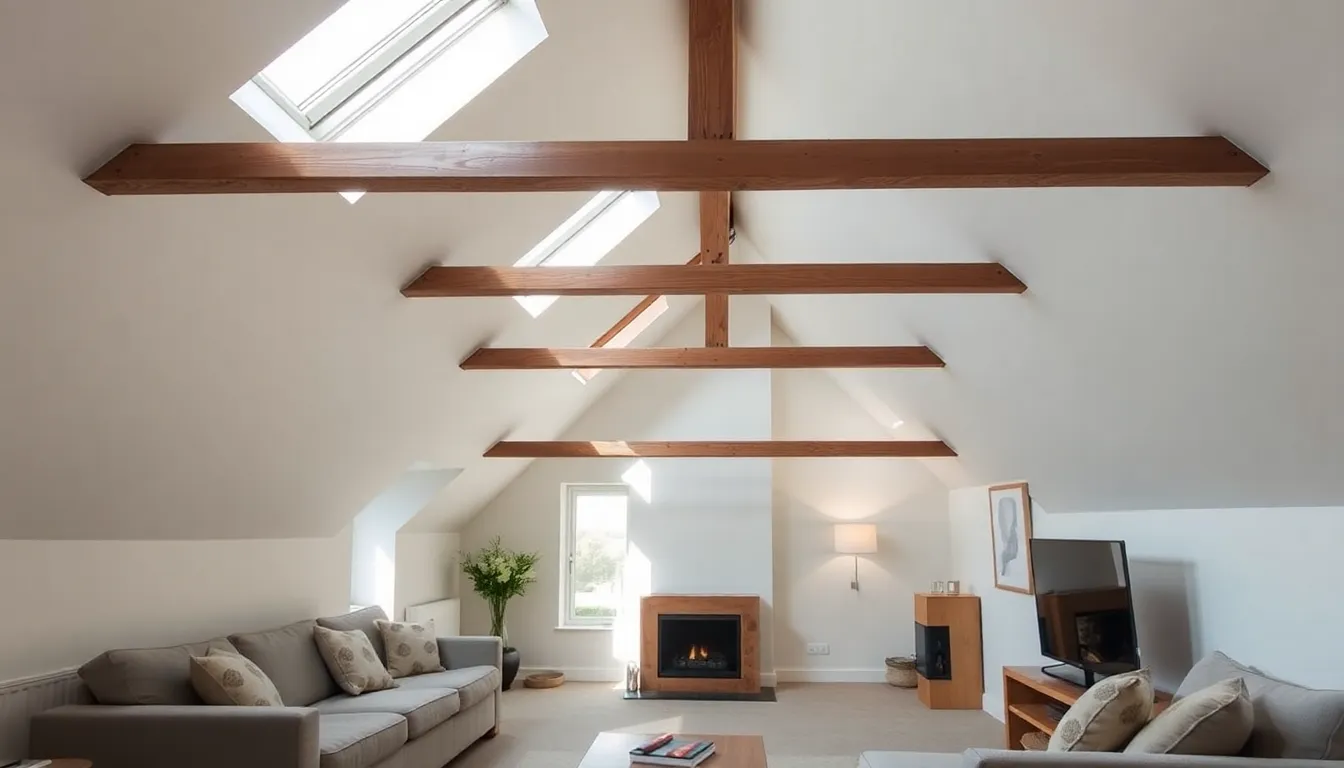
Most attics fail their owners not because they lack potential — but because the homeowner skips a single structural check that costs $500 and ends up spending $40,000 ripping out work that couldn’t pass inspection. I’ve watched it happen more than once. A client in Wicker Park hired a general contractor who never mentioned a structural engineer, framed out a bedroom, got halfway through drywall, and then got a stop-work order that turned into a $38,000 lesson in sequencing. The project wasn’t impossible. The approach was.
Quick Answer
Most attics fail their owners not because they lack potential — but because the homeowner skips a single structural check that costs $500 and ends up spending $40,000 ripping out work that couldn’t pass inspection.
If you’re planning to convert attic to room — turning dead overhead storage into a bedroom, office, or studio — this is one of the highest-return projects a homeowner can pursue. But only when the structure beneath the dream is actually capable of holding it. What follows is the honest version of this project: the feasibility gates, the real cost drivers, the thermal disasters waiting to happen, and the design strategies that make the finished space worth living in.
Is Your Attic Actually Convertible? Start Here Before Spending a Dime
In This Article

Before you contact a single contractor, you need to answer four questions — and the answers to those questions either save you money or expose problems that would have cost you everything.
The floor joist question is the one most people get wrong. Attic floors are typically framed to hold 10–20 pounds per square foot. That’s storage. Boxes, holiday decorations, the suitcases you haven’t touched since 2019. Habitable rooms — bedrooms, offices, anything a person occupies — require a minimum of 40 pounds per square foot under IRC standards. That gap almost always means floor joist reinforcement, and reinforcement means a structural engineer, not a YouTube video.
Here’s what to assess before committing to anything:
- Ceiling height: You’re looking for the 7 and 7 threshold — explained in detail in the next section, but broadly: if the space above your head doesn’t clear 7 feet over a meaningful portion of the floor, you’re either building a dormer or walking away
- Roof pitch: Anything below a 4:12 pitch — meaning the roof rises less than 4 inches for every 12 inches of horizontal run — is almost always a dead end for livable conversion. The geometry simply doesn’t produce usable headroom
- Floor load capacity: Pull down the hatch and look at the joists. Most attic joists are 2×6 framing. A structural engineer can tell you in a single visit whether sistering those joists is sufficient or whether a more involved reinforcement is needed
- Mechanical access: Where is your HVAC unit? Where does your electrical panel sit relative to the attic? Getting ductwork or an electrical circuit into an attic can be straightforward or a full renovation depending on your home’s layout
Roof pitch types that work well — standard gable roofs with pitches of 6:12 or steeper — give you the headroom and floor width to make the math work. Hip roofs can work but often deliver less usable area because they slope on all four sides. Mansard roofs are essentially purpose-built for upper-floor conversion and are the most forgiving geometry of all.
When to call a structural engineer before anyone else: if your floor joists are 2×6 or smaller, if you see any visible deflection or bounce when you walk across the attic floor, or if you’re in a home built before 1970 and have no documentation of any previous structural work. The fee — typically $500–$1,500 — is the most reliable money you’ll spend on this entire project.
Actionable takeaway: Before requesting a single contractor quote, hire a structural engineer for a feasibility assessment. Bring the report to every subsequent conversation. It changes the quality of the bids you get.
What Is the 7 and 7 Rule for Attics — and Why It Makes or Breaks Your Project

The phrase “7 and 7” circulates constantly in attic conversion conversations, and most of the time it’s used imprecisely. Here is the actual standard it refers to.
IRC Section R305.1 requires that habitable rooms maintain a ceiling height of not less than 7 feet over at least 50% of the room’s floor area. The remaining area cannot have a ceiling height below 5 feet — meaning those sloped knee-wall zones don’t disappear from your plans, they just don’t count toward habitable square footage. The “7 and 7” shorthand approximates this by suggesting you need 7 feet of clearance over at least 7 feet of usable floor width, which is a practical heuristic even if the code language is more nuanced.
Why does this matter so much in practice? Because it determines whether your attic produces a real room or a glorified storage upgrade. Here’s how to measure it:
- Find your center ridge height — measure from the attic floor to the peak of the roof at its highest point
- Walk outward from center in both directions and mark where the ceiling height drops below 7 feet — this is your usable band
- Measure the width of that band — if it’s less than 7 feet, the conversion either requires a dormer or doesn’t qualify as habitable space under most codes
- Subtract joist depth and subfloor thickness — once you add a proper subfloor (typically 1.5–2 inches) and potentially sister the joists (adding another 1.5–3 inches), your effective ceiling height drops slightly from your raw measurement
One thing almost no one mentions: local codes sometimes exceed IRC minimums. Chicago, for instance, runs its own municipal building code that doesn’t always mirror the IRC exactly. Always verify the specific ceiling height and area requirements with your local building department before drawing any floor plan.
Dormers are the standard solution when height falls short. A full shed dormer — running the width of the rear roofline — can dramatically expand the zone where 7-foot clearance exists. But that’s a separate project with its own cost structure, covered later in this article.
Actionable takeaway: Measure your attic’s usable footprint using this standard before talking to designers or contractors. If your 7-foot-clearance band is less than 7 feet wide, your first call is to a dormer contractor, not a finish carpenter.
Do You Need a Permit to Convert Attic to Room?

Yes. Full stop. I’ve heard every version of the rationalization — “it’s my house,” “it’s just a bedroom,” “the contractor said it’s fine” — and I’ve also seen what happens when those rationalizations meet a home sale, an insurance claim, or an inspector with a complaint to investigate.
Permits are required in virtually every U.S. jurisdiction when converting attic space to habitable use. This isn’t a technicality. When you convert attic to room, you change the structural load on the building, add occupancy to a space that wasn’t designed for it, and require safety systems — egress, smoke detection, CO detection, proper insulation — that an inspector needs to verify actually meet code.
What the permit process typically covers when you convert attic to room:
- Structural review: The inspector or plan reviewer will want to see that your floor joists are rated for 40 psf live load. If you’ve had a structural engineer sign off on sistered joists, that documentation travels with your permit application and speeds the review
- Egress: Bedrooms require at least one window meeting egress minimums — typically 5.7 square feet of net clear opening, no more than 44 inches from the floor to the sill. An attic bedroom without a compliant egress window fails inspection regardless of everything else
- Stair access: A pull-down ladder does not satisfy code for a habitable room. You need a permanent staircase, and that staircase has its own dimensional requirements — minimum 36 inches wide, maximum 8.25-inch riser height, minimum 9-inch tread depth
- Electrical: Any new circuits feeding the converted space need to be permitted and inspected. AFCI protection is required in bedrooms under current NEC standards
- Insulation and air sealing: Depending on your climate zone, you’ll need to meet specific R-value minimums for the roof assembly, and inspectors increasingly verify air sealing as part of the energy compliance review
The permit fee itself is usually the smallest line item on this entire project — commonly $500–$2,500 depending on jurisdiction and project scope. The real cost of skipping it shows up when you sell the house and a buyer’s inspector flags the unpermitted conversion, your homeowner’s insurance denies a claim because the space was modified without permits, or you have to open walls to prove compliance after the fact.
Actionable takeaway: Pull the permit. Budget for it from the start. The paperwork protects the investment you’re about to make.
The Real Cost to Convert Attic to Room

This is where most online guides fail — they quote ranges so wide they’re useless. “Attic conversions cost $20,000 to $75,000” tells you nothing. Here’s how to think about cost in terms of the actual decisions driving it.
The floor structure is your first cost decision. If your joists need sistering — which they almost always do — budget $3,000–$8,000 depending on span length and the number of joists involved. Full beam replacement runs higher. This line item is non-negotiable; it’s the foundation of every other decision.
Thermal performance is the second. Attics are thermally brutal. Without proper insulation and air sealing, you’ll build a room that costs a fortune to heat in winter and is unbearable in summer. Closed-cell spray foam applied directly to the roof deck is the gold standard for converted attic spaces — it air-seals and insulates simultaneously, and it doesn’t require a separate ventilation channel. Expect $3,000–$7,000 for a typical 400–600 square foot attic depending on depth of foam applied. Open-cell foam is cheaper but delivers lower R-values per inch, which matters when you have limited rafter depth to work with.
Dormers, if needed, are their own budget line. A single shed dormer on a 1,500-square-foot house typically runs $15,000–$30,000 fully finished. A pair of gable dormers runs $8,000–$18,000 each. These numbers swing considerably based on your roofing material, the complexity of the tie-in, and whether you need structural changes to accommodate them.
Rough cost breakdown for a straightforward conversion — no dormer, existing height compliant, 500 square feet:
| Line Item | Typical Range |
|---|---|
| Structural engineer assessment | $500–$1,500 |
| Floor joist sistering | $3,000–$8,000 |
| Spray foam insulation | $3,500–$7,000 |
| Electrical (new circuits, AFCI) | $2,500–$5,000 |
| HVAC extension or mini-split | $3,000–$7,500 |
| Permanent staircase | $4,000–$12,000 |
| Drywall, framing, finish work | $8,000–$18,000 |
| Permits and inspections | $500–$2,500 |
| **Total** | **$25,000–$61,500** |
The staircase is a line item that surprises people. A quality built-in staircase in a space where one didn’t exist before often requires reconfiguring the floor below — stealing square footage from a hallway or closet — which adds framing, drywall patching, and potentially flooring repair to the budget.
Actionable takeaway: Budget from the structural line item outward. Any contractor who leads with finish selections before confirming floor load capacity and egress compliance is working in the wrong order.
Frequently Asked Questions About Attic Conversions

How do I know if my attic is structurally ready to convert attic to room?
The most reliable answer comes from a structural engineer, not a visual inspection. That said, visible signs that reinforcement will be needed include 2×6 or smaller floor joists, any bounce or flex when you walk across the attic floor, joists spanning more than 12 feet without intermediate support, and any visible sagging or lateral movement in the framing. Budget for the engineer’s assessment before any other professional consultation — it costs $500–$1,500 and prevents every downstream mistake.
Can I convert attic to room without adding a dormer?
Yes, if your existing roof geometry already provides adequate headroom. Gable roofs with pitches of 6:12 or steeper on homes with a wide footprint often meet the 7-and-7 rule without modification. Measure your center ridge height, subtract for subfloor buildup, and check whether the resulting 7-foot clearance band spans at least 7 feet in width. If it does, a dormer is optional rather than required.
What’s the minimum room size for a converted attic bedroom?
IRC requires habitable rooms to be at least 70 square feet with no dimension less than 7 feet. The 70 square feet must meet the ceiling height standard — counting only area where the ceiling clears 5 feet or more. In practice, a converted attic bedroom under 100 usable square feet feels cramped once you account for knee-wall storage, the staircase landing, and code-required egress window placement. A functional single bedroom realistically needs 120–150 square feet of qualifying area.
How long does an attic conversion typically take?
A straightforward conversion — compliant height, no dormer, existing HVAC accessible — runs 6 to 12 weeks from permit approval to final inspection. Add 4–8 weeks if a dormer is involved, and account for the permit review period itself, which ranges from two weeks to several months depending on jurisdiction and workload. Projects that hit delays almost always do so because structural or mechanical issues weren’t scoped accurately at the start.
Does converting attic to room increase property taxes?
Almost always, yes. Adding habitable square footage changes your home’s assessed value, and the permit process notifies the assessor’s office in most jurisdictions. The increase varies considerably by location and assessed value methodology, but in most markets the tax impact is modest relative to the market value added by the conversion. A 500-square-foot bedroom addition in a market where finished space sells for $200 per square foot adds $100,000 in value — a property tax increase of a few hundred dollars per year is a reasonable trade.
Converting an attic is a sequenced project, not a renovation where you can improvise the order. Structure first, code compliance second, thermal performance third, finish work last. Skip any step in that sequence and the one after it becomes more expensive. Follow it correctly and you end up with one of the most cost-effective square-footage gains available in residential construction.