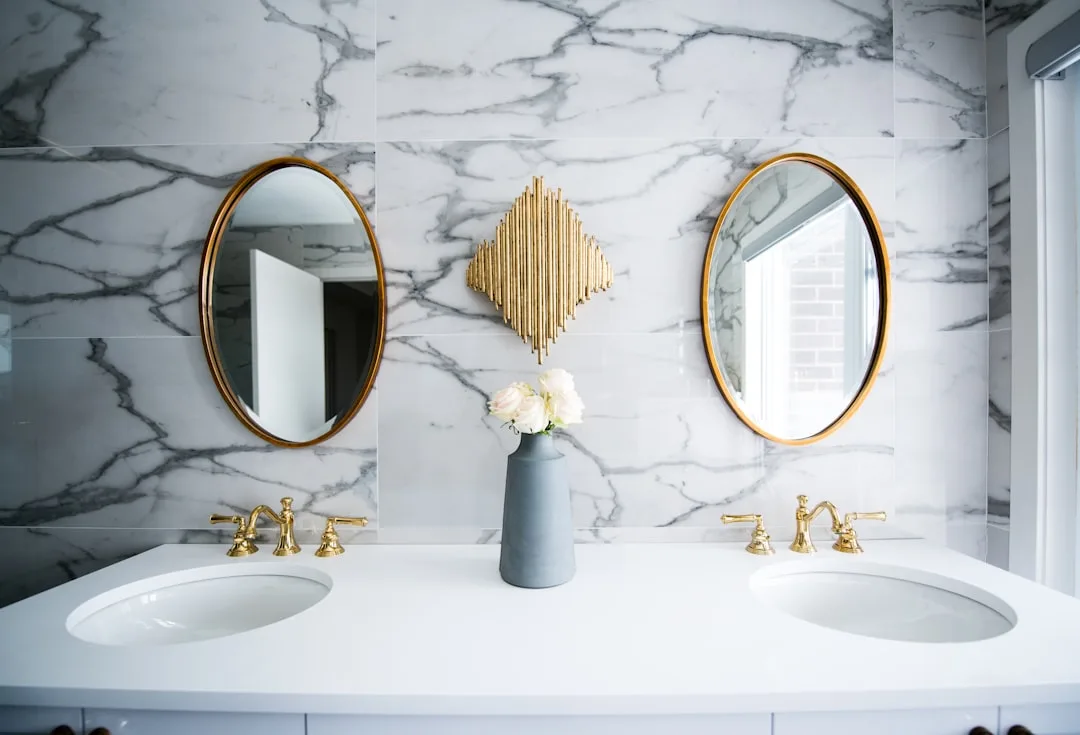
The number one reason DIY bathroom renovations blow their budget isn’t bad tile work — it’s that most homeowners start buying materials before they’ve written down a single line item. They walk into a home improvement store with a vague number in their head, come home with $600 in tile and a new vanity, and only then discover their subfloor is rotted, their backer board wasn’t in the cart, and their permit fee is $200 they hadn’t planned for. I watched this exact sequence destroy a Chicago client’s bathroom project timeline three times in eleven years. Different people, same mistake, different tile patterns.
Quick Answer
The number one reason DIY bathroom renovations blow their budget isn’t bad tile work — it’s that most homeowners start buying materials before they’ve written down a single line item.
This article is not going to tell you that DIY automatically saves money. Sometimes it does. Sometimes it doesn’t. What it will do is give you an actual accounting of where the money goes — so you can make a real decision before you demo a single wall.
Is It Cheaper to DIY a Bathroom Remodel — or Does the Math Lie?
In This Article
- Is It Cheaper to DIY a Bathroom Remodel — or Does the Math Lie?
- What Is the 30% Rule in Remodeling and Should You Follow It?
- Can You Remodel a Bathroom for $5,000 — and What Will You Actually Get?
- Is $10,000 Enough for a Bathroom Remodel? Here’s What Changes
- The DIY Tasks Worth Doing vs. the Ones That Backfire
- How to Build a Realistic DIY Renovation Budget Before You Buy a Single Tile

Labor typically accounts for 40–65% of a professional remodel’s total cost. That’s the number everyone quotes when they argue for going DIY — and it’s real. On a $16,500 professional bathroom renovation (the 2026 national average for a midrange remodel), labor could represent $6,600 to $10,700. That gap looks enormous on paper. What looks less impressive is when you run the actual math after accounting for everything you forgot to include.
The savings ceiling is not a savings guarantee. Here’s what the forum posts and budget breakdowns almost never include:
- Tile saw rental: $60–$100 per day, and most first-timers need 2–3 days minimum
- Waterproofing membrane: $80–$200, non-negotiable for any wet area, skipped constantly
- Cement backer board: $1.50–$3.50 per square foot — usually absent from beginner estimates
- Permit fees: $50–$500 depending on your jurisdiction, required whether you DIY or hire out
- Grout sealer, tile spacers, thinset, transitions: $150–$300 of “small stuff” that adds up fast
A realistic DIY equivalent of that $16,500 professional job — same scope, same square footage, legitimate material quality — runs $6,000–$9,500 when you account for all of it properly. Not the $3,000 figure that circulates endlessly in renovation forums. The $3,000 number is someone’s cosmetic refresh dressed up as a full renovation.
First-time DIYers also average 2–3x longer project timelines than experienced contractors. That matters because extended timelines mean adhesives and compounds that cure incorrectly, tile set before substrates are fully dry, and — if this is your only bathroom — a growing number of days without a functional shower.
Permit fees deserve their own sentence. Skipping them can trigger a forced reversal of work at resale. I’ve seen this happen. A buyer’s inspector flags the unpermitted work, the municipality gets involved, and suddenly you’re either pulling out finished tile or negotiating a price reduction that far exceeds what the permit would have cost.
Actionable takeaway: Before you calculate your savings, build a complete line-item list — every tool, every consumable, every permit — and only then subtract it from a real contractor quote for the same scope.
What Is the 30% Rule in Remodeling and Should You Follow It?
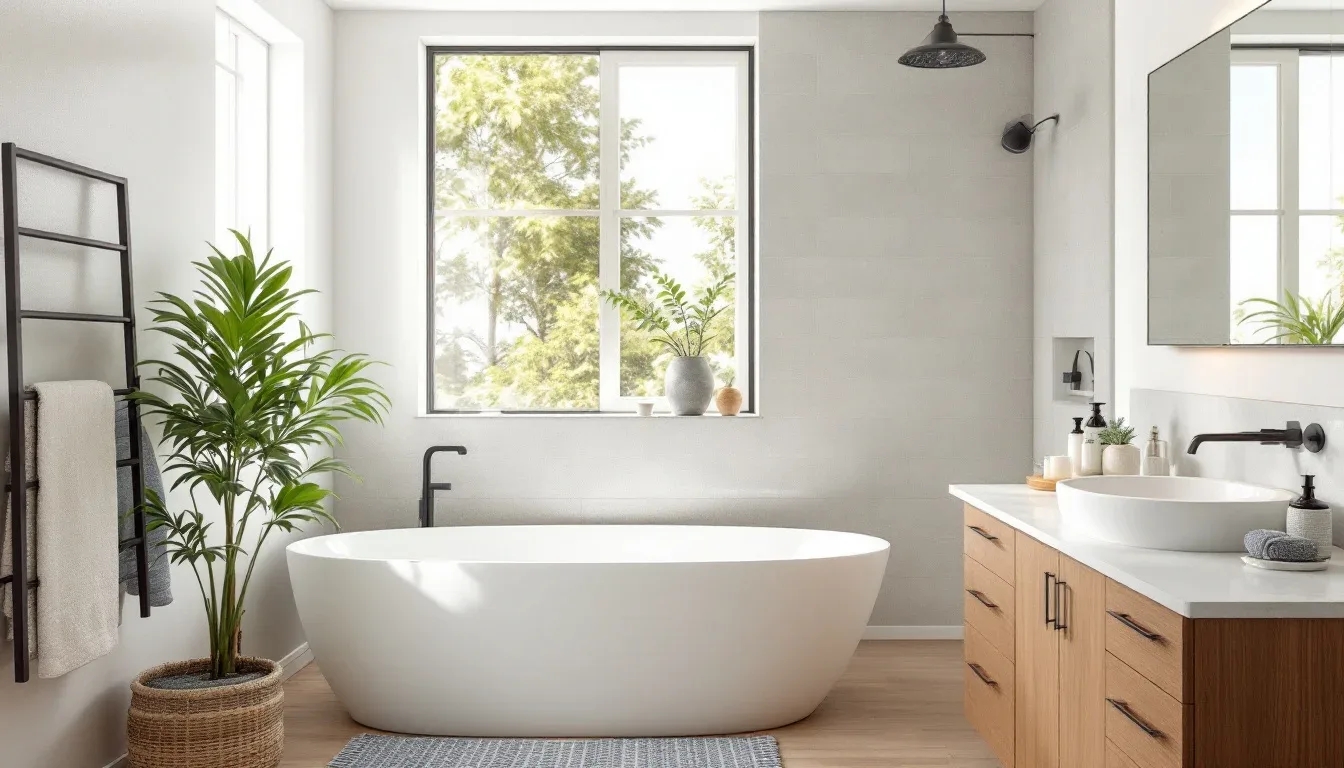
The 30% rule is a resale-protection guideline, not a design limit. The principle: don’t spend more than 30% of your home’s current market value on renovating a single room. For a $350,000 home, that ceiling sits at $105,000 total — but when people apply it specifically to a bathroom, they’re usually thinking about a $35,000–$50,000 cap on a primary bath gut renovation. At the $5K–$10K DIY range, you’re nowhere near that ceiling. Which is exactly where the trap is.
Labor savings create a false sense of budget room. This is — and I mean this — the single most insidious pattern I watched repeat in client projects. A homeowner saves $4,000 on labor costs, feels flush, and starts speccing heated floors, custom-built floating vanities, and handmade tile. None of those are bad decisions on their own. All of them together quietly double the project cost. This phenomenon has a name in the industry: spec creep. It’s the #1 cause of DIY cost overruns, and it’s almost never caught until the credit card statement arrives.
According to Remodeling Magazine’s Cost vs. Value report, a midrange bathroom remodel recoups approximately 66% of its cost at resale. That’s for a midrange renovation. Push into high-end finishes — the ones DIYers tend to gravitate toward after feeling “budget-confident” — and the return rate drops. You’re improving for your own enjoyment, which is a valid reason to spend money, but not a financial justification.
The rule matters most in two specific scenarios:
- You’re planning to sell within 5 years — overspending beyond neighborhood comps will not be recovered at closing
- You’re in a lower-value neighborhood — a $15,000 bathroom renovation in a $180,000 house is rarely recouped regardless of quality
If you’re staying long-term, personal use value justifies exceeding it. A bathroom you use every single day for 15 years doesn’t owe you a full financial return. But you should make that decision consciously — not because you got excited after saving on demo labor.
Actionable takeaway: Before speccing finishes, look up three comparable homes that sold in your ZIP code in the last 12 months and note their bathroom quality level. That’s your real ceiling, not a percentage calculation.
Can You Remodel a Bathroom for $5,000 — and What Will You Actually Get?
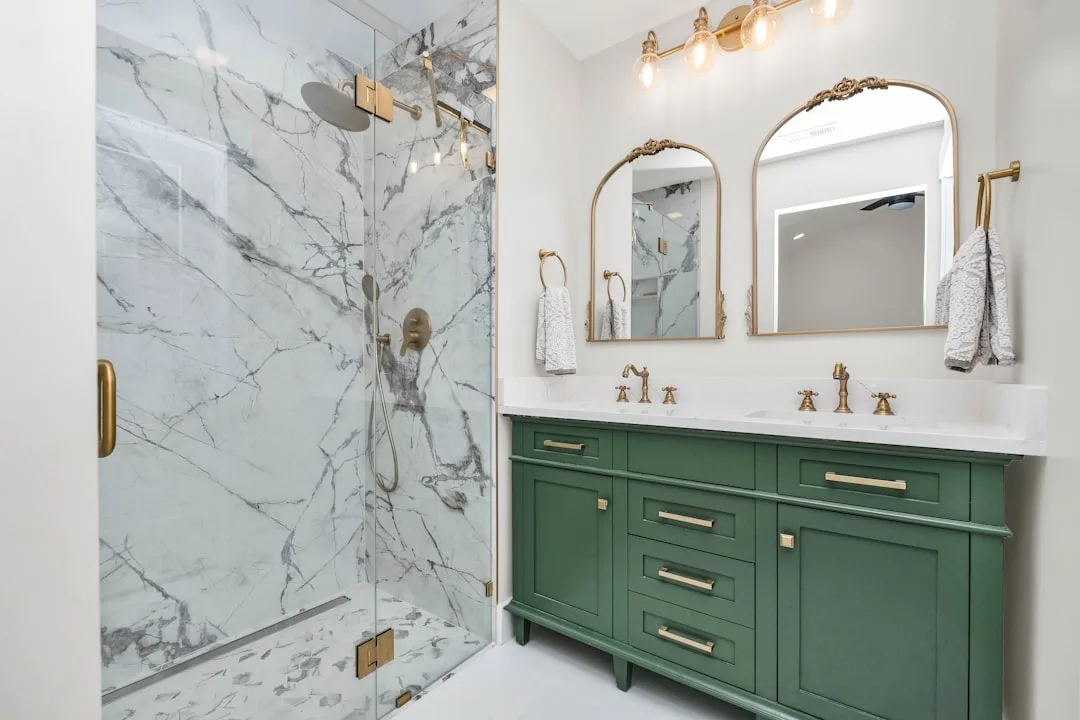
Honest answer: yes, with a sharp constraint on scope. A $5,000 DIY budget is entirely viable for a cosmetic refresh of a small bathroom — under 50 square feet — that doesn’t require moving plumbing, addressing structural issues, or floor-to-ceiling tile in a walk-in shower. That’s a specific scenario. It’s also the most common bathroom situation in older Chicago two-flats and New York prewar apartments, so it applies to more people than you’d think.
Here’s what $5,000 actually buys in materials in 2026:
- Vanity: $200–$800 (freestanding or wall-mount, standard 24″–36″ width)
- Toilet: $150–$500 (basic to mid-grade two-piece)
- Floor tile and adhesive: $300–$700 (ceramic or entry-level porcelain, under 50 sq ft)
- Shower surround tile: $400–$1,200 (depending on material and linear footage)
- Fixtures and hardware: $150–$450 (faucet, towel bars, toilet paper holder, shower head)
- Paint, primer, and prep: $80–$150
That’s roughly $3,200 in materials for a straightforward small bathroom refresh. Add permits (~$150), tool rental (~$250), and a hard contingency buffer (~$400), and you’re at $4,000. That leaves about $1,000 in flex — enough for one unexpected repair. Not two. A single cracked subfloor or corroded pipe fitting can run $400–$900 before you’ve even started the actual renovation.
What a $5,000 budget does not cover: mold remediation (which can run $500–$3,000 depending on extent), moving drain lines, full floor-to-ceiling tile in anything larger than a 3×4 shower, or any structural repairs. If you open a wall and find a problem — and in bathrooms over 20 years old, opening walls frequently reveals problems — this budget absorbs the hit and leaves you with an incomplete project.
The 15–20% contingency buffer is not optional. Every experienced contractor I’ve ever worked alongside builds it in automatically. Most first-time DIYers treat it as a slush fund they’ll skip if things go well. Things rarely go entirely well in bathrooms.
Actionable takeaway: Before committing to a $5,000 budget, inspect your subfloor, check under the sink cabinet for water damage, and look at the caulk line where the tub meets the wall. What you find in those three spots will tell you whether $5,000 is realistic or whether you need to revise upward before you start.
Is $10,000 Enough for a Bathroom Remodel? Here’s What Changes

Ten thousand dollars — when managed correctly — changes the renovation category entirely. This is the budget tier where a full gut renovation of a standard 5×8 bathroom becomes genuinely achievable: proper waterproofing, cement board substrate, new tub or a tub-to-shower conversion, full tile work, and mid-grade fixtures throughout. You’re not stretching to make it work. You’re making actual decisions.
The most important thing $10,000 buys that $5,000 doesn’t is margin for a licensed trade. At this budget level, you can hire a plumber for one day ($300–$600) or an electrician for a GFCI install or exhaust fan circuit ($150–$350) while keeping all cosmetic work DIY. That hybrid approach — licensed trades for anything involving water supply lines or electrical panel connections, DIY for everything else — is the most cost-efficient model for homeowners without prior renovation experience. It eliminates the highest-consequence failure modes while preserving most of the labor savings.
What mid-grade finishes look like at this budget level:
- Vanity top: Quartz or solid surface, $300–$600 (a meaningful durability upgrade over cultured marble)
- Shower enclosure: Semi-frameless, $400–$900
- Porcelain tile: $2–$6 per square foot, which opens up large-format options and realistic wood-look tile
- Fixtures throughout: Chrome or brushed nickel sets, $200–$500 for a coordinated package
That last point matters more than most budget content acknowledges. Design cohesion — fixtures, hardware, and tile that actually read as intentional together — is hard to achieve when you’re forced to buy whatever happens to be discounted. I spent years watching clients mix a $79 faucet with a $400 vanity and wonder why the room felt cheap. At $10,000, you can afford to make every visible element work together.
Homeowners who invest $8,000–$12,000 in a midrange DIY bathroom renovation see an average ROI of 60–70% at resale, which — according to 2026 Cost vs. Value data — outperforms comparable kitchen renovation spending at the same tier. Bathrooms are efficient investments when scoped correctly.
Actionable takeaway: If your project is currently budgeted at $7,000–$8,000, consider whether stretching to $10,000 with the hybrid trade model makes more sense than attempting full DIY at a lower number. The math often favors the stretch.
The DIY Tasks Worth Doing vs. the Ones That Backfire
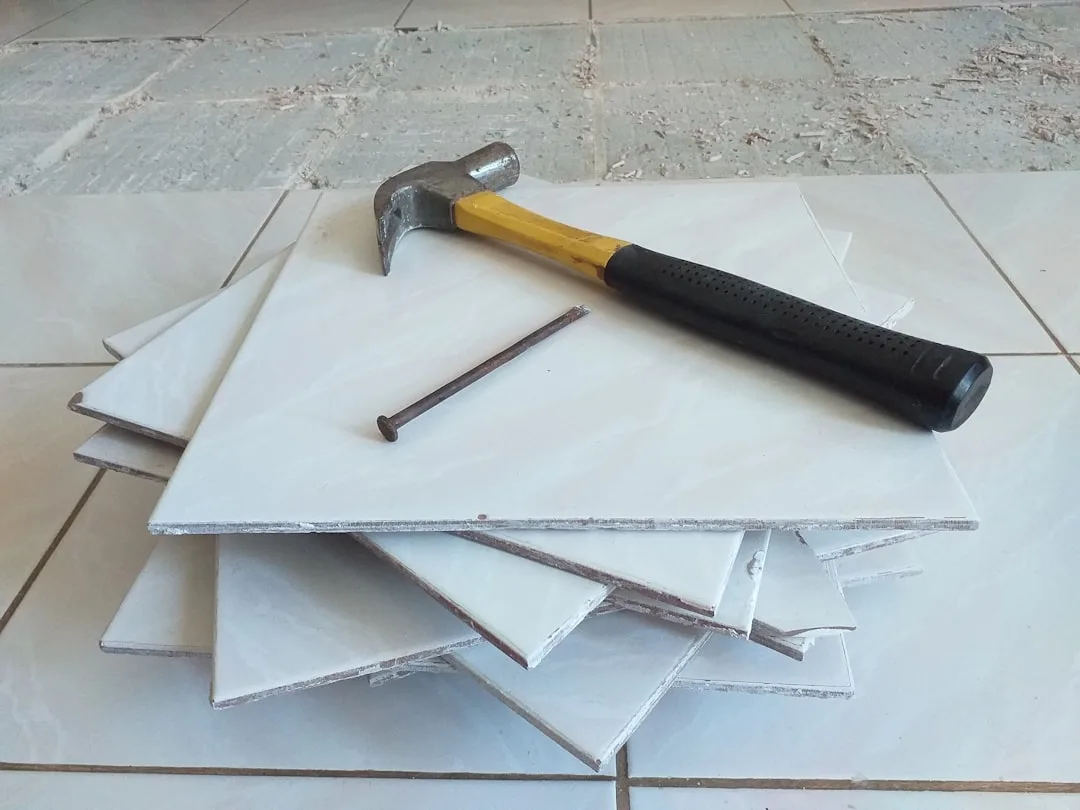
Demolition is satisfying. It’s also almost entirely safe to DIY. Swinging a hammer at old tile doesn’t require a license or specialized skill — it requires safety glasses, a respirator if the tile might be over asbestos-era backer board, and a decent pry bar. Painting is self-explanatory. Vanity swaps, mirror installs, towel bar mounting, caulking, grouting — these are all well-documented, forgiving tasks where a mistake costs you an afternoon, not $3,000.
Medium-ROI tasks require honesty about your own skill ceiling. Tile installation is the one I saw go wrong most often — not catastrophically, just expensively. A beginner who doesn’t fully understand lippage, proper thinset coverage, and consistent grout joint sizing ends up with a floor that looks amateur even with beautiful tile. Toilet replacement is genuinely straightforward if the flange is intact. If the flange is damaged — and in older bathrooms, it frequently is — what started as a $180 toilet installation becomes a $600 plumbing repair. Basic drywall patching is manageable; patching cement board is a different skill set.
Then there are the tasks where DIY produces negative ROI, and I mean that literally — where the cost of remediation exceeds the cost of hiring a professional in the first place:
- Moving drain lines: Requires opening floors, understanding slope requirements, and in many jurisdictions, a licensed plumber regardless of who does the work
- Relocating or adding electrical circuits: One code violation here can require a full inspection and panel work at resale
- Shower pan waterproofing without prior experience: A single pinhole failure in a shower pan membrane causes water damage that goes undetected for months — water damage remediation averages $2,500–$7,500 per incident, routinely exceeding the cost of hiring someone competent to do it correctly the first time
Plumbing mistakes are the leading cause of bathroom renovation cost overruns. Not tile mistakes. Not drywall errors. Water. It finds every gap, sits silently behind walls, and announces itself through a ceiling stain six months later.
Actionable takeaway: Write your task list and honestly rate each item: high confidence, moderate confidence, or “I’ve never done this before.” Hire out anything in the third category that involves water or electricity.
How to Build a Realistic DIY Renovation Budget Before You Buy a Single Tile
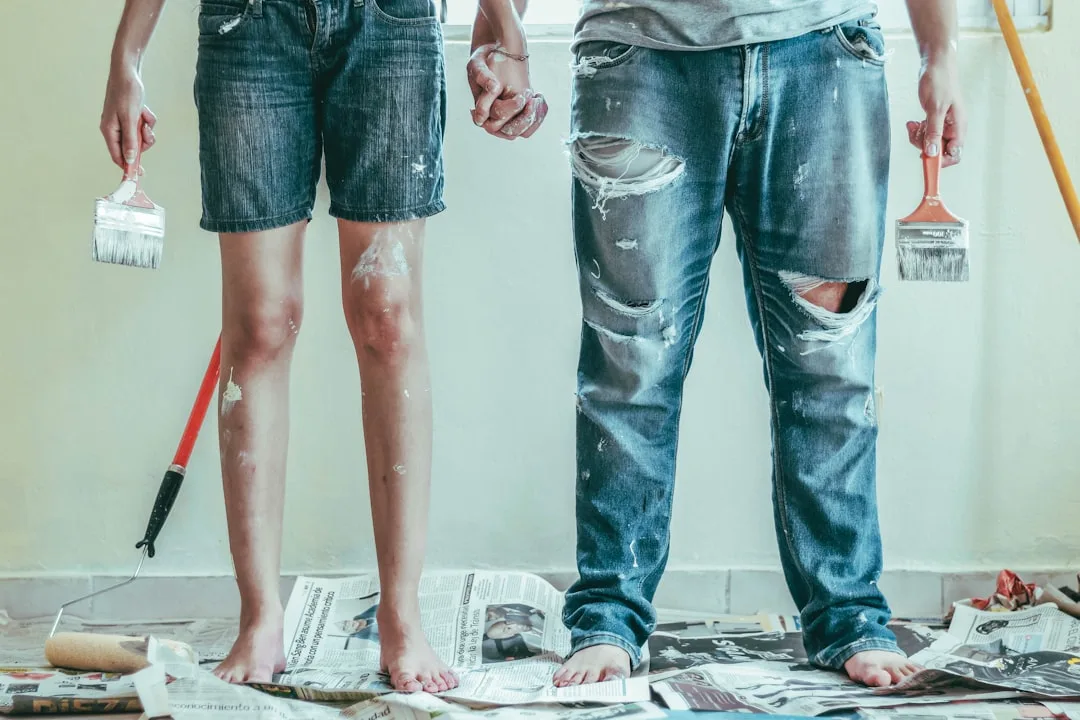
Start with scope, not aesthetics. This is backwards from how most people approach renovation planning — they find a tile they love, build a mood board, and then try to make the budget fit. The correct sequence runs the other direction. Define what category of work you’re doing before you make a single finish selection, because a cosmetic refresh and a gut renovation have completely different cost floors and the gap between them is not small.
Here’s the sequence that actually works:
Step 1: Write down your scope in one sentence. Cosmetic refresh (paint, vanity, fixtures, no demolition). Partial update (new tile, toilet, some demo). Full gut (everything out, structural assessment, new waterproofing, new substrate). Each of those is a different project with a different budget. If you can’t state your scope in one sentence, you’re not ready to buy anything.
Step 2: Measure your space and price every SKU before you purchase. Every tile. Every piece of backer board. Every tube of thinset. The exact model number of the vanity, not just a price range. This process takes a few hours and reveals — every single time — that the number in your head was 20–30% too low.
Step 3: Add the line items that competitor budget lists almost always skip:
- Permit fee: $50–$500 (call your local building department, the number varies wildly)
- Dumpster or haul-away: $150–$400
- Temporary toilet or shower access if this is a single-bathroom home
- Hard 20% contingency — not 10%, not “I’ll figure it out,” 20%
Step 4: Make your two most expensive decisions first. In almost every bathroom, that’s flooring and the shower surround. Lock those in — material, color, format — before you choose anything else. Every other finish decision flows from there. This eliminates the single most common cause of style mismatches and mid-project impulse upgrades.
Step 5: Write down your stop-spend number and what gets cut when you hit it. Before you start work. Before you’re emotionally invested. Before mid-project momentum convinces you that you might as well finish the heated floor now that everything is already torn apart.
The average DIY bathroom project runs 18–25% over initial budget — not because materials prices spike mid-project, but because of scope creep and missing contingency planning. That pattern repeats so consistently that it’s essentially the default outcome when someone skips Step 5.
Actionable takeaway: Complete all five steps before purchasing anything. The few hours this takes is the highest-ROI investment in the entire project.
Frequently Asked Questions About DIY Renovation Costs
Is it cheaper to DIY a bathroom remodel?
Yes — but conditionally. If your scope is cosmetic (vanity swap, paint, fixtures, tile refresh) or you have relevant trade skills, DIY can save $3,000–$7,000 on a standard small bathroom. For full gut renovations without prior experience, mistakes, permit fees, tool rentals, and remediation costs frequently erode savings to the point where the total approaches professional quotes. Hybrid DIY — cosmetics yourself, licensed trades for plumbing and electrical — is usually the most cost-efficient real-world approach.
What is the 30% rule in remodeling?
The 30% rule is a resale-protection guideline advising homeowners not to spend more than 30% of their home’s current market value renovating a single room. On a $350,000 home, that’s a $105,000 theoretical ceiling — but the practical application is preventing over-improvement relative to neighborhood comparable sales. It matters most if you plan to sell within five years. Long-term owners can justify exceeding it based on personal use value, but should make that decision deliberately rather than by accident.
Is $10,000 enough for a bathroom remodel?
For a full DIY gut renovation of a standard 5×8 bathroom with mid-grade finishes — porcelain tile, quartz vanity top, semi-frameless shower enclosure, quality fixtures — $10,000 is workable. It also allows budget for one licensed trade (plumber or electrician), which significantly reduces risk. For a large primary bathroom, master suite bath, or any space requiring luxury finishes or significant plumbing relocation, $10,000 covers partial scope only and should be treated as a phase-one budget rather than a complete renovation budget.
Can I remodel a bathroom for $5,000?
Yes, for a cosmetic refresh of a small bathroom under 50 square feet: new vanity ($200–$800), toilet ($150–$500), floor tile ($300–$700), fixtures ($150–$450), and paint ($80–$150) gets you to roughly $3,200 in materials, with permits, tool rental, and a 20% contingency consuming the remainder. No, for a full gut renovation, any space requiring plumbing relocation, mold remediation, structural repair, or floor-to-ceiling tile in a larger shower. At $5,000, one significant unexpected finding — rotted subfloor, corroded supply lines — consumes your entire contingency buffer instantly.
One thing you can do right now, before this tab closes: open a spreadsheet and write “Scope” at the top. One sentence. Cosmetic, partial, or gut. Everything else — the tile selections, the vanity research, the fixture comparisons — comes after that sentence exists. Most renovation budgets collapse not at the hardware store but at that blank first line that nobody ever wrote.