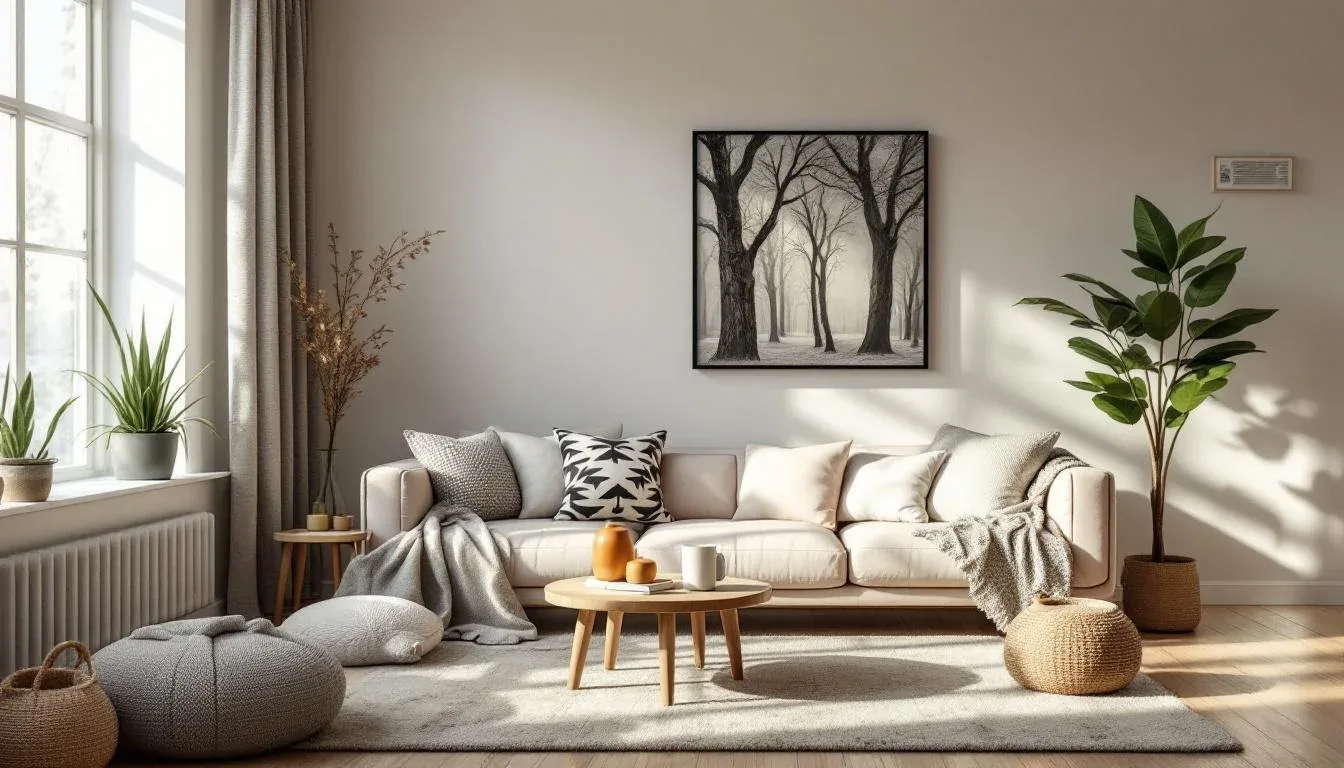
If you’ve been searching for cozy bedroom ideas on budget, the most important thing I can tell you upfront is this: the coldest-feeling bedrooms in the world aren’t always small or poorly furnished — most of them are simply lit wrong, and fixing that costs less than a takeout order.
Quick Answer
The coldest-feeling bedrooms in the world are not always small or poorly furnished — most of them are simply lit wrong, and fixing that costs less than a takeout order.
I moved into a rental apartment with white walls, a ceiling fixture that buzzed like a hospital waiting room, and laminate floors that made every barefoot morning feel like a punishment. The bedroom wasn’t ugly. It was just hollow. That specific kind of empty that makes you feel like you’re sleeping in a room that doesn’t belong to you — because technically, it doesn’t.
Over four weekends and roughly $200 total, that room became the place I actually wanted to be. Not because I bought expensive furniture or did anything dramatic. Because I finally understood why cheap bedrooms feel cheap — and it has almost nothing to do with the price tag on your furniture.
Here’s everything that worked.
Why Most Budget Coziness Attempts Fall Flat (And Cost More in the Long Run)
In This Article
- Why Most Budget Coziness Attempts Fall Flat (And Cost More in the Long Run)
- 1. The Layered Textile Method: How to Make Any Bed Look Like a Hotel Suite for Under $80
- 2. Scent, Sound, and Touch: The Sensory Shortcuts to a Cozy Space That No One Writes About
- 3. Lighting Surgery: The Single Change That Makes Every Other Improvement Look Better
- 4. The Headboard Wall: How to Create Visual Depth Without Drilling or Damaging Anything
- 5. The Curtain Upgrade That Costs $40 and Does Four Things at Once
- 6. The $15 Plant Principle: How Greenery Changes the Emotional Temperature of a Room
- 7. Putting It All Together: How to Sequence $200 Across These Upgrades
Walk into any HomeGoods on a Saturday and you’ll see the trap being set in real time. Cart after cart piled with small decorative objects, discount candles, miniature signs with inspirational phrases, plastic frames, and eight versions of the same faux-succulent. People spend $150 on that cart and walk out with a room that feels more cluttered than cozy.
The core mistake is buying volume instead of impact. Coziness isn’t a quantity game. A single well-placed lamp in warm amber light does more for a bedroom’s atmosphere than fourteen tiny tchotchkes arranged across a dresser top. Budget decorators consistently underestimate how much visual clutter works against warmth — it makes a room feel restless rather than settled, which is the exact opposite of what you’re going for.
There’s also the issue of cozy return on investment. Not all purchases deliver equal perceived warmth per dollar spent. A $12 warm-white bulb swap changes the entire emotional register of a room. A $12 set of decorative pebbles from the clearance bin changes nothing. Ranking your purchases by actual sensory impact — rather than how cozy they look in the store — is what separates a transformed bedroom from a cluttered one.
The National Sleep Foundation has found that bedroom environment, including perceived comfort, light quality, and temperature, significantly affects sleep quality. This means investing in sensory comfort isn’t just an aesthetic preference — it’s backed by sleep science. Your bedroom environment directly influences how your nervous system winds down at night.
The smarter framework is this:
- Identify the highest-visual-weight elements first (bed, lighting, headboard wall)
- Spend the majority of your budget on those three things
- Add sensory layers second (scent, texture, sound)
- Add decorative objects last — and only if the room actually needs them
Most rooms don’t need more stuff. They need better stuff, placed more intentionally.
Actionable takeaway: Before you buy anything, spend 10 minutes photographing your bedroom. Photos reveal clutter and visual noise that your eye learns to filter out in person. That image will tell you exactly what to fix first.
1. The Layered Textile Method: How to Make Any Bed Look Like a Hotel Suite for Under $80

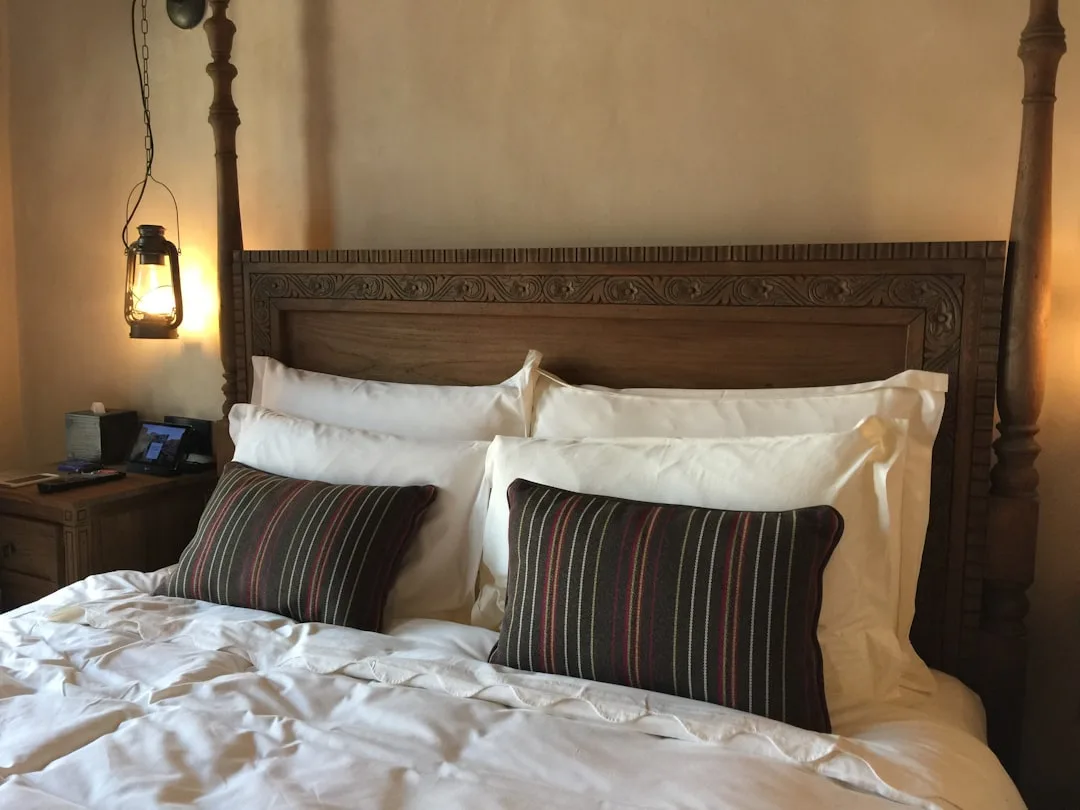
Interior stylists are fairly consistent on one point: bedding accounts for roughly 60% of a bedroom’s visual weight. The bed is the room’s anchor. If it looks cheap or flat or messy, no amount of wall art or accent furniture will save the space. Which means this is exactly where your budget should concentrate first.
The method that actually works isn’t “add more pillows.” It’s a deliberate three-layer system:
- Base layer: Your main duvet or comforter, fitted smoothly with hospital corners or a simple tuck. IKEA’s FJÄDRAR duvet insert runs about $30–40 and has the kind of loft that reads expensive in photographs.
- Mid-layer: A folded quilt or waffle-weave blanket draped across the lower two-thirds of the bed. This is where texture contrast earns its keep — a cotton waffle weave over a smooth duvet creates that effortlessly layered look that takes a bed from flat to editorial. Amazon Basics waffle blankets hover around $25–35.
- Accent layer: A single throw folded loosely at the foot. Not folded neatly — loosely. Deliberately imperfect. Velvet or chunky knit works best here because it photographs as rich even when it costs almost nothing.
Texture contrast matters more than color matching. Mixing linen, knit, and velvet reads as intentional and considered, even when every piece came from a different discount source. A thrift store quilt in a neutral tone paired with an IKEA duvet and a $15 Amazon throw will outperform a matchy-matchy set from a fast-fashion home brand every time.
For pillows: the chop technique. After arranging your sleeping pillows in cases, place two Euro shams behind them and give the front pillows a single karate-chop indent at the top center. This creates that slightly rumpled luxury hotel effect that most people associate with expensive bedding — it costs nothing and takes about four seconds.
Thrift stores are consistently underrated for quilts specifically. Quilts don’t wear out the way fitted sheets do, so secondhand quilts are almost always in excellent condition. You can find substantial, beautifully textured quilts for $3–8 at Goodwill or Salvation Army that would retail for $60–80 new.
Actionable takeaway: Start with texture before you start with color. Buy one waffle blanket and one different-textured throw, layer them on your existing bedding, and photograph the result. You’ll see the difference immediately.
2. Scent, Sound, and Touch: The Sensory Shortcuts to a Cozy Space That No One Writes About

Almost every article about cozy bedroom ideas treats coziness as a visual problem. It isn’t. Or at least, it isn’t only that. Research in environmental psychology shows that multi-sensory environments are perceived as more comfortable and personalized than visually decorated spaces with no sensory layering. Scent in particular activates the limbic system — the part of your brain that governs emotion and memory — which is why walking into a room that smells like vanilla or cedar or woodsmoke creates an immediate emotional response that no throw pillow can replicate.
Scent is the fastest, cheapest way to make a room feel inhabited and warm. The scent families that work best for bedrooms are:
- Warm woods: sandalwood, cedarwood, amber
- Soft florals: lavender, jasmine (used sparingly)
- Gourmand: vanilla, tonka bean, warm musk
- Earthy: vetiver, patchouli in small doses
Avoid sharp citrus or aquatic scents in bedrooms — they register as energizing rather than settling. A soy wax candle with a wood wick from a small brand like P.F. Candle Co. runs about $20, but you’ll find comparable quality from Homesick or even Target’s threshold line for $10–14. Reed diffusers work better than candles for sustained low-level scent — the kind you notice when you first walk in rather than only when you’re sitting right next to a flame. A basic reed diffuser with a warm amber or sandalwood oil runs $8–12 on Amazon and lasts six to eight weeks.
Sound is the other overlooked layer. A white noise machine or even a small Bluetooth speaker playing low ambient sound — rain, brown noise, soft instrumental — changes the acoustic texture of a room in a way that genuinely registers as comfort. Hard floors and bare walls bounce sound around in ways that feel clinical and cold. Until you can add rugs and curtains (which I’ll get to), a consistent low-level ambient sound softens that acoustic sharpness significantly. A basic white noise machine from LectroFan or Marpac runs $30–45 and earns its keep immediately.
Touch starts with the floor. If you have hard floors, the first thing your body registers every morning is cold, hard laminate or tile. A bedside rug — even a small one, 2×3 feet — placed directly where your feet land when you wake up transforms that first morning sensation. Jute and cotton flatweave rugs in that size run $15–25 and are widely available on Amazon or at IKEA. It sounds minor. It isn’t. That physical warmth under your feet in the first thirty seconds of your day sets the tone for your entire morning.
Actionable takeaway: Add scent before you add anything visual. Light a candle or place a reed diffuser, then sit in your room for ten minutes. Notice how the space feels different with no other changes made. Then layer in sound and touch.
3. Lighting Surgery: The Single Change That Makes Every Other Improvement Look Better
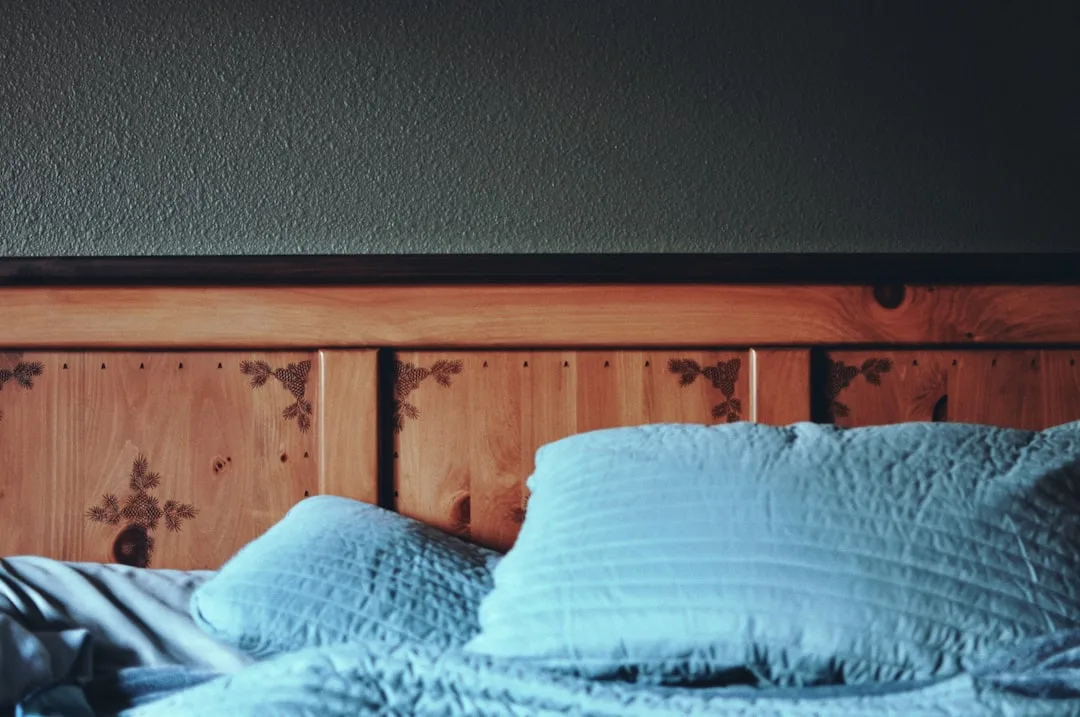
If the textile method is the highest-impact visual investment, lighting is the highest-impact atmospheric one. These are different things and they work together. You can have the most beautifully layered bed in the world, and if it’s lit with a 5000K overhead bulb, it will look like a showroom floor sample. The same bed under warm 2700K lamp light looks like a boutique hotel.
The overhead light problem in rentals is almost universal. Ceiling fixtures in rental apartments exist to provide functional illumination, not atmosphere. They light from above, which creates flat shadows and makes faces and rooms look harsh. The fix is straightforward: stop using the overhead light after dark, entirely if possible.
Here’s how to replace it without touching the fixture:
- Plug-in floor lamps positioned in the corners of the room provide warm ambient light from a lower angle, which immediately softens the space. A torchiere-style lamp pointed at the ceiling bounces diffuse light across the whole room. IKEA’s HEKTAR or REGOLIT floor lamps run $25–45.
- Plug-in table lamps on nightstands create the pools of warm, localized light that bedroom lighting is actually supposed to provide. You don’t need matching lamps. Slightly mismatched lamps in similar tones actually look more collected and intentional than identical pairs from the same set.
- Bulb temperature matters more than the fixture. Every lamp you add should use a 2700K bulb maximum. The difference between 2700K and 4000K in a bedroom is genuinely dramatic — this is not a subtle adjustment. Swap every bulb in the room at once so the color temperature is consistent.
String lights get a bad reputation because of how they’re typically used — stapled along walls or draped haphazardly. Used deliberately, they’re one of the best tools in the cozy bedroom ideas on budget toolkit. A set of warm Edison-style string lights placed behind a headboard or along the top edge of a curtain rod creates soft backlighting that photographs beautifully and costs $12–18 on Amazon. The key is keeping the wire concealed and the placement intentional — not as decoration, but as a light source.
Actionable takeaway: Do a lighting audit at 9 PM. Turn off every overhead light and photograph your room using only the existing lamps. If the photo looks cold or flat, you need either warmer bulbs, more lamp sources, or both. Solve one at a time.
4. The Headboard Wall: How to Create Visual Depth Without Drilling or Damaging Anything
In a rental, the headboard wall is the single highest-impact decorating opportunity in the entire room — and also the most intimidating because you’re not supposed to touch it. But there’s more you can do to that wall without tools or permanent changes than most people realize.
The goal isn’t decoration. The goal is visual weight. An empty wall behind a bed makes the bed look like it’s floating in space, which registers as sparse and unfinished no matter how nice the bedding is. Adding mass and texture to that wall grounds the bed and makes the whole room feel more intentional.
Options that require no drilling:
- A large fabric tapestry or textile hung with tension rods or removable hooks. Fabric absorbs sound, adds texture, and provides exactly the kind of soft visual mass that a wall needs. A large macramé or woven wall hanging in natural fibers can be found on Etsy for $25–45 and dramatically changes the character of a room.
- Removable wallpaper or peel-and-stick panels on just the headboard wall, not the entire room. A single accent section of removable wallpaper — a subtle linen texture, a muted geometric, a soft botanical — creates the focal point the room needs without a permanent commitment. Tempaper and RoomMates both make peel-and-stick options that genuinely remove cleanly. Budget $30–50 for a half-wall section.
- A large mirror leaned against the wall rather than hung. A 24×36-inch mirror from IKEA’s NISSEDAL line runs about $30 and, when leaned at a slight angle against the headboard wall, makes the room feel larger and reflects lamp light back into the space — which multiplies the warmth effect from your lighting upgrades.
- A tall freestanding bookshelf or ladder shelf placed beside the bed on one side acts as a de facto headboard wing and adds enormous visual weight without touching anything. Filled with books, a plant, and one or two decorative objects, it reads as intentional and personal.
Actionable takeaway: Stand at the foot of your bed and look at the headboard wall. If it’s completely bare, pick one of these options — just one — and add it. Resist the impulse to do three things at once. Single large interventions read as intentional. Multiple small ones read as busy.
5. The Curtain Upgrade That Costs $40 and Does Four Things at Once

Standard rental window treatments are usually one of three things: aluminum mini-blinds, cheap white roller shades, or nothing at all. All three versions make a room feel institutional and cold. Curtains solve this problem in a way that almost no other single purchase can match for total impact per dollar — which is why this deserves its own section rather than being folded into a general decorating list.
Curtains don’t just block light. They do four separate things:
- They add vertical visual height. When hung from the highest possible point — ideally just below the ceiling — curtains make windows look taller and rooms look larger, even in a compact rental.
- They add fabric mass and texture. A full-length curtain panel introduces a large surface area of soft material into the room, which immediately softens acoustics and visual tone.
- They frame the window as a feature. A window with floor-length curtains looks architectural. The same window with mini-blinds looks temporary.
- They control light quality. Sheer curtains in warm linen tones filter daylight into something golden and diffuse, which makes every part of the room they touch look warmer.
The rental-friendly installation method: tension rods fit inside the window frame with no damage and hold lightweight curtains. For heavier panels, 3M Command strips rated for the panel weight can mount curtain rod brackets cleanly and remove without damaging paint. IKEA’s LILL sheer curtains are $7.99 per pair and are the best value in budget curtaining — they’re lightweight enough for tension rods and filter light beautifully.
For a slightly more substantial look, IKEA’s HILJA or SILVERLONN panels run $15–20 each and hang with a more tailored drape. Two panels per window is the standard — one on each side, hanging wider than the window frame so the window appears larger than it is.
Actionable takeaway: Hang your curtains as high as physically possible and as wide as the space allows. This one placement decision, more than the fabric you choose, is what makes curtains look expensive.
6. The $15 Plant Principle: How Greenery Changes the Emotional Temperature of a Room
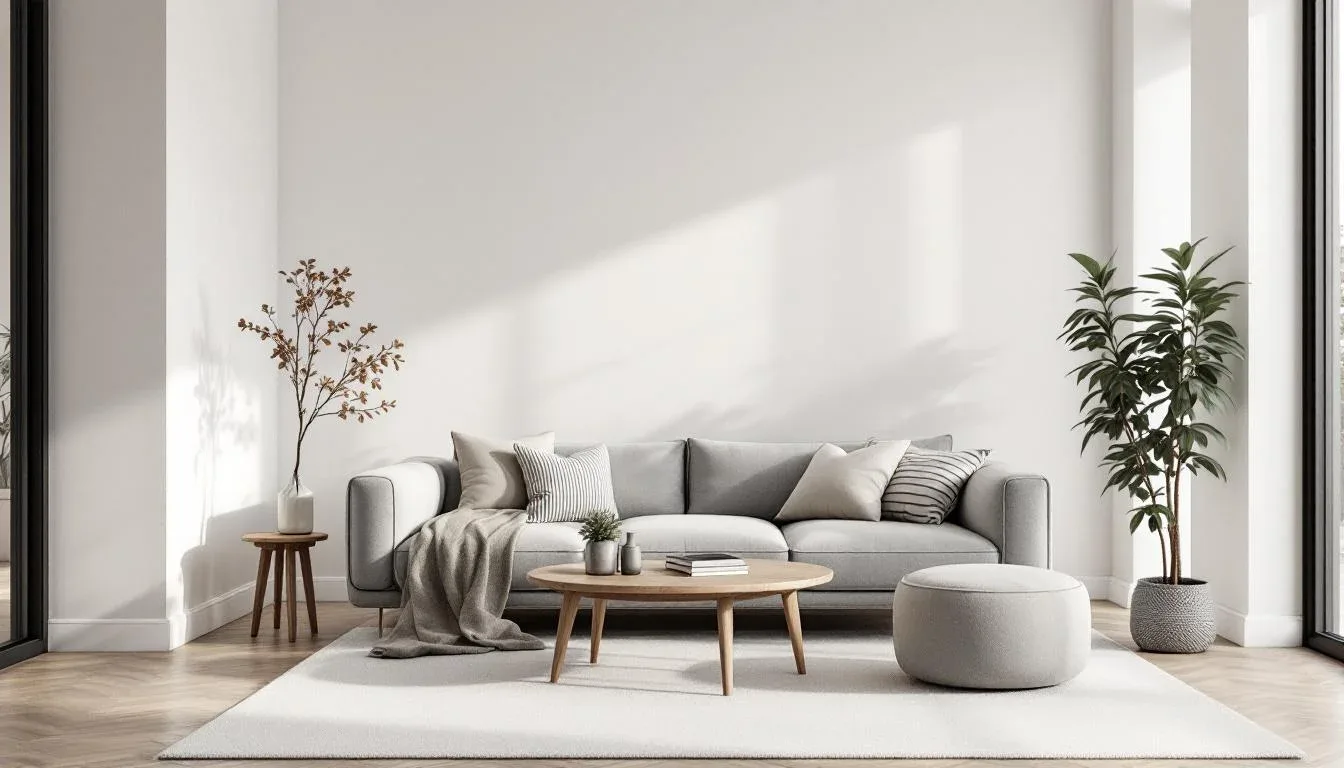
Every interior designer eventually says some version of the same thing: plants make rooms feel alive. It sounds like filler advice. It isn’t. There’s actual research behind it — studies in environmental psychology consistently find that the presence of living plants in interior spaces reduces perceived stress and increases feelings of comfort and belonging. Your nervous system reads a plant as a sign that an environment is livable and safe. That’s not metaphorical. It’s biological.
The practical application for cozy bedroom ideas on budget is simple: one medium-to-large plant in a bedroom does more for the room’s emotional temperature than a dozen small decorative objects. Not because it’s prettier, but because it’s alive. There’s a specific quality that living things bring to a space — a slight unpredictability, a sense of ongoing presence — that no amount of artificial decoration replicates.
Best options for bedroom conditions (low-to-medium light, occasional neglect):
- Pothos: Nearly indestructible, grows in low light, trails beautifully from a high shelf or nightstand. $8–12 at most garden centers or hardware stores.
- Snake plant (Sansevieria): Thrives on neglect, handles low light, has a strong architectural presence. A 6-inch pot runs $10–15.
- ZZ plant: Extremely drought-tolerant, glossy dark leaves that look expensive. $12–18 for a small-to-medium plant.
- Tradescantia (spiderwort): Fast-growing, beautiful trailing purple-green foliage, $6–10 and propagates easily.
The pot matters almost as much as the plant. A beautiful plant in a nursery black plastic pot reads cheap. The same plant in a $4 terracotta pot or a $6 woven seagrass basket reads curated. This is a $4–6 upgrade that changes the entire perception of the plant.
Placement: height creates drama. A trailing pothos on a high shelf, a snake plant in a corner floor position, and a small succulent on a nightstand creates layered greenery at three different heights, which reads as a considered decision rather than a random addition.
Actionable takeaway: Buy one plant before you buy any more decorative objects. Put it somewhere with indirect light, give it a good pot, and live with it for a week. Notice what it does to the room before you decide anything else needs fixing.
7. Putting It All Together: How to Sequence $200 Across These Upgrades
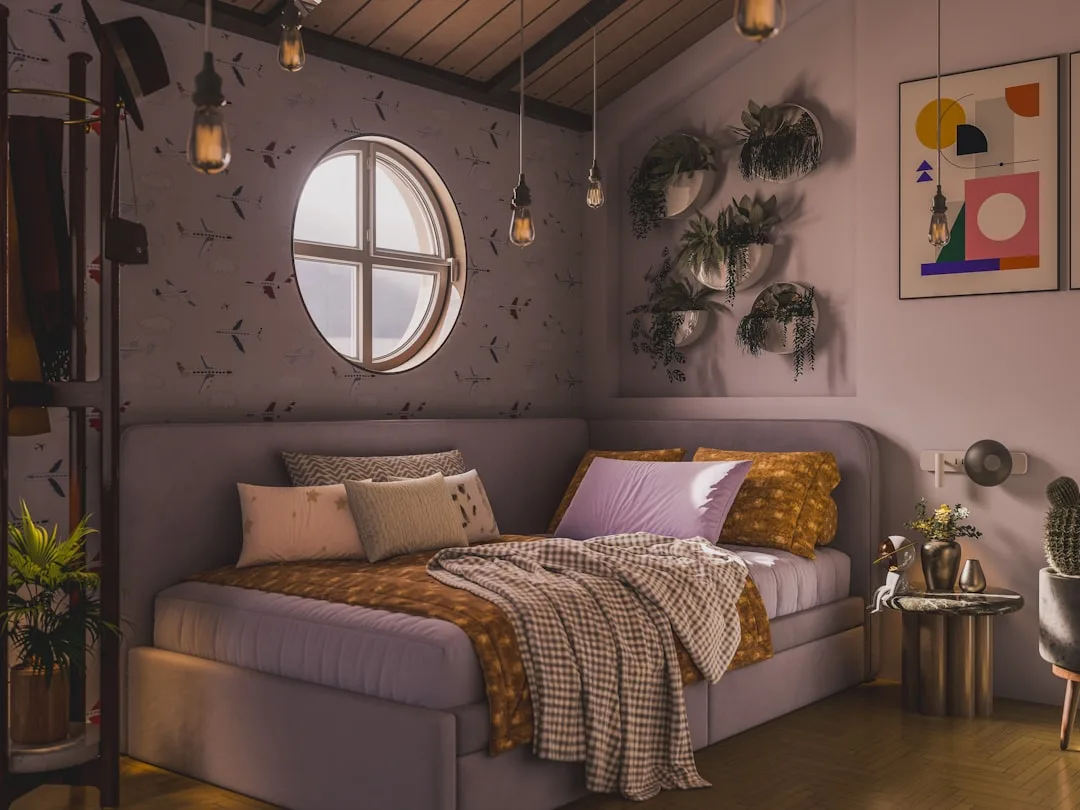
The order you implement these changes matters as much as the changes themselves. Doing everything at once makes it impossible to see which changes are actually working. Doing them in sequence lets you stop when the room feels right — which often happens before you’ve spent the full budget.
Suggested sequence and budget allocation:
| Priority | Change | Estimated Cost |
|---|---|---|
| 1 | Lighting: two plug-in lamps + 2700K bulbs | $40–55 |
| 2 | Bedding: waffle blanket + one textured throw | $35–50 |
| 3 | Curtains: two panels, installed high and wide | $20–35 |
| 4 | Scent: one reed diffuser or soy candle | $10–20 |
| 5 | Headboard wall: mirror, tapestry, or removable wallpaper | $20–40 |
| 6 | Plant: one medium plant + a good pot | $15–22 |
| 7 | Bedside rug: small cotton or jute, 2×3 feet | $15–25 |
Total range: $155–247. Most people land around $190–210 depending on where they source things.
The sequence logic: Lighting comes first because it changes how everything else looks. Bedding comes second because it’s the room’s visual anchor. Curtains come third because they frame the light you’ve just introduced. Everything after that is layering — each addition builds on a foundation that’s already working.
What to skip entirely: Wall art below 18 inches, matching decorative sets sold as a group, anything made of plastic trying to look like natural material, scented plug-ins that smell synthetic. These are the items that fill carts at HomeGoods but deliver almost nothing in terms of genuine warmth.
The deeper principle behind all of this — and what distinguishes the cozy bedroom ideas on budget that actually work from the ones that just create more clutter — is prioritizing sensory impact over visual quantity. Fewer things, chosen for how they feel and not just how they look, in a room lit warmly from below rather than harshly from above. That’s the formula. It cost me $200 and four weekends, and I’d do it exactly the same way again.
Frequently Asked Questions
Can I actually make a rental bedroom cozy without spending a lot or damaging walls?
Yes, and the rental constraint is less limiting than it sounds. The highest-impact changes — lighting, bedding, scent, plants — require no wall contact at all. For anything that does involve the walls, 3M Command strips and tension rods handle most curtain and lightweight art situations cleanly. Removable peel-and-stick wallpaper from brands like Tempaper genuinely removes without damage when applied to properly painted walls. The main thing to avoid is anything that requires screws or nails in load-bearing sections of wall.
What’s the single most impactful thing I can do if I only have $20 to spend?
Replace every bulb in your bedroom with 2700K warm-white LEDs. A four-pack runs $8–12. Turn off the overhead light and use only lamps. This single change — warm bulb temperature plus low-angle light sources — does more for perceived coziness than any decorative purchase at the same price point. If you don’t have lamps yet, a clip-on reading lamp pointed at the wall or ceiling from behind the headboard costs $12–15 and creates surprisingly effective indirect light.
How do I make a small bedroom feel cozy instead of just cramped?
The instinct in a small room is to buy smaller furniture and keep things minimal, but that often makes the room feel more sparse and cold rather than cozy. What actually works in small spaces: light from multiple low sources instead of one overhead, floor-length curtains hung from ceiling height to make the room feel taller, one large plant instead of several small ones, and a light rug that defines the bed zone. Vertical storage — a tall narrow shelf rather than a wide low dresser — keeps floor space open while adding visual height.
I’ve tried adding throw pillows and blankets but my room still doesn’t feel cozy. What am I missing?
Almost certainly lighting. Textiles photograph as warm and inviting under 2700K light and look flat and generic under cool white overhead light. If you’ve added bedding layers and the room still doesn’t feel right, do a full lighting audit at night with overhead lights off. The other common miss is scent — a room can be visually perfect and still feel sterile if it has no olfactory character. Add a reed diffuser in a warm wood or vanilla-adjacent scent and notice how your perception of the space changes within a day or two.
Is it worth buying new furniture to make a budget bedroom feel cozier?
Almost never the right first move. Furniture is expensive and has a low warmth-per-dollar ratio compared to lighting, textiles, and scent. The one furniture-adjacent exception is a headboard — even a faux headboard created with a large piece of fabric or a leaned mirror — because the bed without a headboard looks unanchored no matter what else you add. Beyond that, focus on sensory and atmospheric changes before considering furniture. Most people who transform their bedrooms significantly on a budget do it without buying a single piece of new furniture.
How can I make my bedroom feel cozy without spending a lot of money?
Can I actually make a rental bedroom cozy without spending a lot or damaging walls?
What is the single most affordable change that makes a bedroom feel warmer?
Yes, and the rental constraint is less limiting than it sounds. The highest-impact changes — lighting, bedding, scent, plants — require no wall contact at all. For anything that does involve the walls, 3M Command strips and tension rods handle most curtain and lightweight art situations cleanly. Removable peel-and-stick wallpaper from brands like Tempaper genuinely removes without damage when applied to properly painted walls. The main thing to avoid is anything that requires screws or nails in load-bearing sections of wall.
How do I make a rental bedroom cozy without damaging walls?
What’s the single most impactful thing I can do if I only have $20 to spend?
What colors make a bedroom feel the most cozy and intimate?
Replace every bulb in your bedroom with 2700K warm-white LEDs. A four-pack runs $8–12. Turn off the overhead light and use only lamps. This single change — warm bulb temperature plus low-angle light sources — does more for perceived coziness than any decorative purchase at the same price point. If you don’t have lamps yet, a clip-on reading lamp pointed at the wall or ceiling from behind the headboard costs $12–15 and creates surprisingly effective indirect light.