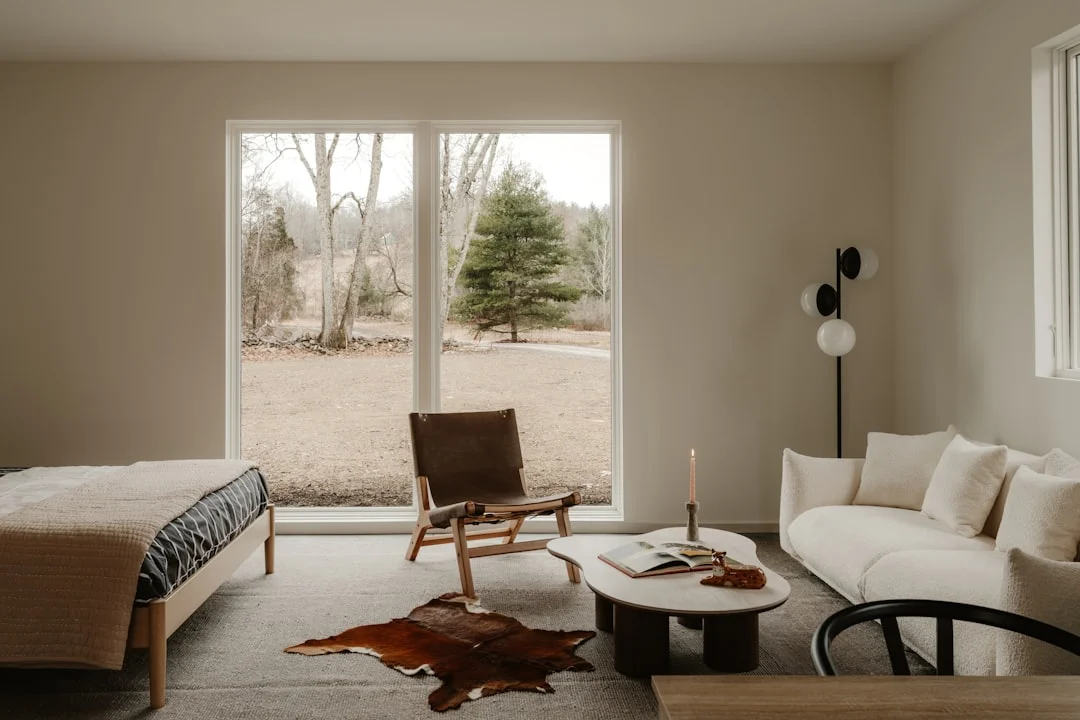
Most people decorating their first studio apartment buy furniture before they figure out the floor plan. That single mistake — made by roughly 80% of first-time studio dwellers, if my decade of talking to designers about this has taught me anything — costs them hundreds of dollars, weeks of frustration, and a space that never quite feels like home.
You moved in with hope. Maybe a few good ideas pulled from a late-night Pinterest scroll. And now you’re standing in 450 square feet wondering why it feels like a hotel room that lost an argument with a storage unit. The good news: cozy studio apartment decor ideas are not magic. They’re a sequence. And the sequence matters more than the budget.
I’m going to save you from every mistake I’ve watched people make. Not the obvious ones. The subtle ones — the choices that seem right but quietly sabotage every other good decision you make.
Your Floor Plan Is the Decoration
Here’s what most guides get wrong about cozy studio apartment decor: they treat furniture as decoration first and architecture second. Wrong order. Dead wrong.
Before you buy a single throw pillow or string a single bulb of Edison lights, you need to draw your apartment. Not artistically. Accurately. Get the dimensions — every wall, every doorway, every window, every outlet. A studio’s livability lives entirely in the negative space between the furniture, not the furniture itself. Most people fill every inch they have. The spaces that feel genuinely cozy leave room to breathe.
Your studio has three zones whether you acknowledge them or not: sleep, live, and work. The moment you collapse all three into an undifferentiated pile of objects, the apartment stops feeling like a home and starts feeling like a waiting room. Zone them intentionally. A rug under the sofa and coffee table creates a living zone. A different-texture rug or no rug at all under the bed creates a sleeping zone. The floor itself becomes a design tool — and it costs you nothing if you already own the rugs.
Here’s the counter-intuitive move most designers swear by but almost nobody does: angle your furniture 45 degrees to the wall in at least one zone. It sounds chaotic. It looks intentional. A bed pushed diagonally into a corner, with a small side table on the exposed side and a floor lamp arcing over it, creates a visual pocket — a room within a room. The geometry signals “this is a different space” without a wall to prove it.
The One Thing That Makes a Studio Feel Cozy Faster Than Anything Else
Turn off your overhead light. Right now. Go do it. I’ll wait.
That single flush-mount fixture in your ceiling is the enemy of cozy. It lights everything equally, which means it makes nothing interesting. Shadows are what create warmth. Contrast is what creates intimacy. An overhead light at full blast gives your apartment the vibe of a DMV office at 2 p.m. — functional, efficient, soul-crushing.
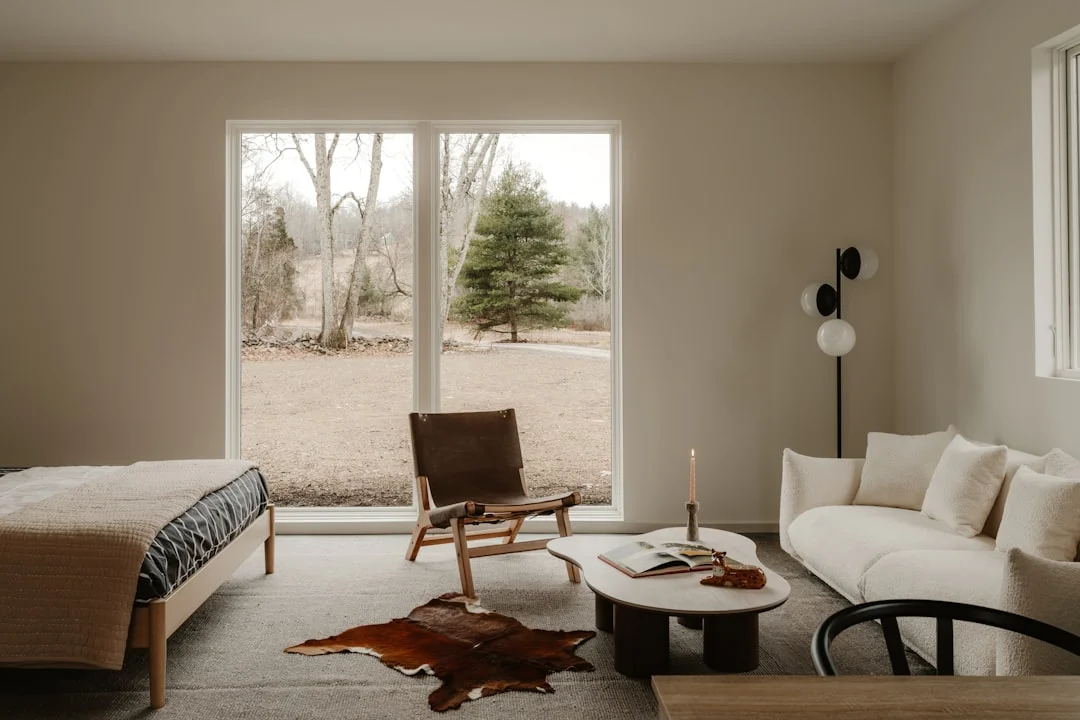
The fix is layered lighting, and it’s the fastest cozy studio apartment upgrade that exists. You need at least four light sources in a studio apartment, positioned at three different heights. A floor lamp in the corner behind the sofa — not beside it, behind it — throws light up the wall and creates ambient glow. Table lamps on the bed’s side table and on any surface near the living area provide pools of warm light. LED strip lights tucked behind the TV console or under the loft bed’s frame add a fifth layer of glow that reads as designed, not improvised. String lights strung inside a bookshelf (not along the ceiling, please) turn a functional object into something atmospheric.
The bulb temperature is where people mess it up. Anything above 2700K reads as office, not sanctuary. Stay at 2200K to 2700K. That amber warmth — the color of candlelight — triggers a neurological response that’s been documented in environmental psychology research. Your brain literally reads it as safe. The right bulbs in the right places transform a beige box into something that feels like it was designed by someone who cared, because now it has been.
Textiles Are Load-Bearing Walls in a Studio Apartment
Nobody talks about this ratio, so I will: in a studio apartment, soft surfaces should represent at least 40% of what you see when you walk in. That means rugs, throw blankets, curtains, pillows, an upholstered headboard, maybe a fabric room divider. If your apartment is mostly hard surfaces — wood floors, metal frames, glass tables, bare walls — it will echo. Literally and emotionally.
Layering textiles is where cozy studio apartment decor ideas live or die. The principle is texture contrast, not pattern contrast. You don’t need everything to match. You need everything to feel different to the touch. A chunky knit throw over a linen sofa, on top of a wool rug, with velvet pillows — that’s four different textures in one square area. Your eye reads that as richness. As warmth. As a space where someone actually lives and rests and relaxes.
Curtains deserve their own paragraph because they’re the most underestimated tool in a studio. Hang them high and wide. Not at the window frame — 6 to 8 inches above the window and 12 inches beyond each side. This makes every window look twice as large as it is. In a studio, where you may only have two or three windows, this is transformative. And choose curtains that pool slightly on the floor. That extra 2 inches of fabric hitting the ground makes the ceiling feel higher and the space feel more intentional. This is what designers charge $200 an hour to tell you. I’m telling you for free.
Zoning Without Walls: The Skill That Separates a Good Studio From a Great One
A folding screen can define a sleeping area. A tall open bookshelf can serve as a room divider while storing your books, displaying objects, and hiding what doesn’t need to be seen. These are the basics, and they work. But the version of this strategy that nobody publishes is the ceiling zone.
Hang a canopy over your bed. Not a full four-poster — a simple frame, even two curtain rods hung from Command hooks, with sheer fabric draped between them. The overhead plane of fabric creates a psychological enclosure. Your brain says “this is a room” even though there are no walls. Interior designers call this technique “borrowed architecture” — you’re adding the suggestion of structure without the structure itself. It costs about $60 in sheers and hardware. It changes everything.
The other zoning technique worth stealing from commercial interior design is the transition object. A console table placed between the living area and sleeping area acts as a threshold — your eye crosses it and registers a shift. A pair of curtain panels hung from a ceiling-mounted track, not a wall, can slide closed over the bed at night and open during the day. This is how Manhattan designers handle $2 million studios where the clients insist on “separate rooms.” The psychology works at any price point.
If you’re looking for more ideas on how strategic furniture placement can redefine a room’s purpose, the team at DesignLike has written deeply about small space living design principles that apply beautifully to studio layouts.
What Your Walls Are Actually For (It’s Not What You Think)
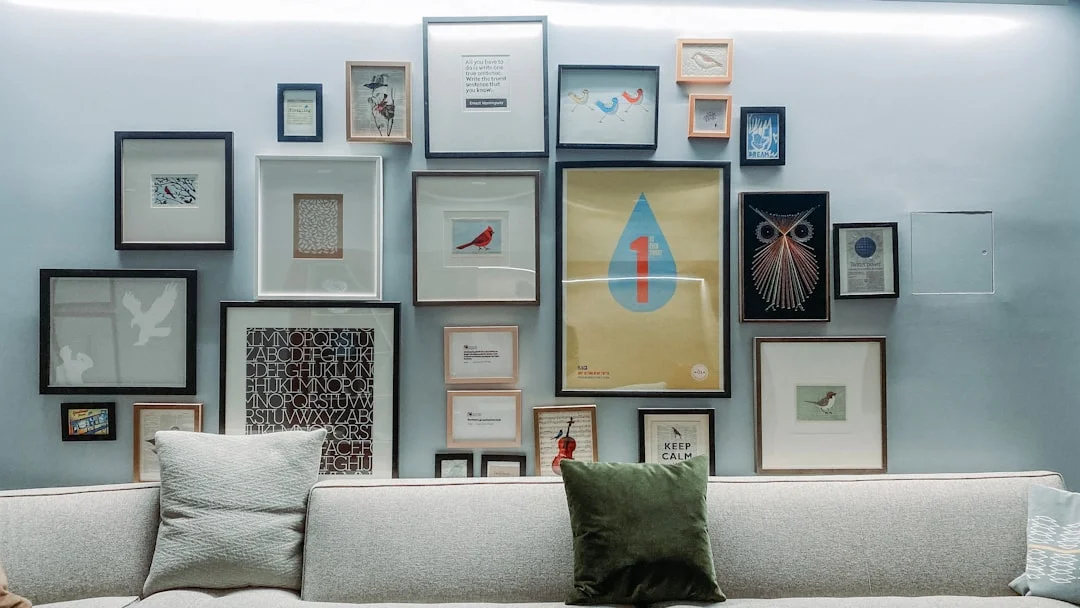
Most people treat studio apartment walls as decoration surface. Wrong. Your walls are your psychological horizon. In a small space, what you see when you look up from the couch, when you wake up in the morning, when you sit at your desk — that sightline either expands or compresses the felt size of your space.
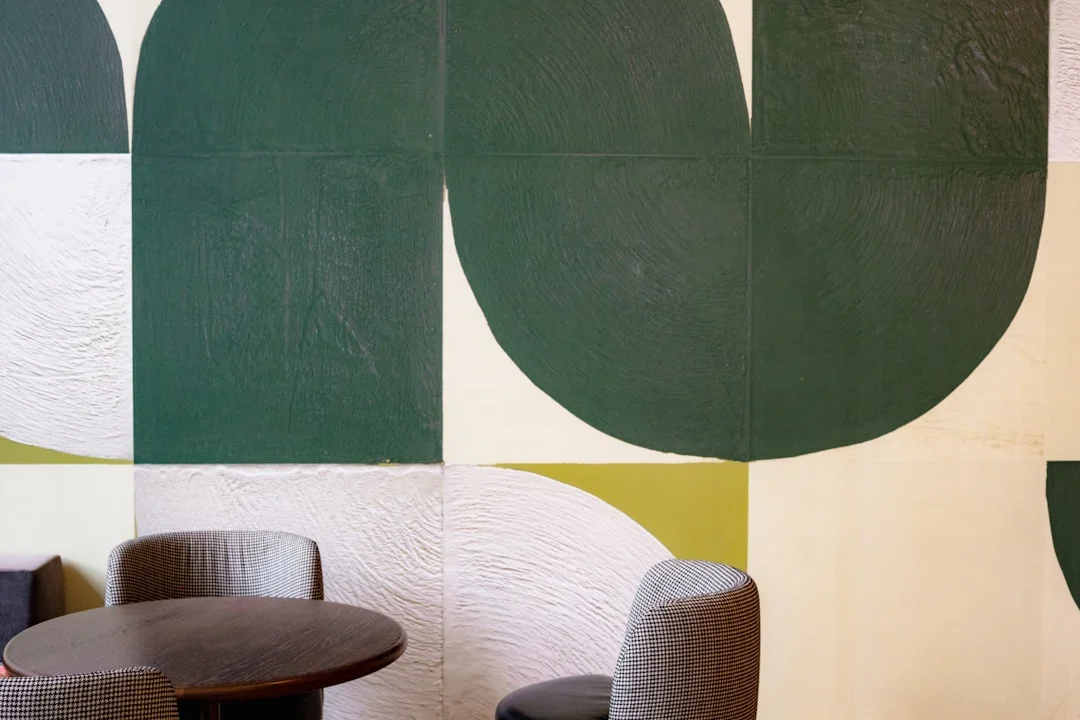
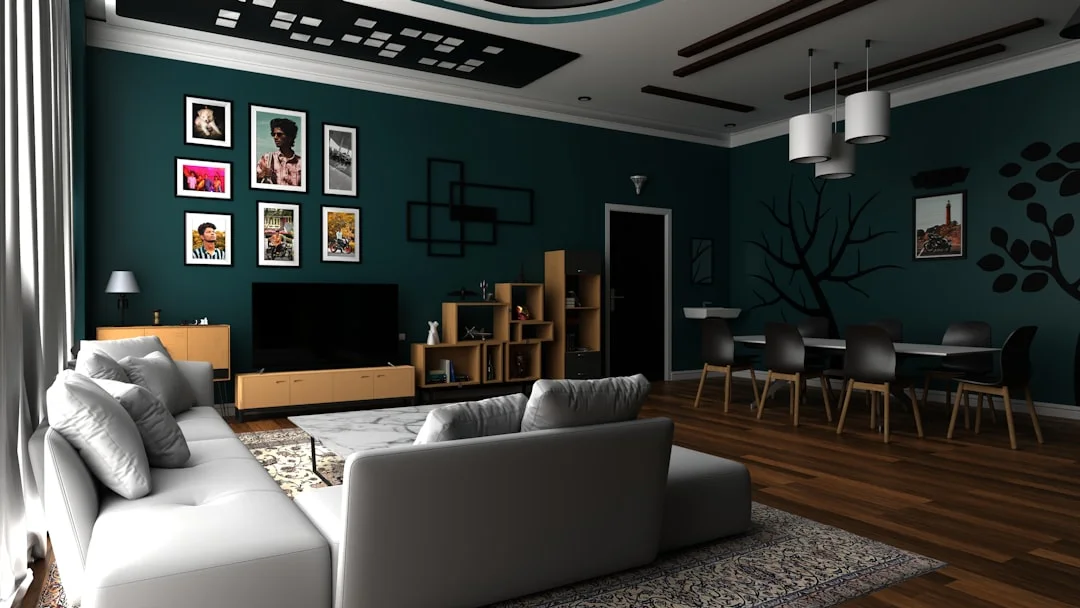
White walls don’t automatically make a studio feel bigger. That’s a myth that needs a quiet death. What makes a small space feel bigger is visual depth — and you can create visual depth with a darker, richer wall color on a single accent wall just as easily as with white everywhere. A deep terracotta or dusty blue on the wall behind your bed, paired with neutral tones everywhere else, draws the eye and creates perspective. The room feels like it recedes. That’s the depth you want.
For renters — and this is the section that competitors consistently forget to write — you have more options than a bare wall and a dozen nail holes. Peel-and-stick wallpaper has become genuinely good. The options from brands operating in 2026 include textured patterns that photograph as real wallpaper. It removes cleanly from most painted surfaces. One wall of a bold floral or geometric pattern behind the bed changes the entire personality of the apartment without violating a lease. Command strips hold frames up to 16 pounds without damage. A gallery wall can be planned using paper templates taped to the wall before a single nail is driven. Renters who think they can’t decorate their walls are leaving the biggest design tool in the apartment untouched.
Furniture Choices That Actually Work at 400 to 600 Square Feet
The rule isn’t “small furniture for small spaces.” The rule is right-scaled furniture placed with intention. I’ve been in 380-square-foot studios with a full-sized sofa that felt spacious and welcoming, and 600-square-foot studios with a loveseat that felt cramped. Scale isn’t about the furniture’s size — it’s about the proportion between the furniture and the negative space around it.
That said, there are specific furniture decisions that consistently win in studios. A bed with storage underneath — drawers built into the base, or a platform high enough for rolling bins — can eliminate the need for a separate dresser, which is typically the largest square-footage-consumer in a studio. No dresser means an entire wall opens up. An ottoman with interior storage serves as coffee table, extra seating, and linen closet simultaneously. A dining table that folds against the wall, Shaker-style, gives you a 4-person dinner party table that disappears to 8 inches of depth when you’re not using it.
The sofa situation deserves honesty. A daybed is the most underrated piece of furniture for cozy studio apartment decor. It reads as a couch during the day, transitions to a bed for guests at night, and because it typically has a tighter silhouette than a traditional sofa, it leaves more floor space while still providing deep, relaxed seating. Pair it with an oversized floor cushion or two and you’ve got seating for five without a sectional eating your entire square footage.
The piece of advice that surprises people most: buy one genuinely expensive item. One. Let everything else be affordable. A single quality piece — a real leather armchair, a handmade ceramic lamp, a vintage rug that took you three months to find — anchors the room in a way that no number of budget items can replicate. The eye finds that piece and reads the entire room as curated rather than assembled. This is what separates a cozy studio from one that just has cozy studio apartment decor ideas pinned to a board but never executed.
For a look at how color and material choices translate across different design scales, explore DesignLike’s deep coverage on interior color theory for real spaces — it applies just as powerfully to 500 square feet as to 5,000.
The Scent, Sound, and Sense Dimensions Nobody Writes About
Cozy is not a visual category. That’s the surprise I promised you, and here it is: the apartments that feel the most cozy when you walk in are hitting at least three senses simultaneously. Most decorating advice addresses exactly one. Vision.
Scent is the fastest path to psychological warmth. Not air freshener — that reads as “someone is hiding something.” Diffused essential oils, a beeswax candle burning on the coffee table, a cedar wood block in the closet — these create a sensory environment that your guests can’t identify but absolutely register. The scents that most reliably read as “cozy home” are vanilla, sandalwood, cedar, and amber. Not lavender, which reads as spa, not home. Not citrus, which reads as kitchen cleaner.
Sound matters more than any decorator will tell you. Hard-surface studios reverberate. The echo of your own movement creates subconscious stress — your nervous system reads it as “empty” and “cold.” Rugs, curtains, upholstered furniture, and bookshelves full of books all absorb sound. A studio with proper textile layering sounds quieter than the same space with bare floors and bare walls, even at identical decibel levels. When the acoustics feel soft, the space feels cozy. That’s not poetic — it’s physics.
Questions We Get Every Day
Can I make a studio apartment feel like it has separate rooms without building walls?
Yes, absolutely — and the most effective methods don’t involve permanent changes. Rugs define zones on the floor, canopies create overhead enclosure around the sleeping area, tall open bookshelves serve as permeable room dividers, and curtains hung from ceiling-mounted tracks can slide to close off the bed entirely. Use at least two of these simultaneously and your studio will feel like a one-bedroom to anyone who walks in.
What’s the first thing I should buy when decorating a cozy studio apartment?
The rug. Before the art, before the throw pillows, before the extra lighting — buy the right rug. It defines the footprint of your living zone, adds acoustic softness, introduces color and texture, and signals where people should sit. Size up. The rug should extend at least 12 inches beyond each side of the sofa. A too-small rug is the most common visual mistake in studio apartments, and it makes even a well-furnished space feel disconnected and cold.
Are dark colors a mistake in a small space?
No. Dark colors are a mistake in a small space only when applied uniformly. A single dark wall — especially behind the bed — creates depth and drama that actually makes the room feel larger by giving the eye a destination. Dark paint on one wall paired with white or cream everywhere else is a technique used constantly in high-end interior design for compact spaces. The all-white studio is a myth perpetuated by people who’ve never lived in one. White walls with no warmth just feel stark.
How do I stop my studio from feeling like a dorm room?
Two things, immediately: replace the overhead light with layered light sources, and hang curtains floor-to-ceiling rather than at the window frame. These two changes alone age a space from “student housing” to “intentional adult apartment.” After that: remove any furniture that came in a flat box with foam padding and has no visual weight. One quality anchor piece — a real headboard, an upholstered chair, a proper area rug — shifts the entire register of the space.
How much should I realistically budget for cozy studio apartment decor?
Between $800 and $1,500 gets you a complete transformation if you prioritize ruthlessly. Spend 40% on the rug and lighting, 30% on one anchor furniture piece, and 20% on textiles (curtains, throw, pillows). The remaining 10% handles wall decor. The mistake people make is spreading the budget evenly across 40 small purchases and ending up with a space that has a lot of stuff in it but no visual center of gravity.
What do most people forget to decorate that actually matters enormously?
The ceiling. In a cozy studio, looking up should feel intentional, not like staring at a landlord’s afterthought. A canopy over the bed, a pendant light swapped in for the builder-grade flush mount, or even just a string of warm lights tacked just inside the perimeter of the ceiling creates an overhead plane that makes the room feel like it was designed rather than occupied.
Does apartment size actually matter for achieving a cozy feeling?
No — and this is the most liberating thing I can tell you. I’ve been in 300-square-foot studios that felt like the warmest, most enveloping spaces I’d ever entered, and I’ve been in 800-square-foot studios that felt cold and adrift. Cozy is density of warmth per visual field, not square footage. Get the lighting right, layer the textiles, define the zones, and anchor the space with one quality piece. You can do all of that in 300 square feet.
The Version of Your Apartment That Already Exists
Here’s the truth nobody tells you at the start: your apartment isn’t waiting to become cozy. The cozy version of it already exists — it’s just obscured by the overhead light you haven’t turned off yet, the rug that’s two sizes too small, and the furniture arranged in the configuration the movers left it in on day one.
Cozy studio apartment decor ideas aren’t a checklist you complete. They’re a lens you apply — to every object, every surface, every decision about what stays and what goes. The best-looking studios I’ve ever seen weren’t the ones with the most stuff or the biggest budget. They were the ones where every single object had been placed with the deliberate question: does this make the room feel warmer, or not?
Start with the lighting. Tonight. That one change, before you spend a dollar on anything else, will show you what’s actually possible in your space. The rest follows logically once you can see what you’re working with — not under fluorescent truth-telling overhead light, but under the amber glow of a room that’s finally becoming yours.
Check out DesignLike’s visual guides on apartment decor ideas across every style and budget when you’re ready to go deeper on the aesthetic direction that fits who you actually are.