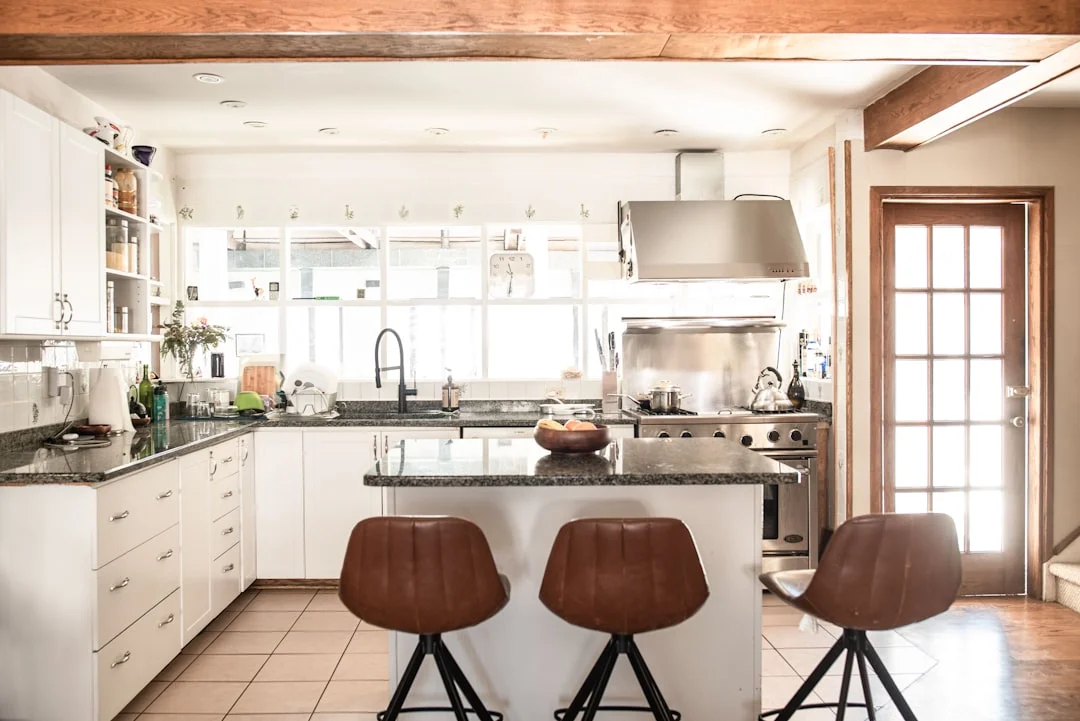
Your kitchen is working against you. Not because it’s ugly, not because it’s small — but because whoever designed it never watched you cook.
That’s the real problem behind almost every kitchen layout redesign conversation. People assume they need more space. What they actually need is better space. And the difference between those two things is the difference between a $60,000 gut renovation and a $3,000 strategic rethink that changes how the room feels every single day.
Kitchen layout redesign tips flood the internet, but most of them stop at “consider the work triangle” and call it done. That concept — the imaginary line connecting your sink, stove, and refrigerator — was developed by researchers at the University of Illinois in the 1940s. It was designed around a single cook, making single dishes, in a kitchen nobody entertained in. It’s 2026. The way you use your kitchen has nothing in common with that world.
Here’s what no one tells you upfront: the most impactful kitchen layout changes rarely involve moving walls. They involve understanding the invisible logic of how you actually move, prep, and cook — and then reorganizing the physical space to match that logic rather than fight it.
Let’s build that understanding.
The Work Triangle Is Dead. Here’s What Replaced It.
The work triangle isn’t wrong. It’s just incomplete — and clinging to it as your primary planning tool will guarantee a kitchen that works for exactly one scenario: you, alone, making dinner.
Modern kitchen design has shifted to a work zones model. Instead of three points on a triangle, you’re designing four distinct operational areas: the prep zone, the cooking zone, the cleaning zone, and the storage zone. Each zone should function semi-independently, which means multiple people can operate in the kitchen simultaneously without constantly crossing each other’s paths. That’s not just a convenience — for anyone who cooks seriously, it’s the difference between a kitchen that feels alive and one that creates daily friction.
Here’s the non-obvious part: your zones don’t have to be adjacent. This is where most kitchen layout redesign tips fall apart. Conventional wisdom says keep prep near cooking. True. But prep also needs to be near refrigerator access, near a water source for washing vegetables, and near a trash/compost point. When you map all four requirements simultaneously, the “obvious” placement stops being obvious. Start by identifying where you spend the most time during actual meal prep — not where you think you do, where you actually do — and build outward from there.
The cleaning zone gets chronically under-designed. Most layouts treat it as a corner compromise: sink goes where the plumbing already is, dishwasher gets tucked beside it, done. But the cleaning zone should have 24 inches of counter on each side of the sink minimum — one side for dirty dishes staging, one side for clean dish landing. Reduce either of those and you’ve created a bottleneck you’ll navigate around 400 times a year.
What Most Kitchen Layout Redesign Tips Get Completely Wrong
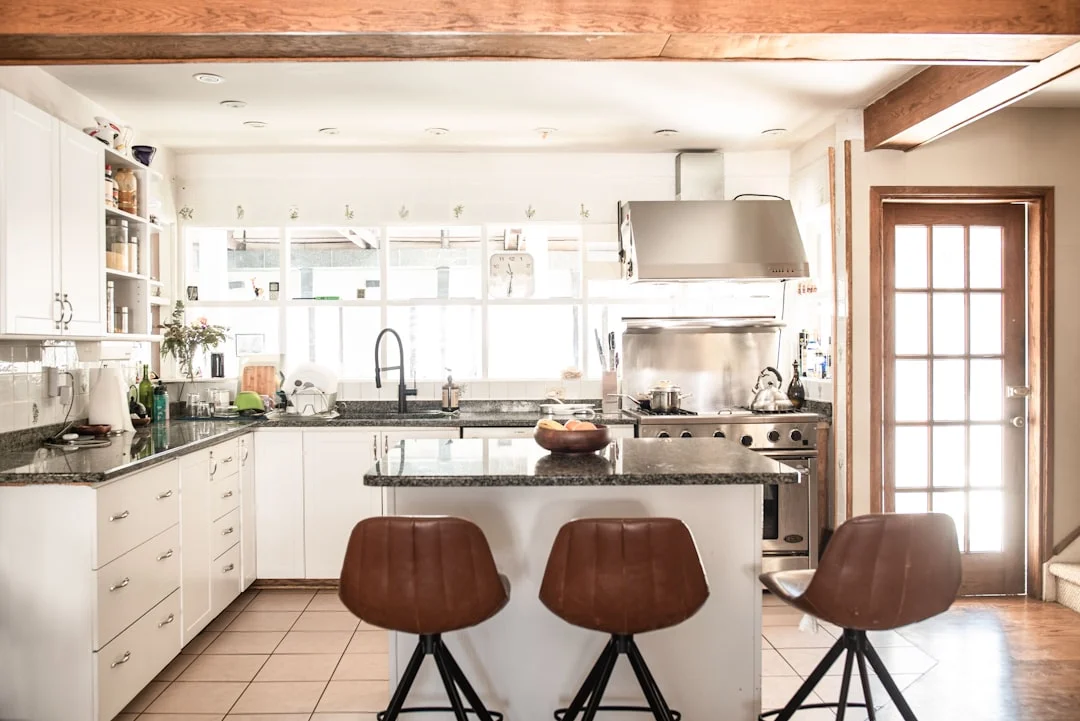
They optimize for the beautiful empty kitchen. Not the Tuesday-night, three-people-trying-to-help, one-kid-doing-homework-at-the-island kitchen.
Here’s what that means practically. Traffic flow is the single most underweighted factor in kitchen layout planning. The standard recommendation is to maintain 42 inches of clearance in a one-cook kitchen, 48 inches when multiple cooks are working simultaneously. But clearance alone doesn’t tell the story. You need to map the paths, not just the gaps. Stand in your kitchen and trace every route you walk during a typical cooking session: fridge to cutting board, cutting board to stove, stove to plating area, plating area to table. Now count how many times those paths intersect with the dishwasher door when it’s open, the oven door when it’s pulled down, or the refrigerator door swinging into a walkway.
That collision map is your real redesign brief.
Another thing guides get wrong: the island obsession. Islands have been the default kitchen aspiration for two decades, and designers have sold them to people who have no business putting one in. The minimum functional island — one with seating on one side and prep space on the other — requires 8 feet of clear floor space in the direction perpendicular to the counter run it sits beside. Not 6 feet. Not 7. If you can’t hit 8, you’re not getting an island. You’re getting a mobility obstacle with a nice countertop.
The counter-intuitive recommendation nobody makes: if your kitchen is under 150 square feet, remove your island if you have one. Seriously. The visual openness and functional clearance you gain will transform how the room feels and performs. A well-placed rolling cart accomplishes 80% of what an island does and disappears when you need the space.
The Hierarchy of What to Change First
Every kitchen layout redesign needs a decision framework. Not a mood board. A framework. Without one, you’ll spend money in the wrong order and still end up with a kitchen that doesn’t work.
Start with plumbing and electrical because they determine your hard limits. Moving a sink involves cutting into existing drain lines and potentially repositioning the P-trap — that’s typically $1,500 to $3,500 in labor before any cosmetic work begins. Moving a gas range to a new position means running new gas line, which in most jurisdictions requires a licensed plumber and a permit. These aren’t reasons to avoid those moves — sometimes they’re exactly right. But they set your cost floor, and knowing your cost floor before you fall in love with a layout change saves you from designing into a financial wall.
Second, address lighting. This sounds like a finishing detail. It isn’t. Lighting determines whether your workspace is functional, and most kitchens are catastrophically under-lit. Under-cabinet lighting — specifically LED strips at 2700K to 3000K color temperature — eliminates counter shadows that make prep work harder and more error-prone. Recessed ceiling lights positioned directly over work surfaces (not over the center of the room, which illuminates nothing useful) transform the functional quality of a space without moving a single cabinet. This work typically runs $400 to $800 including fixtures and installation, and it delivers a perceptual renovation that makes the room feel completely different.
Third, assess appliance placement before appliance replacement. A $200 modification to where your microwave sits — moving it from above the range to a lower drawer position or a dedicated cabinet — can eliminate the single most dangerous daily action in your kitchen: reaching over a hot stove with heavy, hot food. Over-the-range microwaves position the bottom of the unit at roughly 54 inches from the floor. For anyone under 5’6″, that’s an ergonomic problem every single use. Drop it 18 inches and the difference is immediate. You can explore how appliance integration in kitchen design affects both form and function — the best solutions treat appliances as architectural elements, not afterthoughts.
The Layouts Worth Switching To (And When the Switch Makes Sense)
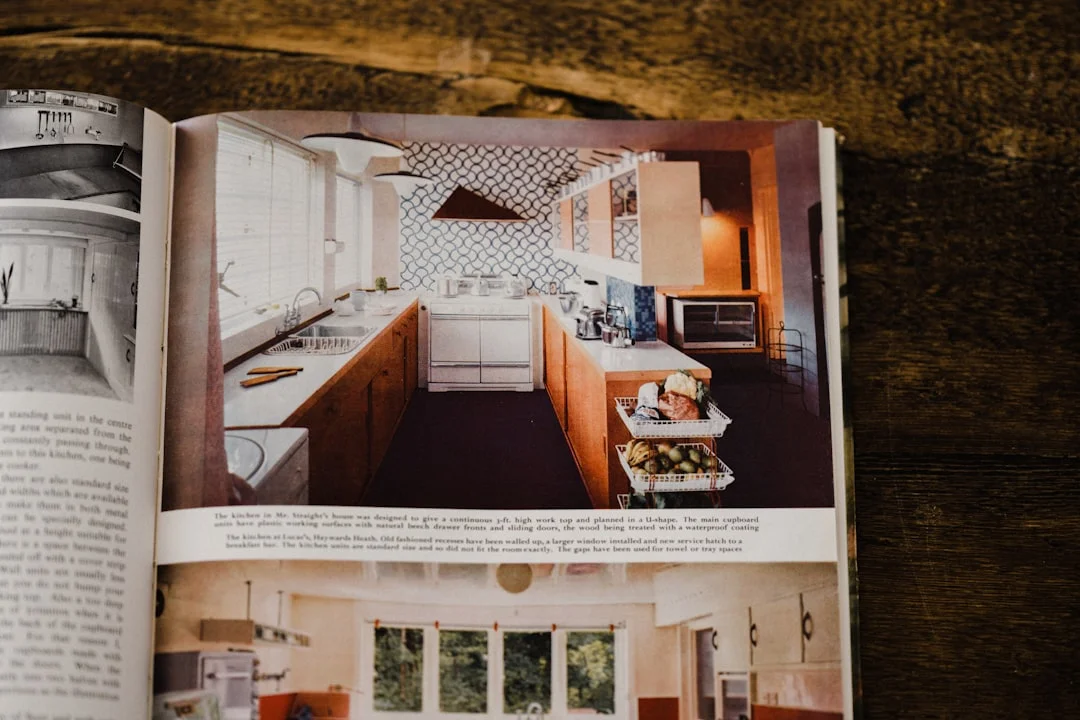
Not every layout is switchable from every starting point. Understanding which transitions are realistic — and which require structural changes that change the cost calculus entirely — is the core skill in kitchen layout redesign.
Galley to L-shape is one of the most common and most rewarding transitions. It requires opening one end of the galley, which may mean removing a non-load-bearing wall or at minimum relocating a door. The payoff is substantial: you convert a linear, one-direction traffic flow into a wraparound workspace that supports the zone model naturally and creates the possibility of an island or peninsula without the clearance crisis. The typical cost range for this transition, not including appliance upgrades, is $8,000 to $22,000 depending on whether the wall separating the kitchen from an adjacent room is structural.
One-wall to L-shape is often simpler and cheaper than people expect, particularly in apartments where one-wall kitchens exist because the adjacent wall was never utilized. If the adjacent wall is already finished and has no plumbing, you’re adding cabinetry and countertop to an existing surface — sometimes as little as $4,000 to $7,000 depending on cabinet specification. This single change doubles your counter run and transforms the functional capacity of the kitchen without touching plumbing or electrical.
L-shape to U-shape is the upgrade that looks modest on paper and is transformative in practice. You’re adding a counter run to close the open end of the L, which creates the most storage-dense, workflow-efficient kitchen layout available. The U-shape is the professional chef’s preference for small and medium kitchens because everything is within 3 to 5 steps — but it requires a minimum room width of 10 feet to maintain functional clearance in the central corridor. Narrower than that and the U becomes a trap, not a workspace.
The one transition nobody recommends: adding a peninsula over an island when you’re working with less than 200 square feet. A peninsula connects to an existing counter run on one end, which means it requires no additional floor clearance on that side. You get the seating, the extended prep surface, and the visual separation of kitchen from living space — with roughly 30% less floor impact than a freestanding island. It’s the better choice in the majority of mid-size kitchens, and it’s chronically under-sold because islands photograph better.
Specific Numbers That Actually Help You Plan
Here’s the dimensional data that makes kitchen layout redesign tips actionable rather than theoretical.
Standard counter height is 36 inches from the floor. If you’re taller than 6’1″, you’ll want to price custom counter height at 38 to 42 inches during any renovation — the ergonomic benefit over years of daily cooking is significant and the incremental cost is modest if you’re already building cabinetry. The distance between your countertop and upper cabinets should be 18 inches as a minimum, but 20 inches is meaningfully more usable and rarely requires changing anything structural.
Drawer base cabinets outperform door base cabinets in storage efficiency by approximately 35% for the same footprint — this is a spec decision, not a layout decision, but it’s one of the highest-ROI choices in a kitchen redesign. Three deep drawers where a base cabinet with doors would sit means everything is visible, accessible, and organized without getting on your hands and knees. Make this substitution wherever you’re replacing cabinetry.
The refrigerator is the most misplaced appliance in American kitchens. The ideal position is at the perimeter of the kitchen — at the entry point from the dining or living area — so that family members getting drinks or snacks don’t enter the cooking zone at all. This single placement decision can eliminate 40% of kitchen traffic collisions during meal prep. You can also reclaim significant visual space by recessing the refrigerator 3 to 4 inches into an adjacent wall cavity, aligning the door face with surrounding cabinetry, and eliminating the visual interruption of an appliance that sticks out like a monolith.
For small kitchen design, vertical storage is the most underused square footage in the room. The space between your upper cabinet tops and the ceiling — typically 12 to 18 inches of dead air — can be enclosed with additional cabinet units for storing infrequently used items. This recovers 15 to 25 linear feet of storage in an average kitchen without changing a single footprint dimension.
The Redesign That Costs Nothing But Changes Everything
Before you spend a dollar, spend two hours.
Remove everything from your kitchen. Every small appliance, every item from every counter, everything from the top of the refrigerator. Put it all in another room and bring back only what you used in the last 30 days. What you bring back is your actual kitchen. What stays in the other room is visual noise that’s been shrinking your usable counter space by an estimated 30 to 40% for years.
Now stand at your main prep position — the counter where you actually chop, mix, and assemble — and look at what’s within arm’s reach. Your most-used knife should be within 8 inches. Cutting board at counter height, not stored. Trash or compost accessible from that position without walking. Oil, salt, and the tools you reach for every single cooking session should be staged there, ready. Everything else earns its counter position or it doesn’t get one.
This isn’t minimalism as an aesthetic philosophy. It’s functional clearing. And it accomplishes something that $20,000 renovations sometimes can’t: it reveals what your kitchen actually needs versus what you’ve been papering over with stuff. Most people who go through this process discover that their kitchen’s core problems are 60% organizational and 40% structural. The organizational problems are solved for free. The structural ones — the awkward traffic flow, the counter that’s too far from the stove, the inadequate lighting — are now visible and prioritizable without the noise.
The best kitchen layout redesign tips are always specific to the kitchen you actually have and the way you actually cook. General frameworks get you oriented. This kind of honest audit gets you to the real work. Understanding how functional interior design principles apply to high-use rooms like kitchens will sharpen every decision you make from here.
Questions We Get Every Day
Do I need a designer for a kitchen layout redesign?
Not always, but for any change involving moving plumbing or removing walls, yes — hire one. A kitchen designer typically charges $150 to $300 per hour or takes a percentage of project cost (usually 10 to 17%). For layout-only planning without construction, you’ll get more value from a two-hour paid consultation than from months of self-directed research.
What’s the single highest-ROI kitchen layout change?
Improving lighting — specifically under-cabinet LED lighting and repositioned recessed ceiling fixtures. The transformation-to-cost ratio is unmatched: typically $400 to $900 all-in, and it changes how every surface in the kitchen reads and functions.
How do I know if my kitchen wall is load-bearing before I consider removing it?
Look at it from above — if you have access to an attic or upper floor, a load-bearing wall will typically have joists running perpendicular to it, bearing on the wall. In a single-story home, any wall running parallel to the roof ridge is a strong candidate for load-bearing. That said: always have a structural engineer confirm before any wall comes down. This is $300 to $600 for a consultation and it is never optional.
Should I renovate my kitchen before selling my home?
Minor updates — paint, hardware, lighting, countertops — consistently return more than their cost. Full gut renovations before selling almost never recoup their full investment. The national average return on a major kitchen remodel is roughly 67 cents on the dollar at resale. Do the $3,000 cosmetic refresh, not the $45,000 overhaul, unless you’re staying.
My kitchen is L-shaped but it feels cramped. What’s the actual problem?
Nine times out of ten, it’s the corner. L-shaped kitchens lose 15 to 25% of their storage capacity to dead corner space that’s either inaccessible or under-utilized. Lazy Susan units, blind corner pull-out systems, or corner drawer configurations can reclaim most of that space. The crampedness you’re feeling is likely a storage overflow problem masquerading as a size problem.
What do people never think to ask about kitchen layout redesign?
Whether their appliances are the right size for the layout. A 36-inch range in a kitchen with 24 inches of counter on each side is a different problem than a 30-inch range with the same clearance. Appliance dimensions drive layout decisions more than any other single factor, and most people choose their layout first and fit appliances into it — which is exactly backwards. Start with appliance sizing. Build the layout around it.
Can good kitchen layout design actually change how much I cook at home?
Yes — and there’s real evidence for this. Kitchen friction (physical effort, poor organization, inadequate lighting, crowded counters) is one of the primary behavioral drivers of choosing takeout over home cooking. Removing that friction lowers the activation energy for cooking. Design affects behavior. This isn’t philosophical — it’s how rooms work.

The One Decision That Separates Good Kitchens from Great Ones
Every great kitchen has one thing in common. Not a specific layout. Not marble countertops or professional appliances or a massive island. The great ones were designed by someone who watched how the people in the house actually cook — and then refused to compromise on that.
The mediocre ones were designed for the listing photos.
You’re not designing for the photos. You’re designing for 6 PM on a Wednesday when you’re tired and you need the kitchen to work without making you think. That kitchen doesn’t require a full renovation. It requires an honest look at what’s broken, a willingness to make targeted changes in the right order, and the discipline to stop adding things and start removing the obstacles.
Your best kitchen layout redesign isn’t the most expensive version. It’s the most honest one.