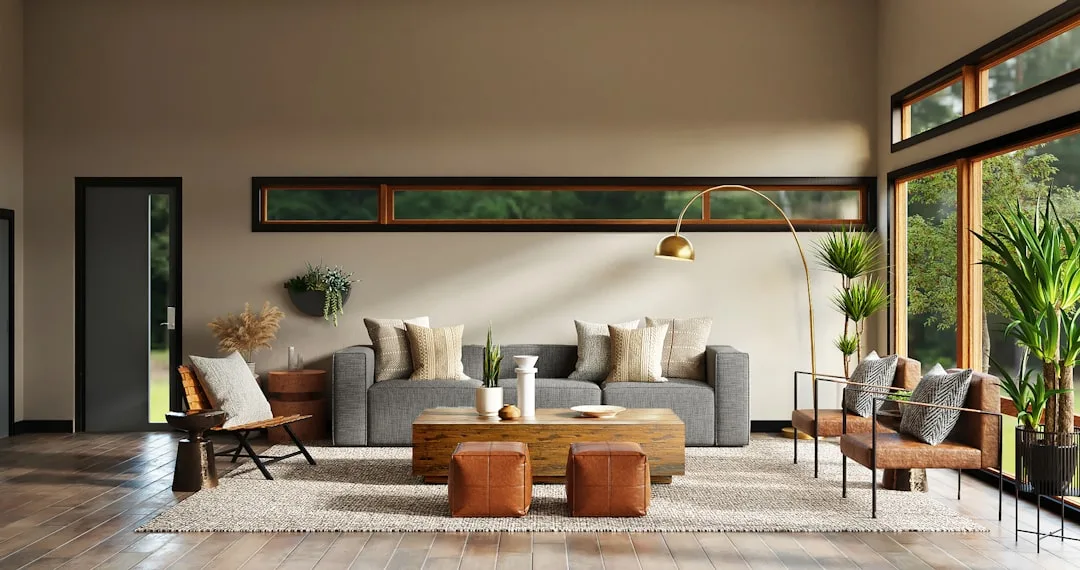
If you’ve been asking yourself what is the current trend for interior design? — you’re not alone, and the honest answer is more complicated than any single Pinterest board suggests. For the first time in over a decade, interior designers are in genuine disagreement about which direction is winning — and that tension between sophisticated maximalism and warm minimalism is producing the most interesting residential interiors in years. Neither camp is backing down. Both are producing beautiful rooms. And the best designers are quietly borrowing from both.
Here’s what’s actually happening, room by room, material by material, and what it means for your home right now.
Why Interior Design Trends Are Shifting So Fast in 2025
The pandemic didn’t just change how much time people spend at home. It changed how they feel about home — what they expect from it emotionally, what they’re willing to tolerate visually, and how much they’re prepared to spend to get it right. That’s not a passing statistic. It reflects a fundamental rewiring of domestic priorities that’s still playing out.
At the same time, social media has compressed what used to be a slow-moving cultural cycle into something almost violent in its speed. An aesthetic that might have taken five years to travel from design week to suburban living rooms now makes that journey in eighteen months. TikTok’s algorithm doesn’t distinguish between a concept and a commodity — it surfaces whatever gets engagement, which means ideas move fast and burn out faster.
The economic dimension is just as significant. Cost-of-living pressures have pushed homeowners away from disposable decor and toward fewer, better investments. A homeowner who spent 2019 buying mass-market furniture from fast-home brands is now more likely to save longer for a piece that’ll last — or hunt vintage markets for something with genuine quality and a backstory.
Three forces in particular are reshaping the trend cycle right now:
- Pandemic legacy: People are designing for how they actually live, not how they imagined they’d live before they spent three years finding out
- Social media acceleration: Pinterest and TikTok have made trend cycles 60–70% shorter than they were in the early 2010s
- Economic maturity: Investment pieces over throwaway decor — quality is back as a genuine value, not just a marketing word
- Sustainability pressure: Homeowners increasingly factor environmental footprint into purchasing decisions, which is nudging both the vintage market and domestic craft manufacturing into mainstream relevance
- The influence of travel: Post-pandemic travel has exposed more homeowners to Mediterranean, Japanese, and Scandinavian interiors firsthand, and those references are appearing directly in how people brief their designers
Actionable takeaway: Before you buy anything, ask whether it’s a response to how you actually live or a response to what you’ve been seeing on your feed. Those are different questions with different answers.
The Dominant Current Trend: Sophisticated Maximalism vs. Warm Minimalism
When homeowners and designers ask what is the current trend for interior design?, this is the section with the most honest answer: it depends on which room you’re in and which designer you’re talking to. A 2024 survey by 1stDibs found that 33% of designers cite sophisticated maximalism as the leading direction, with an equal share pointing to eclectic layering — and that number tells you something important. It means the field is genuinely split. There’s no clean winner. What both directions share, though, is a rejection of the thing that dominated the 2010s: cold, sterile, Instagram-perfect interiors that photograph beautifully and feel miserable to live in.
Sophisticated maximalism isn’t the same as the cluttered eclecticism of 2021’s cottagecore moment. It’s intentional layering — a room where every object has been chosen, where pattern sits next to pattern without apologizing for it, where a William Morris wallpaper might share a room with a contemporary sculpture and a kilim rug, and it all holds together because someone made genuine decisions rather than following a template.
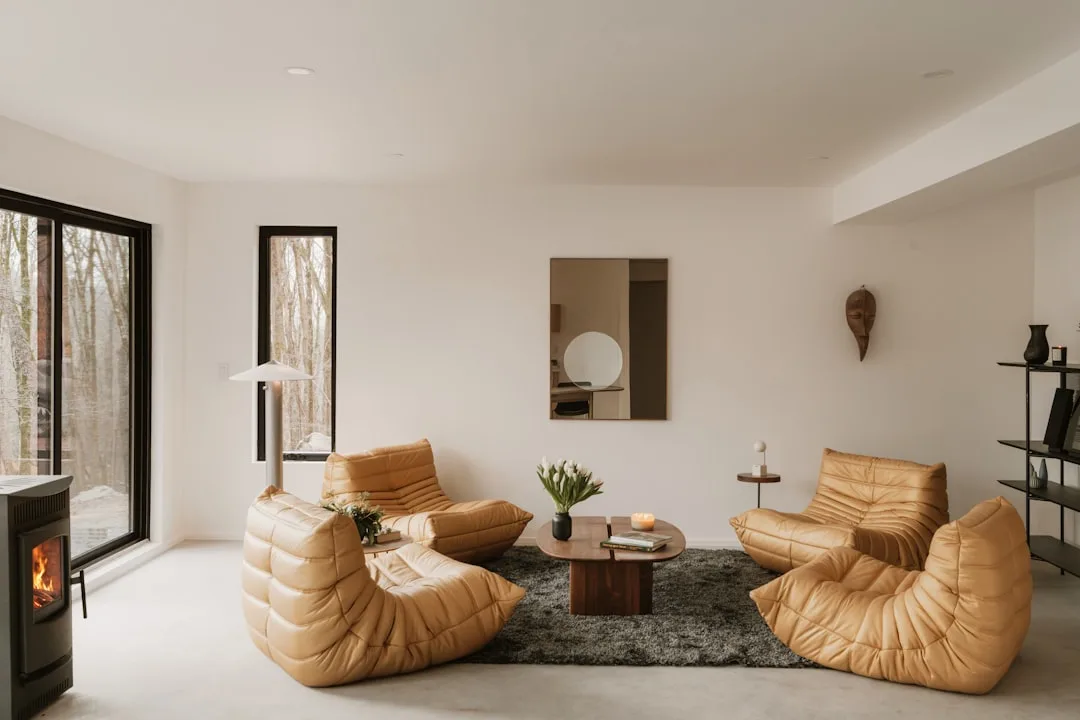
Warm minimalism, by contrast, retains clean structure and negative space but refuses the coldness of its predecessor. Where 2015-era minimalism meant white walls, grey concrete, and no visual sentiment, warm minimalism means the same restrained layout filled with oak grain, undyed linen, aged leather, and a palette borrowed from the natural world. Think a Tadao Ando floor plan with Axel Vervoordt’s material sensibility.
The real insight is that both trends are solving the same problem:
- Sophisticated maximalism answers sterile minimalism with richness and personality
- Warm minimalism answers sterile minimalism with texture and organic warmth rather than cold precision
- Both reject the idea that a room should look like a showroom — lived-in quality is the shared aspiration
- Both prioritize material authenticity over surface finish — real wood over wood-effect laminate, natural stone over porcelain simulacra, hand-thrown ceramics over factory perfection
- Both reward considered purchasing over impulse buying, which is why both aesthetics tend to age well rather than date sharply
If you’re trying to identify which camp suits you, it’s simpler than it sounds. Do you feel most settled in rooms that are visually busy but cohesive — where there’s always something new to notice? That’s maximalism. Do you feel most settled in rooms where the surfaces are calm but the materials are beautiful up close? That’s warm minimalism. Neither is better. Both are producing exceptional residential work right now.
Actionable takeaway: Identify your instinct by looking at rooms you genuinely want to sit in — not rooms you find impressive — and work backward from there.
Color Right Now: What Palettes Are Actually Appearing in Real Homes
The greige era is over. It had a long run — roughly 2009 to 2022 — and it made a lot of sense as a reset from the over-saturated, feature-wall-heavy interiors of the early 2000s. But it has calcified into something safe to the point of visual numbness.
Pantone’s 2024 Color of the Year, Peach Fuzz — a muted, warm apricot — reflected an industry-wide pivot toward softness and approachable warmth that has carried directly into 2025. Benjamin Moore’s 2025 selection, Cinnamon Slate, pushes further into warmth with a complex dusty-lilac tone. Sherwin-Williams’ Quietude, a serene sage-adjacent green, points toward the same biophilic instinct from a different hue direction.
What’s actually appearing on real walls and in real rooms:
- Deep burgundy and aged wine — particularly on kitchen cabinetry, bedroom walls, and statement furniture. Farrow & Ball’s Preference Red and Burgundy are among the brand’s most-requested shades for the second year running
- Terracotta in evolved form — not the flat, rusty terracotta of the 2018-2019 trend cycle, but more complex clay tones with ochre or brown undertones, closer to the earth palette of Axel Vervoordt’s interiors
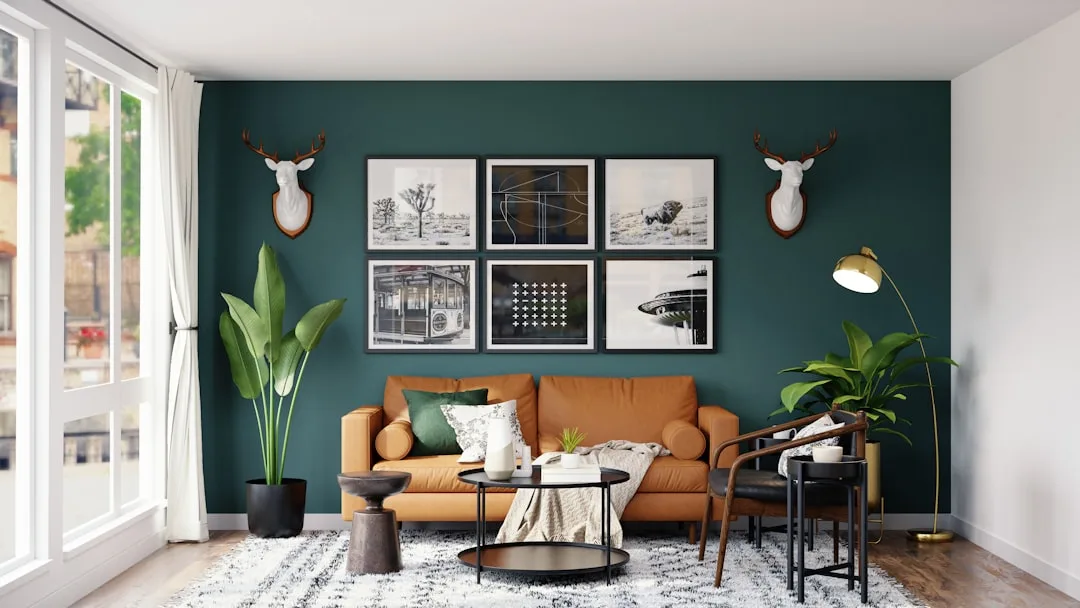
- Deep olive and forest green — working as both accent and dominant wall colors, often paired with warm brass hardware and natural wood
- Warm whites as backdrop, not statement — off-whites in the Dulux White Cotton or Benjamin Moore White Dove register: warm enough to hold the room, neutral enough to let everything else work
- Midnight blue making a quiet return — particularly on library walls, home office joinery, and bathroom tile, where it reads as sophisticated rather than cold when paired with brass or unlacquered bronze
- Dusty rose as a serious neutral — no longer associated exclusively with feminine spaces, dusty rose is appearing in living rooms and dining rooms as a complex, faded tone closer to antique plaster than bubble gum
The unexpected pairing that’s quietly becoming a signature move: deep olive with dusty rose. It sounds counterintuitive until you see it — the green grounds the pink, the pink softens the green, and the combination reads as genuinely original rather than trend-following.
How to use these palettes without committing fully:
- Start with a single painted door or alcove before committing an entire room to a deep tone
- Test paint samples at A3 size minimum — small swatches read completely differently on the wall
- Consider the undertone of your existing floor before choosing a wall color: warm honey oak reads differently against burgundy than against midnight blue
- Use the 60-30-10 rule as a starting point — dominant color, secondary color, accent — then break it deliberately in one place for visual interest
Materials and Texture: What Surfaces Are Defining the Current Moment
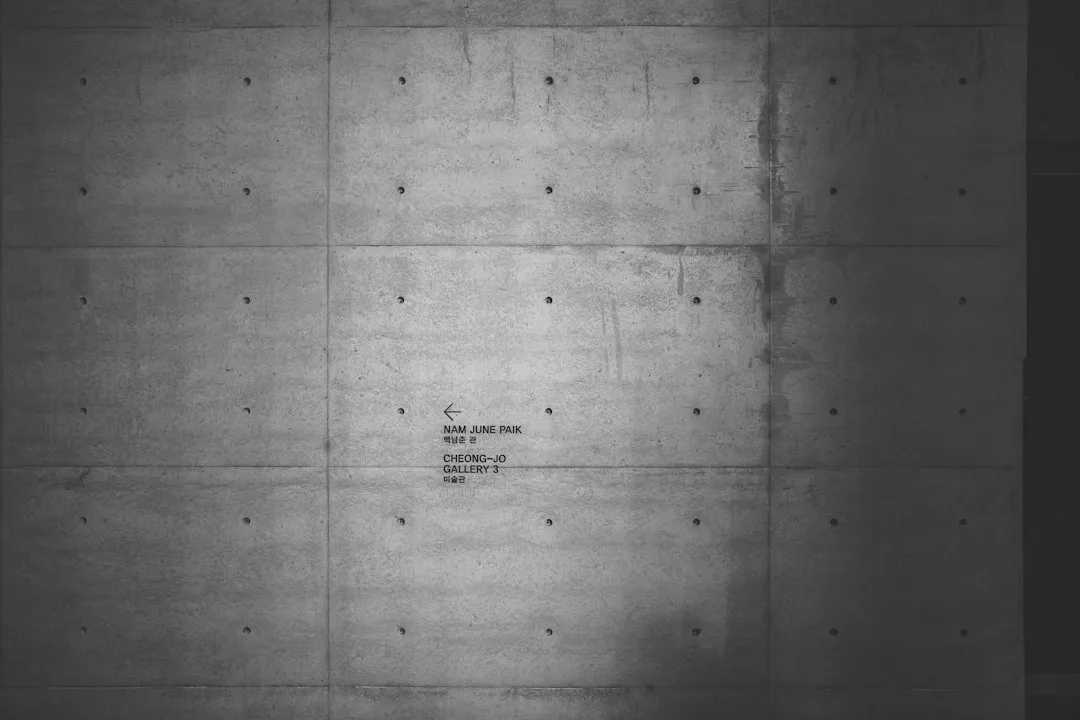
If color is the most visible shift in current interior design trends, materials are the more consequential one. The surfaces people are choosing now will outlast any color trend by a decade. Getting them right matters more than almost any other decision.
The materials defining the current moment:
- Limewash plaster and venetian plaster finishes — applied over flat paint rather than replacing it in some cases, giving walls depth and movement that flat paint simply cannot produce. Portola Paints’ limewash range has been backordered repeatedly through 2024 as demand outstrips supply
- Travertine returning, but differently — not the polished, cream travertine of 1990s hotel lobbies, but filled or unfilled travertine in darker walnut and silver tones, used on floors, fireplace surrounds, and increasingly on bathroom walls
- Unlacquered brass — the finish that ages and patinas rather than holding its showroom shine. It reads as lived-in from day one and only improves with time, which is precisely why it fits both warm minimalist and sophisticated maximalist interiors
- Raw and oiled oak — replacing the grey-washed and whitened oak of the 2010s with something warmer, knotted, and more honest about being wood
- Linen and bouclé upholstery — natural fibers in their least processed form, often undyed or in natural ecru tones, paired with tighter weaves in deeper colors for contrast
- Handmade ceramic tile — particularly in kitchens and bathrooms, where the slight irregularity of hand-pressed or hand-painted tile is being used deliberately against more precise joinery to add the sense that the room was assembled over time rather than specified in a single afternoon
- Reclaimed and antique timber — appearing as structural beams, floorboards, and occasionally furniture, where the grain and patina carry the room’s sense of history more efficiently than any styling exercise could
What to avoid: Materials that mimic premium finishes at lower price points have had a poor few years with anyone paying attention. Porcelain designed to look like marble, vinyl plank flooring designed to look like wood, and laminate designed to look like stone all read differently in person than they do in photography — and homeowners who’ve spent the last few years genuinely looking at interior spaces can tell. This doesn’t mean every surface needs to be the real thing. It means that when budget is limited, choosing one authentic material and letting it do the work is better than spreading the budget across multiple simulated ones.
Room-by-Room: Where the Trends Are Showing Up Most Clearly
Kitchens
The all-white kitchen that dominated for fifteen years has been replaced — not universally, but decisively in design-forward spaces — by kitchens with personality. Specific shifts worth noting:
- Cabinetry in deep, complex colors — navy, forest green, aged burgundy, and warm charcoal are all appearing on both base and upper cabinets, sometimes in tonal combinations rather than matching shades
- Visible hardware making a comeback — cup pulls, bin pulls, and unlacquered brass bar handles replacing the push-to-open, hardware-free look of high-end kitchens from 2015 to 2022
- Open shelving retreating — the Pinterest-perfect open shelf was beloved in photography and problematic in daily life. Closed cabinetry is returning, sometimes with fluted glass inserts that provide visual interest without requiring permanent tidiness
- Island as furniture piece — islands finished differently from the rest of the kitchen, sometimes in contrasting wood or stone, read as a piece of furniture that was brought into the room rather than built into it
- Integrated appliances becoming standard even at mid-market price points, which has the effect of making kitchen surfaces read more like rooms and less like equipment showrooms
Living Rooms
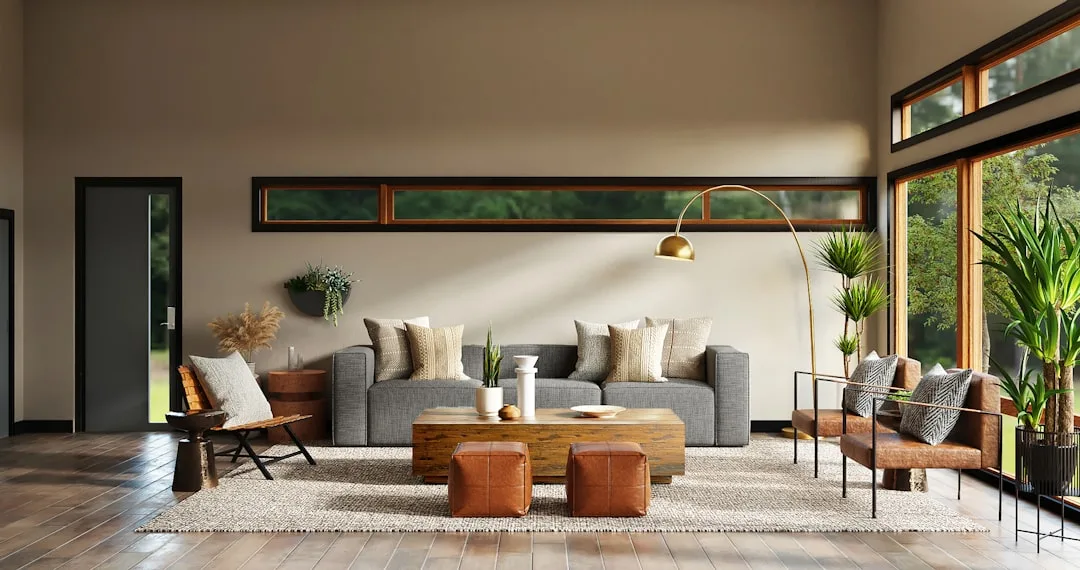
- The sofa as investment piece — homeowners are spending more on a single quality sofa and less on surrounding accessories, reversing the approach of buying a cheap sofa and styling around it
- Layered rugs — a flatweave underneath a smaller hand-knotted rug is appearing in living rooms as a way of adding depth without the visual weight of a single large rug dominating the floor
- Books as interior architecture — not styled spines facing outward for Instagram, but real, read books shelved in a way that acknowledges they’ve been handled and will be handled again
- Lighting as furniture — statement floor lamps and sculptural pendants are being treated as design objects rather than functional necessities, with Flos, Apparatus, and vintage pieces from the 1960s and 1970s all appearing in the same rooms without apparent contradiction
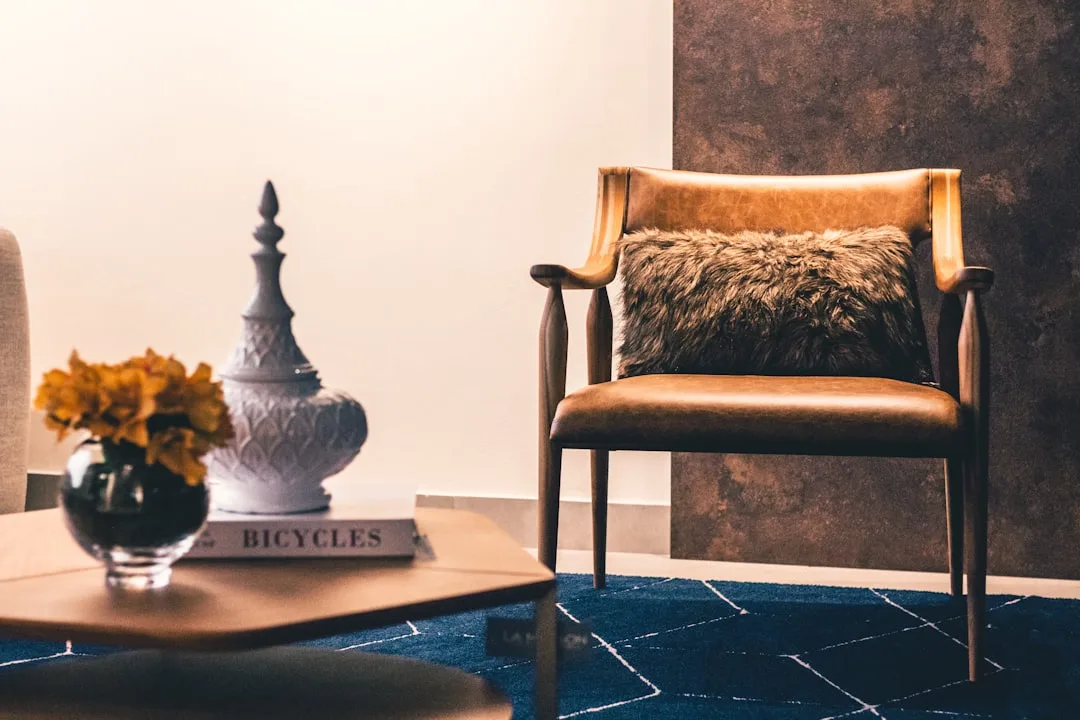
- The return of the armchair — a quality armchair in a different fabric or finish from the main sofa is becoming the single most recommended addition for adding visual interest and genuine comfort to a living room
Bedrooms
- Bed frames as statements — upholstered headboards have given way to more architectural bed frames in oak, walnut, and occasionally painted steel, where the frame itself carries the room’s aesthetic
- Textured wall treatments replacing art — limewash, grasscloth wallpaper, and plaster effects are doing the work that gallery walls did in the previous decade, with more permanence and less visual noise
- Linen bedding in natural tones — undyed, stonewashed, and pre-washed linen in oat, ecru, and warm sand tones, layered with wool throws in deeper colors
- Scent as interior design — candles, diffusers, and occasionally fresh botanicals are being considered as deliberately as any visual element, with the bedroom treated as a multi-sensory space rather than purely a visual one
What This Actually Means for Your Home
Knowing what is the current trend for interior design is only useful if it connects to decisions you can actually make. Here’s how to translate the broader picture into action:
- Audit what you have before you buy anything new. Most rooms benefit more from editing — removing what doesn’t belong — than from adding new elements. The current trend toward considered, intentional interiors is easier to achieve by subtracting than by acquiring.
- Identify your one non-negotiable investment. Whether that’s the sofa, the rug, the lighting, or the wall treatment, pick the element that will define the room and spend properly on it. Everything else can be patient, vintage, or minimal.
- Get the lighting right before you get anything else right. Every current trend — maximalist or minimalist — depends on warm, layered light to read correctly. A room with one overhead fixture will look flat regardless of what’s in it.
- Choose materials for how they age, not how they look new. Unlacquered brass, oiled oak, natural linen, and hand-finished plaster all improve with time. High-gloss lacquer, chrome, and polished stone all show every fingerprint and scratch in ways that become visually exhausting.
- Make one deliberate color decision and commit to it. A single wall in a deep, considered color — properly tested and properly applied — transforms a room more efficiently than any amount of accessorizing.
- Shop vintage before you shop retail. The quality available in the vintage and antique market at mid-range price points is consistently superior to new production at the same budget, and the pieces carry history that no amount of styling can replicate.
- Give rooms time to develop. The interiors that read as most authentic in 2025 are the ones that look like they were assembled over years, not specified in a single weekend. That effect is harder to fake than it looks, but easy to achieve if you simply slow down.
Frequently Asked Questions
What is the current trend for interior design in 2025?
The short answer is that two directions are competing without a clear winner: sophisticated maximalism — intentional layering of pattern, texture, and collected objects — and warm minimalism, which keeps restrained structure but replaces cold surfaces with natural materials like oak, linen, and aged leather. Both are a direct reaction against the sterile, grey-white interiors that dominated the previous decade, and both reward considered purchasing over fast, trend-driven buying.
Is minimalism still in style?
Minimalism has evolved rather than disappeared. The cold, monochrome minimalism of 2015-era interiors has faded, but warm minimalism — which retains clean structure while introducing organic materials, natural textures, and a palette drawn from the natural world — is very much current. If minimalism appeals to you, the update is straightforward: replace grey with warm neutrals, introduce natural grain and texture, and let materials do the decorative work that objects might otherwise do.
What colors are trending in interior design right now?
The greige era has effectively ended. Colors appearing most consistently in design-forward interiors include deep burgundy and aged wine tones, evolved terracotta with ochre or brown undertones, deep olive and forest green, midnight blue, dusty rose used as a sophisticated neutral, and complex warm whites as backdrop rather than statement. The common thread is warmth and depth — colors that look different depending on the light and time of day, rather than flat, unchanging neutrals.
How do I update my home without following trends too literally?
Focus on materials and lighting before color and accessories. Swap synthetic or simulated materials for one authentic one — a real wool rug, a solid wood piece of furniture, a natural linen curtain. Fix the lighting so it’s warm and layered rather than relying on a single overhead source. Edit the room before adding anything new. These changes align with every direction current interior design is moving, without tying you to any specific trend that may date in two years.
Is maximalism back, and how is it different from just having a lot of stuff?
Sophisticated maximalism is back, and the difference between it and clutter is intentionality. A maximalist room in the current mode has been edited — every object has been chosen, every pattern has been considered in relation to the others, and the overall effect is rich and layered rather than random and overwhelming. The test is whether removing any single element would make the room feel more or less complete. In good maximalism, removing things makes the room feel emptier and less itself. In clutter, removing things creates relief.
What’s the biggest mistake homeowners make when trying to follow interior design trends?
Buying accessories before fixing the fundamentals. Paint, lighting, and key furniture pieces define a room. Cushions, throws, and decorative objects support what’s already there — they can’t do the work of a good sofa, a well-chosen rug, or a properly considered light source. The most common pattern in rooms that feel almost right but not quite is excellent accessories sitting in a room where the fundamentals haven’t been addressed. Start with the bones, then style around them.