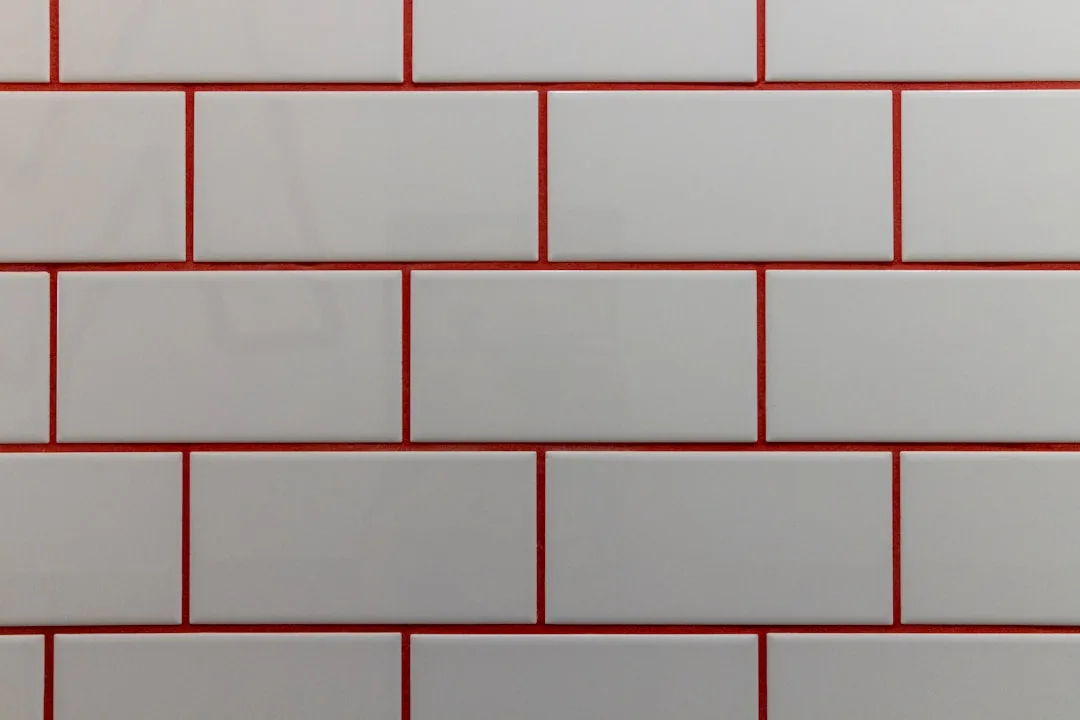
Grout lines can cover up to 20% of your tiled wall — which means choosing dark grout light tile bathroom combinations isn’t a background decision, it’s one of the loudest design choices in the room. Most people treat grout the way they treat caulk: something to finish the job and never think about again. That instinct is why so many bathrooms I’ve walked into over the years felt vaguely wrong without the homeowner being able to name why. The grid was fighting the tile. The contrast was accidental. Nobody meant for it to look that way — it just happened, because grout color got decided in the last five minutes of a tile showroom visit.
Quick Answer
Grout lines can cover up to 20% of your tiled wall — which means choosing dark grout on light tile isn’t a background decision, it’s one of the loudest design choices in the room.
This article won’t tell you that dark grout is good or bad. It’ll tell you exactly when it works, when it fails, and what every tiler, client, and showroom consultant I’ve encountered consistently gets wrong about the decision.
Can You Use Dark Grout with Light Tile? The Honest Answer
In This Article

Yes. But the word “intentional” carries more weight here than in almost any other bathroom decision you’ll make.
The most common mistake I watched play out in client bathrooms was choosing dark grout specifically to hide dirt — then being genuinely blindsided by the visual mass it added to the room. A client in a Wicker Park condo once told me she chose charcoal grout on her white subway tile because she “didn’t want to be cleaning it constantly.” She was right about the dirt. She hadn’t considered that her 48-square-foot bathroom would feel like a grid-patterned box by the time we were done, because nobody explained to her what contrast actually does at scale.
Grout lines can occupy up to 20% of a tiled surface depending on tile size and joint width. That’s not a minor texture detail — that’s nearly a fifth of the visual field you’re standing in every morning. Treating it as an afterthought is a structural design mistake.
Contrast ratio is the variable most people miss entirely. In a dark grout light tile bathroom, dark charcoal on warm ivory reads as deliberate and layered — the contrast is there, but it’s not aggressive. Black grout on bright white tile is a different statement altogether: graphic, high-contrast, the kind of look that commits the entire room to a specific aesthetic. Neither is wrong. But they’re not the same decision made twice.
Room size, lighting conditions, and tile format all change whether dark grout anchors a space or overwhelms it:
- Large rooms with strong natural light: dark grout can read as sophisticated definition
- Small or windowless bathrooms: the same choice can make walls feel like they’re closing in
- Large-format tiles: fewer lines means less visual noise even with high contrast
- Mosaic or small tile formats: dark grout density becomes the dominant visual element — which can be intentional or disastrous
- Warm-toned light tile with cool dark grout: the temperature contrast adds a layer of tension that reads well in modern and transitional bathrooms
- Cool white tile with warm dark grout (like dark brown or espresso): softer than black, often more livable for a primary bathroom you use every single day
One factor most articles skip entirely: your bathroom’s artificial lighting. Recessed LED lighting at 4000K color temperature will make black grout look sharp and graphic. Warmer 2700K lighting softens the contrast considerably and makes the same combination feel more residential. Before you order grout, stand in your bathroom at the time of day you use it most — morning, usually — and look at what the light actually does to your tile samples.
Actionable takeaway: Before committing, tape a 12×12 section of your actual tile to the wall and photograph it with dark grout lines drawn in marker at the correct joint width. The photo won’t lie the way your imagination does.
Why Tilers Push Back on Black Grout (and When They’re Right)
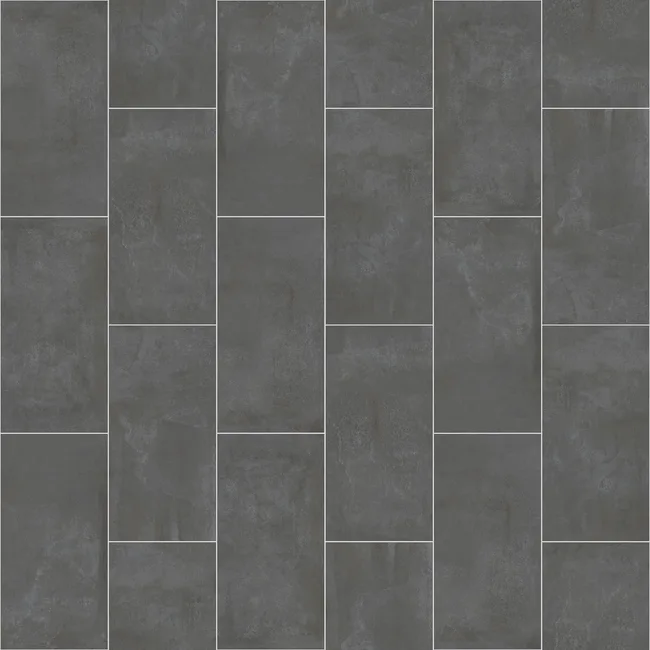
Every experienced tiler I’ve worked with had a version of the same speech about black grout. Most homeowners hear it as overcaution. It isn’t.
The practical problem starts during installation. Black grout leaves behind a haze on light tile surfaces that is genuinely difficult to remove — and unlike lighter grout, there’s no margin for error on cleanup timing. Leave it twenty minutes too long on a glossy white tile and you’re spending hours with grout haze remover and a lot of anxiety. The float technique matters more with dark pigments because streaking on pale tile faces is immediately and permanently visible. These aren’t hypothetical risks. I watched a skilled installer spend an extra two hours on a simple shower niche because the client insisted on matte black grout against polished white marble, and every smear showed.
Epoxy-based black grouts — which are denser, more stain-resistant, and genuinely worth the price premium in wet zones — are significantly less forgiving for DIY installation. They set faster, require more precise mixing ratios, and are unpleasant to remove from tile faces once cured. If you’re hiring someone less experienced or doing this yourself, that’s relevant information nobody puts on the product packaging.
Unsanded grout joints under 1/8 inch are standard for most wall tiles — but dark grout in narrow joints on glossy white tile amplifies any installer error by making shadow lines visually dominant. A slightly wandering joint that reads as nothing in off-white grout becomes a line you can’t stop looking at in black.
Then there’s efflorescence. White mineral deposits migrating to the surface of dark grout over time — particularly in wet bathroom environments with any hard water exposure — is a real and underreported issue. It doesn’t make the grout fail structurally. It does make it look like something is wrong with your tile work.
Tilers aren’t wrong to warn you. But these are solvable concerns:
- Use a premium epoxy or stain-resistant grout rather than basic cement grout in dark colors
- Hire an installer who has specifically used black grout before — ask to see photos of completed jobs, not just samples
- Seal immediately and re-seal annually in shower applications — don’t skip this step even with epoxy grout
- Budget extra labor time for cleanup on glossy light tile with dark grout — it will take longer, and rushing it creates problems that are visible forever
- Discuss cleanup protocol with your installer in advance — ask specifically how they plan to manage grout haze on light tile, and what product they’ll use if it develops
- Test on a small section first if you’re doing this yourself — install a 2-square-foot test area, let it cure fully, then assess cleanup difficulty before committing to the entire room
- In hard water areas, ask your installer about grout admixtures that reduce porosity and slow efflorescence — they exist, they’re inexpensive, and almost nobody mentions them at the point of sale
Actionable takeaway: If a tiler warns you off black grout, ask them directly whether they’ve installed it before and what went wrong. Their answer tells you whether this is professional caution or personal preference.
What Tile Shapes and Formats Actually Work Best with Dark Grout
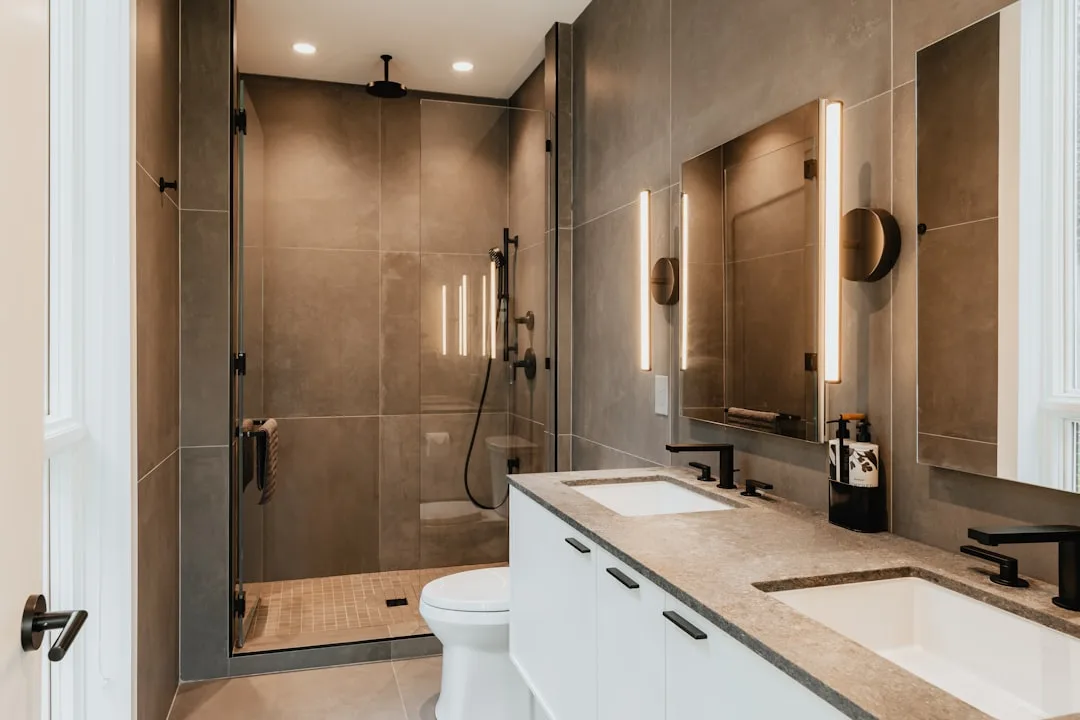
Format is the variable that determines whether dark grout is an asset or a liability — and it’s the thing most inspiration galleries completely ignore because they’re showing you finished rooms without explaining why some of them work and others don’t.
Large-format tiles — 12×24 and larger — are the safest pairing with dark grout. Fewer grout lines means the contrast adds definition without creating a grid that competes with the tile itself. A 24×48 slab tile with charcoal grout reads as architectural. The same charcoal grout on 4×4 tiles reads as a crossword puzzle. I’ve installed both. They are not comparable outcomes.
Subway tile — the 3×6 format that has dominated bathroom design for the better part of fifteen years — sits in genuinely dangerous territory with dark grout. A standard 60×32-inch shower wall tiled in 3×6 subway with 1/16-inch joints produces roughly 180 linear feet of grout line. At that density, dark grout becomes the dominant visual element, not the tile. That can be intentional and striking in small doses — a shower niche, an accent wall — but floor-to-ceiling in a standard bathroom, it’s a commitment most people aren’t prepared for.
Here’s how common tile formats pair with dark grout in practice:
- 4×4 or smaller square tiles: dark grout dominates entirely — use only if the grid pattern is the point
- 3×6 subway tile: high risk of grid saturation; dark grout works better on a single feature wall than throughout
- 4×12 or 4×16 elongated subway: slightly more forgiving than 3×6 because horizontal lines feel less chaotic than a dense brick pattern
- 12×12 square tile: borderline — the math still produces a lot of linear footage in a full shower, but it’s more manageable than small formats
- 12×24 or larger rectangular tile: the sweet spot for dark grout with light tile; contrast reads as design, not noise
- Hexagon tile (2-inch): dark grout creates a graphic honeycomb effect — visually busy by design, works in small applications like floors or niches
- Large hexagon (6-inch or larger): one of the best pairings for dark grout; the geometry becomes a feature rather than a pattern
- Penny tile: dark grout is essentially non-negotiable here for visual coherence, but understand that you are choosing pattern as the primary element
- Plank tile (4×24 or similar): dark grout between elongated planks reads similarly to dark hardwood graining — often surprisingly elegant
Lay pattern interacts with grout color in ways most people don’t account for. A running bond pattern in 3×6 subway with dark grout produces strong horizontal movement — which can make a low-ceiling bathroom feel even lower. A stacked vertical pattern with the same tile and grout creates upward visual movement. The grout color amplifies whatever the pattern is already doing directionally. If you’re planning a herringbone layout on a floor with light tile, dark grout will trace every angle — which makes the pattern more dramatic but also means any installation error in the angle alignment becomes significantly more visible.
Actionable takeaway: Before finalizing your grout color, count the approximate linear feet of grout lines your chosen tile format will produce in your specific installation area. It’s basic math and it will change your decision more reliably than looking at finished room photos online.
The Maintenance Reality Nobody Mentions at the Showroom
Dark grout in a light tile bathroom has a fundamentally different maintenance profile than light grout — and it cuts both ways. This is the conversation that rarely happens before purchase, and it should.
What dark grout hides:
- Everyday soap scum and water minerals from most viewing distances
- Dirt and debris tracked in on floors
- Normal discoloration from hard water over time
- The gradual yellowing that plagues white grout in shower applications
What dark grout shows that light grout conceals:
- White mineral deposits and efflorescence (especially in hard water areas)
- Grout haze from installation that wasn’t fully removed
- Calcium buildup from shower heads and water spray
- Light-colored mildew in its early stages — which on dark grout often appears as a pale film rather than the black spotting most people associate with mold
- Soap residue from products with titanium dioxide (found in many white bar soaps) — it leaves a pale smear on dark grout that accumulates faster than most people expect
The homeowner who chooses dark grout to reduce cleaning is solving one problem and creating a different one. That’s not a reason to avoid it — it’s a reason to know what you’re signing up for.
Maintenance protocol for dark grout in a light tile bathroom:
- Seal the grout before first use and reseal every 12 months in shower applications, every 18-24 months on floors
- Use a pH-neutral cleaner — acidic cleaners degrade grout sealers faster and can affect pigment in dark grouts over time
- Address calcium and mineral deposits with a dedicated calcium remover rather than a general bathroom cleaner, which often won’t touch them
- A weekly wipe-down with a squeegee and microfiber prevents the mineral buildup that shows most aggressively on dark grout
- If you have a water softener, dark grout maintenance drops considerably — this is worth knowing if you’re on the fence about the combination
Frequently Asked Questions
Will dark grout make my small bathroom look smaller?
It depends almost entirely on tile format and joint width. Dark grout on large-format tile (12×24 or bigger) in a small bathroom can actually make the space feel more deliberate and finished without significantly reducing perceived size. Dark grout on small tile formats in a small bathroom — 3×6 subway, 4×4, penny tile — will create a dense grid pattern that competes with the space itself and tends to make it feel more enclosed. If your bathroom is under 50 square feet, prioritize large-format tile if you want dark grout. The combination of small tiles and dark grout in a small room is the specific scenario most likely to produce regret.
What’s the difference between charcoal grout and black grout in a dark grout light tile bathroom?
More than most people expect. True black grout — Mapei Ultracolor Plus FA in Nero, for example, or Custom Building Products PolyBlend in Natural Gray taken to its darkest — creates a graphic, high-contrast line that reads as a deliberate design statement. Charcoal grout, typically in the medium-dark range (think Mapei Warm Gray or similar), creates contrast without the hard graphic edge. In most residential bathrooms, charcoal reads as sophisticated and intentional. True black reads as committed to a specific aesthetic — it works, but it closes off future flexibility if you repaint walls, change fixtures, or update accessories. If you’re uncertain, charcoal is the lower-risk choice with most of the visual payoff.
Can I change dark grout to lighter grout if I don’t like how it looks?
Yes, but it’s not a small project. Grout removal requires either a manual grout saw (tedious, time-consuming) or an oscillating tool with a grout removal blade (faster but requires some skill to avoid nicking tile edges). After removal, the joints need to be cleaned out, allowed to dry, and then regrouted. On a standard shower, expect a full day of work minimum — more if the original grout is epoxy-based, which is significantly harder to remove. The tile itself is rarely damaged by grout removal done carefully. Plan for 20-30% longer than you think it will take. It’s a legitimate option if you’re unhappy with the result, but it’s not a casual afternoon project.
Does dark grout work on bathroom floors with light tile?
Yes, and it often works better on floors than walls precisely because the contrast creates definition underfoot without the grid-closing-in sensation you can get on walls. Dark grout on a light floor also does genuine work in a practical sense — floors accumulate more visible wear than walls, and dark grout handles that reality better. The maintenance note about white soap residue applies here too, particularly near the sink and vanity area where bar soap and toothpaste land on the floor. For floor applications, a slightly textured or matte-surface light tile with charcoal grout is one of the more durable and visually practical combinations you can choose.
How do I know if my tile is suitable for dark grout without doing a full installation test?
Ask your tile supplier for a technical data sheet on the tile surface. Specifically, you’re looking for the coefficient of friction (relevant for floors), the surface finish description, and any manufacturer notes about staining or grout haze. Highly polished or rectified tiles with very smooth surfaces are more susceptible to grout haze with dark pigments — the haze shows clearly against a reflective light surface. Matte, textured, or slightly irregular tile surfaces (like handmade-look ceramics) are more forgiving because minor haze blends with the surface variation. If you can get a sample tile and a small quantity of your intended dark grout, do a 6×6-inch test and attempt cleanup after 20 minutes — that’s a faster and cheaper way to learn what you’re working with than discovering it mid-installation.
Will dark grout make my small bathroom look smaller?
It depends almost entirely on tile format and joint width. Dark grout on large-format tile (12×24 or bigger) in a small bathroom can actually make the space feel more deliberate and finished without significantly reducing perceived size. Dark grout on small tile formats in a small bathroom — 3×6 subway, 4×4, penny tile — will create a dense grid pattern that competes with the space itself and tends to make it feel more enclosed. If your bathroom is under 50 square feet, prioritize large-format tile if you want dark grout. The combination of small tiles and dark grout in a small room is the specific scenario most likely to produce regret.
What’s the difference between charcoal grout and black grout in a dark grout light tile bathroom?
More than most people expect. True black grout — Mapei Ultracolor Plus FA in Nero, for example, or Custom Building Products PolyBlend in Natural Gray taken to its darkest — creates a graphic, high-contrast line that reads as a deliberate design statement. Charcoal grout, typically in the medium-dark range (think Mapei Warm Gray or similar), creates contrast without the hard graphic edge. In most residential bathrooms, charcoal reads as sophisticated and intentional. True black reads as committed to a specific aesthetic — it works, but it closes off future flexibility if you repaint walls, change fixtures, or update accessories. If you’re uncertain, charcoal is the lower-risk choice with most of the visual payoff.
Can I change dark grout to lighter grout if I don’t like how it looks?
Yes, but it’s not a small project. Grout removal requires either a manual grout saw (tedious, time-consuming) or an oscillating tool with a grout removal blade (faster but requires some skill to avoid nicking tile edges). After removal, the joints need to be cleaned out, allowed to dry, and then regrouted. On a standard shower, expect a full day of work minimum — more if the original grout is epoxy-based, which is significantly harder to remove. The tile itself is rarely damaged by grout removal done carefully. Plan for 20-30% longer than you think it will take. It’s a legitimate option if you’re unhappy with the result, but it’s not a casual afternoon project.
Does dark grout work on bathroom floors with light tile?
Yes, and it often works better on floors than walls precisely because the contrast creates definition underfoot without the grid-closing-in sensation you can get on walls. Dark grout on a light floor also does genuine work in a practical sense — floors accumulate more visible wear than walls, and dark grout handles that reality better. The maintenance note about white soap residue applies here too, particularly near the sink and vanity area where bar soap and toothpaste land on the floor. For floor applications, a slightly textured or matte-surface light tile with charcoal grout is one of the more durable and visually practical combinations you can choose.
How do I know if my tile is suitable for dark grout without doing a full installation test?
Ask your tile supplier for a technical data sheet on the tile surface. Specifically, you’re looking for the coefficient of friction (relevant for floors), the surface finish description, and any manufacturer notes about staining or grout haze. Highly polished or rectified tiles with very smooth surfaces are more susceptible to grout haze with dark pigments — the haze shows clearly against a reflective light surface. Matte, textured, or slightly irregular tile surfaces (like handmade-look ceramics) are more forgiving because minor haze blends with the surface variation. If you can get a sample tile and a small quantity of your intended dark grout, do a 6×6-inch test and attempt cleanup after 20 minutes — that’s a faster and cheaper way to learn what you’re working with than discovering it mid-installation.