
Your closets are organized, your countertops are clear, and your junk drawer finally closes — yet every room in your home still feels slightly off, and no amount of new decor seems to fix it. If you’re ready to declutter overlooked home spots that most tidying guides never mention, you’re already ahead of the problem — because the zones doing the most damage are almost never the ones anyone addresses first.
That feeling has a source. And it’s almost never where you’ve already looked.
Professional organizers and interior designers have identified a consistent pattern: the clutter zones that do the most damage to how a home looks and feels are rarely the ones anyone thinks to address first. They live in the periphery — at the base of walls, around the edges of furniture, in the six inches beside every appliance, and on surfaces above eye level that the brain has quietly learned to stop seeing. These aren’t the zones covered in the average decluttering article. And that’s exactly why they keep undermining spaces that should, by every reasonable measure, feel finished.
Here’s what those zones are, why they matter more than your junk drawer, and how to clear them in a way that actually changes how your home feels to be inside.
Why Overlooked Clutter Zones Destroy a Room’s Design Before You Even Decorate
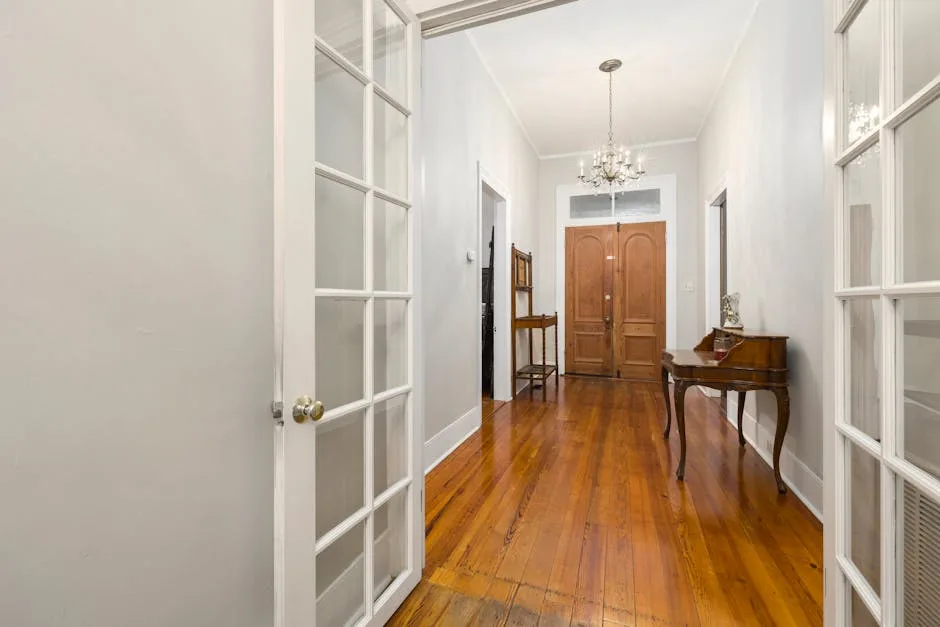
Most people treat decluttering as a prerequisite to cleaning, not a prerequisite to decorating. That’s the wrong frame entirely.
Every intentional design decision you make — the sofa you saved for, the art you hung, the rug that anchors the room — operates in competition with the visual noise around it. When peripheral zones are cluttered, the brain can’t isolate your focal points. It processes the room as a single field of competing stimuli, and no individual element wins.
Research from Princeton University’s Neuroscience Institute established that multiple objects simultaneously competing for neural representation cause measurable stress responses and actively reduce a person’s ability to focus. That work was developed in the context of cognitive attention, but interior designers have understood its spatial equivalent for decades: visual clutter doesn’t just look messy — it neurologically prevents a designed space from being experienced as designed. Your gallery wall isn’t registering the way you intended. The eye is too busy arbitrating between seventeen other things in the room.
This is why the concept of clutter creep matters so much. Clutter creep is what happens when ignored zones accumulate gradually enough that the brain reclassifies them as the room’s baseline. You stop seeing the bag parked beside the armchair. You stop registering the stack of items that’s lived on the landing for three months. But guests see it immediately — and more importantly, your nervous system registers it constantly, even when your conscious mind has moved on.
The shift in how professional organizers work reflects this. Increasingly, high-end organizers are brought in at the start of a redesign, not after furniture arrives. Interior designers who work on residential projects above a certain budget now commonly include a clutter audit in the design diagnostic phase, because they’ve learned that no amount of design investment recovers a room that has active clutter in its peripheral zones.
Actionable takeaway: Before buying a single new decor item for a room that isn’t working, do a clutter audit of every zone outside the primary furniture grouping. Decor added to a room with peripheral clutter will make the room feel busier, not better.
The Transition Zones: How Entryway Overflow Poisons Every Room It Connects To
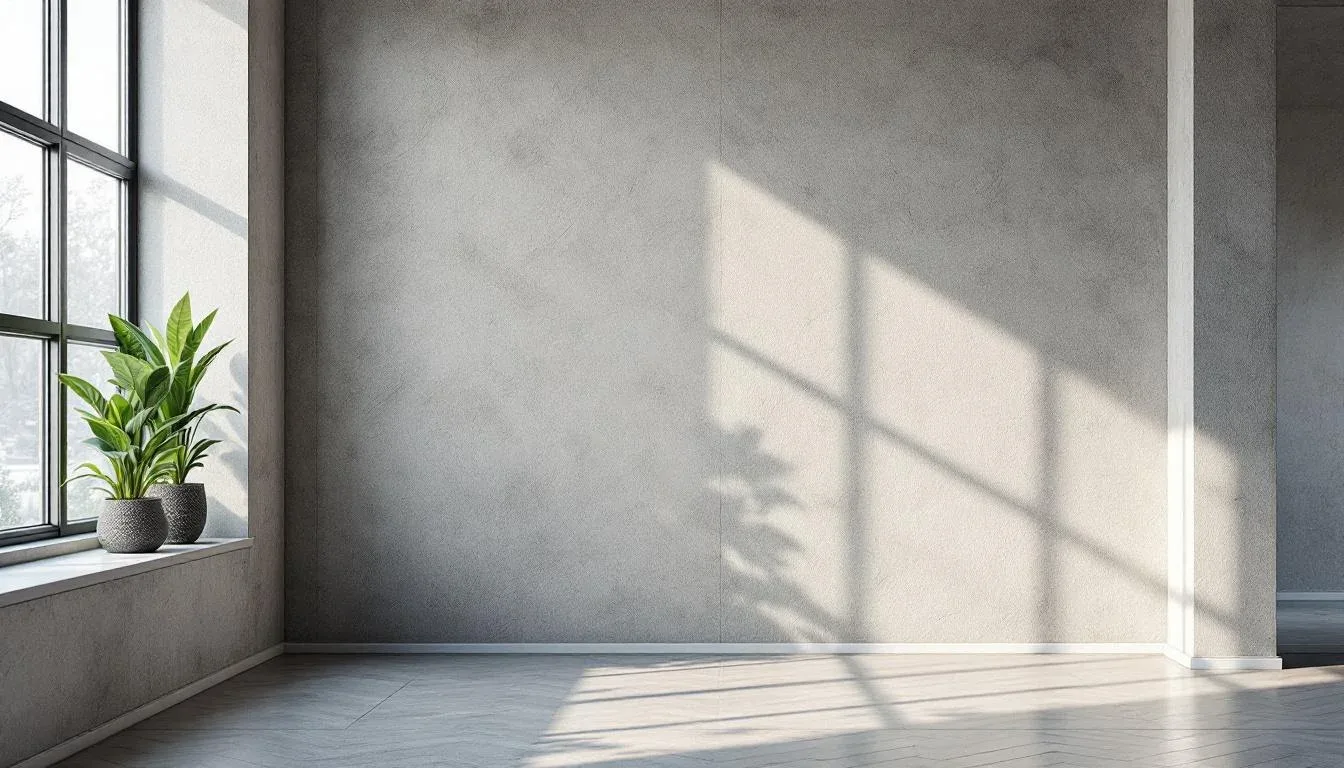
The entryway isn’t a room in the traditional sense. It’s a contract. Whatever condition it’s in tells every person who walks through it — including you, every single day — what to expect from the rest of the house. When that contract communicates chaos, the rest of the home never fully recovers the impression.
The National Association of Realtors has consistently identified entryway presentation as one of the top three interior factors influencing buyer perception during home tours. But this effect doesn’t belong only to real estate. You experience it every day you come home. A cluttered transition zone resets your nervous system to “not quite right” before you’ve even taken your shoes off.
The items that typically accumulate in transition zones follow a predictable pattern:
- Bags staged near doors — not stored, just temporarily parked, for weeks
- Mail stacked on hall tables — often in layers that span multiple billing cycles
- Shoes that migrated out of the entryway and colonized the first three feet of adjacent rooms
- Hanging items that exceeded hook capacity and now live on chair backs or floor pegs
- Reusable shopping bags, returned but never re-stored
Each one of these items does something specific to the space. They visually compress the passage. A hallway that reads as 36 inches wide on paper can read as closer to 22 inches when floor clutter narrows the visible walking path. Perceived square footage drops measurably.
The design solution isn’t more storage at the entry — it’s building what some designers call a decompression gallery: a transition zone with strictly limited, intentional surface area, where the infrastructure only accommodates what actually belongs there. That means one hook per family member, maximum. A tray for keys that holds four sets, not twelve items. A bench with internal storage, not surface area that invites stacking.
The rule that makes this sustainable: nothing in the transition zone is “in progress.” Everything is either stored or it leaves.
Actionable takeaway: Stand at your front door and count every item visible from that position that isn’t architecture or intentional decor. Every single one of those items is actively degrading your home’s first impression — for you and everyone else who enters.
Dead Wall Zones: The Vertical Clutter Nobody Talks About and Designers Always Notice

Ask any professional stager what they fix first in a home that “doesn’t photograph well,” and they’ll tell you: the base of the walls.
The 0–24 inch zone along any wall is the most visually damaging place to accumulate clutter, and it’s also the place homeowners are least likely to address, because it rarely reads as a designated storage area. It’s just where things end up — a guitar leaned in a corner, a stack of magazines beside the armchair, a box that’s been “about to be dealt with” for a month, a collection of shoes that escaped the entryway.
Here’s why this zone does disproportionate damage. Interior design relies heavily on the vertical line to create a sense of height. When your eye can travel uninterrupted from baseboard to ceiling, the room reads as tall. Experienced designers use vertical elements — floor-to-ceiling curtains, tall bookshelves, vertically striped wallpaper — specifically to make 8-foot ceilings read as closer to 10 feet. It’s a well-documented optical principle with real spatial consequences.
When the base of a wall is interrupted by objects, that vertical line breaks at floor level — exactly where the eye begins its upward travel. The ceiling doesn’t feel higher. The room doesn’t feel larger. Every item parked against a wall is effectively capping the room’s perceived height from the ground up.
This is one of the most impactful places to declutter overlooked home spots precisely because the payoff is immediate and visible without buying or changing anything. Clear the base of two walls in a room and the space reads differently before you’ve touched a single piece of furniture.
The categories that accumulate in dead wall zones tend to cluster predictably:
- Leaning items — artwork waiting to be hung, mirrors, frames, sporting equipment
- Displaced storage — boxes migrated from closets that “ran out of room”
- Furniture overflow — items that don’t fit elsewhere and are being “figured out”
- Project materials — home improvement supplies, craft materials, seasonal items between uses
Each category needs a different resolution. Leaning artwork either gets hung or leaves. Displaced storage signals a deeper closet problem that needs addressing at the source. Furniture overflow is often the result of an overcrowded room — removing one piece of furniture will do more for the space than any styling decision. Project materials need a designated home, usually inside a closed storage unit, not against the wall of a living space.
Actionable takeaway: Walk the perimeter of every room in your home and photograph the base of each wall. Review the photos, not the room itself — the camera reveals what familiarity hides. Every item below knee height that isn’t furniture or intentional decor is interrupting the vertical plane and shrinking the room.
Above-Eye-Level Zones: The Clutter Your Brain Has Stopped Registering
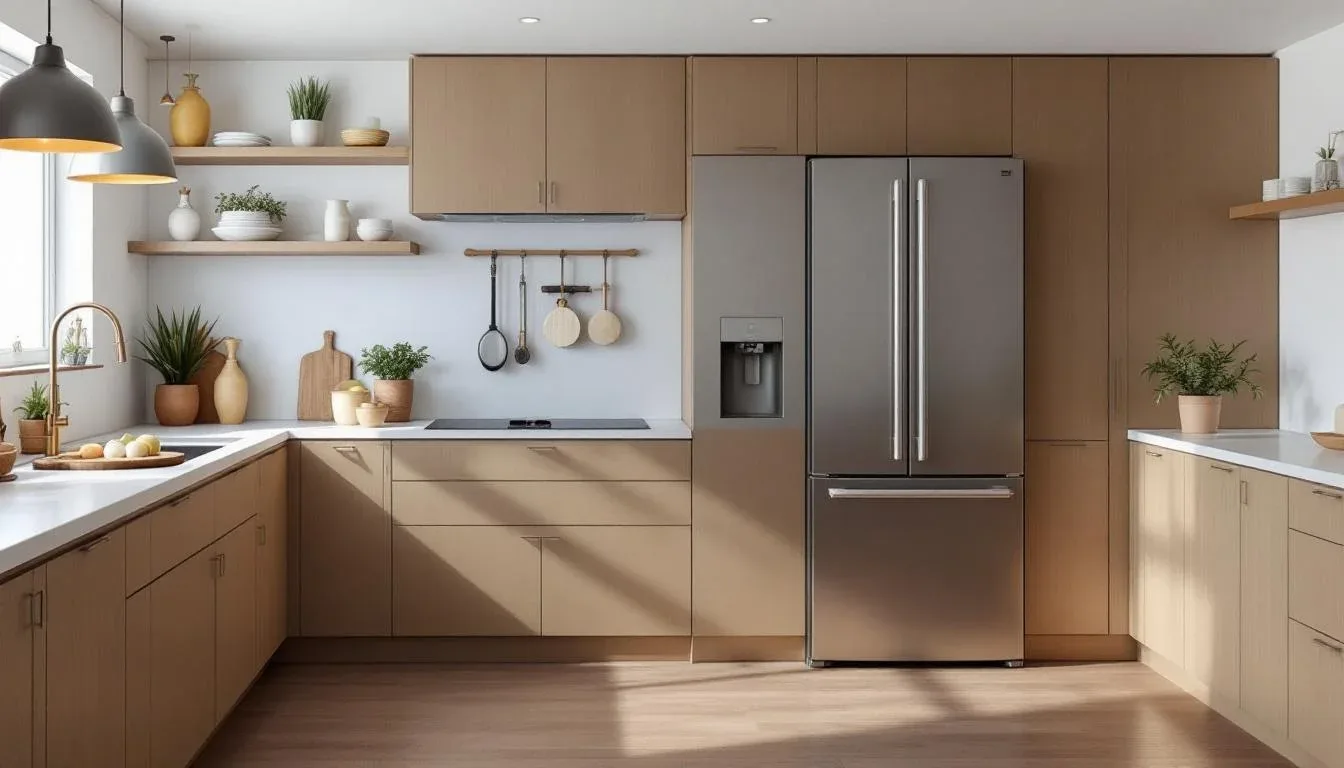
There’s a specific height band — roughly 66 inches to 84 inches — where objects become functionally invisible to the people who live with them. It’s above comfortable sightlines but below the ceiling, which means it registers as “high up” without registering as “empty space.” Tops of kitchen cabinets, the upper shelf of open bookcases, the ledge above a doorframe, the crown of an armoire — these are the zones where clutter accumulates over years because it’s too high to bother with and too familiar to notice.
Guests notice it. Real estate photographers deal with it constantly. Professional organizers who are asked to help a home “feel bigger” almost always find a significant portion of the answer at eye level and above.
The specific damage this zone does is different from floor-level clutter. Rather than breaking vertical lines, above-eye-level clutter creates what designers call visual ceiling compression — the perception that the upper portion of the room is occupied and heavy, which psychologically lowers the ceiling even when the architecture doesn’t change. A room with clean upper zones reads as airier. A room where every high surface is stacked with objects reads as smaller than its dimensions.
The items that accumulate here are almost always in one of two categories: things that were put there to get them out of the way, and things that were decorative once but haven’t been reconsidered since. Both categories benefit from the same approach — pull everything down, handle it with fresh eyes, and return only what earns its place at that height.
What earns a place in an above-eye-level zone: items used seasonally and stored deliberately, with a retrieval system. Intentional decor that’s been chosen for that specific height, not migrated there from somewhere else. Nothing that’s simply “waiting.”
Actionable takeaway: Set a timer for twenty minutes and address one above-eye-level zone in your home. The tops of kitchen cabinets are usually the highest-yield place to start — clearing them reliably makes the kitchen feel taller and more finished without touching a single cabinet below the counter.
The Six-Inch Zones: Beside, Behind, and Between Every Major Appliance and Piece of Furniture
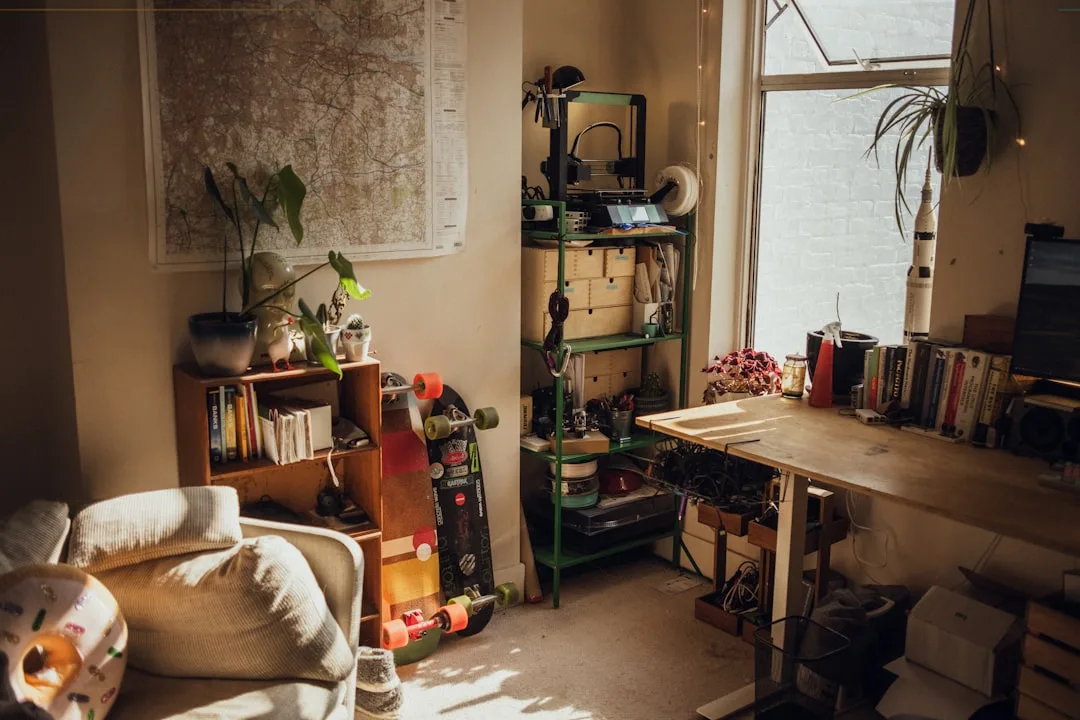
Professional organizers who work in kitchens consistently identify the same problem: it’s not the cabinets that are breaking the space, it’s the six-inch corridors beside the refrigerator, beside the range, between the counter and the wall, and in the gaps between appliances on the counter surface.
These micro-zones are where small items land when there’s no clear home for them — the cooking spray that doesn’t fit in the pantry, the phone charger without a designated spot, the stack of takeout menus, the appliance that gets used twice a year and lives permanently on the counter because putting it away feels like too many steps.
Each individual item seems minor. Collectively, they create what designers call surface scatter — a diffuse visual noise across the working surfaces of the room that prevents any intentional surface moment from reading clearly. A beautiful countertop coffee station disappears into the scatter. A deliberately styled corner of the kitchen becomes invisible.
The same pattern appears in every room. The six inches beside the bed: chargers, books, glasses, water bottles, phone, lamp cord overflow. The gap beside the sofa: remote controls, magazines, a throw that didn’t make it onto the cushion. The space behind the television stand: cable management that was never managed, dust, and items that were supposed to be temporary.
To declutter overlooked home spots in this category, the useful diagnostic question isn’t “should this item stay or go?” It’s “does this item have a real home — a specific, logical, closed storage location — and is it in that home right now?” If the answer to either part is no, the item either needs a designated home created for it or it needs to leave the room entirely.
Actionable takeaway: Choose one room and address every surface-adjacent gap — beside furniture, between appliances, in counter corners. Give every displaced item a real home or remove it. This category of decluttering almost never requires buying new storage; it requires making decisions that were previously deferred.
How to Audit Your Home for Hidden Clutter Zones Without Spending a Weekend on It
The reason most people never address these zones isn’t motivation — it’s that they don’t have a systematic way to see what they’ve stopped seeing. These steps work because they remove familiarity from the equation.
Step one: photograph every room from the doorway. Stand at the entry point of each room and take a wide-angle photo that captures the full space. Review the photos on your phone, not in the room. The slight remove of looking at an image rather than the live space reliably reveals clutter your eye has been filtering out.
Step two: walk the perimeter before the center. Most people assess rooms from the center outward. Reverse this. Walk the perimeter first, examining the base of walls, the zone beside major furniture pieces, and every surface above eye level. The perimeter is where the hidden zones live.
Step three: apply the guest test to every zone. For any area you’re unsure about, ask: if a guest looked at this specific spot, would they see intentional design or accumulated stuff? The answer is usually clear — and usually uncomfortable.
Step four: work one zone per session, not one room. Trying to address an entire room at once leads to overwhelm and abandoned projects. Addressing one zone — the base of the living room walls, or the top of the kitchen cabinets, or the transition zone at the front door — takes twenty to forty minutes and delivers a visible result that motivates the next session.
Step five: establish a no-parking rule for every cleared zone. The zones that stayed cluttered became cluttered because they were used as temporary holding areas. Once cleared, each zone needs a physical rule that prevents re-accumulation — a surface cleared of everything except one intentional object, a floor area kept genuinely empty, a hook that holds exactly what it was designed to hold.
FAQ: Decluttering the Home Spots Nobody Talks About
Why does my home still feel cluttered after I’ve organized the main storage areas?
Because the most damaging clutter zones aren’t storage areas — they’re the peripheral zones that accumulate as overflow from storage areas that are at capacity, or as landing spots for items that don’t have a real designated home. Organized cabinets and closets don’t prevent floor-level accumulation, wall-base drift, or counter scatter. Those zones need to be addressed independently, with their own systems.
How often do these overlooked zones need to be reset?
The zones that accumulate fastest — transition areas, counter-adjacent gaps, and the base of walls in high-traffic rooms — typically need a quick reset every two to three weeks. Above-eye-level zones and behind-furniture gaps are slower to accumulate and can usually be addressed seasonally. The real variable is whether the items landing in these zones have real homes elsewhere; if they do, resets are quick. If they don’t, the clutter will return within days regardless of how thoroughly you clear it.
Is there a priority order for tackling these zones if I can only do one at a time?
Start with the transition zone at your front entry. It affects every arrival and departure, which means it influences your nervous system’s baseline reading of your home more frequently than any other zone. After that, address the 0–24 inch wall perimeter in your primary living space — this delivers the most visible spatial return. The above-eye-level zones and six-inch micro-zones can follow in whatever order is most practical for your schedule.
What’s the difference between this kind of decluttering and regular cleaning?
Regular cleaning addresses surfaces and maintains hygiene. This kind of decluttering addresses the spatial logic of where objects live — whether items have real, designated homes and whether they’re in them. A room can be spotlessly clean and still have all of these zone problems intact. The two processes are completely separate and need to be treated as such.
Do I need to buy new storage solutions to fix these zones?
Rarely. The most common finding when people audit these zones is that there’s adequate storage already — the problem is that items aren’t making it back to their designated locations, or that too many items are being kept for the available space. Buying additional storage before resolving those two underlying issues usually just adds more surface area for the same clutter to occupy. Solve the behavioral and volume problems first; if a storage gap remains after that, then it’s worth purchasing something specific to fill it.