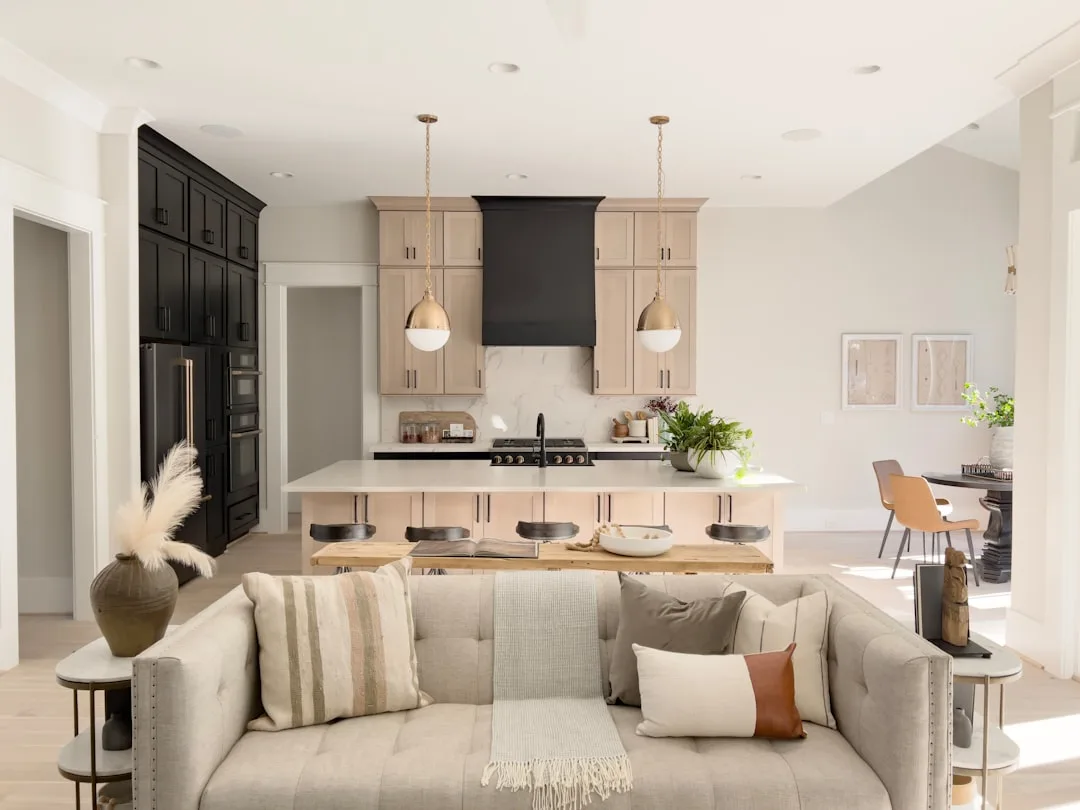
Most rooms don’t fail because of a small budget — they fail because no one told you that hanging your art two inches lower, pulling your sofa off the wall, or switching to an odd number of objects on your shelf would do more than a $500 shopping trip ever could. Affordable interior decorating isn’t about spending less on the same things — it’s about understanding that the decisions costing nothing (proportions, ratios, sequencing) do more work than any product ever could. The real decorating secrets aren’t products. They’re proportions, ratios, and sequencing decisions that cost nothing but change everything about how a room reads.
Quick Answer
Most rooms don’t fail because of a small budget — they fail because no one told you that hanging your art two inches lower, pulling your sofa off the wall, or switching to an odd number of objects on your shelf would do more than a $500 shopping trip ever could.
This is the framework professional designers use. And it works whether you’re working with $300 or $3,000.
What a Realistic Budget for Interior Decorating Actually Looks Like
In This Article
- What a Realistic Budget for Interior Decorating Actually Looks Like
- The 70/30 Rule in Decorating: Why Your Room Feels Off Without It
- The 3-5-7 Rule in Decorating: Odd Numbers Are Doing Heavy Lifting in Your Styling
- The Art Hanging Rule Most People Get Wrong
- The Rug Sizing Rule That Most People Underestimate
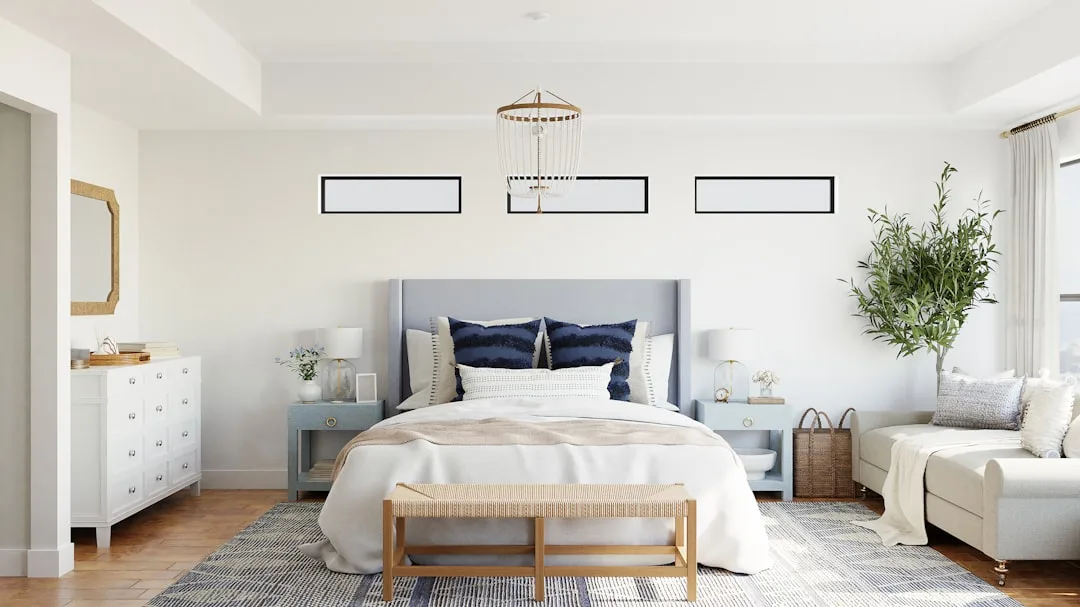
Before you buy a single throw pillow, you need a number. Not a vague sense of “I’ll spend what feels right” — an actual number, broken down by category. Without it, you’ll do what most people do: overspend on accessories and underspend on the pieces that actually matter.
Here’s the industry benchmark most decorators use: spend 10–15% of your home’s value on total furnishings and decor. For a $250,000 home, that’s $25,000–$37,500 spread across every room over time — not a single shopping weekend. According to HomeAdvisor, the average American spends between $1,893 and $11,180 on interior decorating per room, but the median first-time decorator budget lands closer to $800 per room. That’s a realistic starting point.
Here’s what those budgets actually buy:
- $500 per room: One foundational furniture piece (a secondhand solid wood dresser, a new area rug in the right size, or a quality floor lamp) plus strategic rearrangement of what you already own. No new accent pieces — you edit down instead.
- $1,500 per room: A sofa or bed frame as the anchor piece, a correctly sized rug, one good light fixture, and a small allocation ($150–$200) for textiles and styling objects. This is enough to make a room feel complete if sequenced correctly.
- $5,000 per room: Full furniture suite with a mix of investment and budget pieces, window treatments, layered lighting, and room to rotate seasonal accents. This is where most people feel they have genuine creative freedom.
The hidden budget mistake almost every first-time decorator makes: spending $400 on candles, throw pillows, and decorative objects before buying a quality sofa or proper lighting. Accessories are the fashion layer — they sit on top of your foundational pieces. If the foundation is weak, no amount of styling will save it.
The correct allocation splits roughly like this: 70% of your budget on structural pieces (seating, storage, lighting, rugs), 30% on decorative layers. Most people invert this without realizing it.
Actionable takeaway: Before your next purchase, list every item in your room and categorize it as either “foundation” or “fashion.” If your fashion spend exceeds 30% of total room investment, stop buying accessories and redirect the next purchase toward a foundational piece.
The 70/30 Rule in Decorating: Why Your Room Feels Off Without It
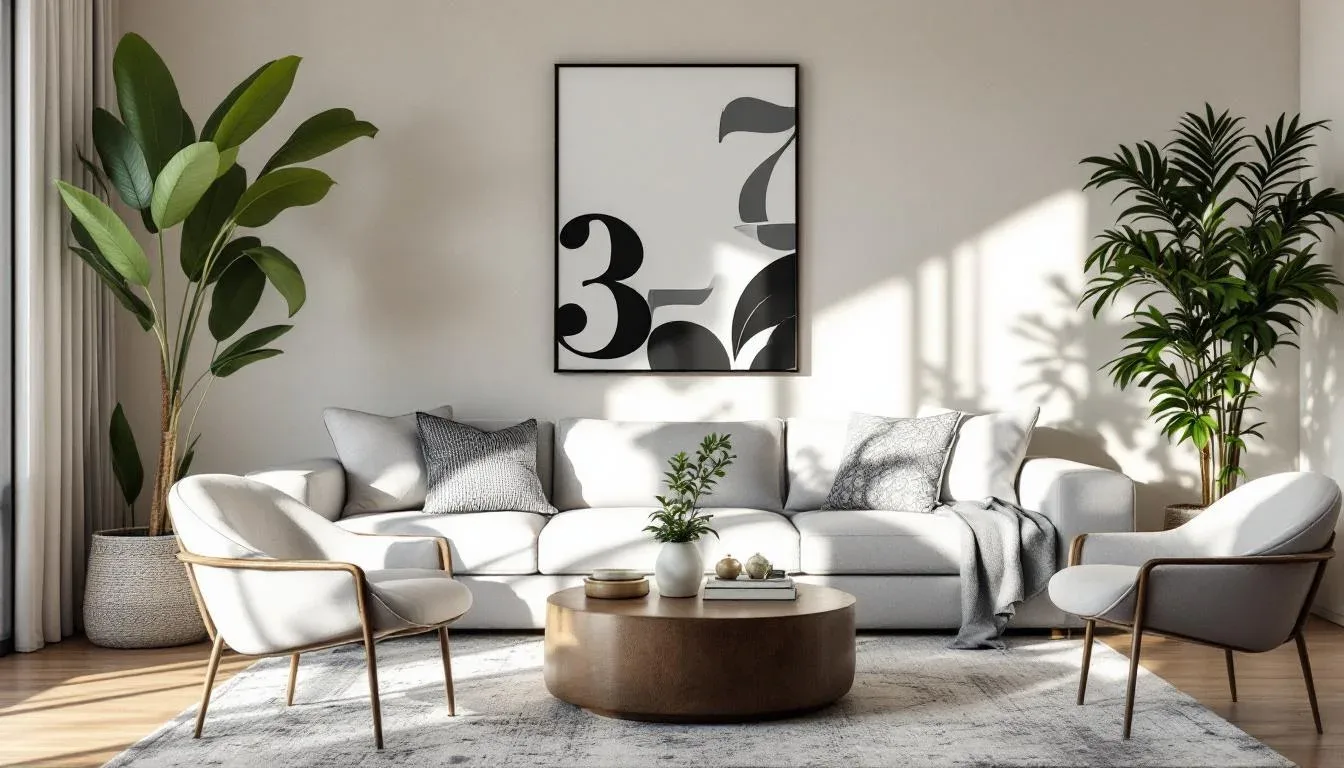
If you’ve ever stood in a room that felt somehow chaotic — not cluttered exactly, just visually exhausting — you were probably looking at a 50/50 color and style split. Two competing aesthetics fighting for dominance. Two equally weighted color families battling across every surface. That’s the visual equivalent of two people talking at the same time.
The 70/30 rule fixes this. Seventy percent of your room’s visual space should be dominated by one color family, material, or stylistic tone. The remaining 30% is your contrast — the accent color, the unexpected texture, the piece that stops the eye. This ratio creates hierarchy, and visual hierarchy is what makes a room feel intentional rather than assembled by accident.
Color psychology research from the Pantone Color Institute shows that rooms with a clear dominant hue are rated as more “calming” and “intentional” by 78% of respondents compared to rooms with equal color distribution. Your eye needs a home base before it can appreciate contrast.
Here’s how to audit your room right now without spending anything:
- Walk in and look for 10 seconds. What color or material grabs your attention first? That’s your current dominant.
- Count competing elements. How many distinct color families appear in upholstery, walls, rugs, and large accessories? If the answer is more than three with relatively equal visual weight, you have a 50/50 problem.
- Identify your natural dominant. Usually it’s the sofa, the rug, or the wall color — whichever has the most surface area.
- Edit the rest to support it. Remove or relocate pieces that compete with the dominant rather than complement it.
How the 70/30 rule interacts with budget: spend proportionally. If your sofa is charcoal (dominant), don’t spend equal money on a competing rust-colored armchair. Spend that chair budget on a rust throw and a rust ceramic vase — both support the accent allocation without challenging the dominant for visual control.
The most common 70/30 violation isn’t mixing styles — it’s mixing two equally strong styles. Mid-century modern and coastal bohemian can coexist beautifully if one of them holds 70% of the room’s visual weight and the other seasons it. When they’re split evenly, neither reads correctly.
Actionable takeaway: Pick your dominant color right now — the one with the most wall, floor, or seating coverage — and make sure every accent piece in the room either matches it, complements it, or deliberately contrasts it in the right 30% proportion. Remove anything that competes.
The 3-5-7 Rule in Decorating: Odd Numbers Are Doing Heavy Lifting in Your Styling
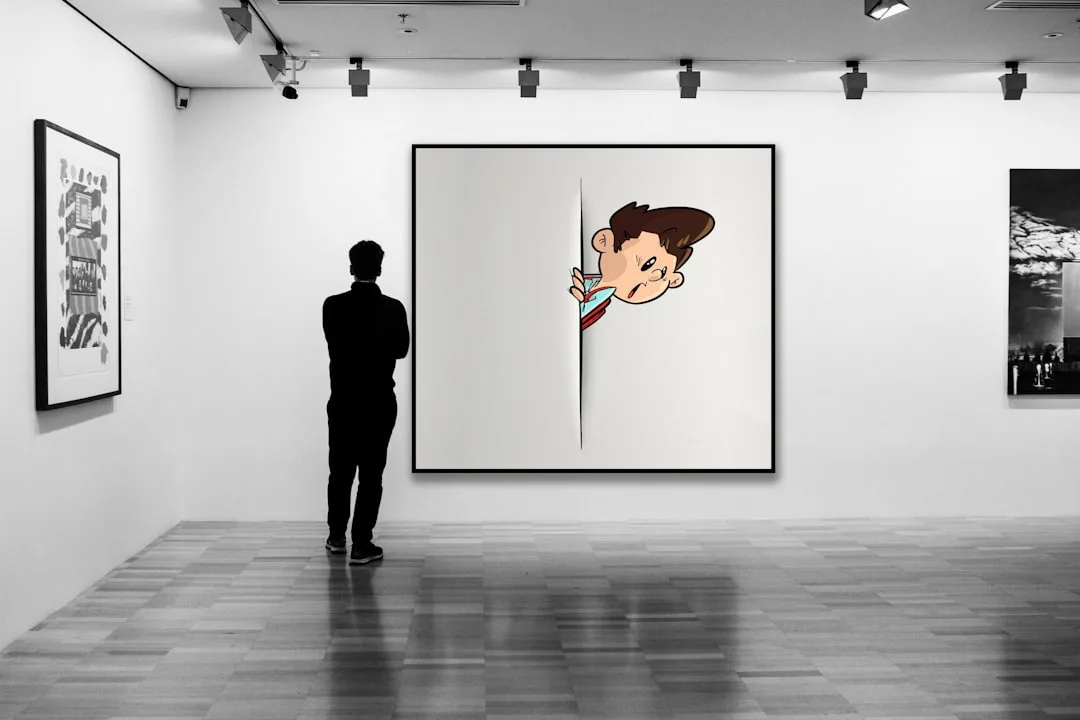
This one costs nothing and you can apply it in the next ten minutes. The 3-5-7 rule states that decorative objects grouped in odd numbers create more visual interest than even groupings. Three objects on a shelf. Five on a mantlepiece. Seven across a console. The moment you shift from two candlesticks to three, or from four books to five, something clicks into place — though most people can’t immediately explain why.
The explanation comes from Gestalt psychology, specifically the Law of Prägnanz: the brain seeks the simplest, most organized interpretation of visual information. Even groupings feel immediately resolved — the eye reads them as static pairs and moves on. Odd groupings create a slight visual tension that keeps the eye engaged, searching for the center of the arrangement. Designers have operationalized this principle into the 3-5-7 framework for decades because it reliably works across every surface type and budget level.
Here’s how to apply it practically:
On a shelf: Group three objects of varying heights — a tall vase, a mid-height stack of books, and a small sculptural object low and to one side. The variation in height is as important as the count. Think triangle: your eye should travel up, across, and back down.
On a console or sideboard: Five objects work best when you vary not just height but also material and texture. A ceramic bowl, a stack of art books, a small framed print leaning against the wall, a trailing plant, and one metallic object. The mix of matte and reflective surfaces does as much work as the count itself.
On a mantlepiece: Seven objects give you enough to tell a visual story without tipping into clutter. Anchor both ends with something tall, work inward with mid-height pieces, and place your smallest or most interesting object slightly off-center. Symmetry reads as formal; slight asymmetry within a structured arrangement reads as curated.
The affordable interior decorating angle here is significant: the 3-5-7 rule lets you do more with fewer objects. Instead of filling a shelf with ten items because the space feels empty, you strategically place five with intention and the shelf reads as considered. That means you spend less, not more, once you understand the principle. A $12 ceramic from a thrift store placed correctly in a group of three will outperform a $60 decorative object dropped onto a crowded surface with no compositional logic.
Common mistakes with the 3-5-7 rule:
- Grouping odd numbers of identical objects. The rule is about count and variety. Three matching white candles of the same height defeat the purpose — the eye resolves them instantly as a set.
- Applying the rule to furniture. This principle is for styling objects on surfaces, not for large furniture placement. Don’t try to put three sofas in a room to satisfy an odd-number instinct.
- Forgetting negative space. The gaps between your grouped objects are part of the composition. Crowding five objects together eliminates the visual breathing room that makes the grouping work.
Actionable takeaway: Pick one surface in your home right now — a shelf, console, or coffee table — and count the objects on it. If the count is even, remove or add one. Then check whether the heights vary and whether you have at least two different materials represented. That single adjustment, costing nothing, will change how the surface reads.
The Art Hanging Rule Most People Get Wrong

Sixty percent of all incorrectly hung art hangs too high. The standard rule — and the one professional installers use — is to center artwork at 57 to 60 inches from the floor to the midpoint of the piece. That’s average eye level for a standing adult. Most people hang art at their own eye level while standing with arms raised, which puts the center closer to 68–72 inches. The result: art that floats above your sightline instead of connecting with the room.
The 57-inch rule applies to gallery walls as a group, not to individual pieces. If you’re hanging a cluster of frames, the visual center of the entire arrangement should sit at 57 inches — not each individual frame.
Where the rule bends: Art hung above furniture should maintain a gap of 6–8 inches between the bottom of the frame and the top of the piece below it. If you follow the 57-inch rule but your sofa top lands at 34 inches, you’ll have a 15-inch gap that reads as disconnected. In this case, lower the art until the gap closes to 6–8 inches, even if that puts the center below 57 inches. The relationship between the art and the furniture matters more than the absolute height.
The affordable angle: Rehinging your existing art costs nothing except a second nail hole. Before buying new art because your current pieces feel wrong, try lowering everything by three to four inches and living with it for a week. The percentage of people who report their rooms feeling “more finished” after this single adjustment — with no new purchases — is consistently high among interior design professionals who coach clients through room audits.
Actionable takeaway: Measure the midpoint of your largest wall-hung piece right now. If it sits above 62 inches from the floor, lower it. Do this before buying anything new for the room.
The Rug Sizing Rule That Most People Underestimate
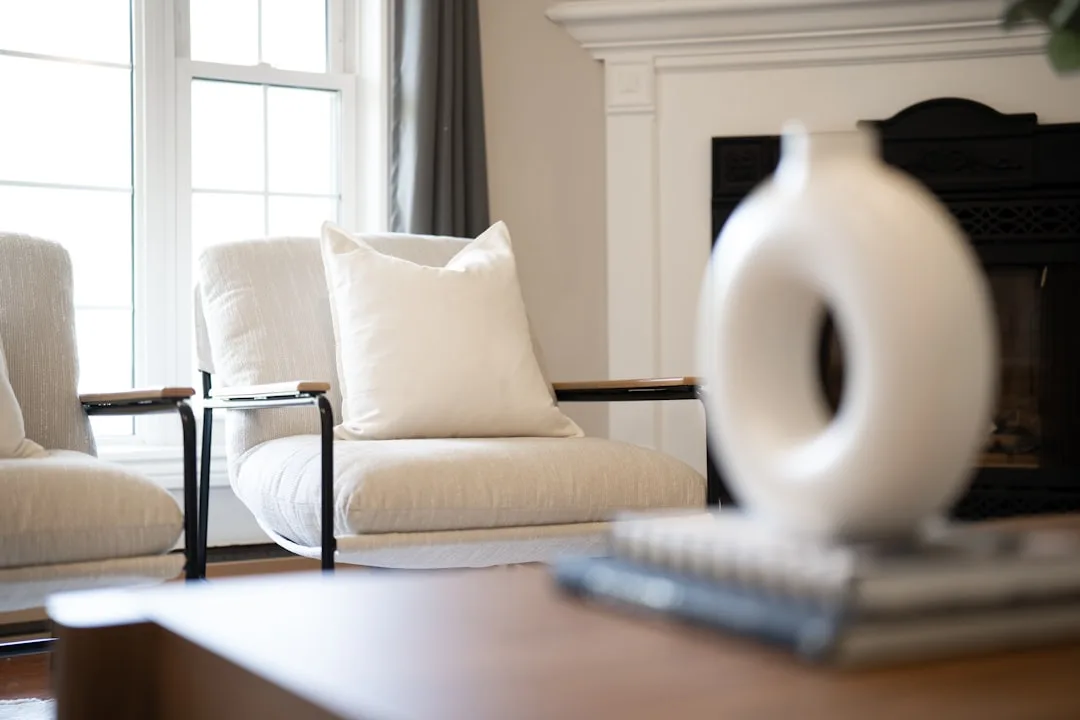
The single most common furniture mistake in living rooms isn’t a bad sofa choice or the wrong coffee table — it’s an undersized rug. A rug that’s too small visually shrinks the room, makes the furniture grouping feel unanchored, and creates the floating-furniture effect that no amount of accessorizing will fix.
The rule: in a living room, all front legs of every seating piece should sit on the rug. If the rug is large enough, all four legs of every piece can sit on it — that’s the ideal. The minimum acceptable standard is front legs on, back legs off. If neither the front nor the back legs of your sofa touch the rug, the rug is too small.
Sizing benchmarks by room:
- Small living room (under 12×12 feet): Minimum 5×8 rug, ideally 6×9
- Medium living room (12×18 feet): Minimum 8×10, ideally 9×12
- Large living room (over 15×20 feet): Minimum 9×12, ideally 10×14 or larger
The affordable interior decorating implication: a larger, cheaper rug almost always outperforms a smaller, expensive one. A $200 jute rug in the correct 8×10 size will make a room feel more pulled-together than a $600 Persian-style rug at 5×7. Size takes priority over quality when budget forces a choice.
Actionable takeaway: Measure your current rug and measure the distance between your outermost seating pieces. If your rug doesn’t extend at least six inches beyond each side of the furniture grouping, it’s undersized. Use painter’s tape to mock up the correct rug size on your floor before purchasing.
Frequently Asked Questions About Affordable Interior Decorating
How do I start affordable interior decorating when my room needs everything at once?
Sequence matters more than speed. Start with the piece that has the most surface area — usually the sofa in a living room or the bed in a bedroom — because it sets the dominant color and scale for everything else. Get that one piece right, then add the rug to anchor it, then lighting, then textiles, then accessories. Buying in this order prevents the most common mistake: spending money on accents before the foundation exists.
What’s the highest-impact, lowest-cost change most rooms need?
Lighting, almost universally. Overhead fixtures on a single switch create flat, institutional light that no amount of furniture or accessories can overcome. Adding one floor lamp and one table lamp to a room — both plugged into switched outlets or smart plugs — creates the layered light that makes spaces feel warm and considered. A $40 floor lamp from a discount retailer placed in the right corner will do more for a room than $200 in throw pillows.
Can affordable interior decorating actually look high-end, or does budget always show?
Budget shows when you prioritize quantity over proportion and placement. A room with three well-chosen, correctly scaled pieces reads as intentional regardless of price point. A room crowded with inexpensive accessories reads as budget-conscious regardless of what individual pieces cost. The design principles in this article — the 70/30 rule, correct rug sizing, proper art height, odd-number groupings — are budget-neutral. They work the same whether your sofa cost $400 or $4,000.
How do I make a small room feel larger without spending much?
Four adjustments, all low-cost: First, pull furniture away from the walls — counterintuitive, but floating furniture creates the illusion of more floor space. Second, use a correctly sized rug rather than a small one; a larger rug unifies the space instead of fragmenting it. Third, hang curtains close to the ceiling and extend the rod 6–12 inches beyond the window frame on each side — this makes windows read larger and draws the eye up. Fourth, reduce the number of objects on surfaces by 30%; visual clutter compresses perceived space more than physical clutter does.
What’s the most reliable way to avoid wasting money on decorating mistakes?
Use painter’s tape before every significant purchase. Tape the footprint of a new sofa on your floor before ordering it. Tape the dimensions of a rug. Tape the frame size of art on your wall. Living with those dimensions for 24–48 hours — walking around them, sitting near them, seeing them in different light — eliminates the most expensive category of decorating mistake: buying pieces that are the wrong scale for the space.
What is the 3-5-7 rule in decorating?
How do I start affordable interior decorating when my room needs everything at once?
What is the 70/30 rule in decorating?
Sequence matters more than speed. Start with the piece that has the most surface area — usually the sofa in a living room or the bed in a bedroom — because it sets the dominant color and scale for everything else. Get that one piece right, then add the rug to anchor it, then lighting, then textiles, then accessories. Buying in this order prevents the most common mistake: spending money on accents before the foundation exists.
What is a realistic budget for interior design?
What’s the highest-impact, lowest-cost change most rooms need?
What is the 3/4/5 rule in decorating?
Lighting, almost universally. Overhead fixtures on a single switch create flat, institutional light that no amount of furniture or accessories can overcome. Adding one floor lamp and one table lamp to a room — both plugged into switched outlets or smart plugs — creates the layered light that makes spaces feel warm and considered. A $40 floor lamp from a discount retailer placed in the right corner will do more for a room than $200 in throw pillows.