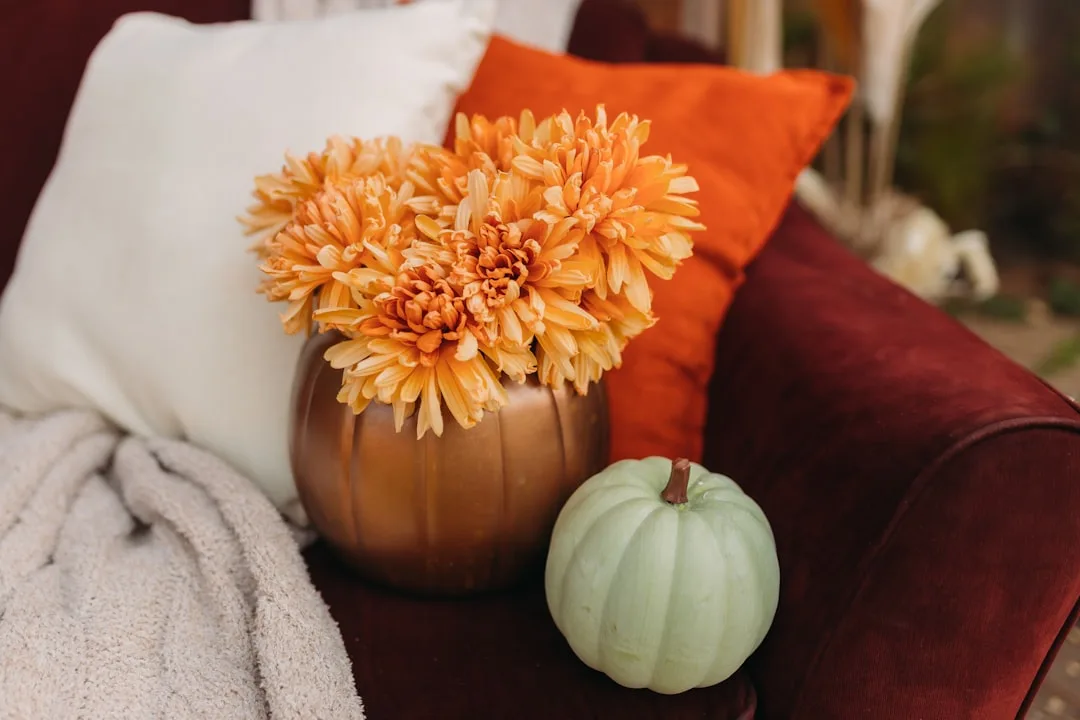
The average American spends over $100 decorating for fall — and most of it ends up looking exactly like what it cost. If you’re trying to figure out fall decor on a budget that actually looks intentional rather than accidental, the problem almost never comes down to how much you spent.
Quick Answer
The average American spends over $100 decorating for fall — and most of it ends up looking exactly like what it cost.
Not because they bought inexpensive things. Because they bought the wrong things, arranged them without intention, and stopped thinking the moment the total hit their budget cap. The result is a home that reads as “decorated for fall” rather than a home that feels like fall — and those two outcomes have almost nothing to do with money.
This is the distinction that separates a $400-looking space from one that cost $40. One is about spending. The other is about thinking. Here’s how to do the second thing well.
What Is the Cheapest Way to Decorate for Fall Without It Looking Cheap?
In This Article
- What Is the Cheapest Way to Decorate for Fall Without It Looking Cheap?
- Budget-Friendly Fall Decor That Doesn’t Follow the Dollar Tree Script
- Can You Build a Fall Centerpiece from Dollar Store Supplies? Yes — If You Follow These Rules
- How to Make Fall Decor Last Through November Without Starting Over
- The Biggest Mistakes That Make Fall Decor Look Cheap (And How to Avoid Each One)
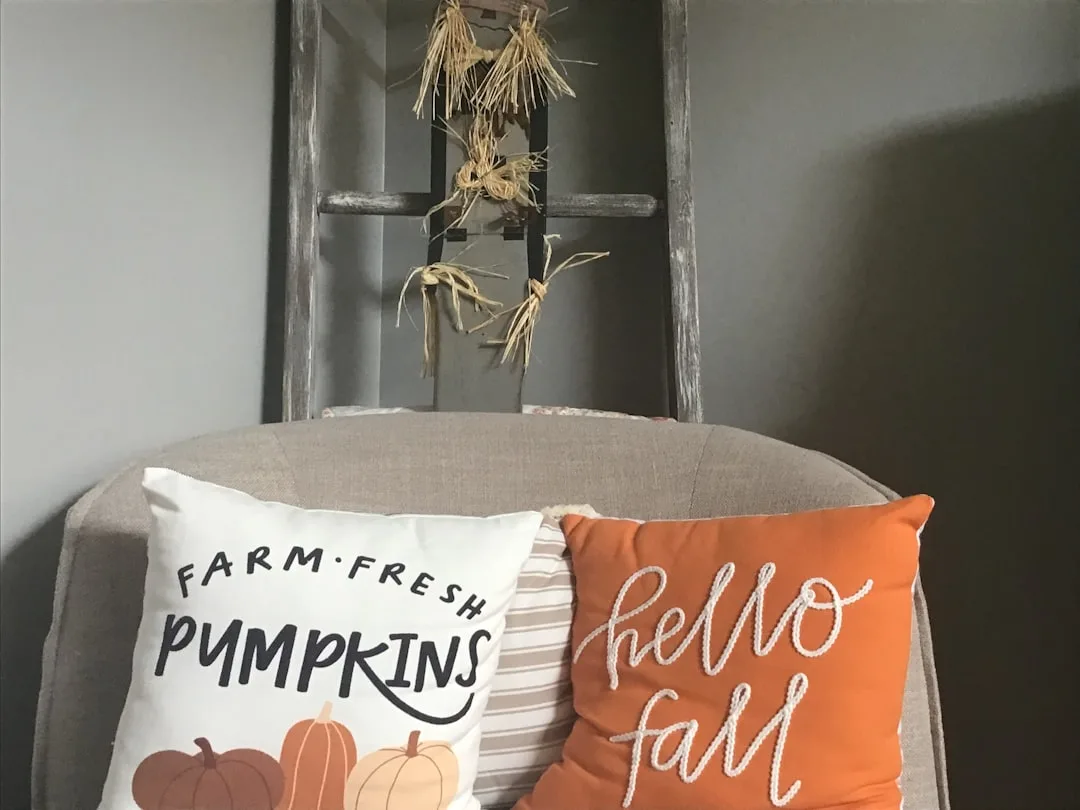
The cheapest way to decorate for fall is to spend less but think harder. That sounds abstract, so here’s what it means in practice: the difference between low-cost and cheap-looking is curation, not price tag.
A 2023 National Retail Federation survey put the average American’s fall and Halloween decorating spend at $108. Most of that money goes toward volume — more pumpkins, more throw pillows, more of whatever was on the end cap at Michael’s. And volume, without editing, is exactly what makes a space look cluttered and cheap.
The most underused free tool in fall decor on a budget is restraint. Experienced interior stylists will tell you that a single perfect arrangement on a clean surface reads as more intentional and expensive than 30 items competing for attention across every horizontal surface in the room.
Before you spend a dollar, run this audit:
- Neutral textiles you already own: Cream, ivory, oatmeal, and dark linen throw blankets and napkins read as fall without any modification.
- Wooden objects: Cutting boards, serving paddles, and raw-edge trivets become fall props the moment you style them with seasonal produce.
- Ceramic and glass vessels: A dark stoneware bowl or an amber glass vase already carries fall’s color story. You don’t need to buy new containers.
- Woven baskets: If you have them, move them from storage to a corner. They’re already doing fall’s heavy lifting.
- Books with earth-tone spines: Pull them from shelves and stack them horizontally on a coffee table as a riser. Free styling prop that adds height and texture.
- Candles in dark or neutral holders: Taper candles in black, ivory, or rust tones signal fall immediately without a seasonal print or label anywhere on them.
The ‘edit before you add’ principle works like this: clear every surface you plan to style. Look at what’s already there in neutral storage. Then, and only then, identify what’s genuinely missing. Most people discover they need two or three new pieces, not twenty.
That’s how you get a $400-looking result on a $25 budget — not by finding cheaper versions of the same 40 items everyone else is buying, but by choosing fewer, better-placed ones.
The Color Palette Problem Nobody Talks About
One of the most reliable reasons a fall setup reads as cheap is palette chaos. Most budget fall decor comes pre-packaged in orange, black, and yellow — the Halloween color story — even when you’re going for harvest or cozy-autumn. These saturated, high-contrast tones are difficult to make look sophisticated unless you’re intentionally leaning into a graphic, graphic-design-inspired aesthetic.
A more elegant fall palette pulls from:
- Warm neutrals: Oatmeal, flax, cream, and natural linen
- Muted earth tones: Terracotta, rust, ochre, and tobacco brown
- Deep naturals: Forest green, burgundy, and dried-leaf brown
- Organic textures: Raw wood, unbleached cotton, dried grasses, and rough ceramic
If you’ve already bought orange plastic pumpkins and shiny black ribbon, the problem isn’t the objects themselves — it’s that they’re fighting your other colors. Group the saturated items together or move them to spaces where they’re contextually appropriate (a front porch leans into Halloween more naturally than a living room bookshelf) and let your interiors breathe in muted tones.
Actionable takeaway: Before opening a single shopping app, walk through your home with a box. Pull every existing neutral textile, wood object, and ceramic vessel you own. Stage those first. Buy only what’s still genuinely missing.
Budget-Friendly Fall Decor That Doesn’t Follow the Dollar Tree Script
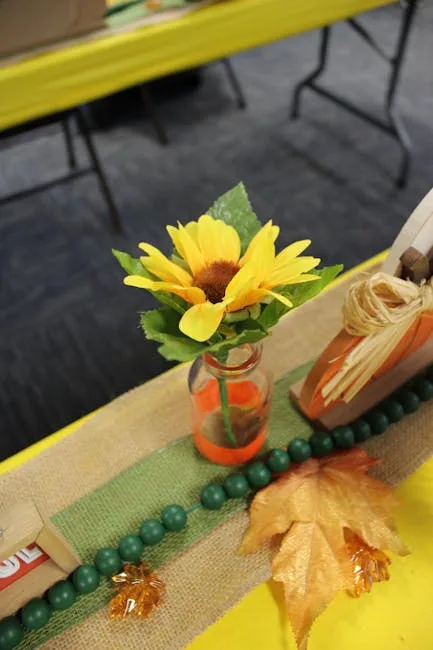
Every competitor will send you to the same three places: Dollar Tree, Amazon, and your local Goodwill. That’s not wrong — but it’s not the whole picture, and it misses the sources where the actual visual quality lives at the same price point.
Facebook Marketplace and Buy Nothing groups are your first stop, not your fallback. Every September, people offload entire seasonal decor collections — full sets of ceramic pumpkins, wicker trays, lanterns, and even quality faux wreaths — because they’re moving, downsizing, or just rotating styles. You’ll find pieces that retail for $30–$80 for free or under $5, and they won’t look like they came from the same factory run as everything else on your block.
The grocery store produce section is a legitimate design source that most decorating guides barely mention. Gourds, sugar pumpkins, pomegranates, dried corn, and artichokes cost $1–$5 each and outperform faux alternatives on every visual metric that matters: texture, color variation, and the kind of organic imperfection that reads as sophisticated rather than mass-produced. A real sugar pumpkin at a farmers market or grocery store runs $2–$5, photographs better than any plastic version, and composts when you’re done. A faux pumpkin from Dollar Tree costs $1.25–$4, looks flat under real light, and ends up in a landfill.
For ceramic, glass, and woven pieces with actual character, Goodwill Outlet stores — also called by-the-pound stores — are where you find goods that didn’t sell at regular Goodwill locations. You pay per pound, not per item. A ceramic crock that would cost $28 at HomeGoods might weigh half a pound and cost you $0.89.
Estate sales, particularly those in older neighborhoods, are rich with amber glass, dark stoneware, and handmade pottery that fits fall’s palette naturally because it was made before color trends became seasonal marketing campaigns.
One more reframe worth internalizing: neutral home goods you buy year-round are fall decor on a budget with good timing. Linen napkins in natural flax tones, wood-handled cheese knives, amber drinking glasses — buy these once, use them always, and they carry fall effortlessly when you pull them forward in September.
When craft stores are unavoidable, use their 40–50% off single-item coupons strategically. One quality anchor piece — a larger lantern, a real wirework wreath form, a substantial ceramic vessel — bought at half price beats ten mediocre items from a bulk haul.
What to Actually Buy When You Have $30 or Less
If your audit left you with genuine gaps, here’s how to allocate $30 or less with precision:
- $0–$5: One or two real gourds or a small sugar pumpkin from a grocery store or farmers market. These do more visual work than anything plastic at the same price.
- $1–$3: A bundle of dried grasses or wheat stalks from a craft store using a coupon. One bundle split into two smaller arrangements doubles your coverage.
- $3–$6: A bag of pillar candles in ivory, rust, or dark brown from a dollar store or discount bin. Candlelight at dusk is one of the most effective and cheapest fall atmosphere tools available.
- $5–$10: One dark ceramic or stoneware vessel from Goodwill or a thrift store. Look for matte finishes, earthy glazes, and organic shapes over anything glossy or novelty-shaped.
- $5–$12: A single quality throw pillow cover (not a pillow) in a textured, muted fall tone. Covers are cheaper than pillows and swap over any standard insert you already own.
Total: under $30. Result: a fall setup with real texture, organic variation, and zero plastic orange.
Actionable takeaway: Check Facebook Marketplace and your nearest Buy Nothing group before spending anything. Search “fall decor,” “harvest decor,” and “seasonal” — then browse the free category. Do this first.
Can You Build a Fall Centerpiece from Dollar Store Supplies? Yes — If You Follow These Rules
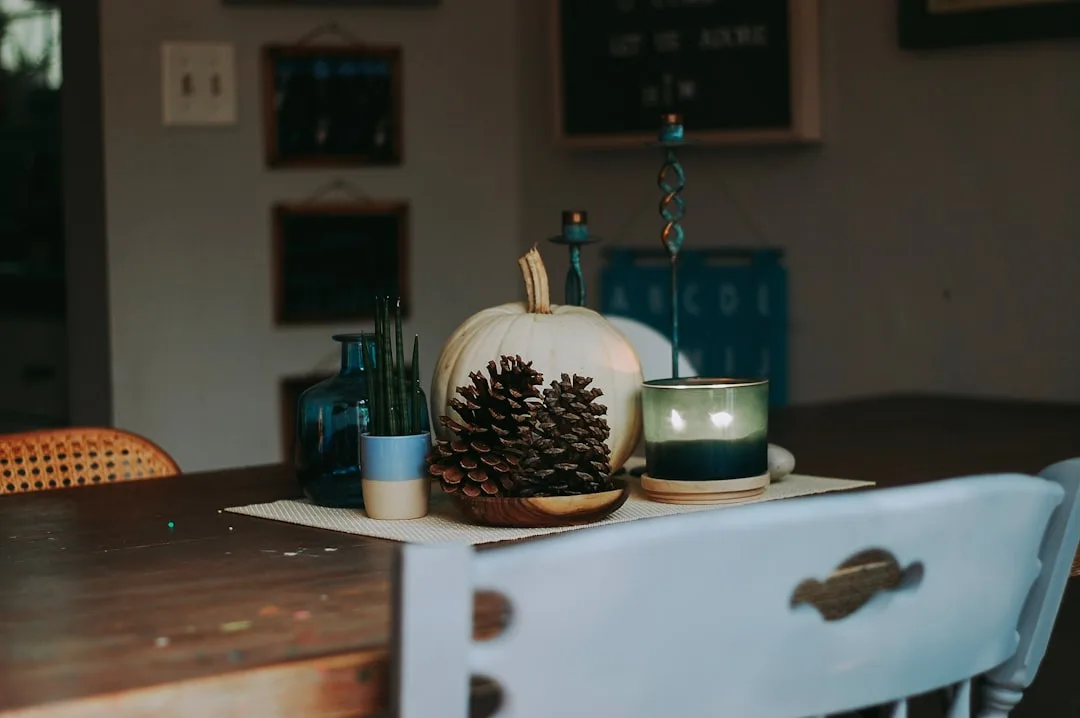
Yes, you can absolutely build a fall centerpiece from Dollar Store supplies. But the centerpiece won’t succeed because of what you bought. It’ll succeed because of how you arranged it — and most people skip that part entirely.
Interior stylists charge $150–$400 to design a single styled tablescape. The physical materials in those arrangements often cost under $20. What you’re paying for is the application of design principles, not expensive product. Here’s how to apply those principles yourself.
The three-layer centerpiece formula:
- Anchor layer: One large, dominant piece — a substantial pumpkin, a dark ceramic bowl, a lantern. This establishes scale and gives the eye a place to land.
- Mid-layer: Two to four smaller supporting pieces — mini gourds, pinecones, small candles, a bundle of cinnamon sticks. These create depth without competing with the anchor.
- Detail layer: The finishing touches — a few dried botanicals, a ribbon or loose twine, a single taper candle in a brass holder. These add texture and intentionality.
Common Centerpiece Mistakes That Signal “Budget”
Even with the right formula, certain habits immediately undercut the result. Avoid these:
- Symmetry that’s too perfect: Real, organic arrangements are slightly asymmetrical. Perfectly mirrored left-right setups read as artificial and retail-display.
- Everything at the same height: Vary elevation deliberately. Stack a cutting board under your anchor piece, or use a stack of books beneath a tray to raise the whole arrangement.
- Matching sets from the same product line: When every piece obviously came from the same display, the arrangement reads as a packaged kit rather than a curated collection. Mix sources intentionally.
- Too much of one material: All faux, all plastic, or all ceramic reads as monotonous. Mix organic, ceramic, textile, and metal elements within a single arrangement.
- Glossy surfaces under warm lighting: Shiny plastic and metallic gold catch light in ways that emphasize their artificial origin. Matte, raw, and textured finishes photograph and read better in both daylight and candlelight.
How to Style a Fall Mantel on Almost Nothing
The mantel is the most visible fall decor surface in most living rooms, which means it’s also where cheap choices are most obvious. The good news: it’s a vertical surface, which means height does most of the work and you need fewer objects than you think.
A functional mantel formula for fall decor on a budget:
- One large vertical element at one end: a mirror you already own, a framed piece with dark or muted tones, or a tall dried branch in a floor vase.
- One mid-height cluster in the center or slightly off-center: a grouping of candles at varying heights, or a small ceramic vessel with dried stems.
- Ground-level texture at the base: a few gourds placed directly on the mantel shelf, a folded linen textile draped at one corner, or a small stack of books with earth-tone spines.
- Negative space: Leave at least 30–40% of the mantel surface empty. That open space makes the occupied areas read as intentional rather than crammed.
Total cost to execute this formula if you already own the mirror and candles: $5–$12 for the gourds and dried stems.
How to Make Fall Decor Last Through November Without Starting Over
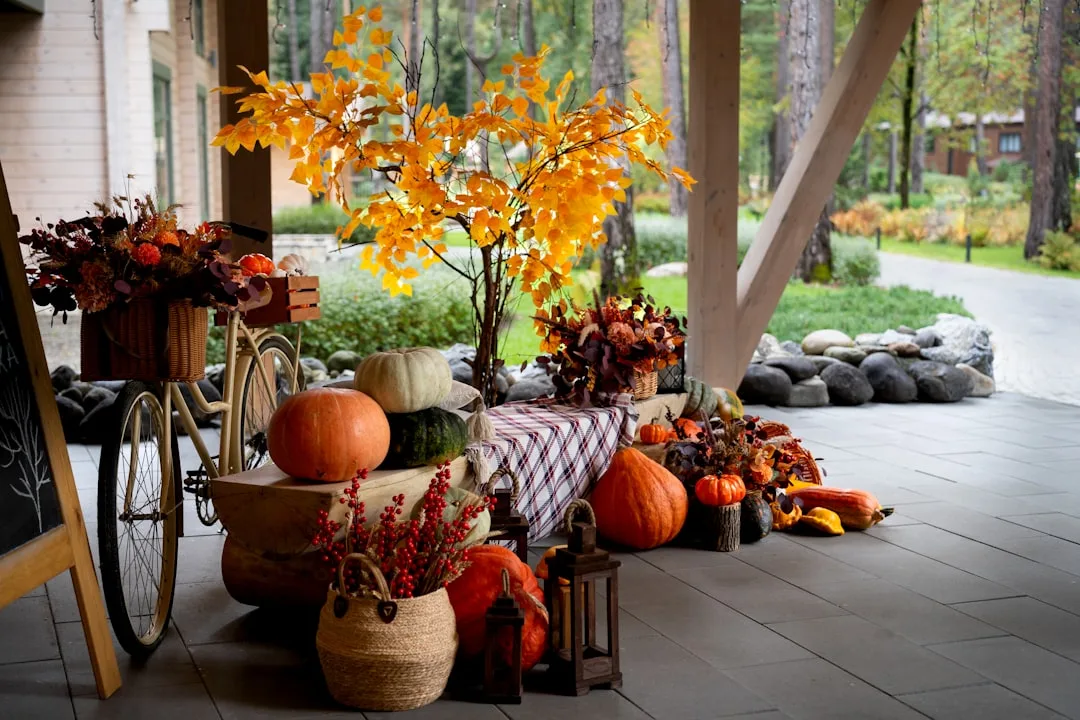
One of the hidden costs in fall decorating is the two-phase problem: people set up for fall in September, then feel like they need to completely replace everything for Halloween in October, and again for Thanksgiving in November. That’s three decorating rounds on one seasonal budget — and it’s entirely optional.
The solution is a layered approach that uses a permanent fall base with swappable seasonal accents.
Your permanent fall base (stays September through November):
- Neutral textiles: linen throws, oatmeal pillow covers, natural-fiber table runners
- Organic vessels: dark ceramic bowls, amber glass, raw wood trays
- Dried botanicals: pampas grass, wheat bundles, dried eucalyptus — none of these are date-specific
- Candles in neutral holders: ivory, rust, or black
Swappable Halloween layer (add in mid-October, remove November 1):
- Small black ceramic or papier-mâché skulls or bats placed within existing arrangements
- Deep purple or black taper candles swapped into holders already on display
- One statement piece: a carved pumpkin outside, a single dramatic wreath on the door
Swappable Thanksgiving layer (swap November 1):
- Remove the Halloween accent pieces
- Add a simple dried flower or berry arrangement to the table centerpiece
- Pull forward any amber or gold glassware you own
- Add a linen or cotton table runner in natural flax for the dining table
The base costs money once. The accent layers cost $5–$15 each. You’re not decorating three times — you’re editing once in each direction.
This is one of the most practical applications of fall decor on a budget thinking: buy for longevity, not for the moment.
The Biggest Mistakes That Make Fall Decor Look Cheap (And How to Avoid Each One)
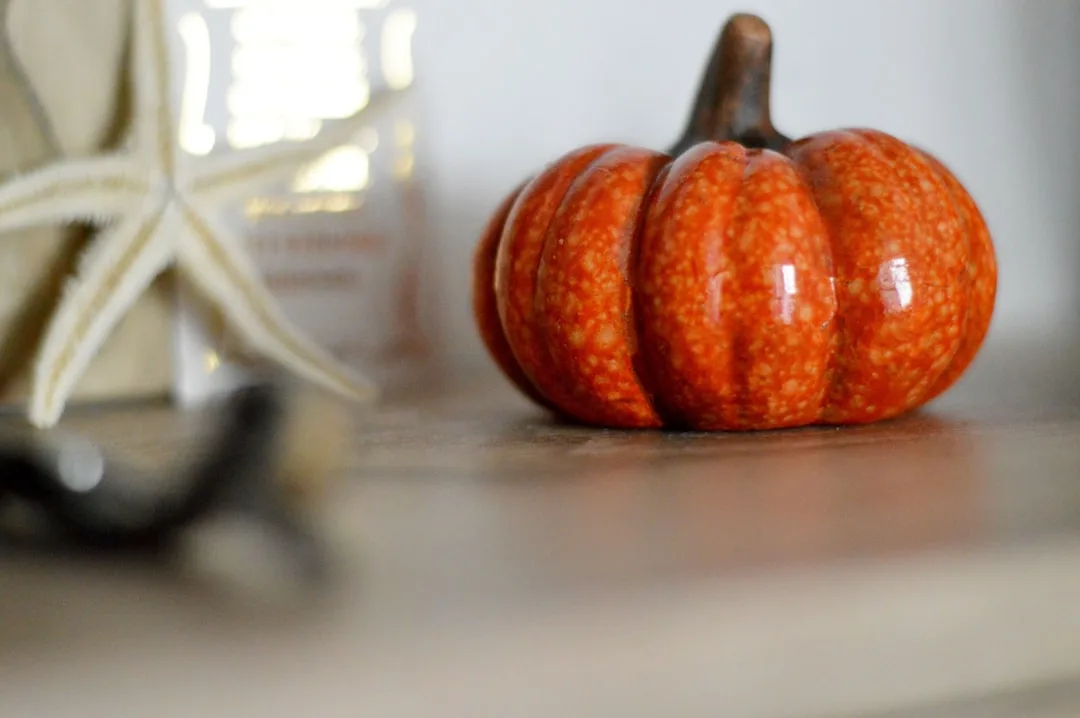
Most cheap-looking fall setups share a recognizable set of problems. Recognizing them is faster than learning every principle from scratch.
Mistake 1: Buying by category instead of by palette
People buy “fall things” — a pumpkin, a wreath, a pillow — without checking whether the specific tones in each piece actually work together. An orange pumpkin, a burgundy wreath, and a yellow pillow are all technically fall colors that fight each other visually. Before buying anything, decide on two to three specific tones and filter every purchase through that lens.
Mistake 2: Ignoring scale
A small arrangement on a large surface disappears. A large arrangement on a small surface overwhelms. Scale your anchor piece to the surface it’s sitting on — a dining table centerpiece should be roughly one-third the length of the table; a coffee table arrangement should leave walking clearance on all sides.
Mistake 3: Treating every surface as equally important
Not every surface needs seasonal decoration. Spreading thin fall decor across every available horizontal surface in a room creates visual noise without visual impact. Choose two or three focal surfaces — a mantel, a dining table, an entryway console — and style those well. Leave the rest alone.
Mistake 4: Buying everything from the same store
When all your pieces share the same aesthetic DNA — same finish, same proportions, same color saturation — the result looks like a store display rather than a home. Mix sources deliberately: one item from a thrift store, one real organic element, one item you already owned, one new purchase.
Mistake 5: Skipping the entryway
The entryway is the first and last thing guests see, and it’s often the most neglected space in budget fall decorating. You don’t need much: a simple doormat, one or two gourds flanking the door, and a wreath that isn’t exclusively orange. That’s a complete entry that reads as intentional for under $20.
Mistake 6: Not editing after you style
Style your arrangement, then step back and look at it from the distance you’d actually view it from — across the room, not standing over it. Remove one item. Look again. Most arrangements improve with subtraction.
Frequently Asked Questions About Fall Decor on a Budget
How much should I actually spend on fall decor if I want it to look good?
There’s no minimum spend required for a well-styled fall home. Most homes already contain 60–80% of what they need — neutral textiles, wood objects, ceramic vessels — and simply need those items pulled forward and arranged intentionally. If you’re genuinely starting from nothing, $30–$50 spent thoughtfully on one or two real organic elements, a quality thrifted vessel, and a bundle of dried botanicals will outperform $150 spent on a bulk cart of seasonal items from a big-box store.
What’s the difference between fall decor that looks expensive and fall decor that just looks like a lot of money was spent?
Expensive-looking fall decor is characterized by restraint, texture variation, organic elements, and a coherent palette. Decor that just signals “money was spent” tends to involve volume, matching sets, shiny surfaces, and obvious brand-recognition pieces. The first is achievable on any budget. The second costs money but doesn’t necessarily look better.
Can real pumpkins and gourds actually replace faux ones for fall decor on a budget?
Yes — and in most cases they outperform faux options visually. Real gourds have color variation, surface texture, and an organic quality that mass-produced faux versions can’t replicate. They’re also typically cheaper: a real sugar pumpkin costs $2–$5 and lasts four to eight weeks. The practical limitation is lifespan, but for a fall decorating season that runs October through early November, they’re entirely adequate and compost when you’re done.
What are the best free or near-free sources for fall decor?
In order of visual quality per dollar:
- Nature: Fallen branches, dried seed pods, pine cones, and autumn leaves arranged in a bowl or vase cost nothing and outperform almost any manufactured alternative on texture and authenticity.
- Buy Nothing groups and Facebook Marketplace: Free or near-free seasonal pieces that other people are cycling out of their homes every September.
- Your own home: Neutral textiles, wood objects, and ceramic vessels already in your possession, repositioned and styled intentionally.
- Goodwill Outlet / by-the-pound stores: Quality ceramic, glass, and woven pieces at prices that are effectively rounding errors.
- Grocery store produce section: Real gourds, pomegranates, artichokes, and dried corn at $1–$5 per item.
How do I make fall decor work in a small apartment without it feeling cluttered?
In small spaces, the edit-before-you-add principle becomes even more important. Choose one or two focal surfaces — a dining table and an entryway console, for example — and style only those. Avoid distributing small seasonal items across every available surface; it creates noise without impact. Prioritize vertical elements (a tall dried branch, a wreath on the door) over horizontal spread, and lean heavily on textiles — a single fall-toned throw and two pillow covers can transform a living room without taking up any surface space at all.
Is it worth buying fall decor after the season to use next year?
For non-organic, non-trend-specific items, yes. Dark ceramic vessels, amber glass, natural-fiber baskets, and linen textiles in neutral tones are worth buying at post-season clearance (typically 50–70% off) because they’re usable year after year and don’t read as specifically “fall 2024.” Avoid buying trend-driven pieces or anything with explicit seasonal graphics — those will look dated by next September regardless of how much you paid for them.
What is the cheapest way to decorate for fall?
How much should I actually spend on fall decor if I want it to look good?
What are some budget friendly decor ideas?
There’s no minimum spend required for a well-styled fall home. Most homes already contain 60–80% of what they need — neutral textiles, wood objects, ceramic vessels — and simply need those items pulled forward and arranged intentionally. If you’re genuinely starting from nothing, $30–$50 spent thoughtfully on one or two real organic elements, a quality thrifted vessel, and a bundle of dried botanicals will outperform $150 spent on a bulk cart of seasonal items from a big-box store.
Can I create a fall centerpiece from Dollar Store supplies?
What’s the difference between fall decor that looks expensive and fall decor that just looks like a lot of money was spent?
How to decorate for fall without being tacky?
Expensive-looking fall decor is characterized by restraint, texture variation, organic elements, and a coherent palette. Decor that just signals “money was spent” tends to involve volume, matching sets, shiny surfaces, and obvious brand-recognition pieces. The first is achievable on any budget. The second costs money but doesn’t necessarily look better.