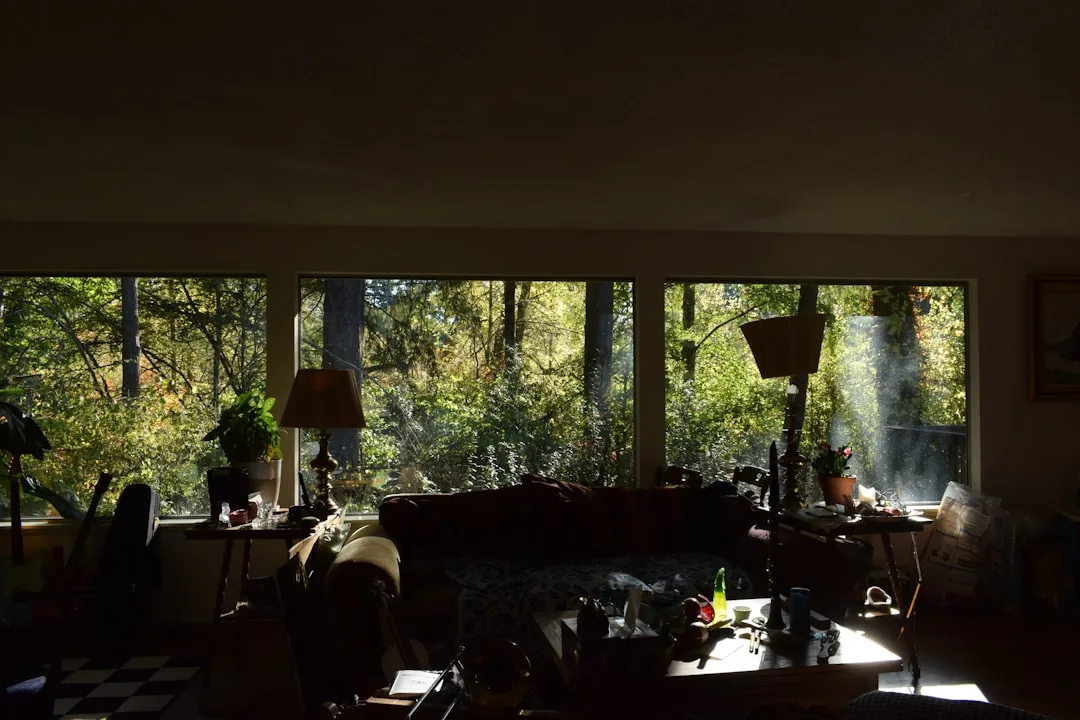
Interior photographers never shoot a room at full brightness — and the reason reveals something most homeowners spend years getting wrong about their own spaces. The single variable separating a room that photographs like a catalog from one that looks like a real estate listing is dimmer switch aesthetic home lighting control: the ability to drop ambient levels, shape warmth, and create visual hierarchy that flat, fixed brightness can never produce. That’s the thing nobody puts in the furniture guide.
Quick Answer
Interior photographers never shoot a room at full brightness — and the reason reveals something most homeowners spend years getting wrong about their own spaces.
Walk onto any professional shoot and you’ll find the overhead fixtures off, the photographer controlling every light source individually, and the ambient level dropped to something that would feel almost too dim if you were trying to read there. They’re not doing this for drama. They’re doing it because a room photographed at full overhead brightness looks exactly like what it is: a box with stuff in it. Lower that light by 60%, add a warm secondary source, and suddenly the texture on the sofa cushions reads, the shadow beneath the coffee table creates ground, and the room looks like it has been designed by someone who cared about it.
Most homeowners never get this because nobody tells them directly. Paint guides, furniture buying tips, rug size calculators — there’s endless content about every design decision except the one that determines how every other decision actually looks. Dimmable lighting isn’t an upgrade. It’s the operating system your entire interior runs on.
Why Fixed Brightness Is the Silent Killer of Beautiful Interiors
In This Article
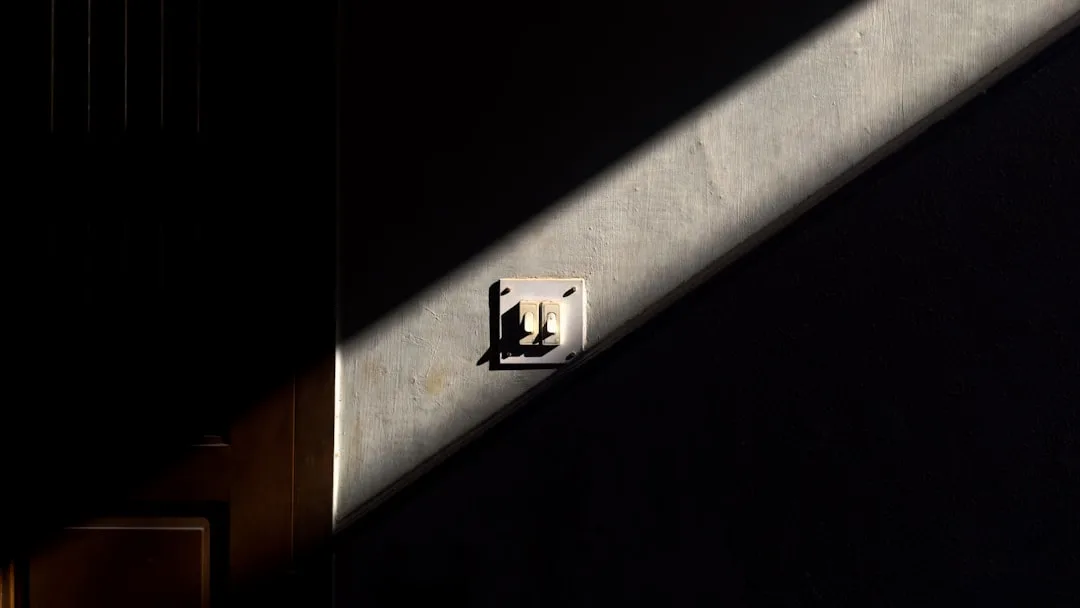
Flat, fixed light is the decorator’s worst enemy — and it’s built directly into most homes by default. When a builder installs a single overhead fixture on a non-dimmed switch and calls it done, they’ve made a structural decision that will undermine every piece of furniture, every paint color, and every finish in that room for as long as someone lives there. The problem isn’t the fixture. It’s the rigidity.
Fixed-brightness lighting flattens texture. A brushed linen sofa under full overhead fluorescent reads as an amorphous blob of fabric. Under a dimmed incandescent-temperature source from a lower angle, the same sofa has depth, weave, and character. Paint colors shift in the same way — the greige that looked sophisticated in the store sample becomes a flat, washed-out nothing under 500 lux of overhead white light. Expensive finishes stop reading as expensive. Layered textiles lose their dimension. The room looks finished but doesn’t feel designed.
The human eye processes space differently at different light levels, and this isn’t subjective preference — it’s physiology. At high lux levels, the eye spreads its attention evenly across a space. Drop the light and the eye starts selecting — moving toward warmer, brighter points and treating darker zones as depth and recession. This is what gives a room a sense of dimension. Without dimming control, you cannot create this effect. You’re stuck presenting every surface at equal weight, which is visually the same as no hierarchy at all.
Research from the Lighting Research Center at Rensselaer Polytechnic Institute found that lighting conditions account for up to 35% of perceived room quality in occupant surveys — outranking both paint color and furniture style. That number stopped me the first time I encountered it, because I’d spent years watching clients agonize over Benjamin Moore versus Farrow & Ball while ignoring the $25 dimmer that would have made the paint color matter.
There’s also a deeper psychological layer here. Prospect-refuge theory — drawn from environmental psychology — holds that humans are hardwired to feel safest when they can see without being fully exposed. Lower light levels, particularly warm lower light, activate that refuge sensation at a neurological level. This is why candlelit rooms feel intimate and institutional overhead lighting feels vaguely stressful. Fixed bright light signals exposure. Variable light signals control. Your nervous system is taking notes whether you are or not.
Takeaway: Before buying another throw pillow, ask whether your room’s existing lighting can be dimmed. If it can’t, every other purchase decision is being made at a structural disadvantage.
Can I Just Add a Dimmer Switch to My Light Fixture?
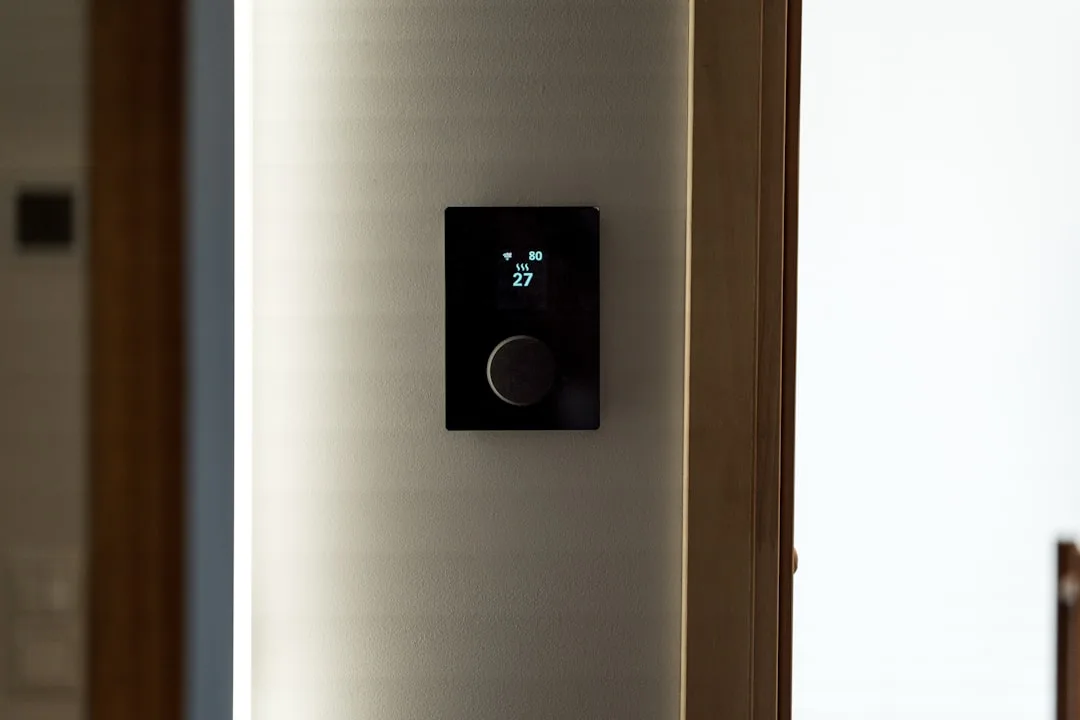
Short answer: probably yes. But the probably is doing a lot of work in that sentence.
The most common concern people bring to this question is wiring — specifically whether their walls can accept a dimmer without a full electrical overhaul. For most homes built after roughly 1980, the wiring itself isn’t the constraint. Standard dimmers replace a regular single-pole switch the same way you’d swap a light switch: power off at the breaker, three connections, fifteen minutes if you’re not overthinking it. The complication isn’t the wall. It’s everything attached to the switch.
Here’s the hierarchy of things that actually matter:
- Bulb type is almost always the first gating factor. Incandescent and halogen bulbs are compatible with nearly any dimmer on the market. LED and CFL bulbs have compatibility requirements that vary by brand, model, and the specific dimmer you’re pairing them with. More on this in the next section.
- Load rating matters more than most people realize. Every dimmer carries a wattage rating — typically 150W, 300W, or 600W for residential units. The National Electrical Code requires that dimmers be rated for the load they control, and industry practice recommends staying at 80% of rated capacity for safety and longevity. If you have a 600W-rated dimmer controlling 500W of bulbs, you’re at 83% — borderline. Build in room to breathe.
- Ceiling fans with integrated light kits are the most common trap I’ve seen. Standard dimmers do not belong on fan circuits. The dimmer creates voltage fluctuations that interfere with fan motor speed control — causing audible buzzing, erratic fan behavior, and in some cases motor damage over time. Fans require dedicated fan-speed controls, not light dimmers, even when they have a built-in light kit.
- Three-way switch configurations — where one light is controlled from two wall locations — require a three-way dimmer specifically designed for that wiring setup. Dropping a standard single-pole dimmer into a three-way configuration creates a malfunction and a potential fire risk. This is not a maybe. Check your setup before you buy.
- Neutral wire availability becomes relevant specifically if you’re installing a smart dimmer. Most traditional analog dimmers don’t require the neutral wire. Most smart dimmers do. Open your switch box and check before ordering a Lutron Caseta or Leviton Decora Smart — if there’s no neutral wire present, you’ll need to either run one or find one of the few smart dimmer models that work without it.
Takeaway: Check your bulb type, count your wattage load, verify your switch configuration (single-pole vs. three-way), and open the box to look for a neutral wire before purchasing anything.
Do I Need a Special Dimmer Switch for LED Lights?
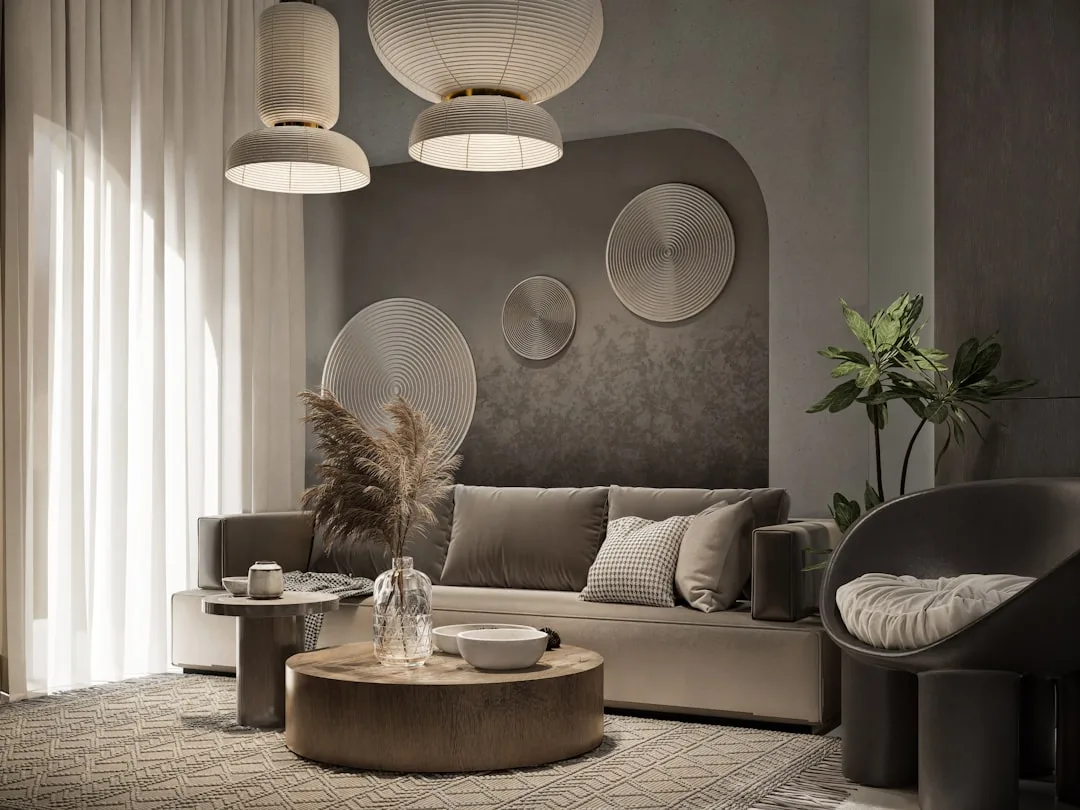
Yes. And the specific reason matters — because understanding it will save you from buying the wrong “LED-compatible” dimmer and ending up with a fixture that flickers at 40%, buzzes audibly at 70%, or drops abruptly from bright to off with no useful range in between.
Traditional incandescent bulbs dim smoothly because they operate on a simple resistance principle — less voltage means a cooler filament, which means less light. The relationship is nearly linear. LED drivers don’t work that way. An LED driver is a small electronic circuit that converts AC current to the DC voltage the diode needs, and most LED drivers were not designed with dimming in mind. When you attach a standard leading-edge incandescent dimmer to an LED, you’re sending a waveform the driver wasn’t engineered to interpret. The result is usually one or more of: flicker at low levels, a narrow usable dimming range (bright at 80%, off at 20%, nothing smooth in between), audible buzz from the fixture, audible buzz from the dimmer itself, or random dropout where the light shuts off entirely before you’ve reached the bottom of the range.
The solution is a trailing-edge dimmer — also marketed as an ELV (electronic low-voltage) dimmer. Trailing-edge dimmers cut the trailing end of the AC waveform rather than the leading edge, which creates a gentler signal that LED drivers handle more predictably. Most major manufacturers now label their LED-compatible dimmers clearly, but “LED-compatible” alone is not enough information. You need to verify compatibility with the specific bulb brand and model you’re using, because LED driver design varies significantly between manufacturers and even between product lines from the same manufacturer.
Lutron maintains a publicly searchable compatibility database at their website. Leviton does the same. If you’re installing dimmer switch aesthetic home lighting in a room with high-end LED fixtures you’ve already purchased, cross-referencing the specific bulb against the dimmer’s compatibility list before installation is worth the fifteen minutes it takes. It’s far faster than troubleshooting flicker after the fact.
A few additional specifics worth knowing:
- Minimum load requirements: Many LED dimmers specify a minimum wattage load to function correctly — often 25W or 40W. If you’re dimming a single LED downlight that draws 8W, the dimmer may behave erratically because it’s operating below its designed minimum. The fix is either adding more bulbs to the circuit or choosing a dimmer with a lower minimum load rating.
- Dimmer curve adjustment: Several higher-end dimmers (Lutron’s Diva and Caseta lines, for example) include a small trim screw or app setting that lets you calibrate the low-end cutoff point. This prevents the abrupt dropout issue where the light extinguishes before you’ve reached the bottom of the slider. If flicker-free dimming across a full range is important to you — and for aesthetic purposes it usually is — look for this feature specifically.
- Retrofit versus purpose-built LED fixtures: Retrofit LED bulbs (screw-base LEDs in standard sockets) have more dimming variability than purpose-built LED fixtures with integrated drivers. If dimmer switch aesthetic home lighting performance is a priority, integrated LED fixtures designed for dimming from the ground up will almost always outperform a retrofit bulb in the same socket.
Takeaway: Match your dimmer to your specific LED bulb using the manufacturer’s compatibility list. Look for trailing-edge or ELV-rated dimmers, check minimum load requirements, and consider a model with adjustable low-end trim if you want smooth, full-range dimming performance.
How Dimming Changes the Aesthetic Equation Room by Room
Dimming doesn’t affect every room the same way, and applying it strategically by room function yields better results than treating it as a uniform upgrade across the whole house.
Living rooms are where layered dimmer switch aesthetic home lighting delivers the most visible return. The typical living room has at least three light sources worth putting on separate dimmers: overhead fixtures, table or floor lamps on a switched outlet, and any accent lighting (picture lights, shelf lighting, cove lighting). When each layer can be controlled independently, you have the ability to shift the room from functional afternoon light to evening atmosphere without changing a single piece of furniture. The overhead drops to 20-30%, the floor lamp runs at 60-70%, and the accent layer runs at full — suddenly the room has depth, focal points, and the kind of visual weight that makes people slow down when they walk in.
Dining rooms have the most straightforward dimming logic of any space. The fixture directly over the table should be on a dedicated dimmer, period. Research on dining behavior consistently finds that people eat more slowly, linger longer, and report higher meal satisfaction under warmer, dimmer light. From a purely aesthetic standpoint, a dimmed pendant over a table does more to define the room as a dining space than the pendant’s design does. The light creates the zone.
Bedrooms benefit from dimming at both the overhead level and the bedside lamp level, with an evening preset in the range of 5-15% doing more for sleep quality than most blackout curtain investments. Color temperature matters here more than anywhere else in the house — warm white (2700K or below) at low dimmer levels is genuinely different in its effect on circadian rhythm than cool white at the same lux level. If you’re choosing bulbs for a bedroom on a dimmer, warm white is not an aesthetic preference. It’s the functional choice.
Kitchens are more complex because they serve two opposing functions: task work that benefits from bright, high-CRI light, and social time that benefits from everything that task light destroys aesthetically. The standard solution is a two-circuit kitchen: undercabinet task lighting on one circuit (often left undimmed or on a separate high-end dimmer), and overhead ambient lighting on a second circuit with its own dimmer. When you’re cooking, the task circuit runs at full and the ambient can run at 60-70%. When you’re done, flip it: ambient drops to 20-30%, task lights off, and the same kitchen that looked like a workspace ten minutes ago now reads as part of the living area.
FAQ
Does dimming LED bulbs actually save energy, or does it just reduce brightness?
Both, but not in the same proportion. Dimming an LED to 50% brightness reduces energy consumption, but typically not by 50% — the driver efficiency curve means you’re likely getting somewhere between 40-60% energy reduction at 50% brightness depending on the specific bulb and dimmer combination. The energy savings are real but secondary. The primary reason to dim is aesthetic and physiological, not financial. That said, longer operating life is a genuine secondary benefit: LED bulbs dimmed regularly tend to run cooler, and lower operating temperature correlates with extended driver lifespan.
Can I use a wireless or smart dimmer if my house was built before neutral wires were standard?
Sometimes. A small number of smart dimmer models — Lutron Caseta being the most widely available — are specifically engineered to operate without a neutral wire by drawing a small amount of current through the load circuit. This works reliably with most LED and incandescent loads. The limitation is that very low-wattage LED loads (below roughly 25W total) can cause problems with no-neutral smart dimmers, sometimes resulting in a faint glow from the bulb even when the switch is off. If you’re in an older home without neutral wires and want smart dimming, Lutron Caseta is the most proven solution, but verify the minimum load requirement against what you’re actually controlling.
My dimmer buzzes. Is that a problem with the dimmer or the bulb?
Usually both are contributing. The buzz you hear from a dimmer is typically caused by the vibration of components responding to the chopped waveform the dimmer creates — this is more pronounced with LED loads than incandescent, and more pronounced with cheaper dimmers than quality ones. The fix is usually upgrading to a better dimmer first (Lutron and Leviton’s mid-range and above lines use components that handle this significantly better), then verifying bulb compatibility. Audible buzz from the fixture itself rather than the switch is almost always a bulb-compatibility issue — the LED driver is responding poorly to the dimmer’s signal. Cross-reference both against a compatibility list and the buzz typically resolves.
What’s the right color temperature for a dimmed living room?
2700K is the standard recommendation for living spaces where dimming will be used, and it’s right for a specific reason: as you dim a 2700K bulb, it shifts slightly warmer in perceived tone (mimicking the behavior of a dimming incandescent), which reinforces the intimate, lower-energy atmosphere you’re trying to create. A 3000K or 4000K bulb dimmed to the same level produces a different effect — the cooler baseline temperature doesn’t shift the same way, and the result can feel more like a dimly lit office than a designed room. For dimmer switch aesthetic home lighting in social spaces, 2700K is the consistent starting point. Go warmer (2200K) if you want candlelight-adjacent results; stay at 3000K only if the space doubles as a work area where you need better task clarity at higher brightness levels.
How many dimmer circuits does a well-lit room actually need?
More than most people install, fewer than some lighting designers specify. For a standard living room, three independently dimmable circuits cover most scenarios well: overhead ambient, floor or table lamps via a switched outlet on a dimmer, and any accent or architectural lighting. A dining room usually needs only one well-positioned dimmer on the overhead fixture, with possibly a second for any buffet or accent lighting. The mistake most people make isn’t installing too few dimmers — it’s putting everything on one circuit, which removes all the layering ability that makes the investment worthwhile. Three circuits with one dimmer each outperforms one circuit with the most expensive dimmer on the market.
Does dimming LED bulbs actually save energy, or does it just reduce brightness?
Both, but not in the same proportion. Dimming an LED to 50% brightness reduces energy consumption, but typically not by 50% — the driver efficiency curve means you’re likely getting somewhere between 40-60% energy reduction at 50% brightness depending on the specific bulb and dimmer combination. The energy savings are real but secondary. The primary reason to dim is aesthetic and physiological, not financial. That said, longer operating life is a genuine secondary benefit: LED bulbs dimmed regularly tend to run cooler, and lower operating temperature correlates with extended driver lifespan.
Can I use a wireless or smart dimmer if my house was built before neutral wires were standard?
Sometimes. A small number of smart dimmer models — Lutron Caseta being the most widely available — are specifically engineered to operate without a neutral wire by drawing a small amount of current through the load circuit. This works reliably with most LED and incandescent loads. The limitation is that very low-wattage LED loads (below roughly 25W total) can cause problems with no-neutral smart dimmers, sometimes resulting in a faint glow from the bulb even when the switch is off. If you’re in an older home without neutral wires and want smart dimming, Lutron Caseta is the most proven solution, but verify the minimum load requirement against what you’re actually controlling.
My dimmer buzzes. Is that a problem with the dimmer or the bulb?
Usually both are contributing. The buzz you hear from a dimmer is typically caused by the vibration of components responding to the chopped waveform the dimmer creates — this is more pronounced with LED loads than incandescent, and more pronounced with cheaper dimmers than quality ones. The fix is usually upgrading to a better dimmer first (Lutron and Leviton’s mid-range and above lines use components that handle this significantly better), then verifying bulb compatibility. Audible buzz from the fixture itself rather than the switch is almost always a bulb-compatibility issue — the LED driver is responding poorly to the dimmer’s signal. Cross-reference both against a compatibility list and the buzz typically resolves.
What’s the right color temperature for a dimmed living room?
2700K is the standard recommendation for living spaces where dimming will be used, and it’s right for a specific reason: as you dim a 2700K bulb, it shifts slightly warmer in perceived tone (mimicking the behavior of a dimming incandescent), which reinforces the intimate, lower-energy atmosphere you’re trying to create. A 3000K or 4000K bulb dimmed to the same level produces a different effect — the cooler baseline temperature doesn’t shift the same way, and the result can feel more like a dimly lit office than a designed room. For dimmer switch aesthetic home lighting in social spaces, 2700K is the consistent starting point. Go warmer (2200K) if you want candlelight-adjacent results; stay at 3000K only if the space doubles as a work area where you need better task clarity at higher brightness levels.
How many dimmer circuits does a well-lit room actually need?
More than most people install, fewer than some lighting designers specify. For a standard living room, three independently dimmable circuits cover most scenarios well: overhead ambient, floor or table lamps via a switched outlet on a dimmer, and any accent or architectural lighting. A dining room usually needs only one well-positioned dimmer on the overhead fixture, with possibly a second for any buffet or accent lighting. The mistake most people make isn’t installing too few dimmers — it’s putting everything on one circuit, which removes all the layering ability that makes the investment worthwhile. Three circuits with one dimmer each outperforms one circuit with the most expensive dimmer on the market.