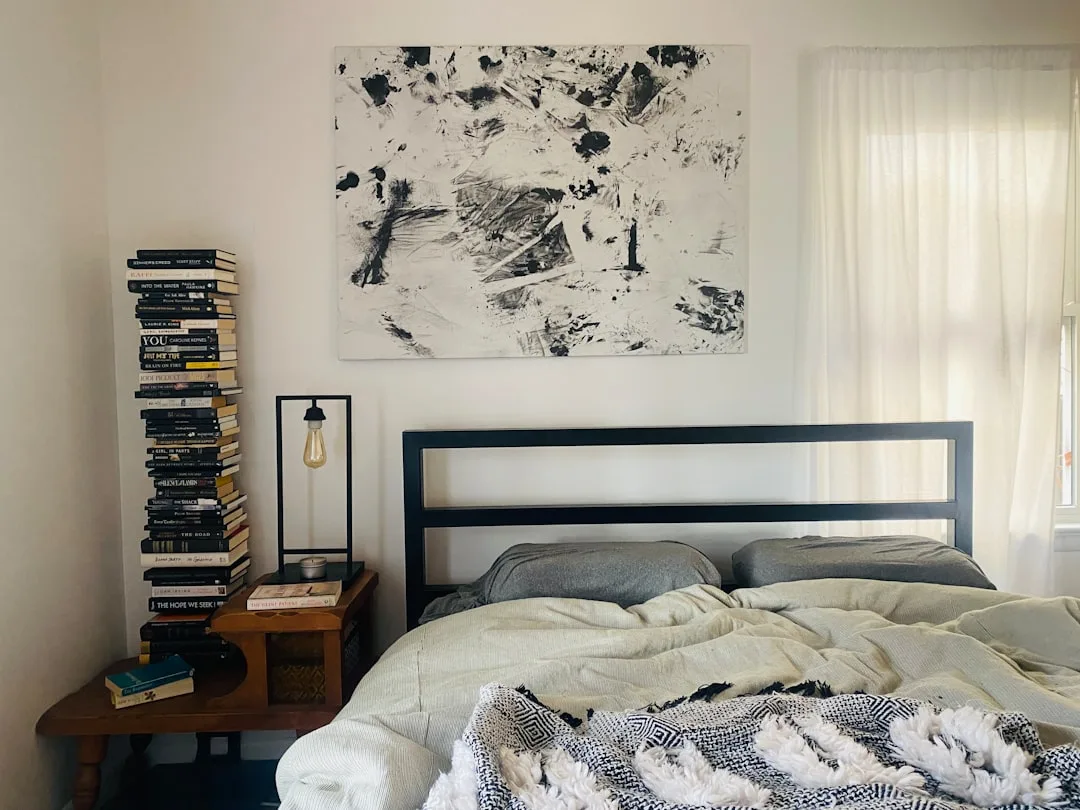
If you’re serious about diy bedroom decor on budget, the first thing to understand is that spending less doesn’t mean settling for less — it means spending smarter. Most bedroom makeover guides tell you to hang string lights and add throw pillows — but after spending $75 on scattered projects, your room still looks exactly the same, just more cluttered. The problem isn’t your taste or your budget. It’s that nobody told you which changes actually move the needle, in what order, and why. This plan does exactly that.
Why Most DIY Bedroom Makeovers Fail Before They Start
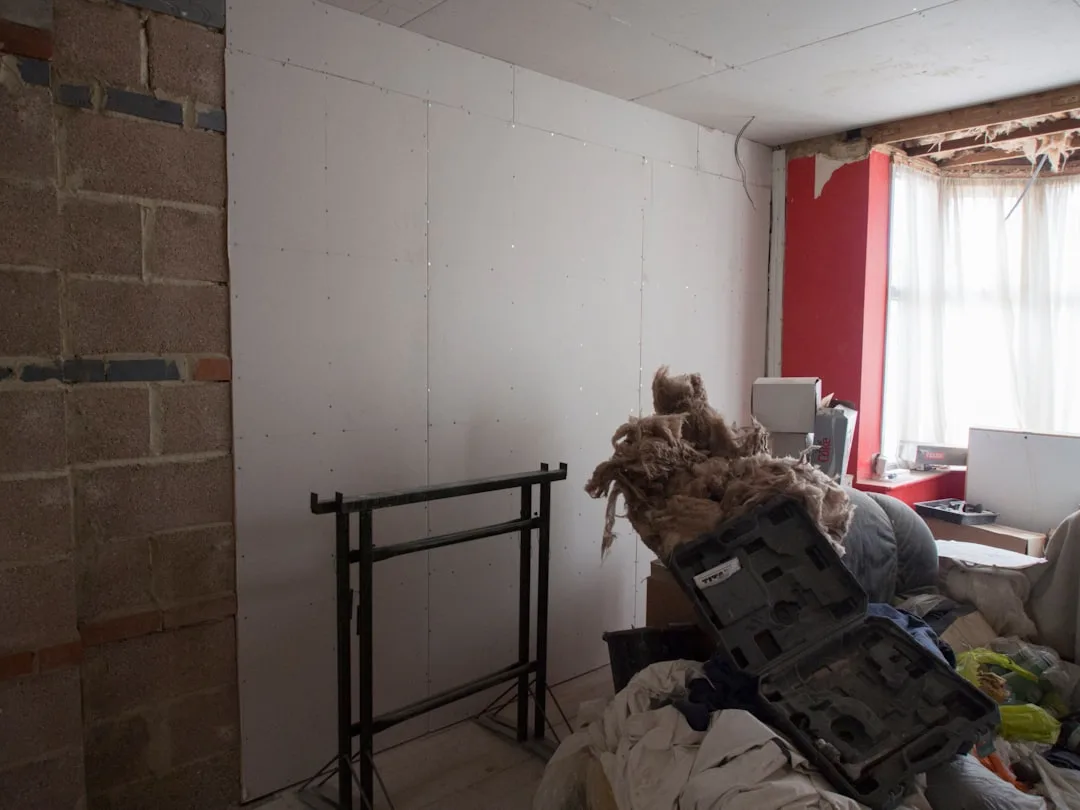
Here’s the uncomfortable truth: most DIY bedroom makeovers fail at the planning stage, not the execution stage. You browse Pinterest, get excited about six different projects, buy supplies for four of them, finish two, and end up with a room that has a macramé wall hanging, mismatched throw pillows, and a candle collection — but no visual cohesion holding any of it together.
That’s the random project trap. Each individual item might be perfectly nice on its own, but without a unifying framework, they compete for attention instead of working together. The result reads as cluttered, not curated.
Then there’s the false economy problem. A $3 adhesive hook from a dollar store that damages your wall during removal, cheap iron-on fabric dye that fades after two washes, peel-and-stick tiles that lift at the corners within a month — these aren’t savings. They’re rework costs. Spending $8 more on a quality product often saves $20 in replacement and repair.
The framework that fixes both problems is the 3-Zone Spending Method. Divide every dollar you spend across three categories in order of visual impact: walls, textiles, and lighting. These are the three surfaces your eye registers first when entering a room. Everything else — accessories, plants, art — is secondary and should only receive budget after the three primary zones are addressed.
The hierarchy matters as much as the budget. A $40 accent wall transformation reads as more intentional than $40 spread across ten small decorative objects, every single time.
Takeaway: Before buying anything, identify which of the three zones — walls, textiles, or lighting — is your room’s weakest link. Start there.
Build a Real Budget Before Touching a Single Wall

The $100 ceiling isn’t arbitrary. It’s tight enough to force prioritization and loose enough to produce genuinely impressive results if you allocate it correctly. Here’s how to break it down:
| Zone | Allocation | What It Covers |
|—|—|—|
| Walls | $35 | Accent paint, peel-and-stick panels, or DIY limewash |
| Textiles | $30 | Throw, pillow covers, or DIY duvet panel |
| Lighting | $20 | Warm bulbs, cord pendant kit, or clip lamp |
| Accents | $15 | Hardware swaps, small plants, framed prints |
These aren’t rigid. If your lighting is already warm and layered, shift $15 from that zone into textiles. If your walls are newly painted and look fine, redirect the $35 to a combination of a floor rug and a DIY headboard. The framework is the logic, not the exact numbers.
Before spending anything, do a full inventory of what you already own. Walk through your home with fresh eyes:
- A linen tablecloth becomes a textured bed throw
- A wooden cutting board becomes a nightstand tray
- Mismatched picture frames, spray-painted the same color, become a gallery wall
- A thrifted ceramic vase, repainted, becomes bedside decor
- A ladder from a garage or storage space becomes a blanket display rack
- Unused scarves or fabric remnants become pillowcase covers with basic hand stitching
- An old crate or wooden box, lightly sanded and stained, becomes a bedside table
Most people have $30–$50 worth of repurposable material sitting in their home already. What you don’t repurpose informs what you buy.
Where you should never cut corners:
- Primer before painting — skipping it means two extra coats of paint and uneven coverage, which negates any savings
- Quality adhesive for peel-and-stick wallpaper — cheap adhesive lifts and bubbles within weeks, requiring a full redo
- Curtain hardware — flimsy tension rods bend under the weight of real curtains and leave marks on walls
- Sandpaper grit selection — using the wrong grit before painting furniture means the finish won’t adhere properly
- Seam tape for wallpaper panels — skipping seam finishing causes peeling at edges within months
A gallon of interior paint costs $25–$45 and covers roughly 400 square feet — more than enough for a full accent wall in the average bedroom with paint left over for smaller touch-up projects. That makes it the single highest visual-impact-per-dollar purchase in this entire plan.
Takeaway: Catalog what you can repurpose before spending a dollar — then fill remaining gaps with your allocated budget, in zone priority order.
The Walls-First Rule: DIY Techniques That Change a Room’s Entire Personality
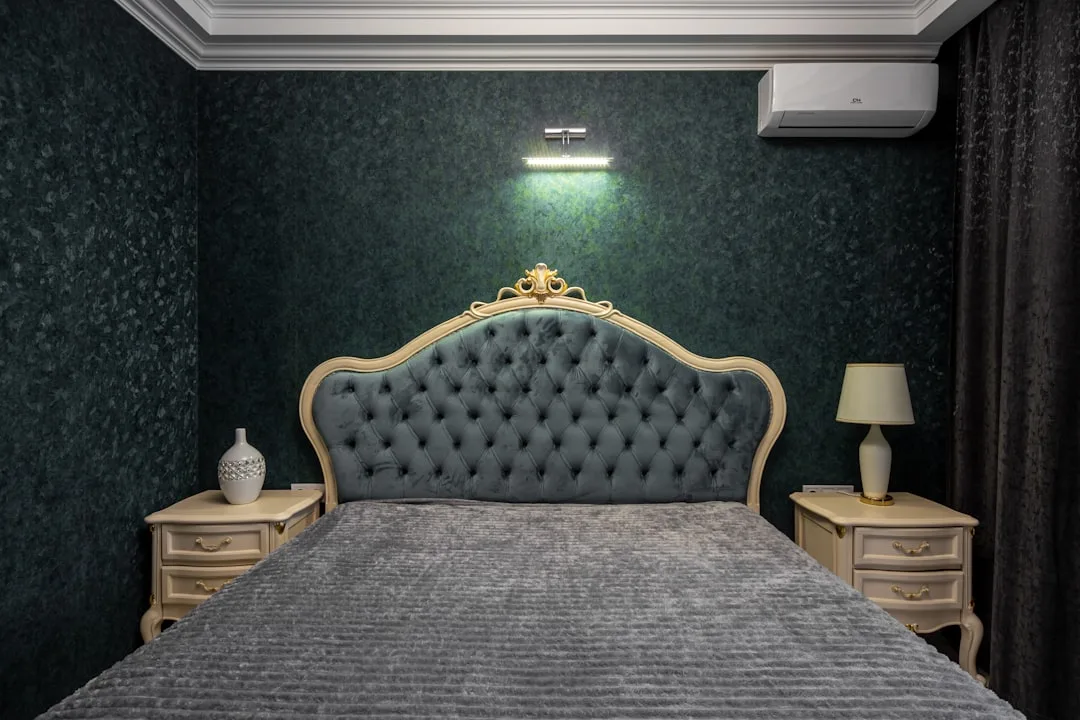
Walk into any bedroom that reads as designed rather than decorated, and you’ll almost always find that the walls are doing real work. Not every wall — usually just one. The single focal wall rule is this: always treat the wall your headboard sits against. Not a side wall. Not the wall facing the door. The headboard wall is where your eye naturally anchors when standing in the doorway, which makes it the highest-impact surface in the room.
Once you’ve chosen the wall, finish matters as much as color. Matte finishes absorb light and make colors look deeper and more saturated — ideal for moody, rich tones like Farrow & Ball’s Hague Blue or Benjamin Moore’s Wrought Iron. Eggshell adds just enough sheen to reflect light softly and is more washable, making it the practical choice for most bedrooms. Satin reads as slightly formal and works well in rooms with good natural light. For most DIYers doing an accent wall, eggshell is the safest choice.
If you’re renting and painting isn’t an option, peel-and-stick wallpaper has genuinely improved. Current quality leaders like Tempaper and RoomMates offer realistic linen, grasscloth, and geometric patterns at $1.50–$3.00 per square foot. A 40-square-foot accent wall costs $60–$120 DIY versus $300 or more professionally installed with traditional wallpaper at $3–$12 per square foot. Remove cleanly, leave no residue. The technology has caught up with the concept.
Other renter-friendly wall options worth knowing:
- Fabric-starched panels: Dilute liquid starch, brush it onto the wall, smooth fabric over it, and let it dry. Peels off cleanly and leaves no damage. Costs roughly $0.75–$1.50 per square foot for mid-weight cotton or linen fabric.
- Removable geometric tape patterns: Painter’s tape in geometric configurations — diamonds, herringbone, chevrons — costs under $10 and creates a surprisingly high-impact graphic element. Remove without residue.
- DIY limewash effect: Mix chalk paint (like Rust-Oleum Chalked in Linen White) with water at roughly a 1:1 ratio and apply with a dry brush in broad, overlapping strokes. Build the depth in three passes, letting each layer dry for 20 minutes between applications. The result mimics $200-per-gallon specialty limewash paint at roughly $18 total cost.
- Wood slat panels: Thin pine furring strips from a hardware store, cut to length and mounted vertically with construction adhesive, create a Scandinavian-style slatted feature wall. At roughly $0.40 per linear foot for 1″x2″ furring strips, a full headboard wall costs $25–$40 in materials. Stain or paint before mounting for a cleaner finish.
- Large-scale art panels: Stretch inexpensive canvas drop cloth over artist stretcher bars (available for under $15 online) and apply diluted acrylic paint with a sponge roller. This creates oversized abstract art that reads as intentional and expensive at a fraction of gallery prices.
Takeaway: One treated wall with a clear technique always outperforms four walls covered in generic white paint and scattered small decor.
Textiles: The Fastest Way to Change a Room’s Temperature and Tone
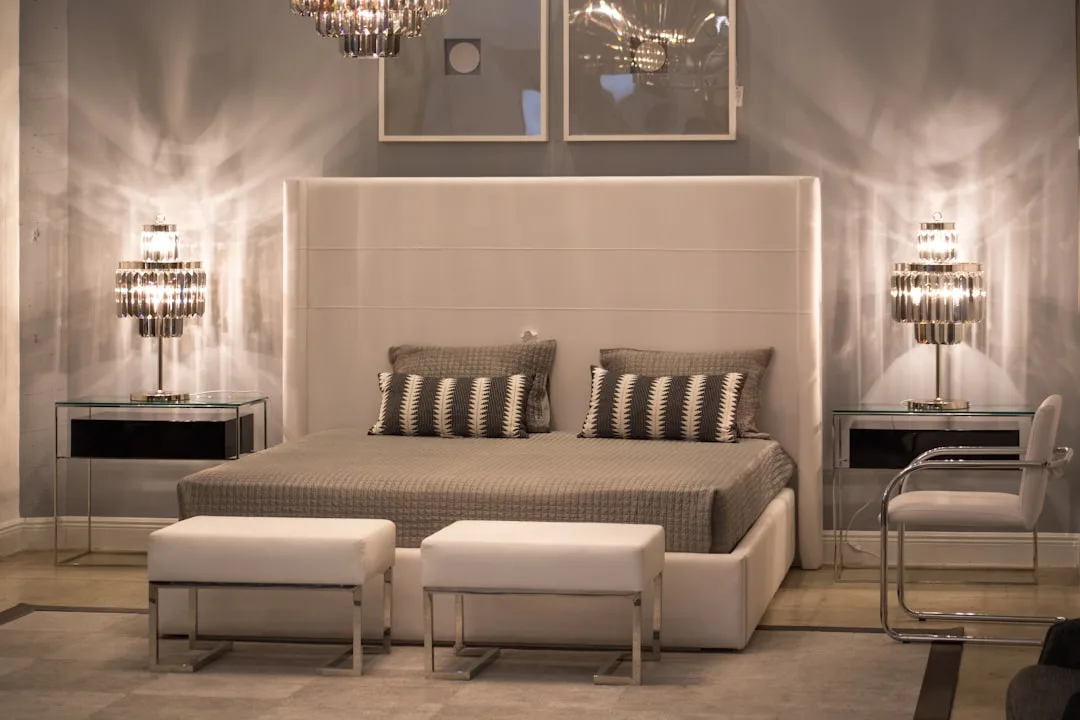
Textiles are where diy bedroom decor on budget produces the most immediate, tactile transformation. Color and texture both live here, and the bed — which occupies the largest visual footprint in most bedrooms — is made almost entirely of them. Getting this zone right is the difference between a room that feels pulled together and one that still feels unfinished regardless of what the walls are doing.
The most cost-efficient textile move available is pillow cover replacement without replacing the pillows themselves. Standard insert pillows cost $8–$15 each and last for years. Covers are the variable. IKEA’s GURLI and SANELA lines offer solid covers in quality fabric textures starting at $4–$8 each. H&M Home regularly runs linen-look covers for $6–$12. Buying two new covers and rotating them seasonally costs less than $20 and changes the bed’s entire color story.
Specific textile changes ranked by visual impact per dollar:
- Duvet cover swap — A new duvet cover over your existing insert completely changes the bed’s visual weight and color. Target’s Threshold line and IKEA’s DVALA series start at $25–$35 for full/queen sizes in solid and textured weaves.
- Throw blanket placement — Draped diagonally across the foot of the bed adds a layer of depth and color contrast. A good-quality throw from TJ Maxx or HomeGoods runs $12–$20 and doubles as functional warmth.
- Curtain panel upgrade — Long curtains hung close to the ceiling and wide of the window frame make any room look taller and larger. IKEA’s HILJA and MOALISA panels start at $9.99 per pair. Hanging hardware ($8–$12 for a basic tension rod or command strip rod) brings the total under $25.
- Rug addition or swap — A 5×7 rug placed under the lower two-thirds of the bed anchors the space immediately. Ruggable, Rugs USA, and Amazon Basics all carry machine-washable options in the $35–$55 range for this size.
- Pillowcase consistency — Replacing mismatched pillowcases with a matching set in the same neutral as your duvet costs under $10 and removes visual noise from the most prominent surface in the room.
DIY textile projects that cost under $10:
- Block-print pillow covers: Use a sponge cut to shape, dipped in fabric paint, and stamped onto a plain canvas cover. Clean geometric shapes — diamonds, triangles, dots — hold up well and look intentional.
- Dip-dye throw: Submerge the bottom third of a plain white throw in a diluted fabric dye bath (Rit dye, $3–$4 at craft stores) for a gradient effect. Works on cotton and linen. Set with a salt rinse to prevent fading.
- Knotted pillow cover: Cut two rectangles of canvas fabric to size, punch evenly spaced holes around three edges with a hole punch, and lace together with jute twine. No sewing required. Insert a standard throw pillow. Entire cost: $4–$6.
Takeaway: Focus textile budget on the bed first. Every dollar spent there has more visible impact than the same dollar spent anywhere else in the room.
Lighting: The Most Underestimated Variable in Bedroom Design
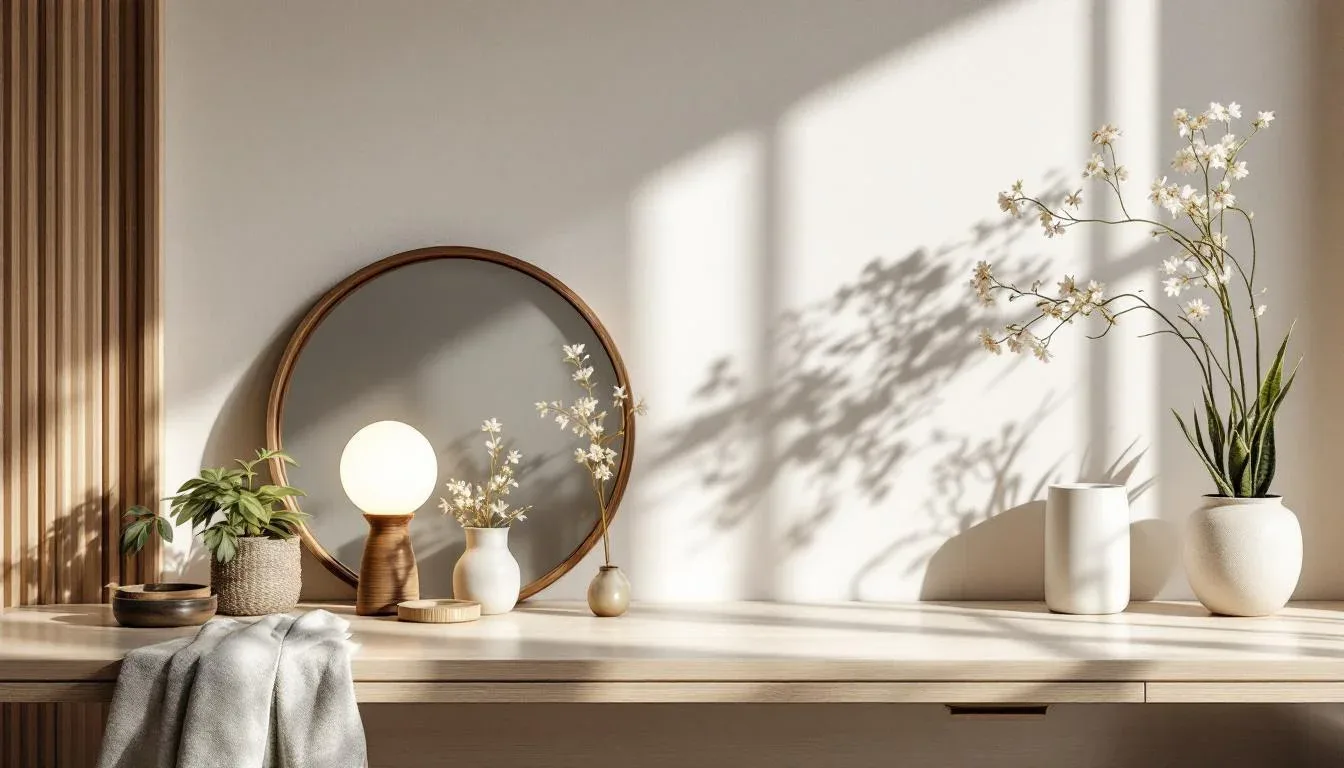
Most bedrooms have one overhead fixture controlled by a wall switch. That single fixture — usually a flush-mount with a bright white or cool-toned bulb — is the primary reason most bedrooms feel more like storage rooms than retreat spaces, even after significant decorating effort. The overhead fixture floods the room with flat, even light that eliminates shadow, removes depth, and makes every surface look equally uninspiring.
The fix doesn’t require rewiring. It requires layering.
Lighting design works on three levels: ambient (overall fill), task (functional, directional), and accent (mood, warmth). Most bedrooms have only ambient light. Adding even one source of task or accent lighting — a bedside lamp, a plug-in wall sconce, a cord-hung pendant — changes the room’s atmosphere after 6pm more dramatically than almost any other single change.
Specific low-cost lighting upgrades that work:
- Bulb swap first: Replace any cool white (5000K+) or daylight bulbs in existing fixtures with warm white (2700K–3000K) bulbs. At $8–$12 for a four-pack of LED warm bulbs, this is the lowest-cost, highest-impact single purchase in the entire plan. The color temperature shift alone makes a room feel 30% warmer without changing a single piece of furniture.
- Plug-in pendant light: A pendant cord kit (available from Amazon or IKEA for $12–$20) accepts a standard bulb and hangs from a ceiling hook. No electrician required. Position above a nightstand as a bedside reading light. Pair with a $5 Edison-style bulb for an intentional, designed look.
- Clip-on reading lamp: A directional clip lamp mounted to a headboard or shelf provides task lighting without requiring a full nightstand lamp setup. Good options run $12–$18 and free up surface space.
- String lights as accent, not decoration: Standard fairy lights used randomly are background noise. Used intentionally — tucked behind a sheer curtain, draped inside a glass vessel, or run along a shelf edge — they create a focused warm glow that serves as genuine accent lighting. Warm white only. Cool white negates the effect.
- Dimmer plug adapters: A smart plug or in-line dimmer cord ($10–$15) allows any standard lamp to become dimmable without replacing the fixture. Dimming an existing lamp to 40% creates more atmosphere than buying a new lamp at full brightness.
The two-lamp rule for nightstands: If you have matching nightstands, matching lamps at identical heights create symmetry that reads as intentionally designed. If lamps don’t match, a coat of the same spray paint on both bases — matte black, brass, or white — unifies them visually for under $6.
Takeaway: Swap bulbs to 2700K first. Add one non-overhead light source second. Do those two things before any other lighting purchase.
Accessories and Final Layering: How to Finish Without Overcrowding
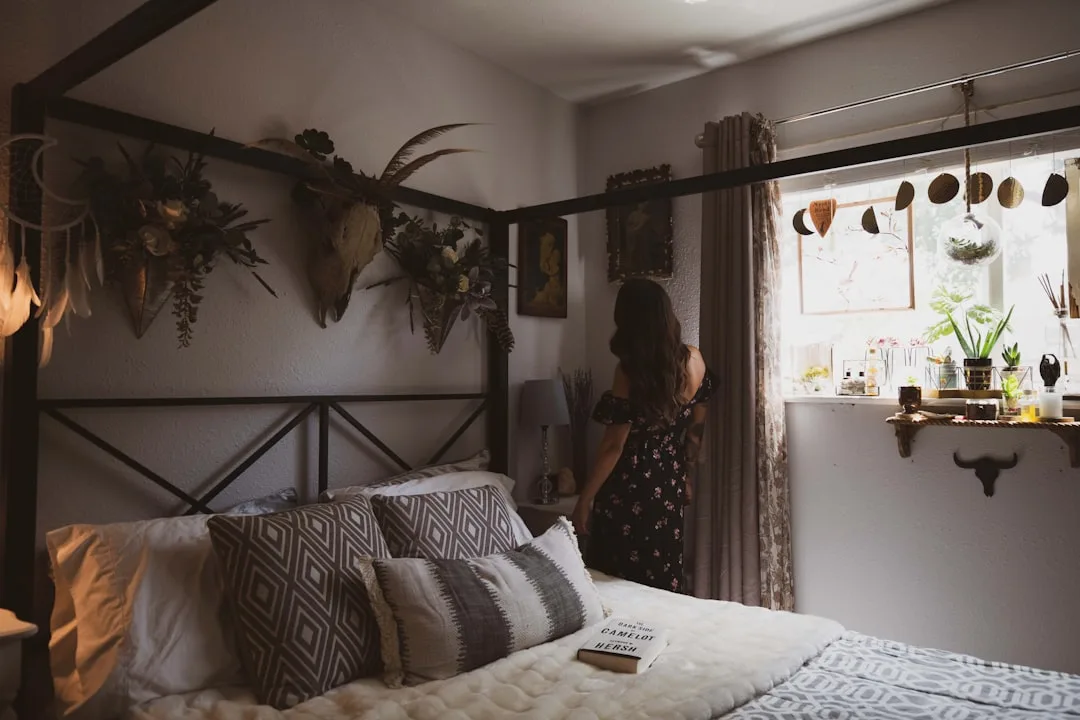
This is where most diy bedroom decor on budget projects either succeed or unravel. The accessory phase feels like the most creative part — it’s also where the random project trap most commonly reasserts itself. The rule here is simple: every object in the room should either serve a function, contribute to the color story, or do both. Objects that do neither come out.
Editing is a design skill, not a failure. A nightstand with three intentional objects reads as curated. A nightstand with nine objects reads as a surface that hasn’t been cleared recently.
The nightstand formula that consistently works:
- One light source (lamp, sconce, or clip light)
- One functional item (book, phone charger, water glass — not all three on the surface simultaneously)
- One decorative object at a different height (small plant, candle, ceramic object)
That’s three items. Not seven.
Inexpensive accent purchases ranked by visual return:
- Matching hardware for dresser or nightstand drawers — A set of matte black or brushed brass pulls costs $12–$25 for six to eight pieces online. Hardware replacement takes 10 minutes with a screwdriver and transforms the entire piece of furniture.
- A single trailing plant — Pothos, heartleaf philodendron, or tradescantia all thrive in low bedroom light and cost $4–$8 at most garden centers. A single plant on a nightstand or shelf adds life and organic texture that no decorative object fully replicates.
- Unified frames for a gallery wall — Collect mismatched frames in any size, spray paint them all the same color (matte black is the safest choice), and hang them in a tight grid. The content matters less than the cohesion. Art prints from Unsplash printed at Walgreens cost $0.35–$0.50 each at 4×6 size.
- A tray to organize surfaces — A single tray on a dresser or nightstand corrals loose objects (keys, jewelry, remotes) and turns a messy surface into an intentional vignette. Thrift stores and dollar stores carry trays for $2–$6.
- A fabric or paper lampshade replacement — If an existing lamp has a worn, yellowed, or mismatched shade, a replacement shade from IKEA or Amazon runs $8–$15 and effectively creates a new lamp.
What to remove before adding anything:
- Cords visible from the door (bundle and route behind furniture)
- Anything stored on the floor that could go in a drawer or closet
- Decorative items that don’t share at least one color with the room’s palette
- Duplicate items — two vases of the same type when one would serve better
Takeaway: Finish by removing before adding. The accessories that remain will carry more weight once the visual noise is cleared.
Frequently Asked Questions
Can you really do a full bedroom makeover for under $100?
Yes — but only if you follow the zone priority framework rather than buying items at random. The $100 ceiling works because the highest-impact changes (a single painted accent wall, a duvet cover swap, a bulb replacement) cost relatively little. Where people exceed $100 is when they skip the audit phase and buy new items before determining what they already own and what can be repurposed. Do the inventory first. Most people discover they already have $30–$50 worth of usable material.
What’s the single most impactful change for someone with only $20 to spend?
Replace every bulb in the room with warm white LEDs at 2700K–3000K. A four-pack costs $8–$12 at most hardware stores. The shift in color temperature changes how every surface in the room reads — warmer, softer, and more intentional — without moving a single piece of furniture. If $8 remains after the bulb swap, spend it on a small trailing plant for the nightstand.
How do you make a rented bedroom look designed without painting the walls?
The most effective renter-friendly wall techniques are peel-and-stick wallpaper on the headboard wall (Tempaper and RoomMates are the current quality leaders), fabric-starched panels that peel off without damage, and removable geometric tape patterns using painter’s tape. Beyond the walls, hanging curtains high and wide of the window frame — using removable adhesive hooks rated for the rod weight — is the single most effective non-permanent change in a rental bedroom. It makes the ceiling appear higher and the window appear larger.
In what order should you tackle the projects to avoid wasting money?
Follow the zone priority strictly: walls first, textiles second, lighting third, accessories last. The reason is visual hierarchy — each zone forms the backdrop for the next. If you add accessories before the walls and lighting are resolved, you’re making decisions in a context that’s about to change. Many accessory choices that seem right against a white wall look wrong against a dark accent wall. Sequence eliminates that rework.
How do you choose a color palette for diy bedroom decor on budget without design experience?
Start with one anchor piece you already own and love — a rug, a throw, a piece of art. Pull two colors from it: one dominant, one secondary. Use the dominant color for your wall treatment and the secondary as an accent in textiles or accessories. Add one neutral (white, cream, warm gray, or natural linen) as a buffer between the two. This three-color constraint prevents the palette from becoming incoherent and produces results that feel deliberate even to untrained eyes.