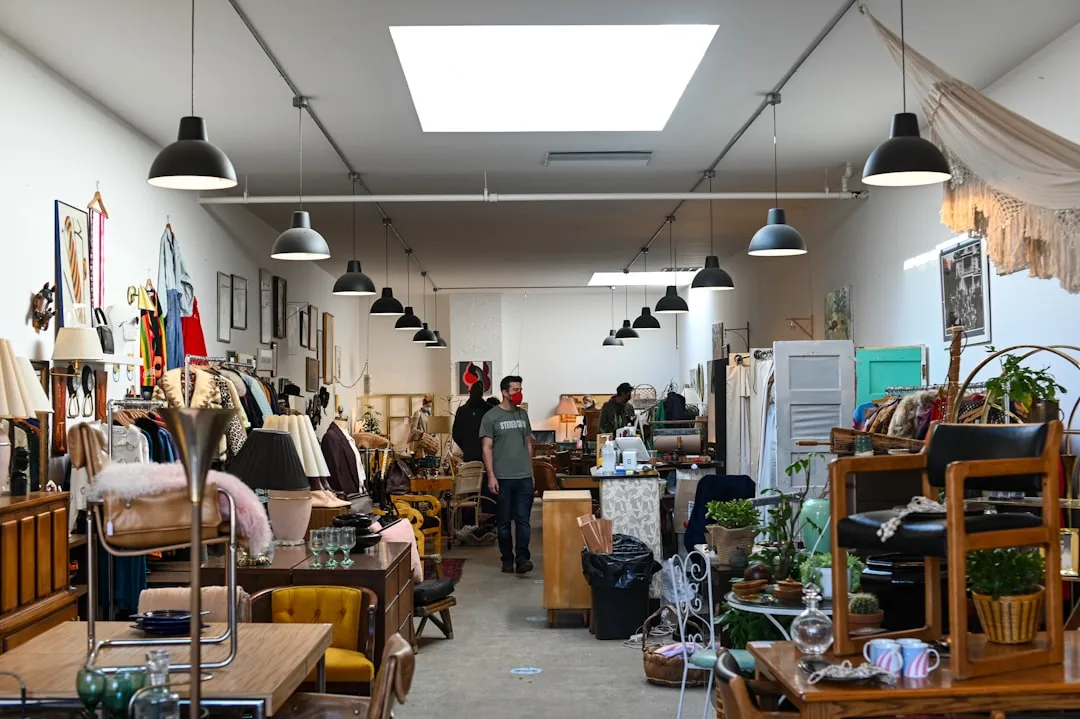
The most compelling rooms in design magazines and home tours share a quiet secret: the pieces that make them feel collected, layered, and alive almost never came from a single retailer — and a surprising number came from thrift stores.
Not because the homeowners were on a budget. Because the pieces were better. A hand-thrown ceramic bowl from 1962 has weight, irregularity, and patina that a $45 West Elm version simply can’t replicate. A solid walnut credenza from the 1950s, picked up for $60 at Goodwill, is structurally superior to most new furniture under $800. This is what separates thrift store decorating done well from thrift store decorating done badly — and the gap between the two is entirely about knowledge, not luck.
Why Thrift Store Home Decor Ideas Outperform Retail in Design Depth

Walk into any Pottery Barn, CB2, or Article showroom and you’ll notice something: everything looks coherent, but nothing looks interesting. That’s the trap of mass-produced retail decor. When every piece is designed by committee to appeal to the broadest possible taste, the result is rooms that are inoffensive and forgettable in equal measure.
The quality that makes a room feel genuinely designed — patina, visual irregularity, narrative — is exactly what manufacturing eliminates and time creates. A vintage brass candlestick has oxidation patterns no factory finish can fake. A 1970s ceramic vessel has a glaze quality that contemporary production ceramics rarely match. Professional interior designers know this, which is why they deliberately mix thrifted and new pieces at roughly a 30/70 ratio. Enough new to feel intentional. Enough old to feel alive.
This isn’t a niche preference — it’s a documented market shift. According to ThredUp’s 2023 Resale Report, the secondhand market in the U.S. has grown to over $43 billion and is projected to reach $70 billion by 2027, with home goods resale accelerating faster than apparel. The people driving that growth aren’t exclusively budget shoppers. They’re design-literate buyers who understand that a room built entirely from retail sources has a ceiling on how interesting it can become.
The shift in mindset required here is specific: stop thinking about thrift store shopping as a budget strategy and start treating it as a curation practice. Budget shopping asks “what can I afford?” Curation asks “what serves this room?” Those are completely different questions, and they lead to completely different results.
Actionable takeaway: Before your next thrift run, write down the word “curation” somewhere visible. Every piece you consider picking up should answer one question — does this serve the room I have in mind, or am I just attracted to the price?
The Pre-Shop Framework: How to Walk Into Any Thrift Store With a Strategy
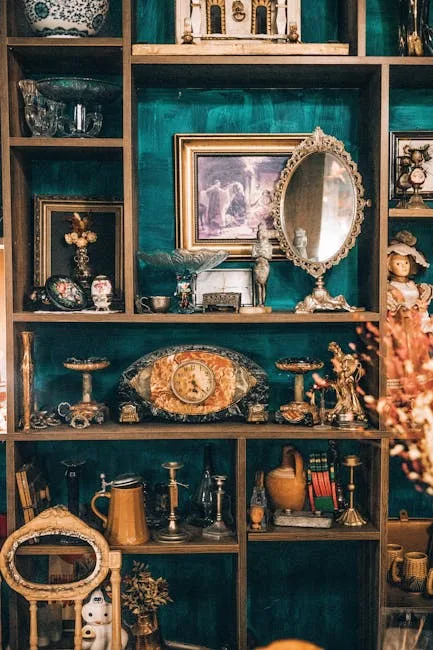
The most common failure in thrift store decorating isn’t bad taste. It’s aimless browsing. You walk in, you’re surrounded by 4,000 objects under fluorescent lighting, and you start reacting emotionally to individual pieces rather than evaluating them against an actual room. You come home with a pasta bowl collection, a wicker lamp base, and a framed print of geese — none of which relate to each other or to anything you already own.
The fix is a pre-shop framework built around three tools:
1. The Design Anchor List
Before you leave home, identify the one or two existing pieces in each room that all new additions must harmonize with. Maybe it’s a navy linen sofa. Maybe it’s a walnut dining table. These anchors define your constraints — color, material, scale — and every thrifted candidate gets evaluated against them, not in isolation.
2. Physical Swatches or Phone Screenshots
Bring them. Color memory is notoriously unreliable, and it gets worse under the harsh fluorescent lighting in most thrift stores. That “warm white” ceramic you’re holding might be a cold cream when you get it home next to your warm-toned walls. Pull up a photo of your room on your phone. Hold the object next to the screen. It’s not perfect, but it’s dramatically better than guessing.
3. The Three-Material Rule
Research in environmental psychology consistently shows that rooms with a cohesive material palette of three or fewer dominant textures are rated significantly more calming and “designed” by observers. Before you shop, identify your room’s three dominant materials — say, oak wood, matte ceramic, and natural linen — and only buy thrifted pieces that fit within those three. This single filter eliminates 80% of the impulsive, regrettable purchases.
Your pre-shop checklist should look like this:
- Room anchor piece(s) identified
- Phone photos of the room loaded
- Three dominant materials written down
- Rough size parameters noted (e.g., “lamp base no taller than 22 inches”)
- A budget ceiling per item and per trip
Actionable takeaway: Spend ten minutes at home before every thrift trip filling in those five checklist items. The first time you do it, it’ll feel unnecessary. By the third time, you’ll wonder how you ever shopped without it.
Reading Quality at a Glance: What Thrift Store Home Decor Pieces Are Worth Picking Up
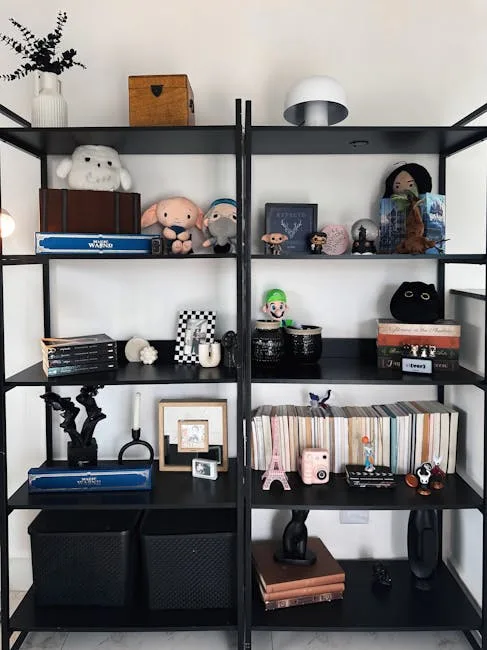
Most thrift store advice tells you what to buy — mirrors, vases, baskets. That’s the wrong starting point. The right question is how to evaluate quality on the spot, because a bad mirror is worse than no mirror, and a cracked ceramic makes a room look neglected, not collected.
Here’s what to check, by category:
Solid Wood Furniture
Flip it over. Look for dovetail joints at the corners of drawers — these are hand- or machine-cut interlocking teeth, not staples or simple butt joints. Check the underside for maker’s marks, country-of-origin stamps, or brand names. Furniture made before 1970 was predominantly solid hardwood; after 1973, particleboard and MDF became industry standard. That means a pre-1970s thrift find is structurally superior to most new furniture under $800 — and often priced at a fraction of the cost because thrift store staff don’t always recognize the difference.
Ceramics and Pottery
Tap the piece gently with your fingernail and listen. A clear, sustained ring means no cracks. A dull thud or a split tone means there’s damage. Then look at the base for artist signatures, studio marks, or country stamps — “Made in Japan,” “McCoy,” or an artist’s initials on the base often indicate pre-1980s craftsmanship that’s genuinely collectible.
Textiles and Rugs
Wool and cotton age beautifully and clean thoroughly. Synthetics pill, hold odors, and rarely improve with age. For rugs, flip it over: hand-knotted construction shows the pattern clearly on the back with visible knots; machine-made rugs have a uniform, almost printed-looking reverse. Check rug backing integrity — if the foundation is crumbling, no amount of cleaning saves it.
Lamps and Lighting
The base is all that matters. Rewiring a lamp costs between $15 and $40 at any hardware store, and a new shade can be found at IKEA for under $20. Never reject a lamp because of bad wiring, a fraying cord, or a hideous shade. Judge only the base — its weight, material, proportion, and form.
Actionable takeaway: Next time you pick up a piece of thrift store furniture, flip it immediately and look for dovetail joints. If you find them, you’re likely holding a structurally superior piece. Put it in your cart and keep evaluating from there.
The Room-by-Room Transformation Playbook Using Secondhand Pieces
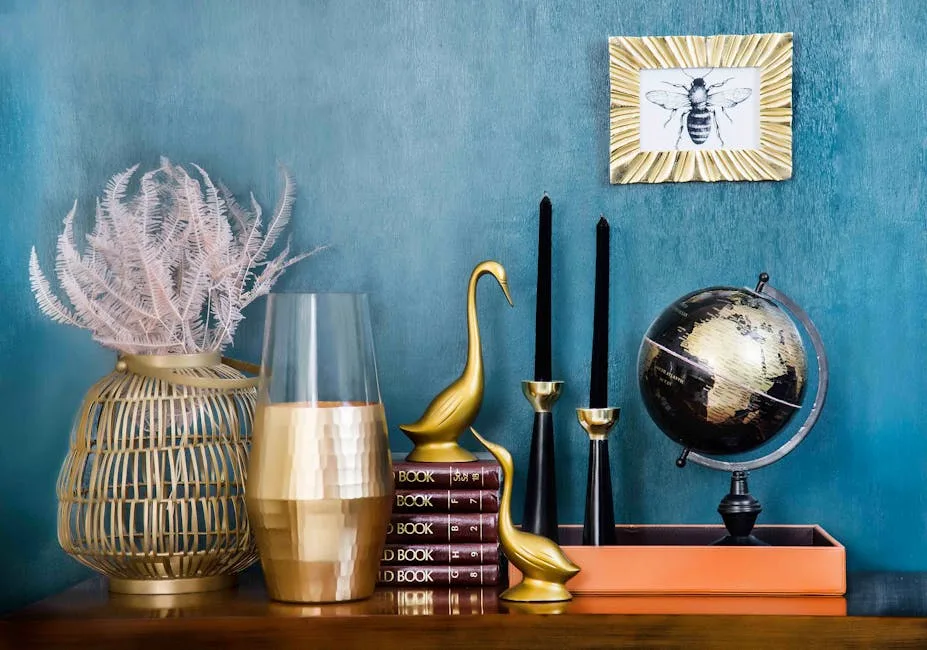
Generic thrift store advice treats your home as a single undifferentiated space. Rooms have different functions, different visual demands, and different scales — and the pieces that transform one room will do nothing for another. Here’s how to think room by room.
Living Room
Scale is the most underused tool in thrift store decorating. A single large vintage mirror — 36 inches or taller — positioned above a sofa or fireplace does more design work than six smaller accessories combined. It reflects light, creates perceived depth, and anchors an entire wall. Thrift stores price mirrors by condition more than size, which means large-format vintage mirrors are routinely undervalued. Look past clouding or ornate frames that can be spray-painted.
Dining Room
Mismatched dining chairs unified by a single paint color or the same upholstery fabric is a documented designer technique. Seen in rooms by Jean-Louis Deniot, Studio McGee, and dozens of editorial spreads, it reads as intentional eclecticism rather than budget necessity. Source four to six wooden chairs in similar scale from multiple thrift trips, then paint them all the same color — Benjamin Moore’s Wrought Iron or Farrow & Ball’s Railings in a satin finish works on virtually any wood chair shape.
Bedroom
Thrifted bedside tables don’t need to match. Pairing two different pieces — a small cane-front cabinet with a simple wooden stool, for instance — of similar height and visual weight creates a “collected over time” aesthetic that editorial interiors actively pursue. The key variables are height (both should sit roughly 2–4 inches above your mattress top) and visual weight (a very heavy piece opposite a very delicate one creates imbalance).
Kitchen and Open Shelving
Vintage ceramic canisters, wooden cutting boards with earned patina, and amber or green glass vessels photograph and style better than their new counterparts because aged surfaces interact with light differently. The slight irregularities catch and scatter light rather than reflecting it uniformly. A set of 1960s–70s ceramic canisters in harvest gold or avocado green on open shelving does more visual work than a matching modern set at three times the price.
Entryway
Interior design research consistently shows that entryways and living rooms create the strongest first impression of a home’s overall design quality — making these the highest-ROI rooms for decor investment. A thrifted console table, one oversized ceramic vessel on the floor, and a vintage mirror above can complete an entryway for under $80. That’s the highest design impact per dollar of any room in a home.
Actionable takeaway: Pick the one room in your home where you spend the most time and identify its single most dramatic void — an empty wall, a bare corner, an awkward entryway. That’s your next thrift shopping target. One large, well-chosen piece beats six small ones every time.
Transforming Dated Thrift Store Home Decor Into Statement Pieces
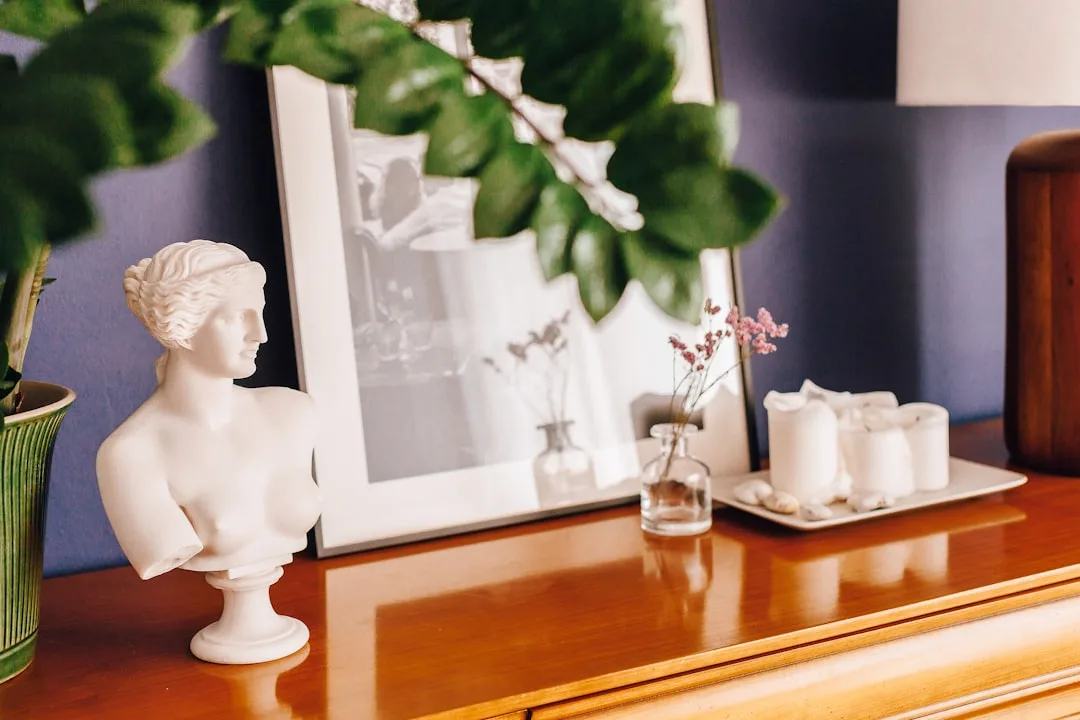
The most common hesitation about thrift store decorating: “But most of it looks old and ugly.” True. Most of it does. The skill isn’t finding perfect pieces — it’s recognizing transformable ones, which is an entirely different and learnable ability.
Spray Paint: The Highest-ROI Tool in Your Arsenal
A $6 can of spray paint — specifically Rust-Oleum’s 2X Coverage in matte black or Krylon’s Fusion All-In-One in warm white — can transform brass hardware, dated picture frames, resin sculptures, ceramic lamp bases, and ornate candlesticks into cohesive, current-looking objects. The technique matters: light coats from 12 inches away, three passes rather than one heavy coat. The result is a factory finish that looks intentional.
Reupholstery Without a Sewing Machine
Dining chair seats are the entry point here. Remove the seat (usually four screws underneath), place it face-down on your fabric, pull the fabric taut, and staple gun it to the back. One yard of fabric — Tonic Living, Spoonflower, or even IKEA’s by-the-yard options — costs $8 to $20 and covers two to three chair seats. No sewing required, and it takes under 20 minutes per chair. A set of four mismatched thrift store chairs with fresh, unified upholstery reads as completely intentional.
Strategic Display
Mediocre individual pieces can become compelling collections. Group thrifted objects in odd numbers — three ceramic vessels, five brass candlesticks — vary their heights deliberately (a 12-inch, 7-inch, and 4-inch grouping reads better than three pieces at the same height), and maintain a single unifying thread across the group: all warm-toned, all matte finish, all natural material. The thread is what makes it look curated rather than accumulated.
Hardware Swaps
Professional stagers consistently cite hardware replacement as one of the top five highest-ROI furniture updates. Swap the original knobs and pulls on a thrifted dresser or cabinet for modern hardware — matte black bar pulls, unlacquered brass knobs, or brushed nickel cup pulls — costing $2 to $8 per piece at most home improvement stores. It takes 15 minutes and makes a $25 thrift store dresser look like something you ordered from a boutique furniture brand.
Actionable takeaway: Pick up one “ugly” thrifted item with good bones — a solid frame, quality material, interesting form — and give it the spray paint treatment this weekend. Start with matte black on something brass. The result will recalibrate what you see as potential versus trash in every future thrift run.
Aesthetic Matching Guide: Sourcing Thrift Store Pieces for Specific Interior Styles
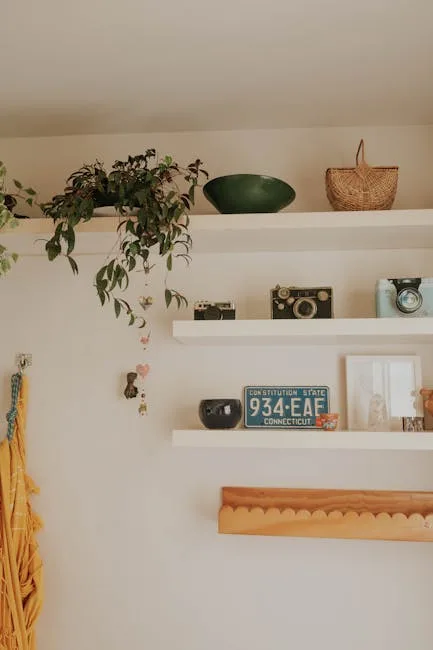
Most thrift store decor content caters to farmhouse and cottagecore enthusiasts. That leaves out everyone decorating in mid-century modern, minimalist, maximalist, Japandi, Mediterranean, or industrial styles — all of whom are equally (sometimes better) served by secondhand sourcing. Here’s where to focus your eye by style.
Mid-Century Modern
Look for tapered wooden legs on any furniture form — chairs, side tables, credenzas — even when the piece is otherwise unremarkable. Starburst or atomic-era motifs in wall art, clock faces, and mirror frames. Teak or walnut finishes. Ceramics in avocado green, harvest gold, burnt orange, or mustard yellow. Mid-century modern is consistently one of the most searched interior design styles globally, yet thrift store staff pricing databases frequently undervalue MCM pieces because the visual vocabulary isn’t universally recognized. A teak sideboard priced at $45 at Goodwill might legitimately list for $400–$800 on Chairish or 1stDibs. This is genuine arbitrage for informed shoppers.
Minimalist and Japandi
Seek unglazed or matte-finish ceramics in neutral tones. Simple wooden vessels, bowls, and trays where material quality speaks louder than decoration. Natural linen or cotton textiles in undyed or stone-washed tones. The ideal thrift find for a Japandi room is a piece where someone else’s eye immediately passes over it because it’s “plain.” That plainness is the point.
Maximalist and Eclectic
Thrift stores are paradise for this aesthetic, and you can shop more freely here than in any other style context. Collect brass candlesticks in multiple heights, patterned ceramic tiles for display, gilded frames in varying sizes, sculptural bookends, layered textiles, and decorative objects from multiple cultures and eras. The only discipline required: keep one dominant color temperature warm throughout, even when patterns and forms vary wildly.
Industrial and Urban Loft
Metal factory stools, wire baskets in various gauges, galvanized containers, vintage industrial lamps with cage shades, and weathered leather pieces are consistently overlooked at thrift stores and priced very low. A wire factory shelf found at $8 styled in a kitchen or bathroom brings the same visual energy as a $200 retail equivalent.
Actionable takeaway: Write your interior style at the top of your pre-shop checklist and beneath it, note three specific forms or materials that define that style. These become your visual search targets the moment you walk through the door.
The Mistakes That Make Thrifted Rooms Look Cheap Instead of Curated
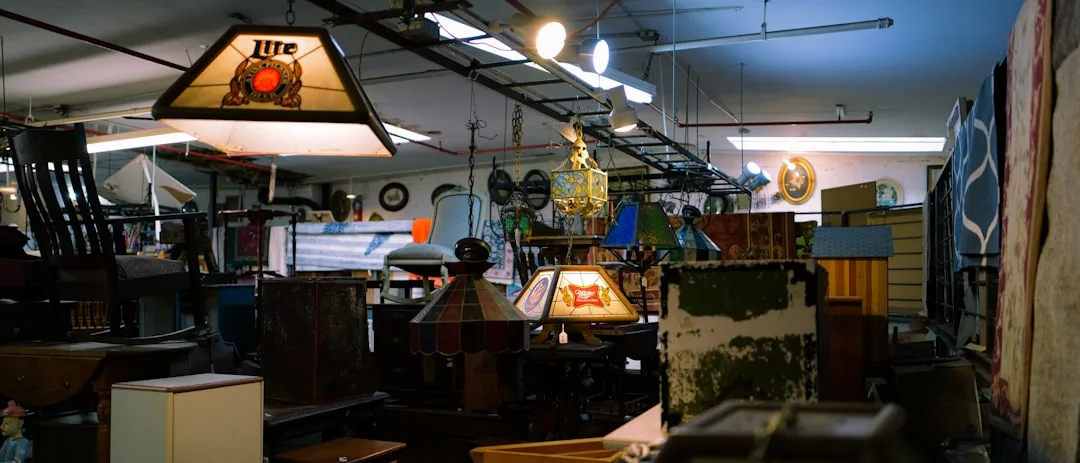
Here’s the honest part that most thrift store content skips: thrifted decorating fails constantly, and it fails in specific, predictable ways. Knowing the failure modes is more useful than any haul inspiration.
Overcrowding
Every interesting piece you bring home eventually competes with every other interesting piece. When every surface is occupied and every corner is filled, the visual noise cancels out the appeal of any individual item. The room reads as chaotic rather than collected. Professional home stagers report that editing — removing approximately 30% of existing items from a room — has a larger positive impact on perceived design quality than adding new pieces. The restraint is the design.
Ignoring Scale
A room full of small thrifted objects at the same visual height reads as clutter regardless of the quality of individual pieces. One large-scale thrift find — a substantial mirror, an oversized ceramic floor vase, a full-length vintage wardrobe — anchors a space in a way that ten small finds never will. Before you buy something small, ask yourself: do I already have an anchor in this room?
Skipping the Deep Clean
Ceramic, glass, metal, and textiles from thrift stores carry invisible residue — dust accumulation, previous owners’ product buildup, storage odors — that affects how pieces photograph, how they read in your space, and how guests respond to being in the room. Every single piece needs a thorough clean before it enters your home. Ceramics and glass: hot water, dish soap, a toothbrush at any detail work. Textiles: wash before displaying, always.
Forcing Premature Coherence
Trying to make every thrifted piece conform rigidly to a single mood board leads to spaces that feel strained and over-managed. The best thrifted interiors have a consistent thread — a material, a color temperature, a general era — but they allow for outliers. One piece that doesn’t quite fit the system often becomes the most interesting piece in the room.
Actionable takeaway: Walk into your most-decorated room right now and ask: if I removed 30% of what’s on display, which pieces would I keep? Those survivors are your actual design priorities. Everything else is noise.
Building a Long-Term Thrift Store Home Decor Practice: Sourcing, Rotating, and Evolving
A single thrift store trip is a shopping errand. A consistent thrift store practice is how you develop a collector’s eye — and how your home evolves into something genuinely distinctive over time. The difference is intentionality and rhythm.
Shop on a Rotation Schedule
Visiting the same two or three thrift stores every three to four weeks — rather than visiting everywhere randomly — builds real familiarity with their inventory turnover patterns. You’ll learn which days new donations hit the floor (typically mid-week at most Goodwill and Savers locations), which sections are restocked most frequently, and what the store’s pricing tendencies are. This is how you stop missing finds and start anticipating them.
The Seasonal Swap Strategy
Maintain a “decor archive” — a labeled bin or box where off-season or temporarily retired pieces are stored. Rotate items in and out of rooms seasonally: heavier textures and darker tones in fall and winter, lighter ceramics and natural materials in spring and summer. This keeps spaces feeling fresh without continuous spending, and it lets pieces rest long enough that they feel new again when they return.
Document Your Rooms
Photograph each room before adding a thrifted piece, then photograph it after placement. This before-and-after archive does two things: it sharpens your instincts over time (you’ll see immediately which additions worked and which were mistakes), and it builds a personal visual library that helps you articulate your developing aesthetic when shopping. After a year of documentation, you’ll be able to describe your style with genuine precision — not just “I like warm, layered spaces” but “I respond to matte ceramic surfaces, warm wood tones, and pieces with visible maker’s marks.”
Know When to Sell Back
If a thrifted piece no longer serves your space, don’t store it forever. List it on Facebook Marketplace or eBay. Vintage and secondhand home goods are among Facebook Marketplace’s top-selling categories, and well-chosen MCM or quality ceramic pieces genuinely appreciate in resale value. A $30 thrift find listed correctly can sell for $80 to $150. Reinvesting those proceeds funds future, better-aligned finds — effectively making your thrift practice self-funding over time.
Actionable takeaway: Identify your two or three closest thrift stores and set a recurring calendar reminder to visit them every three weeks. Consistency of visits, more than any single shopping trip, is what builds the familiarity that leads to great finds.
Frequently Asked Questions
What are the best things to look for at a thrift store for home decor?
Focus on pieces where age and materiality add value rather than diminish it: solid wood furniture with dovetail joints, hand-thrown ceramics with artist signatures or country-of-origin stamps, wool or cotton textiles, and lamp bases in ceramic, brass, or solid wood. Large-format mirrors are routinely underpriced relative to their design impact. Vintage wooden cutting boards, amber and green glass vessels, and pre-1980s ceramic canisters style beautifully on open shelving. The category most worth mastering is furniture — specifically pre-1970s solid hardwood pieces, which are structurally superior to most new furniture under $800 and often available for $20 to $80 at thrift stores.
How do you make thrift store home decor look intentional and not cheap?
Three things do the most work here. First, edit aggressively — a room with five well-chosen thrifted pieces looks deliberately curated; a room with twenty looks like a thrift store itself. Second, use one unifying thread across all thrifted pieces in a room: the same material (all ceramic, all wood), the same finish (all matte, all warm-toned), or the same general era. Third, invest in transformation: a $6 can of matte black spray paint, a $15 set of new hardware pulls, or a yard of quality upholstery fabric can make a thrift find indistinguishable from a boutique purchase. The edit and the transformation do more design work than any individual piece you find.
Which interior design styles work best with thrifted pieces?
All of them, but with different sourcing priorities. Mid-century modern is the highest-reward thrift style because MCM pieces are frequently underpriced by thrift store staff who don’t recognize the visual vocabulary — look for tapered legs, teak and walnut finishes, and atomic-era motifs. Maximalist and eclectic spaces benefit most from thrift shopping’s inherent variety — brass candlesticks, gilded frames, patterned ceramics, and layered textiles are all fair game. Minimalist and Japandi aesthetics reward patience: seek unglazed matte ceramics, simple wooden vessels, and natural textiles, and be willing to wait for the right pieces rather than settling. Industrial styles are well-served by overlooked categories like wire baskets, metal factory stools, and vintage cage-shade lamps.
How often should you visit thrift stores to find good home decor?
Every three to four weeks at the same two or three stores is the optimal rhythm for most people. This frequency aligns with the donation and restocking cycle at most major thrift chains — Goodwill, Savers, and Habitat for Humanity ReStores all turn over inventory rapidly, and weekly visits to the same store mean you’re seeing largely the same items on repeat. By visiting consistently but not obsessively, you build familiarity with each store’s patterns, pricing tendencies, and restocking days without burning out. If you’re hunting for a specific type of piece — say, a large-format vintage mirror or a mid-century credenza — tell the store manager what you’re looking for. Many stores will hold pieces or notify regular customers when relevant donations come in.
Here’s the action you can take today: open the photos on your phone and pull up a picture of the room you most want to change. Identify the one large-scale void — an empty wall, a bare corner, an entry that does nothing. Write down the room’s two anchor pieces and three dominant materials. Then drive to the nearest thrift store with that information on your phone and give yourself one hour to find a single piece that serves that specific void. Not a haul. One piece. That’s how every well-designed thrifted room actually starts — not with a shopping spree, but with a precise, intentional ask.