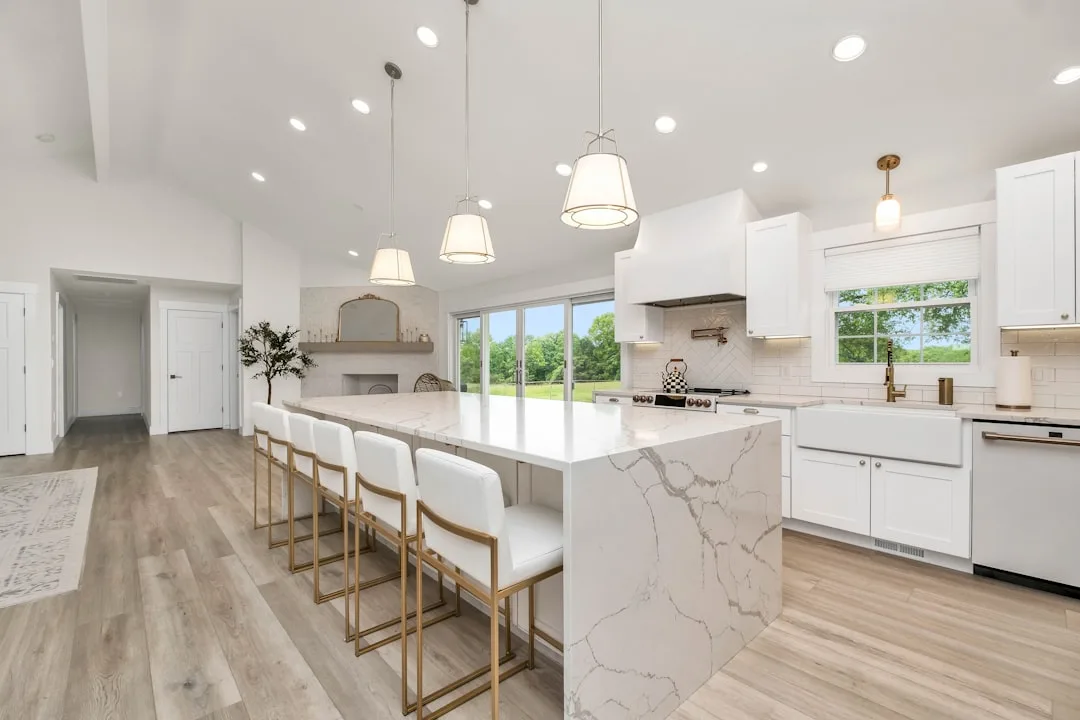
Most homeowners who regret their double island kitchen didn’t run out of money — they ran out of walkable floor space, and nobody told them that 42 inches of aisle clearance has to exist on every exposed side of both islands at the same time.
Quick Answer
Most homeowners who regret their double island kitchen didn’t run out of money — they ran out of walkable floor space, and nobody told them that 42 inches of aisle clearance has to exist on every exposed side of both islands at the same time.
That’s not a preference. That’s not a vibe. That’s a hard constraint that reshapes every other decision in the project, and the number of contractors I’ve watched nod politely when clients sketched out their two-island dreams — without ever mentioning this — is genuinely embarrassing. A double island kitchen layout sounds like a luxury upgrade. Poorly executed, it’s a $40,000 obstacle course.
What follows isn’t a gallery of beautiful kitchens. It’s the structural reality behind the ones that actually work to live in.
What a Double Island Kitchen Layout Actually Requires (Beyond Square Footage)
In This Article
- What a Double Island Kitchen Layout Actually Requires (Beyond Square Footage)
- Are Double Kitchen Islands a Good Idea? An Honest Cost-Benefit Breakdown
- The 3×4 Kitchen Rule Explained — And Why It Changes Everything for a Two-Island Plan
- Why Outlets Are No Longer Allowed in Kitchen Islands — And What That Means for Two-Island Wiring
- Is $30,000 Enough to Budget for a Double-Island Kitchen Remodel?
- The Four Double-Island Configurations That Actually Work (And the One That Looks Great in Photos But Fails in Practice)
- What No One Tells You Before Installing Two Kitchen Islands: Six Decisions That Determine Whether It Works
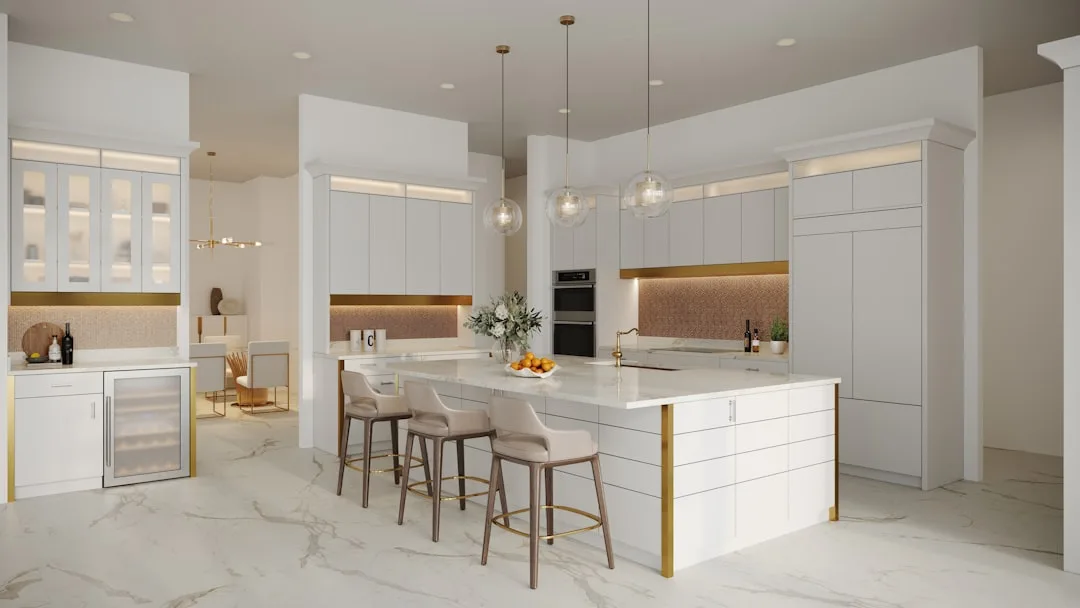
Square footage is the wrong starting question. I’ve walked through 300-square-foot kitchens that had no business fitting a single island, and 180-square-foot kitchens that pulled off one brilliantly — because the owners understood that usable floor geometry matters more than total room size.
The NKBA mandates 42 inches of minimum aisle width for single-cook kitchens and 48 inches for multi-cook households — and this clearance must exist on every exposed side of both islands simultaneously. Not just between the two islands. Between each island and every surrounding perimeter surface, appliance, and doorway. That’s the sentence most designers bury in paragraph four after you’ve already fallen in love with the layout.
Before any cabinet is drawn, a double island kitchen requires:
- Electrical: Two islands nearly always require two separate circuits. If a cooktop sits on one island, that’s a dedicated 240V line that has nothing to do with any receptacle circuit. Plan for three or four separate electrical rough-ins minimum.
- Plumbing: A sink on each island means two plumbing rough-ins — supply lines, drain lines, and the structural subfloor penetrations that come with them. Late-stage plumbing changes are among the most expensive project pivots you can make.
- Structural: Stone countertops on two islands add significant dead load. In older homes especially, subfloor reinforcement isn’t optional — it’s a conversation to have with a structural engineer before the countertop quote, not after.
- Ceiling: Two islands need two distinct overhead lighting zones. One pendant row centered between two islands creates visual confusion and practical shadow problems. The junction boxes need to be placed during framing.
Traffic flow mapping — not mood boards, not tile samples — is the first design task. Sketch how a person moves from the refrigerator to the prep surface to the cooktop to the sink. Then sketch how a second person does the same thing simultaneously. Then add the path from the dining area to the seating island. If those paths cross more than twice, the layout has a problem.
The room has to support two visual anchors without either becoming an obstacle. That’s a design constraint with a spatial solution, and it starts with a tape measure on an empty floor.
Actionable takeaway: Before meeting with any designer or contractor, tape the footprint of both proposed islands on your actual kitchen floor and walk every traffic path in your household. If it feels tight with tape on linoleum, it will feel worse with 900-pound stone.
Are Double Kitchen Islands a Good Idea? An Honest Cost-Benefit Breakdown
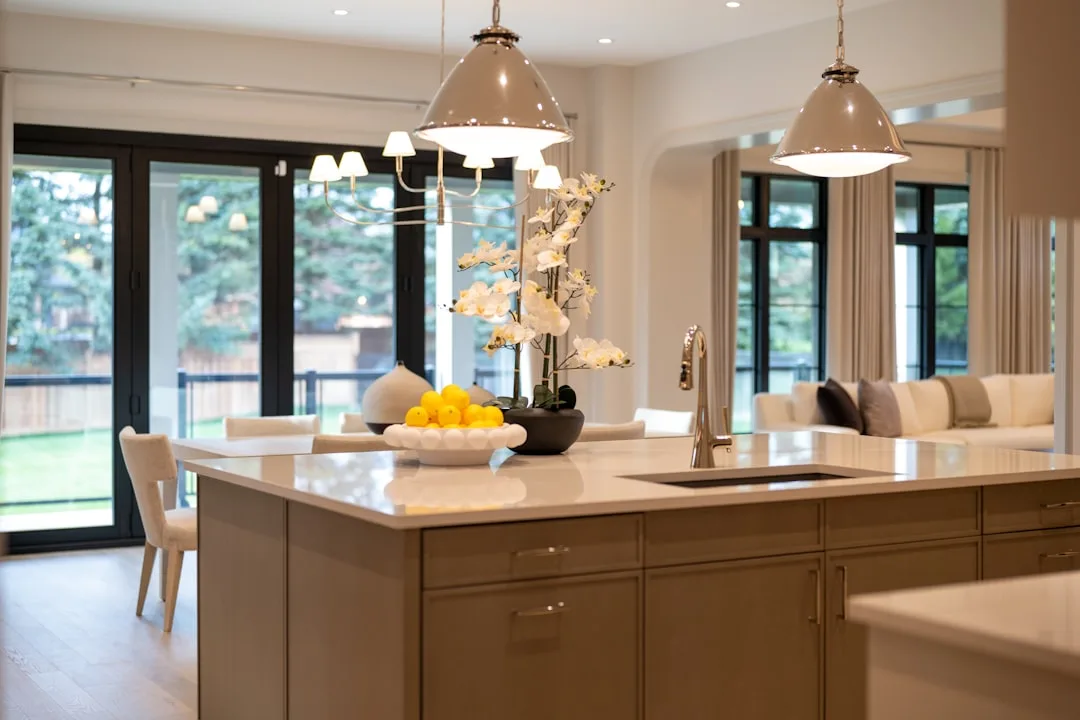
Here’s the answer nobody gives you: it depends entirely on how your household actually uses a kitchen, not on how it photographs.
The functional argument for a double island is real. The single loudest complaint I heard from clients over eleven years wasn’t about storage or counter space — it was about people clustering near the cook during gatherings. A dedicated prep island separated from a seating island physically routes guests away from active cooking without requiring anyone to be rude about it. For households that entertain frequently and cook simultaneously with a partner, two islands solve that problem structurally.
The functional argument against is equally real:
- Two islands double your countertop maintenance surface. Every seam, every grout line, every edge profile requires ongoing cleaning and periodic resealing if you’re using stone.
- Seating logistics become genuinely complicated. Stools at one island are workable. Stools at both creates a circulation nightmare that no amount of careful measurement fully fixes.
- The storage trap is invisible until it’s too late: a second island placed against a wall run eliminates the lower cabinet runs that would have gone there. Net kitchen storage can actually decrease when a second island is added without accounting for lost perimeter cabinetry.
Resale reality deserves honesty too. Double islands read as a luxury signal in markets where large homes are genuinely competitive — but in mid-range neighborhoods, an over-specified kitchen can feel mismatched with the rest of the home and may not recoup its full cost. The 2024 Cost vs. Value Report from Remodeling Magazine places the national average for a major kitchen remodel at $77,939 with a 38.7% average ROI. A double-island configuration typically sits in the upper third of that cost band before a single appliance upgrade is included.
For a couple or small family of three? One well-designed island will outperform two average ones every time.
Actionable takeaway: Write down how many people cook in your kitchen simultaneously on a typical week — not on Thanksgiving. If the honest answer is “usually just one,” your budget almost certainly builds one exceptional island rather than two compromised ones.
The 3×4 Kitchen Rule Explained — And Why It Changes Everything for a Two-Island Plan
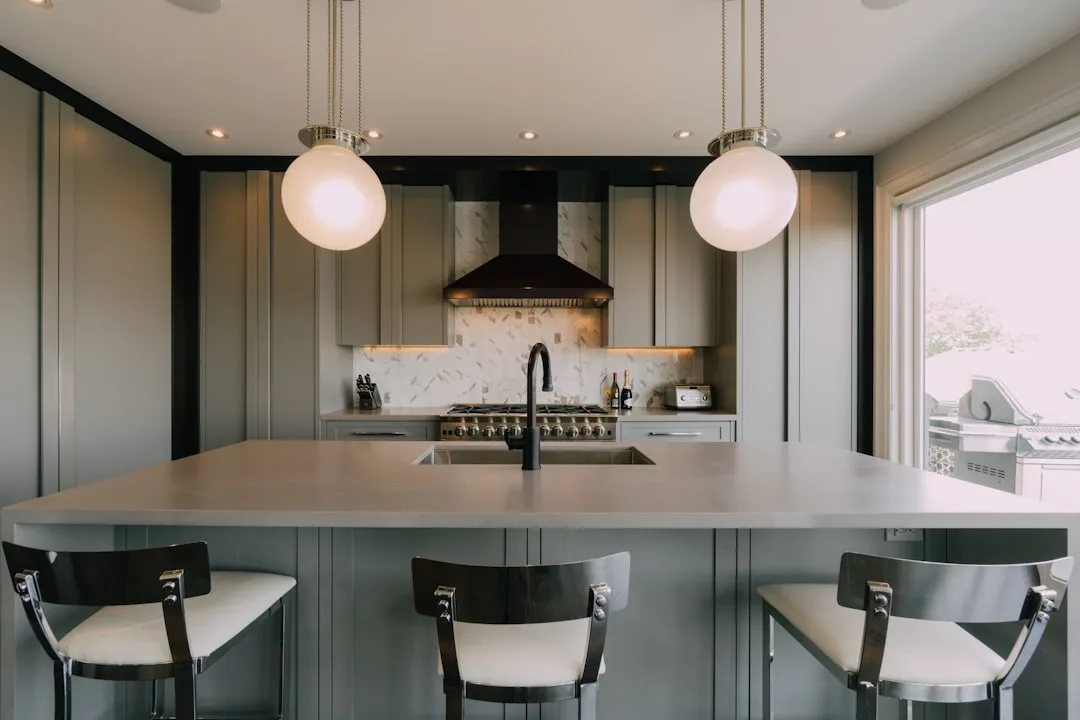
Most people have never heard of the 3×4 kitchen rule. The ones who have usually describe it vaguely and get it slightly wrong.
Here’s the actual framework: the rule refers to a proportional planning guideline — roughly 3 feet of usable depth for every 4 feet of linear kitchen run — used to assess whether a layout has the working depth to support an island before one is added. It’s not a code requirement. It’s a proportional sanity check that experienced kitchen designers apply before putting anything on paper.
In practice, the rule tells you whether your perimeter kitchen zone has enough depth to absorb a free-standing element without crushing aisle clearances. A kitchen that passes the 3×4 check for one island often fails it immediately for two. The second island doesn’t just need the space its own footprint occupies — it needs that footprint plus 42 to 48 inches of clear aisle on every side, simultaneously with the first island’s clearances.
A standard single island measuring 4 feet by 2 feet sounds modest. But once you factor in 42-inch aisle clearances on all four exposed sides, that island consumes roughly 112 square feet of functional floor zone — before a single person stands at it. Two islands can absorb 200 or more square feet of circulation space before anyone starts cooking.
To apply the 3×4 rule to a double-island plan:
- Measure your perimeter counter depth on each wall run.
- Subtract the 42-inch (minimum) aisle clearance required between the perimeter counter and the nearest island face on that side.
- Subtract the aisle clearance required between the two islands.
- Subtract the aisle clearance on the far side of the second island.
- Whatever remains is your available island footprint space — combined, across both islands.
Most kitchens that feel generous for one island leave 18 to 30 inches of remaining space after this exercise. That’s not enough for a second island. Not even close.
I once watched a client — lovely person, very certain — insist their 14-foot-wide kitchen could handle two 4-foot islands. The tape measure on the floor said otherwise within about four minutes. She cried a little. We redesigned. The kitchen is beautiful.
Actionable takeaway: Run the subtraction exercise above on your actual kitchen dimensions before any designer appointment. Walk in knowing your number — it changes the entire conversation.
Why Outlets Are No Longer Allowed in Kitchen Islands — And What That Means for Two-Island Wiring
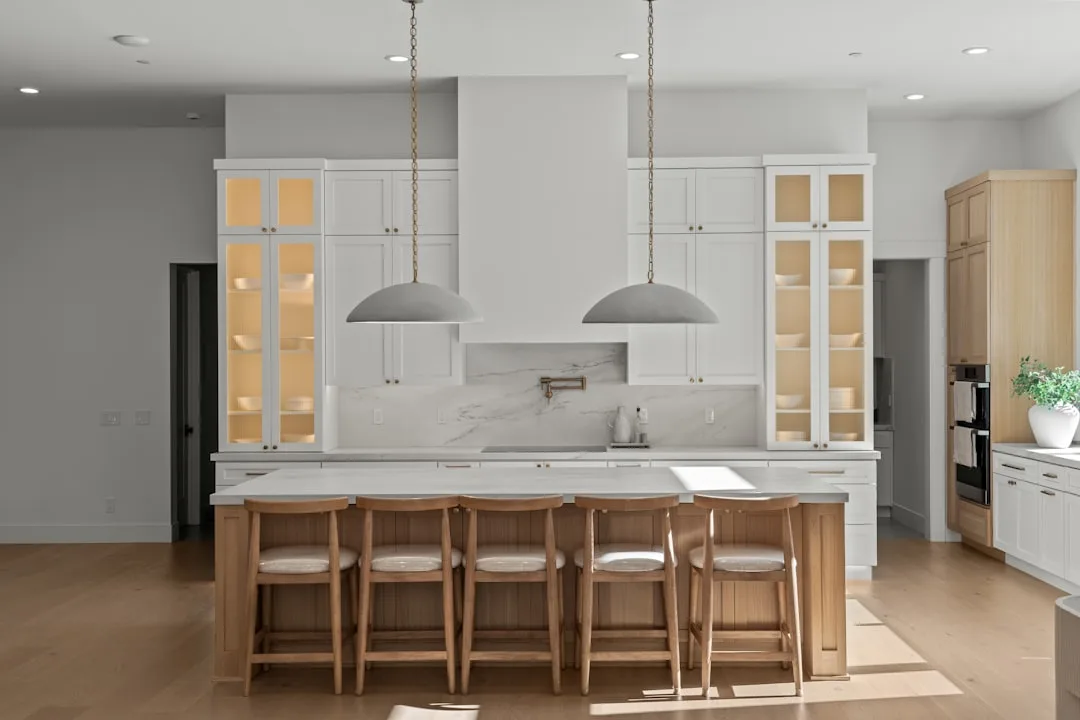
This is the section that confuses contractors and homeowners equally, because the answer depends entirely on where you live.
The 2023 NEC (National Electrical Code) Section 210.52(C) update shifted island outlet placement significantly — removing the requirement for countertop-surface receptacles on islands under 12 square feet and prioritizing under-counter or pop-up outlet systems instead. The logic behind the change is straightforward: water exposure on countertop surfaces near sinks creates GFCI risk that under-counter placement reduces substantially.
Here’s the complication nobody volunteers: as of current reporting, 32 states have not adopted the 2023 NEC. Their electricians are still operating under 2020 or earlier code versions, which may have entirely different island outlet requirements. The code your electrician quotes you is determined by your municipality’s adoption status — not by what’s been written in the most recent national update.
For a double island build, the wiring picture compounds fast:
- Each island is evaluated independently based on its countertop square footage. Two large islands may each trigger their own dedicated circuit requirements.
- A cooktop on either island requires its own 240V dedicated circuit — completely separate from any receptacle circuit serving that island.
- Pop-up outlet systems run $150–$600 per installation point. Under-counter USB hubs and recessed floor outlets near island bases add to that figure per location.
- If both islands need independent circuits plus a cooktop circuit plus under-counter outlets, you’re looking at four to six separate electrical rough-ins for two islands alone.
The pattern I kept seeing during kitchen projects was electricians quoting based on what the homeowner described, not what the final layout required. An island that starts as “prep surface only” becomes a coffee station with a dedicated drawer refrigerator six weeks later. That’s a change order. Plan the electrical for what the island might become, not just what it is on the initial sketch.
Actionable takeaway: Before finalizing your island layout, ask your electrician specifically which NEC version your municipality has adopted and get the outlet placement requirements for each island’s square footage in writing before the rough-in begins.
Is $30,000 Enough to Budget for a Double-Island Kitchen Remodel?
Straightforward answer: $30,000 is a realistic budget for a single-island kitchen refresh in most mid-range U.S. markets. For a full double-island installation that involves structural changes, new cabinetry, stone countertops, and proper electrical rough-in for both islands, $30K typically covers materials and basic labor — with very little margin remaining.
Here’s what the money actually has to cover:
- Cabinetry for two islands: $4,000–$18,000 depending on construction quality, door style, and whether you’re using stock, semi-custom, or fully custom builds.
- Countertops: $2,000–$8,000 per island for stone — quartz runs lower, book-matched marble runs significantly higher. Two islands means two full material budgets.
- Electrical rough-in for both islands: $1,500–$4,000, before any pop-up outlet systems or specialty installations.
- Plumbing (if sinking on second island): $800–$3,500 depending on distance from existing drain lines.
The numbers above alone can push $35,000 before a single pendant light is purchased.
Regional variance makes this even harder to generalize. $30,000 genuinely builds a premium double-island configuration in certain rural Midwest markets. In coastal metros — Boston, San Francisco, Seattle — $30,000 can disappear into demo, permit fees, and rough-in before a cabinet door is hung. That’s not an exaggeration. I’ve watched it happen.
The framing I’d push back on is treating “double island remodel” as a single budget line. Treat each island as its own budget item with its own cabinetry, countertop, electrical, and plumbing line. When the second island becomes financially squeezed — which happens constantly — it gets value-engineered into something that undercuts the entire design. A smaller, well-finished single island is always preferable to two islands where one is visibly the afterthought.
Change orders during kitchen remodels average 10–15% of total project cost. In a complex double-island project, late-stage decisions around lighting placement and appliance assignment are among the most common triggers. Budget that percentage before the project starts, not as a crisis fund afterward.
Actionable takeaway: Get separate line-item quotes for each island — cabinetry, countertop, electrical, plumbing — before agreeing to any total project number. If a contractor gives you a single lump quote for both islands, ask them to break it out. The ones who can’t are the ones who’ll miss something expensive.
The Four Double-Island Configurations That Actually Work (And the One That Looks Great in Photos But Fails in Practice)
Here’s what the Pinterest boards won’t tell you: configuration determines function, and most double-island kitchens that photograph beautifully are exhausting to cook in.
Configuration 1 — Parallel Linear
Both islands run parallel along the kitchen’s long axis, typically in an open-plan space where the kitchen feeds into a dining or living area. This configuration optimizes directional traffic flow and works exceptionally well for households that entertain at volume — caterers, frequent dinner party hosts, households with multiple simultaneous cooks. The risk is that parallel placement creates a corridor effect if aisle clearances are only minimally met.
Configuration 2 — L-Shaped Offset
Islands positioned at a 90-degree offset to each other, creating a natural activity triangle between cooking zone, prep zone, and serving zone. Best suited for kitchens that are wider than they are long — the offset breaks what would otherwise be a linear corridor and gives the room visual movement. This is the configuration I’d recommend most often for open-plan kitchens with an adjacent dining space.
Configuration 3 — Hierarchical (Primary + Prep)
One large feature island with seating; one smaller subsidiary island dedicated to active prep and small appliance storage. This is the most functional configuration for everyday households with occasional large gatherings. The hierarchy is visually clear — guests gravitate to the seating island, the cook owns the prep island — and the spatial logic is intuitive without signage.
Configuration 4 — Zone-Divided (Wet + Dry)
One island contains the sink and dishwasher; the other is entirely dry workspace and storage. This is the most underused configuration and often the most practical, because it concentrates all plumbing at a single island — reducing rough-in complexity and keeping the prep surface completely clear of water zone logistics.
The configuration that fails: symmetrical placement.
Identical-size islands placed equidistant from each wall for visual balance. It looks stunning in architectural renders. In practice, it creates a bowling alley traffic pattern, eliminates any visual hierarchy between the two elements, and makes the space feel institutional — like a hotel banquet kitchen, not a home. The pattern I kept seeing was clients who chose this layout because it photographed well and then quietly admitted, six months later, that they walked around the outside of both islands rather than between them.
NKBA-surveyed kitchen designers consistently rank traffic flow as the most underestimated factor in island placement — and the majority of post-remodel complaints about kitchen layouts involve circulation, not how the finishes look.
Actionable takeaway: Choose your configuration based on your household’s actual movement patterns, not on which one fits the visual balance of your space. Sketch traffic flow first. Layout second. Aesthetics third.
What No One Tells You Before Installing Two Kitchen Islands: Six Decisions That Determine Whether It Works
Most people approach a double island build as a materials question — what countertop, what cabinet finish, what hardware. These decisions come last. The six decisions below come first, and getting them wrong is what generates change orders.
Decision 1 — Countertop Material Consistency
Matching both islands creates visual cohesion and simplifies the design argument — but doubles your material cost immediately. Contrasting materials work when there’s a deliberate functional reason: a butcher block prep island beside a stone seating island, for instance, signals different uses clearly. Contrasting materials without that logic just looks like the budget ran out.
Decision 2 — Seating Configuration
Seating on both islands nearly always creates a circulation problem. The math is simple: bar stools pulled out add 18–20 inches of occupied floor depth to any island face. Two seating islands means potentially 36–40 inches of stool depth coming from two separate directions — eating directly into your aisle clearances. Most successful double-island kitchens seat at exactly one island.
Decision 3 — Lighting Plan Before Layout Finalization
Pendant placement for two islands requires ceiling junction boxes positioned during framing. Not after drywall. Not during cabinet installation. During framing. The number of projects I’ve seen where pendant lights ended up off-center over islands because the junction boxes were placed without the final island positions confirmed — it’s a small visual error that nags at people every single day.
Decision 4 — Flooring Continuity
Tile grout lines, hardwood plank direction, and luxury vinyl layout all need to be planned around two island footprints simultaneously. A herringbone tile pattern that looks intentional in the main kitchen zone can look completely accidental at the margins of a second island if it wasn’t planned for. Flooring decisions made before the island footprints are locked create problems that cost real money to fix.
Decision 5 — Appliance Assignment
Cooktop versus sink versus undercounter refrigeration versus wine storage — these need to be assigned to specific islands before cabinetry is ordered. Not roughly assigned. Specifically assigned, with dimensions confirmed. Cabinet carcasses are built around appliance cutouts, and changing appliance assignments after cabinetry is ordered means new cabinetry.
Decision 6 — Contractor Sequencing
A double island build involves more trade coordination than any single-island project. Plumbing, electrical, and cabinetry subs need to be on-site in a specific sequence, and their work overlaps in ways that single-island builds don’t create. A project manager — or a design-build firm that handles sequencing internally — is worth the premium at this complexity level. The alternative is a general contractor who isn’t tracking whether the electrician’s rough-in conflicts with the plumber’s drain placement, and you discover the conflict when both are already in the wall.
Actionable takeaway: Print this list and work through all six decisions before your first contractor meeting. Walk in with answers, not questions. The projects that go cleanly are the ones where the homeowner made hard decisions early.
Frequently Asked Questions About Double Island Kitchen Layouts
Are double kitchen islands a good idea?
Yes — conditionally. For kitchens over 200 square feet of floor space, with high household traffic or frequent entertaining, and with the budget to execute both islands at full specification, a double island layout solves real problems. It separates the cooking zone from the gathering zone in a way a single island cannot. For households of one or two people with a modest entertaining schedule, one well-designed island with generous countertop space and thoughtful storage almost always outperforms two islands where the second compromises the first. The question isn’t whether double islands are good in the abstract — it’s whether your specific household generates enough kitchen activity to justify the spatial and financial trade.
What is the 3×4 kitchen rule?
The 3×4 rule is a proportional planning guideline used to evaluate whether a kitchen’s footprint has sufficient depth relative to its linear counter run to absorb an island without collapsing walkable aisle clearances. In rough terms, it looks for 3 feet of usable kitchen depth for every 4 feet of linear run. Applied to a double-island layout, the rule helps reveal whether the kitchen’s primary work zone has enough room to support two free-standing elements after mandatory aisle clearances — 42 to 48 inches on all exposed sides of each island — are subtracted from available floor space. Many kitchens that pass this check for one island fail it for two.
Is $30,000 enough for a kitchen remodel with two islands?
In most U.S. markets, $30,000 covers materials and basic labor installation for two modestly specified islands within an existing structural layout — meaning no wall moves, no plumbing relocation, no subfloor reinforcement. The moment structural changes enter the picture, or countertops move above entry-level stone pricing, or a second plumbing rough-in is required, $30K becomes a materials-only budget with nothing left for labor. The 2024 Cost vs. Value Report places the national average major kitchen remodel at $77,939. A double-island configuration sits in the upper third of that range. Budget $30K per island as a working floor — not as a total project number.
Why are outlets no longer allowed in kitchen islands?
The short answer is that code priorities shifted. The 2023 NEC update under Section 210.52(C) moved away from requiring countertop-surface receptacles on islands under 12 square feet, directing installations toward under-counter and pop-up outlet systems instead. The underlying reason is water exposure risk — island countertop surfaces near sinks present GFCI protection challenges that under-counter placement sidesteps. However, 32 states have not adopted the 2023 NEC as of current reporting, so your local electrician may be working under 2020 or earlier code versions that have different requirements entirely. Check your municipality’s NEC adoption status before assuming either standard applies to your project.
Here’s what you can do today — before any contractor is called, before any showroom is visited: take a tape measure into your kitchen and mark both island footprints on the floor using painter’s tape. Then add 42-inch clearance lines around every exposed edge of both islands simultaneously. Walk every traffic path in your household. Open the refrigerator. Pull out the dishwasher. Stand at the range.
If you’re bumping the tape, so will your family — for the next fifteen years.
The double island kitchen layout works. Done right, with both islands fully specified and all six pre-project decisions locked before a single cabinet is ordered, it is one of the most functional configurations a large kitchen can have. The projects that fail aren’t the ones with insufficient budgets. They’re the ones where the spatial reality was never tested before the demo crew showed up.
Test it now. With tape. It’s free.