
The single reason most farmhouse Christmas rooms look flat has nothing to do with the ornaments, the garland, or the tree — it is that every light source in the room is operating at a different color temperature, and your eye knows something is wrong even when your brain cannot name it. If you have been struggling to get your farmhouse christmas lights to feel cohesive rather than assembled, that color temperature mismatch is almost certainly the culprit. You walk into a space that has all the right pieces — the cotton stems, the shiplap, the linen stockings — and it still looks like a Target display floor. Not a home. That gap between “correct ingredients” and “actually feels good” is almost always a lighting problem, and it is almost never discussed with any useful specificity. So let’s fix that.
Quick Answer
The single reason most farmhouse Christmas rooms look flat has nothing to do with the ornaments, the garland, or the tree — it is that every light source in the room is operating at a different color temperature, and your eye knows something is wrong even when your brain cannot name it.
What Joanna Gaines Actually Uses for Christmas Lighting (And Why It Works)
In This Article
- What Joanna Gaines Actually Uses for Christmas Lighting (And Why It Works)
- The Farmhouse Color Palette for Christmas — Beyond Basic Warm White
- Are Farmhouse Chandeliers Still in Style in 2025 — Or Has the Trend Peaked?
- How to Layer Farmhouse Christmas Lights Room by Room
- The Specific Mistakes That Make Farmhouse Christmas Lighting Look Wrong
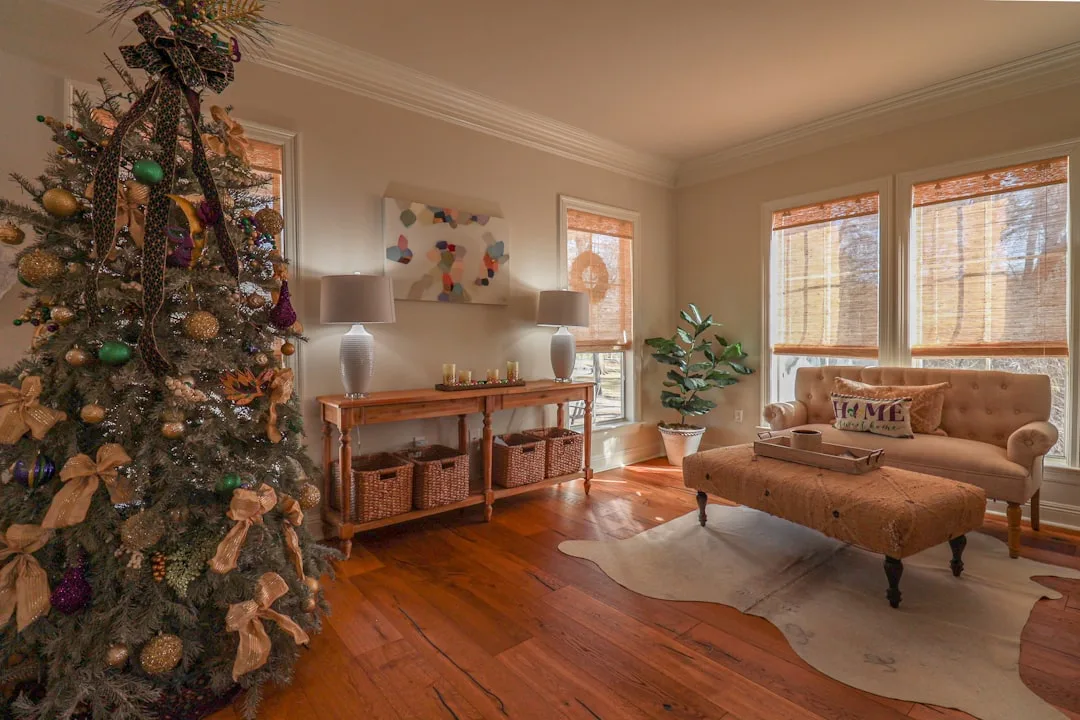
Joanna Gaines does not decorate with drama. That is the first thing worth understanding about her approach — her Christmas rooms feel warm and inevitable, like they grew there, rather than assembled. What makes that possible is a specific, consistent lighting strategy she has returned to across multiple Magnolia Network episodes and in her book Homebody: Edison-style warm white LED bulbs with exposed filaments, layered against natural materials, never competing with them.
The bulbs she gravitates toward sit in the 2700K–3000K color temperature range. That is not an accident. That range mimics candlelight and firelight — the only light sources that existed in the 19th-century American farmhouses the aesthetic is actually drawn from. Using anything cooler than 3000K in a farmhouse Christmas room is historically incongruent, not just aesthetically off. Your eye reacts to it the same way it would react to a chrome faucet on a hand-hewn barn sink.
What separates her approach from a generic “warm white lights are nice” recommendation is the layering. She does not run one strand and call it done. Globe string lights overhead, candle-effect lanterns at mid-height, smaller clustered lights inside glass vessels on surfaces — these are all operating simultaneously, and they are all running at the same color temperature. The consistency is what creates cohesion. The variety is what creates depth.
Her Magnolia brand product line reinforces this. Galvanized metal lanterns, cotton-wrapped wire lights, rattan pendants — the light accents the material, it does not overpower it. Shiplap walls glow under warm Edison strings. Galvanized metal picks up gold undertones at 2700K that completely disappear under 4000K daylight bulbs. The material does the work; the light just has to be in the right temperature range to let it.
One pattern I saw constantly working with clients: people would buy beautiful farmhouse decor and then hang cool white LED lights because they were cheap or “brighter.” The room looked sterile. Wrong temperature, every time.
The principle Gaines operates by — one that rarely gets named this clearly — is that farmhouse christmas lights should feel found, not installed. Imperfect placement. Slightly uneven distribution. The look of something that has been added to gradually, not deployed all at once from a matching set. When every strand looks purpose-purchased and symmetrically draped, the room reads as a set, not a home. The deliberate imperfection is not laziness — it is the actual technique.
Beyond placement, there is a wattage consideration that rarely gets mentioned. Gaines consistently works with lower-lumen outputs per fixture — not because dim rooms are inherently better, but because the combined effect of multiple low-lumen warm sources reads as richer and more dimensional than a single bright source at the same total output. A room with seven 40-watt-equivalent warm bulbs spread across different heights feels more inhabited than a room with one 280-watt-equivalent fixture doing all the work. The distribution creates the warmth, not the volume of light.
What to buy and what to skip — a quick reference:
- Buy: Cotton-wrapped wire strand lights in 2700K, galvanized metal lanterns with candle-effect inserts, Edison filament globe strings on black or cloth-wrapped cord
- Buy: Rattan or wicker pendant shades that diffuse warm light rather than directing it
- Skip: Pre-lit garland with built-in cool white LEDs — the temperature is rarely adjustable and almost always wrong
- Skip: Smart bulbs set to “warm white” mode — the 2700K setting on most smart systems still renders slightly differently than a purpose-built Edison filament bulb, and the inconsistency shows at scale
- Skip: Any strand marketed as “bright white” regardless of how the packaging describes the tone
Takeaway: Match every bulb in the room to the 2700K–3000K window, then layer across at least two different fixture types before adding a third.
The Farmhouse Color Palette for Christmas — Beyond Basic Warm White
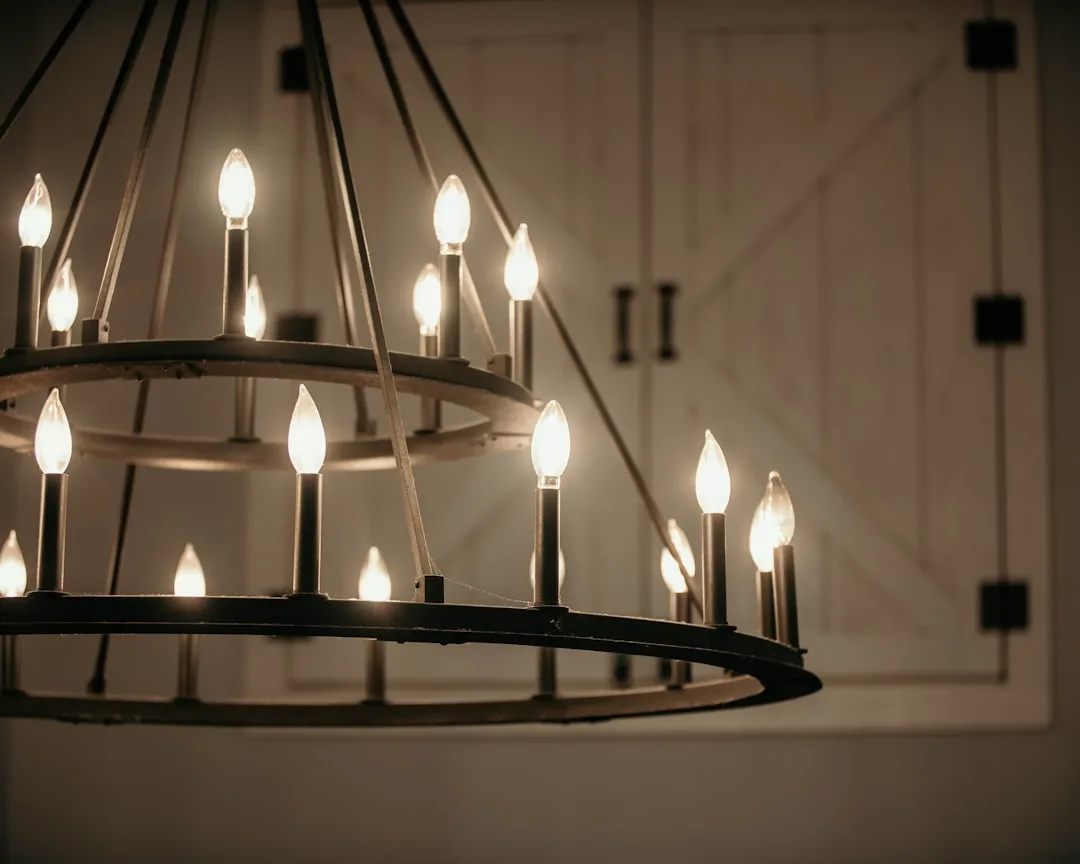
Most farmhouse Christmas content stops at “warm white lights and neutral tones” and leaves you standing in the middle of a home goods aisle completely unable to make a decision. That is not helpful. Here is what the actual palette looks like when it is working.
The core farmhouse Christmas color palette pulls from cream, ivory, aged gold, rust, and sage — not the traditional bright red and kelly green. Those colors belong to a different design tradition. Farmhouse Christmas draws from heritage Americana and Shaker design, where color was restrained because pigment was expensive and materials were left as close to their natural state as possible. Muted cranberry instead of fire-engine red. Dusty olive instead of Christmas tree green. Raw linen instead of stark white. Every color choice should look like it has been washed a few times.
Warm white farmhouse christmas lights are the correct foundation, but treating them as the complete answer creates flat results. The variation that makes a farmhouse room feel layered and intentional comes from mixing:
- Amber and sepia-toned bulbs alongside standard warm white — the slight orange cast adds depth
- Candlelight-effect LED bulbs in lanterns, which flicker subtly and read as genuinely warm rather than electrically warm
- Matte gold and aged brass accents in ornaments, wire, and fixture hardware that catch and diffuse warm light
- Wrapped or caged Edison bulbs inside galvanized or wire baskets placed at floor level — low light sources anchor a room in a way overhead light cannot replicate
- Battery-operated taper candles in cream or ivory, placed inside existing lanterns or along a mantel — these fill mid-height gaps in your layering without requiring additional wiring
What to remove from your consideration entirely: cool white lights, which read clinically in a space designed around organic texture; multicolor strands, which signal playfulness rather than the restrained heritage quality farmhouse is actually after; and any bulb with visible blue or purple undertones — these color temperatures aggressively cancel the warmth that shiplap, raw wood, and linen create naturally.
Color psychology research confirms that lighting in the 2700K–3000K range measurably increases perceived warmth and emotional comfort in interior spaces. This is not soft preference data — it affects how long people stay in a room and how they describe it afterward. The farmhouse aesthetic’s entire emotional goal is comfort and belonging. The lighting temperature either supports that goal or actively fights it. There is no neutral.
It is also worth being specific about surface materials and how they respond to light temperature. Raw wood — particularly reclaimed barn wood, white oak, and pine — reads entirely differently at 2700K versus 4000K. At warm temperatures, the grain deepens and the knots read as character. At cool temperatures, the same wood looks washed out and slightly gray. Linen and cotton textiles follow the same pattern: warm light makes the weave visible and inviting; cool light flattens the texture and makes it look cheap regardless of actual quality. Your farmhouse christmas lights are not just illuminating the room — they are either activating or deadening every material in it.
Takeaway: Build your palette from the earthy neutrals outward — cream and aged gold first, then layer in one muted accent color (rust, dusty olive, or muted cranberry) and let your lighting temperature tie it together.
Are Farmhouse Chandeliers Still in Style in 2025 — Or Has the Trend Peaked?
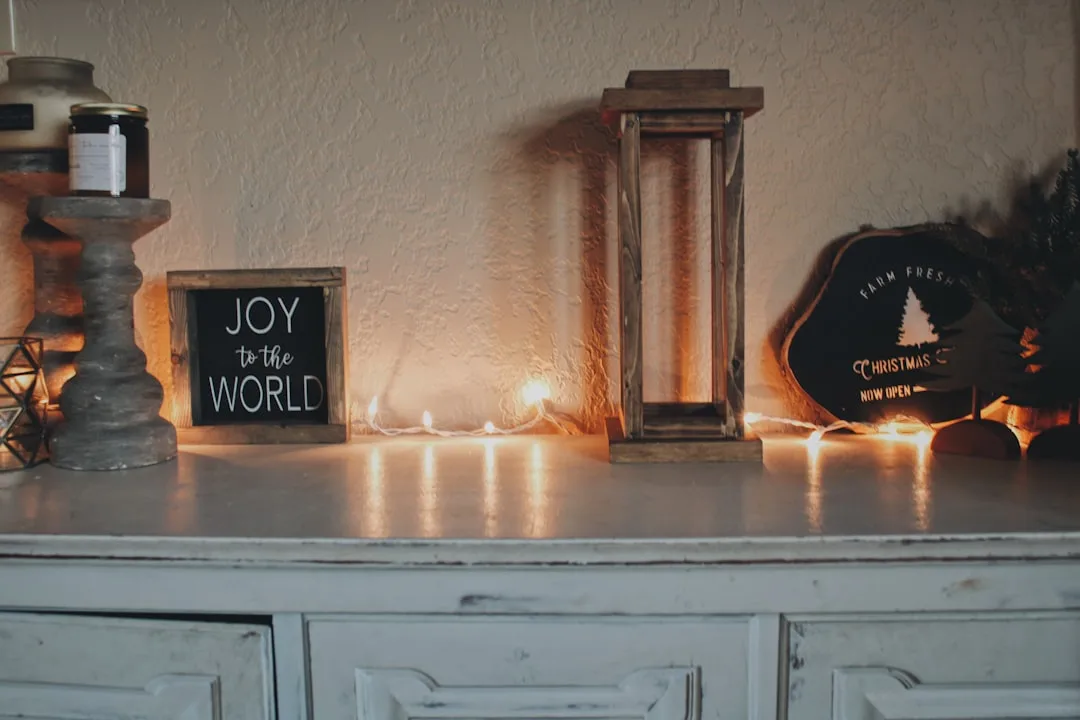
Something shifted around 2022 in how designers were talking about the wagon wheel chandelier. The oversized, six-foot iron wheel that dominated Pinterest boards from 2017 through 2021 started showing up in “dated decor” lists. Not wrong exactly — just maxed out. Saturated. The statement had been made too many times to still be a statement.
What replaced it is more interesting than most trend coverage acknowledges. “Refined rustic” is the operative phrase — farmhouse chandeliers are not disappearing, they are getting more precise. Thinner iron profiles. Matte black or aged brass finishes rather than raw brown iron. Candelabra-style fixtures with four to six arms rather than twelve, scaled to the room rather than dominating it. The silhouette is still clearly farmhouse; the execution is tighter.
For Christmas specifically, the chandelier becomes a layering anchor rather than the statement piece. Draping loose eucalyptus or cedar branches over the arms with a single strand of 2700K Edison lights threaded through — not zip-tied or perfectly arranged, just laid and loosely draped — is how designers are currently working with these fixtures. The greenery softens the iron and brings the eye down from the ceiling plane into the middle height of the room, which is where most living rooms lack visual interest during the holidays.
Chandelier choices that are working in 2025:
- Aged brass candelabra chandeliers with four to six arms, scaled at 24–30 inches diameter for rooms under 400 square feet
- Matte black iron fixtures with exposed Edison filament bulbs — cleaner profile than the wagon wheel, reads as intentional rather than trend-chasing
- Woven rattan or seagrass pendants at lower hanging heights, which add texture while softening overhead light — particularly effective over dining tables
- Repurposed industrial fixtures in oil-rubbed bronze, which sit comfortably in both farmhouse and transitional spaces
Chandelier choices that are reading dated in 2025:
- Oversized wagon wheel chandeliers with more than eight arms, particularly in raw brown iron
- Mason jar cluster pendants — the individual elements aged out before the concept did
- White-painted wood bead chandeliers in their original form, though dark-stained bead versions are still holding
The honest answer on whether farmhouse chandeliers are still in style: yes, with editing. The category is not finished — it is consolidating. The pieces that were always slightly overdone are the ones now flagging as dated. The pieces that had restraint built in from the beginning are still current and will continue to be. Buy for proportion and material quality, not for trend category.
How to Layer Farmhouse Christmas Lights Room by Room
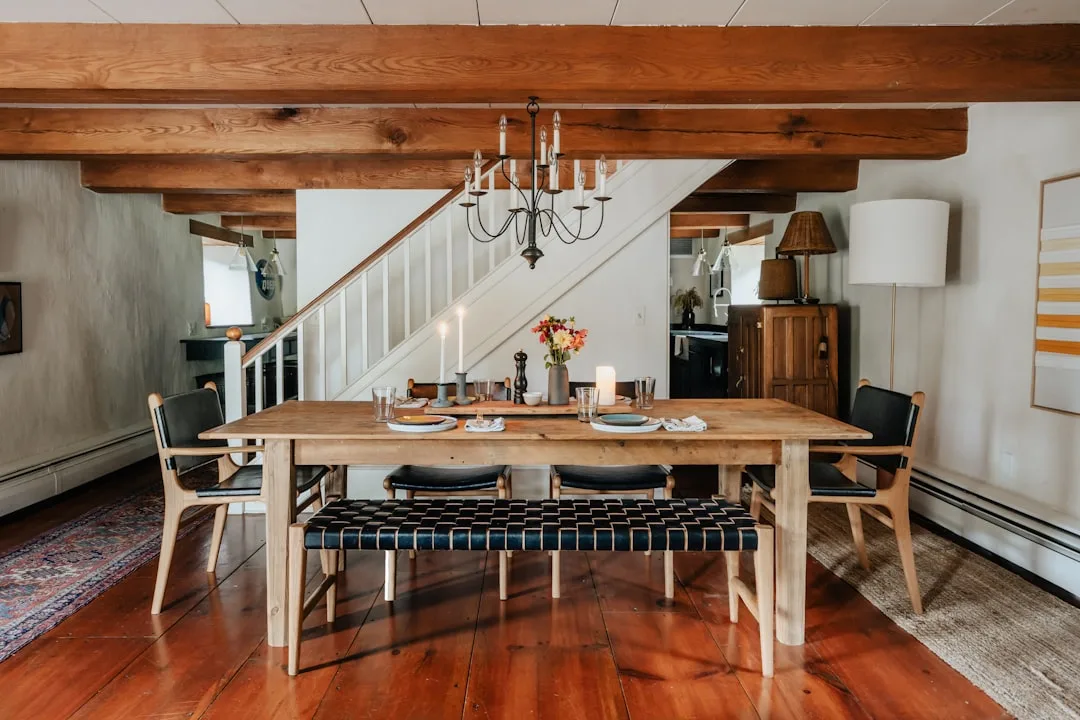
The mistake most people make with farmhouse christmas lights is treating every room identically. The living room, the dining room, the entryway, and the kitchen all have different functions, different ceiling heights, and different natural light levels — and the lighting strategy should respond to each of those variables rather than repeating the same approach everywhere.
Living Room
The living room carries the most decorating weight in most homes during Christmas, which means it needs the most layering. Work in three height zones:
- Overhead zone: String lights along exposed beams, draped over a chandelier, or clipped to the ceiling line at the perimeter — not centered, not symmetrical
- Mid-height zone: Lanterns on side tables, candle-effect LED pillar candles on the mantel, a lighted wreath with 2700K micro-lights rather than the standard pre-lit variety
- Floor zone: A lighted tree anchors this zone, but add galvanized buckets or wooden crates with Edison strand lights loosely bundled inside — the loose bundle reads as organic, not arranged
The total light output across all three zones should feel equivalent to a single dimmed overhead fixture. You are replacing one source with many — the room should not be brighter overall, it should be more dimensionally lit.
Dining Room
The dining table is the most visually specific surface in the house during Christmas meals, which means the lighting directly above it matters more here than anywhere else. A chandelier at the right height (30–34 inches above the table surface for standard 8-foot ceilings) with 2700K candelabra bulbs is the foundation. Add:
- A loose greenery runner down the center of the table with battery-operated micro-lights at 2700K threaded through — not evenly spaced, just present
- Pillar candles in varying heights at 3–4 points along the table, clustered rather than evenly distributed
- No overhead can lighting during meals — if you have recessed fixtures, put them on a dimmer and drop them to 20% or off entirely
Entryway
The entryway has one job at Christmas: make the arrival feel like something. The single most effective farmhouse christmas lights move for an entryway is a galvanized lantern at floor level near the door — large enough to be seen immediately, containing a candle-effect Edison bulb, not a real candle. Add a simple greenery swag above the door frame with a strand of warm micro-lights and nothing else. The restraint is the point. An entryway that tries to do too much reads as anxious.
Kitchen
Kitchens are the hardest room to get right during Christmas because they require functional task lighting that is often cool in temperature. The solution is not to fight the task lighting — it is to add farmhouse christmas lights at a lower level that compete with it visually. A strand of Edison lights along the top of open shelving, a small lighted wreath on a window above the sink, and a galvanized lantern on the counter near the stove create warmth at counter height that reads even when the overhead functional lights are on.
The Specific Mistakes That Make Farmhouse Christmas Lighting Look Wrong
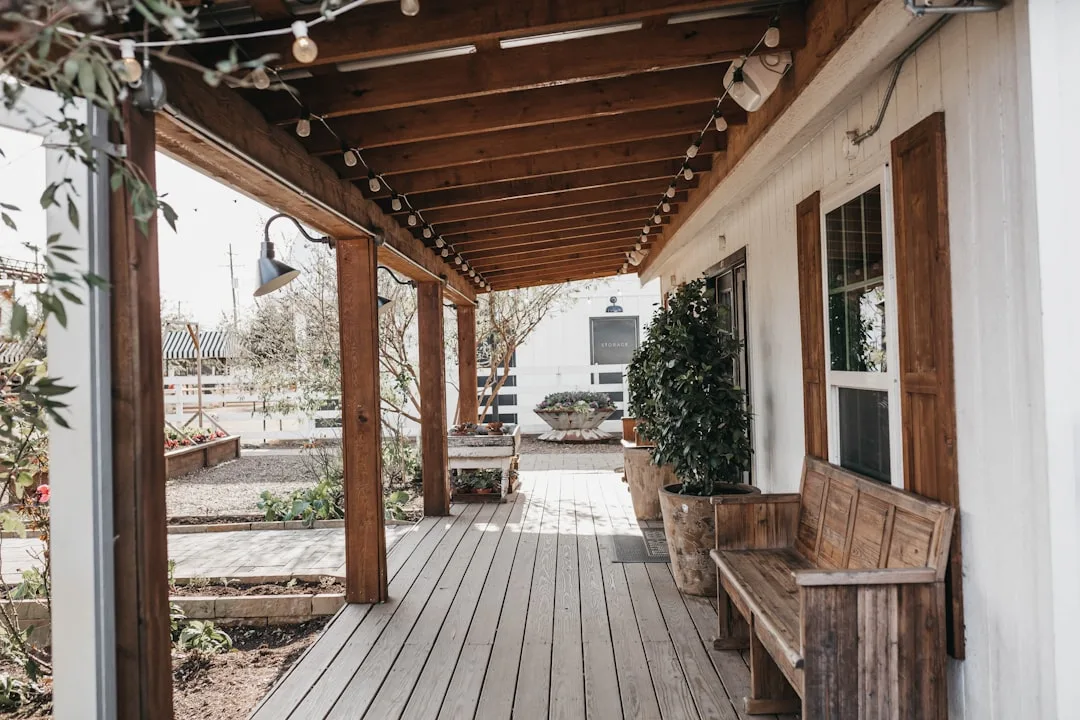
After working with enough clients on holiday spaces, the failure points become very predictable. They are almost never about budget. They are almost never about the quality of individual pieces. They are consistently about the same five decisions made in the same wrong direction.
Mixing color temperatures without a plan
This is the most common and most damaging mistake. Someone puts warm white lights on the tree, cool white lights on the garland because that strand was on sale, and then adds a candle with a genuinely orange flame. The room looks like three different designers worked on it simultaneously. Every light source should fall within the same 300K window — ideally 2700K–3000K. If you cannot verify the color temperature of a strand before buying, do not buy it.
Lighting only the tree
A Christmas tree is a single object in a room. Lighting only the tree creates a spotlight effect — one dramatically lit focal point surrounded by a dark room. This is a theater technique, not a home technique. The tree should be the brightest point in a room where everything else is also lit, not the only lit object in an otherwise dark space.
Using too-short strands on too-large trees
The standard recommendation is 100 lights per vertical foot of tree. Most people use far less and compensate by buying cheap high-density strands that read as flat rather than dimensional. The depth of a well-lit tree comes from lights pushed to the interior branches, not just draped on the outer canopy. Interior lighting on a tree creates shadow and depth; surface lighting creates a lit outline.
Buying pre-lit garland without checking the temperature
Pre-lit garland is convenient and almost universally produced with lights in the 3500K–4000K range, which is definitively outside the farmhouse window. If you are buying pre-lit garland and the packaging does not specify 2700K or “warm white,” assume it is wrong. Strip the built-in lights and add your own strand, or buy unlit garland and add your own strand from the beginning.
Placing all light sources at the same height
A room where every light source is at table height, or every light source is overhead, reads as flat regardless of how good the individual pieces are. Vertical variation — floor, table, mantel, chandelier — is what creates the sense of a layered, inhabited space. Even if every source is operating at the right color temperature, clustering them at one height eliminates the depth that temperature consistency was supposed to create.
FAQ: Farmhouse Christmas Lights
What color temperature should farmhouse Christmas lights be?
The correct range for farmhouse christmas lights is 2700K to 3000K. This window mimics candlelight and firelight — the historical light sources the farmhouse aesthetic is drawn from. Anything cooler than 3000K will read as clinical in a space built around organic materials like shiplap, raw wood, linen, and galvanized metal. When in doubt, buy 2700K specifically rather than anything labeled “soft white” without a stated Kelvin rating, since “soft white” is used inconsistently across manufacturers.
Can you mix warm white and cool white lights in a farmhouse Christmas room?
Not successfully. The color temperature difference is visible to the human eye even without a side-by-side comparison — the brain registers the inconsistency as something being off, even when you cannot immediately identify the source. The entire point of a well-layered farmhouse lighting scheme is that every source reads as part of the same system. Mixing temperatures breaks that coherence immediately.
Are Edison bulb string lights still in style for farmhouse Christmas decor in 2025?
Yes, and they are likely to remain current because they are referencing a historical form rather than a trend. The exposed filament Edison bulb is not a trend in the way shiplap accent walls or subway tile were trends — it is a direct reference to pre-electrification lighting design, which is genuinely aligned with the farmhouse aesthetic’s historical basis. Where Edison lights look dated is when they are used in non-farmhouse contexts as a generic “warm and cozy” shortcut. In an actual farmhouse room with the right materials, they remain the correct choice.
How many lights do you need for a farmhouse-style Christmas tree?
The standard starting point is 100 lights per vertical foot of tree, but the more useful metric is depth coverage rather than quantity. A 6-foot tree with 600 lights pushed to both the interior branches and the outer canopy will read better than a 6-foot tree with 900 lights draped only on the surface. For farmhouse specifically, work with slightly lower total lumen output than you think you need — the tree should glow, not blaze. One common approach is to use 70% warm white and 30% amber-toned lights mixed on the same tree for depth.
What is the difference between farmhouse Christmas lights and regular Christmas lights?
The distinction is primarily in bulb shape, cord material, and color temperature — not in any fundamental technology. Farmhouse christmas lights typically feature exposed filament Edison-style bulbs or small globe bulbs rather than the traditional conical C7 or C9 shapes; cloth-wrapped or black wire cords rather than green plastic; and consistent 2700K color temperature rather than the mixed temperatures common in standard retail Christmas light sets. The aesthetic effect is significant even though the underlying technology is identical.
What color temperature should farmhouse Christmas lights be?
The correct range for farmhouse christmas lights is 2700K to 3000K. This window mimics candlelight and firelight — the historical light sources the farmhouse aesthetic is drawn from. Anything cooler than 3000K will read as clinical in a space built around organic materials like shiplap, raw wood, linen, and galvanized metal. When in doubt, buy 2700K specifically rather than anything labeled “soft white” without a stated Kelvin rating, since “soft white” is used inconsistently across manufacturers.
Can you mix warm white and cool white lights in a farmhouse Christmas room?
Not successfully. The color temperature difference is visible to the human eye even without a side-by-side comparison — the brain registers the inconsistency as something being off, even when you cannot immediately identify the source. The entire point of a well-layered farmhouse lighting scheme is that every source reads as part of the same system. Mixing temperatures breaks that coherence immediately.
Are Edison bulb string lights still in style for farmhouse Christmas decor in 2025?
Yes, and they are likely to remain current because they are referencing a historical form rather than a trend. The exposed filament Edison bulb is not a trend in the way shiplap accent walls or subway tile were trends — it is a direct reference to pre-electrification lighting design, which is genuinely aligned with the farmhouse aesthetic’s historical basis. Where Edison lights look dated is when they are used in non-farmhouse contexts as a generic “warm and cozy” shortcut. In an actual farmhouse room with the right materials, they remain the correct choice.
How many lights do you need for a farmhouse-style Christmas tree?
The standard starting point is 100 lights per vertical foot of tree, but the more useful metric is depth coverage rather than quantity. A 6-foot tree with 600 lights pushed to both the interior branches and the outer canopy will read better than a 6-foot tree with 900 lights draped only on the surface. For farmhouse specifically, work with slightly lower total lumen output than you think you need — the tree should glow, not blaze. One common approach is to use 70% warm white and 30% amber-toned lights mixed on the same tree for depth.
What is the difference between farmhouse Christmas lights and regular Christmas lights?
The distinction is primarily in bulb shape, cord material, and color temperature — not in any fundamental technology. Farmhouse christmas lights typically feature exposed filament Edison-style bulbs or small globe bulbs rather than the traditional conical C7 or C9 shapes; cloth-wrapped or black wire cords rather than green plastic; and consistent 2700K color temperature rather than the mixed temperatures common in standard retail Christmas light sets. The aesthetic effect is significant even though the underlying technology is identical.