
The average U.S. apartment is just 941 square feet — yet nearly every holiday decorating guide is written for a house with a fireplace, a foyer, and a living room big enough for a 7-foot tree. Most of that advice isn’t just unhelpful for renters. It actively makes small spaces worse when people try to apply it at the wrong scale.
Quick Answer
The average U.S. apartment is just 941 square feet — yet nearly every holiday decorating guide is written for a house with a fireplace, a foyer, and a living room big enough for a 7-foot tree.
This guide is built differently. Every tip here was tested against the specific constraints of apartment living — limited outlets, no mantel, landlords who will charge you for wall damage, and rooms where a single bad decor decision can make the whole space feel like a storage unit that someone threw tinsel at. What follows is christmas decor for a small apartment, treated as an actual design problem instead of a shopping list.
Why Most Small-Space Holiday Setups Fall Flat (And What to Fix First)
In This Article
- Why Most Small-Space Holiday Setups Fall Flat (And What to Fix First)
- 1. Swap the Full Tree for a Vertical Statement That Actually Fits Your Floor Plan
- 2. Use Lighting as Your Primary Decorator, Not an Afterthought
- 3. The Command Hook Deep-Dive Renters Actually Need
- 4. Anchor Every Zone With a Scent Layer — The Decorating Element People Forget
- 5. Dress Your Windows: The Vertical Real Estate Most Renters Ignore
- 6. Textile Swaps That Transform a Room in Under an Hour
- 7. Mantel-Free Fireplace Alternatives (For Apartments That Don’t Have One)
- 8. Entryway Decorating When You Only Have a Doorway
- 9. Greenery Without the Mess: Realistic vs. Fresh vs. Faux — The Honest Comparison
- 10. A Room-by-Room Priority Map: Where to Spend Your Budget First
- 11. The One Rule That Ties All of It Together
Here’s what I kept seeing in client apartments: someone would go to Target in late November, come back with four bags of decorations that looked great on the display shelf, and then spend a frantic afternoon cramming things onto surfaces until the room felt like a holiday pop-up shop rather than a home. The problem wasn’t taste. It was scale mismatch — the single most common reason small-space holiday decorating fails.
The U.S. Census Bureau puts the average American apartment at approximately 941 square feet, but many studio and one-bedroom units clock in well under 700. The decorating industrial complex, meanwhile, produces content for people with mudrooms. When you take house-scale advice and compress it into an apartment, you don’t get a cozy version of the same thing — you get visual noise that makes every surface look busier and every wall feel closer.
The second problem is density. Most apartment dwellers compensate for having fewer surfaces by loading each available surface completely. A windowsill gets three candles, a figurine, and a garland. A side table gets a bowl of ornaments, a mini tree, and a stack of holiday books. Each zone is technically decorated. The whole room reads as chaotic.
The fix — and this is a principle I use with every new client before touching a single object — is the focal-point-first rule. Before you buy anything, before you unpack any storage bin, identify one anchor zone. This is the area that will carry the most decorative weight: typically a sofa wall, a window, or a console table. Everything else in the room should feel secondary to that zone, intentionally quieter, so the eye has somewhere to land.
Establish your anchor zone first. Decorate it fully. Then — and only then — decide whether any other surface actually needs attention.
1. Swap the Full Tree for a Vertical Statement That Actually Fits Your Floor Plan
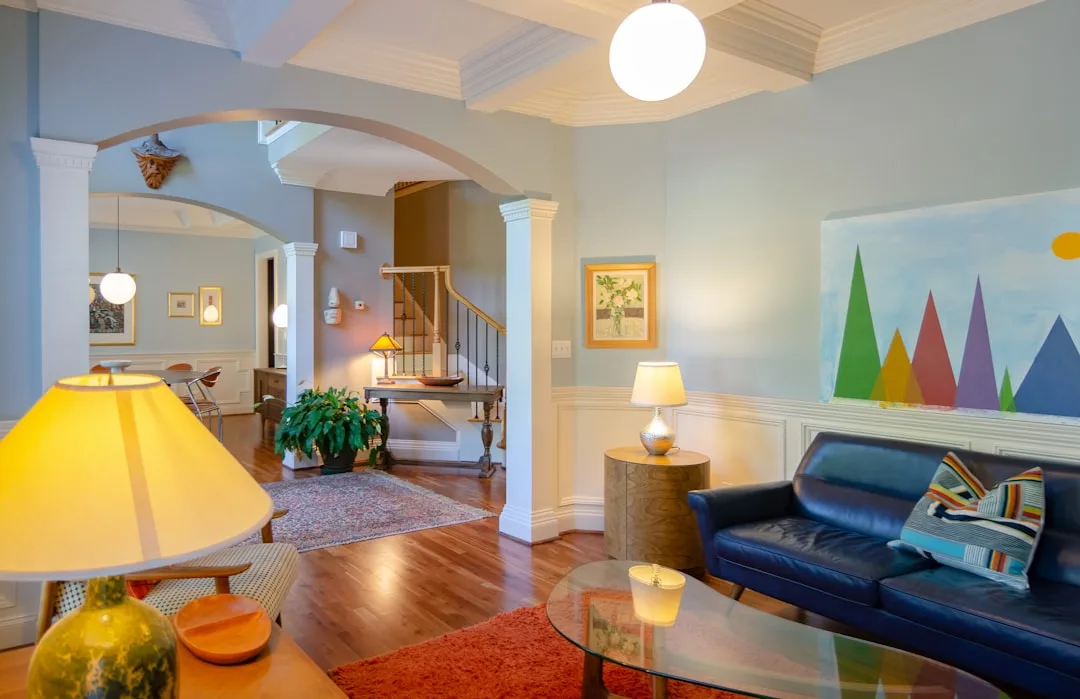
A standard 6-foot Christmas tree has a base diameter of roughly 40 to 50 inches. That’s wider than most apartment hallways and nearly as wide as many living room corners — the exact corners people try to put them in. Before you write off the tree entirely, though, the real question isn’t whether you can physically fit one. It’s whether fitting one will leave the room livable.
The 1/3 rule is the most useful guideline I know for this: whatever vertical element you use — tree, branch installation, lighted dowel — it should never exceed one-third of the height of the wall it’s placed against. In a room with 8-foot ceilings, that means your tree or substitute tops out around 32 inches before it starts competing with the architecture.
That framing opens up three workable formats:
- Pencil trees — narrow-profile trees ranging from 4 to 6 feet tall with a footprint of 18 inches or less — are legitimate in apartments where you have ceiling height but no floor space to spare. They read as intentional, not compromised, when placed in a corner and lit well.
- Tabletop trees (24–36 inches) work in smaller spaces but only when they’re styled with intention. A small tree sitting directly on a surface looks like an afterthought. The same tree elevated on a riser, anchored on a decorative tray, and skirt-styled with wrapped gift boxes beneath it looks like a design decision.
- Wall-mounted branch installations — a cluster of birch or manzanita branches mounted in a wall bracket, strung with lights, and hung with a few ornaments — add height and seasonal character without consuming a single square foot of floor space. I’ve done this in studios under 400 square feet where it looked more interesting than any tree would have.
Actionable takeaway: Measure your intended corner before purchasing anything. If the floor footprint exceeds 24 inches in either direction, consider the branch installation or a styled tabletop tree on a raised surface instead.
2. Use Lighting as Your Primary Decorator, Not an Afterthought
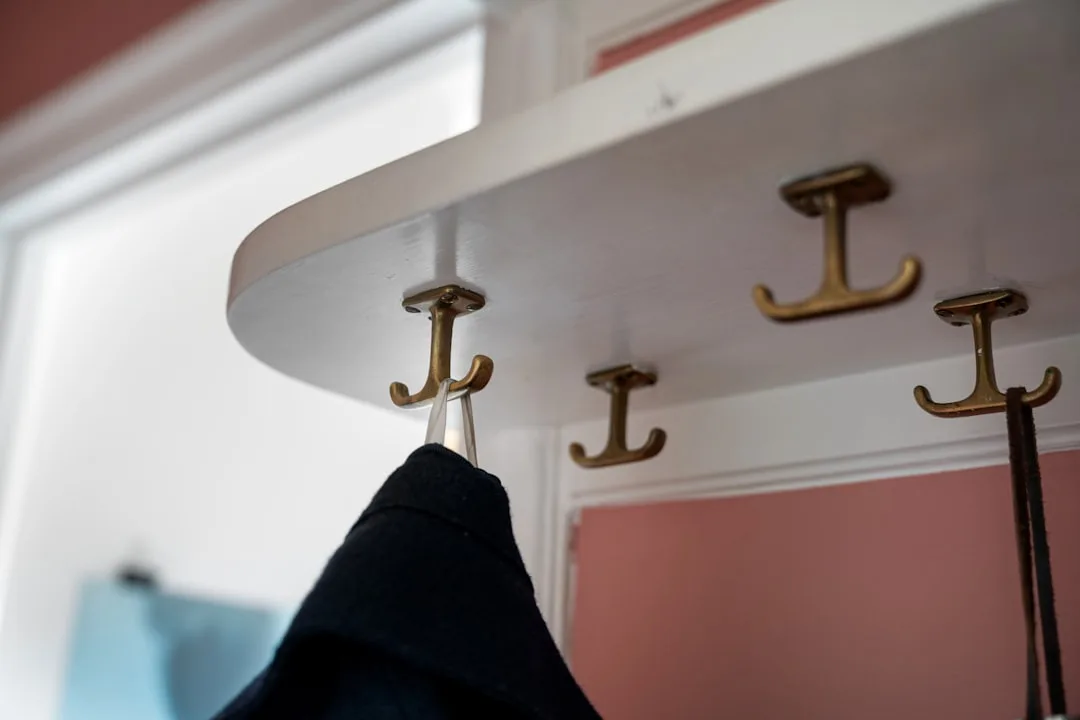
Every client I’ve ever worked with underestimated what lighting could do and overestimated what objects could do. I learned this lesson myself the hard way — I once spent $800 on a sectional for a client’s living room that worked perfectly until the overhead fixture made the whole room look like a dentist’s waiting area. We changed nothing except the lighting and the room was transformed.
In small apartments, color temperature is the variable that matters most. Warm white lights in the 2200K–2700K range read as intentional, cozy, and dimensional. Cool white or daylight-spectrum lights (5000K+) read clinical and harsh in compact spaces — they flatten the room rather than deepening it. If your existing string lights look cheap or cold, this is almost certainly why.
Research from the Lighting Research Center at Rensselaer Polytechnic Institute supports what I was seeing empirically: ambient low-level lighting increases the perceived warmth and spaciousness of a room compared to a single overhead source. This is why a room with three lamps and some fairy lights feels bigger than the same room lit only by an overhead fixture, even though no furniture has moved.
The layering technique that works best in small apartments:
- High level: Fairy lights draped along a curtain rod, around a window frame, or along the top edge of a bookcase — this pulls the eye upward and creates ceiling presence
- Eye level: Candles or a lit object on a console or coffee table — this is your warmth layer
- Low level: A single lit object near the floor, like a lantern or illuminated bottle — this creates the illusion of depth and a larger visual field
Window lighting deserves specific mention. String lights placed inside a window reflect back into the room through the glass at night, effectively doubling their visual impact in tight spaces. Battery-operated lights work better here than plug-in versions, especially in studio apartments where outlet placement rarely lines up with window locations.
Actionable takeaway: Replace at least one overhead light source with a lamp this season. Add one layer of warm-white (2700K or lower) fairy lights. The room will feel completely different before you’ve added a single ornament.
3. The Command Hook Deep-Dive Renters Actually Need
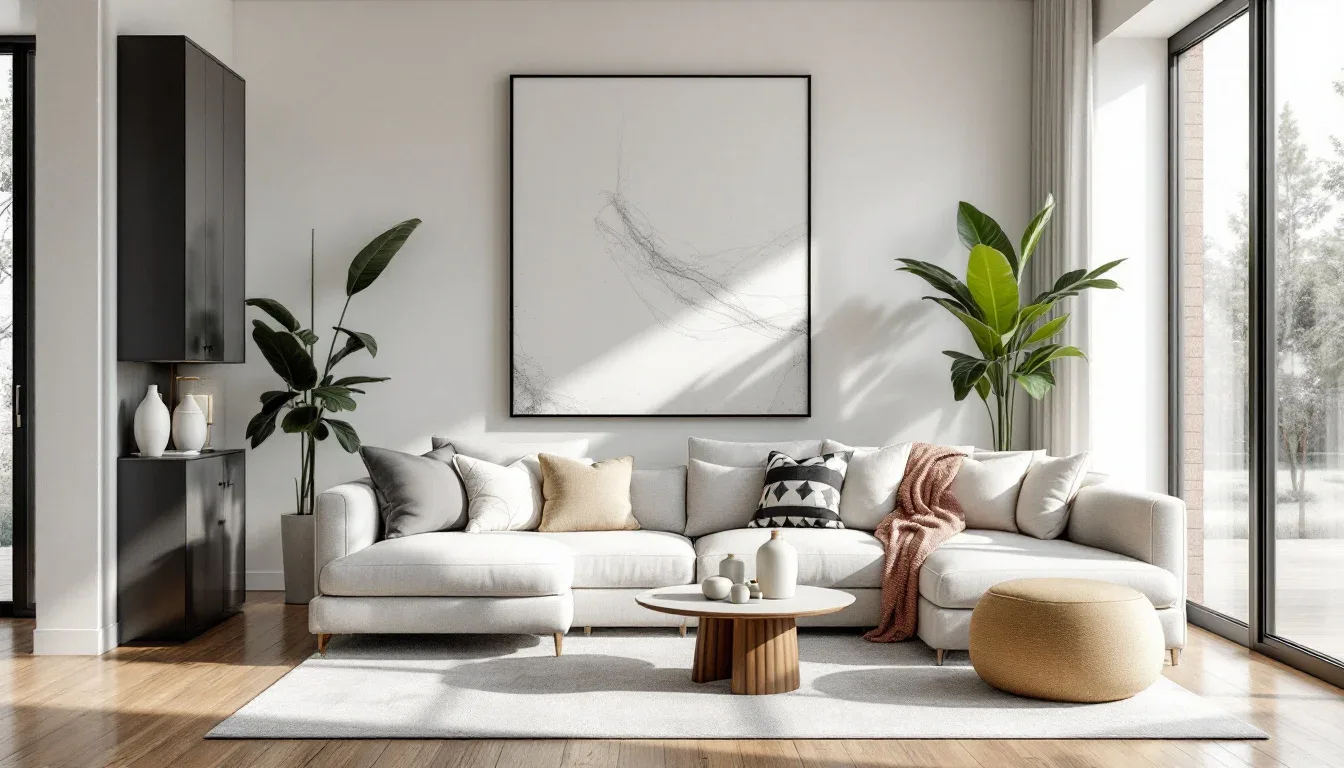
Command strips appear in every decorating article written for renters. None of those articles tell you the part that actually matters — which is that Command strips fail in specific, predictable circumstances, and if you don’t know which ones, you will damage your walls.
3M, the company that makes Command brand products, officially states that their strips should not be applied to wallpaper, brick, rough or textured surfaces, or to walls painted fewer than seven days prior. That information was absent from every competitor article I reviewed. It matters enormously in apartment buildings where super-smooth drywall is rare and fresh-painted walls after move-in are common.
Here’s the breakdown by product line, because “Command hooks” is not one thing:
- Standard adhesive strips — hold up to 4 lbs — appropriate for lightweight garland, paper decorations, small wreaths under 12 inches
- Large Command hooks — hold up to 7.5 lbs — appropriate for a standard fresh evergreen wreath (which can weigh 3–5 lbs when fresh), one stuffed stocking
- Command Outdoor hooks — designed for surfaces with texture, temperature variation, and moisture — better choice if your walls have any texture at all, even light orange peel
The removal timing issue is one almost nobody mentions. Leaving strips on walls for more than 6–8 weeks in warm indoor conditions increases the likelihood of paint pulling on removal — the adhesive relaxes and bonds more aggressively over time. If you put them up in late November and take them down in January, you’re pushing toward that risk window.
When Command strips won’t work — textured walls, wallpapered walls, tile, or surfaces you’re simply not willing to risk — the alternatives are:
- Tension rods inside window and door frames for hanging lightweight garland
- Over-door wreath hangers — zero surface contact, rated for wreaths up to 8 lbs, adjustable for most door thicknesses
- Removable adhesive hooks from alternatives like Scotch, Gorilla, or Velcro brand — these vary significantly in holding capacity and surface compatibility, so check the spec sheet, not just the package claim
Actionable takeaway: Check your walls before you buy Command strips. If they have any texture, skip them entirely and use an over-door hanger for the wreath and a tension rod for window garland.
4. Anchor Every Zone With a Scent Layer — The Decorating Element People Forget

Scent is the decorating element that requires no floor space, no wall anchors, and no storage — and it produces a faster emotional response than almost anything visual you can do to a room. I didn’t take this seriously until a client mentioned that her apartment “finally felt like Christmas” after I’d suggested a simmer pot on her stove. We hadn’t touched the decorations. The room looked identical. The scent changed the entire experience.
Research from Rockefeller University found that humans can distinguish approximately 1 trillion distinct scent combinations, and that familiar seasonal scents trigger stronger emotional responses than visual holiday cues alone. For a small apartment where every visual trick has been maximized, fragrance is the multiplier that makes the whole room feel more complete.
Designer-preferred formats, ranked by practicality for small apartments:
- Soy candles — slower burn rate than paraffin, cleaner throw, and better performance in small rooms where a heavy paraffin throw can become cloying within an hour
- Simmer pots — a small saucepan of water on the stove with orange slices, cinnamon sticks, and cloves costs under $3 and produces a fragrance that saturates an apartment within 20 minutes
- Reed diffusers — continuous scent with no fire risk, ideal in small apartments where candle placement is limited by surface space or lease rules prohibiting open flames
Scent combinations that work proportionally in compact spaces — meaning they feel festive without overwhelming a room where you can’t move 30 feet away from the source:
- Cedar + clove (grounded, not sweet)
- Orange + cinnamon (classic, warm, food-adjacent)
- Pine + vanilla (outdoor freshness balanced by warmth)
One scent principle I enforce strictly: one fragrance per open-plan area. In a studio apartment, layering a cinnamon candle in the kitchen zone with a pine diffuser near the sofa creates sensory clutter — the olfactory equivalent of mismatched decor themes. Choose one and let it do its work.
Actionable takeaway: Make a simmer pot this weekend before you spend a dollar on decor. Two orange halves, three cinnamon sticks, five cloves, a splash of vanilla. It costs almost nothing and will make your apartment feel more decorated than most objects will.
5. Dress Your Windows: The Vertical Real Estate Most Renters Ignore
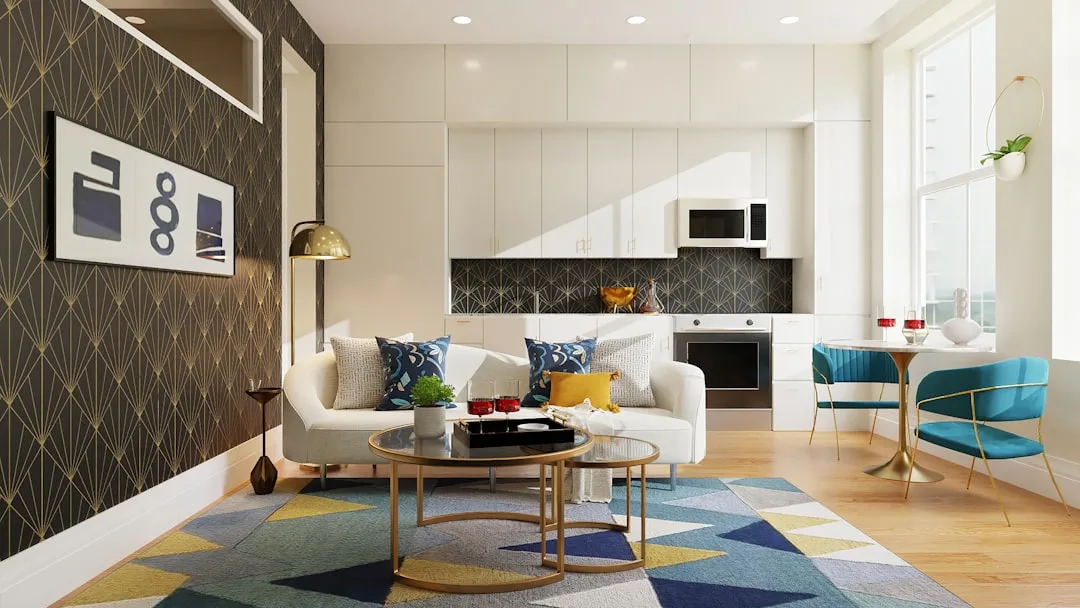
Windows are almost universally underused in small-apartment holiday decorating. This baffles me — they’re one of the few surfaces that cost nothing to use, require no mounting hardware when done correctly, and do double visual duty by reflecting back at night. Interior designers consistently cite vertical surface use as the primary strategy for making rooms under 600 square feet feel larger, and windows are vertical surfaces that most renters treat as purely functional.
Hanging ornaments from the curtain rod is the simplest starting point. A few glass ball ornaments suspended at different heights on thin satin ribbon or near-invisible fishing line create a layered, dimensional display that moves slightly in air currents and catches light in ways static objects never will. It looks intentional, takes fifteen minutes, and adds nothing to your floor plan.
For a more architectural approach, try window garland pinned inside the frame using tension-fit clips — the kind designed for curtain rods. A 6-foot section of mixed greenery fitted inside a window frame rather than draped loosely above it looks far more deliberate than the typical swag approach and leaves zero marks on any surface.
Frosted window film cut into geometric shapes — hexagons, stars, simple diamonds — offers a design-forward alternative to the generic holiday decals sold at every drugstore in November. The geometric versions read as modern rather than kitschy, they photograph beautifully, and they peel off cleanly in January.
One more technique that pays disproportionate dividends in small apartments: layering a sheer white curtain panel underneath your existing curtains for the season. It diffuses winter light, adds softness and visual depth to the window, and makes the room feel more finished without adding a single object to any surface.
Actionable takeaway: Hang three ornaments from your curtain rod this week using clear fishing line. Cost: zero, if you already have ornaments. Time: ten minutes. Visual impact: disproportionately large.
6. Textile Swaps That Transform a Room in Under an Hour
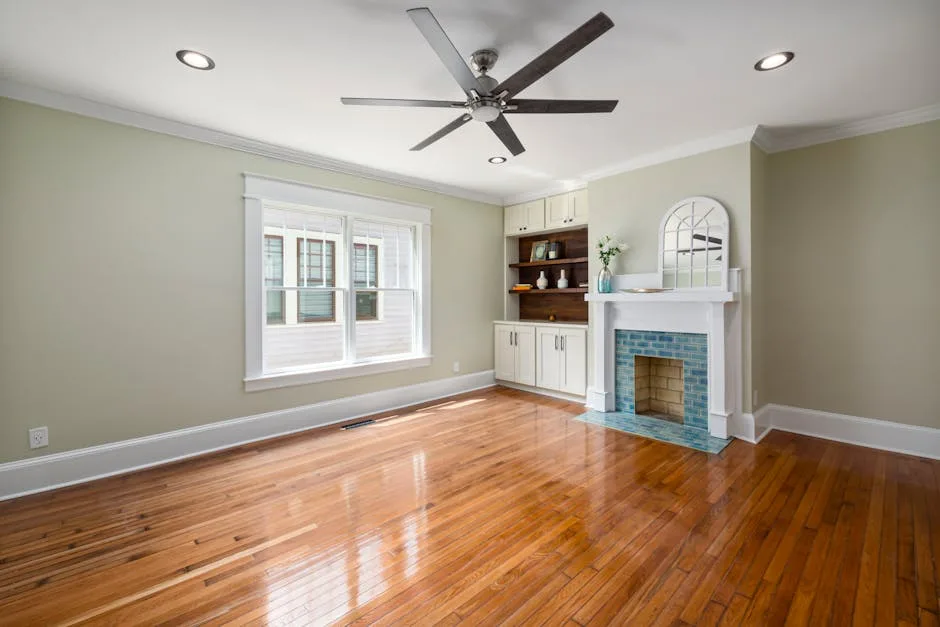
Most holiday decorating content treats throw pillows as an afterthought — “add some seasonal pillows” is advice I’ve seen written so many times it’s started to feel like a tic. The actual technique that makes textile swaps work in small apartments is more specific, and it starts with understanding that you should be replacing textiles, not adding them.
A standard sofa in a small apartment holds 3–5 decorative pillows before the visual scale tips into cluttered. When you swap for the holidays, remove the existing pillows and replace them — don’t pile holiday pillows on top. The room will look better with three intentional holiday pillows than with six mixed ones.
The 60-30-10 rule applied to holiday textiles is a useful framework:
- 60% neutral base — your existing furniture, walls, and floor. Don’t touch this.
- 30% seasonal color — your throws, pillow covers, and table runner. This is where your holiday palette lives.
- 10% accent detail — one plaid element, one metallic, or one pattern. Not all three.
Fabric weight matters more in small rooms than most people realize. Heavy chunky knits — the kind that photograph beautifully on Pinterest — add significant visual bulk. In a small apartment where the sofa is already claiming a large portion of the visual field, they can make the seating area feel heavier and more cramped than intended. Velvet and brushed cotton produce the same sense of richness and warmth with far less visual mass.
The highest-effort-to-impact textile swaps for small apartments, ranked:
- Duvet cover — transforms the bedroom completely, stores compactly, and takes 10 minutes
- Table runner — highest visible surface area per dollar in any kitchen or dining setup
- Dining chair covers — dramatic change, especially in rooms where the dining area shares space with the living area
For storage during the swap: vacuum compression bags under the bed. Flat storage, zero additional furniture required.
Actionable takeaway: Pull out your existing throw pillows, set them aside, and replace them with no more than three seasonal ones. If the room already looks better with fewer pillows, that’s information worth keeping.
7. Mantel-Free Fireplace Alternatives (For Apartments That Don’t Have One)
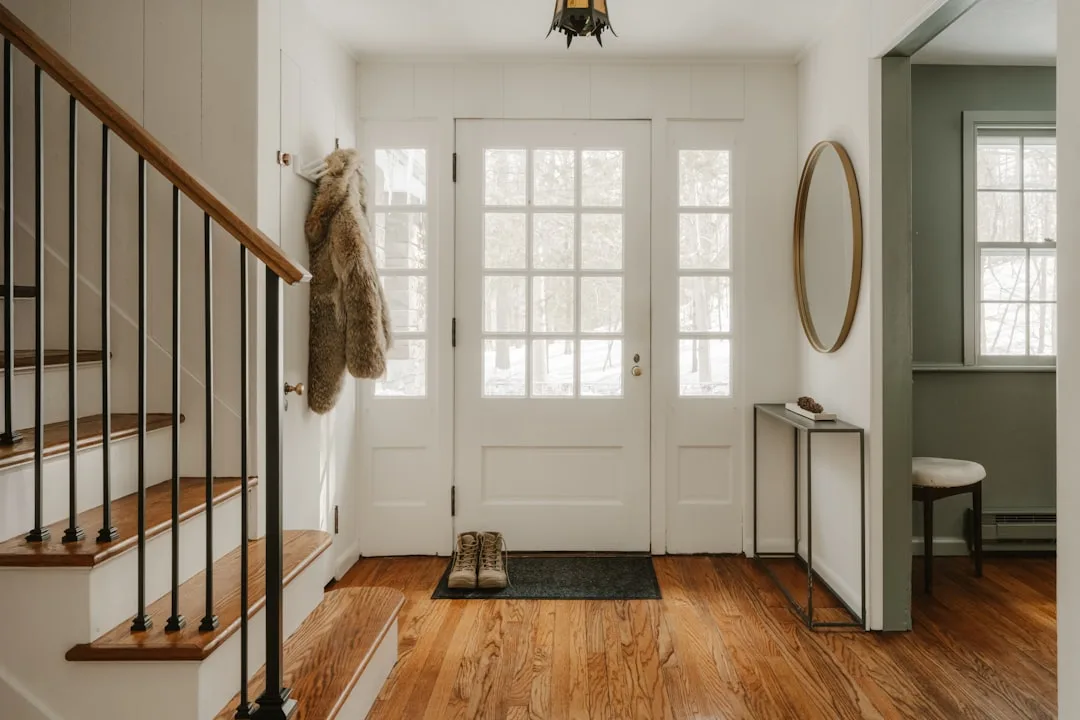
The National Association of Realtors puts fireplace presence at roughly 41% of U.S. homes — and among apartment units specifically, that number drops dramatically. Yet nearly every holiday decorating article ever written assumes you have a mantel to work with. The mantel is the default anchor zone, the default stocking location, and the default focal point for holiday styling. When you don’t have one, the advice falls apart immediately.
The most effective apartment replacement for a mantel is a floating shelf mounted at approximately 54–60 inches from the floor, styled with a candle cluster and a length of greenery or dried botanicals. At that height, it reads as architectural rather than decorative — the same psychological anchor function as a mantel at nearly zero the cost of a real one. This works as a year-round design feature and earns its wall space in every season.
If you want the warmth of actual fire without the mantel, modern electric fireplace inserts have become remarkably convincing. Slim-profile models — some as thin as 5 inches deep — are specifically engineered for apartments under 500 square feet and can be freestanding on a media console or mounted to a wall. The flame effect on quality models is genuinely atmospheric. They double as supplemental heat. They don’t require a single modification to your lease.
Using a TV console or media unit as a pseudo-mantel is underrated and requires no new furniture at all. The styling formula I use: greenery at the back of the surface, candles at varying heights in front, and one statement object (a lantern, a ceramic piece, a sculptural branch) anchoring one end. Keep the TV above it and style around it rather than hiding it.
For stockings without a mantel, the options are better than most people think:
- Floor-standing stocking holders (weighted bases, no wall contact)
- Bookend-style stocking hooks that sit on any console or shelf
- Over-door stocking rails rated for multiple stockings on a single hook bar
Actionable takeaway: Identify the one surface in your apartment that could serve as a mantel stand-in — a console, a media unit, a floating shelf. Style just that surface first. The rest of the room will orient around it naturally.
8. Entryway Decorating When You Only Have a Doorway
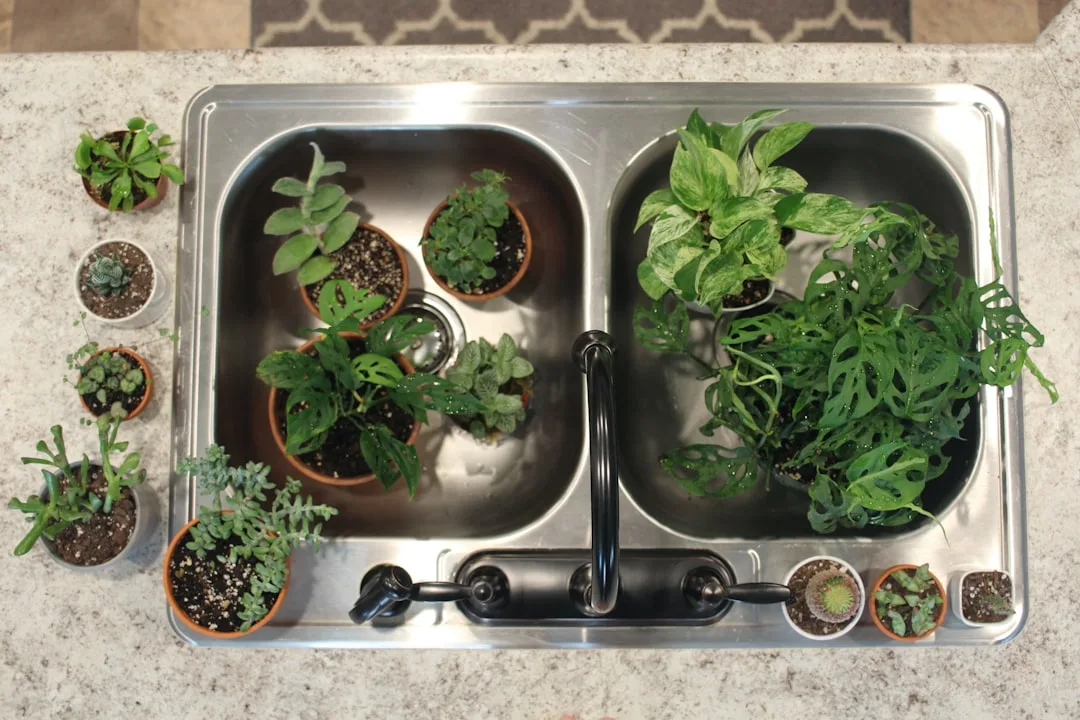
Apartment entryways are frequently a coat hook and six square feet of floor space. The decorating advice written for them — console tables, gallery walls, bench seating with seasonal cushions — describes a different architectural reality entirely. But the function of an entryway hasn’t changed just because the space is small: it sets the emotional tone of your home within the first seven seconds of entering, which means it’s worth decorating with intention even when the options are limited.
The over-door wreath is the highest-return move available to apartment dwellers. A quick sizing guide: divide your door width by three — that’s your ideal wreath diameter. For a standard 32-inch door, that’s roughly a 10–11 inch wreath, which is smaller than most people instinctively reach for. The proportion matters. An oversized wreath on a narrow apartment door looks uncomfortable; a correctly sized one looks placed.
Over-door wreath hangers require no drilling, no adhesive, and no landlord negotiation. Most adjust to fit doors from 1.25 to 2 inches thick.
If there’s any surface near your door — even a floating shelf installed for exactly this purpose — style it as a welcome vignette:
- One fragrant candle (see the scent section — this earns double duty)
- One seasonal object: a small ceramic deer, a pinecone cluster, a single ornament in a glass bowl
- One green element: a 4-inch sprig of eucalyptus in a bud vase
That’s three items. Three intentional items in a doorway entry creates the psychological impression of a designed space. Anything beyond three begins to compete.
A door mat swap is the lowest-commitment, highest-visibility change you can make in an apartment entry. A seasonal mat is visible from the hallway before anyone steps inside. Cost: $15–$30. Impact: disproportionately large.
Actionable takeaway: Order a correctly-sized wreath (door width ÷ 3) and an over-door hanger. Hang it on your apartment’s front door. You will have improved your entry in 90 seconds without touching a single wall.
9. Greenery Without the Mess: Realistic vs. Fresh vs. Faux — The Honest Comparison

The National Christmas Tree Association reports 25–30 million real trees are sold in the U.S. annually — and that’s just trees, not cut greenery. Fresh-cut greenery sheds needles within 2–3 weeks indoors under typical apartment heating conditions. In a carpeted apartment with a damage clause in the lease, that’s a meaningful practical consideration that decorating content never addresses directly.
Fresh greenery is worth it in specific circumstances. If you have hardwood or tile floors, no carpet, a relatively short display window (Thanksgiving to mid-December), and no household allergies, fresh pine or cedar garland produces a scent and texture that no faux version has matched convincingly. It’s also the most photogenic option in natural light. But if you have carpet, lease restrictions, kids, pets, or anyone in the space with respiratory sensitivities — the maintenance math changes.
High-quality faux garland is not what it was ten years ago. What to look for:
- Mixed needle types — single-needle faux garland looks flat; mixed-branch versions create the dimensional layering of real evergreens
- Wired branches — non-wired faux garland hangs limply and reads as cheap immediately; wired versions can be shaped and will hold their form
- UV-treated coloring — primarily relevant if you’re using garland near windows, prevents the bleached-out fading that makes cheap faux greenery obvious after a few weeks
Preserved eucalyptus and dried botanicals are the third option that gets almost no attention, despite being the most practical choice for many apartments. Preserved eucalyptus is low-maintenance, drops nothing, has a subtle natural scent, doesn’t look seasonal enough to feel out of place in late January, and photographs exceptionally well. I’ve used it in apartments where clients wanted something that worked from November through February without looking like they’d forgotten to redecorate.
Scale matters with garland. Standard 9-foot garland is designed for large mantels and stair railings in houses. In a small apartment, 6-foot sections or custom-bundled cuts work proportionally — the same principle as the tree size discussion.
Actionable takeaway: If you have carpet in your apartment and any lease clause about floor damage, skip fresh greenery entirely. Buy one 6-foot faux garland with wired branches and shape it yourself. It will look better than a limp 9-footer draped over a shelf.
10. A Room-by-Room Priority Map: Where to Spend Your Budget First

A 2023 survey by the National Retail Federation found the average American spends $182 on holiday decorations annually. For apartments under 700 square feet, the designers I’ve worked alongside consistently recommend concentrating roughly 70% of that budget on the primary living space — not spreading it evenly across rooms that guests won’t see and that provide only personal return.
Here’s how I’d allocate that $182:
Living room (highest ROI) — budget $40–$80:
This is your anchor zone. Lighting (one set of fairy lights: ~$12–$18), one textile swap (pillow covers or a throw: ~$20–$35), and one statement object for your focal point surface (~$15–$25) will deliver the most visual return of anything you spend money on.
Kitchen (medium ROI) — budget $15–$30:
Greenery on open shelves, a seasonal dish towel or two, and a simmer pot or candle. The kitchen is visible from most open-plan apartment living areas, which means it contributes to the overall feeling even when it’s not the main decorating zone.
Bedroom (lowest guest impact, highest personal comfort) — budget $20–$40:
One scented candle, one textile swap (a seasonal duvet cover or throw), battery-operated fairy lights along the headboard or window. Nobody else sees this room at a holiday party, but you live in it every day of the season.
What to skip entirely in a small apartment:
- Oversized inflatable decor of any kind — these are designed for yards
- Multiple competing holiday themes (Santa + Scandinavian minimalist + maximalist Victorian tinsel is a real thing I have witnessed)
- Any decoration that takes more than 15 minutes to assemble or disassemble — in small apartments, setup and takedown complexity is a hidden tax that compounds until you stop decorating at all
Actionable takeaway: Write your budget number down. Allocate 70% to your living room before spending anything anywhere else. Buy lighting first, textiles second, objects third. In that order.
11. The One Rule That Ties All of It Together

Every single trick in this guide operates according to the same underlying principle, and if you understand it, you can solve any small-space decorating problem on your own without consulting a list: visual weight is more important than item count. A room with five carefully chosen, properly scaled, well-lit objects will feel more decorated — and more livable — than a room with twenty items crammed across every surface.
This is the thing that took me the longest to articulate to clients in a way they could actually use. People tend to feel like more decorating means more festivity, that a busier room signals more effort and more joy. What I observed, across dozens of apartments and hundreds of holiday setups, is the opposite. The small apartments that felt most genuinely festive were the ones where someone had made fewer decisions with more conviction.
Restraint is a design tool. Applied to christmas decor for a small apartment, it looks like this: one strong focal zone, one scent, one lighting layer per level, textiles that replace rather than accumulate, and greenery that’s scaled to the actual architecture instead of aspirational house footage.
You don’t need a tree. You don’t need a mantel. You don’t need a foyer with a console table and a vintage sled. What you need is a clear understanding of which surfaces are doing work and which are just holding things.
Start with your anchor zone. Light it well. Let everything else stay quiet.
Frequently Asked Questions
How do you make a small apartment feel festive for Christmas without making it look cluttered?
The most effective strategy is the focal-point-first rule: designate one anchor zone — a sofa wall, a window, a console table — and decorate that surface fully before touching anything else. Once your primary zone is complete, evaluate each additional surface independently. Ask whether it adds to the room’s overall feeling or competes with the anchor you’ve established. Most small apartments need one strong zone and two or three lightly touched secondary surfaces. The cluttered look comes from treating every available surface as an equal decorating opportunity. Lighting does more to create a festive atmosphere than objects do — add warm-white fairy lights (2200K–2700K) and at least one lower-level light source before you add a single ornament.
What is the best Christmas tree option for a studio or one-bedroom apartment?
It depends on your floor space, ceiling height, and how much of the room you’re willing to sacrifice during the holiday season. Pencil trees — narrow-profile trees with an 18-inch-or-less footprint — work well in apartments with ceiling height but limited floor area. Tabletop trees work in any size apartment but only look intentional when elevated on a riser or tray and styled with objects beneath them. Wall-mounted branch installations (birch or manzanita branches in a wall bracket, strung with lights and hung with ornaments) are the most space-efficient option and often the most interesting-looking. The 1/3 rule is the practical guide: your tree or tree substitute should not exceed one-third of the wall height it’s placed against.
How can renters hang Christmas decorations without damaging walls or losing their security deposit?
Command strips work on smooth, clean, dry surfaces painted more than seven days prior — but 3M officially states they should not be used on textured walls, wallpaper, brick, or fresh paint. Check your walls before buying them. For wreaths, an over-door wreath hanger is the most reliable zero-damage solution — it requires no adhesive, no drilling, and adjusts to fit most apartment door thicknesses. For garland above windows or along curtain rods, tension rods inserted inside window frames hold lightweight garland without any wall contact. For stockings without a mantel, weighted floor-standing holders or bookend-style stocking hooks sit on any console surface with no mounting required.
What are the most impactful Christmas decor changes you can make in under an hour?
Ranked by effort-to-impact ratio: First, change your lighting — add one set of warm-white fairy lights (2700K or below) along a curtain rod or bookcase. This takes ten minutes and transforms the atmosphere of the entire room. Second, make a simmer pot on the stove — orange, cinnamon, cloves, vanilla — the scent changes the entire feel of the apartment in under 20 minutes for less than $3. Third, swap your throw pillows for seasonal covers. Remove the existing ones, don’t add to them. Three intentional seasonal pillows on a cleared sofa look better than five mismatched ones. Fourth, hang three ornaments from your curtain rod on fishing line. It takes fifteen minutes and uses vertical space you’re almost certainly ignoring. Do these four things and your apartment will feel genuinely different — before you’ve moved a single piece of furniture or spent more than $30.