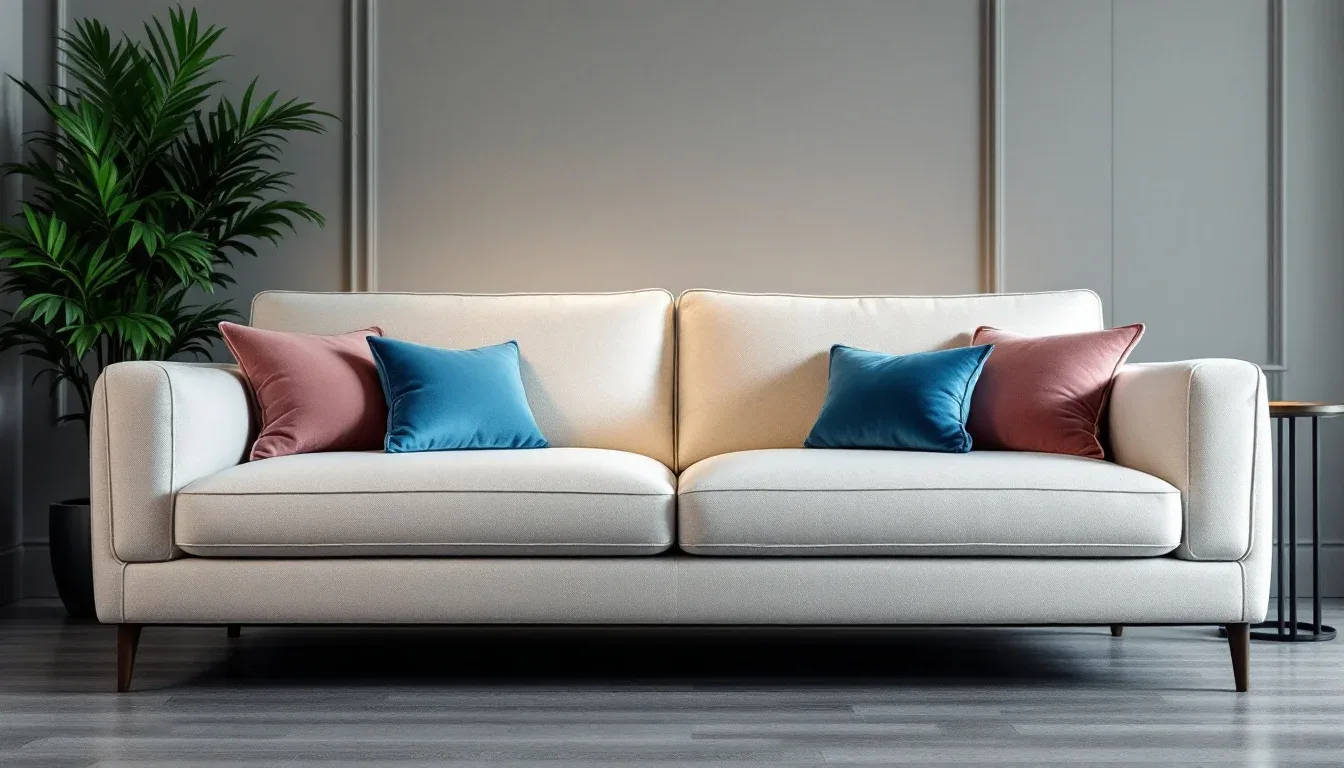
Most people blame the sofa — but the sofa is innocent. The real reason two facing sofas kill a room is almost always a gap that is 14 inches too short or a rug that is two sizes too small, and neither of those problems has anything to do with the furniture you chose. I spent eleven years solving living rooms for people who had spent real money on real furniture and still couldn’t understand why the space felt wrong, and the answer was almost never what they thought it was. The arrangement itself — two sofas facing each other — is not the problem. The diagnosis is.
Quick Answer
Most people blame the sofa — but the sofa is innocent: the real reason two facing sofas kill a room is almost always a gap that is 14 inches too short or a rug that is two sizes too small.
Why Two Sofas Facing Each Other Fails Most Rooms (And Why It’s Not the Sofa’s Fault)
In This Article
- Why Two Sofas Facing Each Other Fails Most Rooms (And Why It’s Not the Sofa’s Fault)
- The Room Shape Test: Which Floor Plans Actually Support a Facing Sofa Setup
- Sizing Both Sofas: The Proportion Rules Designers Use but Rarely Publish
- The Coffee Table Problem: What Goes Between Two Facing Sofas
- Traffic Flow and Clearance: The Measurements Most Guides Get Wrong
- Focal Point Logic: Where the TV, Fireplace, and Windows Fit Into This Arrangement
- Styling the Space Between and Around the Sofas
- When to Abandon This Layout — And What to Try Instead
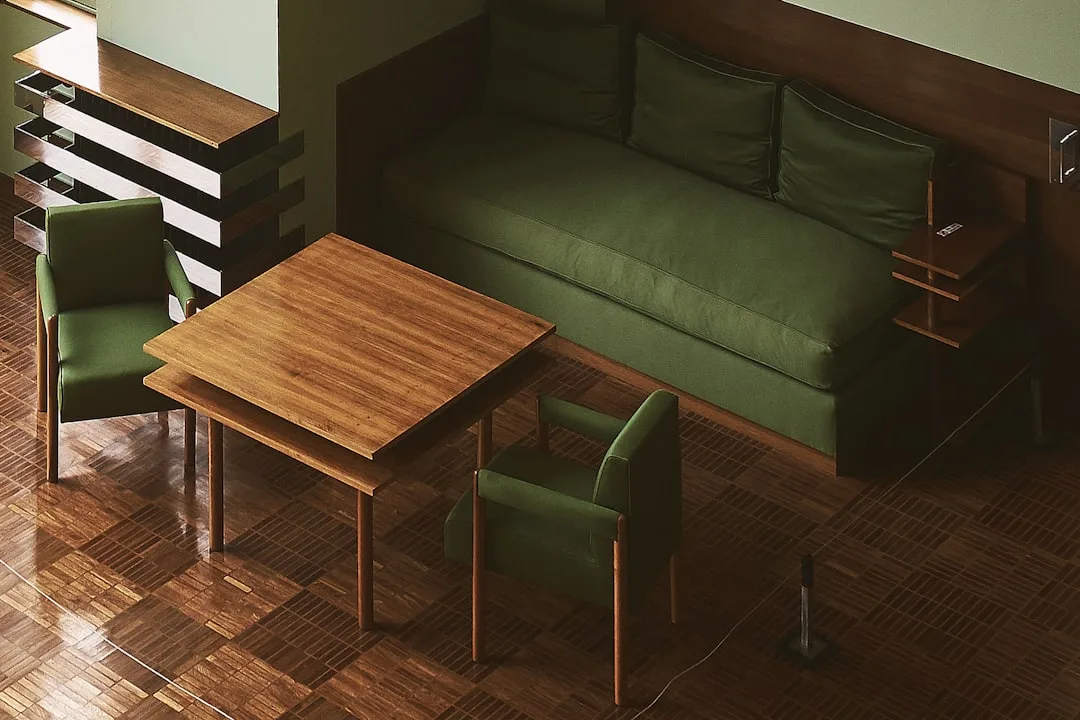
Here is what I tell every client who calls me in a panic after the delivery truck leaves: the two-sofa facing layout works beautifully in theory because it mirrors how humans actually want to sit when they talk to each other. It fails in practice because almost nobody measures the room before they buy the second sofa. They buy the first one, live with it for a year, decide it needs a partner, and then choose something based on what looked good in the store — which is a showroom, not their apartment.
The arrangement has one non-negotiable physical requirement: room depth of at least 12 feet. Below that threshold, the math doesn’t work. You need roughly 7–8 feet for the two sofas themselves if they’re standard depth, and you need somewhere between 4 and 8 feet of gap between them for the space to feel like a conversation rather than an interrogation. That gap is the thing almost nobody gets right.
The correct range is specific: the ideal distance between two facing sofas is 4 to 8 feet (120 to 240 centimeters). Under 4 feet, you feel the other person’s presence before they’ve said anything — it’s claustrophobic in a way that makes people unconsciously avoid the room. Over 8 feet, a normal speaking voice starts to feel effortful. Both failures are common. Both feel vaguely uncomfortable without the occupants being able to name why.
The other structural mistake — and this one took me embarrassingly long to articulate — is that designers talk about “the facing layout” as if both sofas are equal participants. They’re not. One sofa should anchor the room. It sits against or near a wall, it’s larger, and it establishes the primary axis of the space. The second sofa floats — it’s the one that responds. When you treat them as identical, you get a layout that looks like a waiting room and functions like one too.
Actionable takeaway: Before moving anything, measure the usable depth of your room from wall to wall. If it’s under 12 feet, this section will tell you what to do instead. If it’s 12 feet or more, you have room to work with — keep reading.
The Room Shape Test: Which Floor Plans Actually Support a Facing Sofa Setup
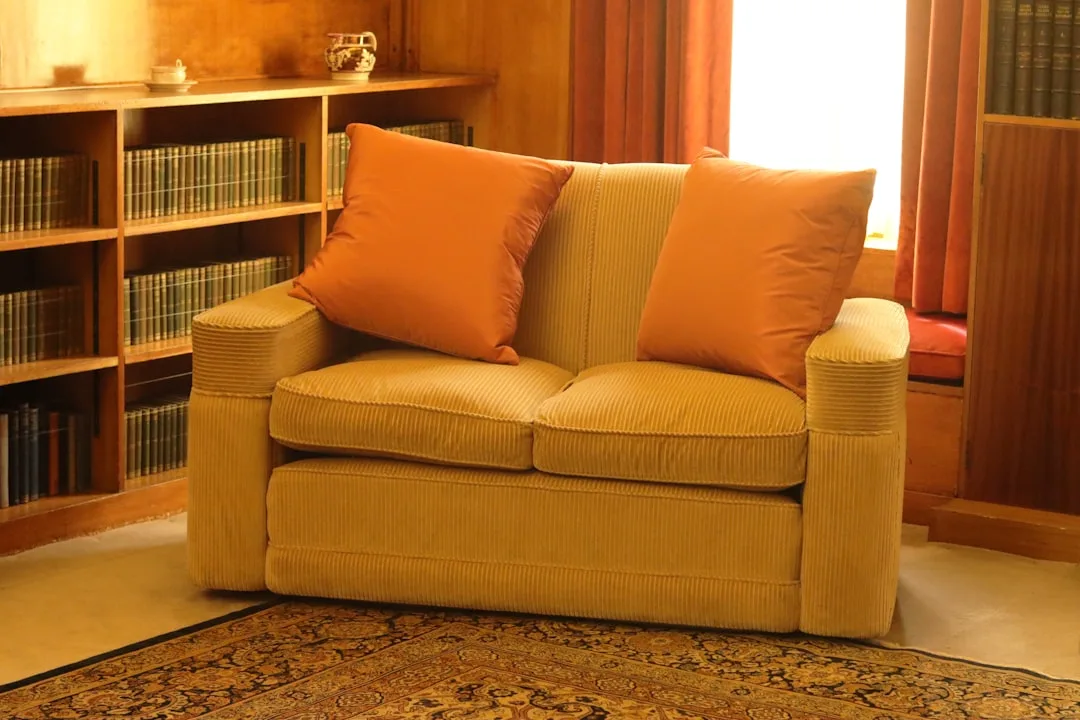
Rectangular rooms are the natural home of this arrangement — but only along the long axis. This is where I see the most consistent mistake among people doing it themselves: they place the sofas facing each other across the short dimension of the room because it feels more intimate. What it actually creates is what I call the bowling-alley effect, where the room becomes a narrow channel with furniture blocking the obvious path through it. The arrangement should always run parallel to the length of the room, so the space opens outward on both sides of the seating group.
Square rooms are trickier. The facing layout technically fits — the proportions are generous — but it creates dead corners on all four sides of the seating group, and those corners collect clutter because nobody knows what to do with them. An angled or offset approach, where one sofa sits slightly diagonal to the other rather than perfectly parallel, reclaims those corners and gives the eye a more interesting path to travel.
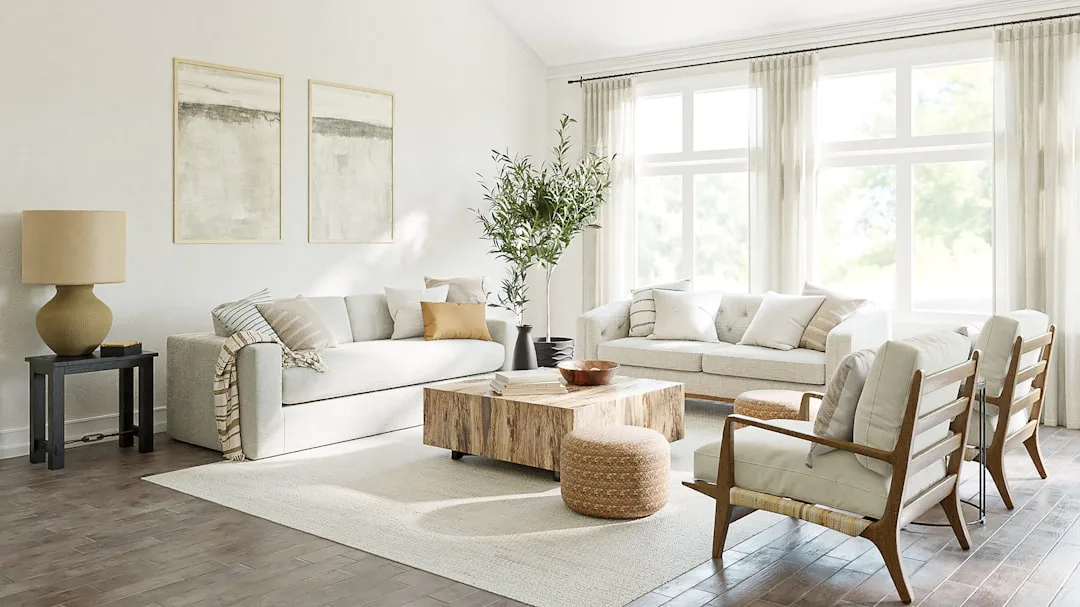
Open-plan spaces present a different challenge entirely. The facing setup can do genuinely useful work here — it defines a living zone without walls — but only when it’s anchored by a rug large enough to hold both sofas visually. Most people in open-plan spaces choose a rug that’s one or two sizes too small, which means the sofas look like they’re floating in the middle of a larger floor, unrelated to each other. A rug anchoring a two-sofa facing arrangement should extend at least 6 inches beyond the outer legs of each sofa on all four sides. In practice, for two standard sofas, this usually means a rug that’s at least 9×12 feet — most people buy an 8×10 and wonder why it doesn’t read.
Narrow rooms — those under 10 feet wide — are where you should stop entirely.
Not “proceed with caution.” Stop. The facing arrangement in a room under 10 feet wide leaves so little clearance on the sides of the seating group that traffic flow becomes genuinely unpleasant, and the gap between the sofas has to shrink to the point where 4-foot minimum starts to feel generous. There are better configurations for narrow rooms, and the last section of this article covers them.
Actionable takeaway: Draw a rough floor plan — it doesn’t have to be to scale — and mark the long axis of the room. If your planned sofa arrangement runs perpendicular to that axis, rotate it 90 degrees before you move a single piece of furniture.
Sizing Both Sofas: The Proportion Rules Designers Use but Rarely Publish
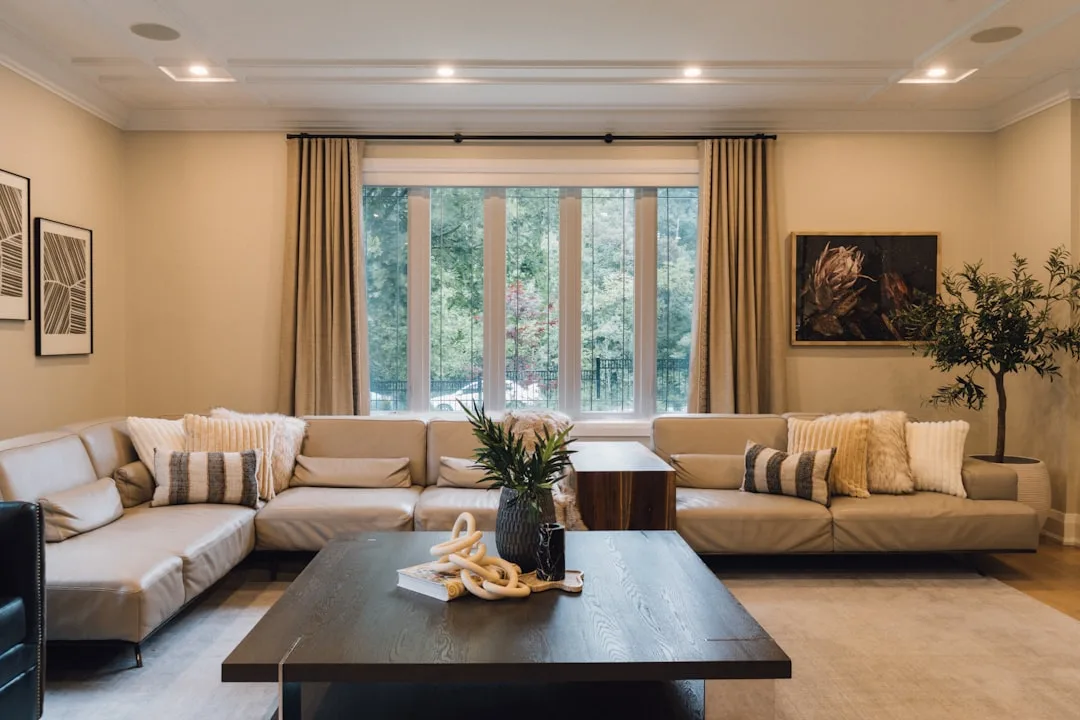
I once spent $800 of a client’s budget on a secondary sofa that was the wrong size — same style, same color family, just four inches too short — and it made the whole arrangement look like a parent and a child sitting across from each other. The sofas didn’t argue. They just looked unresolved. That’s when I started thinking seriously about proportion rather than matching.
The prevailing assumption is that facing sofas should match — same length, same style, ideally same fabric. Matching does work in certain rooms: formal spaces, rooms with very high ceilings, anywhere symmetry is the point of the design. But matching sofas flatten a room. They remove the visual hierarchy that makes a space feel designed rather than furnished.
The alternative is the two-thirds rule, and it’s simpler than it sounds. A secondary sofa that’s roughly two-thirds the length of the primary sofa creates balance without monotony — the eye reads the difference as intentional rather than accidental. Standard sofa lengths run from 72 to 96 inches, which gives you a workable range: if your primary sofa is 84 inches, a secondary sofa in the 54–60-inch range follows this principle. A 60-inch secondary paired with an 84-inch primary is a combination I’ve used multiple times in residential projects, and it consistently reads as curated rather than mismatched.
Seat depth is the measurement nobody talks about, and it matters more than length when two sofas face each other across a coffee table. Here’s why:
- Deep sofas (35–38 inches) encourage lounging — occupants lean back and look up slightly
- Standard sofas (30–34 inches) keep occupants more upright and at eye level
- Mismatched depths mean that one person is sunk into their seat while the other is sitting forward, creating sightline mismatches and a subtle postural discomfort that people notice without naming
Arm height is the third variable. Low-arm sofas (around 22–24 inches) make a room feel expansive and horizontal. Higher arms (26–28 inches) add formality and visual weight. When two sofas with very different arm heights face each other, the room feels unbalanced in a way that’s hard to correct with accessories.
Actionable takeaway: Measure your existing sofa’s length before buying a second. Target a secondary sofa that’s approximately two-thirds that length if you want visual balance without symmetry — and check seat depth to within two inches of your primary piece.
The Coffee Table Problem: What Goes Between Two Facing Sofas
This is the section where most guides write two sentences and move on. I’m going to resist that because I have watched more rooms fail at this specific decision than at almost any other.
The single most overlooked measurement in furniture pairing is coffee table height relative to sofa seat height. Standard sofa seat height runs from 17 to 19 inches off the floor. Coffee tables in the standard range sit at 16 to 18 inches. The overlap is intentional — a table that falls within 1 to 2 inches of the seat height keeps everything at a functional, comfortable reach. Go lower than 15 inches and people are bending forward to set down a glass. Go above 20 inches and the table starts to feel like a barrier rather than a surface.
Table shape is where the real decision lives, and it depends on the gap between the sofas:
- Single large rectangular table: Works when the gap is 5–8 feet and the room is formal. Reinforces symmetry, anchors the center, but restricts traffic through the seating group.
- Two smaller tables (clustered or offset): Works when the household is active — children, pets, people who rearrange — because individual pieces can be moved without disrupting the arrangement.
- Round table: Eases traffic flow naturally, reduces the tunnel effect that a rectangular table can amplify, and works particularly well in square rooms where the facing layout already has straight-line tension.
- Ottoman with a tray: Useful when the gap is on the shorter end (4–5 feet) and a hard table would feel crowding. Adds flexibility and softness, but requires discipline about keeping the tray functional.
The problem nobody addresses is the in-between gap — more than 6 feet, less than what comfortably fits two separate tables. One oversized table creates a moat. Two tables feel sparse. This is where a pair of nested tables earns its keep: they can spread out when the space is in use and compress when it isn’t.
Actionable takeaway: Measure the gap between your sofas, then subtract 12 inches on each end for comfortable clearance. Whatever remains is your functional table zone. A table that fills 50–60% of that zone will feel right.
Traffic Flow and Clearance: The Measurements Most Guides Get Wrong
The “18 inches between a coffee table and sofa” advice that circulates everywhere is not wrong — it’s just incomplete. It tells you how much space to leave for the person sitting on the sofa to stand up, but it says nothing about how people move through a room, which is the dimension that determines whether a layout works in daily life.
There are two distinct clearance types in a living room with facing sofas, and they require different minimums.
Primary walkways — the main paths people take to move from one part of the room to another — require a minimum of 36 inches of clear floor. This is the threshold used in ADA accessibility guidelines, and residential designers apply it to everyday living spaces because it reflects actual human movement, not just theoretical passage. A 36-inch clearance lets two adults pass each other, accommodates furniture being carried, and doesn’t require anyone to turn sideways.
Secondary clearance — the path between the end of a sofa and the nearest wall or adjacent piece of furniture — needs a minimum of 18 inches. This is a pass-through, not a primary route, but 18 inches is the floor. Below that, the sofa grouping starts to feel like it’s eating the room.
Here’s the mapping process I used with clients before I ever moved a single piece of furniture:
- Sketch the room on graph paper (1 square = 1 foot)
- Draw the sofa footprints in their planned positions
- Draw the paths you use every day — from the door to the kitchen, from the TV to the bathroom, from the front door to the stairs
- Measure those paths on paper and verify that the primary ones clear 36 inches and the secondary ones clear 18
If a path fails on paper, it will fail in the room. The sketch takes 20 minutes and has saved more furniture-moving sessions than I can count.
Actionable takeaway: Walk through your room right now and identify the two or three paths you use most. Tape them on the floor if needed. Your sofa arrangement has to accommodate those paths — not the other way around.
Focal Point Logic: Where the TV, Fireplace, and Windows Fit Into This Arrangement
A facing sofa layout is, architecturally speaking, a conversation pit. It was designed before television existed — formal drawing rooms in the 18th and 19th centuries used this exact configuration around a fireplace, and it worked beautifully because the fireplace was a shared focal point that both sofas could see equally. Television broke that symmetry in a way we’ve never fully solved.
Here is the honest problem: placing a TV directly opposite one sofa makes the occupants of the other sofa second-class citizens. They’re either watching TV at an uncomfortable angle or turning away from the screen to talk, but the geometry of the room is working against both. I’ve seen clients install a 75-inch TV directly across from their “primary” sofa and then wonder why nobody ever sat on the secondary one.
There are three solutions worth taking seriously:
- Swivel mount: A TV on a swivel mount can angle toward whichever sofa is in use. Not elegant, but functional, and far less disruptive than rearranging furniture for movie night.
- Diagonal wall placement: In rooms with an architectural diagonal — a corner fireplace, a bay window — a screen mounted off-center can split the sightline difference between both sofas without dominating the arrangement.
- TV in a different zone entirely: In open-plan spaces, the facing sofa grouping defines the conversation zone and the screen lives in a separate zone. This is actually the cleanest solution. The two zones don’t have to be enemies.
Optimal viewing distance for a 65-inch screen sits between 8 and 13.5 feet — the 1.5-to-2.5-times-diagonal-size formula that most display manufacturers use. That range only overlaps with the recommended facing-sofa gap (4–8 feet) at the upper end, which means a facing arrangement is rarely the right primary TV-watching configuration. The fireplace, the view, or the room itself should be the focal point — the screen should be secondary.
Actionable takeaway: Identify the one architectural feature in your room that both sofas could equally face. If that feature doesn’t exist, create one — a large-scale artwork, a built-in, a console with objects at varying heights — before you finalize the sofa placement.
Styling the Space Between and Around the Sofas
Styling advice for this arrangement is where I have the least patience with vague guidance. “Add a throw” tells you nothing. “Some plants would look nice here” is not a sentence that helps anyone standing in their living room with two sofas and a blank corner.
So here is what actually works in a facing arrangement, and why.
Color distribution is the first decision, and it has a formula worth following: 60% dominant color (walls and the larger sofa), 30% secondary color (the second sofa or the rug), 10% accent (cushions, throws, objects on the coffee table). This is the 60-30-10 rule that most designers use instinctively, and it’s particularly useful in a sofa-heavy space where the furniture itself is doing most of the visual work. The mistake is trying to make both sofas the same color — it collapses the hierarchy and makes the 2/3-proportion trick invisible.
Lighting is the second decision, and symmetry here is a trap.
Matching floor lamps on both ends of both sofas looks like a furniture showroom. What works instead: a floor lamp positioned behind or beside one sofa (angled to wash light onto the conversation area), and a pendant or chandelier above the coffee table if ceiling height allows. The pendant anchors the center of the arrangement in a way that no surface lamp can — it signals, visually, that this is the room’s gravitational center.
Cushions across two different sofas should share at least one element: the same color family, the same texture, or the same pattern scale. They don’t need to match. They need to look like they know each other.
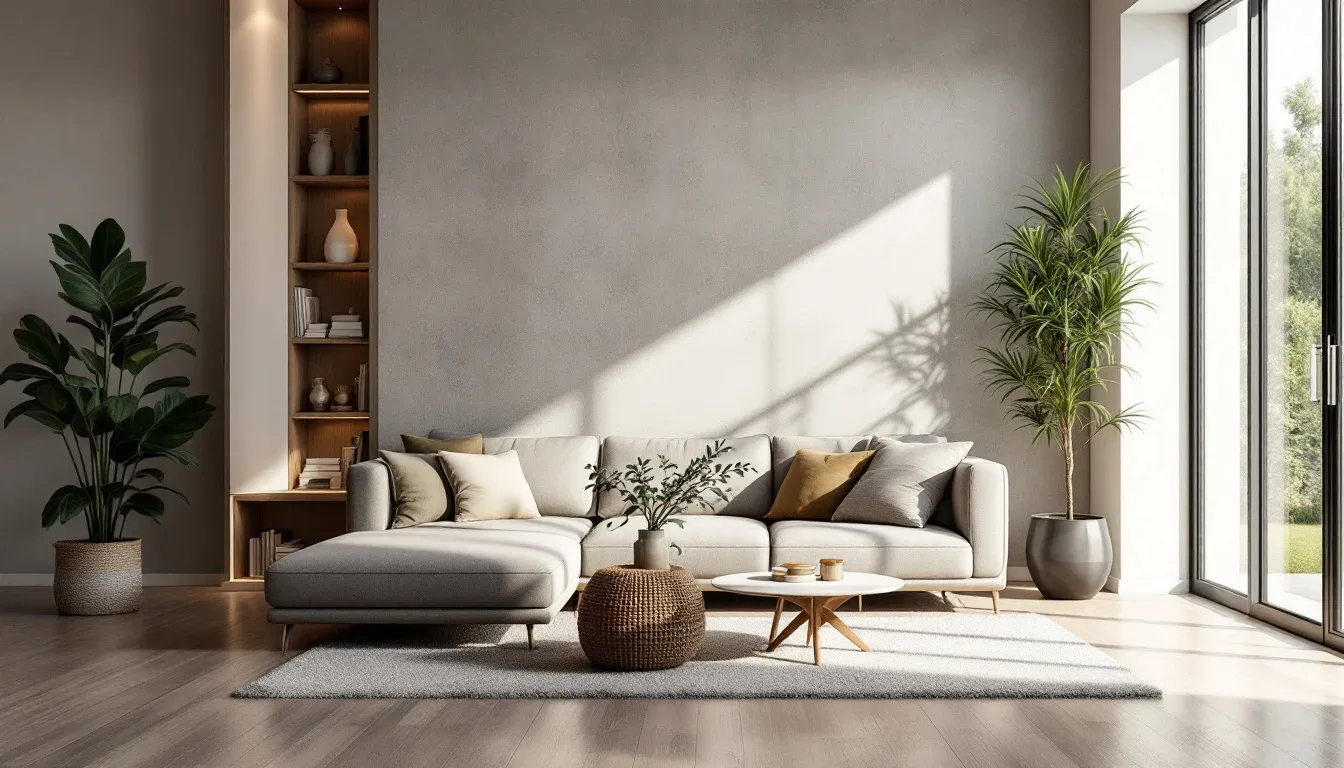
Plants in the corners flanking a facing setup work particularly well because the corners are otherwise dead — nobody sits there, nothing functional lives there, and they’re visible from both sofas simultaneously. But scale matters enormously. A 6-inch potted plant on the floor of a corner flanked by 84-inch sofas is invisible. You need something that reads at 4 to 6 feet — a fiddle-leaf fig, a large snake plant, a bird of paradise — or the corner remains dead even with greenery in it.
Actionable takeaway: Before buying a single decorative object, identify the 10% accent color in your room and buy three objects in that color at three different scales. That alone will make a facing sofa arrangement look finished.
When to Abandon This Layout — And What to Try Instead

Not every room wants this arrangement, and part of what I learned from eleven years of actual work — as opposed to mood boards — is that a designer’s job is sometimes to tell someone their plan won’t work. So here are the honest exit criteria.
If your room is under 10 feet wide, stop pursuing the facing layout. An L-shaped sectional or a sofa paired with two accent chairs at a right angle will serve the space better, use less of the floor, and leave enough clearance for daily life. The L-shape is the dominant living room configuration in North American homes for a reason — furniture retailers’ layout data consistently shows it accounts for over 40% of living room setups, particularly in rooms under 200 square feet. It works because it conforms to the room rather than fighting it.
If your household includes young children or active pets, the facing arrangement creates a corridor between the sofas that becomes a raceway, an obstacle course, or a furniture-bouncing zone depending on the age of the child. A U-shape with a sectional and a single accent chair has no such corridor. It also contains chaos more effectively.
If there is no clear focal point and no budget to create one, the facing arrangement will feel directionless. Two sofas staring at each other across a coffee table need something to orient toward. Without it, the room reads as unresolved — guests don’t know where to look, conversations don’t have a natural anchor. Before you spend money on a second sofa, spend money on a focal point.
Three alternatives, briefly:
- L-shaped sectional: Best for rooms under 12 feet in either dimension; keeps the floor open; works against any wall
- Single sofa with two accent chairs: Maximum flexibility; the chairs can angle independently; better for rooms where the grouping needs to breathe
- Floating sofa facing a built-in: The sofa sits in the middle of the room with nothing behind it; works only when the built-in (shelving, fireplace surround, media wall) is substantial enough to hold the visual weight
Actionable takeaway: If you’ve read this far and two or more of the “when to abandon” criteria apply to your room, close the browser tab on that second sofa and call a furniture rental company instead. Try the alternative arrangement for 30 days before you commit.
Frequently Asked Questions
How far apart should two sofas facing each other be?
The functional range is 4 to 8 feet (approximately 120 to 240 centimeters) measured from the front edge of one sofa to the front edge of the other. Below 4 feet, the proximity becomes physically uncomfortable — people instinctively feel crowded, which makes the seating group one that guests avoid rather than settle into. Above 8 feet, a conversational speaking voice has to work too hard, and the arrangement starts to feel more like a conference room than a living room. The sweet spot for most households is 5 to 6 feet, which allows for a coffee table with clearance on both sides and keeps conversation at a normal register. Before landing on a measurement, account for the coffee table: a 48-inch rectangular table needs at least 18 inches of clearance on each side, which means the sofas themselves need to be at least 7 feet apart if you’re using a table that size.
Do two sofas facing each other have to match?
No — and in many rooms, matching sofas actively work against the design. When two identical sofas face each other, the room tends to read as symmetrical in a way that feels static rather than considered. A more effective approach is the two-thirds rule: the secondary sofa should be roughly two-thirds the length of the primary sofa. The pieces should share something — a leg finish, a similar silhouette, a common fabric tone — but they don’t need to be identical or even from the same manufacturer. What matters more than matching is that seat depth is within two inches between the two pieces, because mismatched depths create posture and sightline mismatches that make the arrangement uncomfortable to actually sit in.
What size coffee table works best between two facing sofas?
Height first, then shape, then size — in that order. The table should sit within 1 to 2 inches of the sofa seat height, which typically means 16 to 18 inches tall. A table outside that range will feel either too low (forcing occupants to reach down) or too high (creating a visual and physical barrier). For shape: round tables ease traffic flow and work well in square rooms or informal arrangements; rectangular tables reinforce the linear symmetry of the facing setup and suit more formal spaces. For size: the table should occupy roughly 50 to 60 percent of the gap between the sofas, not the full span. If the gap between your sofas is 5 feet (60 inches), a table in the 30-to-36-inch range will look proportional and leave adequate clearance for legs and movement on both sides.
Can you put a TV in a room with two sofas facing each other?
You can — but the arrangement doesn’t naturally support it, and the honest answer is that a facing sofa layout works better when the TV is a secondary element rather than the primary focal point. The problem is that placing a screen directly opposite one sofa creates an inherent imbalance: the occupants of that sofa have a straight-on view, while the occupants of the other sofa either watch at an angle or can’t comfortably watch at all. The most functional solution is a swivel mount that can angle toward either sofa depending on use. In open-plan rooms, the cleaner approach is to place the facing sofa arrangement in a conversation zone and locate the TV in a separate area of the plan entirely. If a 65-inch screen is the target, note that optimal viewing distance for that size runs from 8 to 13.5 feet — only the upper end of that range overlaps with the recommended sofa gap, so anyone planning to watch frequently from the facing arrangement should size the gap accordingly and account for it in the initial layout.
Start here, today: Get a tape measure and do three things before anything else. Measure the depth of your room from wall to wall. Measure the current gap between your sofas if they’re already placed. Measure the rug from edge to edge and check whether it extends at least 6 inches beyond the outer legs on all sides. If any of those three numbers are wrong, you’ve just found your problem — and fixing a measurement costs nothing.