
The average North American apartment dweller has roughly 200 square feet of living space per person — yet the holiday decorating advice they receive was written for a 2,400-square-foot Colonial with a dedicated foyer. If you’re trying to figure out how to do christmas decorations in a small apartment without it feeling like a storage unit exploded, you already know the gap between that advice and your actual space isn’t a styling problem. It’s a spatial mismatch that no amount of “add a cozy throw” is going to fix.
Quick Answer
The average North American apartment dweller has roughly 200 square feet of living space per person — yet the holiday decorating advice they receive was written for a 2,400-square-foot Colonial with a dedicated foyer.
I spent eleven years working inside real apartments — studios in Wicker Park, one-bedrooms in the East Village, open-plan lofts where the kitchen, bedroom, and living room were the same room. I’ve watched well-meaning people stack their holidays onto surfaces that were already doing too much work, and I’ve watched those same rooms go from festive to suffocating in three decorating sessions. What I never saw was a client who needed more stuff. What I always saw was someone who needed a different framework for what they were doing.
That framework is what this article is about.
Why Most Compact Holiday Setups Feel Cluttered (And the One Principle That Fixes It)
In This Article
- Why Most Compact Holiday Setups Feel Cluttered (And the One Principle That Fixes It)
- Christmas Decorations in a Small Apartment: The Sensory-First Approach
- 1. Scent and Light Do 70% of the Heavy Lifting
- 2. Borrow Your Existing Furniture as a Display Platform
- 3. Go Vertical — Walls and Heights Are Free Real Estate
- 4. A Tabletop Tree Is Not a Compromise — It’s a Strategy
- 5. Build One Signature Tray Moment Instead of Scattered Accents
- 6. Use Mirrors to Multiply Your Decorating Without Adding Objects
- 7. Textiles Are the Fastest Volume Control in a Small Room
- 8. Edit Your Existing Décor Before Adding Anything New
- 9. Build a Reset Ritual, Not a One-Day Setup
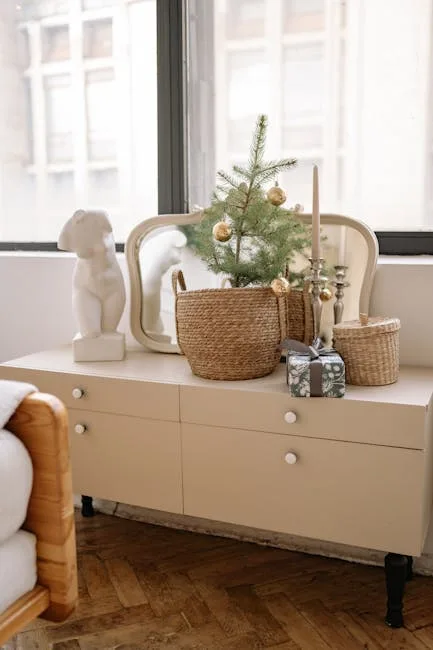
Most people diagnosing a cluttered holiday setup reach the wrong conclusion. They think the problem is the objects themselves — too cheap, too mismatched, wrong colors. In reality, the issue almost always comes down to decorative density: how many distinct visual clusters exist within a single sightline.
Research on visual clutter consistently shows that rooms with more than five distinct decorative clusters visible from one position are perceived as smaller and more chaotic than rooms with fewer, heavier anchors. During the holidays, the average apartment gets hit with eight to twelve new decorative clusters simultaneously — garlands, candles, figurines, stockings, card displays, wrapped gifts, tabletop trees — and each one is fighting for the same focal point. The room doesn’t feel festive. It feels like it’s arguing with itself.
The principle that fixes this isn’t “decorate less.” It’s the three-zone rule: pick three distinct zones in your living space — say, your main wall, your coffee table area, and your windowsill — and anchor your holiday decorating exclusively in those zones. Everything else stays clear. Not sparsely decorated. Completely clear.
Small spaces punish impulse decorating in a way that large rooms simply don’t. In a 2,400-square-foot house, a random candle on a side table reads as charming. In a 500-square-foot apartment, that same candle competes directly with your TV, your bookshelf, your dining table, and your entryway for visual dominance. The eye has nowhere to rest.
Here’s what I learned the hard way after working in a client’s studio on the Upper West Side: every item you place in a small room is a decision, not a decoration. If you can’t explain why it’s in that specific location — not why you like it, but why it belongs there — it probably doesn’t.
Actionable takeaway: Before placing a single holiday item, stand in your main doorway and count the number of decorative clusters you can already see. If it’s more than five, subtract before you add.
Christmas Decorations in a Small Apartment: The Sensory-First Approach

Before we get into the nine spatial tricks, there’s an important reframe worth making. Most people approach christmas decorations in a small apartment as a purely visual exercise — they think about what things look like, and they stop there. But in a compact space, the visual channel is already working overtime. It’s the other senses — scent, warmth, sound, texture — that create the feeling of the holidays without adding a single square inch of visual clutter.
The nine tricks below are organized with this principle in mind. The ones that cost you the least space almost always deliver the most atmospheric return. If you walk away with nothing else from this article, walk away with this: in a small apartment, the goal isn’t to fill the space with Christmas. It’s to make Christmas something the space already feels like.
1. Scent and Light Do 70% of the Heavy Lifting
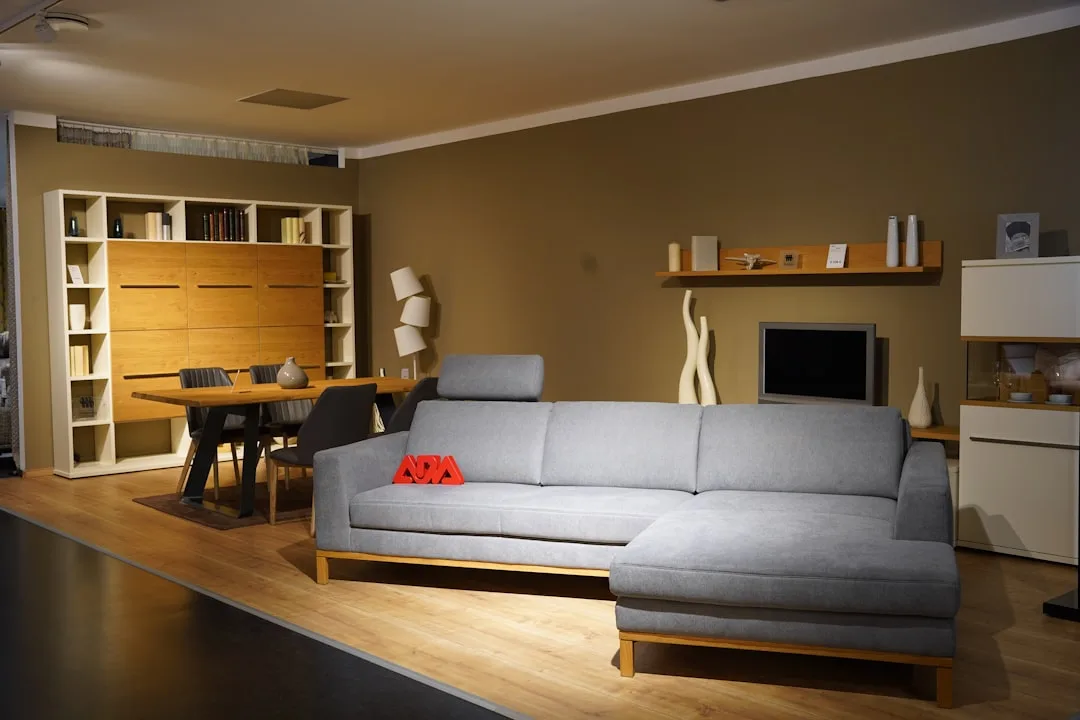
Walk into a room that smells like clove and balsam, lit with warm amber light at 7pm on a December evening, and your nervous system registers Christmas before your eyes have processed a single ornament. This isn’t poetic language — it’s how sensory processing actually works, and it’s the most underused tool in small-space holiday decorating.
Warm-toned bulbs rated 2700K–3000K in your existing fixtures do more atmospheric work than an entire shelf of decorations, and they add zero physical objects to a space that’s already crowded. A $12 smart plug on your floor lamp, scheduled to turn on at 5pm, creates a daily holiday ritual that no wreath can replicate.
Scent works even faster. Research from Rockefeller University established that the olfactory system achieves roughly 65% accuracy in memory recall, compared to approximately 50% for visual memory — which means a balsam candle or cedar sachet will trigger the emotional register of the holidays more efficiently than anything you hang on a wall. A single soy candle in a clove-and-orange blend placed on your coffee table does the work of a dozen smaller visual accents.
What this means practically:
- Replace overhead cool-white bulbs with 2700K equivalents in any fixture your eye lands on first when entering the room
- Use a diffuser or a single pillar candle as your primary scent anchor — one strong source beats three competing ones
- Set a light schedule using a $15 smart plug so warm light activates automatically at dusk — the ritual itself becomes part of the holiday atmosphere
- Layer scent by material: a cedar sachet tucked near your bookshelf, a clove-studded orange on your tray, and a balsam candle near your seating area create depth without crowding any surface
I had a client in Lincoln Park who swore her apartment never felt festive despite spending $300 on decorations each year. I asked her to change two bulbs and light one candle an hour before I arrived for our session. When I got there, the apartment already felt transformed — and I hadn’t touched a single item yet.
Actionable takeaway: Change your living room bulbs to 2700K this week and buy one balsam or cedar-clove candle. That alone will shift the room more than any decoration you could add.
2. Borrow Your Existing Furniture as a Display Platform
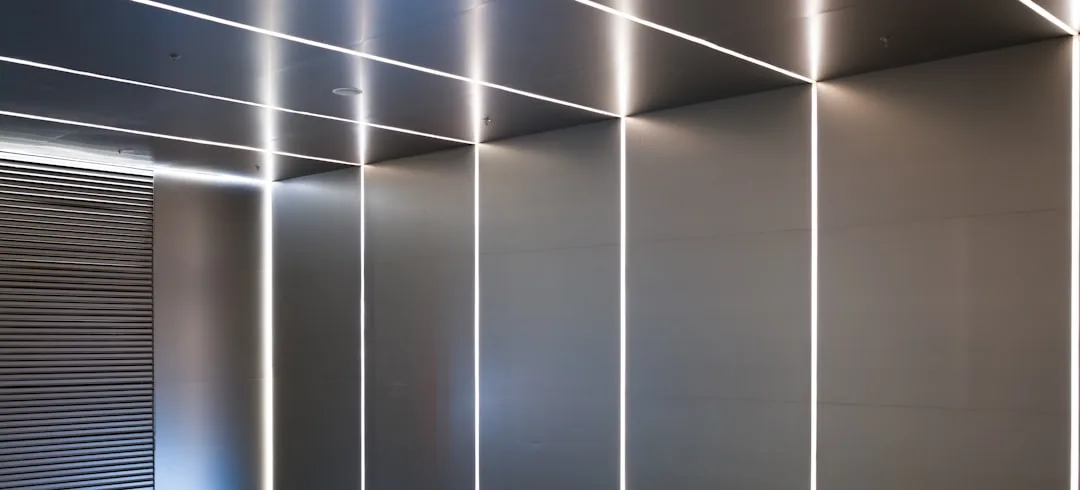
The most expensive mistake I ever made on a client’s behalf was recommending a dedicated holiday display shelf — a small floating unit I thought would “contain” the festive clutter. It added a surface. The client filled it. Then filled the surfaces around it. The shelf didn’t solve the problem; it created permission to add more.
What actually works is the subtract-and-replace method: before placing anything holiday-related on a surface, remove three existing objects and replace them with two holiday items. You’ve just done two things — created breathing room and introduced seasonal feeling — while keeping the visual inventory the same or lower.
Your existing furniture is more useful than you think:
- Bookshelves: Pull three to four everyday objects off one shelf section entirely. Replace with a small cluster — one candle, one small ornament, one sprig of pine. The negative space on either side is part of the decoration.
- Bar carts and open shelving: These are vertical columns that display without consuming floor space. A bar cart styled with two brass candleholders, a small lantern, and some clipped pine branches is a complete holiday moment.
- Windowsills: Massively underused. A windowsill decorated with a pine bough, two white pillar candles, and a few walnut shells reflects against the dark glass at night and effectively doubles its visual impact — you see it from inside and as a warm glow from the street. In a small apartment where every surface counts, the windowsill is essentially a free display shelf that gives you twice the visual return of any interior surface.
- The top of your refrigerator or a cabinet: Often ignored entirely. A single tall pillar candle and a pine garland draped loosely along the top of kitchen cabinetry adds vertical holiday presence without touching any of your work surfaces.
- Dining chairs: A simple tied bow or a sprig of eucalyptus tucked under the seat back transforms the dining area without adding anything to the table itself — which you’ll need clear for actual meals.
The subtract-and-replace method also has a secondary benefit that most people don’t think about: it forces you to look critically at what was already on your surfaces before the holidays. In almost every client space I’ve worked in, the “before” state had at least two or three objects that shouldn’t have been there in the first place — receipts, random chargers, things that landed and stayed. Clearing for holiday decorating is also an opportunity to reset the baseline.
Actionable takeaway: Walk through your apartment and identify three surfaces you currently use for display. For each one, remove everything, then replace with a maximum of two holiday items and one everyday item. See how the breathing room changes the feeling of the whole room.
3. Go Vertical — Walls and Heights Are Free Real Estate
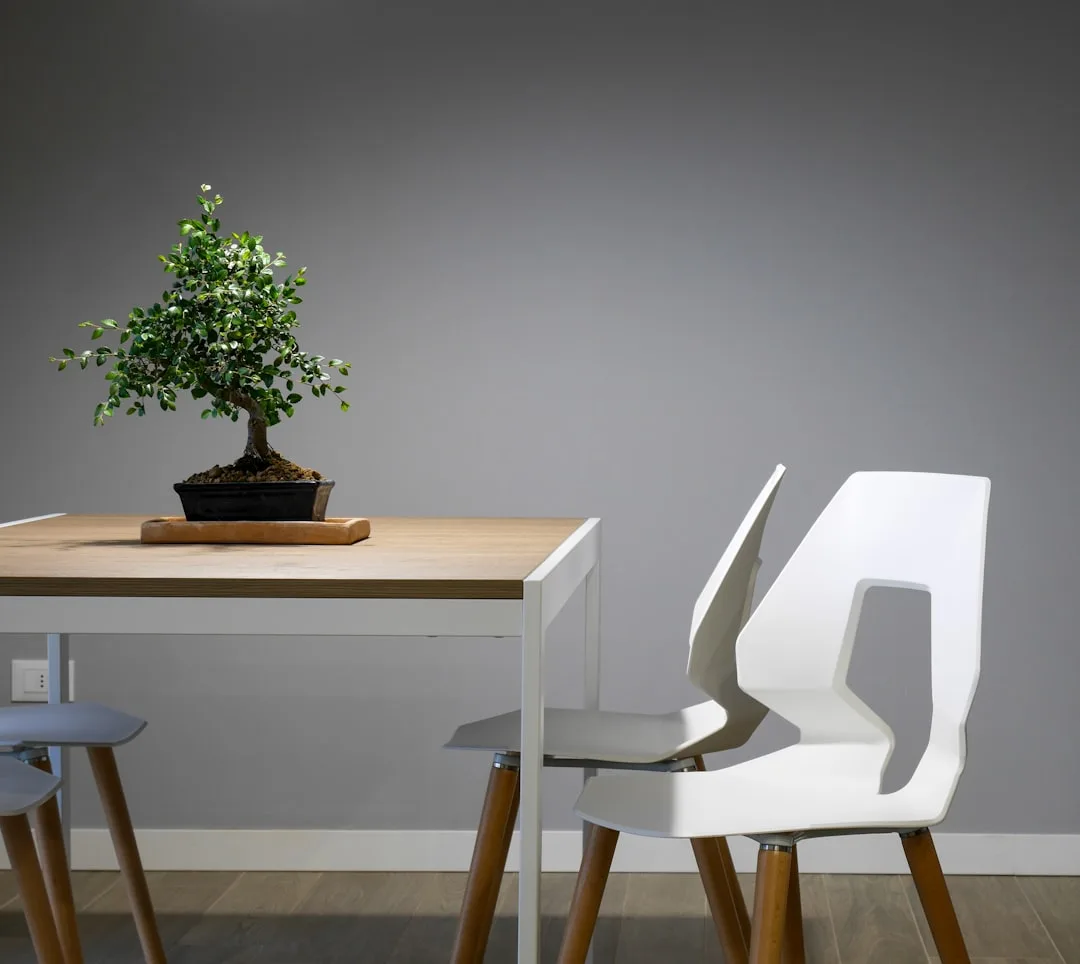
Floor space is the scarcest resource in a small apartment. Vertical space almost never is. Yet the majority of holiday decorating advice defaults to horizontal surfaces — tabletops, shelves, counters — which are already doing the most work in a compact room.
The vertical dimension gives you three distinct levels to work with:
- Eye level and above: A wreath on the wall (not the door) becomes a piece of art rather than a threshold marker. A simple nail and a length of velvet ribbon are all you need. Position it where a painting would go, and it reads as intentional rather than default.
- Ceiling-hung elements: A cluster of dried orange slices, cinnamon sticks, and pine cones suspended from a single hook in a corner costs nothing in floor or surface space and creates a visual anchor that draws the eye upward — which, incidentally, is one of the techniques interior designers use to make rooms feel taller.
- Door frames and window frames: Removable adhesive hooks and a length of thin garland can outline a doorway or window frame without damaging walls. The frame itself does the structural work; you’re just tracing it.
What vertical decorating does for small rooms is change the perceived geometry. When the eye has places to travel upward, the room registers as larger than it is. When everything is concentrated on horizontal surfaces at seated or standing height, the room feels dense and low.
Actionable takeaway: Identify one wall in your main living area that currently has nothing on it. Install a single hook and hang either a wreath or a cluster of dried botanical elements. Do nothing else to that wall. The restraint is the point.
4. A Tabletop Tree Is Not a Compromise — It’s a Strategy
Every year, someone in a small apartment reluctantly sets up a four-foot tree in the corner, spends two weeks squeezing past it to reach their bookshelf, and swears off trees entirely. The problem wasn’t the tree. It was the size of the tree relative to the footprint of the space — and the assumption that a full-size tree is the only legitimate option.
A tabletop tree in the 18-to-24-inch range, placed on a side table, bar cart, or the corner of a dining table, gives you every emotional beat of a full-size tree — the lights, the ornaments, the silhouette — while consuming roughly one square foot of floor space instead of four.
The styling rules are different, though:
- Ornament scale matters more on a small tree: One large ornament on a small branch overwhelms it. Use ornaments that are one inch or smaller, and edit ruthlessly — a small tree with twelve well-chosen ornaments looks intentional; a small tree with forty ornaments looks desperate.
- The container is part of the display: A small tree in a plain plastic stand looks like what it is. The same tree in a small terracotta pot, a brass planter, or a vintage tin reads as a designed object.
- Lighting a small tree: A single strand of micro-LED lights in warm white is enough. More than one strand on an 18-inch tree creates a light-to-branch ratio that looks artificial even when the tree is real.
- Positioning for maximum impact: Place the tree where it will be backlit by a lamp or reflected in a window or mirror. A small tree positioned in front of a dark window at night, lit from behind, casts as much atmospheric light as a tree twice its size.
I’ve seen well-executed tabletop trees become the focal point of a living room more convincingly than full-size trees in larger spaces. Scale isn’t about size. It’s about proportion — and in a small apartment, a proportionate tree will always outperform an oversized one.
Actionable takeaway: If you’ve been avoiding a tree because of space, measure your side table or bar cart and look for a tree in the 18-to-24-inch range. Price-per-square-foot of floor space consumed, a tabletop tree is the best decorating investment in a small apartment.
5. Build One Signature Tray Moment Instead of Scattered Accents

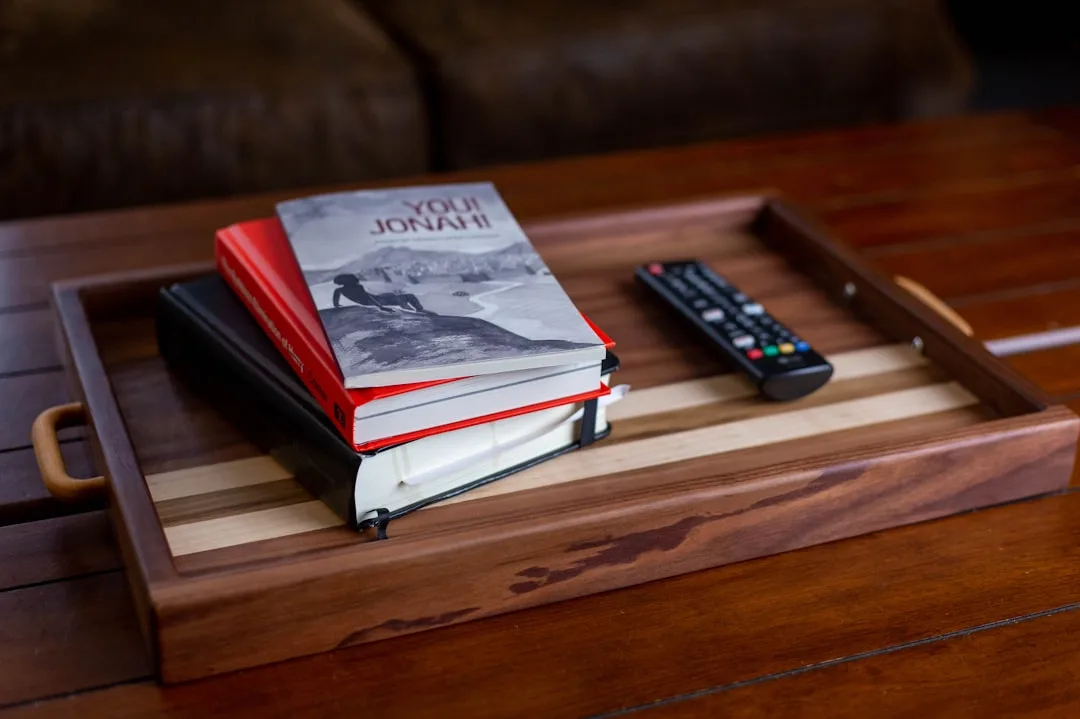
The tray is one of the most underrated spatial tools in a small room — during the holidays or otherwise. What a tray does is create a defined boundary for a decorative cluster. Instead of four objects sitting loosely on a coffee table (which the eye reads as four separate decisions), four objects inside a tray read as one composed moment.
For christmas decorations in a small apartment, the tray method is particularly useful because it gives you a movable, contained holiday display that you can shift, store, or completely remove without disturbing the rest of the room.
Build a signature tray moment like this:
- Start with the tray itself: A wooden tray, a marble slab, a lacquered rectangle — the material should complement your existing furniture, not contrast with it. This is the frame; it shouldn’t compete with what’s inside.
- Use the rule of odd numbers: Three or five objects inside the tray, not two or four. Odd groupings read as more organic and less symmetrical in a way that feels intentional rather than staged.
- Vary height within the tray: One tall element (a pillar candle, a small branch in a bud vase), one medium element (a small lantern, a cluster of ornaments in a bowl), and one low element (a few pine cones, a folded linen, walnut shells). The height variation creates movement without adding more objects.
- Leave some tray surface visible: The empty space inside the tray is part of the composition. A tray that’s packed edge-to-edge has lost the organizational benefit of being a tray.
One strong tray on a coffee table, positioned where a guest’s eye will naturally land when entering the room, does more atmospheric work than six scattered accent pieces distributed across every available surface.
Actionable takeaway: Remove everything from your coffee table. Place a tray. Put three to five holiday objects inside it using varying heights. Put nothing else on the coffee table. Sit down and look at it for thirty seconds before adding anything else.
6. Use Mirrors to Multiply Your Decorating Without Adding Objects
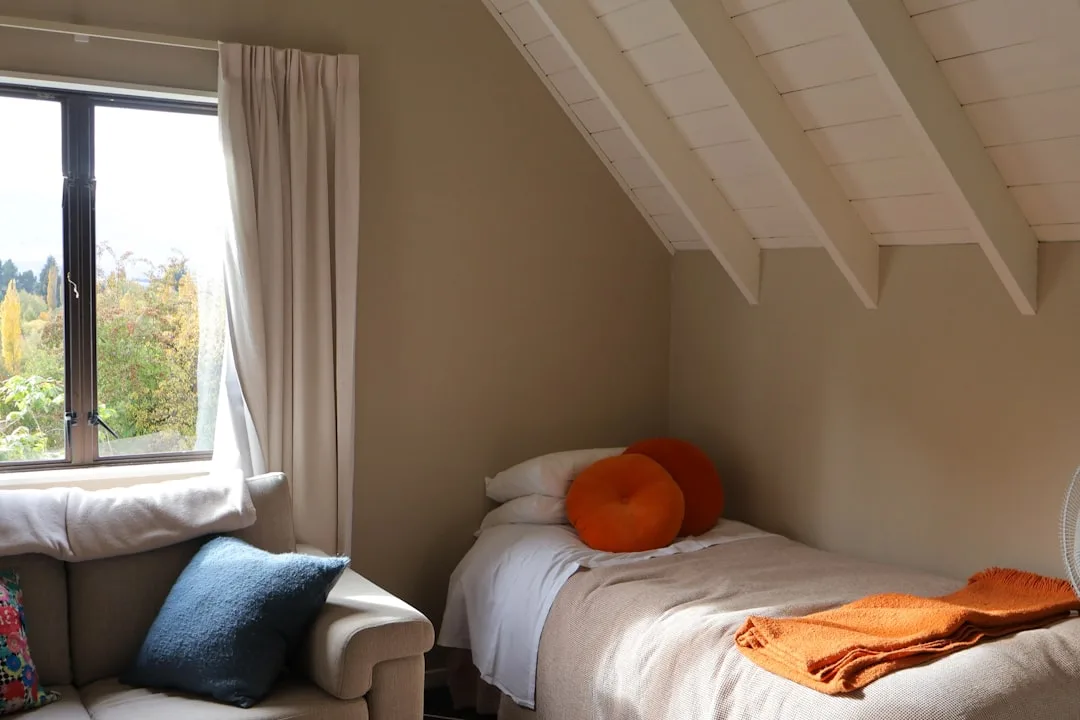
A mirror positioned opposite a lit candle or a small tree effectively doubles the decorative presence in a room without a single additional object. This is basic optics, but it’s consistently overlooked in small-space holiday decorating guides because it requires thinking about the room’s geometry rather than just adding items to a shopping list.
Placement specifics:
- A mirror behind a candle cluster on a console or shelf reflects the flame and the glow, creating the impression of twice the candlelight in the room
- A mirror opposite a window with a decorated windowsill reflects both the windowsill display and the dark exterior, making the decorated surface appear twice — once in reality, once in reflection
- A mirror adjacent to a tabletop tree (at a 45-degree angle rather than directly opposite) creates a different angle of the tree’s silhouette, which reads as visual richness rather than simple repetition
If you already have a mirror in your space, this costs you nothing. You’re just reconsidering what it’s facing and whether the thing it reflects is doing any decorative work.
Actionable takeaway: Stand at your mirror and look at what it currently reflects. If it’s reflecting an empty wall or a coat closet, rotate or reposition it to face your primary holiday anchor — your tree, your candle cluster, or your wreath wall.
7. Textiles Are the Fastest Volume Control in a Small Room

Textiles — throws, cushion covers, table runners, small rugs — change the sensory register of a room without adding visual density in the way that objects do. A deep green velvet cushion cover on your existing sofa cushion is a holiday decoration that takes up exactly zero additional space, costs under $20, and can be swapped back out in January in thirty seconds.
The textile swap is particularly effective because it changes the color temperature of a room — which in a small space has an outsized effect on perceived warmth and atmosphere.
Textile moves worth making:
- Swap one or two cushion covers to deep green, burgundy, or a warm cream/ivory — not plaid-with-reindeer, unless that’s genuinely your register. Solid colors or subtle textures (boucle, velvet, waffle knit) read as seasonal without being costume-y.
- Add a single throw in a seasonal texture: A chunky knit or a wool herringbone in a warm neutral does holiday atmosphere without doing holiday kitsch.
- A table runner on your dining table costs nothing in surface space and transforms the table for the season — particularly useful if you’re hosting and want the table to register as festive without covering it with objects that need to be moved every time you eat.
- A small mat or runner in your entryway in a seasonal color or pattern signals the holiday the moment someone walks in, before they’ve seen anything else. This is high-impact for minimal investment.
The key restraint: treat textiles as a swap, not an addition. Put your existing everyday textiles in storage for December. You’re not adding to the room — you’re seasonally replacing what was already there.
Actionable takeaway: Pull two cushion covers off your sofa and replace them with one deep green or burgundy cover each. Put the everyday covers in a drawer. See how much the room shifts before you add a single object.
8. Edit Your Existing Décor Before Adding Anything New

This is the trick nobody wants to hear but everyone needs to. The fastest way to make a small apartment feel more festive for the holidays isn’t to add holiday decorations — it’s to remove the things that are visually competing with the holiday decorations you haven’t placed yet.
Specifically:
- Books: If your shelves have books spine-out in a range of colors, the visual noise they create competes with everything. Pull books from one prominent shelf section and replace them with a holiday cluster, or turn a section of books so only the pages (not the spines) face out — creating a neutral, texture-only backdrop for the objects in front.
- Framed photos and art: Not all of them, but consider removing two or three smaller frames from surfaces where you plan to add holiday elements. The frames compete with the new objects for attention.
- Functional clutter: Chargers, remotes, mail — these are always there, but in December they become more visible because you’re scrutinizing the room more carefully. Box them, drawer them, or invest in a small lidded container. The holiday atmosphere you’re trying to create is undermined ten times more by a pile of Amazon packages on the floor than by a missing garland.
The editing step is also where you decide what comes down from your existing wall arrangements to make room for a seasonal element. You don’t need to re-hang everything in January — most clients I’ve worked with find that after the holidays, they don’t put the old items back up, because they finally see the wall without them and realize the room breathes better.
Actionable takeaway: Before your next decorating session, spend fifteen minutes removing objects rather than adding them. Count what you’ve taken out. Then allow yourself to add back only half that number in holiday items.
9. Build a Reset Ritual, Not a One-Day Setup
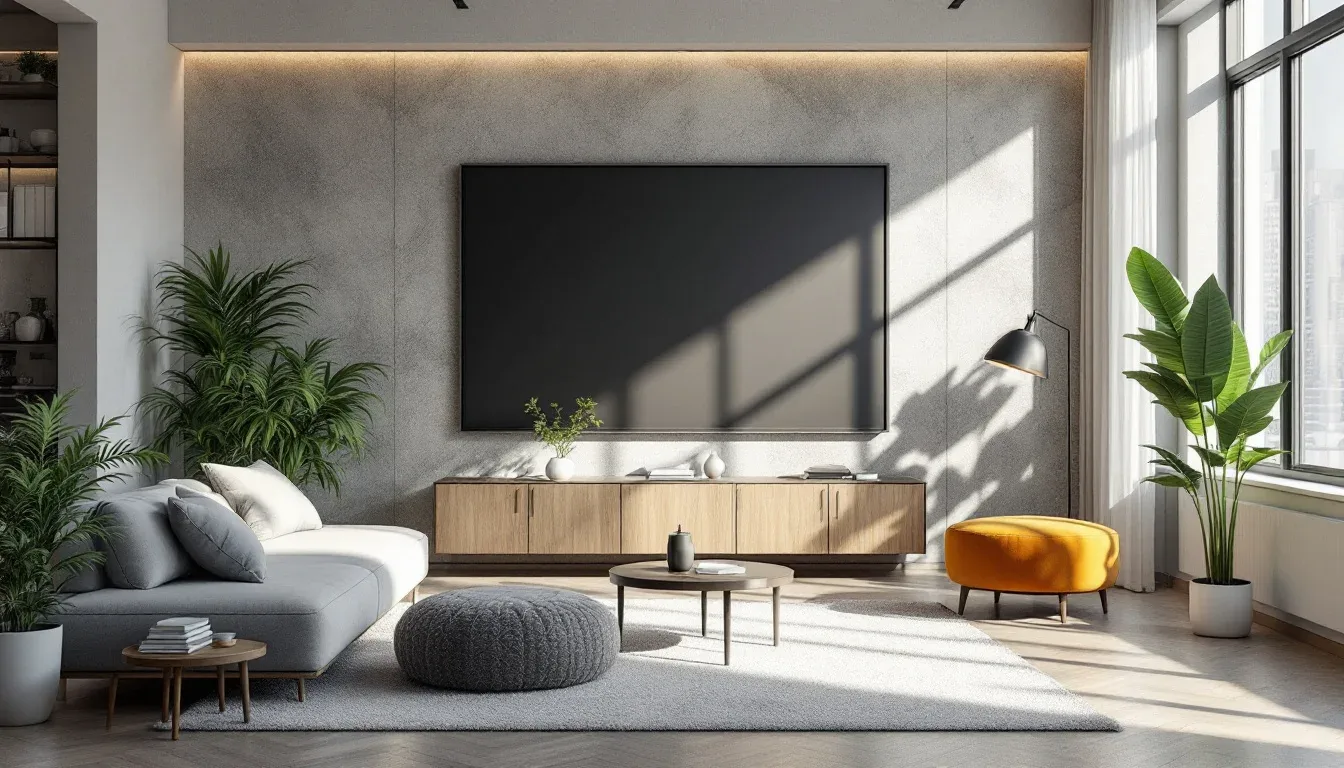
The biggest structural mistake people make with holiday decorating in a small apartment isn’t a decorating mistake at all — it’s a process mistake. They try to do everything in one day, which means they make impulsive placement decisions, run out of energy before they can assess, and end up with a room that’s been decorated but not designed.
A better approach:
- Day one: Do the lighting and scent changes only. Live with the room for 24 hours. Notice how it already feels different.
- Day two: Place your primary anchor — the tree, the wreath, the main tray moment. Nothing else. Live with it.
- Day three: Add one or two secondary elements if the room still feels like it needs them. Often, it won’t.
This three-day process sounds slow. It’s actually faster in the long run because you don’t spend a week undoing and redoing decisions you made impulsively on day one. More importantly, it forces you to notice what the room already has — which is the whole point of small-space decorating done well.
The holiday feeling in a small apartment is almost always already there. The warmth, the intimacy, the sense of enclosure that makes the space feel cozy rather than cramped — these are properties the small apartment already has. Your job isn’t to add Christmas to the room. Your job is to let the room become a version of itself that’s already a little more like Christmas.
Actionable takeaway: Schedule your holiday decorating across three separate sessions this year. Set a fifteen-minute timer for each one. When the timer goes off, stop — regardless of whether you feel done.
Frequently Asked Questions
What’s the single most effective christmas decoration in a small apartment for someone who wants maximum impact with minimum effort?
Lighting, every time. Swapping your existing bulbs to 2700K warm-white and adding one balsam or cedar-clove candle will do more for the holiday atmosphere of a small apartment than any combination of physical decorations. It costs under $20, adds zero objects to a crowded space, and works immediately. If you do nothing else on this list, do that.
How do I handle a small apartment with no fireplace or mantel — which is where most holiday decorating advice focuses?
The mantel is overrated as a focal point, and most holiday advice relies on it as a crutch. In an apartment without one, your focal wall, your windowsill, and your coffee table area become the three anchor zones. A windowsill styled with candles, pine boughs, and reflective elements at night does more atmospheric work than most mantels, because the dark glass doubles the visual display. You’re not missing the mantel — you just haven’t replaced it with something better yet.
Is a real tree worth it in a small apartment, or does the mess and space make it impractical?
A full-size real tree in a studio or one-bedroom is usually more trouble than the emotional payoff justifies — the floor space, the water bowl, the needle cleanup. A real tabletop tree in the 18-to-24-inch range, on the other hand, gives you everything that makes a real tree worth it (the scent, the texture, the organic imperfection) in a footprint that won’t make you resent it by December 15th. A rosemary topiary trimmed into a cone shape is another option — it’s genuinely fragrant, requires minimal care, and reads as a tree without being one.
How do I decorate for the holidays in a small apartment when my roommate and I have very different taste levels?
The three-zone rule is particularly useful here. Assign each person a zone — one person takes the main wall, one takes the coffee table area, one takes the kitchen or entryway — and agree that each zone is that person’s call. The zones are spatially separated enough that two different aesthetics don’t directly collide, and the overall room still reads as intentional because the zones themselves are limited and defined.
How do I store holiday decorations in a small apartment so they’re actually usable next year?
The storage problem is almost always a volume problem. If your holiday decorations take up more than one medium-sized bin, you have more decorations than a small apartment needs. The most useful reframe: after this holiday season, as you pack up, you’re not boxing everything — you’re curating. Keep only the items that actually got used and contributed to the atmosphere you wanted. Everything else goes. A single well-organized bin that fits under a bed or on a closet shelf is more useful than three bins you’ll dread dealing with.
What’s the single most effective christmas decoration in a small apartment for someone who wants maximum impact with minimum effort?
Lighting, every time. Swapping your existing bulbs to 2700K warm-white and adding one balsam or cedar-clove candle will do more for the holiday atmosphere of a small apartment than any combination of physical decorations. It costs under $20, adds zero objects to a crowded space, and works immediately. If you do nothing else on this list, do that.
How do I handle a small apartment with no fireplace or mantel — which is where most holiday decorating advice focuses?
The mantel is overrated as a focal point, and most holiday advice relies on it as a crutch. In an apartment without one, your focal wall, your windowsill, and your coffee table area become the three anchor zones. A windowsill styled with candles, pine boughs, and reflective elements at night does more atmospheric work than most mantels, because the dark glass doubles the visual display. You’re not missing the mantel — you just haven’t replaced it with something better yet.
Is a real tree worth it in a small apartment, or does the mess and space make it impractical?
A full-size real tree in a studio or one-bedroom is usually more trouble than the emotional payoff justifies — the floor space, the water bowl, the needle cleanup. A real tabletop tree in the 18-to-24-inch range, on the other hand, gives you everything that makes a real tree worth it (the scent, the texture, the organic imperfection) in a footprint that won’t make you resent it by December 15th. A rosemary topiary trimmed into a cone shape is another option — it’s genuinely fragrant, requires minimal care, and reads as a tree without being one.
How do I decorate for the holidays in a small apartment when my roommate and I have very different taste levels?
The three-zone rule is particularly useful here. Assign each person a zone — one person takes the main wall, one takes the coffee table area, one takes the kitchen or entryway — and agree that each zone is that person’s call. The zones are spatially separated enough that two different aesthetics don’t directly collide, and the overall room still reads as intentional because the zones themselves are limited and defined.
How do I store holiday decorations in a small apartment so they’re actually usable next year?
The storage problem is almost always a volume problem. If your holiday decorations take up more than one medium-sized bin, you have more decorations than a small apartment needs. The most useful reframe: after this holiday season, as you pack up, you’re not boxing everything — you’re curating. Keep only the items that actually got used and contributed to the atmosphere you wanted. Everything else goes. A single well-organized bin that fits under a bed or on a closet shelf is more useful than three bins you’ll dread dealing with.