
The average dresser takes up more floor space than a full-size bathtub — and in a small bedroom, that trade-off quietly costs you more room than you realize you’ve lost. Small closet organization without dresser systems is the real solution most people overlook entirely, choosing instead to keep hauling furniture that was never the right fit. Not just the 6 to 10 square feet the piece physically occupies, but the clearance around it, the visual weight it carries, and the ceiling on your room’s functionality it imposes before you’ve hung a single thing. I watched this happen in a studio apartment in Wicker Park. The client had a beautiful mid-century dresser she refused to part with, and it consumed roughly 18% of her usable floor space — space her body moved through every morning — to store items that could have lived, better organized and more accessible, in the closet two feet away.
Quick Answer
The average dresser takes up more floor space than a full-size bathtub — and in a small bedroom, that trade-off quietly costs you more room than you realize you’ve lost.
This guide is not about minimalism as a philosophy. It is about building an actual infrastructure inside the closet you already own, so that every garment has a home and you can find it without excavating four stacked piles at 7am.
Why Removing the Dresser From the Equation Changes Everything
In This Article
- Why Removing the Dresser From the Equation Changes Everything
- Audit Your Closet’s Real Dimensions Before Buying a Single Product
- The Vertical Zoning Method: Dividing Your Closet Into Three Functional Layers
- The Products That Actually Work (and the Ones That Don’t)
- Folding Systems That Replace Drawer Logic
- Seasonal Rotation: Managing Volume Without a Dresser Overflow Problem
- The Complete Small Closet Organization Without Dresser Setup: A Room-by-Room Breakdown
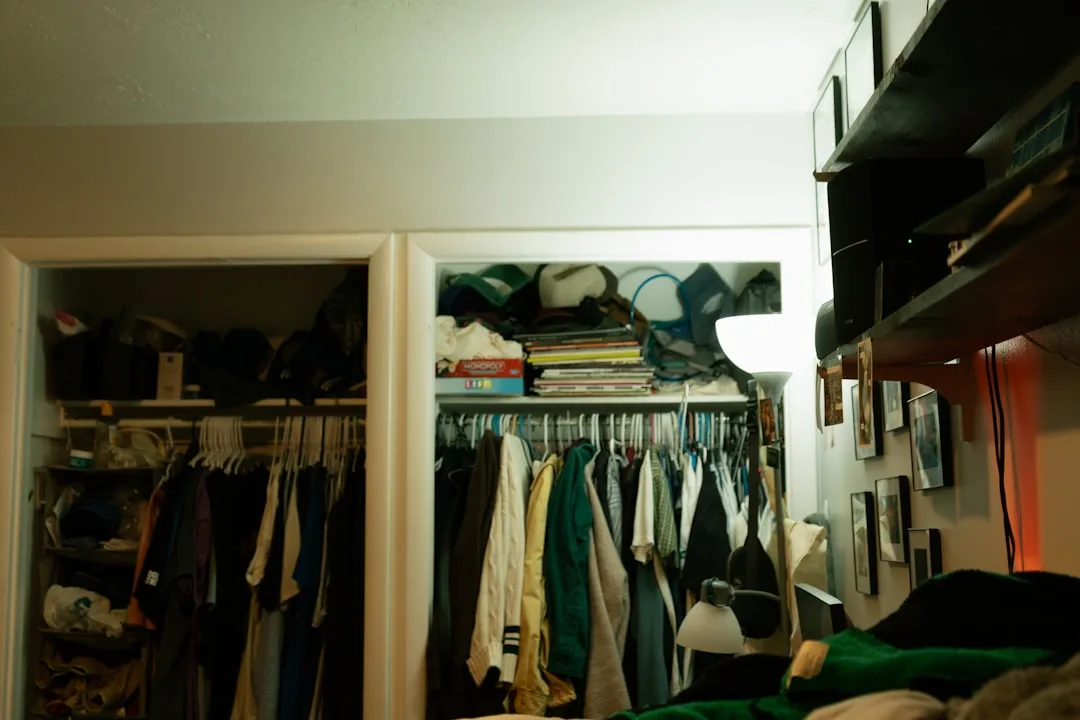
Most people treat a dresser as furniture that was always supposed to be there — like a bed frame or a kitchen table. It’s inherited logic. You grow up with one, you assume you need one, and you keep buying them. But a dresser is a solution to a storage problem that predates modern closet construction, and in small bedrooms with a functional closet, it is frequently the wrong solution applied out of habit.
Here is what a standard reach-in or walk-in closet actually is, structurally: a vertical storage system with substantially more cubic capacity than its owner uses. Most people engage with the hanging rod and maybe one shelf. The rest — the upper zone near the ceiling, the floor zone beneath hanging garments, the back corners, the door panel — sits empty or becomes a graveyard for things that don’t have a real home. That wasted space is where your dresser’s contents belong.
The National Association of Productivity & Organizing Professionals has documented that the average American home contains around 300,000 items, with clothing ranking among the top three clutter contributors in bedrooms. Drawers accelerate that problem because they hide things. You fold a shirt, put it in a drawer, and the drawer closes — out of sight, out of consideration. Items at the bottom of a drawer stack can go unworn for a year because you never see them. A well-configured closet with open bins and visible folded stacks does the opposite: it forces an honest accounting of what you actually own.
There’s also a discipline mechanism that closets provide that dressers don’t. When a shelf fills up, you see it fill up. There’s no closing the drawer on the problem. The pattern I kept seeing — across apartments in Lincoln Park, in Brooklyn, in the West Village — was that clients who moved to a closet-only system almost always reported owning fewer items within six months. Not because I told them to purge. Because the visibility of a closet makes curation feel obvious in a way that dresser drawers never do.
The goal is not to cope without a dresser. It’s to build a wardrobe system so functional that the dresser becomes genuinely unnecessary.
> Takeaway: Before buying a single organizer, accept the premise — your closet is not an accessory to a dresser system. It is the system. Everything else follows from that reframe.
Audit Your Closet’s Real Dimensions Before Buying a Single Product
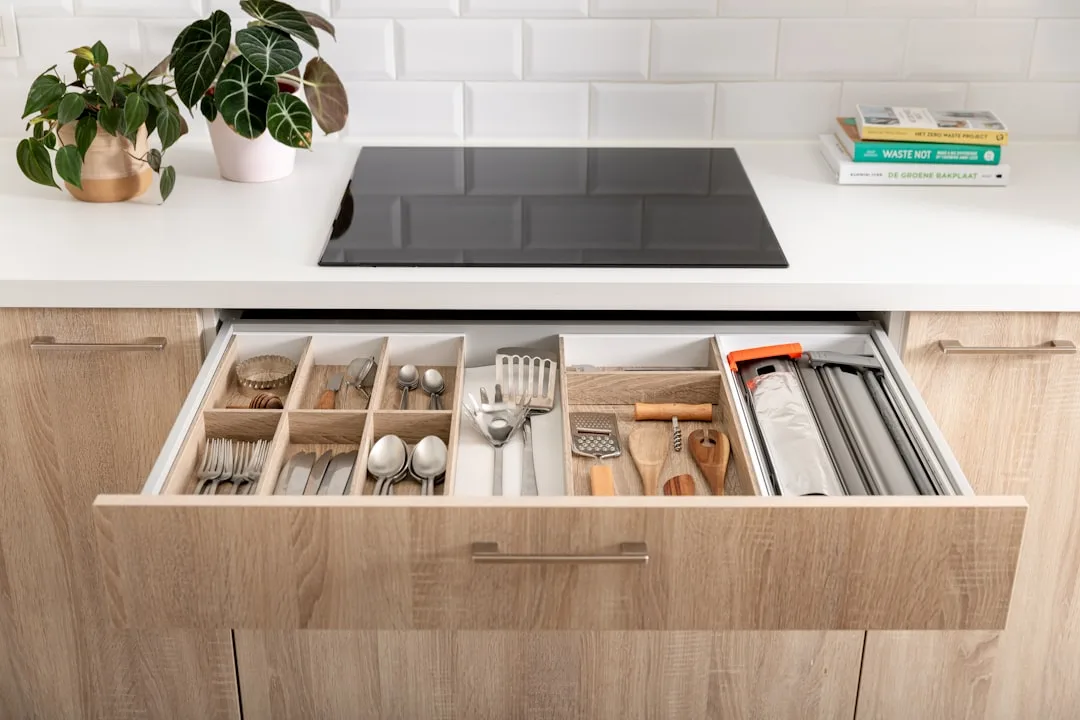
I once watched a client spend $340 on a modular shelving system from The Container Store, haul it home, open the boxes, and discover it was four inches too wide for her closet. Not almost right — actually impossible to install. The shelving went back. The trip cost her an afternoon and a return shipping fee. This is the most common and most preventable mistake in closet organization, and almost no one talks about it before jumping to product recommendations.
Measure everything. Not just the width of the hanging rod. The full interior dimensions of your closet:
- Total width at multiple heights (closets in pre-1980 buildings are often slightly tapered or have irregular walls)
- Total depth from the back wall to the door frame — and note whether a door swing eats into usable depth
- Ceiling height above the existing rod and shelf
- Baseboard protrusion on the floor zone, which affects what rolling carts or stackable units can fit flush against the wall
- Door clearance — bifold, sliding, and hinged doors all impose different constraints on how you access the interior and whether over-door organizers are viable
Once you have measurements, categorize your wardrobe by what it actually needs:
- Hanging-heavy items — dresses, blazers, dress shirts, anything that creases when folded
- Fold-friendly items — t-shirts, jeans, sweaters, activewear, loungewear
- Small-item-heavy categories — socks, underwear, belts, scarves, accessories
Map that ratio honestly. If 60% of your clothing can be folded without damage, your closet should be configured with proportionally more shelf and bin real estate than hanging space. Most factory-configured closets are set up the opposite way — one long rod, one shelf above it — because that layout is cheap to install and requires no thinking. It is almost never the right configuration for how real people actually dress.
This is the core challenge of small closet organization without dresser constraints in mind: the default closet build assumes you have supplemental furniture doing half the work. Once you remove that assumption, the closet has to be intentionally redesigned to absorb everything — and that redesign starts with an honest measurement session, not a shopping trip.
Professional closet designers work from a principle worth knowing: a minimum of 40 inches of hanging rod per person is the functional baseline for a wardrobe. Standard reach-in closets provide 48–60 inches total, which means a shared closet at that size requires vertical reconfiguration rather than just horizontal division of the rod.
Photograph your closet before you touch it. Sketch the dimensions on paper. This takes twenty minutes and prevents the most expensive kind of mistake.
> Takeaway: Measure width, depth, and ceiling height before purchasing anything — and categorize your wardrobe by storage type needed so your configuration matches what you actually own, not what a factory default assumes.
The Vertical Zoning Method: Dividing Your Closet Into Three Functional Layers
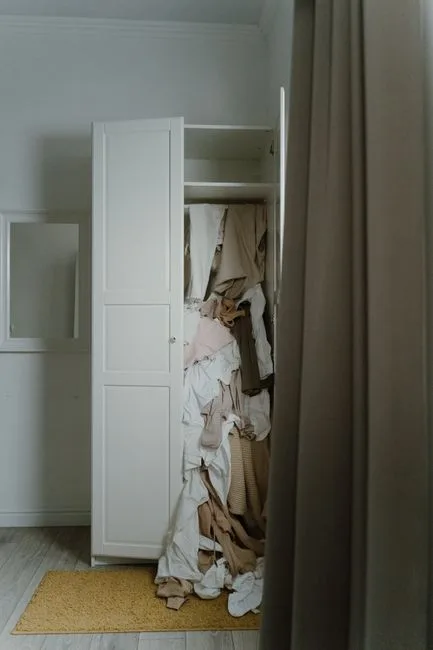
Every closet — regardless of width, regardless of whether it’s a narrow reach-in or a generous walk-in — has three vertical layers. Most people use one of them well, neglect the second, and abandon the third entirely. Vertical zoning is the practice of deliberately assigning a function to all three, based on how frequently you access the items stored there.
Approaching small closet organization without dresser furniture in the equation means every vertical inch has to carry real weight. The three-zone method is how you make that happen without the system collapsing into chaos within a week.
Zone 1: The Prime Zone (eye level to waist height)
This is where your closet’s most valuable real estate sits. Professional closet designers use the term prime real estate zoning to describe this band — roughly the area between shoulder and hip height — because it accounts for approximately 80% of your daily physical interactions with the closet. Everything that belongs in Zone 1 shares one quality: you reach for it multiple times per week. Your most-worn hanging pieces live here on the rod. Your current-season folded basics — the t-shirts, the jeans you rotate through — live here on open shelves or in shallow bins where you can see them without lifting anything.
What does not belong in Zone 1: out-of-season clothing, occasional-use items, duplicates you’re holding onto, anything you wear fewer than once a month. Those items are taking prime real estate from daily workhorses, and that misallocation is usually why Zone 1 feels perpetually crowded even in closets that technically have enough space.
Zone 2: The Upper Zone (above eye level, up to ceiling)
Most closets have a single shelf at rod height — roughly 68 to 72 inches from the floor — and then dead space above that running to the ceiling. In an 8-foot ceiling room, that’s 24 to 28 inches of vertical space sitting empty. In a 9-foot ceiling room, it’s more. This zone is not convenient for daily access, which makes it perfect for exactly the items that don’t need daily access: off-season folded sweaters in clear labeled bins, extra bedding, formal wear in garment bags, shoes for seasonal occasions.
The key product category here is clear stackable bins with lids — the kind you can label on the front panel and read from below without climbing. Opaque bins in the upper zone create the same visibility problem as dresser drawers: items disappear, go unworn, and get forgotten. If you can’t see it, you won’t wear it. Spend slightly more for clear storage in the upper zone and it pays back in wardrobe awareness.
If your closet ceiling allows it, a second rod or shelf bracket installed above the existing rod (for short-hanging items like folded shirts draped over hangers, or a second row of jackets) can double your Zone 2 capacity without major construction.
Zone 3: The Floor Zone (below hanging garments to the floor)
Beneath a full-length hanging section, you have essentially no floor space — dresses and long coats reach close to the floor. But beneath a double-rod configuration (two shorter rods stacked, each holding tops and jackets rather than full-length items), you gain 18 to 24 inches of clear floor depth. That space is where rolling carts, stackable shoe racks, canvas cube organizers, and narrow drawer units live.
This is where the dresser’s former contents relocate most naturally. A set of fabric cube bins on a low shelf or a slim rolling cart with three to four drawers handles socks, underwear, belts, and accessories with the same capacity as two dresser drawers — at a fraction of the footprint, and inside the closet instead of consuming bedroom floor space.
> Takeaway: Zone 1 gets daily-use items at accessible height. Zone 2 stores seasonal and occasional pieces in labeled clear bins. Zone 3, opened up by a double-rod reconfiguration, holds the folded basics and small items that used to live in a dresser.
The Products That Actually Work (and the Ones That Don’t)
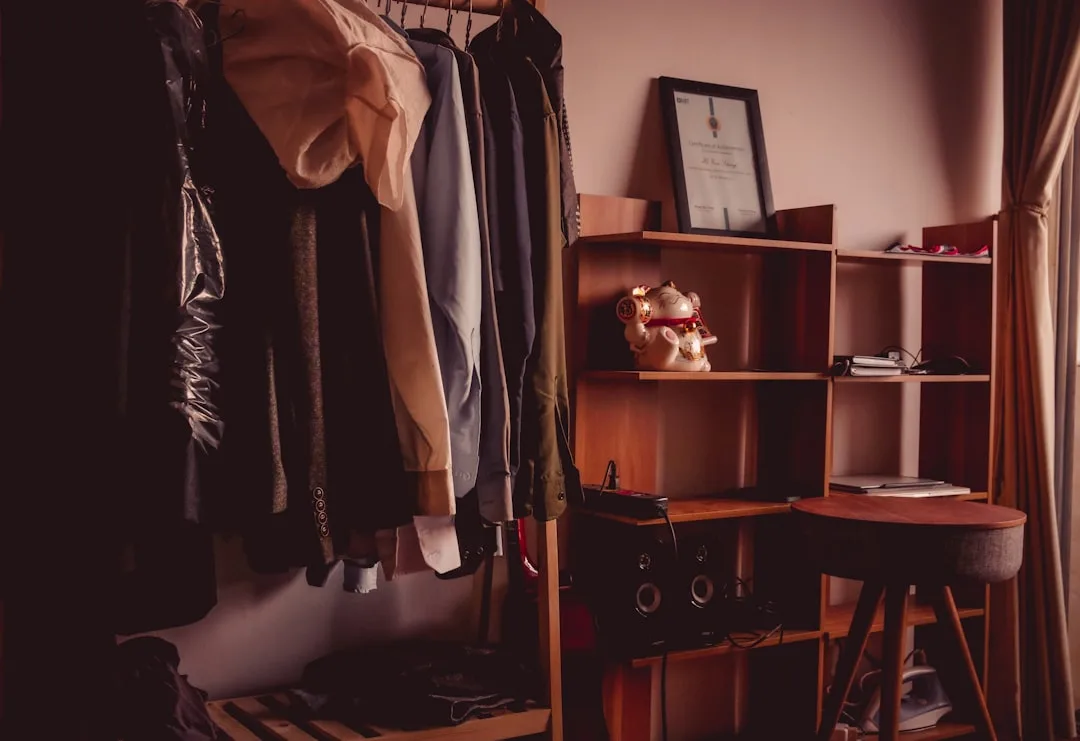
There is no shortage of closet organization products. There is a significant shortage of honest information about which ones hold up, which ones are sized for real closets rather than magazine closets, and which ones solve a problem you don’t actually have. What follows is a category-by-category breakdown based on what consistently performs across different closet types and wardrobe sizes.
Slim Velvet Hangers
The single highest-impact purchase in any closet reorganization. Standard plastic hangers are 2 to 2.5 inches thick at the hook. Slim velvet hangers are half that, sometimes less. In a 48-inch closet, switching from plastic to velvet hangers adds the equivalent of 8 to 12 inches of rod space — the equivalent of fitting several additional garments — without changing anything structural. They also grip fabric without stretching necklines, which matters for knits and jersey fabrics. Buy them in bulk, in one color, and switch everything at once rather than mixing hanger types. The visual consistency alone makes the closet read as more organized.
Over-Door Organizers
The back of a closet door is one of the most underused surfaces in most homes. A good over-door organizer — one with clear pockets rather than opaque fabric ones — holds scarves, belts, workout accessories, small bags, and folded lightweight items without requiring a single wall anchor. The critical measurement here is door clearance: bifold doors often can’t accommodate a standard over-door unit because there’s insufficient space between the door panel and the rod when the door is in motion. Measure that gap before purchasing. For sliding closet doors, over-door organizers don’t work at all — but a slim wall-mounted pegboard system just inside the closet door frame achieves the same effect.
Shelf Dividers
Folded stacks on open shelves collapse. This is not a willpower problem. It is a physics problem. Shelf dividers — the kind that clip directly onto the shelf edge or slide onto existing wire shelving — keep folded stacks of sweaters, jeans, and t-shirts in defined columns so they don’t topple into each other when you pull an item from the middle. This is one of those products that costs almost nothing, does almost nothing visually dramatic, and completely changes how stable and maintainable a folded-stack shelf system is in daily use.
Fabric Cube Bins
For Zone 3 and lower shelves, fabric cube bins outperform both open shelves (too easy to make messy) and zip-close bags (too inconvenient). The 11-inch cube format fits most standard shelving systems and holds a drawer’s worth of folded basics — underwear, socks, athletic gear — with enough structure to maintain its shape but enough flexibility to accommodate slight volume variation season to season. Label the front with a tag or a piece of washi tape so you’re not opening every bin to find what you need.
What Doesn’t Work
Hanging fabric shelf organizers that attach to a closet rod. They sound useful — extra shelf space without installation — but they swing, they’re difficult to access items from without destabilizing the stack, and they pull the rod forward over time, reducing the depth available for hanging garments. I have recommended them to perhaps three clients in twelve years and had all three remove them within two months.
Overdoor shoe racks designed to hold 24 or 36 pairs. The weight distribution on a standard door hinge is not designed for that load, and the shoe pockets rarely match the real dimensions of adult footwear beyond slim flats. They work adequately for a small collection of lightweight shoes but fail at scale. A floor-level angled shoe rack inside the closet or under-bed shoe boxes are more durable solutions for larger collections.
Folding Systems That Replace Drawer Logic
One of the primary functions of a dresser drawer is to stack items without requiring them to be visible or individually accessible. When you remove the dresser, you need a folding and storage method that does the opposite: keeps each item visible and retrievable without disturbing adjacent items. File folding — the method popularized by Marie Kondo but actually rooted in retail display and military clothing storage — accomplishes this.
The principle is straightforward. Instead of stacking garments horizontally (one on top of another), you fold each item into a compact rectangle and store them vertically, standing upright side by side like files in a drawer. The result is that every item is visible from above, you can see the full inventory at a glance, and removing one item doesn’t collapse the rest of the stack.
For open bins and fabric cubes in a closet, this method works better than any alternative I’ve tested. T-shirts, underwear, socks, athletic shorts, and light sweaters all fold compactly enough to stand vertically in a bin. Heavier knits may not hold their shape upright and are better stored flat in labeled upper-zone bins.
The folding dimensions that produce the most stable vertical storage:
- T-shirts: fold in thirds lengthwise, then fold in half twice, so the finished rectangle is approximately 4 inches wide and stands 5 to 6 inches tall
- Underwear: fold in thirds into a compact square that stands without assistance
- Socks: fold one cuff over the other rather than balling, which stretches elastic over time
- Jeans: fold in half lengthwise (one leg over the other), then fold the waistband down to the hem twice; the resulting rectangle stands in a bin with the waistband visible for identification
The waistband-visible orientation matters. When jeans are stored with the waistband up and visible, you can read the wash, the rise, and the cut from above without unfolding anything. This is the closet equivalent of drawer labeling — the identification system built into how items are stored.
> Takeaway: File folding turns any open bin into a functional substitute for a drawer — with better visibility and faster access than any dresser configuration I’ve seen.
Seasonal Rotation: Managing Volume Without a Dresser Overflow Problem
The argument most often made in favor of keeping a dresser is volume. A closet handles current-season clothing reasonably well, the thinking goes, but where does the off-season overflow live? The answer is that off-season clothing should not live in your primary closet at all — dresser or no dresser — and the misunderstanding that it should is what makes both systems feel inadequate.
A functional seasonal rotation strategy works in two phases:
Phase 1: Active Season
Your closet holds only what you are currently wearing or will wear in the next six to eight weeks. In practice, this means: in October, your swimsuits, linen shorts, and sleeveless tops are not in your closet. They are in labeled, sealed storage elsewhere — under the bed in flat storage bins, in a hall closet, on a high shelf in a spare room, or in a dedicated off-season storage container. The closet is not trying to hold twelve months of clothing in a space designed for four.
Phase 2: Transition
Twice a year, you run a deliberate swap: pull the incoming season’s items from off-season storage, assess what still fits and what you actually wore last season (the unworn items at the back are your purge candidates), and install the new season in the closet while boxing the outgoing season for storage. This process takes two to four hours when done properly and eliminates the closet-overflow problem entirely — not by buying more storage, but by recalibrating what the closet is expected to hold at any given time.
The best off-season storage containers for this system: vacuum-seal bags for bulky items like down coats and chunky sweaters (they compress to roughly 30% of original volume), and flat under-bed storage bins (the kind with wheels and a clear lid) for folded items that don’t compress well. Label every container with season and category. You should be able to pull the right bin in the dark if needed.
The Complete Small Closet Organization Without Dresser Setup: A Room-by-Room Breakdown
The method above works differently depending on what kind of closet you’re starting with. Here is how small closet organization without dresser furniture breaks down across the three most common configurations.
Narrow Reach-In Closet (Under 48 Inches Wide)
This is the most challenging configuration because it offers the least horizontal flexibility. The primary move is converting from single-rod to double-rod in the half of the closet that holds short-hanging items (tops, jackets, folded pants on hangers), which recovers the floor zone beneath those rods for Zone 3 storage. The remaining half retains single-rod for full-length items. An over-door organizer handles small accessories if door clearance allows. Upper zone gets two to three clear bins for off-season items or occasional-use pieces. Total capacity gain over a single-rod factory default: typically 40 to 60% more usable storage.
Standard Reach-In Closet (48–72 Inches Wide)
More horizontal flexibility means you can create more distinct sections: a hanging zone on one side, a shelving tower on the other (either a freestanding unit or wall-mounted modular shelving), and a floor zone beneath the hanging section. The shelving tower does the dresser’s work — open shelves with cube bins for folded basics, a section for shoes, a section for bags. This configuration handles the full wardrobe of a single person or a couple with complementary rather than competing clothing volume.
Walk-In Closet (Any Size)
The walk-in closet with no dresser is actually the easiest configuration because the available wall perimeter is large enough to build out all three zones without compromise. The design principle here is perimeter assignment: hanging on two walls, shelving on the third, a center island or rolling cart (if depth allows) for additional flat storage and a surface for laying out outfits. The common mistake in walk-ins is treating them as larger reach-ins — one long rod, one high shelf — rather than as rooms that happen to store clothes.
FAQ
Can small closet organization without dresser systems actually work for families with kids sharing a room?
Yes, but it requires assigning each person a defined vertical zone rather than dividing the closet horizontally. Children’s clothing is smaller and more compressible than adult clothing, which means you can fit a child’s full wardrobe into 24 to 30 inches of closet width using double rods and shallow bins. The system works if the zones are clearly differentiated — different bin colors, different sections of the rod — so everyone knows what belongs where and returns items correctly.
What about items like jeans and sweaters that are hard to hang but awkward to fold compactly?
Jeans fold well with the method described above and stand vertically in a fabric bin without issue. Sweaters are the one category that benefits from open horizontal shelving rather than vertical bins, because they’re bulky and heavy enough that vertical storage creates pressure on the fold lines. A dedicated sweater shelf with dividers, storing folded sweaters in flat stacks no more than four items high, is the most stable solution. Knit items stored this way hold their shape significantly better than items hung on standard hangers, which stretch shoulders over time.
Is a closet rod strong enough to hold everything a dresser was holding, plus the hanging items?
The rod itself isn’t what holds folded items — folded items move into bins and shelves, not onto the rod. The rod handles hanging garments only. What changes is that the floor zone, the upper shelves, and any added shelving towers within the closet absorb the volume that used to live in drawers. The rod load stays the same or decreases slightly if you convert some folded-on-hangers items to vertical bin storage instead.
How do I handle a closet I share with a partner who doesn’t want to change the system?
Start with your half. A full reorganization of one person’s side demonstrates the capacity and usability of the system better than any argument. Once your side is functioning — everything visible, accessible, and fitting without cramming — the evidence is in the closet. Most partners who resist the concept in theory come around when they can see the square footage freed up in the bedroom and the reduction in the morning chaos of finding things.
What’s the minimum budget to set up a functional small closet organization without dresser system from scratch?
The core investment for a standard reach-in closet: a set of slim velvet hangers ($20–$30 for a 50-pack), four to six fabric cube bins ($25–$40 total), shelf dividers ($10–$15), and an over-door organizer if the door allows ($20–$35). Total: $75–$120 for a fully functional system. Adding a double-rod bracket (another $15–$25) and one clear upper-zone bin ($12–$18) brings the complete setup to under $160 for most reach-in configurations. The modular shelving tower approach costs more — $150 to $300 depending on the system — but replaces a dresser that costs considerably more than that to purchase new.