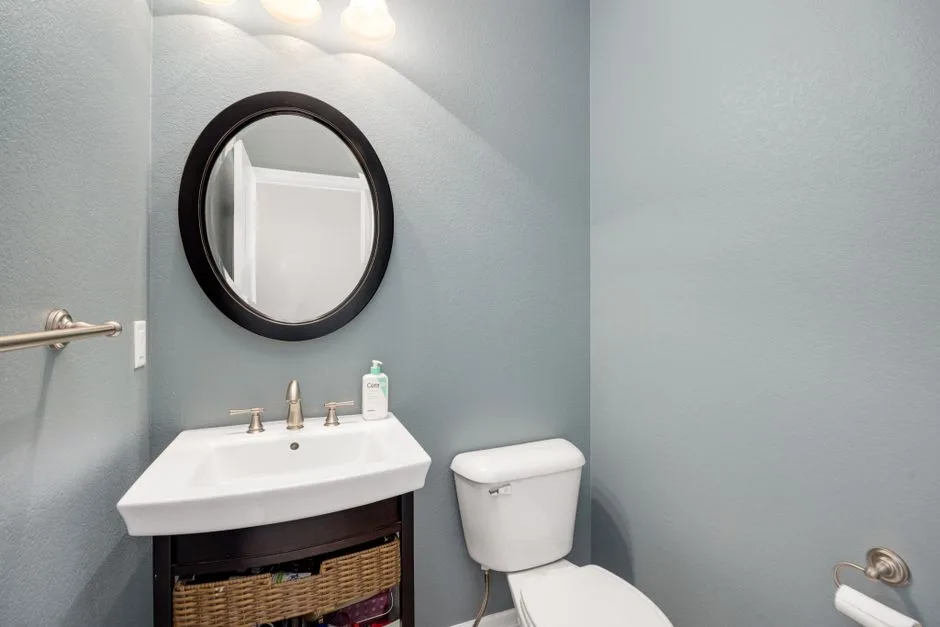
The shower stall that turns your half bath into a full bath can legally fit in a space smaller than a standard coat closet — and in most homes, that closet is sitting right next door. Most homeowners attempting a half bath conversion to full bathroom walk away from this project before they ever measure anything, convinced the room is simply too small. That assumption costs them a full bathroom addition, and I’ve watched it happen more times than I can count.
Quick Answer
The shower stall that turns your half bath into a full bath can legally fit in a space smaller than a standard coat closet — and in most homes, that closet is sitting right next door.
Why Most Half Bath Spaces Already Meet the Minimums
In This Article
- Why Most Half Bath Spaces Already Meet the Minimums
- The Three Variables That Actually Determine Your Half Bath Conversion to Full Bathroom Cost
- Borrowing Space: Which Adjacent Rooms Give Up Square Footage Quietly
- Permits, Inspections, and What Happens If You Skip Them
- How to Evaluate Contractors for This Specific Project
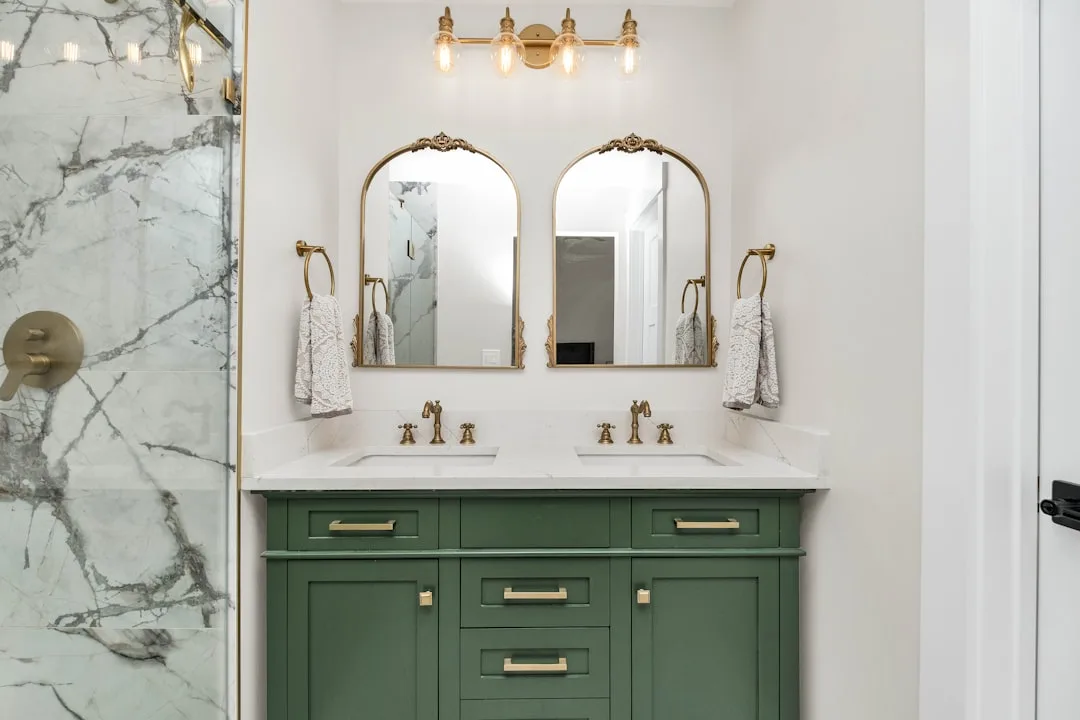
Here’s what nobody bothers to tell you: the spatial requirements for a code-compliant full bathroom are genuinely, surprisingly small. A shower-only full bath — no tub — can fit in as little as 36 to 40 square feet when the layout is planned correctly. Most half baths clock in at 18 to 25 square feet of finished floor space, which means you’re not starting from zero — you’re starting from halfway there.
The NKBA clearance standards that govern minimum fixture spacing are smaller than most people imagine when they’re eyeballing a room:
- 21 inches of clear floor space in front of the toilet
- 15 inches from the toilet centerline to any side wall or obstruction
- 36×36 inches as the minimum shower stall footprint — roughly the size of a phone booth
- 24 inches of clear floor space in front of the vanity or pedestal sink
- 30 inches minimum width for a single-sink vanity, though 24-inch vanities exist for genuinely tight layouts
- 80 inches of headroom minimum in the shower zone — relevant in under-stair conversions specifically
That last shower measurement catches people off guard every time. Thirty-six inches square is a space you can stand in, turn around in, and actually shower in — it’s not a theoretical minimum that nobody uses in practice. Neo-angle and corner shower units are specifically built for this footprint, and they’ve been going into converted half baths for decades.
The measurement most people skip is door swing clearance, and this is where layouts fall apart on paper. Before you call a contractor, measure the door swing arc and mark it on the floor with painter’s tape. Then measure the toilet clearance zone. What’s left is your actual usable footprint — and that number is almost always larger than the initial gut reaction suggests. If the door swing is eating usable floor space, a pocket door or barn door conversion typically runs $300 to $700 installed and immediately reclaims that arc for fixture clearance.
The pattern I kept seeing in client consultations was a homeowner who had already talked themselves out of the project before I arrived. They’d measured the room, gotten discouraged by the raw square footage, and stopped there. Not one of them had measured with the adjacent wall space, closet back wall, or hallway depth factored in. That 22-square-foot half bath looked like a dead end — until we opened the measuring tape past the existing walls.
Common layout configurations that work in tight half bath conversion to full bathroom scenarios:
- Corner shower with toilet on the opposite wall — keeps plumbing on a single wet wall and maximizes the center floor zone
- Shower on the back wall, vanity on the side wall — works when the room is deeper than it is wide, which describes most powder rooms built before 1990
- Wall-hung toilet and floating vanity — eliminates the floor footprint of both fixtures, freeing six to eight square feet of visual and functional floor space even when the actual room dimensions don’t change
- Pocket door replacement — not a layout change, but recovers the door swing arc and can make a 22-square-foot room behave like a 27-square-foot room in practice
Actionable takeaway: Measure your half bath’s current footprint, then measure every wall that shares a border with the room — closet, hallway, pantry, whatever’s adjacent. Write those dimensions down before you spend a dollar on anything else.
The Three Variables That Actually Determine Your Half Bath Conversion to Full Bathroom Cost
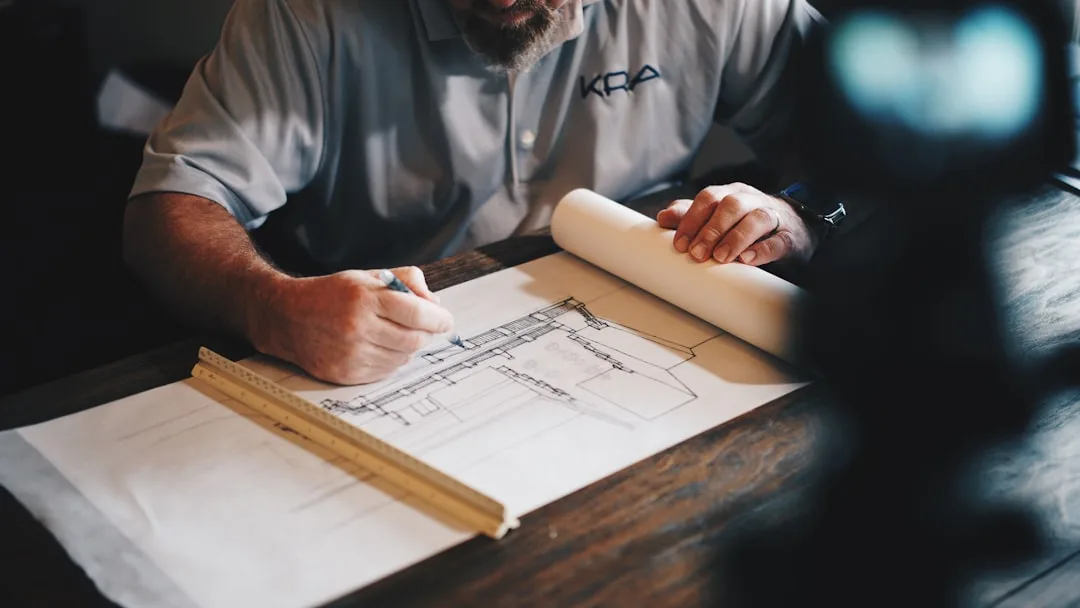
Generic cost ranges for this project span from roughly $5,000 to $25,000 depending on who you ask, and that range is essentially useless for making a real decision. The number that matters is your number, and it’s driven almost entirely by three variables — not the fixtures, not the tile, not the vanity you’re considering.
Variable 1: Plumbing proximity. The single largest cost driver in a half bath conversion is the distance between your proposed shower drain location and the existing drain stack. Plumbing rough-in for a new shower drain runs $800 to $1,500 in labor under normal conditions. But every foot of horizontal drain run beyond six feet adds $200 to $400 in labor — and if your home is slab-on-grade instead of wood subfloor construction, moving a drain line more than six feet can add $1,200 to $3,000 to the project, because slab cutting is an entirely different operation than pulling up plywood subfloor.
What to look for when assessing plumbing proximity before calling anyone:
- Find your main drain stack — it’s usually a 3- or 4-inch ABS or cast iron pipe visible in the basement or crawl space directly below the bathroom
- Measure the horizontal distance from the stack to where your shower drain would land
- Check whether your subfloor is wood (you can see joists below) or concrete slab (no visible joists, just earth or a concrete ceiling)
- Look for existing wet wall locations — walls that already contain supply lines are the cheapest walls to tie into
- Confirm whether your drain stack is 3-inch or 4-inch diameter, as a 3-inch stack limits how many fixtures can tie in without a code upgrade
Variable 2: Expansion vs. reconfiguration. Staying within your existing four walls is one project. Borrowing six square feet from an adjacent closet is a different project. They are not the same job, and contractors rarely price them the same way. Expansion work — even a small wall relocation — typically runs 2 to 3 times the cost of pure reconfiguration within the existing footprint, because it involves framing, drywall, possibly electrical relocation, and potentially a structural assessment.
Questions to ask yourself before deciding between expansion and reconfiguration:
- Is the adjacent wall load-bearing? A structural engineer assessment runs $300 to $600 and is worth every dollar before you assume a wall can move.
- Does the adjacent space contain electrical runs? Open the adjacent closet and look for outlet boxes or switch plates — those circuits need relocation at $80 to $120 per hour of electrician time.
- Will the expansion affect a hallway that serves as a primary egress path? Some municipalities require egress hallways to maintain a minimum 36-inch clear width.
- Is there HVAC ductwork in the adjacent wall or floor cavity? Duct relocation adds $400 to $1,200 to expansion projects and surprises homeowners who didn’t check first.
Variable 3: Fixture tier. Builder-grade fixtures — the ones that look fine in the showroom and feel hollow six months later — will run you $800 to $1,500 for a complete set. Mid-range fixtures from brands like Kohler’s standard line or Moen’s Align collection run $2,000 to $4,500 for a shower enclosure, toilet, and vanity. Designer-tier fixtures are where cost really departs from logic, and in a 40-square-foot room, the visual return diminishes quickly.
Here’s a rough self-scoring framework before you request quotes:
- Low complexity: Drain stack within 6 feet, no wall changes needed, builder-grade or mid-range fixtures → $5,000–$10,000
- Mid complexity: Minor wall modification or annexing closet space, mid-range fixtures, wood subfloor → $10,000–$16,000
- High complexity: Slab construction, significant wall relocation, drain run over 8 feet, or designer fixtures throughout → $16,000–$25,000+
Actionable takeaway: Before getting any quote, locate your main drain stack (usually visible in the basement or crawl space directly below the bathroom) and measure the horizontal distance from your intended shower drain location. That single measurement will tell you more about your project’s cost than any contractor estimate you’ll get over the phone.
Borrowing Space: Which Adjacent Rooms Give Up Square Footage Quietly
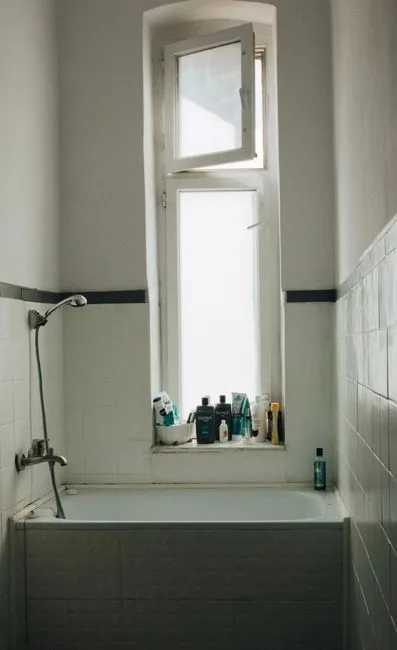
Coat closets are my favorite source of square footage in this whole conversation — partly because they’re usually adjacent to first-floor half baths by design, and partly because absorbing one into a bathroom leaves almost no visual evidence on the outside of the house. Nobody walks by and thinks “they took the closet.” They just see a functional bathroom.
A standard coat closet runs 24 to 30 inches deep and 36 to 48 inches wide. Combined with an existing 20-square-foot half bath, that addition alone brings the combined footprint to approximately 27 to 35 square feet — enough to clear the minimum threshold for a shower-only full bath, in one move, without touching the rest of the floor plan. I’ve done this exact combination twice with clients, and both times the coat closet got relocated to an entry alcove with about four studs and a weekend’s work.
Beyond closets, there are less obvious sources worth examining:
- Hallway niches and dead-end corridors — An 18-inch bump-out into a hallway that dead-ends anyway can yield exactly the shower stall depth you need without compromising circulation. This works particularly well in older ranch homes where hallway dead-ends were a common quirk of original layouts.
- Under-stair voids — In platform-framed homes, the triangular storage space beneath a staircase often shares a wall with the nearby powder room. The challenge is headroom: shower code requires 80 inches at the showerhead location, but the rest of the stall can taper. A fixed showerhead positioned at the tall end of the triangle solves this completely, and I’ve seen under-stair conversions done cleanly in homes with 9-foot ceilings on the ground floor.
- Pantry annexation — Less common than closet absorption, but worth measuring. A pantry that shares a wall with the half bath can donate its back 18 to 24 inches without eliminating the pantry’s function — you’re left with a shallower pantry, not a missing one. Pantry shelving is cheap to rebuild; a full bathroom on the main floor is not.
- Laundry room overlap — In homes where the half bath and laundry room share a wall, there’s a secondary benefit: the plumbing is already right there. A washer drain and the utility sink supply lines can indicate that your drain stack is on that shared wall, which may mean a new shower drain ties in at minimal cost compared to running it across the room.
When assessing adjacent space sources, rank them in this order:
- Coat closet — easiest to relocate, usually non-structural, lowest disruption
- Dead-end hallway bump-out — no lost room, but requires careful framing and may need a permit
- Under-stair void — structurally complex but often requires no relocation of anything else
- Pantry rear section — moderate disruption, need to rebuild shelving, but preserves the pantry function
- Laundry room overlap — most complex, involves two wet rooms merging, but plumbing savings can offset construction costs
Permits, Inspections, and What Happens If You Skip Them
This is the section most remodeling articles bury or skip entirely, and it’s the one that costs homeowners real money when they ignore it.
A half bath conversion to full bathroom almost always requires a permit. The trigger isn’t the cosmetic work — it’s the new drain. Adding a shower drain is a plumbing alteration, and in virtually every jurisdiction in the United States, plumbing alterations require a permit and a rough-in inspection before walls close. Electrical work associated with the project — a new GFCI outlet, exhaust fan installation, or lighting addition — requires a separate electrical permit in most municipalities.
What happens when you skip the permit:
- Resale complications — Unpermitted bathroom additions show up during buyer home inspections and title searches. The buyer’s lender may require the work to be permitted retroactively, which means opening finished walls for inspection.
- Retroactive permit costs — Getting a permit after the fact typically costs 1.5 to 2 times the original permit fee, plus potential fines ranging from $200 to $2,000 depending on the municipality.
- Insurance claim denial — If water damage originates from an unpermitted shower installation, your homeowner’s insurance carrier can deny the claim on the basis that the work wasn’t code-compliant.
- Contractor liability questions — A licensed contractor who pulls permits protects both themselves and you. A contractor who offers to skip permits to save money is transferring all of that risk onto you.
What to expect from the permit process for a standard half bath conversion:
- Application: Filed by your contractor or by you as owner-builder; most municipalities now accept online applications
- Plan review: Small bathroom additions typically skip full architectural review; a hand-drawn dimensioned floor plan is usually sufficient
- Rough-in inspection: Inspector visits after plumbing and framing are roughed in but before walls close — this is the critical checkpoint
- Final inspection: Occurs after all fixtures are installed, GFCI outlets are tested, and exhaust fan is operational
- Timeline: Most jurisdictions turn permits around in 3 to 10 business days for residential bathroom work
Permit costs for this type of project typically run $150 to $600 depending on jurisdiction and project valuation. That cost belongs in your budget from the start, not as an afterthought.
How to Evaluate Contractors for This Specific Project
Not every general contractor has done a half bath conversion to full bathroom in a tight space, and the ones who haven’t will price it the way they price a new bathroom build — which means you’ll overpay significantly or get a bid that doesn’t reflect the real constraints of your project.
What to ask before you request a formal quote:
- “Have you done a half bath conversion where you borrowed space from an adjacent room?” — The answer tells you immediately whether they’ve navigated the specific framing and permit challenges of this project type.
- “Do you sub out plumbing or is that in-house?” — Subcontracted plumbing isn’t a red flag, but it does mean two schedules to coordinate and potentially two markups on labor.
- “What’s your approach to drain tie-in on a slab?” — If they answer quickly and specifically, they’ve done it. If they pause and hedge, assume they haven’t.
- “Can you show me a completed conversion in a similar square footage?” — Photos are nice; an address you can drive by is better.
Red flags to walk away from:
- Refuses to pull permits or suggests permits aren’t necessary for this scope of work
- Provides a written quote that doesn’t specify fixture allowances — you’ll be responsible for cost overruns when the builder-grade budget doesn’t cover what you actually want
- Can’t name the subcontractors they use for plumbing and electrical
- Quotes a project start date more than 8 weeks out without explanation — not always a red flag, but worth asking about
Getting three quotes is standard advice, but for this project specifically, make sure all three quotes are based on the same scope document. If one contractor is pricing a coat closet absorption and another is pricing a pure reconfiguration, you’re not comparing apples to apples, and the price difference will mislead you.
FAQ: Half Bath Conversion to Full Bathroom
Q: How much square footage do I actually need to add a shower to a half bath?
The minimum functional footprint for a shower-only full bath is approximately 36 to 40 square feet, depending on fixture layout and local code. Most half baths are 18 to 25 square feet, which means you typically need to source 12 to 20 additional square feet from an adjacent space. In practice, a coat closet annexation or an 18-inch hallway bump-out covers that gap in the majority of first-floor conversion projects.
Q: Will adding a full bath increase my home’s value enough to justify the cost?
A full bathroom addition on the main floor — especially converting a half bath that serves the primary living area — typically returns 50 to 70 percent of project cost at resale according to Remodeling Magazine’s Cost vs. Value data. The more important figure for most homeowners is the functional value: a main-floor full bath eliminates the need for guests or mobility-limited household members to use upper-floor bathrooms. That has real daily-use value that doesn’t show up in resale percentages.
Q: What’s the difference between a 3/4 bath and a full bath, and does it matter for this conversion?
A 3/4 bath contains a toilet, sink, and shower — no tub. A full bath traditionally includes all four: toilet, sink, shower, and tub. For most half bath conversion to full bathroom projects, the 3/4 configuration is the realistic and practical target. Fitting a tub into a converted half bath is possible only when significant space is borrowed from adjacent rooms, because a standard alcove tub requires a 30×60 inch footprint plus clearance. The 3/4 designation doesn’t hurt resale — buyers in most markets understand and accept shower-only baths on the main floor.
Q: Can I do any part of this project as a DIY to reduce costs?
Yes, with clear limits. Demolition is almost always owner-doable and can save $300 to $800 in labor. Tile installation is within reach for homeowners with some experience and can save $600 to $1,500. Painting and finish work are obvious DIY candidates. What you should not DIY unless you’re a licensed tradesperson: plumbing rough-in, drain installation, and electrical work. These are the items that require inspections, and failed inspections on DIY work cost more to remediate than the original labor savings.
Q: How long does a half bath conversion to full bathroom typically take from permit to final inspection?
For a conversion that stays within the existing footprint or makes a minor wall change, realistic project duration is 3 to 6 weeks from permit approval to final inspection. That timeline includes: permit processing (3 to 10 days), demolition (1 to 2 days), plumbing rough-in and framing (3 to 5 days), rough-in inspection (scheduled 2 to 5 days out in most jurisdictions), tile and waterproofing (4 to 7 days including cure time), fixture installation (1 to 2 days), and final inspection. Projects that involve slab cutting or significant wall relocation add 1 to 3 weeks depending on contractor scheduling and material lead times.