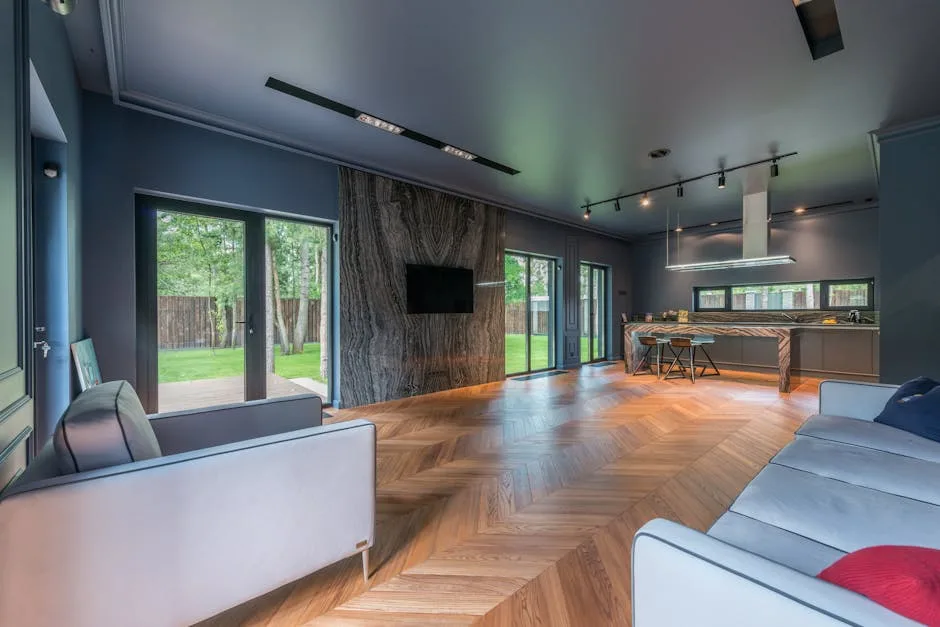
The Reddit thread has over 400 comments and no clear winner — because every answer is right for a different room, and almost nobody is specifying whether they mean click-lock SPC or glue-down hardwood, which changes every piece of advice on cost, DIY feasibility, and room impact. One person swears herringbone made their narrow hallway look twice as wide. Another says it shrank their kitchen. Both are probably correct. They’re just describing different rooms with different proportions, different ceiling heights, and almost certainly different flooring substrates.
Here’s what the generic guides won’t tell you: the entire herringbone vs straight plank conversation shifted around 2019 when SPC (Stone Plastic Composite) flooring went mainstream. That shift didn’t just lower prices. It rewrote the installation rules, the DIY math, and the design possibilities — and most of the advice circulating online was written before anyone noticed.
This guide is built specifically for SPC and LVP products, which now dominate U.S. flooring renovations. You’ll get real labor costs by region, a room-shape framework that actually resolves the “does herringbone make rooms bigger or smaller” debate, and a decision framework at the end that gives you a direct answer based on your specific situation.
Why the Herringbone vs Straight Plank Debate Hits Different With SPC and LVP
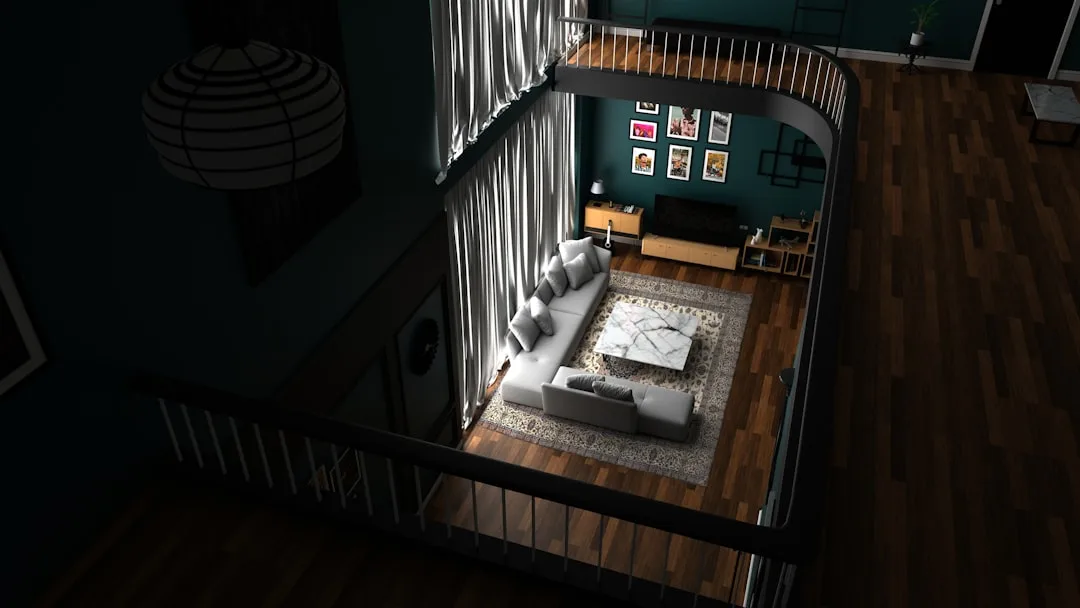
Before SPC flooring, herringbone was essentially a professional-only pattern. Solid hardwood herringbone required glue-down installation, meticulous subfloor prep, and labor rates that reflected hours of precision cutting and alignment work. The “always hire a pro” advice that still circulates on every flooring forum? It came from that era, and it stuck even after the substrate changed completely.
Click-lock SPC herringbone tiles changed the accessibility equation in a fundamental way. SPC’s rigid core — typically 4–6mm of compressed limestone powder and PVC — holds a cut edge cleanly in a way that softer LVT or vinyl plank simply doesn’t. When you miter an SPC tile at 45 degrees, the edge stays sharp and tight. With glue-down hardwood, edge chipping and grain blowout at cut lines were constant failure points. With SPC, that problem is largely eliminated, which is why intermediate DIYers can now complete herringbone installs that would have required a finish carpenter a decade ago.
The visual difference between the two layouts is also more dramatic in SPC than in hardwood. Long-plank LVP — we’re talking 48- to 60-inch lengths, which brands like LifeProof, COREtec, and Shaw offer as standard — creates a sweeping, linear visual movement that shorter hardwood planks never quite achieved at residential price points. Meanwhile, the 12-inch herringbone tiles that dominate the SPC herringbone market produce a tighter, more geometric pattern than the longer herringbone pieces you’d see in a Parisian apartment. These are genuinely different visual effects, not the same pattern at different price points.
The market numbers confirm how significant this substrate shift has been. According to NAFCD data, SPC flooring grew from 18% to 34% of total resilient flooring sales between 2019 and 2023 — nearly doubling its market share in four years. That makes SPC the dominant substrate for both layout styles in U.S. renovations right now. Which means the old hardwood-era advice about herringbone being a premium specialty choice increasingly doesn’t apply to the product most homeowners are actually buying.
Takeaway: If the flooring advice you’re reading doesn’t specify SPC or LVP as the substrate, it may be optimized for a product category most renovators aren’t buying anymore.
Room Size and Shape: The Layout Match Most Guides Get Completely Wrong
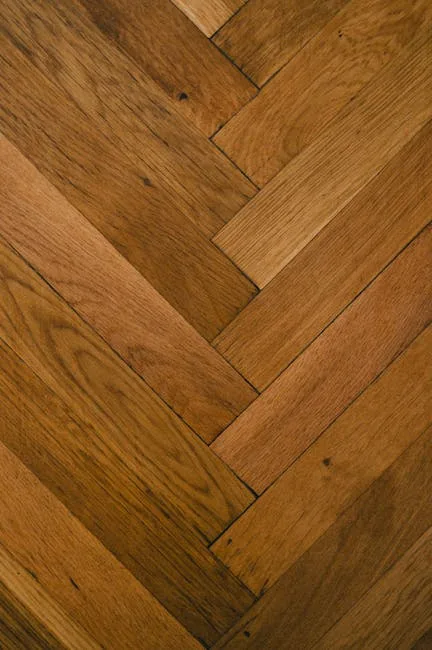
Here’s the confusion that spawns 400-comment Reddit threads: several popular flooring guides claim herringbone makes rooms look bigger, and several others claim it makes rooms look smaller. They’re both citing real design experiences. They’re just describing different room shapes — and never admitting that room proportions determine the answer.
The length-to-width ratio of your room is the variable that resolves this debate. Not the pattern itself.
In a long, narrow room — anything with a length-to-width ratio above 2:1, like a typical hallway, a galley kitchen, or a shotgun-style living room — herringbone set at 45 degrees does something that straight plank cannot: it introduces diagonal movement that visually pulls the walls apart. A 2022 study published in the Journal of Interior Design found that diagonal floor patterns increased perceived room width by up to 9% in rooms narrower than 10 feet, compared to parallel plank layouts in the same space. That’s not a small effect. In a 9-foot-wide hallway, 9% translates to a perceived width of roughly 9 feet 10 inches — a meaningful difference to the eye.
But put herringbone in a square room and something different happens. In a 1:1 ratio space, the pattern loses its directional tension entirely. It has nowhere to pull visually, so it just reads as busy. The geometry activates without resolving, which is the design equivalent of a conversation that goes nowhere. Square rooms — roughly equal length and width within about 15% of each other — are genuinely the worst candidates for herringbone.
Here’s how to match layout to room shape:
- Narrow rooms (ratio 2:1 or greater): Herringbone at 45 degrees, with the center point established along the room’s longest axis — this maximizes the optical widening effect
- Long rectangular rooms (ratio 1.3:1 to 2:1): Either layout works, but straight plank perpendicular to the longest wall is the evidence-backed choice for making the room read as less tunnel-like
- Square rooms (ratio close to 1:1): Straight plank, full stop — wide planks (5 inches and above) in a lighter tone will make the space read as open rather than busy
- Open-plan spaces with defined zones: Herringbone in the entry or dining zone creates a natural visual anchor without requiring a physical threshold
Ceiling height adds another layer. In rooms under 8 feet, herringbone’s visual busyness compresses toward the floor and can make the ceiling feel lower. In rooms with 9-foot or higher ceilings, the pattern has vertical breathing room and reads as intentional luxury rather than visual clutter.
Takeaway: Measure your room’s length and width before deciding anything else. If your ratio is below 2:1 and your ceilings are under 9 feet, straight plank is almost certainly the better choice regardless of aesthetic preference.
Real Installation Cost Breakdown: Herringbone vs Straight Plank by U.S. Region
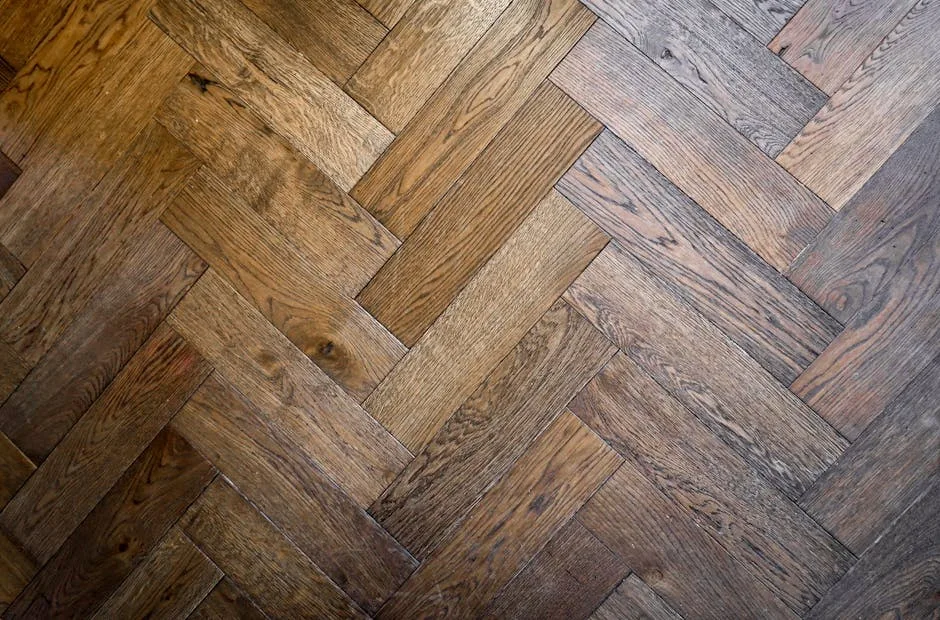
Every competitor article on this topic includes some version of “herringbone costs more to install.” None of them tell you how much more, where, or why — which makes that information nearly useless for planning a real renovation budget.
Here’s what the numbers actually look like.
The national average gap between herringbone and straight plank LVP is $3.18 per square foot. HomeAdvisor’s 2023 aggregated project data puts the total installed cost for LVP straight plank at $5.74 per square foot versus $8.92 per square foot for herringbone LVP. On a 400 square foot room, that’s a $1,272 difference — not nothing, but also not the project-killing premium that vague competitor warnings imply.
Labor costs vary significantly by region:
- Southeast and Midwest: Herringbone SPC/LVP installation runs $4.50–$7.00 per square foot in labor versus $2.50–$4.00 for straight plank — a 60–75% labor premium that reflects the additional layout time and cut complexity
- Coastal metros (NYC, LA, Seattle): Herringbone labor climbs to $8.00–$12.00 per square foot versus $4.50–$6.50 for straight plank, where union labor rates and higher cost-of-living multiply the base premium
- Mountain West and Southwest mid-markets (Denver, Phoenix, Austin): Labor typically falls between the two ranges above, at roughly $5.50–$8.50 for herringbone versus $3.00–$5.00 for straight plank
Material waste is the cost factor that almost nobody accounts for upfront. Herringbone requires 12–15% material overage for cuts and pattern waste versus 7–10% for straight plank. On a mid-range SPC product priced at $3.50 per square foot for a 400 square foot room, that’s the difference between ordering 430 square feet (straight plank) and ordering 460 square feet (herringbone) — an extra $105 in material before installation even starts. On a premium SPC at $5.00 per square foot, that delta reaches $150.
The full cost picture for a 400 sq ft room using mid-range SPC in the Midwest:
- Straight plank total installed: Material ($1,505 with 7.5% overage) + Labor ($1,400 at $3.50/sq ft) = ~$2,905
- Herringbone total installed: Material ($1,610 with 14% overage) + Labor ($2,200 at $5.50/sq ft) = ~$3,810
That’s a realistic $905 premium for herringbone in a mid-market region — meaningful but manageable when you’re comparing it to what you’d pay for the same pattern in solid hardwood, which would run three to four times the total cost.
Takeaway: Before finalizing your layout choice, get a square-foot labor quote from local installers for both layouts. The regional spread is wide enough that a Midwest herringbone project can cost less than a coastal straight plank install.
Herringbone vs Straight Plank Resale Value: What the Housing Market Data Actually Shows
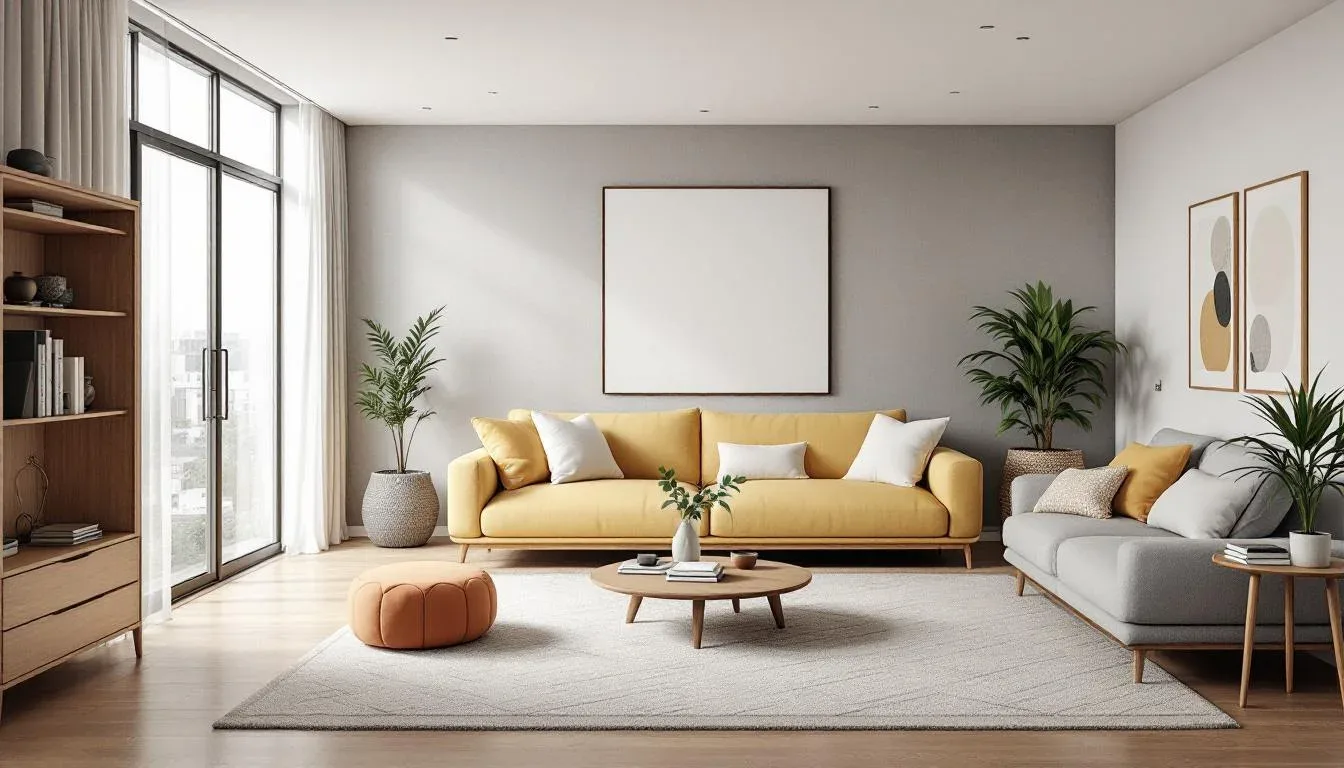
The claim that herringbone flooring boosts resale value is one of the most repeated pieces of design advice on the internet. It’s also one of the least supported by actual data — and the nuance matters if you’re making a $1,000+ layout decision partly on ROI grounds.
Here’s what we actually know. NAR data consistently shows that hardwood and luxury vinyl flooring in general returns 70–80% of installation cost at resale. That’s a reasonable basis for investing in quality flooring regardless of pattern. But no equivalent dataset isolates layout pattern as a variable — meaning the specific claim that herringbone returns more than straight plank at resale is not supported by quantitative housing transaction data. Anyone telling you herringbone definitively increases your sale price is extrapolating from qualitative evidence, not transaction records.
What qualitative evidence does support is more nuanced and more useful:
- In homes priced above the local median, listing agents consistently describe herringbone as a perceived luxury differentiator in entry halls and primary living areas. Buyers in that price band are comparing homes with granite countertops, custom cabinetry, and designer light fixtures — herringbone reads as intentional and design-forward in that context
- In homes priced below the local median, straight plank LVP is frequently cited by listing agents as the higher-ROI choice. Buyers in that price band are evaluating condition, cleanliness, and move-in readiness. A perfect straight plank floor in a neutral tone signals “nothing to fix here” in a way that herringbone doesn’t add to
- A 2023 NAR survey found that 54% of buyers’ agents rated hardwood or luxury vinyl flooring as the single feature most likely to positively influence a buyer’s offer amount — but pattern layout was not isolated as a variable in that survey, confirming the gap in available data
The honest framing: herringbone is a perceived value differentiator, not a proven return multiplier. In the right price segment and the right rooms, it signals a level of design investment that buyers respond to. In entry-level and mid-market homes, a flawlessly installed straight plank floor in a universally appealing tone like warm greige or natural oak will likely do more for your sale price than herringbone.
Takeaway: Match your layout choice to your market segment. If your home competes above the local median and the comparable sales in your neighborhood include design-forward finishes, herringbone earns its premium. If you’re pricing to attract first-time buyers or value-focused buyers, a clean, neutral straight plank floor is the smarter investment.
The Visual Weight Problem: How Each Layout Interacts With Furniture, Color, and Ceiling Height
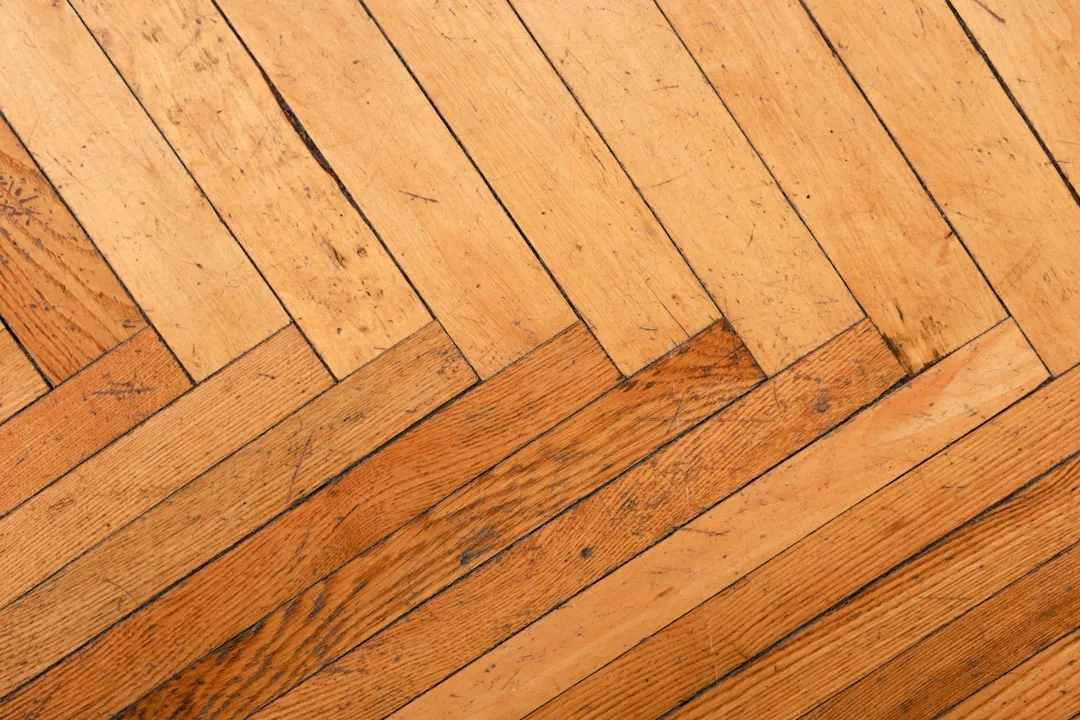
Floor pattern doesn’t exist in isolation. It exists in a room full of furniture, textiles, paint colors, and ceiling conditions — and how herringbone or straight plank interacts with all of that determines whether the final result feels cohesive or chaotic. This is the layer of decision-making that most flooring guides skip entirely.
Herringbone creates a high-frequency visual pattern. That’s part of its appeal — it’s active, geometric, and interesting. But that activity has a cost: it competes. Put herringbone under a sectional with a bold geometric upholstery print, layer in a high-contrast area rug, and add textured wallcovering, and you’ve created a room where the eye has no place to rest. Interior design research on visual complexity shows that rooms with three or more competing pattern sources — flooring, textiles, and wallcovering — score 22% lower on perceived comfort ratings in controlled preference studies. Pattern hierarchy isn’t just an aesthetic preference; it’s a measurable factor in how people feel in a space.
Herringbone performs best when:
- Furnishings are primarily solid-colored or have low-contrast patterns (linen, bouclé, leather)
- Ceiling height is 9 feet or above, giving the pattern vertical room to breathe
- Area rugs are solid, tone-on-tone, or abstract rather than geometric
- Wall treatments are paint or simple plaster, not wallpaper or shiplap
Straight plank in wider widths — 5 inches and above, which is the standard for brands like Pergo Outlast+, Shaw Floorté, and Armstrong Pryzm — absorbs visual noise in a way herringbone simply cannot. Wide planks read as a neutral foundation even in rooms with bold furniture or pattern-heavy textiles. It’s the flooring equivalent of a well-tailored neutral suit: it makes everything else look better without drawing attention to itself.
Color within herringbone deserves specific attention because it modifies the pattern’s perceived intensity in ways most buyers don’t anticipate. Light-toned SPC herringbone — blonde oak, whitewash, pale ash — amplifies the pattern’s busyness because high contrast between tile faces and grout lines makes the geometric repeat more visually prominent. Dark herringbone in charcoal, espresso, or smoked walnut reads as more grounded because the lower contrast between adjacent tiles softens the pattern’s edges. If you love herringbone but worry about it overwhelming a smaller room, go darker and more matte-finished rather than lighter and more reflective.
Takeaway: Before committing to herringbone, do a furniture and textile inventory of the room. If you’re counting more than two existing pattern sources in your furnishings plan, straight plank is the lower-risk choice — or commit to simplifying your furniture palette before the floor goes in.
DIY Reality Check: Which Layout Can You Actually Install Yourself in SPC?

The standard claim across competing flooring content is that herringbone requires a professional installer. That’s accurate for glue-down hardwood herringbone. It’s not accurate as a blanket statement about SPC herringbone — and the distinction matters a lot if you’re trying to decide whether to spend $1,000–$2,400 on professional installation or invest a weekend and do it yourself.
Click-lock SPC straight plank is the most DIY-accessible floor installation in the residential market. A first-timer with a basic miter saw, a rubber mallet, and a pull bar can complete a 400 square foot rectangular room in a weekend. The click-lock mechanism is genuinely forgiving, the SPC core resists damage from minor handling errors, and the rigid construction means you don’t need a perfectly level subfloor — most SPC products tolerate up to 3/16 inch variation per 10-foot span. If you’ve never installed flooring before, straight plank SPC is a legitimately reasonable place to start.
Click-lock SPC herringbone is a different skill level. Not professional-only, but not beginner territory either. Here’s what it actually requires:
- Establishing a true center point using chalk lines — this is the step most beginners skip or rush, and misaligning your center point means the entire floor creeps off-pattern as you work outward
- Setting a miter saw to precisely 45 degrees and verifying that precision with test cuts before starting — a half-degree of error compounds across dozens of tiles
- Patience with the first three rows, which set the alignment for the entire floor and take disproportionately long compared to subsequent rows
- Managing cut tile inventory at the perimeter, which requires more planning and measuring than straight plank borders
Builddirect’s 2023 customer installation survey puts the real-world numbers on this clearly: 68% of SPC straight plank buyers self-installed versus only 31% of SPC herringbone buyers. That’s not because herringbone is impossible for DIYers — it’s because it requires more preparation, more precision, and more patience than most first-timers budget for. Intermediate DIYers who’ve installed straight plank at least once and are comfortable with a miter saw should approach SPC herringbone as a challenging but achievable weekend project.
Glue-down herringbone — still offered by some luxury SPC brands and still the standard for solid hardwood — is a genuine professional-only installation. The adhesive open time, the subfloor prep requirements, and the zero-error tolerance for alignment make it unsuitable for DIY regardless of skill level. If a product you’re considering is glue-down, the “always hire a pro” advice applies and should be budgeted accordingly.
Takeaway: If you’re DIYing, start with straight plank unless you’ve already completed at least one successful click-lock installation and own a quality miter saw. If you’re hiring out, the skill barrier for herringbone disappears — you’re just paying for the additional labor time.
The Decision Framework: Choose Your Layout Based on Room Shape, Budget, and Renovation Goals
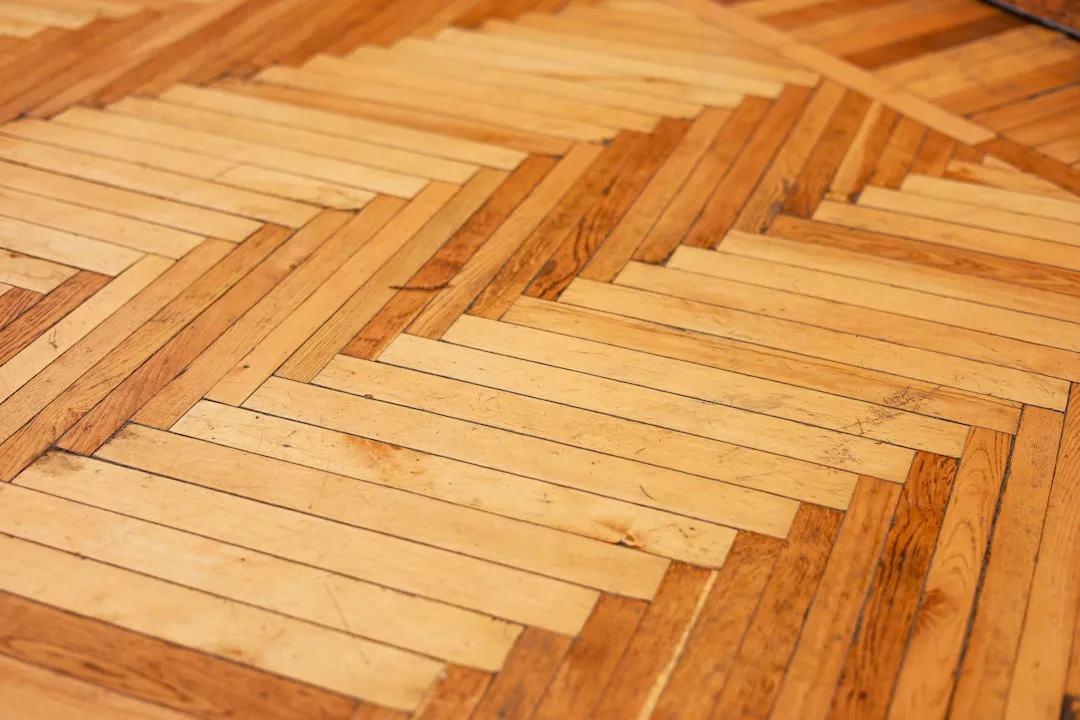
Everything in this guide points toward a single practical decision. Here’s how to make it cleanly, based on your specific situation rather than generic aesthetics.
Choose straight plank SPC when:
- Your room is square or close to square (length-to-width ratio below 1.3:1)
- Your installation labor budget is under $5 per square foot
- You’re handling the installation yourself and this is your first or second flooring project
- Your home is priced at or below the local market median and resale ROI is a priority
- Your room already contains two or more strong pattern sources in textiles or wall treatments
- Your ceiling height is under 8 feet 6 inches
Choose herringbone SPC when:
- Your room is long and narrow with a 2:1 ratio or greater — hallways, galley kitchens, narrow living rooms
- Your installation budget has $3–$5 per square foot of flex above straight plank costs
- You want a focal-point entryway or open-plan living area that anchors the design visually
- Your furnishings are primarily solid-colored with minimal competing patterns
- Your home competes in a design-forward market segment above the local price median
- Your ceilings are 9 feet or higher
Consider the hybrid approach when:
- You’re renovating multiple rooms and want to control total project cost while maximizing visual impact
- Your entry hall or main living area is your home’s primary design statement
- Bedrooms and secondary spaces don’t need — and won’t benefit from — pattern complexity
The hybrid strategy is more mainstream than it sounds. S. Houzz & Home Study reported that 41% of homeowners who renovated flooring in 2022–2023 used different flooring styles in different rooms of the same home, up from 28% in 2018. That’s a 46% increase in homeowners making intentional, room-by-room layout decisions. The practice of mixing layouts isn’t an unusual workaround — it’s now the majority approach among people who’ve thought carefully about the problem.
A practical hybrid allocation for a typical 1,500 square foot home: herringbone in the entry (approximately 80–100 sq ft) and main living/dining area (approximately 350–400 sq ft), straight plank in the three bedrooms and hallways (approximately 700–800 sq ft). At Midwest labor rates, this hybrid approach adds roughly $400–$600 to the total project cost versus straight plank throughout — while concentrating the herringbone’s visual impact exactly where buyers and guests experience it first.
Takeaway: Write your room dimensions and ceiling height next to your installation budget number and look at both together. The right layout will usually be obvious once you do.
Frequently Asked Questions
Is herringbone flooring harder to install than straight plank for SPC or LVP products?
Yes, but the difficulty gap depends entirely on whether the product is click-lock or glue-down. Click-lock SPC straight plank is beginner-friendly — it’s the entry point for most DIY flooring projects. Click-lock SPC herringbone is intermediate level: you’ll need a miter saw, chalk line layout work, and patience with the first several rows that establish alignment for the entire floor. It’s not beyond a capable DIYer, but Builddirect’s 2023 survey data shows only 31% of SPC herringbone buyers self-installed versus 68% of SPC straight plank buyers, which reflects the real skill gap. Glue-down herringbone, whether in hardwood or luxury SPC, is professional-only regardless of your DIY experience level.
Does herringbone flooring actually make a room look bigger or smaller?
Both claims are true — for different room shapes. In long, narrow rooms with a length-to-width ratio of 2:1 or greater, herringbone set at 45 degrees genuinely increases perceived width. A 2022 Journal of Interior Design study found up to 9% perceived width gain in rooms narrower than 10 feet when using diagonal patterns versus parallel plank layouts. In square rooms or rooms with ratios close to 1:1, herringbone loses its directional tension and reads as visually busy without delivering any spatial expansion. The room shape — not the pattern itself — determines the outcome.
How much more does herringbone flooring cost to install compared to straight plank per square foot?
The national average gap is approximately $3.18 per square foot based on HomeAdvisor’s 2023 aggregated project data ($8.92 installed for herringbone LVP versus $5.74 for straight plank LVP). Labor is the primary driver: herringbone typically commands a 60–75% labor premium over straight plank in the Southeast and Midwest ($4.50–$7.00 versus $2.50–$4.00 per square foot), and up to $8.00–$12.00 in coastal metro markets. Material waste adds another layer — herringbone requires 12–15% overage versus 7–10% for straight plank. On a 400 square foot room using mid-range SPC at $3.50 per square foot, that material difference alone adds $75–$105 to your order.
Does choosing herringbone over straight plank flooring increase home resale value?
Herringbone acts as a perceived luxury differentiator, particularly in homes priced above the local market median, but no transaction dataset has isolated layout pattern as a standalone resale variable. NAR data shows flooring in general returns 70–80% of installation cost at resale, and a 2023 NAR survey found 54% of buyers’ agents rated luxury vinyl or hardwood flooring as the feature most likely to influence a buyer’s offer amount — but pattern was not tracked separately. Experienced listing agents consistently describe herringbone as a design-forward signal in higher price-point homes, while recommending clean, neutral straight plank LVP as the higher-ROI choice in entry-level and mid-market homes where buyers prioritize move-in condition over design sophistication.
The most useful thing you can do right now is measure two numbers: your room’s length-to-width ratio and your total installation budget per square foot. Pull up the decision framework in the section above, match your numbers to the conditions listed, and your layout choice will be clear — no more 400-comment threads required.
If you’re still genuinely torn, request quotes for both layouts from two local installers. The real-world labor difference in your specific market, for your specific square footage, will either confirm the herringbone premium is manageable or make the straight plank case for you before you spend another hour deliberating.